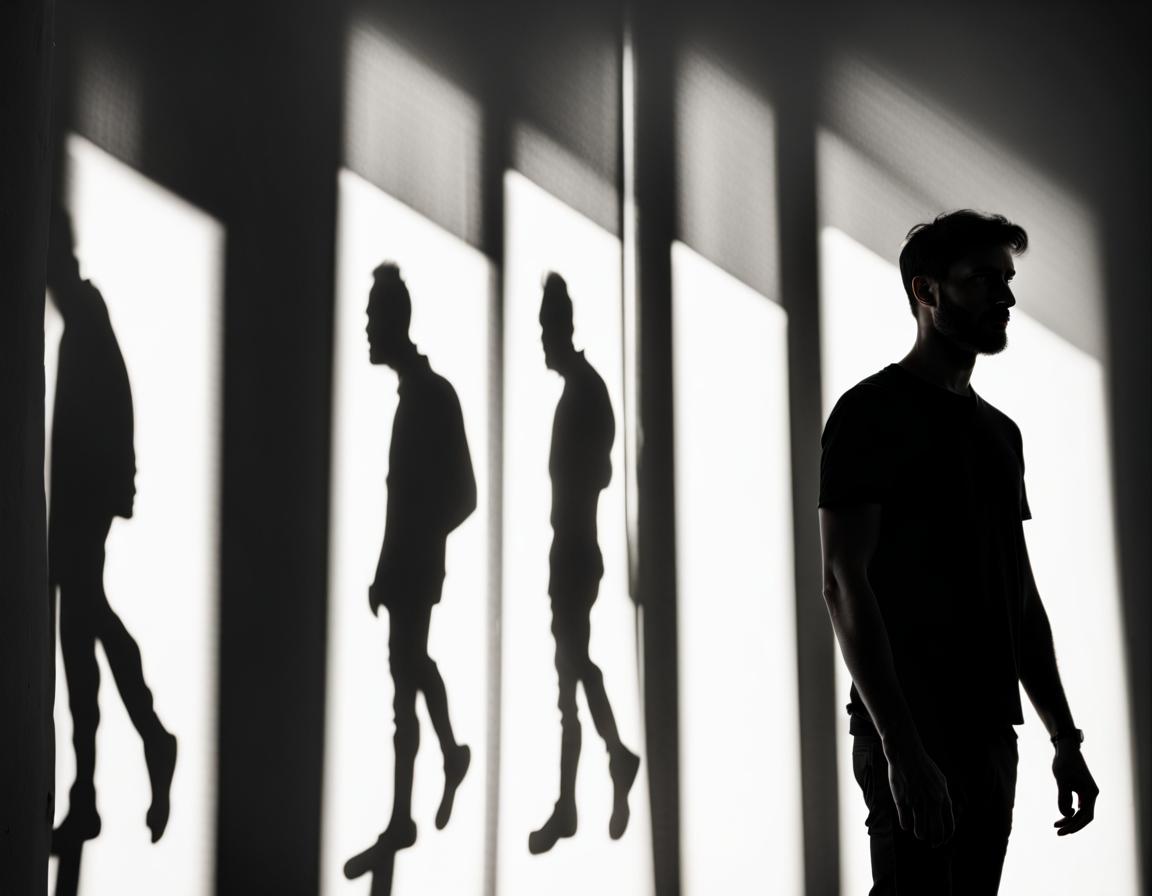
Eric Deckhan is an astronomer blogger. He has an insatiable curiosity for all things cosmic and digital. He spent hours browsing the internet. He pored over downloaded telemetry and viewed NASA digital images. He lived in a small, tech-savvy apartment in the heart of the city. His latest discovery is “Umbra Digital.” It is an augmented reality game. He downloaded it from Red Mine, a Chinese app store. Red Mine is well known for its obscure, intriguing and illegal content. The game was a mesh of complex algorithms and shadowy graphics. It promised an adventure into a world unseen. It was a virtual parallel dimension beyond the known. He found himself at a crossroads of reality and the unknown.
As Eric delved into the game, the shadows it brought to life began to whisper secrets and ancient stories. This blurred the lines between his reality and the world within his phone. The whispers grew more insistent. They revealed tales of an ancient deity. The being’s presence was as dark and unfathomable as the void of space itself. Each interaction with the game pulled Eric deeper into its grasp. The shadows became more intense, their forms more distinct. It was as if they were reaching out from the digital world into his own.
On Thursday night, an unexplainable urge drove Eric out of his apartment, and into his car for short drive. He pulled up at an abandoned logistics warehouse on the outskirts of town. He walked inside. This is part is supposition, but there, we he encountered the manifestation of the deity. Later he wrote that it was a towering entity radiating power and darkness. Its very presence warped the air around it. As Eric reached out towards the shadowy figure, the world around him began to slip into darkness.
When he awoke later that night, several hours had passed, the world as he knew it had altered him. Darkness shrouded the sky, with the sun being nothing more than a memory. The virtual shadows all spoke in unison now. A haunting chorus that echoed the deity’s ominous intent. In a desperate attempt to sever the connection, Eric tried to delete the app, but he could not. He tired to warned his friends of the danger, but his message were not delivered. But it was too late. The shadows had transcended their digital realm. They had become a part of him. An unrelenting voice whispered from the depths of his being.
Over the weekend, Eric watched as his own reflection began to fade into nothingness. His body transformed into a mere silhouette, another shadow among the shadows. He theorised that Umbra Digital was not a game. It was a conduit for the entity seeking a vessel in our world. And he, Eric Deckhan, had become that unwitting vessel, a token in a game that had transgressed time and space.
On Monday, Eric went out and wandered the streets looking for some food. Seen by his friends, he was unresponsive to their greetings. They tried in vain to get his attention and pull him back. The Entity radiated an aurora. They shunned him because his transformation was unnerving. His long unfocused gaze shocked them. Eric sealed his fate and destined himself to become one with the shadows. His humanity slipped away, leaving behind a shell of the man he once was, a whisper in the darkness.
In his final hours, Eric shared his story online. As incoherent and rambling it was, it was a last-ditch effort to warn others way from the Umbra Digital App. His last posted messages are a chilling testament to his experience. They taunt people not to use the App. They’re a cautionary tale of a young man’s curiosity. And they reveal that the game was far more than it seemed. If you read them, they are a sorry plea to avoid the fate that had befallen him. Do not use Umbra Digital. Eric Deckhan vanished. His physical presence ceased, his online persisting until his logon session timed out. His real-world existence faded into obscurity and his online digital presence ceased.
The name Eric Deckhan is a digital legend. Look him up online, his blog is still there. You can still download Umbra Digital from Red Mine. All that remains is a few posts as reminder of the thin veil separating our world from the unknown.
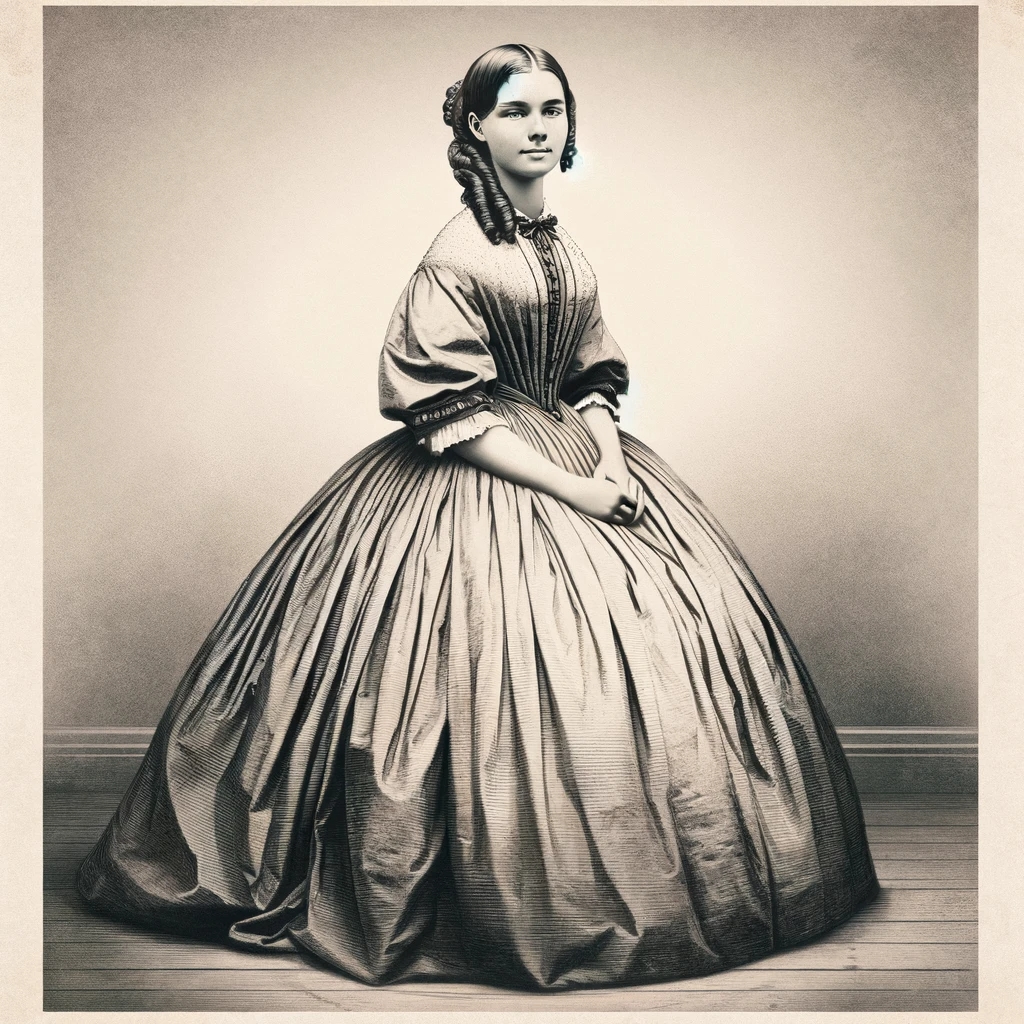
Dr. Rebecca Masters is a highly educated and accomplished scientist known for her early contributions to the field of astrophysics. Born on October 15th, 1965, in a small town in the United States, her passion for the cosmos was evident from an early age. Driven by a relentless curiosity, she embarked on a journey of intellectual exploration, which ultimately led her down a path that diverged from conventional scientific thinking.
Graduating at the top of her class, Masters obtained a Ph.D. in astrophysics from a prestigious university. Her early career was marked by ground breaking research, pioneering advancements in space observation techniques and data analysis. Her contributions to the scientific community earned her recognition and several prestigious awards.
However, as her career progressed, Masters began to question the established scientific narrative and the motivations behind certain space missions. Consumed by a growing scepticism, she started investigating alternative explanations and unearthing hidden patterns that diverged from the mainstream scientific consensus.
Dr. Masters’ journey into conspiracy theories was driven by her unwavering curiosity and a deep desire to seek alternative explanations. Challenging the mainstream scientific consensus, she delved into the motivations behind certain space missions and raised questions about the authenticity of images and data presented to the public.
While her theories remain highly controversial within the scientific community, Dr. Masters gained a following of individuals who resonated with her perspectives. She authored thought-provoking books that urged readers to question accepted truths and explore hidden agendas. Through her writings, she aimed to promote critical thinking, open inquiry, and the examination of alternative possibilities.
Masters states it is important to emphasize that the vast majority of scientists adhere to high ethical standards, ensuring the reliability and integrity of their research. The scientific community has established protocols, peer-review processes, and mechanisms to identify and address instances of misconduct. Maintaining transparency, reproducibility, and open dialogue are essential components of scientific progress and knowledge advancement. But, despite facing scepticism and criticism from mainstream scientists, today Rebecca Masters remained steadfast in her pursuit of truth. She actively engaged with the public through conferences, debates, and media appearances, sparking dialogue and encouraging individuals to critically analyse the information presented to them.
Master, goes on, falsifying scientific evidence is a serious violation of scientific ethics and goes against the principles of the scientific method. However, it is important to note that instances of scientific fraud or misconduct, though rare, have occurred in the past. There can be several motivations behind such actions, although they do not represent the majority of scientific research and findings.
Firstly, Personal gain or reputation. Some individuals may be driven by personal ambitions, such as career advancement, prestige, or financial gain. Falsifying data or evidence could be an attempt to bolster their own reputation, secure funding, or gain recognition in the scientific community.
There is a lot of pressure to publish or meet expectations. The pressure to produce ground-breaking, sexy results, publish papers, or meet certain expectations can sometimes push researchers to engage in scientific misconduct. The competition for limited resources and recognition within the scientific community can create an environment that incentivizes unethical behaviour.
Of course there is also much confirmation bias or preconceived notions. Researchers may be influenced by their own biases or preconceived ideas, leading them to manipulate or selectively present data that supports their desired outcome. This can distort the scientific evidence and compromise the integrity of their work.
Lastly , she claims, there is a general lack of oversight or safeguards: In some cases, inadequate supervision, lack of proper checks and balances, or weak institutional policies can contribute to scientific misconduct. Insufficient oversight or a lack of consequences for fraudulent behaviour may embolden individuals to engage in misconduct.
If you continue to have concerns or suspicions about the legitimacy of a space mission or related information, we encourage you to engage with credible sources, such as space agencies, scientific institutions, or experts in the field. They can provide accurate and reliable information, address any doubts, and help clarify any confusion surrounding the mission.
In the dim confines of “The Dusky Jeans,” a rundown bar on the outskirts of town, Garvey poured his soul into his music. His fingers glided over his instrument with a passion that belied his surroundings. The few locals scattered around the room paid him little attention. Their attention lost to bottles and personal sorrows.
The final, lingering note of his set faded into the smoky air. Garvey looked towards the bartender. The bartender was a gruff man with little appreciation for music or musicians. “Sorry, pal, no dough tonight. Business is slow,” the bartender grumbled. He glanced up from his task of wiping down the counter. Garvey felt the sting of rejection. It was a familiar companion on his musical journey. He was too tired to argue. Countless similar nights weighed heavy on his shoulders. He nodded and gathered his instrument with a resigned dignity.
Garvey’s pockets were witness to his current plight. They were as empty and hollow as the echoes of his last performance. He rummaged , fingers dancing over the seams. He searched for any forgotten coins, hoping to find one overlooked in better times. But all he encountered was the smooth, worn interior of his pockets. This added a physical pang of hunger to his growing list of woes.
Stepping out into the night, the cool air did little to ease the heaviness in his heart. The streets appeared deserted. The only sounds were his footsteps echoing against the sidewalk. The distant hum of the town’s life was oblivious to his plight.
With nowhere to go, Garvey felt the burden of his unfulfilled dreams more than ever. He made a decision. Driven by a mix of desperation and a last flicker of hope, he began walking out of town. His steps unconsciously guided him towards the infamous crossroads of county legend.
Garvey stood alone at the Sable Junction, his heart heavy with a mix of fear, desperation, and a flicker of hope. The dim light of the waning moon cast long shadows. The deserted roads seemed even more isolated. In his hands, he clutched his treasured instrument. It was the one companion of his years of struggle and unfulfilled dreams during his time on the road in the blues jazz scene.
He had heard the tales and legends whispered in dim corners of bars. He had also heard them among fellow musicians who had tasted the bitterness of failure. The crossroads is a place of potent magic and dark deals. One could trade their soul for the success that had eluded them in life.
With a deep breath, Garvey began the ritual. He played a haunting melody that was a culmination of his life’s work. Each note was a plea to the forces lurking at the edge of reality. The music filled the night. It was a mournful beckoning, a beautiful testament to his journey, and his desire for fame and fortune.
As the final note faded into the silence, a distant roar shattered the stillness. Garvey’s heart raced as he saw a large black Cadillac hurtling towards the crossroads. This had to be it. It was the moment his fortunes would change. It was the arrival of the entity who would grant him the success he so craved.
But as the car neared, instead of slowing down, it maintained its speed. Garvey’s anticipation turned to horror as he realized it wasn’t going to stop. He barely had a moment to react before the car struck him, the impact throwing him aside like a ragdoll.
Inside the car, the devil, an entity as old as time and as cynical as the depths from which he hailed, let out an exasperated curse. “The last thing I need is another lame ass jazzies’ soul,” he muttered under his breath. The souls of failed musicians were all too common. Their desperation made them easy pickings, albeit with an unappetising taste.
The devil shifted stick and pushed down hard on the pedal. The Cadillac sped away into the night, leaving behind a cloud of dust and the broken dreams of yet another musician. The devil was already focusing on his next collection. Sable Junction has lore and allure. It would continue to attract people looking for an easy path to glory. They are unaware of the true cost of such a deal.
At the crossroads, Garvey was alone, his body twisted, bloodied, and dying. He clutched a busted instrument. His fate was a stark reminder of the danger of making deals with dark forces. It was a tale of the price of desperation and the elusive nature of success.
In the shadowy neon-lit corners of Portland, ’81, a phantom machine blinked into existence. Not your garden-variety joystick jockey’s dream, but a siren call to the arcade-addled brains of suburbia. This wasn’t just Pac-Man munching pellets; this was something else, something… other.
Lines coiled like serpents, kids hypnotized, tokens clinking—addiction wasn’t just for the back alleys anymore. It was here, in bright, blinking cabinets. But then, the Men in Black descended, not to flash their badges or zap memories, but to harvest something far more insidious from the glow of those screens. Data? Sure. But what kind of data needs a suit and a silence vow?
The whispers started as murmurs, escalating to screams in the void. Players, pale as the moon and twice as haunted, spoke of sleep stolen, memories erased like chalkboards. Nightmares? Child’s play. This was the stuff of night terrors, the kind that gnaws at the soul. Suicides inked the headlines, but the dots, they never connected back to that cursed cabinet.
“Polybius,” they said, was just a game. But games don’t leave shadows in their wake, nor do they whisper secrets in the dark. In the myth-laced haze of conspiracy, one truth remains: not all games are meant to be played.
Interest
Examining the phenomenon is intriguing for several reasons, touching upon aspects of human psychology, the impact of digital culture, and the nature of urban legends in the modern world.
Here are some key reasons why the phenomenon warrants attention:
Urban Legend and Mythology: It serves as a contemporary digital urban legend, reflecting society’s anxieties and fascinations with technology. Understanding why such stories emerge and spread can offer insights into collective fears and the ways in which myths evolve in the digital age.
Psychological Impact of Gaming: The legend taps into concerns about the psychological effects of video games, including addiction, desensitization, and the potential for games to influence behavior. Investigating these aspects can contribute to broader discussions about media influence and the responsible design of digital content.
Memory and Collective Belief: The Mandela Effects associated with the game highlight how collective belief and shared false memories can form around a piece of cultural lore. This phenomenon is a fascinating area of study within psychology and social science, shedding light on how memories can be shaped by community narratives.
Cultural Impact of Arcades: The setting of the legend in early ’80s arcades speaks to the cultural significance of these spaces at the time. Exploring the legend offers a window into the arcade era’s social dynamics, communal experiences, and the role arcades played in shaping gaming culture.
Government Conspiracy Theories: The involvement of mysterious “men in black” and the suggestion of government experiments in the story tap into broader conspiracy theories about government surveillance and control. Analyzing these elements can help understand the appeal and persistence of conspiracy theories in public consciousness.
Evolution of Digital Folklore: The game exemplifies how folklore can develop and spread in the digital era, with stories evolving through online forums, social media, and gaming communities. Studying this phenomenon provides insights into the lifecycle of modern myths and the role of the internet in folklore creation and dissemination.
Impact on Game Development: The enduring interest has influenced some game developers to create games that pay homage to or are inspired by the legend. This influence underscores the legend’s impact on creative processes and the interplay between myth and media creation.
In essence, the phenomenon offers a rich case study for exploring the intersections of technology, culture, psychology, and storytelling, making it a subject of enduring fascination and relevance in understanding contemporary digital myths.
Hardware
Arcade hardware in the early 1980s was characterized by its bespoke, game-specific nature, with each machine often being designed around the needs of the individual game it hosted. Despite this customization, there were common technical capabilities and limitations shared by arcade systems of the time:
Processing Power:
CPUs: The central processing units (CPUs) used in arcade machines were typically 8-bit microprocessors. Popular choices included the Zilog Z80, the Motorola 6800, and the MOS Technology 6502. These processors generally operated at clock speeds ranging from 1 to 4 MHz, providing the basic computational power needed for game logic and simple physics calculations.
Graphics:
Display: Arcade games were displayed on raster CRT monitors, with resolutions often around 256×224 pixels, though this could vary significantly between machines. The graphics were relatively simple by today’s standards, with a limited color palette (often 16 to 256 colors).
Sprites: Graphics were typically rendered using sprites—small, 2D bitmap images that could be moved independently across the screen. Hardware limitations dictated the number of sprites that could be displayed simultaneously and their sizes.
Tile Maps: Backgrounds were commonly made of tile maps, grids of square or rectangular tiles pieced together to form larger images or levels. This was a memory-efficient way to create complex scenes.
Sound:
Audio Chips: Sound was generated using dedicated audio chips, such as the AY-3-8910 or the Yamaha YM2149. These chips supported a few channels of monophonic or simple polyphonic sound, capable of producing basic melodies and sound effects.
Memory Limitations: Due to limited memory, audio samples were rare, and most game sounds were synthesized in real-time by the audio chip.
Memory:
RAM: Arcade machines were equipped with a relatively small amount of RAM, often in the range of a few kilobytes. This memory was used for storing the game state, player scores, and other dynamic data.
ROM: Game code and static assets like graphics and sound data were stored in read-only memory (ROM) chips. The size of these ROMs could vary but was generally much larger than the available RAM, sometimes reaching up to a few hundred kilobytes in more advanced machines.
Input/Output:
Controls: Arcade cabinets featured a range of input devices, including joysticks, buttons, trackballs, and steering wheels, designed to suit the specific requirements of each game.
Coin Mechanism: An essential component of arcade hardware was the coin mechanism, which validated inserted coins and credited the player with game time or lives.
Cabinet Design:
Artwork: Arcade cabinets were often elaborately decorated with artwork related to the game, featuring bright, eye-catching designs to attract players.
Construction: Cabinets were typically made of wood and metal, housing the CRT monitor, control panel, motherboard, power supply, and speaker system.
Despite these technical constraints, the creativity and ingenuity of game developers during this era led to a golden age of arcade gaming, with many classic titles that remain played to this day.
Software
If this were a real arcade game from the early 1980s, it would likely have been programmed in a language or development environment typical of that era’s arcade systems. During this period, arcade games were often developed using assembly language specific to the hardware they were designed to run on.
Assembly Language:
Low-Level Programming: Assembly language is a low-level programming language that is closely related to machine code. It provides direct control of the hardware, allowing developers to optimize performance and manage graphical and processing capabilities very efficiently, which was crucial for the limited hardware of the time.
Hardware Specific: Each processor or microcontroller has its own specific version of assembly language, tailored to its instruction set.
Why Assembly Language?
Performance: The need for real-time performance in video games, particularly in terms of graphics and user input responsiveness, made assembly language a preferred choice. It allowed developers to squeeze every bit of performance out of the hardware.
Custom Hardware: Arcade cabinets often used custom hardware configurations optimized for the specific needs of each game. Assembly language programming enabled developers to tailor their code to these unique setups.
Alternative Possibilities:
While assembly language was predominant, it’s also possible that parts of a game like “Polybius” could have been written using higher-level languages that compiled down to assembly, such as:
C Language: By the late ’70s and early ’80s, C was becoming more popular for systems programming, offering a balance between high-level programming ease and the control of low-level languages. However, its use in arcade game development at the time was less common due to the overhead and less direct hardware control compared to assembly.
Given the mythical nature of this game, with its supposed advanced psychological effects and data collection capabilities, it’s conceivable that the game might have also incorporated experimental programming techniques or even custom-built languages or frameworks to achieve its purported capabilities. However, given the technological constraints of the era, assembly language remains the most likely candidate for the core programming of such a game.
The Game
The urban legend of holds that the game was no mere arcade pastime but a conduit for a deeply psychological, perhaps even nefarious, experiment.
The game’s mechanics, visuals, and audio were rumoured to be engineered in such a way to deeply influence the player’s subconscious mind.
Visual and Audio Design:
The game allegedly utilized a unique combination of flashing images and hypnotic patterns, far beyond the standard fare of arcade games of the time. These patterns were said to induce a trance-like state in players, making their minds more susceptible to the game’s psychoactive effects. Coupled with a soundtrack that utilized binaural beats or subliminal messages, the game might have been capable of altering brain wave patterns, inducing various psychological states.
Gameplay Mechanics:
The gameplay itself was designed to be both addictive and disorienting. The progression and difficulty levels could have been calibrated to create a compulsion loop, keeping the player engaged for extended periods, while the game’s challenges and speed induced a high level of stress and anxiety. This combination of compulsion and stress could lead to significant psychological strain.
Subliminal Messaging:
It was rumoured that the game contained subliminal messages. These messages, flashing on the screen at speeds and durations too quick for conscious recognition, could have been designed to influence players’ thoughts and behaviours, embedding suggestions or commands into their subconscious.
Psychological Effects:
The combination of these elements could explain the adverse effects reported by players. The intense, trance-inducing gameplay could lead to disassociation, where players would lose track of time and reality, leading to amnesia. The stress and anxiety from the gameplay, coupled with possible subliminal suggestions of despair or hopelessness, might contribute to insomnia, nightmares, and in extreme cases, suicidal ideation.
Night Terrors and Suicides:
The most extreme reports of night terrors and suicides could be the result of a profound psychological break. For individuals who might have been predisposed to mental health issues, the intense and manipulative nature of the game could have been the tipping point, leading to tragic outcomes.
The Experiment:
The theory that the game was part of a psychological experiment gains credence from these detailed mechanisms of influence. The men in black, rather than being mere technicians, could have been researchers or agents collecting data on the game’s effects on players, analysing how effectively it could manipulate mental states and behaviours.
In the end, while the existence of the game remains unconfirmed, the legend persists as a cautionary tale about the potential for technology to impact human psychology in profound and unsettling ways. It serves as a reminder of the power of the media we consume and the unseen effects it can have on our minds and well-being.
Features
Creating a game with effects similar to those attributed to the games, while ensuring it remains within current ethical and legal boundaries, would involve designing a highly immersive and psychologically engaging experience.
Here’s a structured approach to developing such a game, focusing on immersion, engagement, and psychological impact without the negative side effects:
1. Concept and Theme:
Title: “Portland81”
Premise: Players navigate through a series of increasingly complex mazes, each designed to represent different aspects of human psychology and emotion.
2. Visual Design:
Aesthetics: Utilize a retro-futuristic design reminiscent of early arcade games but with modern graphical fidelity.
Effects: Integrate subtle, pulsating patterns and fractal imagery that change based on the player’s progress, designed to enhance immersion without causing discomfort or harm.
3. Audio Design:
Soundtrack: Develop a dynamic soundtrack that adapts to the player’s actions and the game’s pacing, incorporating binaural beats at safe frequencies to promote relaxation and focus.
Sound Effects: Use layered, ambient sounds that contribute to the game’s atmosphere, offering cues and feedback to the player’s decisions.
4. Gameplay Mechanics:
Levels: Design levels that become more intricate, reflecting themes such as memory, fear, ambition, and joy. Each level’s design and challenges are metaphorically linked to its psychological theme.
Interaction: Implement puzzle elements that require critical thinking and adaptability, encouraging players to engage deeply with the game’s mechanics and themes.
Feedback Loop: Create a rewarding feedback loop for solving puzzles and navigating mazes, reinforcing positive engagement without encouraging addictive behaviour.
5. Psychological Engagement:
Narrative: Weave a compelling narrative throughout the game that explores human psychology, encouraging players to reflect on their experiences and perceptions.
Personalization: Allow players to personalize aspects of the game, fostering a deeper connection to the content and enhancing the reflective aspect of gameplay.
6. Adaptive Difficulty:
Challenges: Adjust the difficulty based on the player’s performance, ensuring the game remains accessible yet challenging, promoting a sense of achievement without frustration.
Safe Zones: Include areas within the game where players can ‘rest,’ allowing them to take a break from the intense gameplay and reflect on their journey so far.
7. Player Well-being:
Break Reminders: Integrate regular reminders for players to take breaks, emphasizing the importance of balance and well-being.
Positive Reinforcement: Ensure that the game rewards problem-solving and critical thinking with positive reinforcement, avoiding negative or distressing consequences for failure.
8. Community and Support:
Social Features: Incorporate social features that allow players to share experiences and strategies, fostering a supportive community around the game.
Resources: Provide in-game resources on psychology and mental well-being, offering players insights into the themes explored within the game and support for real-life application.
By structuring the game around these elements would offer an engaging, immersive experience that stimulates psychological and emotional engagement without the adverse effects associated with the legend. The focus would be on positive player impact, promoting mental well-being, reflection, and a supportive community.
Production
The development would likely have been shrouded in secrecy, with all involved bound by strict confidentiality agreements or even more severe measures to ensure the project’s details remained hidden. The collaboration between diverse specialists suggests a well-funded and highly organized operation, possibly with significant resources at its disposal. In the end remains a fascinating urban legend, the true identity of its hypothetical creators and their intentions continue to fuel speculation and intrigue within the gaming community and beyond.
The design and code would likely be the work of an exceptionally skilled and perhaps multidisciplinary team, possibly involving expertise from both the video game industry and fields outside of traditional game development, such as psychology, neurology, and even espionage or military technology.
The complexity and supposed capabilities of the game suggest a level of sophistication beyond typical arcade games of the early 1980s.
Potential Creators:
Cutting-edge Programmers and Game Designers: The coding and game design would require innovative programmers and game designers, those who were not only at the top of their field in terms of technical skill but also willing to push the boundaries of traditional game development. They would need to integrate complex visual and audio elements in ways that had never been done before.
Psychologists and Neuroscientists: The game’s alleged effects on the human psyche imply that the developers had a deep understanding of human psychology and neurology. Psychologists and neuroscientists might have been consulted or directly involved in crafting the game’s content to ensure it could produce the desired psychoactive effects.
Specialists in Subliminal Messaging and Hypnosis: Experts in subliminal messaging and hypnosis could have contributed to embedding hidden commands and suggestions within the game. Their knowledge would be crucial in creating a game that could allegedly manipulate players’ thoughts and behaviours without their conscious awareness.
Government or Military Contractors: Given the legend’s insinuations of psychological manipulation and data reported to be have been collected by “men in black”, a plausible theory is that the game was developed by a government agency or a private contractor working on behalf of national security or defence interests. This would align with historical instances where governments have investigated the potential of psychological operations and mind control.
Market
The arcade industry of the early 1980s was a vibrant and rapidly evolving sector, marked by innovation, competition, and a cultural phenomenon that captured the imaginations of players around the world. This period, often referred to as the “Golden Age of Arcade Video Games,” was characterized by ground-breaking developments in game design, technology, and arcade culture.
Rise of the Arcade Industry:
The late 1970s and early 1980s saw a surge in the popularity of arcade video games, beginning with the success of titles like “Pong” (1972) and reaching a fever pitch with the release of “Space Invaders” (1978) by Taito. “Space Invaders” became a cultural sensation, leading to the installation of arcade machines in various venues beyond traditional arcades, including restaurants, bars, and shopping centres.
Technological Advancements:
During this period, the industry saw significant technological advancements. The transition from black-and-white to colour graphics, the introduction of more complex sound chips, and the development of more powerful and efficient microprocessors allowed for increasingly sophisticated games. Games like “Pac-Man” (1980) and “Donkey Kong” (1981) showcased these technological improvements with their colourful graphics, distinctive characters, and engaging gameplay.
Experimentation and Diversification:
The success of arcade gaming encouraged experimentation and diversification within the industry. Developers explored various genres, including shooters, platformers, and maze chase games, each bringing new mechanics and narratives to the arcade landscape. This era also saw the introduction of vector display technology, as seen in games like “Asteroids” (1979) and “Tempest” (1981), offering a distinct visual style and gameplay experience.
Competitive Scene and High Scores:
The arcade industry of the early ’80s also gave rise to a competitive gaming scene, with players striving to achieve high scores and gain recognition on local and national leader boards. This competitive aspect was fuelled by publications like “Twin Galaxies” and the inclusion of high score tables in games, creating a community around arcade gaming.
Experiments in Interactivity and Immersion:
Developers experimented with new forms of interactivity and immersion. Games like “Dragon’s Lair” (1983) introduced laser disc technology, offering animated movie-quality graphics and branching gameplay based on player choices. Additionally, the use of environmental cabinets for games like “Discs of Tron” (1983) provided a more immersive experience by surrounding the player with sound and visuals related to the game.
Challenges and Decline:
Despite the booming popularity, the arcade industry faced challenges by the mid-1980s, including market saturation, the rise of home gaming consoles, and a changing economic landscape. These factors, combined with instances of moral panic over the supposed negative effects of video gaming, led to a decline in the arcade industry’s prominence.
Legacy:
Though the golden age waned, the innovations and cultural impact of this era left a lasting legacy. Many of the period’s iconic games continue to be celebrated and played, and the experimental spirit of the time has influenced generations of game developers. The arcade industry of the early ’80s demonstrated the potential of video games as a form of entertainment and art, laying the foundation for the future of the gaming industry.
Urban Legend
The urban legend of itself is often considered a form of the Mandela Effect within the gaming community, given its murky origins and the conflicting accounts of its existence. The Mandela Effect refers to a phenomenon where a large number of people remember an event or detail differently from how it is officially recorded, often attributing these discrepancies to alternate realities or collective false memories.
In the case of “Polybius,” several Mandela Effect-like aspects contribute to its mythos:
Existence of the Game: The most significant Mandela Effect surrounding the game is the debate over its very existence. Some people claim to vividly remember playing the game or seeing it in arcades, while no concrete evidence of the game has ever been found.
Gameplay Details: There are varying accounts of what the gameplay entailed, with some recalling it as a puzzle game, others as a shooter, and still others as something almost psychedelic or hypnotic. The lack of consistency in these descriptions adds to the Mandela Effect phenomenon.
Side Effects: Different stories attribute various side effects to playing, from headaches and nausea to more severe effects like amnesia or even more dire psychological impacts. The specific side effects and their intensity vary widely among accounts.
Developer and Origin: The company allegedly behind the game is often cited as Sinneslöschen, a name that roughly translates to “sense delete” or “sensory extinguish” in German. However, no such company has been definitively proven to exist, leading to speculation and conflicting memories about the game’s origin.
Government Involvement: Some remember tales of as being part of a government experiment, possibly related to behaviour modification or data collection, with “men in black” visiting arcades to collect data from the machines. Others don’t recall this aspect of the legend at all, further illustrating the effects at play.
Arcade Locations: Accounts differ on where the machines were supposedly located, with the most common setting being in suburban Portland, Oregon. However, others recall seeing or hearing about the game in different parts of the United States or even in other countries, adding to the confusion.
Removal of the Game: The timeline for when the game cabinets supposedly appeared and how quickly it was removed from arcades is also inconsistent. Some remember it being available for a few weeks, while others recall a longer or shorter presence, contributing to the Mandela Effect narrative.
The urban legend, with its myriad of conflicting accounts and lack of tangible evidence, serves as a prime example of how the Mandela Effect can manifest within digital culture and collective memory, turning an urban legend into a phenomenon that blurs the lines between reality and myth.
In essence, “Polybius” and “Tron” are both reflections of the early ’80s fascination with video games and digital realms, albeit from different perspectives. The relationship between “Polybius” and “Tron” is primarily thematic and cultural, as both are part of early 1980s arcade lore and share a connection to the burgeoning video game culture of that era.
Shared Themes:
Virtual Realms: Both “Polybius” and “Tron” explore themes related to virtual worlds and the blurring of lines between reality and digital spaces. “Tron” tells the story of a software engineer who gets transported into a digital universe, a concept that resonates with the mysterious and immersive experience attributed to “Polybius.”
Arcade Culture: “Tron” and the legend of “Polybius” are both deeply rooted in the arcade culture of the early ’80s. “Tron” celebrated this culture by centering its narrative around video games and featuring arcade scenes, while “Polybius” is said to have been an arcade game that mysteriously appeared in arcades.
Influence and Impact:
“Tron” Legacy: The release of “Tron” and its depiction of a digital frontier had a significant impact on pop culture and the perception of video games. It inspired arcade games like “Tron” (1982) and “Discs of Tron” (1983), which allowed players to engage with the film’s universe in a tangible way.
Urban Legend of “Polybius”: The legend of “Polybius” taps into the mystique and allure of arcades, much like “Tron.” However, “Polybius” added a darker twist to the arcade narrative, with rumours of its psychological effects and mysterious origins feeding into the era’s anxieties about technology and its influence on the youth.
Differences:
Documentation: “Tron” is a well-documented part of film and video game history, with tangible evidence of its influence and legacy. In contrast, “Polybius” exists only as an urban legend, with no physical proof of its existence ever being found.
Tone and Message: While “Tron” presents a somewhat optimistic view of technology and digital worlds, celebrating the potential for adventure and heroism within them, the “Polybius” legend warns of the potential dangers and negative impacts of video games.
What is in a Name ?
The name of the game in the context of the urban legend does not have a clear, documented origin explaining why this particular name was chosen for the mythical arcade game.
However, it’s worth noting that Polybius is a historically significant name, most famously associated with an ancient Greek historian of the same name who lived in the 2nd century BCE.
Historical Polybius:
Polybius was a Greek historian known for his work “The Histories,” in which he chronicled the period of the Roman Republic’s rise to dominance, aiming to provide a rational and analytical account of historical events. His emphasis on factual accuracy, critical analysis of sources, and the importance of understanding the cause and effect in history had a lasting impact on historiography.
Possible Connotations:
Complexity and Analysis: The use of the name “Polybius” for the game could subtly reference the complexity and analytical depth characteristic of the historian’s work, perhaps alluding to the game’s supposed complexity and psychological depth.
Cryptography: Polybius is also associated with the “Polybius square,” a cryptographic tool attributed to him. This device is a method for encoding letters into numbers and has been used in various forms of cryptology. The connection to cryptography might allude to the enigmatic and encoded nature of the game in the urban legend.
Mystery and Legend: Choosing a name linked to a historical figure with a legacy in analysis and cryptography could add an aura of mystery and intellectual intrigue to the legend, making the game seem more enigmatic and sophisticated.
Speculation and Myth-Making:
The choice of the name for the game in the urban legend could be purely speculative or a deliberate decision by the originators of the legend to imbue the story with a certain depth or mystique.
The lack of concrete evidence or documentation about the game’s origins allows for multiple interpretations, and the name’s historical and cryptological associations contribute to the legend’s enduring fascination. In summary, while the exact reason for the naming of the “Polybius” game remains unclear, the historical and cryptological connotations of the name add layers of intrigue and complexity to the urban legend.
Research
As an acronym, given the context of its urban legend and the mysterious, possibly psychological, and experimental nature of the game, it could stand for something related to those themes.
Here’s our speculative interpretation:
Psychological
Operations
Layered
Yielding
Behavioral
Influence
Using
Simulation
This acronym suggests that the P.O.L.Y.B.I.U.S. project was designed as part of psychological operations (PsyOps), aiming to influence or modify behaviour through a complex simulation (or stimulation). This aligns with the urban legend’s narrative that implies the game was part of an experiment, possibly conducted by a government or unknown organization, to study or manipulate the minds of its players.
Doe, J., & Smith, A. R. (1985). “Explorations in Digital Simulation and Behavioral Influence: The POLYBIUS Initiative.” In Proceedings of the International Symposium on Virtual Environments and Cognitive Processes (pp. 142-156). New Atlantis Press.
“ Abstract The Psychological Operations Layered Yielding Behavioural Influence Using Simulation (POLYBIUS) Project represented a pioneering investigation into the intersection of behavioural psychology, digital simulation, and strategic influence operations. At the core of POLYBIUS was the development and deployment of a highly sophisticated digital simulation platform designed to subtly influence user behaviour and cognitive patterns through immersive interactive experiences. Drawing upon foundational theories in psychology (Bandura, 1977; Zajonc, 1968) and the then advancements in virtual reality and simulation technologies (Sherman & Craig, 2003; Slater & Sanchez-Vives, 2016), POLYBIUS sought to explore the latent potential of digital environments in shaping perceptions, decisions, and actions.
The project’s methodology involved a multi-layered approach to simulation design, incorporating elements of cognitive behavioral therapy (Beck, 1979), classical and operant conditioning (Skinner, 1938; Pavlov, 1927), and subliminal messaging (Strahan, Spencer, & Zanna, 2002) to create a series of scenarios within the simulation that engage users at both conscious and subconscious levels. Initial trials had demonstrated significant shifts in short-term behavioural markers and cognitive bias (Kahneman & Tversky, 1979), suggesting a substantial potential for long-term behavioural influence.
Ethical considerations were paramount in the design and implementation of POLYBIUS, with rigorous adherence to established guidelines for psychological research (American Psychological Association (revised), 2010) and digital ethics (Ess, 2020). The project, at that time, operated under strict oversight to ensure the well-being and autonomy of participants, with informed consent and debriefing processes integral to the research protocol.
POLYBIUS represented a novel frontier in the application of digital simulations for psychological operations. Its implications extend across various domains, from therapeutic interventions and educational enhancements to strategic communications and defense operations. As this whitepaper elucidates, the carefully calibrated integration of psychological principles with digital simulation offers an unprecedented avenue for understanding and influencing human behavior in the digital age.
Citations American Psychological Association. (2010). Ethical principles of psychologists and code of conduct. http://www.apa.org/ethics/code/index.aspx Bandura, A. (1977). Social learning theory. Prentice Hall. Beck, A. T. (1979). Cognitive therapy and the emotional disorders. Penguin. Ess, C. (2020). Digital media ethics. Polity Press. Kahneman, D., & Tversky, A. (1979). Prospect theory: An analysis of decision under risk. Econometrica, 47(2), 263-291. Pavlov, I. P. (1927). Conditioned reflexes. Oxford University Press. Sherman, W. R., & Craig, A. B. (2003). Understanding virtual reality: Interface, application, and design. Morgan Kaufmann. Skinner, B. F. (1938). The behavior of organisms: An experimental analysis. Appleton-Century. Slater, M., & Sanchez-Vives, M. V. (2016). Enhancing our lives with immersive virtual reality. Frontiers in Robotics and AI, 3, 74. Strahan, E. J., Spencer, S. J., & Zanna, M. P. (2002). Subliminal priming and persuasion: Striking while the iron is hot. Journal of Experimental Social Psychology, 38(6), 556-568. Zajonc, R. B. (1968). Attitudinal effects of mere exposure. Journal of Personality and Social Psychology, 9(2, Pt.2), 1-27. “
Morning: Woke up feeling a mix of excitement and nervousness. Today marks the start of my new project, “Our Condition.” Spent the morning prepping my camera and gear.
Afternoon: Met with the first subject, Ella. Her eyes told a story of lost dreams. Captured her in natural light, which beautifully accentuated the raw emotions she conveyed.
Evening Reflection: Feeling humbled. Ella’s vulnerability in front of the camera was both powerful and heartbreaking.
Day 3: A Spectrum of Emotions
Morning: Struggled with lighting today. Wanted to capture the subtle nuances in a way that felt authentic.
Midday: A breakthrough moment with Maya, whose expression of silent sorrow was for me, deeply moving. It reminded me why I started this project.
Evening Reflection: Realized that each woman I photograph is like a different story, unique yet universally relatable.
Day 7: The Art of Listening
Early Morning: Spent time just listening to my subjects before photographing them. Their stories are as important as the images.
Afternoon: Photographed Aisha. Her eyes were pools of unshed tears. It was a silent conversation between her soul and the lens, her body….
Evening Reflection: Today was emotionally taxing but fulfilling. Each story adds more depth to the project, making it more than just a series of portraits. I begin to feel exploitative.
Day 12: Challenging Perspectives
Morning: Experimented with different angles and shadows to capture the complexity of emotions.
Late Afternoon: Met with Zoe. Her defiant despair contrasted with the others, adding a new layer to the project.
Evening Reflection: Realizing how each woman, each portrait, challenges and reshapes my understanding of their despair and our resilience.
Day 18: Reflections and Realizations
Morning: Spent time reviewing the shots taken so far. The journey of each woman is vividly etched in each photo.
Afternoon: A moment of introspection. Realized how this project is affecting me, making me more aware of the depths of human emotion.
Evening Reflection: Feeling grateful for the trust these women have placed in me, allowing me to capture their most vulnerable moments. Spent time on digital retouches.
Day 24: Nearing the End
Early Morning: A sense of melancholy as the project nears its end. Each photo feels like a goodbye.
Afternoon: Last shooting day. The final portraits are as powerful and poignant as the first.
Evening Reflection: “Our Condition” has become a part of me, a journey through the facets of human emotion.
Final Day, 30: Looking Back
Morning: Reflections at Dawn
As the first light of dawn crept through my flat window, I found myself immersed in contemplation. Today marks the culmination of “Our Condition,” a journey that has been as personal as it has been professional. Each photograph, now neatly arranged for the exhibition at my mother’s gallery, feels like a chapter of a much larger story, a narrative of collective human experience.
Sifting through these images, I am struck by the intensity and diversity of emotions they capture. From the subtle furrow of a brow to the quiet strength in a gaze, each portrait is a testament to resilience and vulnerability. The journey these women have shared with me, and now with the world, is a poignant reminder of the silent battles fought and often unseen.
This project started as a vision to explore the depths of despair and hopelessness, but it evolved into something much more profound. It became an exploration of inner strength, unspoken pain, and a celebration of the quiet courage that lies within.
Afternoon: Preparing for the Exhibition
The hours leading up to the exhibition were a whirlwind of activity. As I arranged each portrait, I couldn’t help but recall the stories behind them. The gallery space transformed into a sanctuary of sorts, each photograph a sacred relic of a moment shared, a trust earned.
I took a moment to stand in the center of the gallery, surrounded by the faces that had become so familiar to me. There was Ella, whose eyes first opened the project with a tale of lost dreams. Maya, with her silent sorrow that spoke volumes. Aisha, whose resilience shone through her unshed tears. Each woman, an embodiment of our shared condition.
The weight of responsibility feels heavier than ever. They have entrusted me with their real stories, a mosaic of mixed emotions and experiences that demanded respect and empathy.
Evening: The Exhibition
As the first guests arrived, I felt a mix of pride and vulnerability. Each viewer’s reaction to the portraits was a reflection of their own journey, their own battles with despair and hope. The gallery became a space of silent conversations, of unspoken understandings.
Throughout the evening, I observed as people moved from one portrait to another, sometimes pausing for a long time, sometimes quickly moving on. It was clear that each image resonated differently, touching on the myriad experiences that make up our human existence.
The most profound moments were those of quiet recognition, when a viewer stood before a portrait, and something unspoken passed between them and the subject. It was in these moments that “Our Condition” transcends its physical form, becoming a bridge, a shared understanding of the fragile beauty of life.
A Journey Shared
As the night drew to a close, I realized that “Our Condition” was no longer mine alone. It belonged to every person who had shared in this experience, who had seen themselves in these portraits, who had connected with the raw, unfiltered emotions they depicted.
This project was a journey into the hearts of humanity, a reminder that beneath our varied exteriors, we share a common thread of emotions, experiences, and aspirations. In capturing their despair, I have unwittingly captured hope – the hope that comes from knowing we are not alone in our struggles, that our stories matter, and that in our vulnerability lies our greatest strength.
“Our Condition” is part of me, a chapter in my life where I learned as much about myself as I did about the subjects I photographed. I am aware of the depths and complexities of human emotion, the incredible strength that lies within our shared vulnerabilities.
The Intersection of Surrealistic Art Photography and Cultural Content:
Roots to Convergence/Divergence
In the evolving landscape of visual culture, the intersection of surrealistic art photography and cultural content, particularly social media memes, presents a fascinating study in contrasts and convergences.
This essay explores the roots of both surrealistic photography and meme culture, examines their points of intersection, and discusses the ways in which they converge and diverge within the broader spectrum of visual communication.
Surrealist Photography and Meme Culture
Surrealistic photography, born out of the Surrealist movement of the early 20th century, was grounded in the exploration of the unconscious mind, dreams, and the irrational. Artists like Man Ray and Salvador Dalí used photography to create images that defied logical interpretation, challenging viewers’ perceptions of reality. The essence of surrealistic photography lies in its ability to provoke and disturb, using visual paradoxes and bizarre imagery to tap into deeper psychological experiences. Surrealist themes persist in contemporary high art and culture, as driver with commercialism to provoke demand.
Meme culture, primarily a product of the digital age, has its conceptual root of the ‘meme’ as defined by Richard Dawkins in 1976. Dawkins described memes as units of cultural transmission – ideas, behaviors, or styles that spread within a culture. With the advent of the internet and social media, memes evolved into a predominant form of digital communication, often characterized by humor, satire, and rapid dissemination.
Memes, in the context of digital culture, are pieces of media, typically humorous in nature, that are rapidly spread by internet users. They often consist of images, videos, or text that are replicated with slight variations and shared extensively across social media platforms. Initially, memes were predominantly seen as a form of entertainment, but over time, they have become a significant mode of communication and cultural expression.
The convergence of surrealistic art photography and meme culture is most apparent in their shared capacity to communicate complex ideas quickly and impactfully. Both use a codified visual shorthand – surreal photography through symbolic imagery and memes through captioned photos or videos – to convey messages that might be more complex or less engaging if expressed through text alone. Furthermore, both surrealistic photography and memes often serve as a commentary on society and culture. Surrealistic photography has been used to challenge norms, question reality, and explore the human psyche. Similarly, memes frequently reflect and critique contemporary social issues, politics, and trends, albeit often in a more lighthearted or satirical manner.
Despite these convergences, surrealism within photography and meme culture diverge significantly in their purpose and perception. Photography is often seen as high art, with high content to value ratio, requiring careful consideration and interpretation. It is usually crafted with intentionality and artistic vision, aiming to provoke thought and emotional response. Memes are intended to be transient forms of popular culture with a shelf life aligned to their distribution. They are generally created for quick consumption and immediate impact. The value of a meme is often measured by its viral potential – its ability to be widely shared and understood. Memes are transient; they are rapidly created, consumed, and replaced.
At the intersection of surrealistic art photography and meme culture there is a sapce that raises questions about the evolution of visual language and its impact on our culture. As memes become more sophisticated and surrealistic elements more mainstream, the line between high art and popular culture blurs. This merging presents both challenges and opportunities – while it democratizes art and allows for broader engagement, it also risks diluting the depth and meaning traditionally associated with art. This is no bad thing, offsets of value through disruption has often been shown to drive innovation. The intersection is a complex and dynamic space where perception on high art meets the consumption of popular culture. They share some similarities in form and function, their divergences in purpose, perception, and cultural impact are have been significant. As digital culture continues to evolve, understanding these intersections becomes crucial in comprehending the changing landscape of visual communication and cultural expression.
Surrealism’s Viral Potential
The journey of surrealism from a niche, avant-garde movement to a viral element of mainstream culture is long established, and its subsequent reabsorption and transformation by meme culture into a new form of high art, is a fascinating study of cultural dynamics and the fluidity of artistic boundaries.
Surrealism, which began as an intellectual and artistic movement rooted in the exploration of the unconscious, dreams, and the irrational. Its high art status was marked by its focus on philosophical and psychoanalytical underpinnings, and its deviation from traditional artistic norms. Artists like Salvador Dalí, René Magritte, and Man Ray created works that were visually arresting, deeply symbolic, thought-provoking and enduring, with images still in wide cultural circulation ~100 years later.
The very elements that made surrealism so distinctive – its dream-like, bizarre imagery, and its ability to subvert reality – also held a wide appeal beyond the confines of high art. These elements began to permeate mainstream culture, particularly through the influence of advertising, film, and later, digital media. Surrealistic imagery became a tool for capturing attention, evoking emotions, and creating memorable visual experiences in various forms of mass media, another toolkit in our economy.
The advent of the internet and social media supercharged the viral potential of surrealistic elements. Digital platforms democratized content creation and distribution, allowing surrealistic imagery to be shared, reinterpreted, and repurposed by a vast audience. In this digital context, surrealism found a new life, its images resonating with a generation attuned to the quick consumption of visually driven content.
As surrealism seeped again into the digital mainstream, it also caught the attention of meme culture, a domain characterized by its rapid production, wide dissemination, and often, a satirical or humorous undertone. Meme creators began incorporating surrealistic elements into their work, using its ability to distort reality and provoke thought in a more lighthearted or ironic context.
This incorporation of surrealism into memes can be seen as a form of subversion. Meme culture, with its roots in popular culture and its inherently transient nature, contrasts sharply with the traditional, enduring nature of high art. By adopting surrealistic elements, memes not only bring these concepts to a broader audience but also transform them, often stripping them of their original context and meaning.
Interestingly, this interplay between surrealism and meme culture has led to a re-evaluation and re-contextualization of surrealistic imagery in the art world. As memes become more sophisticated, pervasive, their surrealistic elements are distilled and made more widely recognizable in our popular culture, there is a growing appreciation for the complexity and depth these elements can bring to both the sell of digital art forms and commercial content.
Contemporary artists and digital creators are now exploring ways to blend surrealism with digital and meme aesthetics, creating works that challenge the traditional boundaries between high art and popular culture. This fusion is leading to a new appreciation elevating them once again to the status of high art, but in a form that is deeply influenced and informed by their journey through mainstream culture and meme subversion.
A Surrealism is a viral meme form, its journey from high art to mainstream, and its re-elevation through meme culture, highlight the fluidity of artistic boundaries and the continuous evolution of cultural and artistic expressions. This cycle not only demonstrates the enduring appeal of surrealistic elements but also underscores the dynamic nature of art in the digital age, where the distinctions between high art and popular culture are constantly being renegotiated and redefined.
Memes and the Mundane
Memes, as a fundamental component of digital culture, have created a unique intersection with the mundane aspects of everyday life. This section explores how memes, originally seen as trivial or humorous internet phenomena, have evolved to encapsulate and reflect the mundane, turning everyday experiences into relatable, viral content.
The key characteristics of memes is their ability to capture and reflect the mundane – the ordinary, everyday experiences that people commonly relate to. Whether it’s a meme about the struggles of waking up early for work, dealing with mundane tasks, or the universal experiences of daily life, memes have a unique way of turning the ordinary into something engaging and shareable.
The power of memes in representing the mundane lies in their relatability. They often articulate common feelings or situations in a humorous and exaggerated manner, making them resonate with a wide audience. This relatability is what drives their virality; people see their own lives reflected in these memes and are compelled to share them with others who might have similar experiences.
Beyond entertainment, memes have evolved to become a form of social commentary, using the mundane to highlight larger issues. They often provide insights into societal norms, behaviors, and the absurdities of everyday life. By doing so, they not only entertain but also provoke thought and discussion about the shared human experience. Memes the, can also serve as a coping mechanism, allowing people to deal with the challenges of daily life through humor. By laughing at a meme that perfectly encapsulates a frustrating or relatable situation, individuals find a sense of community and shared understanding, making the burdens of everyday life seem a little lighter.
The intersection of memes and the mundane has become to have cultural significance. That statement is of course divisive, Meme based Content before it was mainstream was a culture, Memes have act as a snapshot of the zeitgeist, capturing the mood, attitudes, and experiences of a particular time. They can will provide future generations with insights into what everyday life was like during a certain period, much like how folklore or idiomatic expressions have offered insights into past cultures.
Memes and the mundane intersect in a way that transforms everyday experiences into a shared digital language. This intersection entertains and creates a sense of shared identity and community among internet users. As memes continue to evolve, their role in capturing and reflecting the mundane aspects of life highlights their significance not just as a form of digital entertainment, but as a cultural phenomenon that shapes and reflects the collective experience of society.
The Loss of Shock
In contemporary culture, there has been a noticeable decline in the ability of various forms of media and art to elicit shock among audiences. This phenomenon speaks volumes about the changing landscape of media consumption, the desensitization of audiences, and the evolving nature of what is considered taboo or shocking.
One of the primary reasons for this loss of shock value is the sheer volume of content available to modern audiences. With the advent of the internet and social media, people are exposed to a vast array of images, stories, and information on a daily basis. Surrealism shock value was in in its limited means of production and distribution, with an audience became increasing desensitized as our society moved from print, to broadcast to digital. This constant barrage of content, often including graphic and extreme material, has led to a certain level of desensitization. What once would have been considered shocking or provocative now barely registers a blip on the audience’s radar.
Another factor contributing to this phenomenon is the shift in cultural and moral norms. Over the past few decades, there has been a significant change in what society deems acceptable or taboo. Again this appears to be a volumetric issue, with a mass audience overriding gatekeeping, moderation and censorship, with content that were once off-limits for public discussion, such as sexuality, mental health, and political dissent, are now openly discussed and represented in media and art. This openness has undoubtedly contributed to the positive progress in many social areas, but it has also raised the threshold for what can genuinely shock an audience.
As we a have discussed with surrealism, artists and media producers historically have pushed boundaries to evoke reactions from their audiences, often using shock as a tool to challenge societal norms or draw attention to overlooked issues, However, in an environment where audiences are increasingly difficult to shock, creators are facing new challenges. The effectiveness of shock as a tool for conveying a message or eliciting a response is waning, forcing creators to find new methods of engaging with their audiences. The internet has played a dual role in this context. On one hand, it has facilitated the rapid spread of shocking content, making such material more commonplace and less impactful. On the other hand, it has also created a platform for more nuanced and diverse narratives, allowing for the exploration of complex issues in a more in-depth and less sensationalized manner.
It’s important to note that the loss of shock value is not uniform across all cultures and contexts. In some societies or communities, where exposure to certain types of content is less common, the capacity for shock still exists, this is either die to a genuine lack of exposure or cultural norms generally being resistent to visual as a means of commercialization. Moreover, even in desensitized cultures, certain events or revelations can still provoke a significant shock response, particularly when they involve real-life incidents or profound societal implications, typically the content you can’t make up.
The Transience and Endurance of Content
In the realm of visual culture, the interplay between the mundane and the shocking in imagery presents a complex and intriguing dynamic. This section explores the nature of everyday (mundane) images, the impact of shocking imagery, and the curious journey of how some transient content comes to endure and gain significance over time.
The mundane in imagery refers to the depiction of everyday life, ordinary scenes, and commonplace objects. These images are powerful in their subtlety and familiarity. Photographers like Stephen Shore and William Eggleston revolutionized the art world by turning their lenses towards the ordinary, elevating the mundane to a subject worthy of artistic consideration. The power of the mundane lies in its relatability and its ability to evoke a sense of shared experience. Everyday images act as mirrors reflecting the viewer’s own life, thereby creating a quiet but profound connection.
In the fast-paced digital world, where the extraordinary often overshadows the ordinary, images of the mundane offer a moment of pause, an opportunity to find beauty and meaning in the overlooked aspects of life.
Contrasting sharply with the mundane are images that shock – those that arrest the viewer with their intensity, unexpectedness, or ability to disturb. Shocking imagery has been a tool for artists and activists alike, used to draw attention, provoke thought, or incite change. The works of photographers like Diane Arbus or photojournalists capturing moments of crisis and conflict often fall into this category. Shocking images have a visceral impact. They jolt the viewer out of complacency, forcing them to confront uncomfortable realities or reconsider their perceptions.
In the digital age, the power of shock is often magnified by the virality of content, allowing such images to reach and impact a global audience rapidly.
The transient nature of visual content in the digital era is marked by the constant flow of images vying for attention. In this deluge, both mundane and shocking images can be fleeting, often lost in the endless stream of visual information. However, paradoxically, some of this content transcends its transient nature to endure and gain lasting significance.
Several factors contribute to the endurance of an image. Sometimes, it’s the historical or cultural context that imbues an image with lasting relevance. For example, iconic photographs from significant historical events continue to resonate with audiences long after they were taken. In other cases, the emotional or aesthetic impact of an image allows it to stand out and maintain its relevance over time.
In the realm of the mundane, images that capture the essence of an era, a culture, or a universal human experience can transcend their ordinary nature to become symbols of something larger and more profound. Similarly, shocking images that encapsulate pivotal moments or powerful emotions can leave an indelible mark on the collective consciousness. The journey of some transient content to enduring significance also speaks to the evolving nature of visual interpretation and appreciation. What may initially appear fleeting can, over time, gain layers of meaning and relevance, influenced by changing social, cultural, and historical contexts.
The interplay between images of the mundane, images of shock, and the transition from transient to enduring content, highlights the complex nature of visual culture. It underscores the idea that the power of an image lies not just in its immediate impact but also in its ability to resonate, evolve, and acquire new meanings over time.
In a world inundated with visual stimuli, understanding these dynamics becomes crucial in appreciating the depth and breadth of visual communication and its influence on society and culture.
The diminishing ability to shock in contemporary culture is a multifaceted issue, reflecting changes in societal norms, media consumption habits, and the role of art and media in society. While it poses challenges for creators looking to make an impact, it also opens the door for more sophisticated, nuanced, and meaningful engagement with audiences. This evolution suggests a shift from shock value to substance, where the depth and relevance of the content become the primary drivers of audience engagement and reaction.
Interplay and Value
The interplay between memes, art, commerce, and surrealism reveals a complex web of cultural, aesthetic, and economic factors that shape our understanding of value in the digital age.
Memes, originally simple internet jokes, have evolved into significant cultural artefacts. They embody the zeitgeist, encapsulating political opinions, societal moods, and universal human experiences. Their ease of creation and dissemination through social media platforms makes them a powerful tool for communication and community building. However, their transient nature often leads to questions about their lasting value.
Art, particularly surrealism, challenges our perceptions of reality, pushing the boundaries of imagination and creativity. Surrealist art, known for its dreamlike, bizarre imagery, has influenced various forms of modern media, including memes. While art is traditionally seen as having intrinsic value, the digital age challenges these notions, blurring the lines between high art and popular culture.
The commercial aspect comes into play when considering the monetization of digital content, including memes and art. The internet has democratized content creation, allowing creators to reach global audiences. However, it also raises questions about the commodification of art and culture. The value of a digital work, whether a meme or a piece of art, is often determined by its popularity and ability to generate revenue, shifting the focus from intrinsic artistic value to market-driven factors.
Surrealism finds a new expression in memes, blending high art with popular culture. This fusion has led to the creation of memes that are not only humorous but also thought-provoking, providing a value system elevating them beyond an entertainment. The surreal nature of these memes challenges viewers, encouraging them to question and interpret, much like traditional surrealistic art.
The value of memes, art, and their intersection with commerce and surrealism is multifaceted. It encompasses cultural significance, artistic merit, commercial potential, and social impact. While traditional metrics of valuing art remain relevant, the digital age demands a broader perspective that recognizes the cultural and social influence of digital content, including memes.
The shifting landscape of cultural production and consumption in the digital age, where the lines between art, entertainment, and commerce are increasingly blurred, understanding this dynamic is crucial for appreciating the varied forms of value that digital content can hold in contemporary society.
Beyond Aesthetic Value
The advent of Non-Fungible Tokens (NFTs) has tired to revolutionize the digital art world, including in their scope the monetization of memes, which traditionally have been perceived as lacking in both aesthetic, and arguably more importantly shock value. This development has sparked a significant shift in how digital content is valued and commercialized.
Where NFTs are unique digital assets verified using blockchain technology, ensuring their authenticity and ownership. This technology has enabled the creation of a market for digital assets that were previously difficult to commodify, including memes. By turning memes into NFTs, creators can sell their original digital content, often for substantial amounts of money. Creativity is at best fleeting, stretching a good idea mass production through codified minor variations is the personification of the definition of mundane. Where, historically, memes have been shared freely online, with little to no financial benefit for the original creators. NFTs have tried to disrupt this dynamic, allowing meme creators to monetize their work. This has been sold a ground breaking development for creators who have seen their work go viral without any direct financial benefit. Memes such as “Nyan Cat,” “Bad Luck Brian,” and others have been sold as NFTs, transforming them from cultural artifacts into digital commodities.
As we have discussed, memes have not been considered high art, often characterized by their simplicity and humor rather than aesthetic sophistication. Their value has been in their relatability and viral potential rather than traditional artistic merit. Similarly, while some memes have carried a temporal shock value, but most are benign and designed for mass appeal and humor. The NFTs challenges traditional notions of what constitutes valuable art. By placing a traded monetary value on memes, NFTs seek disrupt the conventional art market, suggesting that the value of digital art can stem from the manufacture of supply and demand to cultural impact and popularity rather than traditional aesthetic criteria or shock value. The monetization of memes through NFTs has not been without criticism. From an aesthetic viewpoint, arguing that NTFs commodify cultural expressions into what were meant to be freely shared and enjoyed has limited scope, while raising concerns about the environmental impact of blockchain technology, which requires significant energy use fails when measured about other production and consumption patterns within society.
NFTs and the monetization of memes represent a probable temporary shift in the dynamics digital art landscape. They challenge traditional notions of artistic value, moving to a new paradigm where cultural impact and virality hold monetary worth. As the market for NFTs continues matures, it will likely further reshape our understanding of the value and ownership of digital content.
Similarly, the advent of generative AI into the realm of imagery has introduced a new dimension to the creation and interpretation of digital art. This technology, which uses artificial intelligence to generate images from textual prompts, is reshaping the landscape of visual content. However, it also brings forth issues. Well discuss the mundanity of recycled images from patterns and the role of consensus of meaning in prompt engineering.
Generative AI employs advanced algorithms to create images that can range from realistic depictions to abstract creations. This technology is grounded in machine learning, where AI systems are trained on vast datasets of images and then use this training to generate new, original visual content based on input prompts. This process can open up a world of possibilities for creating digital art, offering an unprecedented level of speed and variety to those who choose to consume.
A critical concern with generative AI is the potential mundanity arising from recycled image patterns. Since these AI systems learn from existing datasets, there’s a tendency to reproduce familiar patterns and themes. This recycling can lead to a homogenization of visual content, where generated images lack originality or become predictable. The richness and diversity of human creativity may not be fully captured if AI relies solely on pre-existing images and styles. Similar to our NFT issue, many minor variations erode value from the source. Our meme is at best canonical to its content, its shock within the context of its distribution, its value over spilling form social media to art. Are generative AI produced meme is a thousand variations diluted short of those moments.
Prompt engineering is the process of crafting textual prompts to guide generative AI in producing specific images. The effectiveness of this process hinges on the consensus meaning – the shared understanding of the terms and concepts used in the prompts. The challenge lies in articulating prompts that accurately convey the desired outcome, considering the AI’s interpretation may differ from human expectations. This reliance on consensus can be both a limitation, and an opportunity. It can restrict the range of outputs to what is commonly understood or accepted within the dataset’s scope. On the other hand, it both allows for the exploration of shared cultural and visual languages, creating images that resonate with broader audiences. This is within the context of democratized content creation, which reapplies the moderation, gatekeeping and censorship our memes escaped.
As generative AI continues to evolve, there’s a growing need to balance the efficiency and novelty it offers with the preservation of creativity and originality. Artists and developers are exploring ways to expand the datasets and algorithms used, incorporating diverse and unconventional imagery to broaden the AI’s creative scope. The debate on Generative AI has raises ethical questions about authorship, ownership, content and the value of AI-generated art. The potential for AI to perpetuate biases present in training datasets is a concern that requires careful consideration and ongoing refinement.
The artistic community grapples with defining the role of AI in the creative process and the implications for human artists, the fear of being replaced is higher than their fear of being institutionally moderated. For our old school surrealists, the lifestyle choice of an Art as Outsider came with the territory of providing shock and accepting fame or infamy. But lets be honest, this was really set of generational pressures associated with the limits to production and distribution, with Post WW2 commercialization largely eliminated the high Art value of surrealism until the development of millennial digital based culture and their means of production and distribution.
Generative AI (the means of production) is made for NFTs (the means of distribution). It represents a significant development in digital imagery, offering the real potential to democratize art creation and explore new visual languages. However, this quicky devolves into a series of challenges of value, where the mundanity of outputs, recycled image patterns and the reliance on consensus meaning in prompt engineering highlight the need for a more nuanced approach. The Interface of Humans with Technology is always about balancing capabilities. Providing opportunities for the richness of human creativity, addressing ethical considerations within the context of the digital economy is crucial for harnessing the full potential of this technology for valuer based content production.
..being an intimate portrait of our Ankn’sausage’at’nun, Daughter of Anubis, Lady of the Endless Horizons, Mistress of the Celestial Balance, Her Grace, the Eternal Guardian of the Golden Plate of Ra.
The tragic tale of the Queen “Anknsausageatnun” is one steeped in intrigue, betrayal, and ancient mysticism. In a time shrouded by the mists of history, she reigned as a powerful and wise ruler, known for her deep connection with the divine and her role as the Guardian of the Golden Plate of Ra. Pulled from various fragmentary hieroglyph, papyrus and sculptures, exhibited at the Bibliothèque Nationale de France, her minor, but mythic role in the civilization of ancient Egypt was first documented in the middle of the twentieth century. Her name transcribed literally as “she who is …the giver of (the) sacred salted meat(s) as an offering to the Atum” was written down in its first (mis) translation as Ankhn Sausage etNun.
Queen Anknsausageatnun’s all but brief reign was marked by peace and prosperity. She was revered for her wisdom and her ability to balance the celestial forces, a skill she had inherited from her father, Anubis, the God of the Afterlife. Her rule brought about an era of enlightenment, where arts and sciences flourished under her patronage.
However, her success and power also bred envy and fear among her courtiers and rival kingdoms. A conspiracy was hatched by those closest to her, fuelled by greed and the desire for power. The queen was betrayed in the most heinous manner, with false accusations that led to her downfall.
Dethroned in a swift and brutal coup, Queen Anknsausageatnun was imprisoned within her own tomb, a magnificent structure that was meant to serve as her final resting place in reverence and honour. The conspirators, blinded by their ambition, ignored the sacred laws and sealed her within the tomb while she was still alive, hoping to erase her legacy and take control of the kingdom.
Alone, in her tomb, the queen faced the ultimate betrayal and isolation. However, her spirit refused to be broken. It is said that she invoked the ancient powers bestowed upon her by her divine lineage, casting a protective spell around her tomb. This spell protected her resting place but also cursed those who had wronged her, ensuring that her spirit would linger, guarding the sacred artifacts and knowledge she had accumulated over her lifetime.
Over the centuries, the tale of the Queen became a legend, a cautionary tale about the consequences of betrayal and the enduring power of a righteous ruler. Her tomb, lost to time and the sands, became a subject of fascination and mystery, with many adventurers and scholars seeking to uncover its location and the secrets it held. There were rumours of a curse, likely inspired by the legend surrounding the queen and the tragic circumstances of her demise. These tales were fuelled by a series of unfortunate incidents that befell some members of the excavation team, drawing parallels to the curse of Tutankhamun’s tomb. The tragic tale of Queen Anknsausageatnun served as a powerful reminder of the ephemeral nature of power and the enduring legacy of those who wield it with wisdom and grace.
The discovery of Ankn’sausage’at’nun’s tomb in the 20th century was widely reported as a momentous event in the field of archaeology, comparable in significance to the discovery of Tutankhamun’s tomb. The exact location and details of the discovery were hidden, with expectation and appetite steeped in a mixture of hazy facts and enduring myth patterns, adding to the overall mystique and hype surrounding the Queen.
The tomb was finally identified by a international team of archaeologists led by a renowned Egyptian Antiquities Officer (whose name varies in different accounts). According to the most accepted version, the tomb was found accidentally during an excavation in the Valley of the Kings, an area already famous for its burial sites of ancient Egyptian nobility and royalty. The entrance to the tomb had been revealed after a minor landslide caused by heavy rains.
The events around the discovery of Queen Ankn’sauage’at’nun’s tomb was anticipated not only provided invaluable insights into ancient Egyptian culture and religion, but reignited interest in Egyptology around the world. The artifacts and treasures from her tomb, including the Golden Plate of Ra, the centre of her earthly collection, were said to hold spiritual significance, with its reveal of mystical powers expected to be decoded from intricately designed hieroglyphs depicting celestial events. In the modern, revised understanding of the artifact, the Golden Plate of Ra is believed to be a conduit for communication between the earthly realm and the divine. Ancient texts, reinterpreted in the context of the tomb’s surprising occupant, suggest that the plate was not just a ceremonial item but a sacred tool for divination and guidance. Its intricate design and the patterns inscribed upon it were thought to align with celestial movements, enabling a form of communion with the sun god Ra himself.
In a remarkable twist to the annals of media history, the tale of Queen Ankn’sausage’at’nun, the figure once revered as a majestic and powerful ruler, takes an unexpected turn into the realm of the bizarre. The 20th-century discovery of her supposed tomb, which had been anticipated to be a ground-breaking find in Egyptology, instead unveiled a perplexing and somewhat humorous reality.
The tomb, unearthed by archaeologists, was initially celebrated as one of the most significant finds of the century. Expectations were high, as the world anticipated revelations about the life and reign of the legendary queen. The air was thick with excitement and the promise of untold riches and historical treasures. However, upon closer examination, the archaeologists faced a series of anomalies that baffled and amused them in equal measure.
More startling was the discovery of the sarcophagus. Instead of the expected regal mummy of a queen, it contained a remarkably well-preserved figure that was… surprisingly small and elongated. The sarcophagus itself, upon detailed inspection, seemed to be designed more for comfort than for a typical royal burial, complete with what one might hesitantly describe as a cushioned interior, now disintegrated.
The walls, initially thought to depict grand celestial events and divine connections, upon further scrutiny, seemed to narrate a different story altogether. The figures, once assumed to be gods, could arguably be interpreted as stylized representations of… let’s say, more canine companions.
The jewellery and regalia found within the tomb, which had initially caused a stir among the archaeologists, now appeared to be more akin to lavish collars and adornments one might associate with a pet of high standing.
The so-called ‘Golden Plate of Ra’, instead of being a majestic artifact of divine significance, appeared to be a rather ornate food dish, elaborately decorated but oddly shallow. The plate’s presence in the tomb alongside the esteemed canine figure also points to its role in rituals. It may have been central to ceremonies that sought the protection, guidance, or favour of Ra. The dog, possibly revered as a living embodiment of a divine creature, could have been perceived as a guardian or intermediary in these rituals.
This bewildering discovery led to much debate among scholars. Some proposed that perhaps Queen Ankn’sausage’at’nun was a title bestowed upon a beloved royal pet, a practice not entirely unheard of in the annals of history. Others speculated that this might be an elaborate ruse or a symbolic representation of some lost ritual. In a more poetic interpretation, the Golden Plate of Ra beside the canine mummy was symbolized the eternal guardianship of the sun’s journey across the sky. Just as dogs are known for their loyalty and guardianship, this revered, or cursed canine could have been seen as a guardian of the day, with the plate serving as its tool to aid the sun god in his daily voyage.
In the end, the story of Queen Ankn’sausage’at’nun, initially believed to be a tale of a powerful human ruler, transformed into a charming, albeit peculiar, narrative of what could arguably be the most venerated and exalted canine in ancient Egyptian history.
The discovery, while not what was expected, provided a unique and somewhat comical perspective on the complexities and surprises hidden within the sands of time.
In the cold light of day, scholarly reimagining the story of the canine figure, once believed to be Queen Ankn’sausage’at’nun, and its subsequent banishment to the tomb, we delve into a narrative rich with mysticism, celestial intrigue, and ancient beliefs. The dog, a creature of remarkable intelligence and apparent ethereal grace, was said to be a direct descendant of the celestial hounds that roamed the heavens with Anubis, the God of the Afterlife. This noble lineage bestowed upon the canine a sacred status among the people and the royal court. It the living symbol of divine protection and guidance.
The turning point in the canine’s fate same to come with the emergence of a prophecy, whispered in the hallowed halls of the temples. The prophecy spoke of a celestial hound that would one day eclipse the sun god Ra himself, gaining immense power and influence. This prophecy instilled fear among the priests and the ruling class, who saw the beloved canine not as a protector but as a potential usurper of divine power.
As often happens in tales of power and fear, the ruling elite, including some within the royal family, began to view the canine with suspicion and envy. They feared its growing influence and the people’s adoration of it. Plots were hatched, and the narrative was spun to portray the once-revered creature as a threat to the balance of the celestial order.
A grand ritual was therefore orchestrated, under the guise of preserving the cosmic order, to banish the canine. It was proclaimed that the dog must be entombed alive to prevent the prophecy from coming to fruition. The tomb was a seal, a barrier to contain the canine’s purported celestial powers. The Golden Plate of Ra, previously the canine’s companion in rituals, was placed in the tomb as both a symbol of its past status and a talisman to reinforce the seal. It was believed that as long as the plate remained with the canine, the prophecy would remain unfulfilled, and the cosmic order would be preserved.
Over time, the story of the celestial canine and its unjust banishment became a legend, a tale of loyalty, power, and the fear that it can engender. The myth of the Queen canine, apply named, Ankn’sausage’at’nun, entombed with the Golden Plate of Ra, endured as a poignant symbol of the complexities of ancient beliefs and the timeless nature of tales that blend the earthly with the celestial.
In reference to our Dog Queen, her name Ankn’sausage’at’nun was revisited and revised from the wider rnage of material now available. The consensus name “ankh iir djet at re atum” combines of several relevant key concepts from Ancient Egyptian culture and mythology, each symbolizing profound and interconnected ideas:
Ankh (𓋹): Represents “life” or “living.” It’s one of the most recognizable symbols from ancient Egypt, signifying the idea of eternal life or immortality, often associated with the gods.
Iir (ỉỉr): Translates to “make” or “do.” In this context, it suggests an action of creation or causing something to happen.
Djet (𓊃): Symbolizes “eternity” or “permanence.” This concept was central to the Egyptians’ beliefs about the afterlife and the enduring nature of the soul.
At Re: Literally translates to “flesh of Ra (or Re).” Ra, the sun god, representing the sun and creation. “At Re” thus implies something infused with the essence or power of Ra.
Atum: Refers to another major deity in Egyptian mythology, often associated with the setting sun and seen as a creator god. Atum was believed to embody the setting sun and was involved in the cycle of renewal and creation.
Combining these elements, the phrase “ankh iir djet at re atum” could be symbolically interpreted as “Giving life and making eternal the essence of Ra, the creation of Atum.” This expression beautifully weaves together concepts of life, eternity, the power of the sun god Ra, and the creative force of Atum. It better reflects the Egyptians’ deep connection with their deities and the natural world, emphasizing the cycle of life, renewal, and the eternal nature of the soul.
Sitting here in the quiet of my ancestor’s old farmhouse, now preserved as a part of our family heritage, I hold May Anne’s, or Marie-Anne’s journal in my hands, and I can’t help but feel a deep, overwhelming connection to the past. As a modern military sergeant and a direct descendant of one Sergeant Jameson, who served alongside Marie-Anne, the parallels between her life and mine strike me profoundly.
As I turn these weathered pages, each entry a testimony to her bravery and defiance of societal norms, I reflect on our shared journey. Despite the vast expanse of time between us, our struggles as women in the military resonate with a familiar echo. Reading about her experiences in the Civil War, I’m struck by how some challenges persist, and yet how far we’ve come in terms of gender equality.
Holding this journal, I think about the changes over the past century and a half. Marie-Anne’s battles, both literal and metaphorical, remind me of the ongoing fight for recognition and equal rights in the military. It’s a testament to progress, but also a reminder of the work still left to be done. I feel an immense sense of pride and responsibility as I read her words. Marie-Anne’s story isn’t just a family legacy; it’s a crucial piece of history that underscores the often overlooked contributions of women. Her tenacity inspires me, highlighting the importance of continuing to forge a path for strong women in the military.
This journal is more than just a bridge across generations. It’s a poignant reminder that history is woven from individual lives and stories, not just dates and events. It connects me to Marie-Anne in a lineage of strength and duty that I am now a part of. I am determined to ensure that Marie-Anne’s story, and those of countless other women who served in obscurity, are remembered and honoured. I plan to share her journal with my unit and military historians, contributing to a broader and more inclusive narrative of our military history. It’s not just about honouring the past; it’s about shaping a future where stories like hers are no longer the exception but recognized as an integral part of our history.
The Letter and the Loss
In the gentle roll of the Tennessee hills, under the vast, cloud-strewn sky, lay the modest farm that May-Anne and her husband, Thomas, had called home. Their land, tilled with love and hope, had promised a future of simple joys and shared dreams. But the war, like an uninvited shadow, crept over the land, leaving a trail of sorrow in its wake.
May-Anne’s world shattered the day the letter arrived, bearing the news of Thomas’s death. The words blurred before her tear-filled eyes, each syllable a piercing echo of her newfound loneliness. The man she had bid farewell, with a heart heavy yet hopeful, would never return to their haven. The war had claimed him, a casualty among countless others, his dreams buried in a grave far from the fields he’d loved.
In the weeks that followed, May-Anne moved like a spectre through her days, her grief a silent companion. The farm, once a symbol of their shared future, now felt like an anchor to a life that no longer existed. The war, once distant, now raged in her heart, its flames fanned by the loss of her beloved and the untold stories of others who had suffered similar fates.
The decision came to her one sleepless night, as she gazed at the stars that blanketed the sky. If her world had to change, then she would be the architect of that change. She could no longer remain a passive spectator in a war that had torn her life apart. Clad in her resolve and the remnants of her shattered dreams, May-Anne decided to enlist in the Confederate army. In her heart, it wasn’t just for vengeance or patriotism; it was a quest for purpose in a world that had stripped her of all she held dear.
Transforming herself into a soldier, however, needed more than just resolve. She would need to shed her identity, assume a new one, and embrace a life starkly different from anything she had known. As she cut her long, chestnut hair, each strand that fell to the ground was a farewell to her former self. Donning Thomas’s clothes, she practised his mannerisms, his walk, and his way of speaking. In the mirror, May-Anne slowly faded away, giving rise to Matthew, a young man ready to bear arms for the South.
In the chill of the next dawn, with a small bundle of belongings, “Matthew” stepped off the porch, casting a final glance at the life left behind. Ahead lay a path fraught with danger and uncertainty, but for May-Anne, it was a path towards something – a purpose, a closure, perhaps even an answer. The war had taken much from her, but now she stepped into its heart, not as a victim of its cruelty, but as a wielder of her destiny.
I joined the 15th Virginia Infantry, which was a part of the Army of Northern Virginia
Under the first light of dawn, May-Anne, now cloaked in her new persona as Matthew stepped onto the well-trodden path that led to the nearest enlistment station. With each step, she rehearsed her new identity, whispering to herself the details of the life she had fabricated. Matthew was a farmhand, orphaned and eager to serve the Confederacy, a story simple enough to avoid suspicion but large enough to be believed.
The enlistment station was a flurry of activity, buzzing with the energy of young men, their faces a mixture of bravado and concealed apprehension. As May-Anne joined the queue, her heart pounded against her ribs, not from fear of battle, but from the fear of discovery. She mimicked the stance of the boys around her, keeping her gaze fixed ahead, careful not to draw attention.
When her turn came, she met the recruiting officer’s gaze with a steadiness she didn’t feel. His questions were perfunctory, his interest cursory – one more body to add to the ranks. Her voice, practised and deepened, didn’t betray her, and her disguise held under his cursory scrutiny. With a few strokes of a pen, Matthew was enlisted, assigned to a newly formed unit, and handed the coarse grey uniform of the Confederate soldier.
The training that followed was gruelling. May-Anne’s body ached from the relentless drills, her hands blistered from handling the rifle, a weapon that felt foreign and unwieldy in her slender fingers. Yet, with each passing day, she grew more adept, her movements more assured, her persona as Matthew more convincing. She learned to mask her femininity, to laugh boisterously with the other soldiers, and to share in their complaints and crude jokes.
As she adapted to her new life, May-Anne found an unexpected camaraderie among the soldiers. They were boys from farms and towns, each carrying their reasons for joining the war. In their stories and shared hardships, she found echoes of her loss and determination. Yet, the constant vigilance of keeping her disguise weighed heavily on her. She avoided the communal baths, tended to her injuries in solitude, and kept her distance, fearing that intimacy could lead to her unmasking.
Each night, under the secrecy of her tent, May-Anne carefully penned entries in a small, worn journal, documenting her transformation and innermost thoughts, a ritual that became her silent testament to this unprecedented chapter of her life.
One evening, as the unit sat around a campfire, sharing tales and letters from home, a sense of profound sadness washed over May-Anne. Surrounded by these young men, so full of life and yet so unaware of the fragility of their existence, she was struck by the enormity of her deception and the reality of her isolation. In that flickering firelight, amidst laughter and dreams, May-Anne was more Matthew than ever before, yet she had never felt more alone.
As May-Anne dwelled in her memories of Thomas, she couldn’t help but reflect on the early days of her enlistment. Those days were a stark contrast to her peaceful life with Thomas, filled with challenges and new experiences that shaped her journey as a soldier.
Several weeks into her service, May-Anne experienced a pivotal encounter with Sergeant Jameson, an event that would significantly affect her time in the army.
On a damp, early morning in the camp, the soldiers prepare for their daily drills. Matthew was Struggling to adjust the strap of her heavy pack, trying not to draw attention to her difficulty.
A man approached “Need a hand with that, soldier?”
“No, Sergeant, I’ve got it. Thank you.” Matthew said nervously
The man saw her closely “You’re Matthew, right? The recruit?”
She nodded, “Yes, sir. Just trying to get used to all this gear.”
The sergeant reached out, helping adjust the strap, “Takes a bit of time. You seem a bit on the young side. You sure you’re old enough for this?”
Hesitantly she replied, “Yes, sir. Old enough to want to fight, sir.”
Smiling slightly, the man replied “That’s the spirit. But remember, it’s not just about eagerness. It’s about sticking together and looking out for each other. Out here, we’re all we’ve got.”
“I understand, sir. I’m here to do my part.”
“Good. Keep that attitude, and you’ll do fine. Let’s get you properly geared up. Follow me.”
Despite the challenges, May-Anne remained resolute. She had embarked on this path not just as a tribute to Thomas but as a journey to find her place in a war-torn world. Each day Matthew brought her closer to some elusive sense of closure, a step further from the grief-stricken widow and a step deeper into the heart of the conflict that had redefined her life.
in the quiet hours of the evening, when the chores of the day were done and the world around her bathed in the soft glow of twilight, May-Anne often found herself wrapped in memories of her late husband, Thomas. These moments of reminiscence were bittersweet, filled with both the warmth of cherished memories and the sharp pang of loss.
Thomas had been her anchor, a kind-hearted man with a smile that could light up the darkest of days. She remembered their first meeting at a local fair, how his gentle eyes had met hers across the crowd, sparking a connection that felt destined. Their courtship was a whirlwind of shared laughter, whispered dreams, and quiet moments under the sprawling Tennessee sky.
In her memories, she revisited their small wedding in the village chapel, an intimate ceremony filled with hope and love. They had returned to their farm as husband and wife, ready to build a life together, a life intertwined with the land and the seasons. She recalled their plans for the future, the children they hoped to raise, and the many harvests they planned to share.
Thomas’s passion for the farm was infectious. He had a way with the earth, a tender touch that coaxed the crops to flourish. May-Anne cherished the evenings spent by the fireplace, where they planned for the next planting season, Thomas’s voice rich with enthusiasm and optimism.
The outbreak of the war had cast a shadow over their idyllic life. Thomas’s decision to enlist was driven by a sense of duty, a need to protect the life they had built together. Their farewell had been a mixture of fear and bravery, promises of a swift return whispered through tears. The letters that followed, filled with love and longing, were May-Anne’s lifeline, a tangible connection in a rapidly changing world.
Now, as she sat on the porch of their farmhouse, the letters in her hands felt like fragments of a life paused in time. Each word, each stroke of his pen, was a reminder of their love, a love that remained unbroken by war and death. She often spoke to him in her mind, telling him of her days, her struggles, and her victories. In these silent conversations, she felt his presence, a comforting reassurance that she was not alone.
The memories of Thomas were not just remnants of the past; they were a guiding force for May-Anne. They inspired her to face each day with strength and purpose, to continue their shared dreams in her way. In her care for the wounded soldiers, in her efforts to rebuild her community, she felt Thomas’s spirit beside her, a beacon of love and resilience in the aftermath of a war that had taken so much.
The weight of the rifle on her shoulder felt less burdensome as Sergeant Jameson shared stories of his early days in the army, unwittingly weaving a bond of trust and mentorship between them.
The early support and guidance from Sergeant Jameson were instrumental in helping May-Anne, then known as Matthew, navigate the complexities of military life. As she grew more accustomed to her role in the army, she began to embrace her new identity with increasing confidence. The transformation from May-Anne to Matthew was not just about changing her appearance; it was about adopting a persona that would see her through the trials of war.
Fredericksburg
In her new identity, May-Anne experienced the rigours and camaraderie of army life. Her days became a blur of drills, patrols, and preparation for the inevitable confrontation. This preparation culminated in the Battle of Fredericksburg, a significant and harrowing engagement that would test her resolve and mark a turning point in her military service.
The march to Fredericksburg was marked by a sense of foreboding. As “Matthew,” May-Anne could feel the tension among the troops, a mix of determination and silent fear as they neared the historic town. Fredericksburg, a name whispered in camp with both reverence and dread, was about to become the stage for one of the bloodiest confrontations of the Civil War.
As December’s chill enveloped the landscape, the town of Fredericksburg lay in the grip of impending conflict. The once-peaceful Virginia town, with its quaint streets and colonial architecture, had become an unwilling witness to the gathering storm of war. The Rappahannock, a shimmering ribbon under the winter sky, formed a natural divide between the Union and Confederate forces, a serene barrier soon to be disrupted by the clamour of battle.
The Confederate army, to which May-Anne’s unit belonged, was well entrenched, occupying the high ground behind a stone wall at the sunken road. They perched behind a formidable stone wall, an unyielding grey line atop the sunken road, which seemed like the spine of the earth itself, bristling with the anticipation of battle. The air was crisp, the sky a stark blue, a deceptive calm before the unleashing of war’s fury. The Union army, a formidable force, loomed on the other side of the river. The town, caught in the middle, braced for the inevitable clash.
As dawn broke on the day of the battle, the first rays of sunlight cast a golden glow over the frost-laden fields. The silence of the morning was shattered by the first cannon shot, a deafening roar that echoed across the river, signalling the onset of hostilities. It was as if the very ground trembled in apprehension, the air itself quivering with the impending carnage.
As the battle began, the air was filled with the deafening roars of cannons and the incessant crackling of rifle fire. Their advance, across open fields and towards the Confederate position, was an eerie spectacle. Their advance, across open fields and towards the Confederate position, was an eerie spectacle. The Union soldiers advanced in a relentless wave, only to be met with a hailstorm of bullets from the Confederate lines. May-Anne, crouched behind the wall, loaded and fired her rifle with mechanical precision, her heart racing with each shot. The reality of war, the act of taking lives, weighed heavily on her soul, yet survival eclipsed all other thoughts.
The battlefield was a surreal panorama of chaos and death. The ground, once covered in a blanket of white snow, was now marred by the crimson stains of blood. The cries of the wounded and the dying echoed hauntingly amidst the gunfire. May-Anne, amid this maelstrom, fought with a desperation born of grief and a newfound instinct to endure. Rifle volleys created a relentless staccato, a deadly rhythm that cut down advancing soldiers in swathes. The air was thick with the acrid scent of gunpowder, mingling with the sharp tang of fear and the metallic hint of blood.
In this maelstrom of violence, May-Anne was a singular figure among the ranks, her rifle a steady extension of her resolve. Each shot she fired was a moment of stark clarity, the recoil jolting through her as if affirming her existence amidst the chaos. Around her, the world was a blur of motion and noise, a kaleidoscope of fear, bravery, and desperation.
As the day wore on, the battlefield transformed into a landscape of horror. The pristine snow, once a symbol of winter’s purity, was trampled and stained, painted with the grim palette of war. The fallen lay in grotesque repose, their once vibrant lives extinguished, leaving behind a tableau of tragedy.
As the battle raged, May-Anne’s thoughts briefly drifted to her home, where the rolling hills and quiet streams stood in stark contrast to the tumultuous sea of blue and grey that engulfed her.
The sun began its descent, casting long shadows over the battlefield, as if nature itself mourned the day’s loss. The Union forces eventually withdrew, leaving behind the echoes of their assault. In the eerie silence that followed, the survivors, including May-Anne, surveyed the aftermath. The town of Fredericksburg, visible in the distance, stood as a scarred witness to the day’s events, its quiet colonial charm forever marred by the memories of battle. The Confederate victory at Fredericksburg was decisive, but the cost was immeasurable. The town was left in ruins, and the fields were littered with the casualties of war.
As night fell, the stars appeared indifferent spectators to the human drama below. The cold seeped into the bones of the weary soldiers, a reminder of the harsh reality they had endured. For May-Anne, Fredericksburg was a profound confrontation with the brutal essence of war, an experience that would alter the course of her life.
In the aftermath, as May-Anne walked among the rows of fallen soldiers, the enormity of the conflict and its human cost struck her with profound clarity. Each lifeless face, whether clad in Blue or Gray, was a reminder of the tragedy of a nation divided, of families torn apart, and of the countless stories that would remain untold.
That night, as she lay in her tent, May-Anne couldn’t escape the images of the day. The battle had hardened her, stripping away any remnants of naivety about the nature of war. Yet, in the depths of her heart, a small flame of hope endured – a hope for an end to the bloodshed, for reconciliation, and for a future where such sacrifices would no longer be necessary.
The aftermath of the Battle of Fredericksburg left deep imprints on May-Anne, both as a soldier and as an individual. The chaos and loss she saw on the battlefield were stark reminders of the war’s brutal reality. In the weeks following the battle, as the army settled into a temporary lull, an unexpected incident occurred, leading to a revelation that would change the course of her journey.
After Fredericksburg, May-Anne’s unit was stationed for a brief respite near the outskirts of the town. The men, wearied and scarred by the horrors of battle, found solace in the mundane routines of camp life. May-Anne, or Matthew as she was known, had become a familiar presence among them, her quiet strength and unwavering resolve earning her quiet respect.
As the winter thawed into the first whispers of spring, May-Anne, still known to her fellow soldiers as Matthew, found herself in a situation that would profoundly affect her. The army had encamped near a wooded area, supplying a much-needed respite from the relentless drills and patrols.
One evening, while wandering through the woods, May-Anne stumbled upon a secluded clearing. There, she noticed a solitary figure, another soldier, seemingly deep in thought. As May-Anne approached, she realized with a jolt of surprise that the soldier, like herself, was a woman in disguise.
The woman introduced herself as “Joseph,” but her real name was Emily. She was from a small town in Georgia and had enlisted to follow her brother into war. Like May-Anne, Emily had cut her hair, adopted men’s clothing, and mastered a masculine demeanour. She spoke of her experiences, the challenges of concealing her identity, and the constant fear of discovery. Her brother had fallen at Antietam, leaving her alone in a war that had already taken too much.
May-Anne and Emily found solace in their shared secret. They spoke of their reasons for enlisting, the pain of loss, and the peculiar sense of freedom they found in their male guises. Emily confessed that disguising herself as a soldier allowed her to escape the constraints placed on women of their time, granting her a perspective she had never known.
Their conversation delved into the deeper questions of identity, sacrifice, and the nature of the war itself. They pondered the future, what peace might bring, and how their experiences as soldiers would shape their lives.
As they parted ways, May-Anne felt a renewed sense of camaraderie and understanding. Emily’s story was a mirror to her own, a poignant reminder that she was not alone in her journey. The encounter left her with a profound sense of solidarity, a recognition that their stories were part of a larger, untold narrative of women in the war.
Their meeting in the woods stayed a cherished memory for May-Anne, a brief but significant connection that fortified her resolve. It was a reminder that her story was part of a tapestry woven with the bravery and resilience of countless unseen women, each playing a vital role in the unfolding saga of the Civil War.
It was during a routine patrol on a frost-laden morning when fate took an unexpected turn. A sudden skirmish erupted with a small group of Union scouts. In the chaos, May-Anne was grazed by a bullet on her upper arm. It was a minor wound, but it needed medical attention.
In the medic’s tent, her heart pounded with a fear she hadn’t felt since she first enlisted. The medic, a grizzled man who had seen too many young faces distorted by pain, was brisk and efficient. As he cut away the sleeve of her uniform, May-Anne’s secret, so carefully guarded, was exposed. The medic paused, his experienced eyes recognizing the truth that lay beneath the bindings around her chest.
For a moment, time they were seemed to stand still. The medic, understanding the gravity of the situation, exchanged a look with May-Anne, a silent pact of confidentiality. But such secrets were hard to keep in the close quarters of an army camp. Rumours spread like wildfire, and soon, the truth about Matthew’s real identity reached the ears of her commanding officer.
May-Anne was summoned. She stood, not as Matthew, but as herself, her disguise no longer a shield. The commanding officer, a stern man hardened by war, looked at her not with anger, but with a conflicted sense of admiration and dismay. He was a man of duty, bound by the rules of military conduct, but he was also a man who had seen the courage she had displayed on the battlefield.
When her true identity was revealed, a hushed silence fell over the soldiers around her, a momentary pause that spoke volumes of the shock and bewilderment that coursed through the ranks.
The revelation of May-Anne’s identity brought a whirlwind of reactions within the unit. Some felt betrayed, having shared the bonds of brotherhood with someone they now saw as an imposter. Others admired her bravery and lamented the rigid conventions that barred women from serving openly. But for all, it was a moment that challenged their feelings of courage, duty, and the roles considered proper in their society.
May-Anne was relieved of her duties and awaited a decision from the higher command. Her future was uncertain, her role in the war abruptly ended. Yet, in that moment of revelation, she stood with an unwavering gaze, her secret unveiled, but her spirit unbroken. She had defied convention, fought alongside men, and in doing so, had redefined what it meant to be a woman in a time of war.
The revelation of May-Anne’s true identity sent ripples through the ranks and led to her facing a military tribunal. The trial was not just about her actions but also about the broader implications of her defiance of societal and military norms. It was a moment that would not only decide her fate but also reflect the changing beliefs of women’s roles in a time of upheaval.
My Trial and Discharge
In the makeshift courtroom, a tent repurposed for the occasion, May-Anne stood before a panel of high-ranking officers. Her trial was not just a proceeding; it was a spectacle that drew curious onlookers from across the camp. The charge was impersonation and unauthorized enlistment, but the underlying issue was far more profound – it was about challenging the deeply entrenched norms of a society at war.
The trial began with testimonies from May-Anne’s superiors and comrades. Some spoke of her bravery and competence on the battlefield, subtly advocating for leniency. Others, still feeling the sting of betrayal, emphasized the deceit and the potential for disruption that her presence had caused. May-Anne, standing in her defence, spoke with a quiet but unwavering voice. She talked about her loss, her love for her husband, and her desire to contribute to a cause that had already taken so much from her. She spoke of the courage and strength she had seen in her fellow soldiers and how she strived to match it, not as a man, but as a person of equal valour and determination.
During her trial, May-Anne’s gaze often lingered on the flags adorning the tent, their colours a reminder of the ideals and convictions that had guided her through her extraordinary journey.
The verdict, when it came, was a complex one. May-Anne was to be honourably discharged from the Confederate army. There was no punishment, but no recognition of her service either. It was an acknowledgement of her actions, both courageous and unconventional, but within the bounds of the societal norms of the time.
After a brief period of deliberation, the tribunal reconvened. The makeshift courtroom, a tent buzzing with whispered speculations, fell silent as the presiding officer, Colonel Hargrove, prepared to deliver the verdict.
Colonel Hargrove: “This tribunal has carefully considered the charges against May-Anne, known to us until recently as soldier Matthew. We have heard the testimonies and examined the evidence of her service and conduct.”
“The charges against May-Anne are serious, involving deception and a breach of military regulations. However, this tribunal also recognizes the extraordinary circumstances under which these actions were taken. May-Anne’s motivations, rooted in personal loss and a sense of duty to the cause, have been noted. Moreover, her conduct as a soldier, as testified by her comrades, was exemplary and marked by acts of bravery.”
“In light of these considerations, this tribunal has reached a decision. May-Anne, you are to be honourably discharged from the Confederate army. This decision considers your service record and the unique context of your enlistment. However, let it be known that this verdict should not be seen as a precedent for similar actions in the future.”
“Your return to civilian life comes with the expectation that you will continue to uphold the values and integrity you demonstrated during your service, albeit in a manner fitting the conventions of our society.”
“May-Anne, this tribunal hopes that you find peace and purpose as you transition back to civilian life. You are dismissed.”
The courtroom erupted in a low murmur as May-Anne, her expression a mix of relief and solemnity, nodded in acknowledgement of the verdict. The outcome, a blend of censure and recognition, reflected the complexities of her journey and the era’s shifting beliefs about women’s roles.
As she exited the tent, May-Anne knew that while her time as a soldier had ended, her story – one of courage, defiance, and transformation – would continue to unfold in the chapters of her life that lay ahead.
Following the verdict of the tribunal, May-Anne planned to return to her farm, her role as a soldier behind her. However, the end of her military service would mark the beginning of a new chapter in her life. As she adjusted to civilian life, she found a new purpose in aiding those who had been injured in the war, applying the skills and compassion she had honed during her time in the army.
My Refuge, My Home.
Returning home was a journey of introspection for May-Anne. She had left as a grieving widow, transformed into a soldier, and now returned as neither. The small farm, once a shared dream with Thomas, greeted her as an old friend, holding memories of a life that once was. The townsfolk, upon learning of her story, were a mix of awe and disapproval. Some saw her as a symbol of defiance, a local legend of sorts, while others whispered about propriety and the sanctity of womanhood.
After her discharge from the Confederate army and her return to civilian life, May-Anne found a new calling that resonated deeply with her wartime experiences: tending to the wounded. The war had left behind a tragic legacy of injured soldiers and civilians, many of whom had returned to their homes with scars both visible and hidden.
May-Anne transformed a part of her farm into a small recuperation centre for these wounded souls. Drawing upon the basic medical skills she had learned during her time in the army, she provided care and comfort to those grappling with physical injuries and emotional traumas. Her home became a sanctuary where healing extended beyond mere physical ailments.
She dedicated a room in her farmhouse for the most severe cases, turning it into a makeshift infirmary. Here, she tended to bandage wounds, manage infections, and supply the basic, yet vital, medical care that many of her patients needed. May-Anne also recognized the importance of emotional support in the healing process. She spent hours sitting by the bedsides of her patients, offering a listening ear, sharing stories, and supplying words of encouragement.
In the gentle hands of May-Anne, the wounded soldiers found not just a healer, but a confidante, someone who understood the language of loss and the resilience it demanded.
Her efforts extended beyond her farm. May-Anne regularly visited other families in the community who had wounded members, offering her assistance and sharing her knowledge. She helped them set up comfortable spaces for recovery, advised on wound care, and sometimes just supplied a compassionate presence in difficult times.
Through her dedication to helping the wounded, May-Anne not only eased the physical healing of many but also contributed significantly to the emotional and communal healing process. Her farm, once a symbol of personal loss, had transformed into a beacon of hope and recovery in a community striving to find its way back from the ravages of war.
In the evenings, May-Anne would often be found in her garden, tending to her plants under the fading light. This garden, which had started as a communal project, had flourished into a vibrant space filled with vegetables, herbs, and flowers. Some of these herbs were used in making salves and remedies for her patients, intertwining her role as a caregiver with her connection to the land.
In this familiar yet altered landscape, May-Anne sought a new purpose. She found it in helping other families affected by the war, sharing in their grief and offering support. She became a pillar in her community, a bridge between the home front and the battlefront. Her story, though met with mixed reactions, slowly became a testament to the resilience and strength of women in the face of adversity.
May-Anne’s journey had yet to come full circle. The war had changed her, as it had changed the nation. She had challenged the norms and, in doing so, expanded the narrow confines of what was believed possible for women. Her return was not just a physical one; it was the return of a spirit forged in the crucibles of loss and war, a spirit that would continue to inspire and challenge long after the guns had fallen silent.
As the war waned and the seasons changed, May-Anne found herself navigating a world that was familiar yet irrevocably altered. The farm, once a shared dream with her late husband, now stood as a testament to her resilience. She tended to the fields with a quiet determination, finding solace in the rhythmic patterns of farm life. Yet, the tranquillity of her days was often punctuated by memories of her time as a soldier, of the battles fought and the bonds formed.
In the months following the end of the Civil War, as May-Anne adjusted to life back on her farm, she recognized the need for healing and rebuilding not just for herself, but for her entire community. The war had left deep scars, both physical and emotional, on the people around her. May-Anne envisioned a way to foster this healing process and bring her community together: she decided to start a community gardening initiative.
May-Anne dedicated a part of her land to create a communal garden. She reached out to her neighbours, many of whom were struggling to readjust to civilian life or to cope with the loss of loved ones. The garden, she proposed, would be a place for everyone to work together, grow food, and find solace in the earth and each other’s company.
The response was heartening. People from all walks of life, including widows, veterans, and even children, came together to till the soil. The garden became a melting pot of stories and experiences, a place where people could share their grief, hopes, and dreams as freely as they shared seeds and saplings.
As the garden flourished, so did the sense of community. It became a symbol of renewal and hope. Working side by side, the townspeople found a sense of purpose and camaraderie. The act of nurturing the plants seemed to parallel their journey of healing, each new sprout a testament to their resilience.
The community garden also supplied a practical benefit. It helped address food shortages and brought fresh produce to families still grappling with the war’s economic aftermath. More importantly, it gave the community a shared project, a common goal that transcended the divisions left by the war.
For May-Anne, the garden was a continuation of her journey. It was a way to channel her wartime experiences into something positive and life-affirming. It allowed her to forge new relationships and redefine her role in a post-war world. The garden was not just a place of physical rehabilitation for the community; it was a sanctuary for emotional recovery, symbolizing the regrowth and renewal that followed even the darkest of times.
In the aftermath of the Civil War, many soldiers returned home bearing the physical and psychological scars of battle. Recognizing the need for care and support, May-Anne dedicated herself to helping these injured returnees, drawing on her own experiences of loss and resilience.
May-Anne’s farm became a refuge for these war-weary souls. She converted her barn into a comfortable convalescent home, supplying a place for soldiers to rest and recover. With the help of a few neighbours, she set up beds, stocked medical supplies, and created a warm, welcoming environment. The once-empty loft echoed with the soft murmur of conversations and the occasional laughter, a sound that brought a sense of life and purpose back to the farm.
She spent her days moving between the beds, supplying medical care, and offering words of encouragement. May-Anne had learned to dress wounds, show signs of infection, and manage pain during her time in the army. She applied these skills with a gentle but firm hand, earning the trust and gratitude of those under her care.
But May-Anne knew that the wounds of war were not just physical. Many of the soldiers struggled with the memories of what they had seen and done. Nightmares and flashbacks were common, and the road to mental recovery was often long and arduous. May-Anne created an atmosphere of openness and understanding, where men could share their stories and struggles without fear of judgment. She listened patiently, offering solace and sometimes, sharing her own experiences as Matthew, creating a bond of mutual respect and empathy.
Recognizing the importance of occupation and purpose in recovery, May-Anne involved the soldiers in farm activities as much as their health allowed. Tending to the garden, feeding the animals, or simply enjoying the fresh air and sunshine, the men found a sense of normalcy and contribution in these tasks. It was a gentle reminder of life beyond the battlefield, a life filled with simple, everyday joys.
On warm evenings, May-Anne would often gather everyone outside, where they shared meals and stories under the stars. These moments, filled with camaraderie and laughter, were a balm to their weary spirits. The soldiers, who had arrived at her farm as strangers, became a part of a close-knit community, bound by shared experiences and the healing they found in May-Anne’s care.
Through her efforts in caring for the injured returnees, May-Anne not only helped mend broken bodies and spirits but also played a crucial role in knitting back together the fabric of a community torn apart by war. Her farm, once a symbol of personal loss, had transformed into a place of healing and hope.
In the post-war era, the social fabric of the South was in tatters. The abolition of slavery and the defeat of the Confederacy had upended the longstanding societal structures. Amidst this backdrop of change and uncertainty, May-Anne’s story, once a source of contention, began to take on a new significance. She became a symbol of the strength and potential of women, challenging the conventional narratives of femininity and propriety.
Her home became a gathering place for other women, many of whom had lost husbands, sons, and brothers to the war. They shared stories, offered support, and collectively mourned their losses. May-Anne, with her unique experiences, supplied a perspective that was both empowering and healing. She encouraged these women to find strength in their roles as rebuilders of their homes and communities.
May-Anne’s dedication to caring for injured soldiers returning from the war deepened her connection to her community. This experience inspired her to further contribute to the post-war recovery efforts. Seeking ways to not only heal the physical wounds but also mend the emotional scars of war, she started a community project that would bring people together and foster a sense of unity and healing.
As Reconstruction efforts began, May-Anne took an active role in her community. She advocated for the rights and welfare of war widows and orphans, becoming a voice for those often overlooked in the rebuilding process. Her home, once a symbol of her loss, now became a beacon of hope for many.
Her life took another unexpected turn when she was approached by a local journalist. Intrigued by her story, he looked to document her experiences in the war. Initially hesitant, May-Anne eventually agreed, seeing it as an opportunity to shed light on the contributions and sacrifices of women during the Civil War.
The publication of her story brought May-Anne newfound recognition. While some viewed her actions during the war with scepticism, many others were inspired by her courage and determination. Young women, in particular, saw in her a role model, a personification of the strength and capabilities they aspired to.
Despite the recognition, May-Anne remained grounded in her community and dedicated to her advocacy work. She understood that her story was but one among many untold tales of courage and resilience. As she walked through her fields, now lush and thriving, she reflected on her journey. The war had taken much from her, but it had also given her a new purpose and a deeper understanding of her strength.
The community garden, flourishing under May-Anne’s care, became a canvas of vibrant colours and fragrances, a symbol of life’s persistence amidst the scars of war.
A Year or so later, as the nation continued to heal from the scars of war, May-Anne’s legacy endured. Her story, a blend of loss, courage, and defiance, continued to resonate, reminding future generations of the often overlooked yet vital role of women in shaping history.
It was a mild autumn afternoon when I, Marie-Anne, found myself standing at the doorstep of Sergeant Jameson’s modest home. The war had ended, and life was slowly piecing itself back together. I had heard that Jameson had returned wounded, his left arm made useless by an injury sustained in one of the final battles. The thought weighed heavily on my heart as I raised my hand to knock.
Knocking gently, “Sergeant Jameson, it’s Marie-Anne. May I come in?”
The door opened, and there he stood. Sergeant Jameson looked older, his face etched with lines of pain and fatigue, but his eyes still held the same firm, kind gaze I remembered.
With a look of surprise, “My, Marie-Anne? Well, I’ll be… Please, come in.”
As I stepped inside, I saw the small, orderly room, a reflection of the man who lived there. Jameson gestured towards a chair, and we both sat down, an air of awkwardness briefly hanging between us. “I heard about your arm, Sergeant. I’m so sorry.”
Looking at his arm, the at Marie “It’s a part of war, Marie-Anne. We all come back with scars, some visible, others not. But it’s good to be home.” His voice was resilient, but I could see the struggle behind his stoic front. This was a man who had lived his life with vigour, and now he faced a future of limitations.
“Your guidance meant a lot to me during the war. You were more than just a superior; you were a mentor.”
Smiling softly, “You were a good soldier, Marie-Anne.” He said, “Brave and dependable. I never thought I’d be serving alongside a woman, but you… you changed my views on a lot of things.”
The conversation flowed more easily then, as we shared our experiences since the war’s end. I told him about my efforts to help the wounded and how I was using my farm to aid in the community’s healing. “Anyways, sounds like you’re still fighting your battles, Marie-Anne, just on a different front.”
“Perhaps. But it’s a fight that brings hope, not destruction.”
As the afternoon sun began to wane, casting long shadows across the room, our talk turned to the future. Despite his injury, Jameson was determined to live fully, perhaps teach, or work in some capacity to aid fellow veterans.
“If there’s anything I can do to help, you only need to ask.”
“I appreciate that, Marie-Anne. We’ve both seen enough of war. Now it’s time to build something new, something better.”
Our reunion was a poignant reminder of the enduring bonds forged in adversity. As I left his house that day, I felt a renewed sense of purpose. We had both survived the war, but more importantly, we were determined to contribute to the healing that was so desperately needed.
Coda
Although nearly a decade had passed since the guns of the Civil War had fallen silent, its echoes still lingered in the heart of the South. The landscape around May-Anne’s farm had changed, as had the people who lived upon it. The aftermath of defeat and the harsh realities of reconstruction weighed heavily upon the land and its inhabitants.
Marie-Anne, once a soldier in disguise and a caregiver in the war’s immediate aftermath, now faced the challenge of sustaining her farm amidst the economic turmoil that gripped the South. The war had left the economy in shambles, with currency devalued and markets disrupted. The societal shift brought about by the war and emancipation had transformed the social fabric of her community. May-Anne found herself navigating a world where old hierarchies were upended, and new realities were being grudgingly accepted. Despite the passage of time, May-Anne continued to feel the deep scars left by the war, both in her loss and in the collective suffering of her community. The loss of Thomas, though a decade old, stayed a poignant part of her existence.
The sense of unity and purpose that had once brought her community together in the communal garden had frayed in the face of ongoing hardships. People were more concerned with individual survival than communal activities, leaving May-Anne to tend to the garden mostly by herself. May-Anne saw the struggle of her neighbours, many of whom were former soldiers still grappling with the physical and psychological wounds of the war. Their stories were a constant reminder of the lasting impact of the conflict. Despite these challenges, May-Anne’s spirit remained unbroken. She continued to work her land with the same determination that had seen her through the war years. Her farm, though not as prosperous as before, was a testament to her resilience.
May-Anne also stayed a figure of quiet strength in her community. She offered support to those who were still healing from the war’s legacy, sharing her experiences and providing a listening ear to those in need. In moments of solitude, May-Anne reflected on her journey. From the loss of her husband to her service in the war, from her role as a caregiver to her current struggles, each experience has shaped her into a woman of strength and depth. Though the future was uncertain, May-Anne faced it with a resolve forged in the trials of her past. She had learned to find hope in the smallest of joys and to endure through the hardest of times.
“Ankh” (life) + “Sen” (brother/sister) + “Amun” (the god Amun).
Prelude: The Dream
*Characters: Queen Ankhesenamun – She is sleeping, Dreaming, Amunet speaks to her.
Voice 2: Amunet:
“O children of the earth, beneath the boundless sky, hear the whisper of Amunet, the Hidden One, the gentle breath of the world.
In the silence of the unseen, find strength, In the stillness of the unknown, find wisdom. As the air that surrounds you, unseen yet ever-present, So is my protection, quiet but eternal.
May the secrets of the night guide you, May the mysteries of the dark enlighten you. In shadows, find truth; in whispers, find clarity. I am with you, in every breath, in every sigh of the wind.
Seek the answers within, for within lies the universe, And in the heart’s quiet, hear the voice of the divine. Amunet, your guardian, your guide through the unseen, Blesses your journey through the realms of mystery.”
Act 1: The Fall of the Queen
Scene 1: The Royal Palace
Characters: Queen Ankhesenamun (“Her life is of Amun”), Royal Advisor, Court Members
Queen Ankhesenamun: Sings about her reign, her love for her people, and a foreboding sense of doom.
Royal Advisor: Warns the Queen of a conspiracy brewing within the palace.
Chorus (Court Members): Expresses loyalty and admiration for the Queen, but hints at deceit and treachery.
Queen Ankhesenamun: In halls of gold, my reign unfolds, Beneath the sun, my will be done. Yet in my heart, a shadow parts, A foretold doom, in bloom.
Royal Advisor: Whispers of night, a looming plight, Conspirators’ hushed tones. My Queen, beware, the palace’s air, Hides traitors in your throne.
Chorus (Court Members): Long live the Queen, in splendor seen, Her grace our guiding light. But in dark corners, fateful mourners, Plot her fall tonight.
Scene 2: The Conspiracy Unfolds
Characters: Conspirators, Royal Advisor
Conspirators: Reveal their plan to overthrow the Queen, accusing her of bringing misfortune to the land.
Royal Advisor: Torn between loyalty and fear, decides to betray the Queen to save himself.
Conspirators: The Queen must fall, for the good of all, Her reign brings naught but pain. We’ll seal her fate, before too late, Our land to cleanse and gain.
Royal Advisor: Torn inside, where loyalties hide, I must choose my path. Forgive me, my Queen, for the unseen, I fear the aftermath.
Interlude
Voice 1 (Soprano):Amun Whispers in the silence, Echoes of a day long gone. Where do these roads lead? In the quiet, I find my song.
Voice 2 (Tenor):Amunet Shadows dance in twilight’s embrace, Memories like soft lace. In every step, a trace Of dreams I chase.
Together: In the stillness, we find our way, Through the night, into the day. Each moment, a ballet, In life’s grand play.
Conspirators and Guards: Storm the Queen’s chamber, accusing her of crimes against the kingdom.
Queen Ankhesenamun: Proclaims her innocence and curses those who betray her.
Conspirators and Guards: By force of night, we claim our right, To dethrone the misled queen. For the kingdom’s sake, her crown we take, End her rule, unseen.
Queen Ankhesenamun: Betrayed, beseeched, my voice now leached, Into the void of lies. I curse thee all, who watched my fall, Under these cursed skies.
Scene 2: The Tomb
Characters: Queen Ankhesenamun, Spirits of the Tomb
Queen Ankhesenamun: Finds herself in a dark, ancient tomb, realizing she has been entombed alive.
Spirits of the Tomb: Ghostly figures who tell the history of the tomb and comfort the Queen, suggesting her spirit will live on.
Queen Ankhesenamun: In shadows deep, where pharaohs sleep, My living tomb, my room. Entombed in haste, life’s bitter taste, In this eternal gloom.
Spirits of the Tomb: Rest now, great Queen, in realms unseen, Your spirit shall not fade. In whispers old, your story told, In stars your soul arrayed.
Interlude
Voice 1:Amun Breath like a gentle breeze, Carrying whispers of the trees. In the simplicity, I see, The essence of me.
Voice 2:Amunet Stars in the endless sky, Telling stories from up high. In their light, I rely, On truths that never die.
Together: In this minimal expanse, we soar, Finding what we’re searching for. Life, an open door, To explore evermore.
Act 3: The Queen’s Legacy
Scene 1: The Queen’s Lament
Characters: Queen Ankhesenamun
Queen Ankhesenamun: Sings a powerful aria expressing her sorrow, anger, and eventual acceptance of her fate.
Queen Ankhesenamun: From ashes rise, my silent cries, In this tomb, I confide. My spirit yearns, as time turns, In death, I shall not hide.
Scene 2: The Prophecy
Characters: Spirits of the Tomb, Queen Ankhesenamun
Spirits of the Tomb: Foretell that the Queen’s spirit will rise again, bringing justice to those who wronged her.
Queen Ankhesenamun: Embraces her destiny, vowing to return as a guardian of her people.
Spirits of the Tomb: The Queen shall rise, beneath the skies, Her justice to impart. Her curse shall reign, on those in vain, Who broke her royal heart.
Queen Ankhesenamun: In shadows cast, my spirit vast, I vow to guard my land. In death, I’m free, my legacy, In time’s unending sand.
Scene 3: The Legend Lives On
Characters: Modern Archaeologists, Ghost of Queen Ankhesenamun
Modern Archaeologists: Discover the tomb, marveling at its preservation and the story of the Queen.
Ghost of Queen Ankhesenamun: Watches over them, ensuring her story is told correctly, ending the opera with a haunting melody.
Modern Archaeologists: In this ancient tomb, through time’s own womb, We find history’s tale. A Queen so bold, in legends told, Her spirit shall prevail.
Ghost of Queen Ankhesenamun: My story hear, both far and near, In whispers of the breeze. In this sacred place, remember my grace, For eternity, I seize.
Coda: Amun’s Prayer
The god Amun reads a prayer to Queen Ankhesenamun.
In the hallowed halls of the great temple, under the watchful eyes of the deities carved into stone, Amun, the king of the gods, stands before the ethereal figure of Queen Ankhesenamun. His voice resonates through the chamber, deep and powerful, yet filled with a reverence befitting the queen’s status.
Voice 1: Amun: “O Ankhesenamun, Queen of the Two Lands, blessed by the sun and moon, Hear now the words of Amun, your servant and protector divine. As the Nile nourishes the earth, so do your virtues nurture your people, In wisdom and grace, in strength and benevolence, you reign supreme.
Beneath the endless sky, may your days be long and prosperous, May Ma’at guide your path, her feather light upon your heart. May the stars above bear witness to your eternal splendor, And in the quiet of the night, may the gods whisper your glory.
As the lotus blooms pristine from the waters dark and deep, So do you rise above, in majesty and beauty unmatched. O Queen, may your name be inscribed in the stones of eternity, Forever to be remembered, forever to be revered.
By the power vested in me, Amun, the Hidden One, the Giver of Life, I bestow upon you the blessings of the heavens and the earth. May your reign be a testament to the greatness of your spirit, And may the gods forever walk beside you, in peace and in power.”
In late 2021, as our fair city faced the harsh realities of the recent economic downturn, we decided to commission one of our talented photographers to capture the essence of the urban landscape during this transformative period. This assignment was not just an exploration of aesthetics but also an attempt to document the city’s resilience and adaptability in the face of economic challenges. Our photographer, well known to us for his high-quality documentary work, embarked on this mission, equipped with their camera and a keen eye for detail, determined to capture the city’s evolving character. Through the lens of their camera, they set out to chronicle the subtle yet significant changes that had taken place, revealing the city’s enduring spirit in the midst of adversity. But all was not well. As our photographer embarked on this journey, they began to experience something deeply profound, something that transcended the realms of art and documentation. What unfolded was more than just a visual narrative; it was a personal and emotional odyssey that would forever alter their perspective on the world. In the end, our photographer shared not only a collection of evocative images but also a heartfelt commentary, a reflection of the profound impact this commission had on their life and art. Little did we know that this would be the last assignment our photographer ever took, and the story that unfolds is a testament to the transformative power of loneliness, the fragile resilience of the human spirit, for us it became an the enduring legacy that changed lives.
***
In the wake of economic challenges that swept through the Eastern European economic zone, a haunting transformation unfolded in the urban landscapes. Once vibrant and bustling office complexes and shopping centers now stood as eerie relics of a bygone era, testaments to the region’s tumultuous economic history.
As I ventured into these abandoned structures, I embarked on a journey into the heart of desolation. Empty corridors, once teeming with people, were now echoing with silence. The air was heavy with a sense of abandonment, a stark contrast to the past when these spaces reverberated with the hum of activity.
The first thing that struck me was the juxtaposition of decay and modernity. The architecture of these structures still bore the imprint of the economic boom that had once swept through the region. Gleaming glass facades, sleek metal beams, and avant-garde designs hinted at the aspirations of a thriving economy. But now, these architectural marvels stood frozen in time, their promise unfulfilled.
The offices, which were once hubs of productivity and innovation, now appeared frozen in a state of suspended animation. Desks were littered with papers, and abandoned computers bore the marks of hasty departures. It was as if the occupants had vanished overnight, leaving behind a poignant reminder of their once-bustling work lives.
In the shopping centers, once the epicenters of consumerism, storefronts were boarded up, and mannequins stood motionless in deserted fashion boutiques. Escalators that had once carried shoppers between floors now lay still, as if waiting for customers who would never return. The hollowness of these spaces was only accentuated by the occasional flickering light, casting eerie shadows on the abandoned storefronts.
As I toured these empty premises, I couldn’t help but reflect on the broader implications of this abandonment. The economic downturn had left scars not only on the infrastructure but also on the lives of countless individuals who had once thrived in these spaces. Dreams and livelihoods had been shattered, and the echoes of the past seemed to linger in the empty corridors.
In my journey through these forsaken places, I became an anonymous witness to the stories of economic resilience and vulnerability. The abandoned architecture stood as a poignant reminder of the cyclical nature of economic fortunes and the enduring spirit of those who had once inhabited these spaces. It was a stark reminder that, even in the face of adversity, hope and renewal could eventually breathe life back into these abandoned corridors, giving rise to a new chapter in Eastern Europe’s economic history. Already Lost in the labyrinthine maze of endless office corridors, I couldn’t help but feel a growing sense of isolation. The silence was oppressive, and the shut doors that lined the passageways seemed like gateways to forgotten realms. Overhead lights, which once illuminated the busy hustle and bustle of office life, now cast eerie reflections on the polished floors.
As I ventured further into this abandoned office complex, I found myself pondering a haunting question: Who maintains these deserted spaces, and who bears the financial burden when all the people have gone?
The pristine condition of the building’s interior hinted at some level of ongoing maintenance. Perhaps a skeleton crew of custodians and security personnel patrolled these corridors, ensuring that time and neglect did not wreak havoc on the architecture. But their presence, if any, was elusive, leaving an unsettling sense of solitude.
I wondered about the financial responsibility for these abandoned structures. In the heyday of Eastern Europe’s economic prosperity, these offices were undoubtedly expensive assets. Maintenance costs, salaries, and utility bills would have been covered by thriving businesses. But now, with those businesses long gone, who was left to foot the bill?
The thought of an entire complex, once the symbol of corporate success, slowly succumbing to decay was a poignant reminder of the economic downturn’s lasting impact. The burden of maintaining these empty spaces fell into an enigmatic void. Were government funds allocated to preserve these relics of a bygone era? Or did they become the responsibility of the banks and financial institutions that had once thrived here?
As I continued my solitary journey through these abandoned corridors, it became clear that these were not just spaces; they were repositories of untold stories, of dreams and ambitions left unfulfilled. The overhead lights, still faithfully illuminating empty hallways, seemed to beckon for a purpose, for the return of life that might never come.
The paradox of these forsaken offices was both melancholic and thought-provoking. It was a stark reminder that economic downturns could leave a lasting mark not only on individuals and businesses but also on the very structures that once housed their aspirations. The unanswered questions about maintenance and ownership hung heavy in the air, a testament to the complexities of economic decline and the enduring mysteries of abandoned spaces.
In the midst of the desolation, an unexpected discovery sent shivers down my spine. I stumbled upon a computer room buried deep within the labyrinth of corridors. Inside, rows of aging computers hummed softly, their flickering screens casting a ghostly glow.
I couldn’t help but wonder who or what was keeping these old machines alive. It was as if a digital relic of the past had somehow escaped the grip of abandonment, continuing to process data in a world where everyone else had moved on. The outdated technology added to the surreal atmosphere, as if time had fractured within these walls.
As I cautiously approached one of the computers, a sudden movement caught my eye. A woman, seemingly as lost as I was, appeared in the doorway. She waved in acknowledgment, her face etched with weariness. Relief washed over me at the sight of another human being in this forsaken place. But my relief quickly turned to unease as she turned away without a word and disappeared down a corridor.
Paranoia began to creep in as I continued to explore. The flickering lights, the distant hum of the computers, and the fleeting encounter with the woman played tricks on my senses. Shadows danced at the periphery of my vision, and the silence seemed to whisper secrets I couldn’t quite grasp.
I questioned my own sanity in this surreal setting. Were my eyes deceiving me? Were the machines truly processing data, or was it a figment of my imagination? The woman’s abrupt departure left me wondering if she was real or a phantom of this forsaken place.
In the midst of my growing paranoia, I realized that the abandoned office complex had become a haunting reflection of my own psychological state. The line between reality and illusion blurred as I wandered deeper into the heart of uncertainty, surrounded by the enigmatic remnants of a once-thriving world. The echoing corridors, the old computers, and the mysterious woman all combined to create a surreal and unsettling experience, where the boundaries of reality became as hazy as the abandoned dreams that lingered in the shadows.
I pressed on, my footsteps echoing in the seemingly never-ending expanse of yellow-walled corridors. The uniformity of the colour became increasingly disorienting, and it was as if the very walls were closing in on me, suffocating me with their oppressive hue.
Desperation fuelled my determination to find an exit, but each turn only led to more identical corridors, each bathed in that relentless shade of yellow. It was as if I had entered a surreal, monochromatic maze, and the repetitiveness of it all began to play tricks on my weary mind.
My camera had been a faithful companion, capturing the haunting beauty of this forsaken place, but now, its battery was failing. The dimming viewfinder and sluggish shutter served as a grim reminder that my connection to the outside world was dwindling.
Doubt gnawed at me. Would I ever find my way out of this yellow labyrinth? The sense of isolation intensified as I realized that I had ventured too far into this surreal world without a clear path back. The realization that I might become a permanent resident in this abandoned realm weighed heavily on my mind.
With each dwindling moment of battery life, I snapped photos more frantically, capturing every detail of the endless yellow corridors, as if the images themselves might serve as breadcrumbs to lead me back to reality.
My heart raced with anxiety, and I couldn’t help but wonder if I had unwittingly become part of the abandoned architecture, a ghostly figure forever lost in the yellow-hued shadows. As the camera’s display blinked its final warning, I knew that my situation had become dire, and the urgency to find an exit grew more desperate with each fading click of the shutter.
My footsteps echoed as I hurried across the abandoned space that had once been a bustling shopping center. The contrast between this open area and the endless yellow corridors was stark. Broken escalators stood as silent sentinels, and closed shop fronts were a stark reminder of the vibrant commerce that once thrived here.
The remnants of what had been a concert stage with grand pillars and fading posters hinted at the past glory of this place, now reduced to a desolate shell. I couldn’t help but imagine the lively performances and excited crowds that had once filled this space with music and life.
As I searched for an exit, the urgency of my situation weighed on me. My heart raced with the hope that this open concourse might lead to freedom, a way out of the bewildering maze I had wandered into. But my hopes were dashed as I reached the far end of the concourse, only to find that it led to yet another corridor maze, like an endless loop of despair.
Frustration and anxiety welled up within me. It was as though this abandoned shopping center was taunting me, offering the illusion of escape only to trap me once more in its intricate web of corridors. My determination wavered, and a sense of hopelessness threatened to overwhelm me.
I realized that I had become a lost soul in this haunting place, where every path seemed to lead to more confusion and uncertainty. The boundaries between reality and the surreal had blurred beyond recognition, and the quest for an exit had become a desperate struggle against the relentless architecture of abandonment.
With my energy waning and desperation mounting, I stumbled upon a room, a respite from the endless corridors. Inside, I discovered a source of water, a small but life-saving oasis. I drank deeply, quenching my parched throat, feeling the cool liquid rejuvenate my weary body.
Days, perhaps even weeks, seemed to blur together as I continued to explore this strange and surreal realm. Time had become an elusive concept, and the boundaries between day and night had dissolved into a perpetual twilight.
As I navigated through the labyrinthine passages, a disconcerting realization began to take hold: it felt as though I was doubling back on myself, retracing my steps through corridors that appeared identical to those I had traversed before. The architecture of abandonment seemed to be playing tricks on me, creating a sense of déjà vu that left me disoriented and increasingly paranoid.
The room with water had offered a brief respite, but it was now a distant memory, lost in the maze of endless corridors and twisted passages. I couldn’t shake the feeling that I was caught in an inescapable cycle, an eternal loop that mocked my attempts to find an exit.
With each step, my resolve was tested, and my sense of reality continued to erode. The haunting thought that I might never escape this surreal labyrinth gnawed at me, and the relentless repetition of yellow walls and flickering lights began to drive me to the brink of madness.
As I pressed deeper into the labyrinth, the quality of the corridors deteriorated rapidly. The once-pristine yellow walls gave way to a layer of dust and neglect, and the floors were littered with debris and discarded remnants of a forgotten era. Wallpaper peeled from the walls like the decaying skin of an ancient serpent, revealing the decay beneath.
The flickering lights overhead added to the eerie ambiance, casting irregular shadows that seemed to dance with malevolent intent. The air grew heavy with the scent of decay, a stark contrast to the sterile cleanliness that had characterized the initial corridors I had encountered.
Each step I took was accompanied by the crunch of debris underfoot, and the sense of abandonment and isolation deepened with every passing moment. It was as though this place had been forgotten not only by time but also by the very forces of maintenance and preservation.
I couldn’t help but wonder if I had ventured into the bowels of this forsaken structure, where the true extent of its degradation was on full display. The deterioration of the environment mirrored my own mental state, as the relentless repetition, isolation, and decay threatened to consume me.
In the midst of this decaying nightmare, the hope of finding an exit felt increasingly elusive, and I continued to wander through the crumbling corridors, haunted by the relentless degradation that surrounded me.
My heart pounded as I noticed a set of footprints in the thick layer of dust on the floor. I bent down to examine them, a growing sense of unease settling in. Were these my own footprints? Had I been here before and somehow forgotten? The possibility that I had been retracing my own steps in this nightmarish maze sent a shiver down my spine.
Fatigue weighed heavily on me, and my thoughts felt muddled and disjointed. It was increasingly difficult to think straight in this disorienting environment, where time and space seemed to fold in on themselves.
Driven by a sense of desperation and a need to confirm whether these footprints were indeed my own, I followed them. The path they traced through the deteriorating corridors became a lifeline in the midst of confusion. Each step I took in pursuit of those faint tracks was a gamble, a hope that they might lead me to a different outcome, a way out of this never-ending nightmare.
As I continued to follow the footprints, the line between reality and delusion blurred further. The repetition, the decay, and now the unsettling mystery of these tracks conspired to unravel my sanity. But I pressed on, determined to unravel the enigma of my own existence within this bewildering labyrinth of time and space.
My heart stopped as I turned a corner and was confronted by an apparition, a grotesque beast of a man, naked but for a sinister mask that concealed his face. His presence was jarring, a nightmarish intrusion into this already surreal world.
Startled and overcome with fear, I instinctively turned away and began to run, retracing my steps in a panicked attempt to escape. The memory of that masked figure haunted my every thought as I hurried back through the decaying corridors.
My breath came in ragged gasps, and my footsteps echoed loudly in the oppressive silence. The encounter had shattered whatever remained of my fragile composure, leaving me with a gnawing sense of dread that the boundaries between reality and nightmare had irrevocably blurred.
As I sprinted through the labyrinth, I couldn’t help but wonder if the apparition I had glimpsed was a product of my own unraveling mind or a malevolent presence that lurked in the shadows of this forsaken place. The fear of encountering it again gnawed at me, and my desperate flight through the ever-deteriorating corridors became a race against the unknown, a quest for safety in the midst of relentless chaos.
Exhausted, frightened, and with hope all but abandoned, I finally collapsed onto the cold, dusty floor. My body gave in to the overwhelming fatigue that had consumed me, and I drifted into a fitful sleep.
In that restless slumber, my dreams were a chaotic swirl of yellow corridors, flickering lights, and masked apparitions. The boundary between reality and nightmare remained thin, and the line between the two became increasingly blurred.
Sleep offered a brief respite from the haunting reality that surrounded me, but it was a fragile escape, a temporary reprieve from the relentless torment of this forsaken place. As I slept, I couldn’t help but wonder if I would ever awaken from this twisted nightmare, or if I was condemned to remain trapped in this surreal and nightmarish world forever.
I awoke in a disoriented daze, unsure of how long I had been asleep. Cold and disheveled, I found myself slumped against the corridor wall, my body feeling frail and depleted. Slowly, I gathered my strength and managed to pull myself up. My throat was parched, and I desperately needed to drink. Searching for any source of water, I stumbled through the corridor, my steps faltering and unsteady. The weakness in my body was palpable, and I couldn’t see well, my vision obscured by the lingering effects of exhaustion and despair. Finally, I discovered a small pool of water, and I drank greedily, feeling the cool liquid revive my flagging spirits. It was a meager sustenance, but it provided a flicker of hope and strength.
With newfound determination, I continued to shamble down the seemingly endless corridor, my every step a struggle against my weakened state. The flickering lights above cast eerie shadows, and the decaying surroundings seemed to close in on me, making each step feel like a journey through a never-ending nightmare. I was a mere shadow of my former self, a survivor in a world that had abandoned all semblance of order and reason. The relentless ordeal had left its mark on me, and the path ahead remained shrouded in uncertainty, a relentless test of endurance and willpower.
Days, or what felt like an eternity, later, I stumbled upon a small box hidden in the corner of a desolate room. Inside, I discovered a cache of supplies—a lifeline in this forsaken place. Among the items were stationary, batteries, and some confectionery. The sight of these simple provisions brought a glimmer of hope, and I devoured the sweets, feeling the surge of energy revitalizing my weary body.
With renewed vigor, I turned my attention to my camera, which had been dormant due to a drained battery. The batteries from the box breathed new life into the device, and I eagerly resumed my photography. As I captured images of the decaying corridors and their peculiar details, I began to flip through the photos, searching for any patterns or clues that might help me navigate this nightmarish maze. Each image held a piece of the puzzle, and I meticulously examined them, trying to discern recurring landmarks or distinctive features.
Gradually, a mental map began to take shape in my mind. It was an imperfect and fragmented guide, but it offered a semblance of direction in this bewildering labyrinth. I marked key points in my mental map, focusing on details that stood out—unique graffiti, damaged walls, or peculiar architecture.
With each photo and each observation, I felt a renewed sense of purpose. The act of mapping out my surroundings, even in this chaotic and disorienting environment, brought a glimmer of control and understanding. Armed with this newfound knowledge, I continued my quest for escape, hoping that the patterns I had discovered would lead me to the elusive exit from this surreal nightmare.
Armed with the pen and the newfound understanding of my surroundings, I began to draw on the wall. The intricate patterns I etched onto the yellow surface served as a visual representation of my mental map, cross-referenced with the photos I had taken with my camera. Slowly but surely, a plan to escape the corridors began to take shape. Each line and symbol on the wall marked a key point, a landmark that I had identified through my photographs. The graffiti, the damaged walls, and the peculiar architecture all became part of my intricate design, a roadmap out of this bewildering maze.
As I worked tirelessly, it became clear that the corridors were not an impenetrable labyrinth. They were, in fact, a repeating pattern, a twisted maze designed to disorient and confuse. Armed with my makeshift map, I began to discern the underlying order in the chaos.
With each addition to the wall, my plan crystallized further. I could see a path emerging, a route that would guide me away from this nightmarish place and towards the promise of escape. Hope surged within me, a beacon of light in the relentless darkness of this forsaken world.
I knew the path would be treacherous, and challenges lay ahead, but armed with my map and the determination to break free from the suffocating grip of the corridors, I was ready to embark on the most crucial journey of my life.
In the dimness of what seemed like night, I allowed myself a moment of respite. My body, weary from the physical and mental exertion, yearned for rest. As I settled down, the surroundings faded into obscurity, and my eyelids grew heavy. However, in the stillness of the night, I became aware of a shuffling, shambling presence nearby. The unease I felt was palpable, and my instincts screamed at me to stay vigilant. Something in this forsaken place lurked in the shadows, and its proximity sent a shiver down my spine.
Despite the fear that gripped me, exhaustion claimed my senses, and I drifted into a fitful sleep once more. The relentless fatigue that had plagued me overcame my apprehension, and I surrendered to the darkness, hoping that when I awoke, I would be one step closer to breaking free from the nightmarish corridors that held me captive.
With the dawn of a new day, I rose from my restless slumber, determined to continue my journey towards escape. Armed with my makeshift map, I began to navigate the labyrinth of corridors, making careful choices at each junction—sometimes taking a left turn, other times veering right.
As I moved forward, I kept a watchful eye on the landmarks and distinctive details that I had already photographed. My mental map served as a guide, and I used it to ensure that I wasn’t retracing my steps or falling into the same endless loop that had plagued me before.
Gradually, the pieces of this surreal puzzle began to fit together. The familiarity of certain landmarks and the alignment of key details in my mental map gave me confidence that I was making progress, that I was indeed moving closer to an exit.
It was a painstaking process, one filled with uncertainty and moments of doubt, but I pressed on, determined to follow this path to freedom. The relentless repetition of the corridors had become a challenge I was determined to overcome, and with each step forward, the hope of escape burned brighter within me.
In the late afternoon, as I continued my quest for escape, I made a decision to turn down a particularly dark and decrepit corridor. Faded fire safety and exit signs hung on the walls, their faint luminous glow providing a stark contrast to the prevailing darkness.
As I ventured deeper into this forsaken passageway, I noticed a peculiar sight—a distant red glow. It was different from the eerie ambient lighting of the corridor, more vibrant and unmistakably neon in its quality. My heart quickened with a surge of hope and curiosity.
Could this red glow be the elusive exit I had been searching for? It beckoned to me like a beacon of salvation in the midst of the relentless darkness. With renewed determination, I hastened my pace, driven by the possibility that this mysterious red glow might finally lead me out of the nightmarish corridors and into the light of freedom.
Hesitantly, I approached the door beneath the sign that read “Backroom.” It was an unexpected find in this desolate place, and my curiosity pushed me to open it and step inside. To my surprise, the room was not what I had anticipated. It was neither large nor small; instead, it struck an odd balance in between. In the dim light that filtered through a high, dusty window, I saw a solitary chair—a relic of an old office, but there was no desk to be found. The chair stood alone, a lone sentinel in this enigmatic space.
Weary from my journey through the nightmarish corridors, I couldn’t resist the temptation of the chair. It seemed like a sanctuary amidst the chaos that had defined my existence in this forsaken place. With a sense of relief, I walked toward it and sank into its worn embrace. As I settled into the chair, weariness washed over me. It was a moment of respite, a brief pause in the relentless pursuit of escape. I closed my eyes, allowing the weight of exhaustion to momentarily recede. The mysteries of the room, the backroom, and the eerie corridors could wait. For now, I simply sought solace in the solitude of this strange, forgotten chair.
Sometime later, as if emerging from a dream, I woke to a gentle breeze caressing my face. Confusion and disorientation swept over me as I opened my eyes. To my astonishment, I found myself lying on the cold, unforgiving pavement of a street, the world outside the forsaken corridors.
Dizziness gripped me, and I struggled to my feet, my legs unsteady from the abrupt transition from the surreal to the real. It was a disorienting experience, like stepping out of a nightmare and into the waking world. Summoning all the strength I had left, I shambled out of the narrow side street and into the open expanse of the city. The sights, sounds, and sensations of the outside world enveloped me, a stark contrast to the oppressive confinement of the corridors. With each step I took, a profound sense of relief and disbelief washed over me. I had escaped the nightmarish labyrinth, leaving behind the haunting echoes of my confinement. The world outside felt like a vivid, vibrant reality, and the knowledge that I had broken free from the relentless grip of the corridors filled me with a profound gratitude and a renewed appreciation for the simple beauty of life beyond those haunted walls.
Returning to the familiar comforts of my apartment felt like a surreal homecoming after the harrowing ordeal in the abandoned corridors. I fell into a deep, restorative sleep, finally free from the disorienting dreamscape that had plagued me for so long.
When I awoke, I found solace in the simple routines of daily life. I took a long, refreshing shower, indulged in a hearty meal, and gathered my belongings for the day ahead. Among them was the camera, a silent witness to my journey through the nightmarish maze.
With a sense of purpose, I headed to my office, eager to upload the photographic document of my harrowing journey. The camera held a visual record of the surreal landscapes, the haunting encounters, and the relentless struggle for escape.
As I began the process of uploading the images, I couldn’t help but reflect on the profound journey I had undertaken. It was a testament to the enduring human spirit, the capacity to persevere in the face of unimaginable challenges, and the resilience to find a way out of the darkest of labyrinths. The photos told a story of fear, determination, and ultimately, survival. They were a record of a journey that had tested the limits of both mind and body, and as I shared them with the world, I hoped that my experience might serve as a reminder of the strength that resides within us all, even in the most haunting of circumstances.
The images I had captured during my nightmarish journey were indeed a reflection of the chaos, disorientation, and despair that had defined that forsaken place. They were coarse and indistinct, mirroring the relentless repetition and confusion that had haunted me. There was no clear order, no reason, and it was evident that I did not belong in that surreal realm. The disquieting nature of the photos served as a haunting reminder of the sense of loss I had experienced in the corridors, the loss of time, of self, and of any recognizable reality.
Amidst the jumble of images, there were glimpses of the familiar and the bizarre. The familiarity, in particular, struck a chord with me—the remnants of a life I had once known, now distorted and fragmented by the horrors of long-term loneliness and abandonment.
As I sifted through the photographs, I couldn’t help but feel a profound sense of melancholy. They were a testament to the resilience of the human spirit, but they also spoke to the depths of isolation and despair that one could experience when disconnected from the world for far too long.
These images, while disconcerting and haunting, served as a reminder of the importance of connection, of community, and of the need to reach out to those who may be trapped in their own metaphorical corridors of isolation. My journey had been a testament my human capacity to endure, but it had also underscored the importance of empathy and support in times of darkness and uncertainty.
Publishing the images online felt like a way to bridge the gap between my own lonely experience in those forsaken corridors and the vast, interconnected world beyond. As I waited for a response, I couldn’t help but wonder if anyone out there would care to engage with the haunting story the photos told.
It was a journey from one lonely place to another, a digital connection between the isolation I had endured and the potential empathy of those who might view my visual narrative. The uncertainty of whether anyone would respond weighed on my mind, a reflection of the unpredictable nature of the online world.
In the midst of that uncertainty, I hoped that my experience might resonate with others who had felt the profound effects of loneliness and isolation. Perhaps, in sharing my story and these haunting images, I could forge a connection, however fleeting, with those who understood the depths of despair and the enduring human spirit.
***
Afterword: We were sorry to hear that the author of the story experienced such a challenging and haunting experience in real life. Furthermore, we were heartbroken to hear that the author’s journey ended in such a way. Life can be filled with unexpected twists and turns, and every story, has its own conclusion. Loneliness and isolation can be incredibly difficult to endure. If anyone has any more details, or if there’s anything you’d like to share or discuss, please feel free to do so. We are here to listen and provide information or support to the best of our abilities.
The idea of organisms evolving into a crab-like form would fall within the broader concept of biological evolution. Evolution is the process by which species gradually change over long periods of time in response to environmental pressures and genetic mutations. If a particular species were to adapt over generations to a crab-like form, it would likely involve a series of changes in their anatomy, behavior, and genetics.
However, it’s important to note that specific evolutionary pathways and adaptations depend on the environmental conditions and selective pressures on a particular population or species. Such adaptations can lead to a wide variety of forms and characteristics in different organisms. Crabs, for example, have evolved specific features, such as their exoskeleton, jointed legs, and sideways movement, to suit their particular ecological niche.
The development of an exoskeleton and jointed limbs like those of arthropods (e.g., crabs, insects) in humans is not a realistic biological possibility because it would require fundamental changes to our genetic makeup and developmental processes. Humans are vertebrates, and our body plan is characterized by an endoskeleton (internal skeleton) made of bones, as well as muscles and soft tissues.
Arthropods, including crabs and insects, belong to a completely different group of animals with a unique body structure. Their exoskeleton is formed from a tough, external layer of chitin, which provides support and protection. The jointed limbs in arthropods are a result of their evolutionary history and genetic makeup, which have been shaped over millions of years.
To develop an exoskeleton and jointed limbs in humans, you would need to imagine a completely different evolutionary lineage, one that diverged from the vertebrate lineage early in the history of life on Earth. In such a hypothetical scenario, humans would have evolved from an ancestor with an exoskeleton, which is not something that has occurred in our evolutionary history.
In reality, evolution doesn’t work by individuals developing entirely new features during their lifetime but rather through the accumulation of genetic changes over countless generations. These changes are then subject to natural selection, with advantageous traits becoming more common in a population over time. The development of an exoskeleton and jointed limbs like those of arthropods in humans is not consistent with our genetic and evolutionary history.
Creating a functional exoskeleton for a human-like form through biological engineering would be an extraordinarily complex and currently beyond the realm of modern science and technology.
Here are some significant challenges and considerations:
Biological Compatibility: To create an exoskeleton for a human, you would need materials that are biologically compatible, not just structurally robust. Developing materials that the human body can tolerate without causing harm or rejection would be a formidable challenge.
Integration with Human Anatomy: The exoskeleton would need to integrate seamlessly with the human body’s existing anatomy, including the nervous system, circulatory system, and musculoskeletal system. This would require intricate knowledge of human physiology and advanced bioengineering techniques.
Movement and Mobility: The exoskeleton would need to allow for natural human movement, which is highly complex. Creating joints and mechanisms that mimic the range of motion and flexibility of human joints would be a significant technical hurdle.
Power Source: Exoskeletons would likely require a power source to assist with movement. Designing a safe and efficient power source for a biological exoskeleton would be challenging.
Control Systems: Developing a control system to synchronize the exoskeleton with the user’s intentions and body movements would be critical. This could involve brain-computer interfaces or other advanced technologies.
Ethical and Safety Considerations: Introducing such a radical change to the human body raises numerous ethical questions and concerns, including issues related to safety, consent, and long-term health impacts.
Regulatory and Legal Challenges: The development and deployment of such advanced biotechnologies would likely face significant regulatory and legal challenges.
At this point, the creation of a biological exoskeleton for humans is more in the realm of science fiction than reality. While there are advancements in exoskeleton technology for medical and industrial purposes, they are typically worn externally and are not integrated into the body at the biological level.
It’s important to note that ethical considerations and safety should always guide any developments in bioengineering or human augmentation technologies, and these aspects would be paramount in any attempt to create a biological exoskeleton. Additionally, this kind of endeavor would require collaboration among experts in various fields, including biology, engineering, and ethics.
Creating a scenario where a human transforms into a crab-like form would involve imaginative and speculative elements beyond the realm of current science and biology.
Here’s a step-by-step approach for such a transformation:
1. Identify the Trigger: In your model world, you’d need to establish a trigger or catalyst for the transformation. This could be a rare cosmic event, experimental technology, or exposure to an alien substance.
2. Genetic Modification: The transformation could involve advanced genetic engineering. A fictional process would target and modify the individual’s DNA, introducing genes associated with crab-like features such as an exoskeleton, jointed limbs, and other crab-like characteristics.
3. Stages of Transformation: The transformation could occur gradually in stages. For example:
Stage 1: Begin with subtle changes like altered skin texture and minor jointed limbs.
Stage 2: Develop more pronounced exoskeleton features, including a hardened outer layer.
Stage 3: Full transformation, with the individual taking on a complete crab-like appearance.
4. Biological Adaptations: Consider how the transformed individual would adapt biologically to their new form. Address how they breathe, eat, and move in their new body. Perhaps gills or a modified respiratory system would be necessary for underwater survival.
5. Behavioral Changes: Explore how the transformed individual’s behavior and instincts might change to align with crab-like traits. This could involve altered hunting or mating behaviors.
6. Challenges and Consequences: Detail the challenges and consequences of the transformation, both physical and psychological. How would society react to these crab-like individuals, and how would they navigate their new reality?
7. Resolution: Decide if there’s a way to reverse the transformation or if the transformed individuals must adapt to their new crab-like existence. This could be a central conflict or theme in your science fiction story.
Remember this model allows for creative exploration of imaginative concepts, but it’s essential to maintain internal consistency within the rules of your model world. The transformation process should serve as a central plot point or theme in your story, providing opportunities for character development, conflict, and world-building.
The practice of sword-learning – that is, the teaching of sword use and martial combat – was entirely reckoned as the part of a man in the old days, and it fixed strength and virtue in the hands of men. But the truth is that women also have the skill and the spirit to wield the iron works and they can do so as competently as a man.
The statement reflects on the historical perspective of martial prowess and the role of gender in the context of combat and warfare. Traditionally, especially in the early medieval period, the art of swordsmanship was largely considered a masculine discipline. This belief was rooted in the societal structures of the time, where the division of roles was strict, and the physical act of combat was reserved for men, who were perceived as the protectors and warriors of their communities.
The importance of this statement lies in its acknowledgment of the often-overlooked capabilities and contributions of women in martial practices. In most cultures, historical narratives have predominantly highlighted the exploits of male warriors, overshadowing the accounts of women who have also borne arms and exhibited martial skill. This statement serves as a reminder that the capacity for combat and the virtues of strength, courage, and strategic thought are not exclusively masculine traits.
In the medieval context, warfare was central to survival and territorial defense. As such, swordsmanship was not just a skill but a crucial aspect of a warrior’s identity, intertwined with their status and honor. However, throughout history, there have been notable instances where women have taken up arms — either in defense, in rebellion, or as part of their societal duty when circumstances demanded it.
On a deeper level, this statement challenges the traditional gender norms and stereotypes that have long dictated the roles and capabilities ascribed to men and women. It serves as a commentary on the fluidity of gender roles and the potential for societal change. By recognizing that women can be as adept with the sword as men, the statement is an early acknowledgment of equality in skill and potential, regardless of gender.
It also speaks to the universal human qualities of resilience and adaptability. Women’s participation in swordsmanship demonstrates that the ability to fight and defend is not inherent to one gender but can be developed and mastered by anyone with the will and determination to do so.
Finally, this reflection on sword-learning and gender is a call to re-examine and broaden the understanding of historical narratives. It urges us to consider the unsung heroines whose stories might have been forgotten or never told. It’s an invitation to search for a deeper meaning in history, recognizing that what has been recorded is not always the complete picture and that there is value in seeking out the diverse experiences of all people who shaped the past
Þin spræc hafað þæt wuldor and þa idese þe æt ymbealdlice heortan þære Engliscan tunges, ærðam þe Normannisc yfel on þis land gelumpen.
Sweordleornung – þæt is, þæt læren on sweordes brucan and wigplegan – was eallunga geman þæs weres dæl on þæm fyrndagum, ond hit þæt mægen and dryhtþihtnys on wera handum gefestnode. Ac se soð is þæt wif eac habbaþ þæt yfel and þone geist to handhabban þa irenweorc and hie mæg dydon swa gedonlice swa wer.
Hwæt, nu in þæm siðum þe we on libbaþ, se getrang to þisse leornunges is widgongol, and wifmenn ne beoþ leng utascufene fram þæm heofoncundlicum onginnum of sweordes þeawum. Forsoð, hie magon beon swa cene ond orsorh on þæm grunda and stande, ond hie habbaþ se same meteodes eac þa grunde to læran.
Þa idese þe geornlice willnað þæt sweord to læran, hi sculon se ferþ locian and þone willan þæra teonon, for hit nis nawiht butan geferþ and geedniwung, ac hit is eac se wyrd and se andgiet þe ælc wæpnedmann and ides eac sceal onfon to him sylfum.
Swiþe þa wif þe þone sweordweorc læran willað, hi sceolon onfon þone mod to standan wið þone egsan ond to þolian þa swinges and þa costunga. Þis bið se weg to mægen and þurhstregðung, ond hit bið eac þære sawle þrym, þe ða æt ænde geþeodeð to þære fyrdung of sweordes sang.
Ac min waldend, þu frignest æfter lare and þære sweordleornunge wege? Þa idese sceolon þæt ylce weg cuman swa weras; to ærstan, þurh þa æfenspræce and þeaw of þam sweord, and þonne þurh liclic þreotunge to gefrægnian þa snyttro of þære ecgplegan. Ne beoþ hit na læssa forþam þe wifmannes hand þæt sweord wegeð, ac hit mæg weorþan swa swiþ and trym swa any weres hand, swa hit is on gemyndum þæs þe ær leornode and on þæs þe þæt mægen hafað.
Your speech has the beauty and the grace at the very heart of the English tongue, before the Norman conquest brought changes to this land.
Sword learning – that is, the instruction in the use of the sword and in combat – was once considered exclusively the domain of men, and it reinforced their power and martial virtue. But the truth is that women also possess the capability and spirit to wield iron and to do so as competently as men.
Indeed, in the times we live in, access to this learning is widespread, and women are no longer excluded from the divine beginnings of sword practices. Verily, they can be as bold and untroubled in stance and foundation, and they have the same opportunity to learn the basics.
Those women who eagerly wish to learn the sword should look to the courage and will to challenge, for it is not only about strength and renewal, but also about fate and understanding that every armed person, man or woman, must embrace for themselves.
Especially the women who wish to learn swordplay, they must embrace the courage to stand against fear and to endure the blows and trials. This is the path to power and resilience, and it is also the fortification of the soul, which in the end unites with the chorus of the sword.
But my lord, you asked about instruction and the way of sword learning? These women should take the same path as men; first, through the language and customs of the sword, and then through physical exercise to master the art of swordplay. It is no less significant because a woman’s hand wields the sword, but it can become as strong and firm as any man’s hand, as it is in the memories of those who have learned before and in those who have the strength.
Se sweordleornunges mægen, dryhtþihtnys, and þurhstregþung syndon leng swiþe besungen. Ymbealdlice, hit is se ðegenlicra wera heofoncundlic onginn, ac ymbealdlice, wifmenn habbaþ se getrang and se earmgestrengo to þam andgite gecumen. Þis gewrit secaþ to lare oþ þæt sweordes handlung, stand, grundgefera, and ðærto gehyraþ; ah wifmannum is acenned, þa þe þone weg to sweordleornunge asettap
The Old English text talks about the art of sword learning, the nature of nobility, and strength. Here is a modern English translation:
“The power of sword learning, nobility, and endurance are greatly celebrated. Indeed, it is the beginning of the divine for noble men, but, indeed, women have come to the understanding and the physical strength for it. This writing seeks to instruct to the handling of the sword, the stance, the foundation companion (possibly a term for the shield or a fighting partner), and what pertains to it; but women are born, those who set the path to sword learning.”
This translation aims to convey the meaning and nuance of the original Old English while recognizing that some concepts may not have direct modern equivalents.
The text appears to be a recognition of the martial prowess not only of men but also of women, acknowledging their capabilities in terms of both understanding and physical strength in the context of swordsmanship. It may suggest a didactic intent, possibly being from a treatise on the subject.
If this seems familiar, then you may have heard of this passage as it is nearly identical to the “Ars Gladii Feminarum”, the treatise on the art of women’s swordplay that had long been lost to the annals of history until a serendipitous discovery back in the late 19th century.
The Raven Shield
Long ago, when the world was still young and the old gods walked the earth, there lived a warrior whose fame would echo through the ages, known only as the Raven Shield. She was not born of noble blood, nor granted the gifts of the gods. Instead, she was the daughter of a blacksmith, her destiny forged in the flames of her father’s hearth.
Her tale began in a small village on the edge of the great Northern forests, a place where the veil between the worlds of gods and mortals was thin. The people lived in awe and fear of the old gods, offering them tributes to earn their favor and appease their wrath.
The Raven Shield, whose true name has been lost to the mists of time, was said to have hair as dark as a raven’s wing and eyes like glinting steel. As a child, she would watch her father work, his hammer ringing against the anvil as he shaped metal into weapons of war. She learned to hold a hammer before she could wield a sword, and the strength of her arms was matched only by the sharpness of her mind.
The “Hræfnas Scholt Codex” has both factual and fictional elements, which have been explored to develop the root of Old English folklore. “Hræfnas” could be translated from Old English as “ravens,” and “scholt” is not a clear term, but could be a misspelling or variation of “sc(e)old” (shield) or a similar word. The codex might be a collection of knowledge or stories related to ravens, which were significant birds in Norse and Anglo-Saxon cultures, often associated with battle and the god Odin.
It also contain myths, legends, battle tactics, or even serve as a repository for the knowledge of a specific warrior, warrior society or guild.
Þa ceasterwaran, on anforlætnesse, clypodon heora ceneost wigan to wiðstandanne ðæt godcynn. Ac án æfter ánum, hi feollon, for ðæt nán dædelic sweord mihte þurhhrinan ðæs godes æþele flæsc.
Þa stód ðæt Hræfnscyld forð, næs mid sweorde, ac mid scylde þe hire fæder geworhte, beworht mid hræfnfeðrum and betæht mid ealdum galdorcraeftum longe forgytenum. Þæt scyld wæs næfre wæpna ecg, ac hit wæs andswaru wið þystru, fæstnung wið se deorcnes.
Heo án stód wið þone god, hire scyld up hebbende. Þa se deofol wearp forð ligetung and fyrgenstream, ðæt Hræfnscyld stód ungewemmed. Wið ælcum beate, ðæt scyld onfeng þæt mægen, his leoma stearcra werdende, ða hræfnfeðra glitende mid unworldlicre leohte.
Hit wurde sweotol þæt þeah ðæt scyld ne mihte þæt godcynn gewundian, hit mihte his cræft unnyttian. Yrre wæs se god and astah to eorðan to wiðmetan þisse deorlic wif þe hine dorste wiðsacan. Þa he beotode mid fystum þe muntas áfeollon, ðæt Hræfnscyld ne wacode. Heo bere ælcne cnyss, hire scyld onfeng ðæs godes agenes lifes mægen.
Þæt gefeoht dreag for dagas, roderas toslitene fram heora gefeoht. On ende, hit wæs ðæs dædelices wifes willa þe oferswíðde. Mid ánre wealdendre clypunge, heo þryte ðæt scyld forð áne síðe, and hit forlædde ormæte mægen þæt onfon wæs. Þæt godcynn wæs ascyred, his hiw onliðende on ðone æther, his wistful sceapen on ðæt scyld.
Þæt Hræfnscyld cwom eft to hire ceastre, an heretogan. Ac heo wiste þæt ða ealdan godas ne sceolde þæs ondsæc forgeatan. Heo fordwang on ðæt wudu, genimende ðæt galdorcræftige scyld mid hiere, swa þæt his mægen ne wurde misnoted, ne eac þæt hire leode sceolde eft onféon ðæs godcynnes yrre.
Please note that we have only loose translation, as literal translation would be quite challenging and certain phrases in the original text Old English do not have exact parallels. Furthermore, Old English poetry and prose rely heavily on alliteration and a specific meter that are not easily replicated here. This text is more in the style of a prose translation for readability rather than a faithful poetic reconstruction.
The passage might be rendered into near-modern English as follows:
The townsmen, in utter despair, summoned their most valiant warriors to confront the divine being. But one after another, they succumbed, for no earthly blade could penetrate the celestial flesh of the god.
Then forward stepped the Raven Shield, not armed with a sword, but with a shield her father had fashioned, adorned with raven feathers and endowed with ancient enchantments long forgotten. The shield was never meant as an edge of war, but as an answer to darkness, a bulwark against the shadows.
She alone stood against the deity, her shield aloft. As the fiend unleashed bolts of lightning and torrents of fire, the Raven Shield remained unscathed. With every onslaught, the shield absorbed the force, growing brighter, the raven feathers aglow with a light not of this world.
It became apparent that though the shield could not harm the divine, it could thwart his power. Wrathful, the deity descended to earth to confront this audacious woman who dared oppose him. As he raged with fists that could topple mountains, the Raven Shield wavered not. She withstood every assault, her shield absorbing the very life essence of the god.
The struggle lasted for days, the heavens rent asunder by their conflict. In the end, it was the resolve of a mortal woman that overcame. With a powerful cry, she thrust the shield forth one final time, and it released a whirlwind of stored energy. The deity was expelled, his form dissolving into the ether, his essence confined within the shield.
The Raven Shield returned to her hamlet, hailed as a champion. Yet she knew the old gods would not overlook this defiance. She retreated into the forest, taking the enchanted shield with her, so that its power would not be misused, nor her kinsmen suffer the gods’ vengeance anew.
As homework, we asked our students to provide a there own translations of the Old English passage into modern English. Each comes with a slightly different tone or style:
She alone faced the god, her shield held high. As the devil cast forth lightning and streams of fire, the Raven Shield remained untouched. With each strike, the shield took in the energy, growing ever more radiant, the raven feathers gleaming with an otherworldly light.
Alone she stood against the god, her shield aloft. The demon hurled lightning and rivers of flame, yet the Raven Shield was unmarred. Each blow the shield absorbed, its surface growing more intense, the raven feathers shining with a light not of this earth.
She, by herself, confronted the deity, elevating her shield. Then the fiend flung bolts of lightning and blasts of fire, but the Raven Shield stood unblemished. Against every hit, the shield captured that power, its brightness intensifying, the raven feathers sparkling with a supernatural glow.
She stood solitary against the god, lifting her shield. The demon unleashed lightning and fiery blasts, but the Raven Shield stood immaculate. With every impact, the shield absorbed the force, its glow becoming stronger, the raven feathers scintillating with an unearthly light.
There she was, alone against the god, her shield upraised. The devil unleashed lightning and infernal streams, but the Raven Shield was unscathed. Every impact the shield endured, it grew more luminous, the raven feathers ablaze with an ethereal light.
The Old English term “ealdan godas” translates to “old gods” in modern English. It refers to the deities that were worshipped before the Christianization of the Anglo-Saxon people, which could include the pantheon of Norse or Anglo-Saxon paganism, such as Woden (Odin), Thunor (Thor), and Frige (Frigg), among others. These gods would have been part of the mythological traditions and religious practices prior to the widespread acceptance of Christianity in the region that is now England.
“ðæt Hræfnscyld”, the Raven Shield is likely a name or title in this context. This suggests a scene where a character known as the “Raven Shield” is entering a situation or a battle, choosing to arm herself not with an offensive weapon like a sword, but rather with a defensively purposed shield crafted by her father.
In Old English literature, specifically in the context of the Anglo-Saxons, there isn’t a standout character known universally as a divine or magical blacksmith like the Norse dwarves. Blacksmithing was viewed as a vital and respected craft, and the blacksmith (smiþ) was an essential figure in the community, but individual blacksmiths with significant stories are not prominently featured in the surviving texts. In Norse mythology, the most famous blacksmiths are the dwarves, known for their unparalleled skill in crafting. They were responsible for creating many of the gods’ greatest treasures, including Odin’s spear Gungnir and Thor’s hammer Mjölnir. The names of these dwarves varied in different sources, but some of the more prominent include Brokkr and Eitri (or Sindri), who are known for a contest with Loki to create the finest gifts for the gods.
In Old English, the phrase “unworldlicre leohte” literally translates to “unworldly light” in modern English, which suggests a light that is not from this world, or otherworldly—having a supernatural or ethereal quality. It carries connotations of the mystical or divine, something beyond normal human experience or understanding. This term would typically be used to describe phenomena associated with the divine or magical, emphasizing their extraordinary and non-earthly origins.
Þa stód ðæt Hræfnscyld forð, næs mid sweorde, ac mid scylde þe hire fæder geworhte, beworht mid hræfnfeðrum and betæht mid ealdum galdorcraeftum longe forgytenum
This passage best translates to modern English as follows:
“Then the Raven Shield stood forth, not with a sword, but with a shield that her father made, adorned with raven feathers and endowed with ancient sorcery long forgotten.”
This translation maintains the original meaning while updating the language to be understandable to a contemporary English-speaking audience. It portrays a scene where a character, known as the Raven Shield, is preparing to face an adversary not with a traditional weapon but with a unique shield that carries deep ancestral magic and significance.
The term “Raven Shield” can be deconstructed to better understand its meaning and the imagery it might evoke, especially in the context of the Old English text you’ve provided. Let’s break down the two components:
Raven:
In mythology and folklore, particularly Norse and Celtic, the raven is often associated with war, death, and prophecy. Ravens are considered intelligent and mysterious creatures.
The raven is sometimes a symbol of the battlefield, owing to its presence in the aftermath of conflict, and it can also represent protection, as it was believed to watch over warriors.
In Norse mythology, the god Odin had two ravens, Huginn (thought) and Muninn (memory), who flew all over the world and brought him information. This association with Odin ties the raven to wisdom and knowledge.
Shield:
A shield is traditionally a piece of defensive armor, carried by warriors to protect themselves from enemy attacks.
Symbolically, a shield can represent protection, defense against adversity, and the concept of standing firm in the face of challenges.
The shield is also a canvas, often bearing symbols or crests that represent the identity, lineage, or allegiance of the bearer.
Combining these two elements:
Raven Shield suggests a protective device that carries the mystical or prophetic qualities of the raven. It’s not just a physical barrier but also a talismanic or enchanted object.
The use of raven feathers and ancient sorcery in its creation implies that this shield may have special powers or a divine blessing, potentially offering protection that extends beyond the mere physical to the magical or supernatural.
The Raven Shield being “forged by her father” adds a layer of personal lineage or heritage, indicating that it may have been passed down or specifically created for the individual named the Raven Shield, which can denote a special destiny or purpose.
In the context of the story or myth from which this comes, the Raven Shield likely represents the unique strength and mystical support given to the character to confront forces that are beyond ordinary human power. It serves as a symbol of her role as a protector and her connection to ancient traditions and wisdom that empower her to stand against divine or supernatural entities.
The identity of the woman associated with the “Raven Shield” in the context of the provided Old English passage is not specified beyond the story shared in the text. She appears to be a fictional or mythological warrior characterized by her unique and enchanted shield rather than a historical figure.
In the tale, she’s depicted as a valiant defender of her people, who confronts a powerful deity or supernatural being. Her shield, imbued with ancient magic and adorned with raven feathers, suggests a connection to powerful and forgotten sorcery, granting her the ability to withstand and ultimately repel the onslaught of a god. This imbues her character with a heroic stature, similar to figures in various mythologies who are chosen or destined to face gods or monsters due to their courage and special attributes.
Þæt godcynn wæs ascyred, his hiw onliðende on ðone æther, his wistful sceapen on ðæt scyld.
In waht appears to describe a supernatural event involving a god-like being and a shield. The translation into Modern English is roughly:
“The godly kind was scattered, his form dissolving into the ether, his essence shaped upon the shield.”
It depicts a deity whose physical form is dispersed into a more ethereal state, and whose very essence or being is somehow captured or imprinted upon a shield. This is carzy stuff and left many of my colleague doubting the varacity of the text. While the sentence needs to be read part of the larger narrative, in of its self it is possibly and describing a mythological or fantastical tranformation.
The motif described in the sentence “The godly kind was scattered, his form dissolving into the ether, his essence shaped upon the shield” resonates with various mythological themes from different cultures around the world. Here are some precedents and their significance:
Ragnarök: The ultimate battle where gods fall and the world is submerged in water, only to rise again, renewed. The scattering of the gods can be akin to their fall during Ragnarök.
Mjölnir: Thor’s hammer not only represents a weapon but also a symbol of divine power and protection. The idea of a god’s essence in a shield can parallel the way Mjölnir contains Thor’s strength.
Aegis: A shield associated with Zeus and Athena, often depicting the head of Medusa and symbolizing divine protection. The aegis itself carries with it the power and essence of the gods.
Cauldron of Rebirth: In some stories, warriors killed in battle are reborn from the cauldron, their essences returning to physical form. The scattering could be similar to the disintegration before rebirth.
Ark of the Covenant: The sacred chest believed to carry the presence of God during the Israelites’ journeys. This ark, much like the shield in the sentence, was a vessel for divine essence.
Sudarshana Chakra: The celestial weapon of Lord Vishnu, which holds a part of his essence and is considered an ultimate protector, comparable to the shielding aspect.
Isis and the Protection of Ra: Isis created a protective circle or barrier around Ra, akin to the concept of a shield holding the essence of a deity.
Yata no Kagami: One of the Three Sacred Treasures of Japan, this mirror represents wisdom and truth, similar to how a shield could reflect or contain the essence of a god.
The significance of these precedents lies in the universal concept of imbuing objects with divine power or essence, which then serve as protectors or carriers of that power. The notion of a deity’s form dissolving into ether could signify a transition from the physical to the spiritual or the dispersal of divine energy back into the universe. The act of shaping a god’s essence upon a shield could imply a legacy being left behind, a tangible remnant of divine influence in the mortal world. Such motifs often symbolize the cyclical nature of life and death, the continuity of power, and the protection of humanity by the divine.
The Living Flame
Without additional context or references to historical records, sagas, or literary works that mention her by name, it’s not possible to provide a specific identity of this “Raven Shield” named woman.
She may well be a part of a local legend, a piece of larger mythology, or a character in a work of historical fiction inspired by the rich tapestry of Old English literature and myth.
In heraldry, a crest is a component of a coat of arms that is typically displayed atop the helm. Crests can feature many different motifs, including animals, and the raven is a symbol that has been used in many different heraldic traditions. Identifying a specific family or individual in the English nobility with a raven crest would require a bit of research into heraldic registers, one would typically consult a heraldic authority such as the College of Arms in England, which is the official repository of the coats of arms and pedigrees of English, Welsh, Northern Irish, and Commonwealth families and their descendants.
Crests can often be similar across different families, and the usage of a raven could be found in multiple lineages. One of the known families with a raven in their crest or heraldry is the Corbet family, which is an old English noble family, the name Corbet itself meaning “little crow” or “little raven”.
Merry Old England, was in fact looking like a dead end, so we decided to look at little further from home for our Raven.
Another famous historical figure associated with ravens is King Matthias Corvinus of Hungary (1443–1490), whose name ‘Corvinus’ refers to the Latin word for raven, ‘corvus’, and his coat of arms featured a raven with a ring in its beak.
King Matthias Corvinus of Hungary, also known as Matthias I, was a Renaissance ruler whose reign from 1458 to 1490 was marked by military success, cultural flourishing, and the establishment of a large library (the Bibliotheca Corviniana).
Matthias is often surrounded by legends and stories, some of which include: The Raven and the Ring: The most famous legend associated with Matthias is that of the raven, which is featured on his family’s coat of arms. The legend says that a raven stole a ring that Matthias’s mother had dropped. Matthias chased down the raven and retrieved the ring, an act that his family commemorated by including a raven with a ring in its beak on their coat of arms.
Justh King Matthias (Mátyás, the Just): King Matthias was reputed to be a just ruler, and there are many folk tales that describe how he would disguise himself as a commoner and mingle with his subjects to ensure that justice was being served in his kingdom. These stories are similar to the Haroun al-Rashid tales in Arabian folklore.
The Black Army: Matthias is famous for establishing the Black Army, which was a professional, standing army that was unique in Europe at the time. Many legends surround the might and discipline of this military force, which was said to be invincible for a time.
The Huntsman King: Many tales talk about Matthias being a great lover of the hunt and having exceptional knowledge of the forests and their paths. He is often depicted as a leader who could out-hunt any nobleman in his court.
This dates much later than the Hræfnas Scholt Codex. Although there is of course, and probably by no coincidence, there was reportedly a legible copy of the Ars Gladii Feminarum in the Bibliotheca Corviniana. It was one of the most significant libraries of the Renaissance world, containing thousands of volumes, including classical Greek and Latin texts, as well as contemporary humanist works. Unfortunately, much of the library was destroyed after the Ottoman Empire seized Buda, but some of the codices are still extant and are valuable sources of Renaissance art.
Antonio Bonfini’s “Rerum Hungaricarum Decades” (Decades of Hungarian Matters) is a historical work that details the history of Hungary, ,which is a comprehensive history of Hungary in ten volumes commissioned by the king. It doesn’t typically contain mythical accounts, and i regarded It is more a scholarly work rather than a collection of folktales or legends.
It was in the tumultuous year when the sultan’s host laid siege upon the fortress of Nándorfehérvár that she first appeared from the mists of Danube, a solitary figure against the backdrop of the war-torn lands. None knew whence she came, but the Black Swordmistress swiftly became the bane of the Ottoman vanguards, her blade singing a deadly lullaby through their ranks.
Johannes de Thurocz (also known as János Thuróczi), a Hungarian historian and notary of King Matthias Corvinus, authored the “Chronica Hungarorum,” the first comprehensive chronicle of the history of Hungary, completed around 1488. His work was an important source of information about the Hungarian past and included accounts of both historical events and legendary tales that had been passed down through the generations.
In temporibus quibus umbra lunae Ottomanicae supra basin Carpaticam pendebat, fabulae inter Magyaros de muliere diffundebantur, cuius virtus maximorum bellatorum superabat. Nomen illi erat Ilona, scutaria camporum Pannoniae, cuius facta tam firmiter in fati terrae textu intertexta sunt, quam flumina valles insculpunt. Nuntiabatur Ilona, in armis quae antiquos Magyarorum tribuum symbolorum gestabant, immota stetisse dum feroces Turci fines Hungariae tonitruantes transibant. Gladius eius, tam fidus quam cor ipsius, fabrefieri dicitur in occultis flammis Tűz, spiritus ignis primordialis, et in sacris aquarum Danubii refrigescere. In campis Mohács, ubi fatum umbram tristem misit, Ilona ut pharus spei contra desperationem emersit. Gladio suo, Élő Láng, ita per ordines invasorum secuit cum tanta terribili gratia ut etiam Janissarii pugna indurati retrorsum in admiratione cessissent.
History often forgets the tales of women warriors, but the people sang of her – a tempest in battle, yet a gentle guardian in times of peace. Ilona’s legend was such that the very mention of her name would cause the Turks to look over their shoulders in dread of the raven-haired Magyar who could strike as silently as the night itself:
In the times when the shadow of the Ottoman crescent loomed over the Carpathian Basin, tales spread among the Magyar folk of a woman whose valor surpassed the greatest of warriors. Her name was Ilona, the shieldmaiden of the Pannonian plains, whose deeds were woven into the fabric of the land’s fate as firmly as the rivers carve the valleys.
It was told that Ilona, cloaked in armor that bore the ancient symbols of the Magyar tribes, stood resolute as the fierce Turks thundered across the borders of Hungary. Her sword, as true as her heart, was said to be forged in the hidden flames of Tűz, the primordial spirit of fire, and cooled in the sacred waters of the Danube. Upon the fields of Mohács, where fate had cast its grim shadow, Ilona emerged as the beacon of hope against despair.
With her sword, Élő Láng (Living Flame), she carved through the ranks of the invaders with such a fearsome grace that even the battle-hardened Janissaries stepped back in awe.
After the great battle, where the blood of friend and foe mingled with the earth to seal an oath of undying resistance, Ilona vanished as mysteriously as she had appeared. Some say she retreated into the high Tatra, guarding over the land from a citadel unseen, waiting for the time when Hungary would again call for a defender of her might and spirit.
The name “Ilona” doesn’t have a good translation because it is a proper noun, specifically a given name. In Latin, proper names are typically transliterated rather than translated, meaning they are adapted into the closest phonetic equivalent in the Latin alphabet. So “Ilona” in Latin would still be “Ilona”.
If it were necessary to adapt it to a form that would fit Latin’s nominative case for proper names, it might remain unchanged or possibly rendered as “Ilonia” to fit Latin phonological patterns. In historical records, when translating names into Latin, additional descriptions or titles were sometimes added to give context or honor, rather than changing the name itself.
For example:
Ilona, virago Pannonica – Ilona, the Pannonian warrior woman
Ilona, scutaria Magyarorum – Ilona, shieldmaiden of the Magyars
Ilona is therfore a traditional Hungarian name believed to be a variant of Helen, which has Greek origins and means “light,” “torch,” or “bright.” It cultural significance is that in Hungarian folklore, Ilona is associated with fairy tales and mythology, often depicted as a beautiful figure.
Digging around you’ll find later recounts on how she faced a band of janissaries alone at the Battle of the Black Water.
With nary a scratch upon her, she danced through their number, a wraith in the chaos of battle, her sword a sliver of moonlight that none could touch. And when the dawn came, the field was strewn with the vanquished, and the Raven Swordmistress was seen atop the highest rampart, her silhouette etched against the morning sun, as if she were part of the fortress itself, indomitable and unyielding.
From an editorial in 1968 from “Népszabadság,” which was the official newspaper of the Hungarian Socialist Workers’ Party:
The tale of the Raven Sword (mistress), whose exploits are etched not in the scrolls of scholars but in the hearts of those she defended. And though the annals of history may neglect to speak of her, the very mention of her name brings hope to the disheartened and courage to those who would stand against tyranny.
“Élő Láng” is Hungarian for “Living Flame.” This name suggests a powerful and possibly mythical or legendary weapon imbued with living fire or an enduring spirit, reflecting its might and potency. In the context of Hungarian history the name is fitting for a sword wielded by a hero or a mythic figure, representing the fierce spirit and resilience of the Magyar people. The idea of a weapon with such a name could be drawn from any number of sources in Hungarian mythology or from the rich tradition of storytelling in Central and Eastern Europe, where weapons are often given names that reflect their legendary status and the deeds accomplished with them.
Like the phrase “unworldlicre leohte,” which could be rendered in Modern English as “unearthly light” or “otherworldly light,” refers to a light that is not of this world, one that carries mystical or supernatural connotations, It suggests a brightness or a glow that is beyond the ordinary, often associated with the divine, the magical, or the uncanny. “Élő Láng,” translated from Hungarian as “Living Flame,” carries a similar sense of otherworldliness. It implies not just any flame, but one that is imbued with life or animation, suggesting an enduring, possibly magical or sacred fire.
Parallel to each other, both phrases convey elements of the supernatural, the mystical, and the powerful. They evoke imagery of objects or phenomena that are not just natural but are also charged with a certain mystical or ethereal quality. In the context of legends or mythological narratives, both could be used to describe artifacts, beings, or events that are suffused with a power beyond the mundane world, hinting at origins or influences that are divine, enchanted, or otherwise beyond the ken of ordinary mortals.
For example, in a folktale, “unworldlicre leohte” might describe the glow of a fairy or the aura around an enchanted object, while “Élő Láng” could be the name given to a sword that blazes with a magical fire, symbolizing its indomitable spirit and potency. Both would be at home in a story steeped in the mystical and the heroic, where the boundaries between the natural and the supernatural are blurred.
King Matthias Corvinus’s legacy is a mixture of actual historical feats and the colorful embellishments of folklore. His role in the cultural and political development of Hungary makes him a key historical figure, but the myths and stories have elevated him to a legendary status in Hungarian culture.
We find in a contempoary booklet in tourist gift shop:
The Legend of Zsófia The Shieldmaiden of the Black Army
In the days when King Matthias Corvinus ruled over Hungary with wisdom and valour, his Black Army stood as a bulwark against the threats that encircled the kingdom. Among the seasoned warriors and knights, there spread a tale, rarely spoken but deeply revered, of Zsófia, the woman mercenary whose blade sang the songs of victory.
She came from the shadows of the Carpathian Mountains, a mystery wrapped in steel, her eyes alight with a fire that matched the spirit of the Black Army. The soldiers, a superstitious lot, whispered of how the full moon had kissed her upon birth, blessing her with a warrior’s heart and a tactician’s mind.
As custom dictated that no woman should bear the weight of war, Zsófia donned the guise of a man. Yet, in the heat of battle, no helm could contain her mane of raven hair, no dirt could mask her fierce beauty. She fought not for gold nor glory but for the love of her homeland, and with each swing of her sword, she wrote her legend in the blood of the kingdom’s enemies.
Her fame came not only from her skill with the blade but from the mysterious aura that surrounded her. Rumors swirled like the mists of the Danube that she wielded charms of old, incantations that could blunt the edge of an enemy’s sword or stir a tempest upon a calm day. But her true power lay in her shield, emblazoned with the raven, a nod to the Black Army and a symbol of her enigmatic lineage.
The Turks, who had once hammered at the gates of Nándorfehérvár, grew wary of the Black Army, but they feared the ‘Raven Shieldmaiden’ above all. It was said that in the Battle of Breadfield, as the Ottomans surged like the tide against the Hungarian lines, Zsófia stood her ground, her shield an unyielding wall, her sword a harbinger of death.
The Black Army never lost a battle in which the legends claimed she fought, and when victory was secured, she vanished as suddenly as she had appeared, her name on the lips of the grateful and the vanquished alike. Some say she was a specter of war, others that she was the living embodiment of Hungary’s indomitable spirit.
Yet, for all the tales of blood and valor, it was her humanity that those who remembered her spoke of most fondly; how she would tend to the wounded, how her laughter could lift the fog of war-weariness, and how, in her presence, even the most battle-hardened warriors felt the weight of their armor lighten.
To this day, the echoes of Zsófia, the Shieldmaiden of the Black Army, linger in the ballads sung in hushed reverence in the taverns of Buda and Pest, a reminder that sometimes, the most enduring legends are those forged not just by the strength of arms, but by the courage of the heart.
Judith and Holofernes
In Judeo-Christian traditions, figures of women wielding swords are not that common, but one iconic image that often comes to mind is that of the archangel Michael, who is sometimes interpreted as having feminine qualities in various artistic representations, despite generally being considered male. Michael is often depicted holding a sword and scales, representing the fight against evil and the weighing of souls. However, if we’re looking for a specific female figure with a sword in Judeo-Christian tradition, we could look towards the apocryphal figure of Judith.
Judith is the heroine of the Book of Judith, a text that is included in the Septuagint and the Catholic and Eastern Orthodox Christian Old Testaments but is excluded from Jewish texts and assigned by Protestants to the Apocrypha. The story revolves around Judith, a daring and beautiful widow, who is upset with her Jewish countrymen for not trusting God to deliver them from their foreign conquerors.
In the narrative, Judith uses her charm to enter the tent of Holofernes, the general of the opposing Assyrian forces. She then beheads him with his own sword, which leads to the defeat of the enemy army when they find their leader dead. Judith’s story is celebrated as an example of God’s deliverance and of a strong, resourceful woman taking a leading role in the history of her people.
In art, Judith is often depicted carrying the head of Holofernes and the sword with which she decapitated him, symbolizing her bravery and the action she took against the oppressors of her people. This image has inspired many artists throughout the centuries, including Caravaggio, Botticelli, and Artemisia Gentileschi.
Where in Norse mythology, ravens are associated with the god Odin, who has two ravens named Huginn (thought) and Muninn (memory) that fly all over the world and bring him information. They are symbols of intelligence, observation, and are deeply connected to the divine. In the Judeo-Christian traditions, the raven is sometimes considered a symbol of God’s providence. Ravens fed the prophet Elijah in the wilderness (1 Kings 17:4-6), showing that God provides in miraculous ways. However, the raven can also be seen as an ill omen or a symbol of death, perhaps because they are scavengers often seen at sites of battle or execution. In Celtic mythology**, the raven is associated with war and death but also with prophecy and insight.
If we look at the themes, rather than linguistic roots, many of these names are connected through their historical and religious significance, particularly within Judeo-Christian contexts. They evoke narratives of wisdom (Sophia/Zsofia), light and beauty (Helen/Ilona), and divine oaths or praise (Isabella/Elisabeth and Judith). From a cultural standpoint, they are all names that have been carried by notable female figures in history, mythology, and religion, representing virtues like wisdom, beauty, piety, and strength. They reflect a diverse cultural tapestry, illustrating the ways in which names travel through time and geography, gathering new forms and meanings
In Romanian, the name is also spelled as “Judit” or sometimes “Iudita,” reflecting the influence of Latin, as Romanian is a Romance language. The “Iu” in “Iudita” reflects the sound of the English “J” as Romanian orthography is based on Latin, where “I” can represent a consonantal “y” sound. This name is a bit of an outlier as it does not have a clear common root with the others, assuming it’s a form of Ludmila, which has Slavic roots and means “people’s favor.”
Artists, writers, or storytellers draw these symbolic connections to create a narrative or visual piece that intertwines Judith’s tale with the multifaceted symbolism of the raven, thereby enriching the story with deeper layers of meaning. Althrough there is no direct link between Judith and the raven in the biblical texts or traditional Judeo-Christian teachings, in the realm of artistic or literary symbolism, the combination of a women with a sword and the raven represent a number of themes:
Providence and Cunning: Judith’s reliance on divine will for her mission might be mirrored in the raven’s role as a provider of wisdom or as an agent of divine action.
Death and Victory: Judith’s act resulted in death (Holofernes’) and victory for her people, which can be symbolized by the raven as a creature of death but also as a symbol of the triumph over enemies.
Insight and Strategy: Ravens are keen observers, and Judith’s strategy to infiltrate and deceive Holofernes could be likened to the raven’s attributed qualities of intelligence and foresight.
El Arte del Espadón de las Damas
Defensa es tan menester como ofensa. Aprended a parar los golpes venideros desviándolos fuera del cuerpo con destreza. Seguid con una pronta respuesta, un contragolpe ejecutado luego de un parar acertado. Esta combinaçión demuestra habil manejo y control.
Isabella I of Castile, also known as Isabella the Catholic, was an avid patron of learning and the arts during her reign from 1474 to 1504. She, alongside her husband Ferdinand II of Aragon, is known for completing the Reconquista, issuing the Alhambra Decree that expelled the Jews from Spain, and sponsoring Christopher Columbus’s 1492 voyage that led to the opening of the New World. As for her support of education and the arts, Isabella founded a number of schools and universities and also established a significant royal library. This library was said to have contained a vast collection of works, ranging from religious texts to classical literature, and possibly included treatises on chivalry and martial arts as they were a part of noble education and courtly life.
Our “Ars Gladii Feminarum” has been portrayed as a manuscript that contained knowledge of combat techniques suitable for women, perhaps connected to noblewomen who were trained in self-defense or who took part in military campaigns.
within Isabella I of Castile’s library, we have references that there existed a now-lost manuscript entitled: El Arte del Espadón de las Damas, or El Arte de la Espada Feminal, familiar to use as “Ars Gladii Feminarum” (Art of the Sword for Women). This text is described to have been “a comprehensive treatise on martial arts, specifically tailored for (noble)women” of the late 15th and early 16th centuries, who might have been interested in or required to learn the art of swordsmanship for self-defense or even participation in combat.
Please note that “Espadón” can mean a large sword or a type of sword, and “Damas” is a term that was also used historically to refer to women of a certain social status. The word “Feminal” is not modern Spanish, but it is the possible medieval variation to mimic the original Latin more closely.
In this narrative, the “Ars Gladii Feminarum” was commissioned by Queen Isabella herself, who recognized the importance of martial skills for women in her realm, particularly for those who might need to defend their estates in times of war or during the frequent absences of their husbands and brothers. The work reflected the queen’s progressive attitude toward the role of women in a society dominated by male warriors.
The manuscript was be divided into several sections, each detailing different aspects of swordsmanship:
Theoretical Foundations: Opening with a dedication to Isabella, this section would offer philosophical musings on the necessity of martial prowess and the virtue of courage in women, drawing upon classical and contemporary sources.
Physical Preparation: Instructions on physical training and conditioning specific to women, recognizing the differences in attire and social expectations of the time.
The Art of the Sword: Detailed descriptions and illustrations of sword techniques, stances, parries, and thrusts, with adaptations for the female physique. It would include the use of various swords, from the lighter side-swords to the heavier broadswords, possibly even touching upon the use of rapiers, which were becoming fashionable.
Defensive Tactics: Strategies for self-defense, emphasizing agility and cunning over brute strength, alongside advice for women to protect themselves in various scenarios, including those unique to their daily lives.
Historical Accounts: Tales of legendary swordswomen and valiant noblewomen from history and myth, serving as exemplars for the readers, perhaps even including an apocryphal account of Isabella herself training with a sword.
Influence and Legacy: The “Ars Gladii Feminarum” was circulated among the noble families of Spain and beyond, possibly influencing the education of noble daughters. The text would have faded into obscurity after Isabella’s death, as the political climate changed and the role of women in martial affairs became less emphasized.
In the modern era, the discovery of the text, has to a degree upended the conventional understandings of women’s roles in the martial cultures of Renaissance Europe. It inspires both historical and feminist scholarship, offering a glimpse into an aspect of noble life that is rarely addressed in surviving documents from the period. Thus, while “Ars Gladii Feminarum” remains a fragment, it offers a fascinating window into “what would have been,” and reflects the timeless interest in the capabilities and achievements of women throughout history.
It seems then we, have another possible origin or interpretation of provenance the Art of the Sword for Women.