This article proposes conversion of a photo image into a line drawing by using edge detect, smooth and enhancement process.
The script configures an edge detection algorithm, which is a multi-step process that detects a wide range of edges in images.
To make the outline more drawing-like, a smoothing filter is applied with a Gaussian blur to the edge-detected image.
Additionally, the PIL library’s ImageFilter module is used to enhance the drawing effect.
Edge Detection
The line edges = cv2.Canny(gray_image, threshold1=30, threshold2=150) applies the Canny edge detection algorithm to the grayscale image (gray_image). Here’s a detailed explanation of how this function works and what each parameter does:
Canny Edge Detection Algorithm
The Canny edge detection algorithm is a multi-step process that detects a wide range of edges in images. It is known for its effectiveness and efficiency.
The steps involved in the Canny edge detection algorithm are:
Noise Reduction:
The algorithm first applies a Gaussian filter to the image to smooth it and reduce noise. This step is crucial because noise can lead to false edge detection.
In OpenCV’s cv2.Canny function, this step is handled internally.
Gradient Calculation:
The algorithm calculates the intensity gradient of the image using Sobel operators. It computes the gradient in the x and y directions (Gx and Gy) and then calculates the gradient magnitude and direction.
The gradient magnitude represents the strength of the edge, and the gradient direction indicates the orientation of the edge.
Non-Maximum Suppression:
To thin the edges, the algorithm performs non-maximum suppression. It keeps only the local maxima in the gradient direction and sets all other pixels to zero. This step ensures that the edges are thin and well-defined.
Double Threshold:
The algorithm applies two thresholds to identify strong and weak edges.
Strong Edges: Pixels with gradient magnitudes above the high threshold (threshold2).
Weak Edges: Pixels with gradient magnitudes between the low threshold (threshold1) and the high threshold.
Non-Edges: Pixels with gradient magnitudes below the low threshold are discarded.
Edge Tracking by Hysteresis:
The algorithm tracks edges by connecting weak edges to strong edges if they are connected directly or through other weak edges. This step helps in discarding weak edges that are not connected to any strong edge, thereby reducing the likelihood of false edges.
Function Parameters
gray_image: The input image in grayscale. The Canny edge detection algorithm works on single-channel images, so the input image is typically converted to grayscale before applying this function.
threshold1 (30): The lower threshold for the hysteresis procedure. Pixels with gradient magnitudes below this value are considered non-edges and are discarded.
threshold2 (150): The upper threshold for the hysteresis procedure. Pixels with gradient magnitudes above this value are considered strong edges and are retained.
gray_image: The grayscale image on which edge detection is performed.
threshold1=30: The lower bound for edge detection. Pixels with gradient values below 30 are ignored.
threshold2=150: The upper bound for edge detection. Pixels with gradient values above 150 are considered strong edges.
What the Function Does
The function cv2.Canny processes the input gray_image through the Canny edge detection algorithm.
It produces an output image edges, where the edges are marked with white pixels (255) and non-edges are marked with black pixels (0).
Practical Use Case
Using the Canny edge detection in image processing is common for applications like:
Detecting edges in images for computer vision tasks.
Preprocessing images to find object boundaries.
Assisting in feature extraction for image recognition and classification.
Example Code
Here’s a simple example to demonstrate the use of cv2.Canny:
import cv2
import matplotlib.pyplot as plt

# Load the image
image = cv2.imread('path/to/image.jpg')

# Convert the image to grayscale
gray_image = cv2.cvtColor(image, cv2.COLOR_BGR2GRAY)

# Apply Canny edge detection
edges = cv2.Canny(gray_image, threshold1=30, threshold2=150)

# Display the original image and the edge-detected image
plt.figure(figsize=(10, 5))

plt.subplot(1, 2, 1)
plt.title('Original Image')
plt.imshow(cv2.cvtColor(image, cv2.COLOR_BGR2RGB))
plt.axis('off')

plt.subplot(1, 2, 2)
plt.title('Edges')
plt.imshow(edges, cmap='gray')
plt.axis('off')

plt.show()
This example reads an image, converts it to grayscale, applies the Canny edge detection algorithm, and displays the original and edge-detected images side by side using Matplotlib.
Batch Image Processing
This script works to process all images in a folder, apply the desired image processing steps, and save each result with a unique identifier (UID):
Script Overview
The script consists of two main functions:
process_image(image_path, output_folder):
This function processes a single image.
It reads the image, applies Canny edge detection, inverts the colors, smooths the edges with a Gaussian blur, enhances the edges to make them more drawing-like, and saves the processed image with a UID-based name.
process_folder(input_folder, output_folder):
This function processes all images in the specified input folder.
It iterates over each image file in the input folder, calls process_image to process the image, and saves the result in the output folder.
Detailed Steps
1. Import Necessary Libraries
import os
import cv2
import uuid
from PIL import Image, ImageOps, ImageFilter
os: Used for handling file and directory operations.
cv2: OpenCV library for image processing.
uuid: Used to generate unique identifiers.
PIL (Pillow): Python Imaging Library for image operations.
2. Define process_image Function
def process_image(image_path, output_folder):
    # Read the image
    image = cv2.imread(image_path)

    # Verify if the image is loaded successfully
    if image is None:
        print(f"Error: Failed to load the image at path '{image_path}'.")
        return

    # Convert the image to grayscale
    gray_image = cv2.cvtColor(image, cv2.COLOR_BGR2GRAY)

    # Apply Canny edge detection
    edges = cv2.Canny(gray_image, threshold1=50, threshold2=150)

    # Convert edges to a PIL image
    edges_pil = Image.fromarray(edges)

    # Invert the colors
    invert = ImageOps.invert(edges_pil)

    # Apply a Gaussian blur to smooth the edges
    blurred = invert.filter(ImageFilter.GaussianBlur(radius=1))

    # Enhance the edges to make them more drawing-like
    enhanced = blurred.filter(ImageFilter.EDGE_ENHANCE)

    # Generate a unique identifier (UID) for the output filename
    uid = uuid.uuid4()
    output_path = os.path.join(output_folder, f'{uid}.png')

    # Save the smoothed and enhanced edge-detected image
    enhanced.save(output_path)
    print(f"Saved: {output_path}")
Step-by-Step Explanation:
Read the Image: Uses OpenCV to read the image file from the specified path.
Check if Image is Loaded: Ensures the image is successfully loaded; if not, prints an error message.
Convert to Grayscale: Converts the color image to grayscale, which is necessary for edge detection.
Edge Detection: Applies the Canny edge detection algorithm to find the edges in the image.
Convert to PIL Image: Converts the resulting edges (a NumPy array) to a PIL Image object for further processing.
Invert Colors: Inverts the colors of the edge-detected image.
Apply Gaussian Blur: Applies a Gaussian blur to smooth the edges, giving a softer look.
Enhance Edges: Enhances the edges to make them more pronounced, creating a drawing-like effect.
Generate UID: Creates a unique identifier for the output filename.
Save Image: Saves the processed image to the output folder with the UID-based name.
3. Define process_folder Function
def process_folder(input_folder, output_folder):
    # Ensure the output folder exists
    os.makedirs(output_folder, exist_ok=True)

    # Process each image in the input folder
    for filename in os.listdir(input_folder):
        if filename.lower().endswith(('.png', '.jpg', '.jpeg')):
            image_path = os.path.join(input_folder, filename)
            print(f"Processing: {image_path}")
            process_image(image_path, output_folder)
Step-by-Step Explanation:
Ensure Output Folder Exists: Creates the output folder if it doesn’t already exist.
Iterate Over Files: Loops through each file in the input folder.
Check File Extension: Processes only files with .png, .jpg, or .jpeg extensions (case-insensitive).
Process Image: Calls process_image for each valid image file, passing the file path and output folder.
4. Parameters and Script Execution
# Parameters
input_folder = '\input'  # Folder containing the grid images
output_folder = '\output'  # Folder to save the individual icons

# Run the batch processing
process_folder(input_folder, output_folder)
Set Input and Output Folders: Specifies the paths for the input and output folders.
Run the Batch Processing: Calls process_folder to process all images in the input folder and save the results in the output folder.
Summary
The script processes all images in the specified input folder.
Each image undergoes edge detection, color inversion, smoothing, and edge enhancement.
The processed images are saved in the output folder with unique UID-based filenames.
The script ensures that only valid image files are processed and handles errors if images cannot be loaded.
Morning: Woke up feeling a mix of excitement and nervousness. Today marks the start of my new project, “Our Condition.” Spent the morning prepping my camera and gear.
Afternoon: Met with the first subject, Ella. Her eyes told a story of lost dreams. Captured her in natural light, which beautifully accentuated the raw emotions she conveyed.
Evening Reflection: Feeling humbled. Ella’s vulnerability in front of the camera was both powerful and heartbreaking.
Day 3: A Spectrum of Emotions
Morning: Struggled with lighting today. Wanted to capture the subtle nuances in a way that felt authentic.
Midday: A breakthrough moment with Maya, whose expression of silent sorrow was for me, deeply moving. It reminded me why I started this project.
Evening Reflection: Realized that each woman I photograph is like a different story, unique yet universally relatable.
Day 7: The Art of Listening
Early Morning: Spent time just listening to my subjects before photographing them. Their stories are as important as the images.
Afternoon: Photographed Aisha. Her eyes were pools of unshed tears. It was a silent conversation between her soul and the lens, her body….
Evening Reflection: Today was emotionally taxing but fulfilling. Each story adds more depth to the project, making it more than just a series of portraits. I begin to feel exploitative.
Day 12: Challenging Perspectives
Morning: Experimented with different angles and shadows to capture the complexity of emotions.
Late Afternoon: Met with Zoe. Her defiant despair contrasted with the others, adding a new layer to the project.
Evening Reflection: Realizing how each woman, each portrait, challenges and reshapes my understanding of their despair and our resilience.
Day 18: Reflections and Realizations
Morning: Spent time reviewing the shots taken so far. The journey of each woman is vividly etched in each photo.
Afternoon: A moment of introspection. Realized how this project is affecting me, making me more aware of the depths of human emotion.
Evening Reflection: Feeling grateful for the trust these women have placed in me, allowing me to capture their most vulnerable moments. Spent time on digital retouches.
Day 24: Nearing the End
Early Morning: A sense of melancholy as the project nears its end. Each photo feels like a goodbye.
Afternoon: Last shooting day. The final portraits are as powerful and poignant as the first.
Evening Reflection: “Our Condition” has become a part of me, a journey through the facets of human emotion.
Final Day, 30: Looking Back
Morning: Reflections at Dawn
As the first light of dawn crept through my flat window, I found myself immersed in contemplation. Today marks the culmination of “Our Condition,” a journey that has been as personal as it has been professional. Each photograph, now neatly arranged for the exhibition at my mother’s gallery, feels like a chapter of a much larger story, a narrative of collective human experience.
Sifting through these images, I am struck by the intensity and diversity of emotions they capture. From the subtle furrow of a brow to the quiet strength in a gaze, each portrait is a testament to resilience and vulnerability. The journey these women have shared with me, and now with the world, is a poignant reminder of the silent battles fought and often unseen.
This project started as a vision to explore the depths of despair and hopelessness, but it evolved into something much more profound. It became an exploration of inner strength, unspoken pain, and a celebration of the quiet courage that lies within.
Afternoon: Preparing for the Exhibition
The hours leading up to the exhibition were a whirlwind of activity. As I arranged each portrait, I couldn’t help but recall the stories behind them. The gallery space transformed into a sanctuary of sorts, each photograph a sacred relic of a moment shared, a trust earned.
I took a moment to stand in the center of the gallery, surrounded by the faces that had become so familiar to me. There was Ella, whose eyes first opened the project with a tale of lost dreams. Maya, with her silent sorrow that spoke volumes. Aisha, whose resilience shone through her unshed tears. Each woman, an embodiment of our shared condition.
The weight of responsibility feels heavier than ever. They have entrusted me with their real stories, a mosaic of mixed emotions and experiences that demanded respect and empathy.
Evening: The Exhibition
As the first guests arrived, I felt a mix of pride and vulnerability. Each viewer’s reaction to the portraits was a reflection of their own journey, their own battles with despair and hope. The gallery became a space of silent conversations, of unspoken understandings.
Throughout the evening, I observed as people moved from one portrait to another, sometimes pausing for a long time, sometimes quickly moving on. It was clear that each image resonated differently, touching on the myriad experiences that make up our human existence.
The most profound moments were those of quiet recognition, when a viewer stood before a portrait, and something unspoken passed between them and the subject. It was in these moments that “Our Condition” transcends its physical form, becoming a bridge, a shared understanding of the fragile beauty of life.
A Journey Shared
As the night drew to a close, I realized that “Our Condition” was no longer mine alone. It belonged to every person who had shared in this experience, who had seen themselves in these portraits, who had connected with the raw, unfiltered emotions they depicted.
This project was a journey into the hearts of humanity, a reminder that beneath our varied exteriors, we share a common thread of emotions, experiences, and aspirations. In capturing their despair, I have unwittingly captured hope – the hope that comes from knowing we are not alone in our struggles, that our stories matter, and that in our vulnerability lies our greatest strength.
“Our Condition” is part of me, a chapter in my life where I learned as much about myself as I did about the subjects I photographed. I am aware of the depths and complexities of human emotion, the incredible strength that lies within our shared vulnerabilities.
The Intersection of Surrealistic Art Photography and Cultural Content:
Roots to Convergence/Divergence
In the evolving landscape of visual culture, the intersection of surrealistic art photography and cultural content, particularly social media memes, presents a fascinating study in contrasts and convergences.
This essay explores the roots of both surrealistic photography and meme culture, examines their points of intersection, and discusses the ways in which they converge and diverge within the broader spectrum of visual communication.
Surrealist Photography and Meme Culture
Surrealistic photography, born out of the Surrealist movement of the early 20th century, was grounded in the exploration of the unconscious mind, dreams, and the irrational. Artists like Man Ray and Salvador Dalí used photography to create images that defied logical interpretation, challenging viewers’ perceptions of reality. The essence of surrealistic photography lies in its ability to provoke and disturb, using visual paradoxes and bizarre imagery to tap into deeper psychological experiences. Surrealist themes persist in contemporary high art and culture, as driver with commercialism to provoke demand.
Meme culture, primarily a product of the digital age, has its conceptual root of the ‘meme’ as defined by Richard Dawkins in 1976. Dawkins described memes as units of cultural transmission – ideas, behaviors, or styles that spread within a culture. With the advent of the internet and social media, memes evolved into a predominant form of digital communication, often characterized by humor, satire, and rapid dissemination.
Memes, in the context of digital culture, are pieces of media, typically humorous in nature, that are rapidly spread by internet users. They often consist of images, videos, or text that are replicated with slight variations and shared extensively across social media platforms. Initially, memes were predominantly seen as a form of entertainment, but over time, they have become a significant mode of communication and cultural expression.
The convergence of surrealistic art photography and meme culture is most apparent in their shared capacity to communicate complex ideas quickly and impactfully. Both use a codified visual shorthand – surreal photography through symbolic imagery and memes through captioned photos or videos – to convey messages that might be more complex or less engaging if expressed through text alone. Furthermore, both surrealistic photography and memes often serve as a commentary on society and culture. Surrealistic photography has been used to challenge norms, question reality, and explore the human psyche. Similarly, memes frequently reflect and critique contemporary social issues, politics, and trends, albeit often in a more lighthearted or satirical manner.
Despite these convergences, surrealism within photography and meme culture diverge significantly in their purpose and perception. Photography is often seen as high art, with high content to value ratio, requiring careful consideration and interpretation. It is usually crafted with intentionality and artistic vision, aiming to provoke thought and emotional response. Memes are intended to be transient forms of popular culture with a shelf life aligned to their distribution. They are generally created for quick consumption and immediate impact. The value of a meme is often measured by its viral potential – its ability to be widely shared and understood. Memes are transient; they are rapidly created, consumed, and replaced.
At the intersection of surrealistic art photography and meme culture there is a sapce that raises questions about the evolution of visual language and its impact on our culture. As memes become more sophisticated and surrealistic elements more mainstream, the line between high art and popular culture blurs. This merging presents both challenges and opportunities – while it democratizes art and allows for broader engagement, it also risks diluting the depth and meaning traditionally associated with art. This is no bad thing, offsets of value through disruption has often been shown to drive innovation. The intersection is a complex and dynamic space where perception on high art meets the consumption of popular culture. They share some similarities in form and function, their divergences in purpose, perception, and cultural impact are have been significant. As digital culture continues to evolve, understanding these intersections becomes crucial in comprehending the changing landscape of visual communication and cultural expression.
Surrealism’s Viral Potential
The journey of surrealism from a niche, avant-garde movement to a viral element of mainstream culture is long established, and its subsequent reabsorption and transformation by meme culture into a new form of high art, is a fascinating study of cultural dynamics and the fluidity of artistic boundaries.
Surrealism, which began as an intellectual and artistic movement rooted in the exploration of the unconscious, dreams, and the irrational. Its high art status was marked by its focus on philosophical and psychoanalytical underpinnings, and its deviation from traditional artistic norms. Artists like Salvador Dalí, René Magritte, and Man Ray created works that were visually arresting, deeply symbolic, thought-provoking and enduring, with images still in wide cultural circulation ~100 years later.
The very elements that made surrealism so distinctive – its dream-like, bizarre imagery, and its ability to subvert reality – also held a wide appeal beyond the confines of high art. These elements began to permeate mainstream culture, particularly through the influence of advertising, film, and later, digital media. Surrealistic imagery became a tool for capturing attention, evoking emotions, and creating memorable visual experiences in various forms of mass media, another toolkit in our economy.
The advent of the internet and social media supercharged the viral potential of surrealistic elements. Digital platforms democratized content creation and distribution, allowing surrealistic imagery to be shared, reinterpreted, and repurposed by a vast audience. In this digital context, surrealism found a new life, its images resonating with a generation attuned to the quick consumption of visually driven content.
As surrealism seeped again into the digital mainstream, it also caught the attention of meme culture, a domain characterized by its rapid production, wide dissemination, and often, a satirical or humorous undertone. Meme creators began incorporating surrealistic elements into their work, using its ability to distort reality and provoke thought in a more lighthearted or ironic context.
This incorporation of surrealism into memes can be seen as a form of subversion. Meme culture, with its roots in popular culture and its inherently transient nature, contrasts sharply with the traditional, enduring nature of high art. By adopting surrealistic elements, memes not only bring these concepts to a broader audience but also transform them, often stripping them of their original context and meaning.
Interestingly, this interplay between surrealism and meme culture has led to a re-evaluation and re-contextualization of surrealistic imagery in the art world. As memes become more sophisticated, pervasive, their surrealistic elements are distilled and made more widely recognizable in our popular culture, there is a growing appreciation for the complexity and depth these elements can bring to both the sell of digital art forms and commercial content.
Contemporary artists and digital creators are now exploring ways to blend surrealism with digital and meme aesthetics, creating works that challenge the traditional boundaries between high art and popular culture. This fusion is leading to a new appreciation elevating them once again to the status of high art, but in a form that is deeply influenced and informed by their journey through mainstream culture and meme subversion.
A Surrealism is a viral meme form, its journey from high art to mainstream, and its re-elevation through meme culture, highlight the fluidity of artistic boundaries and the continuous evolution of cultural and artistic expressions. This cycle not only demonstrates the enduring appeal of surrealistic elements but also underscores the dynamic nature of art in the digital age, where the distinctions between high art and popular culture are constantly being renegotiated and redefined.
Memes and the Mundane
Memes, as a fundamental component of digital culture, have created a unique intersection with the mundane aspects of everyday life. This section explores how memes, originally seen as trivial or humorous internet phenomena, have evolved to encapsulate and reflect the mundane, turning everyday experiences into relatable, viral content.
The key characteristics of memes is their ability to capture and reflect the mundane – the ordinary, everyday experiences that people commonly relate to. Whether it’s a meme about the struggles of waking up early for work, dealing with mundane tasks, or the universal experiences of daily life, memes have a unique way of turning the ordinary into something engaging and shareable.
The power of memes in representing the mundane lies in their relatability. They often articulate common feelings or situations in a humorous and exaggerated manner, making them resonate with a wide audience. This relatability is what drives their virality; people see their own lives reflected in these memes and are compelled to share them with others who might have similar experiences.
Beyond entertainment, memes have evolved to become a form of social commentary, using the mundane to highlight larger issues. They often provide insights into societal norms, behaviors, and the absurdities of everyday life. By doing so, they not only entertain but also provoke thought and discussion about the shared human experience. Memes the, can also serve as a coping mechanism, allowing people to deal with the challenges of daily life through humor. By laughing at a meme that perfectly encapsulates a frustrating or relatable situation, individuals find a sense of community and shared understanding, making the burdens of everyday life seem a little lighter.
The intersection of memes and the mundane has become to have cultural significance. That statement is of course divisive, Meme based Content before it was mainstream was a culture, Memes have act as a snapshot of the zeitgeist, capturing the mood, attitudes, and experiences of a particular time. They can will provide future generations with insights into what everyday life was like during a certain period, much like how folklore or idiomatic expressions have offered insights into past cultures.
Memes and the mundane intersect in a way that transforms everyday experiences into a shared digital language. This intersection entertains and creates a sense of shared identity and community among internet users. As memes continue to evolve, their role in capturing and reflecting the mundane aspects of life highlights their significance not just as a form of digital entertainment, but as a cultural phenomenon that shapes and reflects the collective experience of society.
The Loss of Shock
In contemporary culture, there has been a noticeable decline in the ability of various forms of media and art to elicit shock among audiences. This phenomenon speaks volumes about the changing landscape of media consumption, the desensitization of audiences, and the evolving nature of what is considered taboo or shocking.
One of the primary reasons for this loss of shock value is the sheer volume of content available to modern audiences. With the advent of the internet and social media, people are exposed to a vast array of images, stories, and information on a daily basis. Surrealism shock value was in in its limited means of production and distribution, with an audience became increasing desensitized as our society moved from print, to broadcast to digital. This constant barrage of content, often including graphic and extreme material, has led to a certain level of desensitization. What once would have been considered shocking or provocative now barely registers a blip on the audience’s radar.
Another factor contributing to this phenomenon is the shift in cultural and moral norms. Over the past few decades, there has been a significant change in what society deems acceptable or taboo. Again this appears to be a volumetric issue, with a mass audience overriding gatekeeping, moderation and censorship, with content that were once off-limits for public discussion, such as sexuality, mental health, and political dissent, are now openly discussed and represented in media and art. This openness has undoubtedly contributed to the positive progress in many social areas, but it has also raised the threshold for what can genuinely shock an audience.
As we a have discussed with surrealism, artists and media producers historically have pushed boundaries to evoke reactions from their audiences, often using shock as a tool to challenge societal norms or draw attention to overlooked issues, However, in an environment where audiences are increasingly difficult to shock, creators are facing new challenges. The effectiveness of shock as a tool for conveying a message or eliciting a response is waning, forcing creators to find new methods of engaging with their audiences. The internet has played a dual role in this context. On one hand, it has facilitated the rapid spread of shocking content, making such material more commonplace and less impactful. On the other hand, it has also created a platform for more nuanced and diverse narratives, allowing for the exploration of complex issues in a more in-depth and less sensationalized manner.
It’s important to note that the loss of shock value is not uniform across all cultures and contexts. In some societies or communities, where exposure to certain types of content is less common, the capacity for shock still exists, this is either die to a genuine lack of exposure or cultural norms generally being resistent to visual as a means of commercialization. Moreover, even in desensitized cultures, certain events or revelations can still provoke a significant shock response, particularly when they involve real-life incidents or profound societal implications, typically the content you can’t make up.
The Transience and Endurance of Content
In the realm of visual culture, the interplay between the mundane and the shocking in imagery presents a complex and intriguing dynamic. This section explores the nature of everyday (mundane) images, the impact of shocking imagery, and the curious journey of how some transient content comes to endure and gain significance over time.
The mundane in imagery refers to the depiction of everyday life, ordinary scenes, and commonplace objects. These images are powerful in their subtlety and familiarity. Photographers like Stephen Shore and William Eggleston revolutionized the art world by turning their lenses towards the ordinary, elevating the mundane to a subject worthy of artistic consideration. The power of the mundane lies in its relatability and its ability to evoke a sense of shared experience. Everyday images act as mirrors reflecting the viewer’s own life, thereby creating a quiet but profound connection.
In the fast-paced digital world, where the extraordinary often overshadows the ordinary, images of the mundane offer a moment of pause, an opportunity to find beauty and meaning in the overlooked aspects of life.
Contrasting sharply with the mundane are images that shock – those that arrest the viewer with their intensity, unexpectedness, or ability to disturb. Shocking imagery has been a tool for artists and activists alike, used to draw attention, provoke thought, or incite change. The works of photographers like Diane Arbus or photojournalists capturing moments of crisis and conflict often fall into this category. Shocking images have a visceral impact. They jolt the viewer out of complacency, forcing them to confront uncomfortable realities or reconsider their perceptions.
In the digital age, the power of shock is often magnified by the virality of content, allowing such images to reach and impact a global audience rapidly.
The transient nature of visual content in the digital era is marked by the constant flow of images vying for attention. In this deluge, both mundane and shocking images can be fleeting, often lost in the endless stream of visual information. However, paradoxically, some of this content transcends its transient nature to endure and gain lasting significance.
Several factors contribute to the endurance of an image. Sometimes, it’s the historical or cultural context that imbues an image with lasting relevance. For example, iconic photographs from significant historical events continue to resonate with audiences long after they were taken. In other cases, the emotional or aesthetic impact of an image allows it to stand out and maintain its relevance over time.
In the realm of the mundane, images that capture the essence of an era, a culture, or a universal human experience can transcend their ordinary nature to become symbols of something larger and more profound. Similarly, shocking images that encapsulate pivotal moments or powerful emotions can leave an indelible mark on the collective consciousness. The journey of some transient content to enduring significance also speaks to the evolving nature of visual interpretation and appreciation. What may initially appear fleeting can, over time, gain layers of meaning and relevance, influenced by changing social, cultural, and historical contexts.
The interplay between images of the mundane, images of shock, and the transition from transient to enduring content, highlights the complex nature of visual culture. It underscores the idea that the power of an image lies not just in its immediate impact but also in its ability to resonate, evolve, and acquire new meanings over time.
In a world inundated with visual stimuli, understanding these dynamics becomes crucial in appreciating the depth and breadth of visual communication and its influence on society and culture.
The diminishing ability to shock in contemporary culture is a multifaceted issue, reflecting changes in societal norms, media consumption habits, and the role of art and media in society. While it poses challenges for creators looking to make an impact, it also opens the door for more sophisticated, nuanced, and meaningful engagement with audiences. This evolution suggests a shift from shock value to substance, where the depth and relevance of the content become the primary drivers of audience engagement and reaction.
Interplay and Value
The interplay between memes, art, commerce, and surrealism reveals a complex web of cultural, aesthetic, and economic factors that shape our understanding of value in the digital age.
Memes, originally simple internet jokes, have evolved into significant cultural artefacts. They embody the zeitgeist, encapsulating political opinions, societal moods, and universal human experiences. Their ease of creation and dissemination through social media platforms makes them a powerful tool for communication and community building. However, their transient nature often leads to questions about their lasting value.
Art, particularly surrealism, challenges our perceptions of reality, pushing the boundaries of imagination and creativity. Surrealist art, known for its dreamlike, bizarre imagery, has influenced various forms of modern media, including memes. While art is traditionally seen as having intrinsic value, the digital age challenges these notions, blurring the lines between high art and popular culture.
The commercial aspect comes into play when considering the monetization of digital content, including memes and art. The internet has democratized content creation, allowing creators to reach global audiences. However, it also raises questions about the commodification of art and culture. The value of a digital work, whether a meme or a piece of art, is often determined by its popularity and ability to generate revenue, shifting the focus from intrinsic artistic value to market-driven factors.
Surrealism finds a new expression in memes, blending high art with popular culture. This fusion has led to the creation of memes that are not only humorous but also thought-provoking, providing a value system elevating them beyond an entertainment. The surreal nature of these memes challenges viewers, encouraging them to question and interpret, much like traditional surrealistic art.
The value of memes, art, and their intersection with commerce and surrealism is multifaceted. It encompasses cultural significance, artistic merit, commercial potential, and social impact. While traditional metrics of valuing art remain relevant, the digital age demands a broader perspective that recognizes the cultural and social influence of digital content, including memes.
The shifting landscape of cultural production and consumption in the digital age, where the lines between art, entertainment, and commerce are increasingly blurred, understanding this dynamic is crucial for appreciating the varied forms of value that digital content can hold in contemporary society.
Beyond Aesthetic Value
The advent of Non-Fungible Tokens (NFTs) has tired to revolutionize the digital art world, including in their scope the monetization of memes, which traditionally have been perceived as lacking in both aesthetic, and arguably more importantly shock value. This development has sparked a significant shift in how digital content is valued and commercialized.
Where NFTs are unique digital assets verified using blockchain technology, ensuring their authenticity and ownership. This technology has enabled the creation of a market for digital assets that were previously difficult to commodify, including memes. By turning memes into NFTs, creators can sell their original digital content, often for substantial amounts of money. Creativity is at best fleeting, stretching a good idea mass production through codified minor variations is the personification of the definition of mundane. Where, historically, memes have been shared freely online, with little to no financial benefit for the original creators. NFTs have tried to disrupt this dynamic, allowing meme creators to monetize their work. This has been sold a ground breaking development for creators who have seen their work go viral without any direct financial benefit. Memes such as “Nyan Cat,” “Bad Luck Brian,” and others have been sold as NFTs, transforming them from cultural artifacts into digital commodities.
As we have discussed, memes have not been considered high art, often characterized by their simplicity and humor rather than aesthetic sophistication. Their value has been in their relatability and viral potential rather than traditional artistic merit. Similarly, while some memes have carried a temporal shock value, but most are benign and designed for mass appeal and humor. The NFTs challenges traditional notions of what constitutes valuable art. By placing a traded monetary value on memes, NFTs seek disrupt the conventional art market, suggesting that the value of digital art can stem from the manufacture of supply and demand to cultural impact and popularity rather than traditional aesthetic criteria or shock value. The monetization of memes through NFTs has not been without criticism. From an aesthetic viewpoint, arguing that NTFs commodify cultural expressions into what were meant to be freely shared and enjoyed has limited scope, while raising concerns about the environmental impact of blockchain technology, which requires significant energy use fails when measured about other production and consumption patterns within society.
NFTs and the monetization of memes represent a probable temporary shift in the dynamics digital art landscape. They challenge traditional notions of artistic value, moving to a new paradigm where cultural impact and virality hold monetary worth. As the market for NFTs continues matures, it will likely further reshape our understanding of the value and ownership of digital content.
Similarly, the advent of generative AI into the realm of imagery has introduced a new dimension to the creation and interpretation of digital art. This technology, which uses artificial intelligence to generate images from textual prompts, is reshaping the landscape of visual content. However, it also brings forth issues. Well discuss the mundanity of recycled images from patterns and the role of consensus of meaning in prompt engineering.
Generative AI employs advanced algorithms to create images that can range from realistic depictions to abstract creations. This technology is grounded in machine learning, where AI systems are trained on vast datasets of images and then use this training to generate new, original visual content based on input prompts. This process can open up a world of possibilities for creating digital art, offering an unprecedented level of speed and variety to those who choose to consume.
A critical concern with generative AI is the potential mundanity arising from recycled image patterns. Since these AI systems learn from existing datasets, there’s a tendency to reproduce familiar patterns and themes. This recycling can lead to a homogenization of visual content, where generated images lack originality or become predictable. The richness and diversity of human creativity may not be fully captured if AI relies solely on pre-existing images and styles. Similar to our NFT issue, many minor variations erode value from the source. Our meme is at best canonical to its content, its shock within the context of its distribution, its value over spilling form social media to art. Are generative AI produced meme is a thousand variations diluted short of those moments.
Prompt engineering is the process of crafting textual prompts to guide generative AI in producing specific images. The effectiveness of this process hinges on the consensus meaning – the shared understanding of the terms and concepts used in the prompts. The challenge lies in articulating prompts that accurately convey the desired outcome, considering the AI’s interpretation may differ from human expectations. This reliance on consensus can be both a limitation, and an opportunity. It can restrict the range of outputs to what is commonly understood or accepted within the dataset’s scope. On the other hand, it both allows for the exploration of shared cultural and visual languages, creating images that resonate with broader audiences. This is within the context of democratized content creation, which reapplies the moderation, gatekeeping and censorship our memes escaped.
As generative AI continues to evolve, there’s a growing need to balance the efficiency and novelty it offers with the preservation of creativity and originality. Artists and developers are exploring ways to expand the datasets and algorithms used, incorporating diverse and unconventional imagery to broaden the AI’s creative scope. The debate on Generative AI has raises ethical questions about authorship, ownership, content and the value of AI-generated art. The potential for AI to perpetuate biases present in training datasets is a concern that requires careful consideration and ongoing refinement.
The artistic community grapples with defining the role of AI in the creative process and the implications for human artists, the fear of being replaced is higher than their fear of being institutionally moderated. For our old school surrealists, the lifestyle choice of an Art as Outsider came with the territory of providing shock and accepting fame or infamy. But lets be honest, this was really set of generational pressures associated with the limits to production and distribution, with Post WW2 commercialization largely eliminated the high Art value of surrealism until the development of millennial digital based culture and their means of production and distribution.
Generative AI (the means of production) is made for NFTs (the means of distribution). It represents a significant development in digital imagery, offering the real potential to democratize art creation and explore new visual languages. However, this quicky devolves into a series of challenges of value, where the mundanity of outputs, recycled image patterns and the reliance on consensus meaning in prompt engineering highlight the need for a more nuanced approach. The Interface of Humans with Technology is always about balancing capabilities. Providing opportunities for the richness of human creativity, addressing ethical considerations within the context of the digital economy is crucial for harnessing the full potential of this technology for valuer based content production.
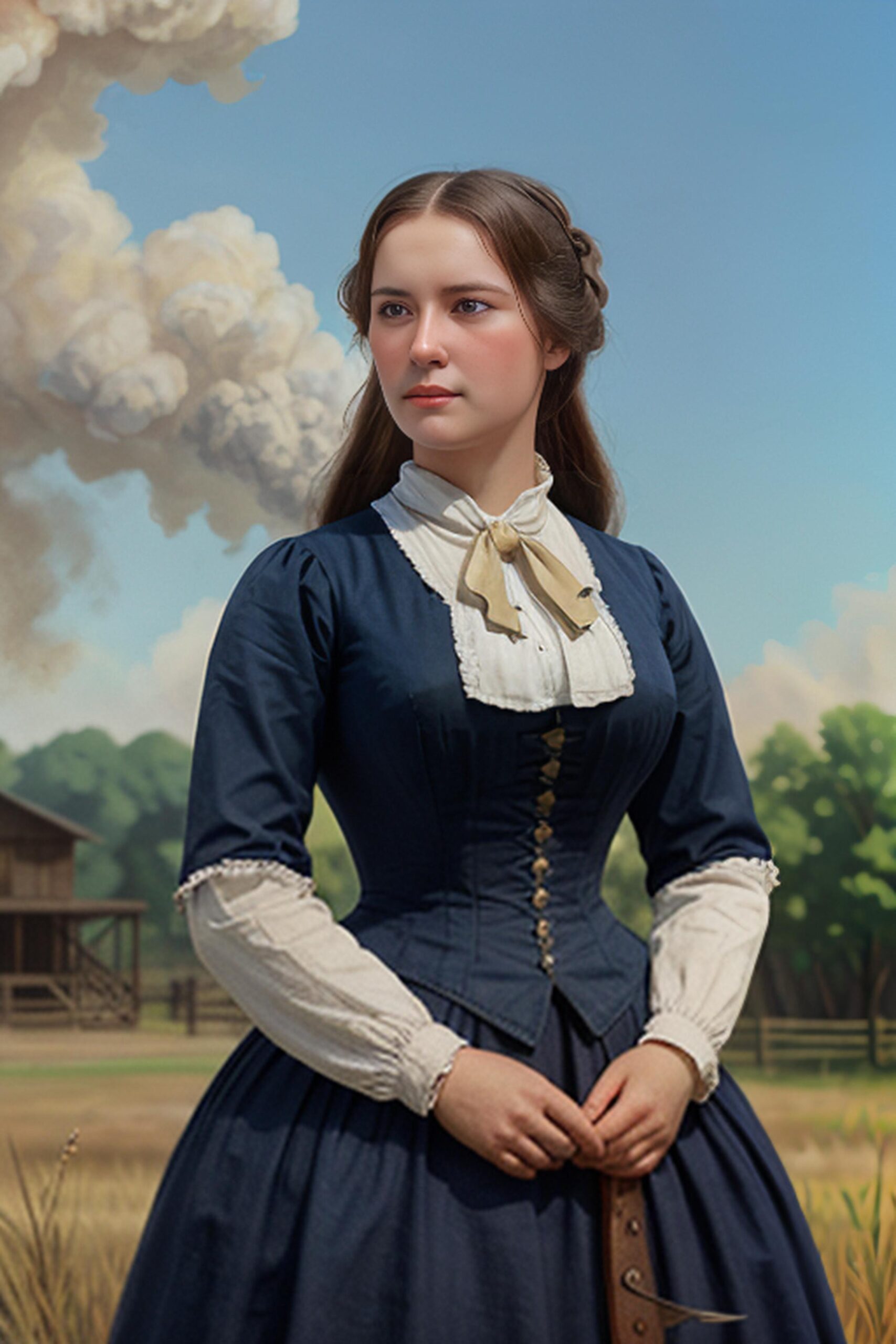
This photography project, titled “Within the Shadows of War,” seeks to cast a new light on the American Civil War, a pivotal moment in history, through the lens of the women who lived through it. It aims to uncover the often-overlooked narratives and experiences of women during this tumultuous period, exploring themes of resilience, loss, and the varied roles women played, both in the backdrop of the battlefield and in the everyday struggle for survival and dignity.
Utilizing near-authentic period clothing and settings, “Within the Shadows of War” brings to life the diverse realities of women during the Civil War era. From the working women away from the conflict to those caught in its direct path, the project encapsulates the strength, sorrow, and complexity of their experiences. Each photograph is more than just a snapshot of re-enactment; it’s a window into the past, telling stories that resonate with emotional depth and historical accuracy.
As the photographer, I draw from a deeply personal connection to this era, influenced by my heritage and my family’s diverse perspectives on history. This project is not just a tribute to the resilience of these women but also an exploration of the lasting impact of the Civil War on American identity and the ongoing dialogues about race, gender, and equality.
“Within the Shadows of War” is an invitation to pause and reflect on a critical chapter of history through a fresh, yet introspective, lens. It’s about understanding the past in its full context and recognizing the enduring strength and spirit of the women who experienced one of the most challenging periods in American history.
Shadows of War
The American Civil War, fought from 1861 to 1865, was a pivotal event in the history of the United States. Its roots lay in deep-seated political, social, and economic differences between the northern and southern states, primarily revolving around the issue of slavery and states’ rights. The election of Abraham Lincoln as President in 1860, who was seen as anti-slavery, led to the secession of eleven southern states, forming the Confederate States of America. The northern states, supporting the Union, were determined to preserve the nation and abolish slavery.
From a modern perspective, the Civil War is often viewed as a struggle for civil rights and equality. The Emancipation Proclamation issued by President Lincoln in 1863, which declared all slaves in Confederate-held territory free, is seen as a significant step towards the abolition of slavery. The war resulted in the defeat of the Confederacy and the preservation of the Union. It also led to the passage of the 13th, 14th, and 15th Amendments to the U.S. Constitution, which abolished slavery, granted citizenship to all persons born or naturalized in the United States (including former slaves), and protected the voting rights of men regardless of race, color, or previous condition of servitude.
The contemporary interpretation of the Civil War also acknowledges the catastrophic human cost of the conflict. It was the deadliest war in American history, resulting in the loss of an estimated 620,000 soldiers and an unknown number of civilian casualties. The war had devastating effects on the Southern states, with major cities like Atlanta and Richmond left in ruins, and the South’s economy was decimated.
Today, the Civil War is also viewed through the lens of racial relations and civil rights in the United States. The legacy of the war and its role in shaping attitudes about race and equality continue to be subjects of debate and reflection. The conflict and its aftermath have been re-examined in the context of the struggle for civil rights, especially in light of ongoing racial disparities and tensions in the U.S.
Furthermore, the war’s impact on women’s roles and societal expectations has gained attention in modern scholarship. Women played critical roles during the war, serving as nurses, spies, and even soldiers. The war challenged traditional gender roles and laid the groundwork for the later women’s suffrage movement.
In summary, the American Civil War is a complex and multifaceted event in American history. Its causes, the conduct of the war itself, and its long-term consequences are still the subject of much study and debate. It is seen as a turning point in the nation’s history, with significant implications for the development of the United States in terms of civil rights, race relations, and national identity.
My father was from Tennessee and he grew up in the 1960s. This added a unique dimension to my understanding of the American Civil War and its legacy. The 1960s were a tumultuous time in American history, marked by significant civil rights movements and a broader re-examination of the country’s history, including the Civil War.
In the South the 1960s was a period of profound change and often intense conflict over civil rights and the legacy of the Civil War. My father’s viewpoints were shaped by this backdrop. During this time, there were still strong sentiments in parts of the South that were sympathetic to the Confederacy, often under the guise of “heritage” or “tradition.” This perspective frequently downplayed or ignored the central role of slavery in the Civil War and the ongoing impact of racial injustice. On the other hand, the civil rights movement brought a renewed scrutiny of the Civil War’s legacy, particularly its implications for racial equality and justice. The 1960s saw significant strides in this area, with landmark legislation like the Civil Rights Act of 1964 and the Voting Rights Act of 1965. These laws were designed to dismantle segregation and protect the voting rights of African Americans, directly addressing the unresolved issues of racial inequality stemming from the Civil War era.
My father’s views on these events and the general atmosphere of the South during this time were not so positive, but his opinions were affected by the broader national dialogue about civil rights and history, which was becoming more prominent.
Today, understanding these diverse perspectives I hope I can enrich my photography project. The legacy of the Civil War is multifaceted and continues to influence American society. Capturing this complexity, especially through the lens of women’s experiences and contributions, can provide a powerful insight into how history shapes our present.
In my photographic exploration of the American Civil War, I plan to address the complex themes of race with a deeply informed, respectful, and sensitive approach. Recognizing the sensitive nature of racial issues during this period, my work will be grounded in thorough historical research to ensure accuracy and context. I aim to represent the diverse experiences and perspectives of people of color during the Civil War, avoiding stereotypes and instead focusing on the nuanced realities of their lives.
Collaboration and consultation with historians, cultural sensitivity experts, and relevant communities will be a cornerstone of my process. This will help ensure that my portrayals are not only historically accurate but also handled with the respect and sensitivity they deserve. While my work aims to be artistically expressive, I am mindful of the impact it may have. My intention is to evoke empathy and educate rather than to shock or sensationalize.
Consent and clear communication will be fundamental when working with models or re-enactors, ensuring they are comfortable and understand the intent behind the project. I am committed to avoiding the exploitation of painful historical events for sensationalism. Instead, the focus of my work will be on respectful commemoration and education.
Where appropriate, my work may draw parallels between the racial issues of the Civil War era and contemporary challenges, inviting reflection on the progress made and the ongoing struggles. The curation of my work, whether in a book or an exhibition, will be executed thoughtfully, considering the sequence of images and the overall narrative, to offer a meaningful and insightful perspective on this pivotal period in American history.
The history of women soldiers in the American Civil War is a fascinating study of bravery, tenacity, and the complexities of gender roles in 19th-century America. Women were not legally allowed to serve as soldiers in the armies of the Union or the Confederacy, but this did not stop many from participating directly in the war.
Many women disguised themselves as men to enlist in the military. Estimates suggest that approximately 400 to 750 women soldiers served in the Civil War. However, exact numbers are difficult to determine due to the secretive nature of their service. Women took on male aliases and concealed their gender through various means to fight alongside men.
The reasons why women disguised themselves and fought vary widely:
Some were motivated by patriotism and a desire to serve their country.
Others followed husbands or loved ones into war, unwilling to be separated.
For some, it was an opportunity to earn a soldier’s pay at a time when economic opportunities for women were limited.
The adventure and the break from traditional female roles were also appealing to some.
Women soldiers were sometimes discovered only after being wounded or killed. Others were found out due to illness or medical examinations. Those who were identified were typically sent away from the front lines, sometimes with a dishonorable discharge, although the dishonor was not always enforced, and in some cases, women received pensions after the war.
A few women became famous for their military service:
Sarah Emma Edmonds who served with the 2nd Michigan Infantry and participated in various battles. She also worked as a nurse and a spy.
Jennie Hodgers, known as Albert Cashier, served with the 95th Illinois Infantry and lived as a man for many years after the war.
Loreta Janeta Velazquez, a Cuban-born woman, claimed to have served as a Confederate soldier under the alias Harry T. Buford.
Women’s contributions as soldiers were largely unrecognized during the war and rarely acknowledged afterward. It was only through pension records, personal diaries, letters, and the occasional press interview that their stories came to light. The Civil War challenged the perceptions of gender roles and demonstrated the ability of women to perform military duties.
These women, through their service, played a part in expanding the understanding of what women could do and laid early groundwork for later discussions about women in the military, which would evolve significantly throughout the next centuries.
“Shadows of War” is a profound photographic exploration that delves into the often hidden and untold stories of women during times of conflict. This project illuminates the experiences of women who, despite being pivotal to the war effort and the fabric of society, have historically remained in the shadows of the more dominant narratives of battle and male heroism.
Throughout history, and especially during the American Civil War, women played multifaceted roles – as caregivers, nurses, supporters, and even direct participants in the conflict. Yet, their stories have often been relegated to footnotes, overshadowed by the tales of generals and soldiers. “Shadows of War” seeks to bring these stories to the forefront, giving voice to the voiceless and painting a more inclusive and comprehensive picture of what conflict truly entails.
The project captures the resilience, the untold suffering, the silent strength, and the often overlooked contributions of women during the Civil War. It highlights how women not only managed homes and families but also took on roles that defied gender norms of the time, such as spying, smuggling, and even dressing as men to fight.
Moreover, “Shadows of War” delves into the nuanced racial dimensions of these experiences. It portrays the diverse struggles and contributions of African American women, who faced the dual challenges of conflict and systemic racial oppression. Their stories are a testament to their unyielding strength and a critical part of the Civil War narrative.
In bringing these hidden stories to light, “Shadows of War” not only pays homage to these women but also invites reflection on the broader impact of conflict on society. It questions the traditional narratives of war, urging a re-examination of our historical understanding through a more inclusive and empathetic lens.
Through this project, we are reminded that in the backdrop of the grand narratives of war, there are countless untold stories of resilience and courage. “Shadows of War” is a tribute to these stories, a visual journey that acknowledges and honors the indispensable role of women in the tapestry of history, particularly in times of conflict.
Photography, to me, is the silent whisperer of untold stories, the visual composer of unsung symphonies, and the silent observer of unseen dances. My journey through the world of photographic art has been a ceaseless exploration of the unseen dialogues between light and shadow, between the said and the unsaid, between the seen and the unseen.
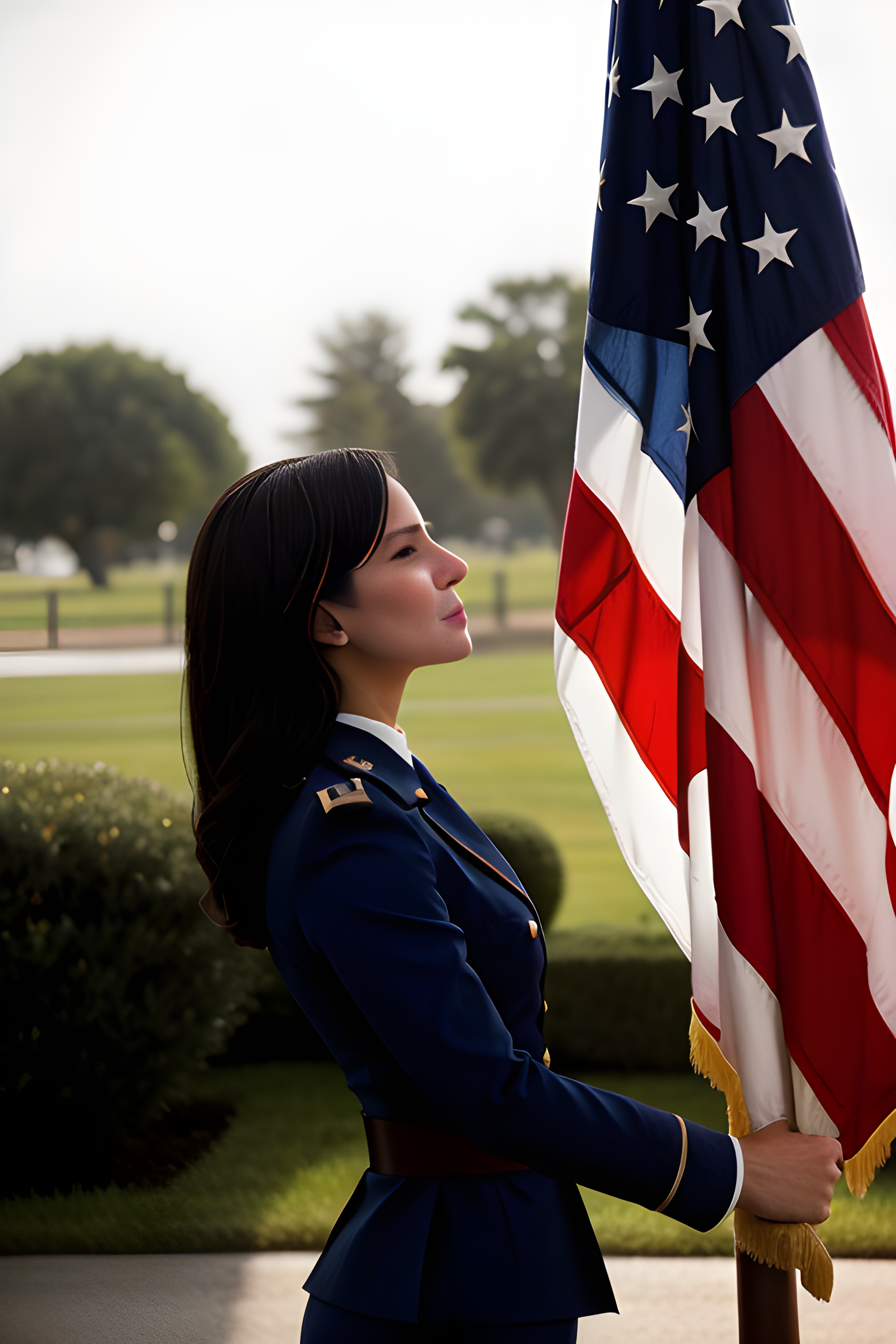
My latest series, American Woman, is a manifestation of this journey, a visual composition of the harmonic convergence between womanhood and patriotism, depicted through the timeless dance of the American flag with the women who breathe life into its stars and stripes. The monochromatic tones of these pieces are my brushstrokes, painting the intricate ballet of emotions, resilience, and unity that resonates in the silent gazes of my subjects.
Each portrait is a mirror reflecting the myriad faces of America, the diverse tapestry of stories woven into the fabric of the nation. The women I have had the honour to photograph come from varied backgrounds—professionals, public sector contributors, ex-forces members—each adding a unique note to the symphonic rendition of American identity. Their stories, their journeys are the unspoken verses of the American ballad, their spirits the undying flame of the American dream.
The subtlety of back and side lighting in my work is a purposeful choice, a creative whisper allowing the dance of shadows and light to paint the unexplored depths, the unvoiced thoughts, and the untraveled paths of my subjects’ souls. It is in these shadows that the silent dialogues, the untold narratives, and the unseen emotions unfold, inviting the observer to a dance, a waltz through the harmonious interplay of vulnerability and strength.
My journey is not merely about capturing moments; it’s about conversing with souls, about listening to the unheard, about feeling the unexpressed. It’s about exploring the bond between the symbol and the bearer, about painting the dance between the flag and the spirit, about composing the symphony between the nation and its daughters.
American Woman is a reflection of my voyage through the realms of light and shadow, a visual symphony of the untold, a dance of the unseen. It is my ode to the harmonious convergence of womanhood and patriotism, my tribute to the silent singers of the American ballad, and my invitation to the world to join in the eternal dance of shadows and light, to explore the unexplored, and to listen to the unheard symphony of the stars and stripes.