
Category: Review

  • Mars

    Mars

    What to Read about the Red ?

    Mars, the red planet, has been a fascination for humans for centuries. With recent advancements in space technology, the possibility of humans visiting and even colonizing Mars in the near future is becoming increasingly more realistic. However, long before humans had the capability to physically travel to Mars, authors have been exploring the planet through the lens of science fiction literature.

    Mars has served as a backdrop for countless science fiction stories, ranging from classic works like H.G. Wells’ “War of the Worlds” to contemporary works like Andy Weir’s “The Martian.” Through these stories, authors have explored the potential challenges and opportunities that would come with colonizing Mars. These stories have also given readers a chance to experience the red planet and its mysteries in ways that would otherwise be impossible.

    One of the most notable authors of Mars-based science fiction is Kim Stanley Robinson. His “Mars Trilogy” – “Red Mars,” “Green Mars,” and “Blue Mars” – is considered a classic of the genre. In these novels, Robinson explores the social, political, and environmental implications of human colonization on Mars. The books are widely regarded for their attention to scientific detail and their nuanced exploration of complex ethical and social issues.

    Other notable works of Martian science fiction include “The War of the Worlds” by H.G. Wells, “Stranger in a Strange Land” by Robert A. Heinlein, and “The Martian” by Andy Weir. These novels explore a range of topics, from the challenges of surviving on an alien planet to the potential consequences of human colonization.

    Through these works of science fiction, readers are able to experience the thrill of exploration and discovery on a planet that is still largely unknown to humans. These stories offer insights into the potential opportunities and challenges that come with human exploration and colonization of Mars, as well as the ethical dilemmas that may arise.

    As we continue to explore the mysteries of the universe, Mars will remain a key destination for both scientific and literary exploration. For anyone interested in the possibilities of space exploration and the wonders of science fiction, Mars-based novels offer an exciting and thought-provoking journey to the red planet and beyond.

    Reading list

    • The Martian by Andy Weir – A science fiction novel about an astronaut who is stranded on Mars and must figure out how to survive until he can be rescued.
    • Red Rising by Pierce Brown – A science fiction novel set in a dystopian future where society is divided into color-coded classes, with the protagonist rising from the lowest class to lead a rebellion against the ruling class on Mars.
    • The War of the Worlds by H.G. Wells – A classic science fiction novel in which Martians invade Earth and attempt to conquer it.
    • The Mars Trilogy by Kim Stanley Robinson – A series of three science fiction novels that explore the colonization and terraforming of Mars by humans.
    • A Princess of Mars by Edgar Rice Burroughs – A classic science fiction novel about a Confederate soldier who is transported to Mars and becomes embroiled in the planet’s conflicts.
    • Martian Time-Slip by Philip K. Dick – A science fiction novel set on a Mars colony where time moves differently, and the protagonist becomes embroiled in a conflict between two groups vying for control.
    • Red Planet by Robert A. Heinlein – A science fiction novel set on a Mars colony where a group of teenagers uncover a conspiracy that threatens the safety of the colony.
    • Stranger in a Strange Land by Robert A. Heinlein – A science fiction novel about a human raised on Mars who returns to Earth and becomes embroiled in a cultural and political revolution.
    • The Sands of Mars by Arthur C. Clarke – A science fiction novel set on a human colony on Mars, where a journalist uncovers a sinister plot.
    • The Martian Chronicles by Ray Bradbury – A collection of interconnected short stories that explore the colonization and eventual abandonment of Mars by humans.
    • The Space Trilogy by C.S. Lewis – A series of three science fiction novels that includes a visit to Mars as part of a larger cosmic adventure.
    • The Memory of Mars by Raymond F. Jones – A science fiction novel about a group of scientists who discover ancient Martian artifacts that reveal the planet’s past and future.
    • Mars by Ben Bova – A science fiction novel about a journalist who travels to Mars to cover the first human mission to the planet and becomes embroiled in political and personal drama.
    • The Light of Other Days by Arthur C. Clarke and Stephen Baxter – A science fiction novel that explores the consequences of a technology that allows people to view any point in space and time, including the past and future of Mars.
    • Martian Time Jump by Mike Resnick – A science fiction novel about a team of scientists who travel back in time to ancient Mars and become embroiled in a power struggle between rival factions.
    • Mission to Mars by Buzz Aldrin and John Barnes – A science fiction novel that imagines a human mission to Mars in the near future and explores the personal and political struggles of the crew.
    • Old Mars edited by George R.R. Martin and Gardner Dozois – A collection of short stories by various authors that imagines a version of Mars as it was popularly imagined in early science fiction, including ancient civilizations, lost cities, and alien encounters.
    • Mars Crossing by Geoffrey A. Landis – A science fiction novel about a group of astronauts who must navigate a treacherous journey to Mars in order to save a stranded colleague.
    • The Red Trilogy by Linda Nagata – A series of three science fiction novels that explore a near-future conflict between China and the United States on Mars.
    • The Martian Race by Gregory Benford – A science fiction novel that imagines a global competition to be the first to send humans to Mars, and the personal and political struggles of the competing teams.
    • The First Men in the Moon by H.G. Wells – A classic science fiction novel that explores a journey to the moon and encounters with alien life, including a trip to Mars.
    • The Children of Mars by David Gerrold – A science fiction novel that imagines a future where humans have colonized Mars, and explores the personal and societal consequences of genetic engineering.
    • The Ghosts of Mars by George Alec Effinger – A science fiction novel that imagines a future where Mars has been terraformed, and explores the personal and political struggles of the colonists.
    • The Expanse series by James S.A. Corey – A series of science fiction novels that includes Mars as one of the major settings, and explores the political and personal conflicts between Earth, Mars, and the outer planets.
    • The Medusa Chronicles by Alastair Reynolds and Stephen Baxter – A science fiction novel that explores a journey to Mars and encounters with ancient alien technology.
    • The City of the Chasch by Jack Vance – A science fiction novel that imagines a future where Mars is inhabited by a variety of alien species, and explores the conflict between them and a human explorer.
    • The Martian Engineer’s Notebook by Margaret Atwood – A science fiction novella that imagines a future where humans have colonized Mars, and explores the personal and philosophical struggles of a Martian engineer.

    The “Red” trilogy

    Linda Nagata is a science fiction author known for her imaginative and thought-provoking works. She has published a number of novels and short stories, including several set in the near-future world of her “Red” trilogy.

    The “Red” trilogy includes three novels – “The Red: First Light,” “The Trials,” and “Going Dark” – that explore a near-future conflict between the United States and China, with Mars serving as a major setting. The series follows a team of soldiers equipped with advanced combat technology as they struggle to navigate the political and military complexities of the conflict.

    Nagata’s other works include “The Bohr Maker,” which won the Locus Award for Best First Novel, and its sequels “Deception Well” and “Vast.” These novels are set in a future where biotechnology has advanced to the point where individuals can modify their bodies and minds in radical ways, leading to social and political upheaval.

    Nagata’s works are known for their attention to detail, complex characters, and thought-provoking themes. She often explores the intersection of technology, politics, and human nature, and her stories frequently feature strong female characters who navigate complex ethical dilemmas.

    Overall, if you are a fan of thought-provoking, character-driven science fiction, Linda Nagata’s novels are definitely worth checking out.

    “Mars Trilogy”

    Kim Stanley Robinson is a science fiction author known for his detailed and meticulously researched works that often explore themes of ecological and social change. Robinson has written a number of novels set on Mars, including his “Mars Trilogy” – “Red Mars,” “Green Mars,” and “Blue Mars” – which follow a group of colonists as they establish a human settlement on the planet and navigate the political and environmental challenges of living in an alien environment.

    Robinson’s depiction of Mars is both scientifically accurate and imaginative, taking into account the real-world challenges of living on the planet while also incorporating fantastical elements such as terraforming and the discovery of alien life. His characters are complex and multi-dimensional, grappling with the personal and political implications of their actions in a rapidly changing world.

    One of Robinson’s strengths as a writer is his ability to weave together scientific and technical details with engaging storytelling and deep character development. His novels often incorporate elements of hard science fiction, exploring the real-world implications of emerging technologies and scientific discoveries, while also exploring the psychological and emotional impact of these changes on individual human beings.

    Overall, Robinson’s works are known for their imaginative world-building, complex characters, and insightful explorations of the implications of scientific and technological change. If you are a fan of science fiction that grapples with big ideas and explores the intersection of science and society, his novels set on Mars are definitely worth checking out.

    Common Mars Themes

    The lessons from novels set on Mars can vary depending on the specific work in question, but there are a few themes and messages that tend to emerge across many of these stories. Here are a few lessons that can be gleaned from reading Martian novels:

    1. The importance of science and exploration: Many Martian novels emphasize the importance of scientific research and exploration in expanding human knowledge and understanding of the universe. By setting stories on Mars – a planet that has long been a focus of scientific study and exploration – these novels highlight the ways in which science and exploration can push the boundaries of human understanding and inspire new discoveries.
    2. The challenges of living in a harsh and unfamiliar environment: Mars is an incredibly challenging environment, with harsh conditions and a lack of many of the resources necessary for human survival. Martian novels often explore the difficulties and dangers of living in such an environment, emphasizing the need for careful planning and innovation in order to ensure survival.
    3. The potential consequences of human actions on other planets: Many Martian novels explore the ways in which human actions on other planets can have far-reaching consequences, both for the planet itself and for the people who live there. By examining the environmental and social impact of human colonization and exploration, these novels highlight the need for responsible stewardship of our resources and our environment.
    4. The power of human resilience and adaptability: Despite the challenges of living on Mars, many Martian novels emphasize the resilience and adaptability of human beings in the face of adversity. By showcasing characters who are able to innovate and overcome obstacles in order to survive, these novels highlight the ways in which human beings are capable of overcoming even the most daunting challenges.

    Overall, Martian novels offer a rich and thought-provoking exploration of science, human nature, and the challenges of exploration and discovery. By examining the lessons and themes that emerge from these works, readers can gain a deeper understanding of the potential of science and exploration, as well as the importance of responsible stewardship and ethical decision-making in the face of new frontiers.
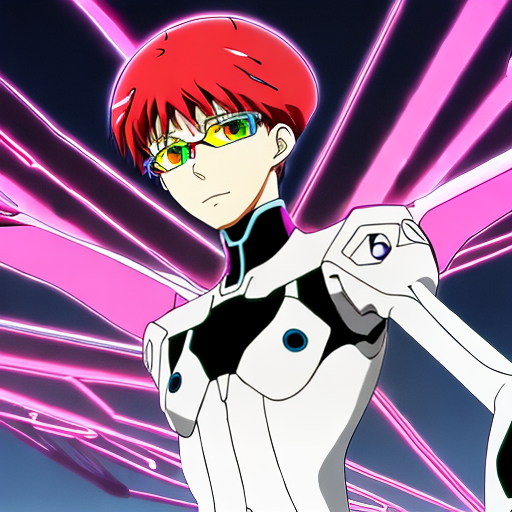
  • Neon Genesis Evangelion

    Neon Genesis Evangelion

    “I mustn’t run away. I mustn’t run away. I mustn’t run away.”

    – Shinji

    “Neon Genesis Evangelion” is a Japanese animated television series that originally aired from 1995 to 1996. The plot follows a young boy named Shinji Ikari who is recruited by his father to pilot a giant bio-machine called an “Evangelion” to defend the futuristic city of Tokyo-3 from monstrous beings known as “Angels.”

    As the story progresses, Shinji becomes embroiled in a complex web of interpersonal relationships with the other Evangelion pilots, including his fellow pilots Asuka Langley Soryu and Rei Ayanami, as well as his father Gendo Ikari and the mysterious organization known as NERV.

    The series explores themes of identity, loneliness, and the nature of humanity, and features a number of dramatic plot twists and revelations as the characters struggle to come to terms with their place in the world and the roles they are forced to play in the ongoing conflict with the Angels.

    Themes

    “Neon Genesis Evangelion” is known for exploring complex and multi-layered themes throughout its story. Some of the most prominent themes of the series include:

    Identity: The theme of identity is a central focus of “Neon Genesis Evangelion.” Characters struggle with issues of self-worth, self-discovery, and the search for a sense of purpose in a world that is constantly changing. This is particularly true for the protagonist, Shinji, who grapples with feelings of isolation and insecurity throughout the series.

    Loneliness: The theme of loneliness is also a recurring motif in “Neon Genesis Evangelion.” Many of the characters struggle with feelings of isolation and disconnectedness, as they try to navigate the complexities of their relationships with others. This sense of loneliness is often expressed through the imagery of empty city streets and deserted landscapes.

    Human nature: The series also explores the nature of humanity, and what it means to be human in a world that is often harsh and unforgiving. Characters are forced to confront their own weaknesses and flaws, as they struggle to come to terms with the challenges they face.

    Trauma: Trauma is a central theme in “Neon Genesis Evangelion.” Many of the characters have experienced significant trauma in their past, and this has shaped who they are as people. The series explores how characters cope with trauma, and the ways in which it can affect their relationships with others.

    Religion and spirituality: The series features a number of religious and spiritual themes, including references to Christian and Jewish symbolism. These themes are used to explore the idea of the human soul, and the struggle between good and evil.

    “Neon Genesis Evangelion” is a complex and thought-provoking series that delves into a wide range of themes and ideas. Its exploration of these themes has made it a popular and enduring work of science fiction.

    Pilots

    In “Neon Genesis Evangelion,” there are several main characters who pilot the Evangelions:

    Shinji Ikari: The series’ protagonist, who is initially reluctant to pilot an Eva but eventually becomes a skilled pilot. Shinji is the son of NERV commander Gendo Ikari and has a strained relationship with his father.

    Asuka Langley Soryu: A skilled pilot who is brought in from Germany to help fight the Angels. Asuka is initially confident and self-assured but struggles with personal issues as the series progresses.

    Rei Ayanami: A quiet and reserved pilot who is initially shrouded in mystery. Rei is revealed to be a clone of Shinji’s mother and has a complex relationship with Gendo Ikari.

    Mari Makinami Illustrious: A new character introduced in the “Rebuild of Evangelion” film series. Mari is a cheerful and energetic pilot who enjoys piloting Evas and often behaves in a reckless manner.

    Each pilot has their own unique personality and backstory, and their relationships with each other and with their Evas are central to the series’ themes and plot.

    EVAs

    The pilots operate giant bio-machines called “Evangelions” (often shortened to “Evas”). These Evas are humanoid in appearance and are the only weapons humanity has that are capable of standing up to the Angels.

    The Evas are unique in that they are not simply machines, but rather living beings that are grown in laboratories. They are piloted by specially trained teenagers, who are selected based on their compatibility with the Eva’s biology and technology.

    Each Eva has a distinctive appearance and set of abilities, and the pilots use these abilities to fight the Angels. The Evas are armed with an array of advanced weapons, including knives, guns, and energy weapons.

    Throughout the series, the relationship between the pilots and their Evas is explored in depth. The pilots must synchronize with their Evas in order to control them, and this process can be mentally and physically taxing. The relationship between the pilots and their Evas is often portrayed as deeply personal and emotional, with the two entities becoming deeply intertwined over the course of the series.

    Angels

    The Angels are a series of monstrous beings that threaten humanity’s existence. They are depicted as massive, humanoid creatures with unique abilities and powers that make them extremely difficult to defeat.

    The Angels are believed to be extraterrestrial in origin, and their arrival on Earth is seen as an existential threat to humanity. They are named after various biblical angels and other spiritual figures, such as Sachiel, Ramiel, and Zeruel.

    Each Angel has a unique physical appearance and set of abilities, such as the ability to manipulate gravity, generate powerful energy fields, or use sonic attacks. The pilots of the Evangelion units are tasked with fighting the Angels, using their own unique abilities and the advanced technology of their bio-machines to try and defeat them.

    As the series progresses, the true nature and origins of the Angels are gradually revealed, leading to a number of unexpected plot twists and revelations.

    Endings

    “Neon Genesis Evangelion” has several different endings, each of which is controversial and open to interpretation.

    TV Series Ending: The original ending of the TV series is famously confusing and surreal, with abstract imagery and heavy use of symbolism. It suggests that the main character, Shinji, is able to accept his flaws and fears and find a sense of peace and understanding.

    The End of Evangelion: This is an alternate ending that was created in response to the controversial TV ending. The End of Evangelion is a feature-length film that provides a more conclusive and action-packed finale, with intense battles and dramatic character revelations. The ending of the film is still open to interpretation, but it suggests a dark and nihilistic view of humanity’s fate.

    Rebuild of Evangelion: A series of films that retell and re-imagine the events of the original series. The Rebuild films introduce new characters and plot twists and provide a different take on the ending of the story. The fourth and final film in the series, “Evangelion: 3.0+1.0 Thrice Upon a Time,” was released in 2021 and features a controversial and divisive ending that leaves many questions unanswered.

    The various endings of “Neon Genesis Evangelion” are complex, thought-provoking, and open to interpretation. Each ending provides a unique perspective on the story and its characters, and fans continue to debate their meaning and significance to this day.

    Meaning

    “Neon Genesis Evangelion” is a complex and deeply symbolic work that explores a wide range of themes related to psychology, spirituality, and human relationships. The term “Eva” can be interpreted in a variety of ways within this context, and different viewers and critics may have their own unique interpretations. Here are a few possible ways to deconstruct the meaning of “Eva” in the context of the series:

    Biomechanical Duality: One of the most prominent themes in “Neon Genesis Evangelion” is the idea of a duality between organic and mechanical elements. The Evas are a perfect embodiment of this theme, as they are living beings that are also heavily augmented with mechanical components. The term “Eva” can be seen as a reference to this duality, as it is a shortened form of “Evangelion,” which itself is derived from the Greek word “euangelion,” meaning “good news” or “gospel.”

    Motherhood and Rebirth: Another key theme in the series is the idea of motherhood and birth. The Evas are created using the genetic material of various characters in the series, including Shinji’s mother. The term “Eva” can be seen as a reference to the biblical figure of Eve, who is often associated with motherhood and the idea of rebirth or renewal.

    Human Connection and Empathy: Throughout the series, the relationship between the pilots and their Evas is explored in depth, with the two entities often becoming deeply intertwined. The term “Eva” can be interpreted as a reference to the Hebrew name “Eve,” which means “life” or “living.” This can be seen as a nod to the idea that the Evas are not just machines, but living beings that are capable of forming deep connections with their human pilots.

    Existential Crisis and Spiritual Awakening: Finally, the term “Eva” can also be seen as a reference to the concept of “Eve,” as in the first woman in the biblical creation story. This can tie into the series’ exploration of existential crisis and spiritual awakening, as the characters are forced to confront their deepest fears and anxieties in order to grow and evolve. The Evas themselves can be seen as a manifestation of this process, as they are created to combat the Angels and protect humanity from destruction. In this way, the term “Eva” can be interpreted as a symbol of hope and redemption in the face of overwhelming despair and chaos.

    The meaning of “Eva” in “Neon Genesis Evangelion” is multi-layered and open to interpretation. It can be seen as a reference to themes related to duality, motherhood, human connection, existential crisis, and spiritual awakening, among others. Each viewer may have their own unique interpretation of the term, based on their individual reading of the series and its complex symbolism.

    Hideaki Anno

    “Neon Genesis Evangelion” was created by Hideaki Anno, who served as the series’ director and writer. Anno’s intent with the series has been a topic of much discussion and debate, as the series is known for its complex and often ambiguous storyline.

    One of Anno’s stated goals with the series was to create a work that would reflect the struggles and anxieties of young people in Japan at the time of the series’ creation. The series explores themes related to depression, isolation, and self-doubt, which were common issues faced by many young people in Japan during the 1990s.

    Anno has also stated that he wanted to create a work that would challenge traditional ideas about anime and mecha series. “Neon Genesis Evangelion” features many of the traditional elements of mecha anime, such as giant robots and epic battles, but subverts these tropes by focusing more on the psychological struggles of the characters and the impact of the battles on their emotions and relationships.

    Anno’s intent with “Neon Genesis Evangelion” was to create a work that would both reflect the concerns of young people in Japan at the time and challenge traditional ideas about anime and mecha series. The series’ enduring popularity and impact suggest that he succeeded in his goals, creating a work that continues to captivate and inspire audiences around the world.

    Appeal

    The enduring appeal of “Neon Genesis Evangelion” can be attributed to several factors. Firstly, the series’ complex and thought-provoking storyline, which explores a range of themes related to psychology, spirituality, and human relationships, has resonated with audiences around the world. The characters are well-developed and relatable, and the series’ use of symbolism and metaphor has encouraged viewers to engage with the story on a deeper level.

    The series’ animation style and visual effects were groundbreaking for their time, and the iconic designs of the Evas and Angels have become instantly recognizable symbols of the series. The action sequences are intense and well-choreographed, and the use of music and sound design add to the overall impact of the series.

    Finally, the controversial and open-ended nature of the series’ various endings has encouraged ongoing discussion and debate among fans, keeping the series relevant and intriguing long after its initial release. “Neon Genesis Evangelion” has spawned countless spin-off works, including manga, light novels, video games, and a recent series of films, ensuring that the franchise will continue to capture the imaginations of audiences for years to come.

    “I mustn’t run away. I mustn’t run away. I mustn’t run away.”

    This line is repeated by Shinji multiple times throughout the series, often when he is feeling overwhelmed or afraid. The quote is significant because it speaks to Shinji’s struggle with anxiety and his tendency to avoid difficult situations or confrontations. By repeating this mantra, Shinji is reminding himself that he cannot give in to his fears and must face his problems head-on, even when it is difficult or painful to do so. The quote has become an iconic line in the series and is often referenced by fans as a reminder to stay strong and face their own challenges with courage and determination.