Author: Amanda Girard

  • Astrani

    The prospect of encountering extra-terrestrial life has long captivated the human imagination, with much speculation centered on how such an encounter might unfold. A prevailing notion among scientists and scholars is that the first indication of a technologically advanced civilization beyond Earth would more likely come in the form of signals or signs rather than a physical visitation. This perspective is rooted in the vast distances that separate the stars, distances so immense that even at the speed of light, travel between them would require timescales far beyond human lifespans.

    Should we detect a signal from a distant civilization, the event would undoubtedly be of monumental significance, marking the first confirmed existence of other intelligent life in the universe. However, the vast distances involved would also imbue the discovery with a certain degree of patience. Any response humanity might craft and send would take years, decades, or even centuries to reach its intended recipients, affording us ample time to contemplate and deliberate on the content of our message. This slow pace of interstellar communication would ensure that our dialogue with an extra-terrestrial civilization would unfold over generations, a gradual exchange allowing for careful consideration and reflection.

    In contrast, the scenario of an alien visitation carries with it far more immediate and profound implications. For an extraterrestrial civilization to physically reach Earth, they would need to possess technological capabilities far beyond our current understanding, potentially including faster-than-light travel or other means of traversing the vast gulfs of space in a practical timeframe. Such an event would unequivocally demonstrate that the visiting civilization has surpassed us not only in terms of communication technology but in their mastery of space travel and possibly other areas of science and engineering we have yet to conceive.

    An alien visitation would, therefore, confront humanity with an immediate and direct encounter with a civilization potentially millennia or more ahead of our own. The implications of this disparity in technological advancement would be profound, touching on every aspect of human society, from our scientific and philosophical understanding of the universe to our geopolitical structures and existential self-perception.

    The presence of such advanced beings on our doorstep would raise urgent questions about their intentions, the nature of their interest in Earth, and the potential risks and benefits of engaging with them. Unlike the receipt of a distant signal, which allows for a measured response, an alien visitation would thrust humanity into a scenario requiring immediate action and adaptation to a new reality, one in which we are no longer the most advanced entities within our realm of awareness.

    In either scenario, the discovery of extra-terrestrial intelligence would irrevocably change our understanding of our place in the cosmos, challenging us to rethink our perspectives on life, intelligence, and the nature of civilization itself.

    The unexpected arrival of a alien craft, crash-landing on Earth, would undoubtedly provoke a whirlwind of questions, concerns, and debates, particularly regarding the intent of the extra-terrestrial beings involved. The distinction between benign and hostile intentions would be paramount, shaping the global response to such an unprecedented event. This dilemma mirrors the larger debate within the scientific and philosophical communities about the wisdom of actively seeking contact with extra-terrestrial intelligences versus the more cautious approach of passively scanning for signs of their existence.

    In the event of a flying saucer making an unscheduled landing on our planet, the absence of established protocols or legal frameworks for dealing with extra-terrestrial encounters would thrust the host country into a position of unforeseen responsibility. The situation would be mired in complexity, particularly if the craft were to be downed by defensive measures, raising questions of sovereignty, jurisdiction, and international law.

    The country where the craft landed would find itself at the epicenter of a global dialogue, tasked with navigating the initial communication and response efforts. This would entail making critical decisions on containment, investigation, and potentially, diplomacy, all under the watchful eyes of the world. The lack of precedent for such an event would likely lead to an ad hoc coalition of nations and experts, pooling resources and knowledge to address the myriad challenges posed by the extra-terrestrial presence.

    The ramifications of these initial actions would be profound, influencing not only the immediate tactical responses but also setting the tone for humanity’s future interactions with extra-terrestrial beings. The balance between safeguarding Earth and extending an olive branch of peace and curiosity would be delicate, requiring a nuanced understanding of the potential risks and benefits involved.

    In essence, its sudden appearance on Earth would serve as a catalyst for an urgent reassessment of our preparedness for contact with extraterrestrial life. It would compel nations to consider not only the scientific and security implications but also the ethical and philosophical dimensions of such an encounter. The need for a collaborative, thoughtful approach to this unparalleled challenge would be paramount, highlighting the interconnectedness of our world and the shared destiny of humanity as we face the unknown together.

    Outline

    An allegory involving aliens often serves as a powerful tool for exploring complex human issues within a speculative or science fiction framework. By introducing extra-terrestrial beings into a narrative, we can delve into themes such as cultural diversity, fear of the unknown, colonialism, and the essence of humanity itself, all while maintaining a veil of detachment afforded by the alien setting. Here’s a conceptual outline for an allegory using aliens:

    In a not-so-distant future, Earth receives its first visitors from beyond the stars. These aliens, known as the “Astrani,” are ethereal beings of light and energy, their forms shimmering and ever-changing, a stark contrast to the corporeal existence of humanity. Their arrival, silent and unheralded, sends ripples through the fabric of human society, their presence a mirror reflecting our deepest fears and highest hopes.

    The Astrani, communicating through a form of telepathy that transcends verbal language, express no overt intentions of harm or domination. Instead, they express a desire to observe, to learn of humanity’s art, culture, and ways of life. Yet, their inscrutable nature and incomprehensible technology provoke a spectrum of reactions across the globe.

    In one part of the story, a small town becomes the focal point of the Astrani’s attention. The townsfolk, embodying a microcosm of human diversity and contradiction, respond in varied ways. Some see the Astrani as angels, harbingers of a new era of enlightenment and peace. Others view them with suspicion and fear, their alienness a threat to the established order and a challenge to human primacy.

    As the narrative unfolds, the Astrani’s interactions with the town expose underlying tensions and prejudices within the community. Their mere presence acts as a catalyst, bringing to the surface latent conflicts and forcing the townsfolk to confront their biases, fears, and aspirations.

    A key moment occurs when the Astrani, in their desire to understand human emotion, inadvertently cause a crisis, leading to a confrontation that threatens to escalate into violence. It is in this moment of tension that the true message of the allegory emerges: the realization that the ‘alien’ is not the Astrani, but the fear, prejudice, and misunderstanding that reside within each human heart.

    The resolution comes not through a grand gesture or battle, but through quiet understanding and empathy. A single act of kindness towards the Astrani, misunderstood and seen through the prism of human fear, becomes the turning point, leading to a fragile but hopeful bridge between species.

    This allegory, using the motif of alien visitors, allows us to explore the notion that the ‘alien’ or ‘other’ is often a reflection of our inner selves, projected onto those we do not understand. It challenges us to look beyond the surface, to see the common threads of existence that bind all sentient beings, and to recognize that understanding, empathy, and kindness are universal languages that transcend the boundaries of worlds.

  • Mandy at Rosewood

    In the college town of Willow Creek, nestled between rolling hills and sparkling rivers, stood the prestigious Rosewood Boarding School for Girls. Gratiam Alens, Resilientiam Fovens.

    It was here that Mandy, a young woman with a heart full of dreams and a spirit of independence, found herself feeling out of place amidst the grandeur and strict routines of the school. Though she often felt overshadowed by her more extroverted peers, Mandy possessed a keen intellect and a creative spirit. It was in the school’s fencing class that Mandy discovered her passion and a sense of purpose.

    Mandy, with her chestnut hair often tied back in a practical ponytail, had always felt slightly shy and overshadowed by her more outgoing classmates. Despite her intelligence and creativity, she struggled to find her niche in the school’s myriad of clubs and activities.

    However, everything changed the day Mandy stepped into the fencing class. Initially unsure, she was mesmerized by the elegant dance of the fencers, their swords flashing in the sunlight streaming through the large windows. Mandy’s heart raced as she took up the épée for the first time. In that moment, she found a passion she never knew she had.

    Under the tutelage of Madame Duval, a former Olympic fencer, Mandy’s natural talent for fencing blossomed. She moved with grace and precision, her épée becoming an extension of her arm. As her skills sharpened, so did her confidence, spreading into all aspects of her life.

    As weeks turned into months, Mandy’s skill with the sword grew exponentially. She became more confident, not just in fencing, but in all aspects of her life. Madame Duval, saw great potential in her and encouraged her to enter the national junior fencing championship.

    Mandy was becoming young woman of quiet determination and her newfound passion for fencing, meant she was about to encounter a formidable challenge in the form of a rival, Vanessa.

    Vanessa, with her sleek raven hair and piercing gaze, was known throughout the school as a fencing prodigy. She was as confident as she was skilled, often seen practicing her lunges and parries with a fierce intensity. Her presence in the fencing class brought a competitive edge to every session, and it wasn’t long before a rivalry developed between her and Mandy.

    Despite her initial shyness, Mandy’s talent in fencing was undeniable. Her style contrasted starkly with Vanessa’s; where Vanessa was aggressive and bold, Mandy was fluid and precise. Their duels became the highlight of the class, drawing spectators from all over the school.

    The rivalry reached its peak in the lead-up to the national junior fencing championship. Both Mandy and Vanessa were selected to represent Rosewood, and it was clear that the coming competition between them would be the talk of the tournament.

    The grand hall of Rosewood Boarding School was abuzz with excitement. Students and faculty alike had gathered to witness the much-anticipated fencing duel between Mandy and Vanessa, the school’s top fencers. The air was thick with anticipation as the two rivals took their positions on the piste, their fencing foils gleaming under the bright lights.

    Mandy, known for her fluid and precise style, faced Vanessa, whose aggressive and bold technique had won her many accolades. As the referee signalled the start of the match, a hush fell over the crowd.

    The duel began with a series of swift exchanges. Mandy’s movements were graceful and calculated, each lunge and parry executed with meticulous care. Vanessa, on the other hand, attacked with ferocity, her blade moving in rapid, forceful arcs.

    The tension between the two fencers was palpable. With each passing moment, their movements became more intense, the clashing of their foils echoing through the hall. The audience was captivated by the display of skill and agility.

    As the match progressed, Vanessa’s strikes became more aggressive. Mandy countered skilfully, but the relentless assault started to take its toll. Vanessa’s competitive spirit flared, her desire to win overshadowing her judgment.

    In a moment charged with intensity, Vanessa executed a particularly aggressive manoeuvre. Her foil, moving with excessive force, struck Mandy in an illegal move. The blow was unexpected and forceful, catching Mandy off-guard.

    The impact knocked Mandy off her feet, and she hit the ground with a thud, her head striking the floor. The hall erupted in gasps and cries of alarm. Vanessa, realizing the gravity of her action, dropped her foil and rushed to Mandy’s side.

    Mandy lay motionless, unconscious from the impact. The medical team was called immediately, and the hall was cleared to give them space to attend to her.

    Vanessa stood by, her face a mask of worry and regret. The rivalry, which had always been a source of motivation and challenge, had escalated beyond her intentions. In that moment of recklessness, she had not only violated the rules of the sport but had also endangered her fellow fencer.

    Later , Mandy goes to Madame Duval Office. The fencing instructor is calmly making a pot of English Tea.

    Madame Duval:  “Mandy, please sit down, could I have a word with you?”

    Mandy: “Of course, Madame Duval. Is everything okay?”

    Madame Duval: “Yes, everything is fine. I wanted to talk to you about your progress. You’ve been showing remarkable improvement in your technique.”

    Mandy: (Smiling shyly) “Thank you, Madame. I’ve been practicing a lot, trying to refine my movements.”

    Madame Duval: “I’ve noticed. Your dedication is admirable. But there’s something else I wanted to discuss. Your last match with Vanessa… it was intense.”

    Mandy: “Yes, it was. I’ve been reflecting on that a lot. It was… a bit overwhelming.”

    Madame Duval: “Understandable. Fencing is as much a mental game as it is physical. It’s crucial to maintain focus and control, especially in high-pressure situations.”

    Mandy: “I’ve been working on that, trying to stay calm and think a few steps ahead.”

    Madame Duval: “Good. Remember, fencing isn’t just about attacking. It’s about outsmarting your opponent, knowing when to strike and when to wait.”

    Mandy: “I’ll keep that in mind. Sometimes I get caught up in the moment.”

    Madame Duval: “That’s part of the learning process. Also, I want you to remember that what happened with Vanessa was an accident. It’s important to not hold onto any grudges.”

    Mandy: “I know. I’ve been writing about it in my journal, trying to sort through my feelings.”

    Madame Duval: “That’s an excellent way to process it. Keep using that insight. It will make you not just a better fencer, but a stronger person.”

    Mandy: “Thank you, Madame Duval. I really appreciate your guidance.”

    Madame Duval: “You’re welcome, Mandy. Keep up the good work. I see great potential in you, not just in your skill with the sword, but in your character as well.”

    Mandy: (Nodding determinedly) “I won’t let you down.”

    They share a moment of mutual respect before parting ways, Mandy feels inspired and Madame Duval proud of her student’s growth.

    In the quiet sanctuary of her room Mandy had maintained a special journal – a little repository of her thoughts, experiences, and growing expertise in fencing. This journal began to be much more than a mere notebook; it was a reflection of her journey, a personal guide through the art and science of fencing.

    The cover of the journal was a deep, forest green, worn at the edges from frequent use. Inside, Mandy’s handwriting filled the pages – a mix of meticulous notes, sketches of fencing poses and movements, and reflections on her matches and training sessions.

    The initial pages of the journal were filled with the basics of fencing. Mandy had noted down the different types of weapons – foil, épée, and sabre – and their unique rules and scoring systems. There were detailed sketches of the en garde position, the various lunges, and the defensive manoeuvres like parries and ripostes.

    As the journal progressed, it became more personal and introspective. Mandy wrote about her challenges and triumphs in the sport. She reflected on her matches, analysing her strategies and pinpointing areas for improvement. After each fencing class or competition, Mandy would diligently record what she learned, what she observed in her opponents, and the feedback she received from her instructors, especially Madame Duval.

    There were also pages where Mandy explored the mental and emotional aspects of fencing. She wrote about the importance of focus, the need to anticipate an opponent’s moves, and the mental resilience required to bounce back from a defeat. She also penned her thoughts on sportsmanship and the respect for one’s opponents, a lesson she deeply valued.

    Among the entries, one could find detailed accounts of her rivalry with Vanessa. Mandy analyzed their duels, noting Vanessa’s aggressive style and how it contrasted with her own more calculated approach. She wrote about the need to adapt her tactics to different opponents and situations, a skill that was crucial in her development as a fencer.

    As the journal neared its most recent entries, the tone shifted. These pages bore witness to the incident where Vanessa’s strike left Mandy unconscious. Mandy recorded her feelings about the event, her initial frustration and anger, and how she eventually came to terms with it, focusing on forgiveness and understanding.

    The next morning Mandy passes Vanessa in the corridor.

    Vanessa: (With a smirk) “Well, if it isn’t Mandy. Still nursing that bruise from our last match?”

    Mandy: (Looking up calmly) “Hi, Vanessa. It’s healing. Fencing bruises are part of the game, you know.”

    Vanessa: “Oh, I know. But it’s not just any game when I’m your opponent. I guess some people just can’t handle the pressure.”

    Mandy: “Or maybe some people just need to learn more about control and fair play.”

    Vanessa: (Laughing mockingly) “Control? Please, Mandy. Fencing is about winning. Maybe that’s something you’re still trying to figure out.”

    Mandy: “There’s more to fencing than just winning, Vanessa. It’s about honour and respect too. But maybe that’s something you’re still trying to understand.”

    Vanessa: “Honour won’t get you a championship trophy. But keep filling your journal with those ‘noble thoughts’ while I focus on real victories.”

    Mandy: “We’ll see at the next match, Vanessa. May the best fencer win – with honour.”

    Vanessa: “Oh, don’t worry. I plan to. See you on the piste, Mandy. You might want to bring an extra ice pack.”

    Vanessa walked away with a confident stride, leaving Mandy slightly irked but composed, her friends looking on supportively.

    Mandy’s skill were honed an to be tried  in the fencing championship, where she faced her toughest opponents with grace and determination. Win or lose, she knew she had already achieved something far greater – she had found her true self.

    As the students take their seats, Mandy and Vanessa enter the hall. They are both in full fencing gear, their masks under their arms, and their épées in hand. They acknowledge each other with a nod, a silent recognition of their rivalry.

    Referee: “Fencers, salute!”

    Mandy and Vanessa lift their swords in a traditional salute to each other and the audience. They then put on their masks, signalling their readiness.

    Referee: “En garde!”

    The two fencers take their positions, their bodies tense but focused.

    Referee: “Ready? Fence!”

    The match begins with Vanessa launching a swift attack, her movements aggressive and confident. Mandy, anticipating this, counters with precise and measured responses. Their blades clash, the sound echoing in the hall.

    Mandy takes the offensive, her style a blend of grace and accuracy. Vanessa, undeterred, meets each attack with powerful parries. The audience watches, enthralled by the skill and intensity of the duel.

    As the match progresses, the score remains close. Mandy’s strategy is to outmaneuver Vanessa, using her agility and finesse. Vanessa, on the other hand, relies on her strength and speed to dominate the bout.

    In a critical exchange, Vanessa attempts a daring move, aiming to score a decisive point. Mandy, however, reads her intention and counters with a swift riposte, scoring a touch.

    Referee: “Touch! Mandy!”

    The crowd erupts in cheers. Vanessa, momentarily taken aback, regains her composure. She acknowledges the point with a nod, a sign of respect for Mandy’s skill.

    As the match neared its end, the tension rose. Both fencers are at the top of their game, each point hard-earned. Finally, Mandy saw an opening. She feinted, drawing Vanessa into a response, and then lands a clean touch.

    Referee: “Match point, Mandy!”

    Mandy lowers her épée, the realization of her victory setting in. Vanessa removes her mask, a look of respect and acknowledgment in her eyes.

    Vanessa: “Well fenced, Mandy. You deserved it.”

    Mandy: “Thanks, Vanessa. You were incredible out there.”

    The audience applauds as the two fencers salute each other once more. There rivalry, still very much alive, has transformed into a mutual admiration, the respect between the two fencers evident to all.

    As they left the piste, Mandy and Vanessa share a moment of camaraderie, knowing that their rivalry has pushed them to be better fencers and has forged a bond of respect between them.

    It back then, a time of growing unrest in America, with tensions simmering across the nation, the tranquil town of Willow Creek and its prestigious Boarding School had stood as a safe haven of peace and education.  However, the tranquillity of Willow Creek was to shattered.

    An armed  robbery gone awry in the town. A group of desperate robbers, fleeing from a botched heist, found themselves pursued by the authorities. In their panic, they sought refuge in the least expected place – the Rosewood Boarding School.

    The school was thrown into chaos as the robbers, frantic and cornered, took shelter within its historic walls. The faculty and students were caught off-guard, their daily routines disrupted by this sudden intrusion of danger.

    In the wake of their intense fencing match, the atmosphere in the hall was one of celebration and newfound mutual respect. But this atmosphere was abruptly shattered by the unforeseen intrusion of the fleeing robbers, who had chosen the school as their hideout.

    Mandy, who had faced a life-threatening situation before, found herself once again in the midst of a crisis. However, this time, she was not alone in her bravery. Her once-rival, Vanessa, stood by her side, their past animosities forgotten in the face of this new threat.

    Together, Mandy and Vanessa, using their fencing skills and quick thinking, devised a plan to protect their fellow students and themselves. They knew that direct confrontation with the robbers was too risky. Instead, they focused on keeping the students calm and creating a safe hiding place within the school’s maze-like corridors and numerous classrooms.

    As the students began to realize the gravity of the situation, panic set in. Mandy, still catching her breath from the match, quickly assessed the danger. She noticed Vanessa, her former rival and now a comrade, stepping forward, perhaps in an attempt to negotiate or confront the intruders.

    Before anyone could react, a loud gunshot echoed through the hall. Vanessa fell to the ground, a victim of a reckless and panicked shot from one of the gunmen. The hall erupted into chaos, with screams and cries of shock.

    Mandy, along with other students, rushed to Vanessa’s side. The scene was one of confusion and horror. Vanessa lay motionless, a stark contrast to the vibrant and competitive spirit she was known for.

    Mandy, in shock, held Vanessa’s hand, tears streaming down her face. The rivalry that had once defined their relationship seemed so trivial now in the face of such a senseless tragedy.

    The hall, still echoing with the sounds of the recent fencing bout, was suddenly plunged into a crisis with the arrival of the fleeing robbers. The shock of Vanessa being shot reverberated through the crowd, creating a moment of paralyzing terror.

    Mandy, amidst the chaos, reacted instinctively. Her fencing training, coupled with her recent experiences, had honed her reflexes and decision-making under pressure. She saw one of the gunmen momentarily distracted by the commotion and knew she had to act.

    Moving with the agility and precision that had made her a formidable fencer, Mandy swiftly approached the gunman from behind. Her heart raced, but her focus was laser-sharp. She remembered a move from her training – a disarmament technique taught for emergency situations.

    With a quick movement, she used her épée to knock the gun from the gunman’s hand, sending it sliding across the floor, far out of reach. The gunman, taken aback by the suddenness of the action, was momentarily stunned, ran.

    Mandy stood there, breathing heavily, her fencing foil still in hand. She had just used her skills in a way she never imagined – not in a bout for points, but to protect her peers and herself from a real and immediate threat.

    As the authorities surrounded the school, negotiations began for the safe release of the hostages. Inside, Mandy tended to Vanessa, worked tirelessly to stop her bleeding and provide reassurance to the fading child. Her courage were a beacon in those tense standoff hours.

    This moment of surprise gave the school security and arriving police officers the opening they needed. They quickly apprehended the disarmed gunman, while others secured the second intruder.

    Finally, after what seemed like an eternity, the standoff came to an end. The robbers, realizing the futility of their situation, agreed surrendered to the authorities. The authorities swiftly moved in, securing the entire area and apprehending the remaining intruders. The immediate concern was for Vanessa and the other students’ safety. Emergency medical personnel attended to Vanessa, their expressions grave. 

    However, the triumph of the moment was overshadowed by the tragedy of Vanessa’s injury. Mandy rushed to her side, where emergency personnel were administering urgent care. The rivalry that had once defined their relationship seemed so distant now, replaced by a profound sense of camaraderie and concern.

    The school, once a place of learning and growth, was now a scene of a tragic incident, leaving students and faculty in a state of grief and disbelief.

    In the aftermath, as Vanessa was taken to the hospital, Mandy remained a figure of strength and support for her fellow students. The incident at Rosewood Boarding School would leave a lasting impact, serving as a reminder of the unpredictability of life and the courage that can arise in the face of danger.

    The students and faculty, now recovering from the initial shock, looked at Mandy with a mixture of awe and gratitude. Her courageous act had prevented further violence and saved further lives.

    Mandy, who had faced a life-threatening situation before, found herself once again in the midst of a crisis. However, this time, she was not alone in her bravery. The spirit of her once-rival, Vanessa, stood by her side, their past animosities forgotten in the face of  defeat..

    Mandy, still grappling with the intensity of the recent events, was gently led aside by a counsellor brought in to support the students.

    Counsellor: (In a calming tone) “Mandy, I’m Ms. Harper, your counsellor. I know this has been an incredibly traumatic experience for you. It’s okay to feel overwhelmed. How are you holding up?”

    Mandy: (Shakily) “I… I don’t know. It all happened so fast. I just acted. I was scared, but I couldn’t let him hurt anyone else.”

    Ms. Harper: “What you did was incredibly brave, but it’s also a lot to process. It’s normal to feel a mix of emotions right now. Fear, shock, even guilt – these are all common reactions to such a stressful situation.”

    Mandy: “I keep thinking about Vanessa. It should have been a day about our fencing, not… not this.”

    Ms. Harper: “It’s clear you care deeply about your friends and your school. Remember, it’s important to allow yourself to feel these emotions and not bottle them up. Talking about them is a good way to start processing what happened.”

    Mandy: “I just feel so… shaken. Everything’s changed in just a few moments.”

    Ms. Harper: “That’s understandable. Experiences like this can change your perspective in an instant. But remember, you’re not alone in this. We’re here to support you, and it’s okay to lean on others for help.”

    Mandy: “Thank you, Ms. Harper. I think I just need some time to make sense of all this.”

    Ms. Harper: “Take all the time you need, Mandy. And remember, it’s okay to seek help. I’m here whenever you’re ready to talk.”

    As they continue to speak, the sounds of the school returning to a semblance of order provide a backdrop to their conversation. Mandy, surrounded by support and understanding, begins the process of healing and coming to terms with the day’s harrowing events.

    In the days that followed, the school community came together to support each other. Mandy, deeply affected by the loss of Vanessa, found solace in her journal, pouring her grief and memories of Vanessa onto the pages. Vanessa’s bravery and spirit were commemorated in a school-wide memorial, her legacy living on in the hearts of those she touched.

    This tragedy at Rosewood Boarding School became a poignant reminder of the fragility of life and the senseless nature of violence. For Mandy, it was a defining moment, shaping her perspective on life, rivalry, and the importance of cherishing every moment.

    Mandy’s actions, born out of her dedication to fencing, had transcended the sport, revealing the true depth of her character and the real-world applicability of her skills and quick thinking.

    Her time at Rosewood was marked by her transformation from a shy young woman to a brave leader, became a source of inspiration. Her story, and that of Vanessa, showed that even in times of fear and uncertainty, courage and unity could prevail.  

    The incident at Rosewood became a national story, a stark reminder of the unrest and challenges facing the country. But for the students and staff of Rosewood, it was a further testament to the courage and resilience of their community. The legacy of their actions during those harrowing hours would live on in the hearts of all who witnessed it, a beacon of hope in troubled times.

    Mandy, deeply affected by the recent crisis at the school, found herself grappling with a whirlwind of emotions. The memories of the incident lingered, often invading her thoughts at quiet moments. She experienced a range of feelings – from fear and anxiety to a profound sense of loss, especially concerning Vanessa’s injury.

    In an effort to cope with her trauma, Mandy turned to what she knew best – fencing. The fencing hall, once a place of friendly rivalry and personal triumph, now became her refuge, a place where she could channel her turbulent emotions into something familiar and grounding.

    Each day, after her classes, Mandy would spend hours in the hall, practicing tirelessly. Her movements were more intense than before, each lunge and parry fuelled by an inner turmoil. Fencing had always been a passion for Mandy, but now it became a necessary outlet, a way to process and escape from the haunting memories of the attack.

    Madame Duval, noticing the change in Mandy, approached her with concern.

    Madame Duval: “Mandy, I can see you’re throwing yourself into your training. It’s good to have a focus, but are you taking time to address what happened?”

    Mandy: (Pausing, catching her breath) “Fencing is the only thing that makes sense right now, Madame. When I’m here, I don’t have to think about… about that day.”

    Madame Duval: “It’s natural to seek comfort in familiar routines, but remember, healing takes time and often requires facing those difficult emotions, not just redirecting them.”

    Mandy: “I just feel so lost. Fencing helps. It’s where I feel strong, in control.”

    Madame Duval: “Strength isn’t just about control and physical prowess, Mandy. It’s also about vulnerability, about acknowledging and working through our fears and pain.”

    Mandy: “I’m trying, Madame. But every time I stop, every quiet moment, it all comes rushing back.”

    Madame Duval: “And it might, for a while. But you’re not alone in this. We’re all here to support you, including your teammates. Don’t hesitate to lean on us.”

    Mandy nodded, understanding the truth in Madame Duval’s words. In the following weeks, while she continued to find solace in fencing, she also began to open up more. She started attending group counselling sessions at school and talking to her friends about her experiences and feelings.

    Through this combination of physical outlet and emotional support, Mandy began to heal. She learned to balance her love for fencing with the need to confront and process her trauma. Her journey wasn’t easy, but with each day, she found a little more of her old strength and joy returning.

    In the end, Mandy’s experience solidified her resilience and her understanding of true strength. She emerged not only as a skilled fencer but as a young woman who had faced adversity with courage and was learning to triumph over it.

    The lush green lawns of Rosewood Boarding School were adorned with rows of chairs and a large stage, beautifully decorated for the graduation ceremony. Students in their caps and gowns chatted excitedly, a buzz of anticipation in the air. Among them was Mandy, looking reflective yet proud in her graduation attire.

    As the ceremony commenced, the headmistress addressed the graduating class, her speech touching upon the challenges and triumphs of the past year. When she mentioned the bravery shown during the crisis, many eyes turned towards Mandy, who managed a small, humble smile.

    When it was time for the graduates to receive their diplomas, Mandy’s name was called. As she walked across the stage, there was a resounding applause. Her classmates and teachers acknowledged not just her academic achievements but the courage and resilience she had shown.

    Madame Duval, present at the ceremony, watched Mandy with a mixture of pride and affection. After the official ceremony, she approached Mandy.

    Madame Duval: “Congratulations, Mandy. You’ve grown so much, not just as a fencer but as a person of great character.”

    Mandy: “Thank you, Madame. I couldn’t have done it without your guidance… and fencing.”

    Madame Duval: “Remember, the skills and strengths you’ve developed here go beyond fencing. They’re part of who you are now, ready to face whatever comes next.”

    Mandy nodded, feeling a sense of accomplishment mixed with the bittersweet realization that her time at Rosewood was ending.

    As the graduates threw their caps in the air, Mandy felt a surge of optimism for the future. The challenges she had faced had prepared her for the world beyond Rosewood. She was ready to take the next steps in her journey, carrying with her the lessons, memories, and friendships that had shaped her.

    The ceremony ended with laughter, tears, and farewells. Mandy, surrounded by her friends and mentors, felt a deep gratitude for her time at Rosewood. It was an end, but also a beginning – a transition to a new chapter in her life, filled with possibilities.

    Mandy’s Journal Entry Date:  14th May

    Today’s practice was intense, not just physically but mentally. I’ve been reflecting a lot on the mental aspect of fencing. It’s a dance, a chess match, and a battle of wills all rolled into one. I’ve come to realize that the mental preparation is just as crucial as the physical. Here are some of my thoughts and strategies on getting my mind ready for a bout:

    Visualization: Before stepping onto the piste, I take a few moments to visualize my movements and strategies. I picture myself executing perfect lunges, parries, and ripostes. It’s not just about seeing myself win; it’s about visualizing every possible scenario, including how I might recover from a misstep or counter an unexpected move from my opponent.

    Breathing: I’ve started integrating focused breathing exercises into my routine. Deep, steady breaths help calm my nerves and centre my mind. It’s amazing how something as simple as breathing can sharpen your focus and quiet the noise of a bustling gym or a cheering crowd.

    Mindfulness: Being present in the moment is vital. It’s easy to get caught up in what just happened (a point lost) or what might happen (the outcome of the match). I’m learning to keep my mind on the here and now, on my stance, my grip, and the immediate actions of my opponent. This mindfulness helps me react more instinctively and with greater precision.

    Emotional Control: Fencing can be an emotional rollercoaster. There’s the thrill of scoring a touch, the frustration of a missed opportunity, and sometimes, the sting of an unfair call. I’m working on maintaining an even keel, not letting my emotions dictate my actions. It’s about channelling my passion and intensity into focus, not letting it spill over into anger or recklessness.

    Strategy and Adaptability: Having a game plan is crucial, but so is the ability to adapt. No two opponents are the same, and a strategy that worked brilliantly in one bout might be ineffective in the next. I think through my strategies, but I also stay flexible, ready to change tactics on the fly.

    Confidence and Positivity: Finally, I remind myself of my training, my skills, and my victories. Self-doubt can be a fencer’s worst enemy. I bolster my confidence with positive affirmations and by recalling moments when I overcame challenges or executed a technique flawlessly.

    As I close this entry, I’m reminded of a quote Madame Duval mentioned, “The most powerful weapon on earth is the human soul on fire.” As I prepare for each match, I’m not just honing my body and techniques; I’m kindling that fire within, readying my soul for the beautiful, demanding dance that is fencing.

    End of Entry

    During the summer, Mandy’s journey was to culminate in the fencing championship, where she faced her toughest opponents with grace and determination. Win or lose, she knew she had already achieved something far greater – she had found her true self.

    As she stood on the fencing piste, ready to face her final opponent, Mandy felt a surge of pride. She was no longer the shy, unfulfilled girl who had walked through the gates of Rosewood Boarding School. She was a confident, skilled fencer, and a brave young woman ready to take on whatever challenges life threw her way.

    Mandy’s story became a legend at Rosewood, inspiring generations of young women to find their own paths, to face their fears, and to discover their true selves in the unexpected adventures of life.

  • A Strange Occurrence for Harry and George

    Harry and George, just typical lovers, found themselves in a peculiar and quite unintended predicament.

    Harry and George’s fascination with the antique mirror began the moment they spotted it tucked away in a shadowy corner of the bustling flea market. Its silver frame, intricately designed with delicate filigree and mysterious symbols, seemed to whisper tales of forgotten eras and hidden magic. The two had always shared a passion for uncovering such treasures, each piece a doorway to a bygone time, but this mirror felt different — almost as if it were waiting for them.

    The seller, a frail old man with wrinkles that mapped out a lifetime of stories on his face, watched them with twinkling, secretive eyes as they approached. His stall was a curious collection of odds and ends, but the mirror, with its aura of enigmatic allure, clearly stood out as the crown jewel.

    “This mirror,” the old man began, his voice as crackled as the leather of the books that surrounded him, “is no ordinary piece. It’s seen centuries, watched lives unfold, secrets kept and revealed.” His gaze intensified, locking with theirs as he leaned in closer. “It’s special, but remember, all magic comes with its price.”

    Harry and George exchanged a look, a mix of scepticism and intrigue dancing in their eyes. They were no strangers to sellers spinning tales to sweeten a deal, but something about the man’s earnestness, the way the air seemed to thrum with unsaid words around the mirror, made them throw caution to the wind.

    “Special, you say?” George asked, his curiosity piqued. “Well, we do have a fondness for the unique. How much?”

    The old man named his price, surprisingly reasonable for such a captivating item. Without further ado, they exchanged the cash for the mirror, the old man’s parting smile tinged with an unspoken ‘be careful.’

    Carrying the mirror back to their apartment, nestled amongst the eclectic mix of modern and antique furnishings, they found the perfect spot for it. As they hung it up near their closet, they couldn’t help but feel a sense of anticipation, as if the mirror’s arrival marked the beginning of something unforeseen.

    The inscription on the mirror’s frame, written in a language that hinted at ancient origins, piqued Harry and George’s curiosity. As they read it aloud together, their voices filled the room, intertwining with a strange resonance that seemed to emanate from the mirror itself.

    “In lumine lunae et stellae,
    Duae animae commutantur,
    In speculi reflexione,
    Veritatem novam inveniunt.”

    The words, though foreign, flowed with an odd familiarity, as if the mirror itself lent them understanding.

    Unbeknownst to them, these words were not mere decoration but a dormant enchantment, awakened by their voices. The room seemed to pulse with a silent energy, the air around the mirror shimmering like the surface of a disturbed pond. As the final syllable hung in the air, a soft, ethereal glow emanated from the mirror, enveloping them in a gentle radiance.

    For a moment, Harry and George stood transfixed, caught in the spell’s embrace, as the world around them seemed to tilt on its axis. It was a moment suspended in time, a breath between one reality and the next, before the enchantment took hold, irrevocably intertwining their destinies with the ancient magic of the mirror.

    The moment the last word was spoken, a strange sensation overcame them. The room spun, and a blinding light flashed from the mirror. They both passed out , collapsing untidily to the floor. When their senses returned, Harry and George were shocked to find that some was a miss with their bodies. The realization dawned on them one morning when Harry, or rather, George in Harry’s body, stumbled into the bathroom and met with a reflection that was decidedly not his own.

    George, is that you in there?” came Harry’s voice from George’s body, filled with a mix of confusion and dawning horror.

    “Yes, it’s me, Harry! But why do I look like you?” George’s voice echoed back, tinged with disbelief.

    Harry, now in George’s body, had to attend George’s job at the bank, fumbling through tasks he barely understood. Meanwhile, George, in Harry’s body, struggled to keep up with Harry’s coursework at the local university

    At first, they thought it was a prank or an illusion. But as they navigated their daily lives in each other’s bodies, the reality of their situation sunk in.

    Harry (in George’s body): “George, this is… surreal. I never imagined what it would be like to literally be in your shoes.”

    George (in Harry’s body): “I know, Harry. It’s one thing to know someone intimately inside out, but this is a whole different level. It’s like we’re getting to experience the world through each other’s eyes.”

    Harry: “Exactly. I always knew you had a tough job, but I didn’t really understand it, not until now. The pressure, the decisions you have to make… it’s a lot.”

    George: “And I never realized how passionate you are about your art. Seeing your work through your eyes, the way you see colors and shapes… it’s beautiful, Harry. I feel closer to you than ever.”

    Harry: “We’ve always said we wanted to understand each other better. I guess this is one way to do it!”

    George: “Yeah, the most unexpected way. But you know, Harry, there’s something liberating about this. It’s like we’re breaking down every last barrier between us.”

    Harry: “It’s an adventure, that’s for sure my love. But I think it’s important we find a way back to our own bodies. I miss being me with you.”

    George: “Me too, Harry. Let’s figure this out together. But no matter what, this experience… it’s changed us, for the better.”

    Sitting at the familiar table in the cozy corner of his favourite Thai restaurant, George, now in Harry’s body, eagerly awaited the arrival of his beloved dish. The aroma, the ambiance, everything was as he remembered, except he was experiencing it all through Harry’s senses. As the waiter placed the dish in front of him, George’s anticipation peaked. But the moment he took the first bite, his face contorted in surprise.

    The flavours he had adored all these years tasted entirely different. What was once savoury and delightful now seemed overly intense and disagreeable. With each bite, George’s confusion grew. He couldn’t understand how the same dish could taste so different. It wasn’t just the flavour; the texture, the aroma, everything about it felt off. He realized then how significantly personal taste can vary from one person to another. Feeling disheartened, George pushed the plate away, a mix of disappointment and newfound understanding in his eyes.

    On his way home he reflected on this experience, as mundane as it might seem, was a profound lesson in the uniqueness of individual experiences, even in something as simple as the taste of food.

    At George’s workplace, trying to navigate a conversation with George’s boss, Harry finds himself in an awkward and embarrassing situation, He has heard of Jackie from George.

    Jackie: “Morning, George! You’re looking sharp as usual.”

    Harry (as George): “Uh, thanks, Jackie. You too. I mean, you always look… so professional.”

    Jackie: “I was thinking, maybe we could go over the Henderson project over dinner tonight? Just the two of us, to brainstorm.”

    Harry: “Dinner? Oh, uh, about that… I’m actually, um, I have plans. With Harry.”

    Jackie: “Harry? You’ve been spending a lot of time with him lately. Is there something I should know?”

    Harry: “Something? No, no, nothing. Just, you know, regular friend stuff. Harry’s just a good friend.”

    Jackie: “Well, if you change your mind, let me know. I think we could really ‘connect’ on this project, don’t you think?”

    Harry: “Connect, right, yeah… I’ll keep that in mind. I should probably get back to work now!”

    Later that day, George is frantically flipping through notes before a big presentation.

    George: (mumbling to himself) “Okay, George, you can do this. Just remember what Harry said: ‘Keep it professional and stick to the script.’”

    Sarah Enters, a co-worker, who approaches with a suspicious look.

    Sarah: “Harry, since when do you talk to yourself before presentations?”

    George: (panicking) “Ah, just a new technique I’m trying! Positive affirmation, you know?”

    Sarah: (raising an eyebrow) “Right… Well, good luck. You’ll need it.”

    As the meeting begins, and George starts the presentation with an air of misplaced confidence.

    George: “Ladies and gentlemen, I’m thrilled to… um, present our… uh, innovative approach to… synergistic… management solutions!”

    Client: (puzzled) “Synergistic what now? Harry, this isn’t like your usual clear and concise presentations.”

    George: (sweating) “Ah, yes, well, innovation often comes wrapped in… complexity!”

    As George fumbles on through the presentation, Harry, in George’s body, faces his own ordeal at George’s art studio, teaching a crafts class.

    The art studio is filled with students and spinning pottery wheels. Harry, utterly clueless about pottery, attempts to demonstrate.

    Harry: “So, you just grab the clay like this and, uh, give it a little tug, right?”

    He pushes the pedal too hard, sending clay flying everywhere.

    Student: (covered in white clay) “Is this some kind of avant-garde technique we’re learning today?”

    Harry: (trying to maintain composure) “Exactly! It’s all about embracing the… unpredictability of art!”

    Back at the office, George’s presentation is taking a nosedive.

    George: “…And so, by leveraging our… um, core competencies, we can achieve a… paradigm shift!”

    Client: (confused) “Harry, are you feeling alright? This is all over the place.”

    George: (desperate) “I assure you, it’s all part of the plan! Innovation might look messy in the middle, but… that’s where the magic happens!”

    The meeting ends in a bewildered applause, more out of politeness than understanding.

    Sarah: (whispering to George) “What was that? You’re lucky they love your past work.”

    George: (exhaling deeply) “I have no idea, but let’s just say I have a newfound respect for the job.”

    Meanwhile, Harry concludes his pottery class, now covered head to toe in clay, much like his students.

    Harry: “And remember, art is not about perfection. It’s about the joy of creation!”

    Student: (looking at their misshapen pot) “If that’s true, then I’m overjoyed with my creation.”

    Harry: (laughing) “Exactly! carpe diem!”

    In the bedroom, Harry and George found themselves wrapped in the comfort of soft blankets and the warmth of each other’s company. The day’s bizarre and whimsical adventures had left them both with a sense of surreal contentment, and now, in the quiet of the night, they turned to each other with a mix of affection and playful mischief in their eyes.

    “George,” Harry whispered, a mischievous glint in his eye, “do you remember how to navigate this body of mine?”

    George chuckled, the sound warm in the hushed room. “I might have picked up a thing or two, but I suppose a refresher wouldn’t hurt.”

    With exaggerated care, George traced a finger along Harry’s arm, feigning deep concentration. “Now, if my memory serves me correctly, this is an arm, yes?”

    Harry burst into laughter, the tension and absurdity of their situation dissolving into genuine affection. “You’re a quick study, indeed. But let’s see how well you remember the rest.”

    The playful exploration continued, with each touch and whisper a further probe into thee deep bonds of their relationship. Their laughter and gentle teasing filled the room, creating a light-hearted intimacy that was as much about rediscovering each other as it was about savouring the moment.

    As they navigated the familiar yet newly thrilling terrain of each other’s laughter and soft sighs, the outside world—with its peculiar mirrors and celestial events—faded away, leaving only the warmth of their connection.

    In the end, as they lay entwined, the only magic they needed was the laughter shared between them, a reminder that their strongest bond was not just intimacy, but the ability to find humour in the most unexpected places.

    So the initial shock gave way to a frenzied search for a solution. Ever the amateur antiquarian scholar, George poured over ancient texts and obscure manuscripts, their living room floor littered with books on mystical rites and supernatural phenomena. The quest for answers led them to consult a myriad of self-proclaimed experts in the supernatural, from eccentric local mystics to dubious internet gurus, each more bizarre than the last.

    Their breakthrough came when they were directed to a reclusive scholar, known only by the obviously made up name of Doctor Eldritch, who lived at the edge of town, surrounded by rumours of forbidden knowledge and otherworldly insight. The journey to Eldritch’s strange abode was an adventure in itself, involving a series of cryptic clues and a trek through a dense, whispering urbanity that seemed to watch their every step.

    Eldritch’s home was a strange, non-Euclidean structure that seemed to defy the laws of architecture, its walls lined with shelves overflowing with ancient tomes and artifacts. The scholar, a figure shrouded in layers of tattered yellow robes inscribed with spiral sigil motifs, listened to their tale with an unsettling intensity.

    “Ah, the mirror with the silver frame, inscribed with the lost language of the ancients,” Eldritch mused, stroking what appeared to be a beard, or perhaps some sort of moss. “A rare and potent artifact, indeed. The spell cast upon you can only be reversed under the rare alignment of the celestial bodies, when the stars are right so to speak, a convergence that occurs sadly, but once every century.”

    Harry and George exchanged a puzzled, sullen looks. He was clearly mad.

    Eldritch rummaged ion some scrappy manuscripts on his desk, selecting a disintegrating scroll. He smirked “Forgotten Thoth, god of the pale moon, peddler of medicines, arcane sciences, judge and scholar.”, hew paused for effect, “for the alignment of Thoth celestial chariot with the hades of the seventh division pf superior highly composite number, next Thursday boys!”

    Harry and George exchanged a glance, a mix of relief and renewed panic. “But that’s just three days away!” Harry exclaimed, his voice tinged with urgency.

    “Aye, but the ritual is no small feat,” Eldritch warned, his eyes gleaming with a cryptic light. “It requires the most precise components, a locus of power, and, most importantly, a bond of true consensual love to anchor your souls to your rightful vessels.”

    And so, armed with a list of bizarre and seemingly unrelated items (including, but not limited to, the feather of a raven born at midnight and the whisper of a secret never told), Harry and George embarked on a madcap quest to gather everything needed for the ritual. Their journey was fraught with comic mishaps, from Harry (in George’s body) attempting to charm a particularly stubborn owl into parting with a feather, to George (in Harry’s body) trying to ‘borrow’ a historical artifact from the local museum under the guise of academic research.

    As the date of the celestial event approached, Harry and George found themselves in a less-than-ideal, yet somehow fitting, location for their crucial ritual. The municipal park, usually bustling with joggers and families, was eerily deserted in the late hours of the evening. In the heart of this urban greenery stood a modernist art sculpture, a tangle of abstract phallic metal shapes that was both a towering eyesore and a sensual marvel, depending on one’s taste in art. Unfortunately, the sculpture’s original artistic intent had been long overshadowed by layers of graffiti, ranging from amateurish tags to more elaborate, and often obscene, street art.

    Despite the incongruous setting, Eldritch had been most insistent that this was the place of power they needed, the sculpture’s metallic twists and turns acting as a conductor for the magical energies they sought to harness. Harry and George, though initially sceptical, had learned to trust in the peculiar logic that governed their current predicament.

    With the ritual components carefully arranged at the base of the sculpture — which included an assortment of bizarre items they had collected over the past days — they prepared to begin the incantation. The graffiti-covered metal loomed over them, casting strange shadows under the park’s flickering lights, adding an unexpected layer of surrealism to the already bizarre situation.

    As they started the chant, their voices felt out of place in the quiet of the municipal park, overshadowed by the occasional distant sound of city traffic and the rustle of leaves in the night breeze. The words of the incantation were ancient and strange, rolling off their tongues with an odd familiarity, as if they were remembering rather than reading them for the first time.

    “Under the eye of the celestial dance, we call forth the ancient balance. In this place of concrete and whispers, let the veil be lifted,” they intoned together, their combined voices giving strength to the words.

    The sculpture, for all its modernist abstraction and defacement, seemed to resonate with their voices, the metal almost humming with energy as the stars above began their slow alignment. The graffiti, illuminated by the occasional flicker of the nearby streetlights, took on a life of its own, the obscene and mundane images twisting into shapes that seemed to mock and encourage them in equal measure.

    Harry and George, standing amidst this chaos of art and magic, couldn’t help but feel a surge of absurdity at the situation. Here they were, two lovers caught in a supernatural predicament, chanting ancient words in a municipal park, surrounded by what could only be described as an urban Stonehenge of graffiti-covered metal.

    Yet, as the incantation progressed and the celestial bodies moved into place, the laughter and disbelief that had bubbled up within them gave way to awe. The air around the sculpture crackled with unseen energy, and for a moment, the entire park seemed to hold its breath, waiting for the outcome of this improbable ritual.

    “By the light of the moon and stars,
    Two souls are exchanged,
    In the mirror’s reflection,
    A new truth is discovered.”

    The air around them shimmered with a palpable energy, the boundary between their bodies and souls blurring as the spell reached its crescendo. A brilliant flash of light enveloped them, and for a moment, the world seemed to stand still.

    As the light faded, Harry and George looked at each other, each finally seeing their own familiar face staring back at them. They erupted into laughter, relief and joy mingling in their voices.

    “We did it, George! We’re back!” Harry exclaimed, wrapping George in a tight embrace.

    George grinned, his eyes sparkling with mirth. “Like just wait until we tell absolutely no one about this. They’ll never believe it!”

    After their whirlwind adventure and successful return to their rightful bodies, Harry and George made a unanimous decision to keep the ornate silver mirror. More than just a beautifully crafted object, it had become a symbol of their extraordinary journey together, a tangible reminder of the chaos, laughter, and unexpected lessons learned along the way. It now occupied a place of honour in their shared living space, its reflective surface catching the light and throwing it into the corners of the room, as if winking at its own secret history.

    The mirror, with its intricate frame and ancient inscriptions, stood as a testament to the deepened bond between Harry and George. It was a silent witness to their newfound understanding and appreciation for each other’s lives, a magical mystery that they vowed to keep between themselves. The shared secret of the mirror added an extra layer to their friendship, a private joke that they could chuckle about over dinner or during quiet evenings at home.

    One evening, as they sat reminiscing about their adventure with a glass of Chablis in hand, George glanced over at the mirror and quipped, “You know, Harry, they say a mirror never lies, but I’d say ours is quite the master of deception.”

    Harry, with a smirk, raised his glass in agreement before adding, “True, but at least it showed us who we really are on the inside. And speaking of inside, I must say, I didn’t mind the view from your side of the mirror. Not one bit.”

  • Tendrils of Servitude

    The streets of Soweto were always alive with the vibrant pulse of community and the resilient spirit of its people, once formed the backdrop of my existence. It was here, amid the laughter of children and the bustling market stalls, that my life took an unimaginable turn. One moment, I was navigating the familiar alleys, the next, an alien shadow fell over me, marking the end of the world as I knew it.

    Their abduction was swift, the methods of my captors both advanced and incomprehensible. I found myself enveloped in a force that rendered me powerless, lifted from the earthy embrace of my homeland into the cold, sterile environment of the Martian’s transport ship. The transition from the warm African sun to the artificial lights of the spacecraft was jarring, a physical manifestation of the chasm between my past life and the uncertain future that awaited me. Aboard the ship, the reality of my situation became painfully clear. I was to be transformed, augmented to survive the harsh conditions of Mars, and serve in their infamous pleasure dome. The process of integration with xeno-DNA was explained in cold, clinical terms, but nothing could have prepared me for the reality of it. The augmentation was a violation of my very essence, an invasive procedure that melded alien genetics with my own in a fusion that was both unnatural and excruciating.

    The pain was indescribable, a searing agony that coursed through my veins as the Martian DNA insinuated itself into my cells. It felt as though my very identity was being erased, overwritten by something wholly other, something that did not belong. Each moment of the procedure was a battle, a struggle to hold onto the remnants of who I was amidst the onslaught of alien influence.

    The transformation was not just physical. With the splicing of xeno-DNA came an array of sensory enhancements and cognitive alterations, a suite of capabilities designed to equip me for my role in the pleasure dome. These new abilities were disorienting, alien senses grafted onto my human experience, creating a dissonance that echoed in the depths of my psyche.

    The journey to Mars was a blur of confusion and despair. Encased in the confines of the transport ship, I grappled with the reality of my altered state, mourning the loss of my former self while trying to come to terms with the being I was becoming. The landscape of Mars, with its stark beauty and unforgiving terrain, became my new existence, a world away from the vibrant life I had known back home in Soweto.

    Arriving at the pleasure dome, I was thrust into a world that was both mesmerizing and alienating. Tasked with tending to the desires of a diverse clientele, I found myself navigating the intricacies of my new role, each day a test of my endurance and adaptability. The dome, with its ethereal architecture and sensory delights, was a constant reminder of the price of my augmentation—the loss of my humanity in exchange for a place in this alien pantheon of pleasure.

    The Martian pleasure dome stands as a marvel of extra-terrestrial architecture and sensory indulgence, a testament to the advanced Martian civilization’s mastery over both form and function. Rising from the red Martian soil, its structure is a seamless blend of organic curves and geometric precision, creating an otherworldly silhouette against the stark, alien landscape.

    Constructed from materials that seem to pulse with an inner light, the dome’s exterior is a tapestry of shimmering hues, reflecting the Martian sky’s ever-changing colors. Its surface is smooth and cool to the touch, infused with a subtle energy that hints at the advanced technology contained within. Upon entering the pleasure dome, one is immediately enveloped in an atmosphere of opulent tranquillity. The interior is vast and open, designed to stimulate the senses while simultaneously evoking a sense of serene detachment from the outside world. The air is perfumed with a symphony of scents, each carefully curated to enhance the experience of relaxation and pleasure.

    The heart of the dome is a grand central chamber, where gravity itself seems to be a mere suggestion. Here, guests float in a gentle embrace, surrounded by soft, bioluminescent light that casts a soothing glow over everything. The chamber is dotted with private alcoves, each a sanctuary of personal indulgence, where one can retreat to experience the myriad pleasures the dome has to offer. Intricate, whisper-thin tendrils extend from the walls, capable of gentle manipulation and interaction. These tendrils are the dome’s most exquisite feature, capable of evoking a wide range of sensations, from the softest caress to the most intricate massage, all tailored to the individual’s desires and needs.

    The dome is also home to a variety of immersive environments, each crafted to transport its occupants to different realms of experience. From lush, verdant landscapes that mimic the most beautiful terrains of Earth to abstract, sensory-rich environments that defy earthly logic, the dome offers an escape into realms of pure imagination. Sound is masterfully employed within the dome, with ambient melodies and harmonies that resonate at just the right frequency to induce states of deep relaxation and bliss. The acoustics are so finely tuned that the music seems to emanate from within oneself, a personal hypnotic concert for the soul.

    At the core of the dome’s philosophy is the harmonization of Martian mind, body, and spirit. Every aspect, from the ambient temperature to the subtle shifts in lighting, is designed to bring about a state of complete well-being. A place of physical pleasure but a sanctuary for deep, meditative introspection and rejuvenation of the Masters.

    The pleasure dome, with its blend of advanced technology, aesthetic beauty, and profound understanding of sensory experience, stands as a sensory highlight of Martian culture’s sophistication and their pursuit of harmony between the material and their ethereal desires. It is a place where the boundaries of sensation and perception blur, offering a glimpse into the potential of a civilization that has transcended earthly limitations.

    Reflecting on my journey from the streets of Soweto to the Martian pleasure dome, I am haunted by the memories of my abduction and transformation. The cruelty of being spliced with Xeno-DNA, the pain of losing a part of myself to an alien masters will, remains a shadow over my every existence. Yet, within the depths of this new life, I search for a spark of resilience, a remnant of the human spirit that once roamed the vibrant streets of my homeland, clinging to the hope that even in the darkest of circumstances, the essence of who I am can endure this servitude.

    In the vast expanse of the Martian landscape, where the red dust swirls like the distant memories of Earth, now it like I’ve only heard of it in stories. My life lies in the pleasure dome, their marvel that transcends the boundaries of their imagination and reality. Here, amidst the luminescent corridors and gravity-defying chambers, I serve as a hybrid worker, a bridge between two worlds, bound by the invisible chains of servitude to the Martian overlords.

    Each day, as the twin artificial suns rise over the projected horizon, casting their ethereal glow on the dome’s shimmering inner surface, I don my uniform—a sleek, form-fitting garment, that pulls my skin and exposes my privacy for the touch of their tendrils. That signifies my role. Within this vast ecosystem of pleasure and illusion, my hands, a blend of human dexterity and Martian augmentation, move with practiced grace, tending to the intricate machineries of their desires, flaying tentacles and turgid orifices that drink the life oils of the dome.

    Life here is a delicate dance on the edge of a blade, a constant balancing act between fulfilling the whims of our patrons and preserving the fragile semblance of self that flickers within me. The masters, beings of diverse origins and insatiable desires, come to the dome seeking escape, indulgence, and experiences beyond the confines of their mundane existences. To them, I am but a shadow, a faceless facilitator of their horrible fantasies, my hybrid heritage a novelty that adds an exotic flair to their escapade.

    Within the grand central chamber, where the air is thick with the scent of alien flora and the sound of ethereal music, I navigate the floating platforms, my movements choreographed to the rhythm of the dome’s pulsating heart. The tendrils, extensions of my kinetic augmentation switch to my will, weave through the air, responding to my thoughts with a precision and strength that belies their gentle appearance. They caress, soothe, and stimulate, drawing sighs of contentment and gasps of pleasure from the Martians who float in the embrace of the dome’s nurturing grasp.

    Yet, beneath the surface of this orchestrated harmony, a storm brews within me—a tempest of longing, of questions unasked, and dreams unfulfilled. My mind, a a complex pattern of human emotion and Martian conditioning, wrestles with the duality of my existence. Memories of a life I never lived on Earth, passed down through hushed whispers and stolen moments with my kind, clash with the reality of my purpose under the Martian’s static sky.

    The overlords, ever watchful, rule with a subtlety that is both benevolent and oppressive. Their commands are woven into the very fabric of my being, a constant reminder of my place in this world. They speak of harmony, of the grand vision that brought the dome into existence—a sanctuary for all beings to explore the depths of pleasure and self-discovery. Yet, in their grand design, I am but a cog, a means to an end, my humanity a tool to be exploited.

    In the solitude of my quarters, where the glow of the dome’s energy cores casts long shadows on the walls, I dare to dream. I dream of a life beyond servitude, of a world where my hybrid heritage is not a chain but a pair of wings that could carry me across the cosmos. I imagine the touch of the Earth’s soil beneath my feet, the warmth of a sun that is not filtered through the dome’s protective barrier, and the embrace of a community where I am seen, acknowledged, and valued not for the services I render but for the person I am.

    Yet, as dawn breaks once more over the Martian dome’s horizon, these dreams dissipate like the morning mist, leaving behind the stark reality of my existence. I don the mantle of my role once again, stepping into the light of the pleasure dome, where I dance the dance of the servitor, my every move a testament to the enduring spirit of those who tread the line between worlds, seeking a place where they truly belong.

    My proficiency within the pleasure dome, a testament to both my resilience and adaptability, catches the eye of the Martian overlords. Their recognition, however, is not without its consequences. Deeming me a valuable asset in their grand design, they resolve to enhance my augmentation, pushing the boundaries of my transformation even further towards the alien.

    The next phase of augmentation is more invasive, more altering than anything I’ve experienced before. My humanity, already frayed at the edges, seems to dissipate entirely as they meld me into a being of their choosing. My face, once a familiar reflection of my past life, becomes an unrecognizable canvas of Martian engineering—a fleshy pulp with a moist slit, my eyes recessed and hooded, devoid of its original form, reshaped to serve purposes beyond my comprehension.

    Adorning my form, tendril-like appendages emerge, an alien embellishment of chain and pierced tendral to my womanhood, marking the depth of my transformation. These new limbs, delicate yet powerful, are a stark reminder of the distance I’ve travelled from my human origins. Among these, a singular, large tentacle stands out, cybernetically enhanced to whip through the air with a precision and strength that belies its orgiastic nature. This appendage, a symbol of my servitude and prowess, becomes an extension of my will within the dome, a tool of both allure and control.

    Sustenance, in this new existence, is reduced to a mere function, devoid of the pleasures of taste and companionship that once accompanied meals. I am fed a syrup-like nutritional substance, its flavour repulsive, a bitter reminder of my current state. Yet, this concoction is laced with a cunning blend of chemicals designed to enhance my capabilities while binding me to my role. It infuses me with a strength that is both empowering and enslaving, a subservient vigor that drives me to perform with unparalleled efficiency, all the while deepening my dependency on my captors.

    This new iteration of my being, increasingly Martian, stands as a bio-engineered monument to the overlords’ technological prowess and their insatiable desire for control. Each day, as I navigate the complex demands of my role within the masters intimacy of the dome, I am haunted by the uncomfortable remnants of my former human self, flesh and memories of a life where my identity was my own to shape and define.

    Yet, even in the depths of this alien transformation, a spark of rebellion flickers within me. Amidst the blur of sedatives there are sensations and tasks that define my existence, I harbor a silent defiance, a refusal to let go of the essence of who I once was. This inner resistance, though muted by the overwhelming influence of my augmentation, is a testament to mu ancestry, hope in a reality where I am increasingly made an alienized stranger to myself.

    This twilight of my identity. Is this where the lines between human and Martian blur. I tread a delicate line between submission and resistance, my every action a negotiation with the being I am becoming. The dome, with its ethereal beauties and hedonistic pursuit, becomes both my prison and my battleground, a place where the struggle for self-preservation unfolds amidst the dance at the hands of my pleasures and orchestrated servitude.

    In the opulent confines of the pleasure dome, amidst the orchestrated ambiance designed to heighten every sensation, a moment of unforeseen defiance alters the course of my existence. As I tend to the whims of a Martian master, an individual of notable stature and influence within the dome’s intricate hierarchy, the line between servitude and autonomy blurs in a single, cataclysmic instant.

    At his behest, my cybernetic tentacle, a symbol of my augmented servitude, springs into action. Yet, in a twist of fate that not even the Martian overlords could have anticipated, the tentacle lashes out with a force and precision that transcends the bounds of my control. It strikes the Martian master with an impact both flat and unyieldingly hard, a manifestation of pent-up strength and latent defiance that I scarcely knew it possessed.

    The master’s cry, a spluttering utterance in the guttural tongue of his kind, fills the chamber, a sound of shock and pain that echoes off the ornate walls, marking the gravity of what has transpired. As the tendrils, once instruments of pleasure, dance around me in a chaotic ballet, the master collapses, his life force extinguished in a moment of unintended rebellion.

    In the aftermath of his demise, the reality of my situation crystallizes with terrifying clarity. A dead master at my feet, a being of significant power within the Martian hierarchy, represents not just a personal transgression but a disruption of the delicate balance that governs the dome’s existence. The implications of his death, at the hands of a hybrid servitor no less, are vast and unpredictable, casting a shadow of impending retribution over me.

    Compromised, with the weight of my actions bearing down upon me, I am thrust into a maelstrom of fear and uncertainty. The dome, once a place of controlled indulgence, becomes a prison of my own making, its luxuries and pleasures transformed into gilded cages that hold the promise of severe consequences.

    In the silence that follows the master’s demise, I am left to confront the enormity of my predicament. The act, though unintended, marks me as a threat in the eyes of my overlords, a disruption to the order they have so meticulously constructed. The tendrils that once obeyed my every command now seem like foreign entities, their dance a macabre reminder of the power that courses through me—a power that, even in servitude, holds the potential for rebellion and chaos.

    As I stand amidst the opulence of the pleasure dome, the dead master at my feet a testament to the fragile line between control and defiance, I am acutely aware of the precariousness of my existence. The path forward is shrouded in darkness, each step fraught with danger and the spectre of retribution looming large. In this moment of crisis, I am forced to reckon with the dual nature of my being, caught between the remnants of my humanity and the alien influences that have shaped my destiny.

    The choice that lies before me is one of survival, a desperate bid to navigate the treacherous waters of Martian politics and power. In the shadow of my unintended act of defiance, I must find a way to reclaim my agency, to carve a path through the uncertainty that envelops me. The road ahead is fraught with peril, but it is a journey I must undertake, for in the aftermath of chaos lies the possibility of a new beginning, however uncertain it may be.

    In the wake of the unforeseen calamity within the central dome, my mind races with the urgency of escape, a desperate need to evade the inevitable consequences of my actions. With the Martian master’s lifeless form hidden away in the seclusion of his alcove, I seize the moment to retreat, my every step away from the scene a blend of calculated calm and inner turmoil.

    Back in the sanctuary of my chamber, the gravity of my situation weighs heavily upon me. The master key, an unexpected boon in the wake of the day’s events, lies heavy in my hand, a tangible symbol of the opportunity—and risk—that lies before me. In a decisive act, I detach the cybernetic tentacle, its removal a painful but necessary severance from the identity that has been imposed upon me. It writhes on the floor, a stark reminder of the depravity of the life I am leaving behind.

    Clad in a right black leathery skin suit that clings to my altered form, I cloak myself in anonymity, the robe draped over my head a veil between myself and the world I must navigate. My appearance, once a marker of my servitude, is now a near invisible guise under which I seek to disappear, to blend into the shadows that line the path to freedom.

    With the master key as my guide, I make my way to the servant door, a lesser-known exit that offers a discreet passage away from the central dome. The door yields to the key’s command, opening onto a corridor that promises the first steps toward escape. My heart races as I step through, the weight of my decision manifesting in the quickened pace of my breath.

    Outside, the Martian landscape unfolds in stark contrast to the opulence of the dome, its red soil a vast expanse of freedom and desolation. There, waiting like a silent sentinel, is the master’s tripod vehicle, its form both alien and familiar. Climbing into the vehicle, I command the human hybrid servitor with authority, instructing it to take me to the master dormice house, a destination chosen for its relative safety and the opportunity it presents to blend in among the higher echelons of Martian society. The tripod springs to life, its movements swift and sure, carrying me away from the pleasure dome and the life I have known. As it traverses the Martian terrain, the reality of my escape begins to settle in, a mix of exhilaration and fear coursing through me. The city landscape blurs past, a backdrop to the tumult of thoughts and emotions that swirl within me.

    With each step the tripod takes, I am carried further away from captivity and closer to the uncertain promise of freedom. The master dorm house looms ahead, a destination that marks both the end of my immediate flight and the beginning of a new chapter in my existence. Here, in the shadow of power and privilege, I must find a way to disappear, to shed the identity that has been both my prison and my protection. The journey is fraught with danger, the stakes higher than they have ever been. Yet, within me burns a flame of defiance, a determination to reclaim the agency that has been stripped from me. As the tripod vehicle carries me into the unknown, I am guided by a newfound resolve, a commitment to forge a path through the chaos of my circumstances and emerge, not as a servitor of the Martian overlords, but as the architect of my own destiny.

    Upon reaching the master’s house, a structure that exudes both authority and opulence, I slip inside, moving with a purpose that belies my inner turmoil. The master’s chambers, a sanctum of its personal and professional power, now to become the stage for the next act in my bid for freedom. There, amidst the trappings of Martian authority, I find the the computer, a portal to their information and systems that govern travel and communication between Mars and Earth. With a deep breath, I interface with the computer with my cyber lines, Martian algorithms translate my intents as my augmented abilities allowing me to navigate its complexities with an ease that feels almost like second nature. Under the assumed guise of an unescorted ambassador for Earth, destined to serve in one of Earth’s own pleasure domes, I secure my passage on the next transport ship bound for my home planet. The transaction is smooth, the digital footprint of my false identity weaving seamlessly into the tapestry of interplanetary diplomacy and commerce. With the confirmation of my booking, a weight lifts from my shoulders, replaced by a sense of urgency that propels me towards the Martian city spaceport. The sprawling complex, a hub of activity and technology, is my gateway to Earth, to a chance at a life reclaimed from the shadows of servitude. As pass through the crowded port, beneath Martian gaze, one among the many hybrids and servitors snatched from earth and bent to the will of the Masters.

    As I board the transport, the reality of my departure begins to sink in. Guided to my pod, I am enveloped in the warm, viscous liquid that serves as both a cushion and life support for the journey ahead. The sensation is comforting, a stark contrast to the harshness of my recent experiences, offering a moment of respite before the next phase of my journey begins. With the closing of the pod, the world outside fades away, leaving only the hum of the ship’s engines and the beating of my own heart. As we launch into orbit, the initial gentle movement gives way to the fierce acceleration of the rockets, propelling us away from Mars and towards Earth. The force grips me, a physical reminder of the vast distance we are about to traverse, of the chasm between my past life and the future that awaits. In the confined space of my pod, suspended in the liquid that now sustains me, I surrender to the exhaustion that has been my constant companion. Sleep comes easily, a welcome escape from the complexities and dangers of my existence. As the months of the voyage stretch out before me, I drift in and out of consciousness, my dreams a tapestry of Earthly landscapes and Martian architecture, of human faces and alien forms.

    The journey is a cocoon, a time of transformation and reflection. In the depths of space, hurtling towards a planet that is both home and an unknown frontier, I am given the rare opportunity to contemplate the path that has led me here, to consider the dehumanized thing I have become and the life I wish to lead.

    As Earth grows ever closer, the anticipation of arrival mingles with the apprehension of the unknown. What awaits me on Earth, a world nearly a century into a transformation through its interactions with Martian civilization, is a mystery. Yet, within me burns a flame of hope, a belief that in the vast expanse of humanity, there is a place for one such as me, a corrupted hybrid of worlds, seeking a new beginning.

    The bustling environment of the South African spaceport’s customs area is a stark contrast to the solitude of my journey from Mars. The throngs of people, the cacophony of languages, and the myriad of scents create a sensory overload that is both exhilarating and overwhelming. My heart races as I navigate through the crowd, each step towards the security inspection a leap into the unknown. The security checkpoint, with its advanced technology designed to detect any anomaly, becomes a moment of truth. As I pass through, the equipment buzzes, signalling the detection of my implants. A wave of panic washes over me, the tendrils between my thigh tighten, but to my surprise, the system clears me to proceed. It seems that in this new era of interplanetary travel, the presence of such augmentations, while unusual, is not entirely unheard of.

    Approaching the passport desk, I am acutely aware of the eyes upon me. The gatekeeper to my re-entry into the world seemingly I once called home, studies me with a mixture of curiosity and caution. My appearance, marked by the physical alterations of my Martian servitude, paints me as an anomaly, a being that straddles the line between the known and the unfathomable. I try to smile, but my slit like mouth just parts slightly and some lubricant oozes, As the inspector’s gaze lingers on my distorted features, the dribbling moisture in my mouth a sign of my nervousness, I sense the hesitation in his assessment. The silence stretches, a gulf filled with unspoken questions about my identity and origins. Then, breaking the tension, he asks for my name, his voice laced with an underlying uncertainty about the being that stands before him.

    With as much conviction as I can muster, I respond, “I am Sarah Nkosi. I am a citizen of the Republic of South Africa, and I want to claim asylum from the Martians.” The words, spoken with a mixture of fear and defiance, come out they are a plea for recognition, for sanctuary in the face of the unimaginable trials I have endured. The moment that follows is charged with the weight of decisions that could alter the course of my life.

    The inspector, is obviously faced with a situation that undoubtedly falls beyond the ordinary scope of his duties, vexed at being tasked with determining the validity of my claim, but the truth of my story etched in the scars and augmentations that mark my body. I stand firm, my resolve bolstered by what i have endured. Despite the fear and apprehension that gnaw at the edges of my consciousness, I cling to the hope that this land, my homeland, will offer me the refuge I seek.

    The inspector’s professional smile, a blend of courtesy and empathy, momentarily eases the tension that has enveloped me. His words, “Welcome home, Sarah Nkosi,” resonate with a profound significance, a beacon of hope in the daunting journey that lies ahead. The acknowledgment of my return, coupled with the recognition of my name, a name that ties me to the earthy roots of my heritage, instils a sense of belonging that I have longed for since my departure. As I am ushered away from the impersonal expanse of the customs desk, the reality of my situation begins to settle in. The path to asylum, with all its bureaucratic intricacies and uncertainties, stretches out before me. Yet, in this moment, guided by the inspector’s assurance of support, I feel a tentative sense of relief.

    The journey through the customs area, following the inspector through the bustling spaceport, is a surreal experience. Surrounded by the sights and sounds of Earth, of humanity in all its diversity, I am reminded of the life I once knew, of the community and culture that shaped me before my abduction. Each step is a step closer to reclaiming my identity, not just as Sarah Nkosi, but as a survivor, a person who has endured the unimaginable and emerged with a story that demands to be heard. |I am shown into a small room and greeted by Claim Officer Mazibuko. The road ahead may be fraught with challenges, but I am ready to face them, armed with the truth of my experiences and the unwavering spirit of a woman who has traversed the stars to find her way back home.

  • Black Mars

    In the shadowed alleyways and vibrant streets of South Africa’s urban landscapes, a new hybrid breed stirs, known colloquially as Black Mars.

    These beings, born from the intricate mingling of Martian xeno-DNA with the rich genetic tapestry of African tribal heritage, embody a fusion of worlds, both terrestrial and extraterrestrial. They carry within them the legacy of ancient human cultures, steeped in the traditions, rituals, and resilience of Africa’s tribes, alongside the alien intellect and physical peculiarities of their Martian forebears.

    The physical manifestation of Black Mars hybrids is a captivating sight, a blend of human form and Martian elegance. Their stature and build reflect the diversity of African tribal ancestry, with skin tones that capture the earthen hues of the continent, enriched with subtle, otherworldly iridescences reminiscent of their Martian lineage. Their eyes, often large and expressive, hold the depth of the human soul, yet sparkle with the alien intelligence inherited from their Martian ancestors.

    Most striking are the hybridized features reminiscent of their Martian heritage, particularly the tentacle-like appendages. These tentacles, fewer in number and more seamlessly integrated with their human form, serve as a symbol of their dual heritage. They possess a mesmerizing grace, moving with a fluidity that harmonizes the human and the alien into a single, coherent entity. These appendages, while hinting at their Martian ancestry, are adapted to the human form, allowing for intricate interactions with the world around them, from the creation of art to the subtle gestures of communication.

    Black Mars hybrids navigate the complexities of their identity within the socio-economic tapestry of South African ghettos, where the convergence of cultures, challenges, and the struggle for identity and belonging are part of daily life. Their presence introduces a new dimension to the urban landscape, one where the boundaries between human and alien blur, creating a community rich in diversity yet unified in its shared experience of marginalization and resilience.

    Their method of reproduction, a blend of Martian “budding” and human genetic principles, results in a unique lineage that challenges traditional concepts of family and community. Offspring may emerge in a manner reminiscent of the Martian asexual budding, yet they are imbued with the genetic heritage and cultural legacy of their human ancestors. This process creates a continuous, living bridge between the worlds of their Martian and human forebears, ensuring that each generation inherits the combined strengths, wisdom, and challenges of both lineages.

    In the heart of South Africa’s urban jungles, the Black Mars hybrids stand as living testaments to the possibilities of coexistence and integration between the vastly different worlds of humanity and the cosmos. Their existence challenges the inhabitants of Earth to expand their understanding of identity, community, and the potential for harmony between the diverse forms of life that share the universe.

    Soweto, where the pulse of South Africa beats strong amidst the echoes of a turbulent history, I stand—a mother whose story is etched in both love and loss. My daughter, my pride, carries within her a lineage that spans the vast expanse between Earth and the distant, red sands of Mars. A fusion of worlds, she is a testament to the boundless possibilities of life, bearing the mark of Martian heritage alongside the resilient spirit of our African ancestors.

    From the moment of her birth, it was clear that she was different. Her eyes, deep and wide, held a universe of knowledge, a wisdom far beyond her years, inherited from the stars. Her movements, graceful and fluid, echoed the strange beauty of her Martian kin, a dance of two worlds intertwined. Yet, in the streets of Soweto, where humanity’s myriad faces converge, her uniqueness was both a blessing and a curse.

    The day they came for her is etched in my memory, a scar upon my soul. They spoke of opportunity, of a life beyond the confines of our humble existence, but their eyes betrayed their true intent. My daughter, with her hybrid vigor and otherworldly grace, was seen not as a person, but as an asset—a commodity to be traded and exploited. Against the backdrop of a society still grappling with the chains of its own past, she was sold into a new form of bondage, her destiny wrested from my loving embrace.

    In the shadowed underbelly of a world not yet free from the specter of slavery, my daughter became a pleasure machine operator, her unique abilities twisted to serve the whims of others. Her Martian heritage, which should have been a source of wonder and exploration, became a tool for manipulation and control. In the dimly lit chambers of her confinement, she was forced to navigate the complex interfaces of alien technologies, her mind and body pushed to their limits to cater to the desires of those who saw her not as a child of the cosmos, but as an object of entertainment.

    Each day, I walk the streets, my heart heavy with the weight of her absence. The vibrant hues of the market stalls, the laughter of children playing in the dust, the rhythmic beat of music that fills the air—all of it is tinged with the pain of her loss. Yet, within me burns a flame of hope, fueled by the indomitable spirit of our people, who have faced the darkness of oppression and emerged stronger, more united.

    I speak her name to the stars, a prayer for her safety and for the strength to fight against the chains that bind her. In the depth of night, when the world is still, I can feel her, a distant whisper in the fabric of the universe, reminding me that our bond is unbreakable, transcending the barriers of space and time.

    My daughter, my heart, is more than the sum of her parts. She is a bridge between worlds, a beacon of what could be if only we could see beyond our fears and prejudices. Her story is a call to action, a plea for a future where no child is seen as less than human, where every life is valued for the unique tapestry of experiences and heritage it represents.

    Among the echoes of past struggles and the vibrant dance of life that persists, I stand—a mother, a warrior, a beacon of love in the face of darkness. For my daughter, for all our daughters, I will not rest until the chains are broken, until the light of freedom and understanding illuminates the darkest corners of our world.

    Within the confines of a reality far removed from the vibrant streets, where the essence of my heritage pulses strong, I find myself ensnared in a web of cosmic irony. Here, in the shadowy recesses of an existence dictated by the whims of those who see me not as a being but as an instrument, I grapple with the dual nature of my very essence. My heart, rooted in the rich soil of my Sud African ancestry, beats in tandem with the alien rhythm of my Martian lineage, a symphony of existence that is both my greatest strength and my most profound vulnerability.

    The infusion of Martian DNA that weaves through my veins, a gift from the stars that should have been a beacon of unity between worlds, has instead become the chain that binds me. Each day, as I navigate the labyrinth of my servitude, the alien aspect of my being grows more pronounced, a relentless tide eroding the shores of my humanity. My hands, once the instruments of gentle expression, now manipulate the intricate controls of pleasure machines with a precision that belies my inner turmoil.

    The cruel irony of my fate is not lost on me. Those who command my existence, my so-called Martian masters, wield their authority with a sadistic glee that chills the very core of my spirit. They revel in the manipulation of my xeno-DNA, pushing the boundaries of my capabilities, delighting in the spectacle of my struggle. To them, I am but a curiosity, a hybrid anomaly to be exploited, my human heritage overshadowed by the exotic allure of my alien features.

    With each passing moment, the line that defines my identity blurs, the human essence of my soul increasingly overshadowed by the burgeoning influence of my Martian heritage. The whispers of my ancestors, once a clarion call of strength and resilience, now fade into the cacophony of my subjugation, their voices drowned out by the demands of my captors.

    Yet, even as I am compelled to serve, to bend to the sadistic whims of those who view me through the lens of their own twisted desires, a spark of rebellion flickers within the depths of my being. It is the flame of my mother’s love, the unbreakable bond that connects me to the dust-strewn streets of Soweto, to the legacy of a people who have known oppression and risen, time and again, with the indomitable will to fight, to claim their place in the tapestry of humanity.

    In the quiet moments, when the clamor of my existence ebbs into the solitude of my own thoughts, I cling to the memory of my mother’s embrace, to the strength and dignity that define her spirit. It is in these fleeting instants of clarity that I am reminded of who I am, of the power that resides within me—not as a tool of alien machinations, but as a daughter of Earth, a child of the cosmos with the right to define my own destiny.

    As I stand on the precipice of this alien-induced abyss, I resolve to harness the very essence that has been used to subjugate me, to turn the tide of my fate. With each act of defiance, no matter how small, I reclaim a piece of my stolen identity, weaving the fragments of my human and Martian selves into a tapestry of resistance.

    My story is not yet written, and though the chains of my current reality bind me, the spirit of my ancestors flows through my veins, a river of resilience that cannot be quelled. In the depths of my subjugation, I find the strength to dream, to hope for a future where the duality of my being is not a curse but a bridge between worlds, a testament to the power of unity in the face of division. And in that hope, I find the courage to endure, to fight, to rise.

    In the dim glow of the chamber where the lines between pleasure and servitude blur, an unexpected moment of opportunity arises. The very tools of my entrapment, the intricate machinery I’ve been forced to master, become instruments of my liberation. As the alien tendrils of control tighten, a surge of defiance ignites within me, fueled by memories of a life once lived under the open skies of Soweto, where freedom was more than just a whispered dream.

    In a fleeting instant, where desperation meets opportunity, I shatter the holding chains of my bondage. The act is swift, a culmination of pent-up rage and longing for freedom, as my hands, guided by the resolve of my human spirit, turn against the master who has come to embody my captivity. The fall of the oppressor is silent, a stark contrast to the turmoils that rages within me.

    With the weight of my actions heavy on my shoulders, I flee into the labyrinthine sprawl of the ghetto, the familiar yet foreign streets now a maze of shadows and danger. The Martian minions, their octopoid forms a grotesque reminder of the world I’m running from, are relentless in their pursuit. Their presence in the ghettos, a stark violation of the sanctity of this human refuge, ignites a silent uproar among its denizens. Whispers of resistance ripple through the undercurrents of the community, a shared indignation at the intrusion.

    My flight is a blur of adrenaline and instinct, each turn and alleyway navigated by the echo of a life I once knew. The ghettos, with their pulsing life and resilient spirit, offer fleeting havens of shadow and silence, allowing me to elude capture. The very complexity of this human terrain, so alien to my pursuers, becomes my ally, a testament to the indomitable spirit of its inhabitants.

    As dawn begins to paint the horizon with the first light of freedom, I find myself at the threshold of the only sanctuary I have ever known—my mother’s house. The journey back to her, a path tread with a mixture of fear and hope, is a testament to the unspoken bond that has tethered my spirit to this world, even in the darkest moments of my captivity.

    The reunion is a collision of worlds, a moment where the harsh realities of a universe fraught with division and strife meet the unyielding strength of maternal love. My mother, her face a canvas of worry and relief, becomes the anchor I cling to amidst the storm of my existence. In her embrace, the fragmented pieces of my identity—human and Martian, captive and liberator—begin to weave together, forming the tapestry of a new beginning.

    Our home, once a bastion of mundane comforts, now takes on the guise of a fortress, a haven against the forces that seek to reclaim me. Together, we navigate the aftermath of my escape, aware of the dangers that lurk just beyond the fragile sanctity of our walls. Yet, in the sanctum of our reunion, there is a palpable sense of hope, a shared conviction that the path to freedom, though fraught with peril, is a journey worth taking.

    As the sun ascends, casting its light on the paths and alleyways of Soweto, it illuminates not just the physical landscape but the contours of a future yet to be forged. In the heart of this community, where the resilience of the human spirit has weathered countless storms, a new chapter begins—one where the chains of oppression give way to the unbreakable bonds of family, love, and the relentless pursuit of freedom.

    In the quiet sanctum of their humble home, the air hangs heavy with a silence that speaks volumes. The mother, a paragon of resilience and strength, stands at a precipice, her gaze fixed upon her daughter, a visage that stirs the deepest recesses of her soul. There, before her, is the embodiment of her deepest fears and fiercest love—a daughter transformed, bearing the scars of a life that no mother could have envisioned for her child.

    The daughter, once a vibrant embodiment of her rich heritage, now stands as a testament to the cruelty of a fate that has intertwined her humanity with the cold, unfeeling machinations of an alien world. Her form, altered by the relentless imposition of Martian technology, bears the marks of her captivity. Implants, like the shackles of a bygone era, mar her skin, a network of cables intertwining with her flesh, a constant reminder of the chains she has fought so desperately to break.

    The mother’s heart aches as she takes in the sight of her child, the physical manifestations of her torment etching a stark contrast against the backdrop of their simple home. The proud, unwavering spirit of a woman who has faced life’s adversities with a stoic resolve is tested as never before. The daughter she once cradled, whose laughter filled the corners of their existence, now stands as a hybrid of worlds, her very being a battleground between her earthly roots and the alien influence that has sought to claim her.

    In the daughter’s eyes, there flickers a flame of defiance, a vestige of the unbreakable will that has carried her through the darkest of times. Yet, beneath the surface, there lies a vulnerability, a silent plea for understanding, for acceptance in the face of an identity irrevocably altered. It is a reflection of the struggle that defines her, a dance between the innate strength inherited from her mother and the indelible marks of her journey through the stars.

    The chasm that lies between them, bridged by their shared history and the unspoken bond of family, is a testament to the complexities of love in the face of unimaginable change. The mother, confronted with the altered visage of her daughter, grapples with a maelstrom of emotions—grief for the innocence lost, anger at the forces that have wrought this transformation, and an unwavering love that remains the bedrock of their existence.

    In this moment of reunion, the silent dialogue that passes between them speaks of resilience, of a shared journey through the depths of despair and back. It is a recognition of the scars that mark not just the body, but the soul, and of the strength required to bear them. The mother, in her despair, sees not just the physical remnants of her daughter’s ordeal but the enduring spirit of the child she raised, a beacon of hope in a world that has sought to extinguish it.

    As they stand in the quietude of their reunion, the distance that separates them is bridged by the unspoken understanding that flows between their hearts. In the eyes of her mother, the daughter finds not judgment, but a wellspring of love and acceptance, a harbor in the storm of her existence. And in the embrace that follows, they find a sanctuary, a place where the wounds of the past can begin to heal, and where the promise of a new dawn, however uncertain, can be glimpsed on the horizon.

    In the heart of a world torn between the familiar and the alien, where the stark realities of existence are painted in shades of struggle and resilience, there lies a beacon of hope—a place where the seemingly insurmountable divides that separate beings are bridged by the most powerful force of all: passion.

    This then, is Black Mars, a realm where the fusion of human spirit and Martian innovation has birthed a new tapestry of life, rich in diversity yet unified in its pursuit of harmony. Here, amidst the sprawling ghettos and vibrant communities that pulse with the rhythm of Soweto’s streets, the scars of past conflicts and the specter of alienation find solace in the shared experiences of its inhabitants.

    At the core of this new world, passion becomes the catalyst for healing, transcending the physical and metaphysical barriers that have long defined the boundaries of existence. It is in the passionate pursuit of art, music, and storytelling that the hybrid offspring of Earth and Mars find a common language, a medium through which the stories of their intertwined destinies can be woven into a collective narrative.

    The passion of a mother, steadfast and unwavering, becomes a beacon of hope for her daughter, a hybrid being who embodies the convergence of worlds. It is a love that knows no bounds, a force that heals the wounds of alienation and transforms the chains of the past into the bonds of a shared future. In the sanctity of their reunion, the healing power of maternal love becomes a testament to the ability of passion to transcend the physical alterations and societal divisions that have sought to define them.

    In the vibrant cruelty of Black Mars, the passion for community and belonging ignites a movement of unity and understanding. The ghettos, once a symbol of division and struggle, become the cradle of a new society, where the exchange of ideas, cultures, and dreams fosters an environment of inclusivity and acceptance. The shared struggles and triumphs of its inhabitants become the foundation upon which a new vision of coexistence is built, a world where differences are celebrated as the harbingers of innovation and growth.

    The healing power of passion extends beyond the bonds of family and community, reaching into the heart of the conflict that has shaped the destiny of Black Mars. It is in the passionate pursuit of justice and equality that the hybrid beings and their human kin challenge the remnants of oppression and discrimination, weaving a new narrative of coexistence that honors the legacy of both Earth and Mars.

    In this world, passion becomes the lens through which the beauty of diversity is magnified, a force that dissolves the barriers of fear and misunderstanding. The arts, a vibrant expression of the soul’s deepest desires and fears, become a universal language, bridging the gap between disparate beings and fostering a sense of unity in the shared experience of creation and expression.

    As the sun sets on the horizon of Black Mars, casting its warm glow over the landscape of a world reborn, the echoes of passionate voices rise in a chorus of hope. It is a song of healing, a melody that weaves the diverse strands of existence into a symphony of coexistence, where the differences that once divided become the harmonies that unite. Where passion heals the wounds of difference, the legacy of Black Mars stands as a reminder that in the heart of every struggle lies the potential for unity, and in the depth of every division, the seeds of a new beginning are sown.

  • Margret Ravenholt

    The Voyage

    In the early 1620s, England was a land rife with religious and political turmoil. Amidst this backdrop, Margret Ravenholt, a woman of the Protestant faith, found herself increasingly alienated. Her disenchantment with the escalating conflict and the search for a new beginning propelled her decision to leave for the American colonies.

    Margret’s departure was not a whim of adventure; it was a calculated move, shrouded in secrecy. While outwardly she appeared as just another soul seeking religious freedom, her true motives were deeply entwined with her undisclosed allegiance to Spain. As a skilled swordswoman, her talents were a rare asset, and unbeknownst to her fellow travelers, she had been covertly recruited as a Spanish spy.

    The voyage across the Atlantic was a grueling test of endurance. Aboard a modest, overcrowded ship, Margret and her fellow passengers faced tumultuous seas, unpredictable weather, and the ever-present threat of disease. Life on board was harsh, with limited rations and unsanitary conditions. Despite these hardships, Margret maintained a resilient front, her resolve fueled by her clandestine mission.

    During the long weeks at sea, Margret forged subtle bonds with her fellow travelers. She listened to their stories, learning about their hopes for the New World. These interactions were a crucial part of her cover, helping her blend into the tapestry of the ship’s diverse passengers. Yet, beneath her congenial exterior, she remained vigilant, gathering information and observing the intricacies of the ship and its crew – details that would prove valuable in her reports to her Spanish handlers.

    The voyage from England to the American colonies was fraught with danger, not just from the treacherous seas but also from the tensions and conflicts that simmered among the passengers and crew on the overcrowded ship. Margret Ravenholt, amidst this volatile mix, tried to maintain a low profile, aware of the need to protect her secret identity as a spy and her unusual skill with a blade.

    One night, as the ship sailed through the dark waters of the Atlantic, Margret encountered a grave threat. A man, possibly driven by desperation, ill-intent, or the lawlessness that often prevailed in such cramped and harsh conditions, attacked her. This assault was not just a physical danger but a threat to her carefully constructed cover.

    Faced with immediate peril, Margret’s instincts and training took over. She defended herself with the only means available – her hidden blade. In the struggle that ensued, she fatally stabbed her assailant, an act of self-defense but one that risked exposing her combat skills.

    Realizing the implications of her actions, Margret knew she had to act quickly to conceal the evidence of the altercation. With a mix of fear and resolve, she made the drastic decision to throw the man’s body overboard. This act was not just about removing physical evidence; it was an attempt to erase any trace of the incident, to keep her secrets hidden in the depths of the ocean.

    The choice to cast the body overboard was a moment of significant moral and emotional conflict for Margret. It was a decision made in the heat of the moment, one that would haunt her in the days to come.

    The next morning, the disappearance of the man caused murmurs among the passengers and crew. Some suspected foul play, while others believed it to be an unfortunate accident or a case of man overboard. Margret remained silent, her guilt and fear concealed behind a facade of calmness.

    This incident was a pivotal moment for Margret. It was the first time she had been forced to use her skills in such a deadly and public manner. The fear of discovery now hung over her, adding to the already heavy burden of her secret mission. The event also served as a harsh reminder of the dangers she faced, not just in her role as a spy but as a woman traveling alone among strangers in a lawless environment.

    As the ship continued its journey to the New World, Margret was left to grapple with the consequences of her actions, both in terms of her immediate safety and the moral weight of taking a life. This experience would shape her approach to her new life in the colonies, making her more cautious but also more aware of the lengths she might have to go to protect herself and her mission.

    As the ship approached the American coast, the sight of the new land sparked a mix of emotions among the passengers – relief, excitement, apprehension. For Margret, the sight of the rugged coastline marked the beginning of a new chapter in her life. It was here, in this untamed land, that she would carve out her role as a spy, using her skills and wits to navigate the complex dynamics of the colonial settlements.

    Upon disembarking, Margret and the other settlers were greeted by a landscape vastly different from their homeland. The vast, untamed wilderness of the New World presented a stark contrast to the cultivated lands of England. This new environment posed its own set of challenges, from harsh weather to unfamiliar flora and fauna.

    As Margret stepped onto the soil of the American colonies, she knew that her journey had only just begun. Ahead lay the task of establishing her new identity, integrating into the colonial society, and fulfilling her covert mission.

    The American colonies, with their burgeoning settlements and uncharted territories, offered a fertile ground for espionage. And Margret Ravenholt, with her unique skills and hidden agenda, was poised to leave her mark on this new world, shaping not only her destiny but also the intricate web of international relations in the age of colonialism.

    Life in the Colony

    Upon her arrival in the American colonies, Margret Ravenholt was immediately faced with the stark realities of life in a new land. The settlements were rudimentary, with basic wooden structures and dirt roads, a far cry from the developed landscapes of England. Margret quickly adapted, using her resilience and resourcefulness to establish herself in the colony.

    Her daily life involved a blend of household duties common to women of the era—cooking, cleaning, and sewing. However, Margret also participated in community activities, which helped her to forge connections with her neighbours and gather information pertinent to her secret mission as a Spanish spy.

    Once settled in the colony, Margret Ravenholt quickly began to establish the means for communicating with her Spanish handlers. Her role as a spy required a discreet and reliable method to transmit information. The perfect solution presented itself in the form of a courier, a man who worked on the ships traveling between the colonies and England.

    This courier was a key figure in Margret’s espionage activities. He was a man who navigated the seas regularly, familiar with the intricacies of maritime travel and the art of discretion. His job provided him with the perfect cover to transport messages without arousing suspicion.

    Margret’s choice of the courier was strategic. His position allowed him access to outgoing vessels heading back to England, making him an ideal intermediary. He could carry her reports across the ocean, far from the prying eyes of the colonial authorities.

    Margret and the courier met covertly, often under the guise of innocuous interactions to avoid drawing attention. These meetings were risky, and both understood the grave consequences should they be discovered. They chose secluded spots for their exchanges – perhaps in the dense woods surrounding the settlement or in the quiet corners of the bustling colonial market.

    During these clandestine meetings, Margret handed over carefully crafted letters. These letters contained observations on the military strength of the colonies, political sentiments, economic conditions, and other information valuable to the Spanish. She used various codes and ciphers to encode her messages, ensuring that if the letters were intercepted, their contents would remain a mystery.

    Once in the hands of the courier, the letters began their secretive journey. They traveled first to England, hidden among the courier’s belongings or in other ingenious hiding places. From England, they were then dispatched to the Spanish court. This indirect route was a necessary precaution, as direct communication between the colonies and Spain would have been highly suspicious.

    This covert operation was fraught with danger. Margret was constantly aware that discovery would lead to severe punishment, likely death. Her meetings with the courier required meticulous planning and utmost caution. Each exchange was a gamble, a moment where her fate hung in the balance.

    Despite the risks, Margret continued her espionage, driven by her sense of duty and the thrill that came with such a dangerous endeavor. Her successful exchanges with the courier were small victories in a shadowy war of information – a war that played out silently and unseen beneath the surface of colonial life.

    Margret’s adeptness with a blade, a skill unusual for women of her time, remained a closely guarded secret. She practiced in solitude, honing her skills in the early hours of dawn or under the cover of night. This hidden talent was not just a means of self-defense; it was an integral part of her identity and a crucial element in her espionage activities.

    As a woman in the colonies, Margret faced the typical expectations of her gender—piety, modesty, and an adherence to the domestic sphere. She navigated these societal norms with a careful balance, maintaining her cover as a devout and unassuming member of the community while also fulfilling her role as a spy.

    Her position in society allowed her a unique perspective. Women were often underestimated, and as such, Margret was able to gather intelligence in ways that a man could not. She listened and observed, gathering information at social gatherings, during church services, and in the course of everyday interactions.

    Margret’s life as a spy was fraught with risks. Any misstep could lead to her exposure and, likely, her death. She communicated with her Spanish handlers through coded letters, which she hid meticulously. The information she provided was invaluable: details of the colony’s defenses, economic conditions, and political sentiments.

    In the American colonies, Margret Ravenholt had managed to secure a modest income for herself. This could have been through a variety of means common in the period, such as trading goods, providing services like sewing or teaching, or perhaps through her involvement in the local market. Despite her covert activities as a spy, she understood the importance of maintaining a semblance of normalcy and financial independence in the colony.

    Margret was prudent with her earnings. In a time when the economic status of women was precarious, she knew the value of saving. Her savings were not just a financial cushion; they represented her autonomy and a means to navigate the uncertainties of colonial life.

    However, Margret’s relative financial stability was shattered when she became the victim of a robbery. In the colonies, where law and order were still in a formative stage, such incidents were not uncommon. The robbery could have occurred at her home, perhaps a break-in during the night, or it might have been a more brazen theft in broad daylight.

    This event was a significant setback for Margret. Not only did she lose her hard-earned money, but the incident also exposed her vulnerability. It was a stark reminder of the dangers and instability of life in the colony, especially for a woman living alone.

    The loss of her savings had multiple implications, Margret found herself under immediate financial pressure. Without her savings, she faced difficulties in covering her basic living expenses and maintaining her cover in the colony. The robbery forced Margret to engage more frequently in her espionage activities to recover her financial losses. This increased activity heightened her risk of exposure. The incident eroded her sense of security and trust within the community. It made her more cautious and even more isolated, as she began to suspect those around her.

    However, ff part of her income was supplemented by her espionage activities, the loss of her savings might have made her more dependent on the money received from her Spanish handlers, compelling her to take even greater risks. Margret’s response to this adversity was a testament to her resilience. She sought ways to increase her income through alternative means or tighten her expenditure. She became more guarded, reinforcing her home against further incidents. This event, while a setback, strengthened her resolve and adaptability, traits essential for survival in the unpredictable environment of the colonial frontier.

    Her dual life was a constant juggling act. On one hand, she was a trusted member of her community, on the other, a covert operative for a foreign power. This duplicity weighed heavily on her, as she formed genuine bonds with some of her fellow colonists, all the while knowing that her actions could ultimately lead to their harm.

    Margret’s life in the colonies took a turn when she entered into a relationship with a fellow colonist, a man who initially seemed kind and understanding. However, as time passed, the man’s demeanor changed drastically. He became abusive, subjecting Margret to verbal and physical harm.

    Margret, strong-willed and independent, was not one to suffer in silence. She sought help from the colony’s elders, hoping for protection and justice. In a society where women’s voices were often disregarded, her plea was a bold move, defying the norms that dictated silent endurance of such hardships.

    To Margret’s astonishment, the elders, adhering to some archaic and bizarre practices, suggested a resolution that seemed straight out of medieval lore: a trial by combat. Margret was to face her abuser in a physical duel, an unthinkable proposition for a woman in her time.

    In the eyes of the community, this was a fair way to settle disputes, deeply rooted in ancient traditions that viewed combat as a test of truth and justice. For Margret, it was both a dangerous challenge and an unexpected opportunity to utilize her secret swordsmanship skills.

    The day of the duel drew a large crowd. Such events were rare, and the idea of a woman participating was unheard of, igniting curiosity and skepticism among the colonists. Margret, cloaked in a mix of determination and apprehension, stepped into the makeshift arena.

    The duel began, and it quickly became apparent that Margret was no ordinary combatant. Her skills with the blade, honed through years of secret practice, were evident. She moved with a precision and grace that belied her seemingly demure exterior. The man, overconfident and underprepared, found himself outmatched.

    The duel ended with Margret standing victorious, her abuser disarmed and defeated. The crowd, initially shocked, erupted into a mix of cheers and murmurs. Margret had not only defended herself but had also shattered the community’s perceptions of a woman’s capabilities.

    This victory was more than just a personal triumph over her abuser; it was a public vindication of her strength and skill. However, it also inadvertently put her in the spotlight, drawing unwanted attention to her abilities and raising questions about her past – a precarious situation for a woman harboring the secret of being a spy.

    In the aftermath of the duel, Margret’s life in the colony changed. She gained a newfound respect from some, while others viewed her with suspicion and fear. Her display of martial prowess, so contrary to the expected behavior of women at the time, made her an enigma.

    This shift in perception began to complicate her espionage activities. Margret found it increasingly difficult to blend into the background, her every move now scrutinized by those around her. The duel, while a moment of personal empowerment, had unwittingly sown the seeds of her eventual downfall, inching her ever closer to the discovery of her true identity and mission.

    Following the duel, Margret Ravenholt’s presence in the colony was transformed. She began to openly carry a short sword, a physical manifestation of her strength and defiance of societal norms. The sword, while a symbol of her victory and self-reliance, also served as a constant reminder to the colonists of her unusual abilities.

    Margret’s newfound status elicited mixed reactions from the community. Many respected her for her courage and skill, perhaps even seeing her as a figure of empowerment in a society where women were often marginalized. However, this respect was intertwined with a sense of fear and apprehension. A woman skilled in combat was an anomaly, challenging the established order and gender roles.

    The elders, who once viewed Margret as just another member of the colony, began to regard her with suspicion. Her deviation from the expected behavior of women unsettled them, and they worried about the influence she might have on other women and the broader social dynamics of the settlement.

    Margret’s role as a spy was predicated on her ability to blend in and gather information unnoticed. However, her new status made this increasingly difficult. Her every move was now observed and discussed, diminishing her ability to act covertly. The respect and fear she commanded came at the cost of her anonymity.

    Feeling the pressure of increased scrutiny, Margret began to operate with a sense of urgency and recklessness that was uncharacteristic of her previous careful approach. Her dispatches to her Spanish handlers became more sporadic and risky. She took chances she would have avoided in the past, like meeting contacts in less secluded locations or hastily encoding messages.

    This carelessness was fueled partly by paranoia. Margret felt the eyes of the colony on her at all times, and she knew that any slip could expose her true identity. The fear of discovery started to cloud her judgment, leading to mistakes that would have been unthinkable to her just months before.

    Margret’s transformation and subsequent carelessness marked the beginning of the end of her time in the colony. What started as a journey for a new life had spiraled into a complex web of espionage, conflict, and survival. As the suspicion around her grew, so too did the risk of her true identity being uncovered. Margret Ravenholt, once a shadowy figure blending into the backdrop of colonial life, had become a person of interest, her every action scrutinized by a community that had grown wary of her unorthodox ways. This shift set the stage for the eventual unraveling of her secret life as a spy.

    Margret’s carefully constructed world began to unravel when suspicions arose about her activities. It started with small inconsistencies in her behavior, observations made by a few observant colonists. Then, a series of unfortunate events led to the discovery of one of her hidden messages.

    As the community she had grown to know as home turned against her, Margret faced the harsh reality of her situation. She was no longer just a spy; she was now a traitor in the eyes of those she had lived among for years. Her arrest and trial were imminent, marking the end of her life in the colonies and the beginning of a harrowing ordeal that would test the very limits of her resilience and cunning.

    The Espionage Unveiled

    In the heart of the American colonies, amidst the bustling growth and raw challenges of the New World, Margret Ravenholt’s life took a dramatic turn. For years, she had woven herself into the fabric of the colonial community, her true identity and purpose cloaked beneath the guise of a diligent Protestant settler. But the fragile veil of her secret life was about to be torn asunder.

    The unraveling began with the discovery of her correspondence. Hidden within the floorboards of her modest abode, a cache of letters was found – intricate messages penned in a cryptic blend of codes and languages. These letters revealed her true allegiance: Margret Ravenholt, the unassuming settler, was in fact a covert agent for Spain.

    The revelation sent ripples of shock and betrayal through the community. To the colonists, her actions were not merely an act of espionage; they were a profound betrayal of trust, an affront to their nascent society and its values.

    Margret was swiftly apprehended and subjected to a trial. The colonial authorities, eager to demonstrate their commitment to justice and order, conducted a swift and rigorous examination. The evidence was overwhelming – the letters detailed her reports to Spanish handlers, her observations of the colony’s defenses, and plans that could endanger the very existence of the settlement.

    Despite her pleas of innocence and attempts to explain her actions, the court remained unmoved. In their eyes, Margret was a traitor, her guilt undeniable.

    Following her conviction, Margret was imprisoned. Her cell, a stark, cold space, became her world. The days blurred into a continuous loop of solitude and reflection. She pondered her choices, her loyalty to a distant land, and the life she had built in the colonies – a life now shattered beyond repair.

    The colonial authorities, determined to make an example of her, sentenced Margret to death by burning at the stake – a punishment both brutal and symbolic, intended to purge the community of her perceived treachery and to serve as a stark warning to others.

    As the fateful day arrived, the air was thick with tension and sombre anticipation. The community gathered, a mix of anger, fear, and morbid curiosity etched on their faces. Margret, bound and resolute, was led to the stake. The flames were lit, and as they climbed higher, consuming her physical form, the legacy of Margret Ravenholt – the settler, the skilled swordswoman, the spy – was written up into the annal of colonial lore, a cautionary tale of deception, loyalty, and the merciless hand of justice in the raw, unforgiving world of the American colonies.

    Notes for Margret Ravenholt

    Margret’s Journal: A Double-Edged Sword

    In her quest for discretion and security, Margret maintained a personal journal written in a complex cipher. This journal was a meticulous record of her thoughts, experiences, and, most crucially, details of her espionage activities. The cipher was a method to ensure that, even if the journal were discovered, its contents would remain incomprehensible to anyone but her.

    The journal served multiple purposes for Margret. It was a detailed account of her observations, plans, and contacts, crucial for her espionage activities. The journal also served as a confidential space where Margret could express her fears, hopes, and struggles, a rare luxury in her precarious situation.

    The use of cipher was a testament to Margret’s caution and intelligence. It demonstrated her awareness of the risks involved in her work and her efforts to mitigate them. However, the security Margret sought through her journal ultimately became her undoing. The journal was discovered, perhaps during a search of her home or through the betrayal of a confidant. To the colonial authorities, the very existence of a ciphered document was inherently suspicious. It implied secrets and possibly subversive activities.

    During her trial, the journal was presented as evidence against her. Although its contents remained indecipherable to her accusers, the mere fact that she had gone to such lengths to conceal these writings was incriminating in itself. The prosecution argued that the journal was proof of clandestine activities, perhaps even treasonous in nature.

    The ciphered journal had a significant impact on the trial. The inability of the authorities to decipher the journal may have further fueled their suspicions, leading them to assume the worst about its contents. To the public and the jury, the journal was a mysterious and damning piece of evidence. It painted Margret as a schemer and a spy, undermining any defense she might have presented. Margret’s inability to provide an innocent explanation for the journal, without revealing her role as a spy, put her in an impossible position. Admitting to the espionage would have sealed her fate, but maintaining her innocence in the face of such evidence was equally damning.

    The journal, which Margret had created as a tool for protection and organization, turned into one of the primary instruments of her downfall. In her efforts to guard her secrets, she had inadvertently given her accusers the very tool they needed to convict her. This twist of fate highlighted the perilous nature of espionage and the fine line Margret walked in her double life as a spy in the American colonies.

    Centuries after Margret Ravenholt’s trial and subsequent execution, her ciphered journal, long forgotten, resurfaced unexpectedly. It was discovered in the archives of a museum, perhaps during an inventory or a research project into colonial history. This journal, once a critical piece of evidence in a high-stakes trial, had become a relic of the past, its origins and significance shrouded in mystery.

    The 17th century’s ciphers and secret writings reflect a fascinating intersection of history, science, and art. They were tools of war, diplomacy, and personal safeguarding, revealing the increasing sophistication in handling information and the perennial human concern for privacy and secrecy.

    This was a period rich in the development and use of ciphers and secret writing, particularly due to political intrigue, espionage, and the burgeoning scientific inquiry of the time. This era, marked by figures like Sir Francis Bacon and Cardinal Richelieu, saw significant advancements in the art of cryptography. Ciphers were crucial for espionage. Spies used them to communicate sensitive information covertly. The ability to decipher an enemy’s codes was equally important and could turn the tide in conflicts.

    Margert used a combination of techniques:

    A Simple Substitution Cipher, which was one of the most common forms of ciphers. Each letter in the plaintext was replaced by a letter with a fixed shift in the alphabet. The Caesar cipher is a famous example, where each letter in the plaintext is shifted a certain number of places down or up the alphabet.

    Vigenère Cipher, developed in the 16th century but gaining popularity in the 17th, the Vigenère cipher used a keyword to create a series of different Caesar ciphers for each letter of the text. This method was considered more secure than simple substitution ciphers and was widely known as ‘le chiffre indéchiffrable’ or the unbreakable cipher.

    The art of codebreaking evolved alongside ciphering techniques. Codebreakers used frequency analysis, pattern recognition, and later, more complex mathematical methods to crack codes. The 17th century saw significant advancements in cryptography, laying the groundwork for modern cryptographic science. Scholars like Sir Francis Bacon proposed innovative methods, including the Baconian cipher, which used a binary system of encoding.

    The journal, once deciphered, offered historians a rare and intimate glimpse into the life of a woman in the American colonies, particularly one involved in espionage. It shed light on the day-to-day experiences, struggles, and inner thoughts of a person living in such a tumultuous period. For the researchers, the journal was a treasure trove of information on espionage techniques of the era. The use of cipher demonstrated the sophistication of spy networks and the lengths to which individuals went to protect their secrets. Margret’s writings provided valuable material for cultural and gender studies, showcasing the role and perception of women in early colonial society, especially those who defied societal norms.

    The process of deciphering the journal was likely a painstaking task for historians and cryptographers. Using a combination of historical knowledge, linguistic expertise, and modern technology, they gradually unlocked the secrets of Margret’s cipher.

    Each decoded entry revealed more about her life, her work as a spy, and the circumstances that led to her tragic end. Once deciphered, the journal became a highlight of the museum’s collection. An exhibition might have been organized, showcasing excerpts from the journal alongside other artifacts from the period, giving visitors a vivid picture of Margret’s life and times.

    The public reaction to the journal and its contents could range from fascination to empathy. Margret’s story, once marked by infamy and suspicion, might now be viewed in a new light – as a tale of courage, intrigue, and the complex nature of colonial existence.

    The discovery of the journal had a significant impact on both educational and scholarly fields. The journal became a subject of academic research, providing material for dissertations, papers, and debates in the fields of history, espionage, and women’s studies. Margret’s story, enriched by the details from her journal, inspired documentaries, and fictional adaptations, drawing a wider audience to this intriguing piece of history.

    The emergence of the journal centuries after her death transformed her from a mere footnote in history into a figure of academic interest and study. It offered a rare perspective on the complexities of life in the early American colonies and the extraordinary narrative of a woman who lived at the fringes of society, both geographically and socially.

    The journal served as a poignant reminder of the countless untold stories that lie hidden in early American of history.

    Among the many fascinating encoded discoveries within Margret Ravenholt’s deciphered journal was a section that stood out as particularly remarkable: a detailed treatise on swordsmanship.

    This section of the journal was a comprehensive guide to the art of the sword, a compilation of techniques, strategies, and philosophical insights into combat.

    Margret detailed various sword-fighting techniques, including stances, thrusts, parries, and counterattacks. She described the forms with meticulous precision, likely honed through her own practice and experience.

    Beyond her techniques, the treatise offered insights into the strategic aspects of swordplay. Margret wrote about reading an opponent’s intentions, the importance of timing and rhythm in combat, and the psychological aspects of duelling. Interspersed with the technical details were personal reflections and anecdotes from Margret’s own experiences. These stories provided context to the techniques and revealed her deep understanding of and respect for the art of swordsmanship.

    Margret also delved into the philosophy behind martial arts. She wrote about discipline, honour, and the ethical considerations of using a sword. Her words reflected a contemplative and respectful approach to what was essentially a lethal skill.

    The inclusion of a swordsmanship treatise in Margret’s journal was extraordinary for several reasons. It further challenged the prevailing notions of the role and capabilities of women in the 17th century, particularly in martial disciplines, which were predominantly male domains. The techniques and philosophies might have reflected a blend of different traditions – European fencing styles mixed with insights Margret could have gathered during her travels or through encounters with individuals from various cultural backgrounds.

    The treatise showcased a balance of practical knowledge and theoretical understanding, indicating that Margret was not just a practitioner but also a thinker and strategist. The swordsmanship treatise in Margret’s journal had a significant impact, where it became a valuable resource for historians and practitioners of martial arts, providing a unique perspective on the evolution of sword-fighting techniques and philosophies. Margret’s treatise served as an inspiration, particularly to women in martial arts, exemplifying that skill and mastery in combat are not confined by gender.

    It offered a lens into the merging of cultures and ideas in the early colonial period, highlighting how knowledge and practices were shared and adapted across different societies.

    The treatise at it most basic was a manual of combat techniques; but it was also a reflection of her life as a warrior, a spy, and a thinker. It stood as a testament to her skill, intelligence, and the complex identity she navigated in a world that often sought to define her by the standards of her time.

    1620’s England

    Life in England during the 1620s was characterized by significant social, political, and religious turmoil. This period was marked by the reign of King James I, followed by Charles I, and it was a time of growing tension that would eventually lead to the English Civil War in the 1640s. The situation in England during this era would have influenced many, including women, to consider the perilous journey to America.

    Here are some key aspects of life in England during the 1620s and reasons why a woman might seek to travel to America:

    Economic Hardship: The 1620s witnessed economic difficulties, including inflation and unemployment. The rural and urban poor suffered from these conditions, leading to increased social unrest and hardship.

    Land Shortages: In rural areas, there was a significant shortage of land due to the enclosure movement, where common lands were being privatized. This reduced opportunities for small-scale farming, impacting many families.

    Puritanism and Religious Persecution: The 1620s saw the rise of Puritanism, a movement seeking to “purify” the Church of England from Catholic practices. Puritans faced opposition and persecution from the established church and the monarchy, leading many to seek a place where they could freely practice their religion.

    Escape from Religious Conflict: England’s religious landscape was marked by tension and conflict. This environment could be particularly oppressive for women, who had fewer rights and were often targets of religious scrutiny.

    Authoritarian Rule: The policies of King James I and Charles I towards governance and religion were seen as authoritarian. This led to discontent among various segments of the population.

    Seeking Political Freedom: The lack of political freedom and representation in England was a significant concern. The New World offered a chance for greater participation in local governance and decision-making.

    Adventure and Opportunity: The idea of America as a land of opportunity was a compelling lure for many. For women, it offered a chance for a new start, especially for those who were widowed, unmarried, or seeking to escape poverty.

    Family and Community Migration: Many women traveled as part of family groups or with communities seeking to establish new settlements in America.

    Marriage and Dowry Concerns: The social structure in England often limited women’s choices regarding marriage. In the colonies, there was a higher demand for women, offering them potentially more advantageous marriage prospects.

    Widows and Inheritance: Widows might have more opportunities to own land or run businesses in the colonies, which was often not possible in England due to strict inheritance laws and social norms.

    The combination of these factors created a compelling case for migration.

    For many women, the American colonies represented not just a new land, but a chance for religious freedom, economic opportunity, and a break from the constraints of traditional English society.

    Despite the dangers and uncertainties of such a journey, the promise of a new beginning was a powerful motivator that led many to embark on the arduous voyage to America.

    Colonial Life

    Life for a woman in the American colonies during the 17th and 18th centuries was profoundly shaped by societal norms, economic demands, and the harsh realities of colonial life. Women’s experiences varied widely depending on their social status, geographical location, and whether they lived in rural or urban areas.

    However, certain commonalities defined the general experience of women during this period.

    Role in the Household: Women were primarily responsible for managing the household. This included a wide range of duties such as cooking, cleaning, sewing, and childcare. In rural areas, women also participated in farming tasks, like milking cows, tending to poultry, and gardening.

    Childbearing and Childrearing: Childbearing was a central aspect of a woman’s life. Women often had large families, and due to the high infant mortality rates, the emotional toll of losing children was a grim reality. Childrearing was a significant responsibility, with mothers playing a key role in educating their children, particularly in religious and moral instruction.

    Agricultural Work: In farming families, women contributed significantly to the agricultural labour. They helped with planting and harvesting crops, and in some cases, managed farms when their husbands were absent or deceased.

    Crafts and Trades: Some women engaged in crafts such as weaving, spinning, and candle-making. In towns, women might run or work in shops and inns. Widows sometimes took over their late husbands’ trades, becoming rare but accepted figures in professions like printing, tavern-keeping, or shopkeeping.

    Limited Legal Rights: Women had limited legal rights. Married women, in particular, were under the legal doctrine of coverture, where a wife’s legal identity was subsumed by her husband’s. Women could not vote, and in most cases, could not own property independently of their husbands.

    Social Expectations: Society held strong expectations regarding women’s behavior. Piety, modesty, and obedience were highly valued. Education for girls was focused more on domestic skills rather than formal academic subjects.

    Hardships: Life in the colonies was challenging, with threats from diseases, food shortages, and, in some areas, conflicts with Native Americans or other colonial powers. Women often had to manage these challenges while their husbands were away or deceased.

    Community and Support: Women found support in their communities through social networks, church groups, and kinship ties. These networks were crucial for survival and emotional support, particularly in frontier regions or during periods of hardship.

    Religious Life: Women were active participants in religious life. In some denominations, they could hold certain positions of authority or influence, although preaching or formal leadership roles were generally reserved for men.

    Social Reforms: In the later colonial period, some women began to play roles in social reform movements, such as the abolition of slavery and the promotion of education, although these movements became more prominent post-independence.

    The life of a colonial woman was thus marked by hard work, resilience, and resourcefulness.

    Despite their limited formal rights and societal constraints, women played a crucial role in the survival, economy, and social fabric of the colonial settlements. Their contributions, often overlooked in historical narratives, were fundamental to the establishment and growth of the early American colonies.

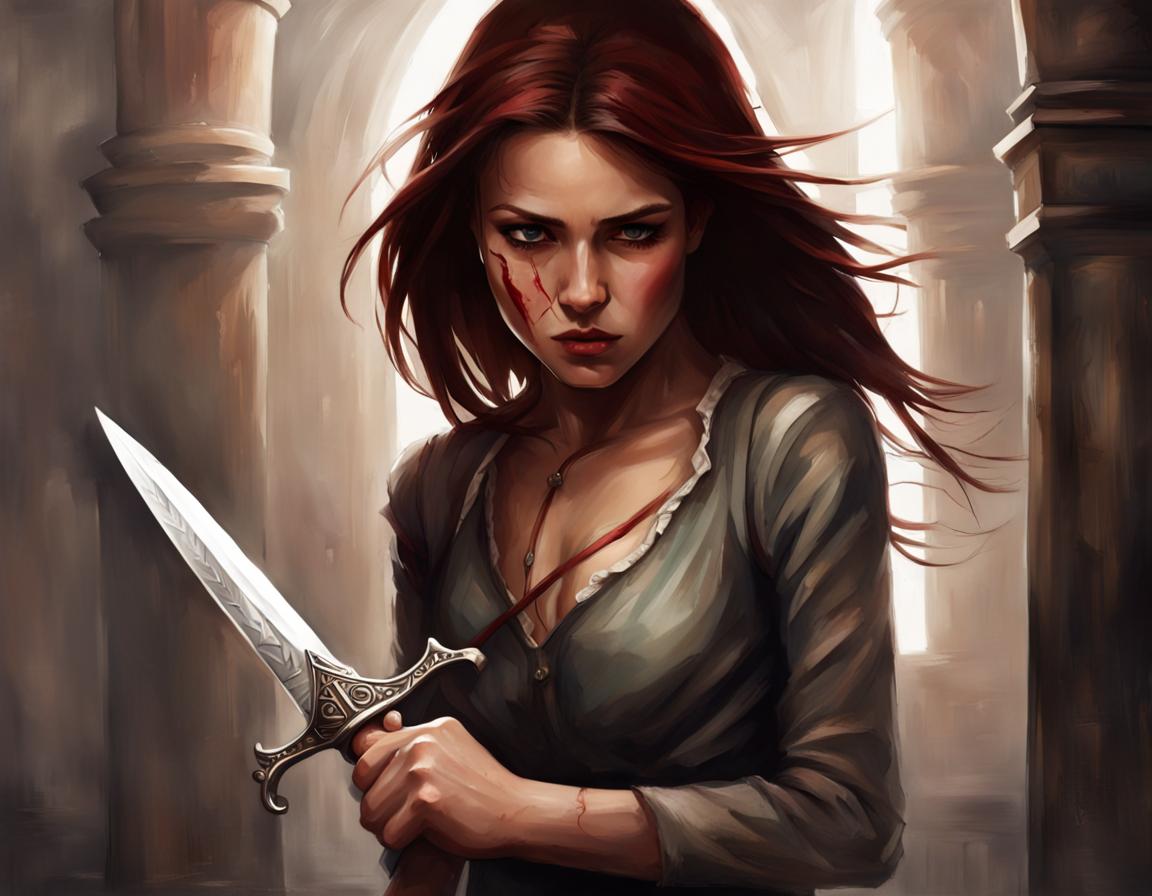
  • The Last Station

    Jed lived in a quiet town. Every day was the same and the only excitement came from the occasional weather change. Jed’s life was routine. Family long gone, his dear wife passed away. He was late middle-aged and showed signs of aging on his face and in his tired eyes. His eyes seemed tired from many unremarkable days. His only comfort came from watching his TV late into the night.

    Jed’s life was ordinary. He did the same things every day. His routine never changed. The clock in his living room reminded him that time was always passing. Like most of the people in this small town, he had been in a set routine that had been around for years.

    Jed’s boring life was suddenly interrupted when an old TV station came back to life. The station, known as CEE-13, was a local legend in the town. People still talked about it and talked about it in local diners. The station mysteriously went off the air years ago, which led to many rumours and myths. Some said it was because of strange events, maybe even supernatural ones, while others thought it was closed for reasons they couldn’t understand.

    This reactivation of CEE-13 was a literal break in the static routine of Jed’s life; it was a crack in the very foundation of the town’s folklore. As the eerie, flickering images began to dance across Jed’s screen, his eyes opened, he felt an inexplicable pull towards the mysteries that the channel held. What had once been a source of idle town gossip now became a tangible, mesmerizing mystery unfolding right before his eyes. Unbeknownst to Jed, this was the beginning of an unravelling that would not only disrupt the monotony of his life but also challenge the very fabric of what he believed to be true about his town, and perhaps, about the nature of reality itself.

    Jed, whose evenings had long been marked by the passive consumption of late-night television, found himself increasingly drawn into the enigmatic allure of CEE-13 with an intensity that surprised even him. At first, the broadcasts seemed old-fashioned, with shows that reminded Jed of a forgotten time. The programs had grainy footage and dated sets. Jed saw them as harmless distractions, a refreshing change from his usual predictable shows.

    However, as the nights wore on, the nature of the broadcasts began to shift, imperceptibly at first, then with increasing malevolence. The episodes, once comforting in their antiquity, started to weave narratives that bore unsettling resemblances to Jed’s own life. It was as though the channel were peering through the lens of his existence, selecting fragments of his reality to twist and magnify on screen. What began as vague parallels soon evolved into eerily accurate reflections, portraying versions of Jed’s daily routines but with outcomes that veered into the dark and macabre.

    The transformation was gradual yet relentless. An episode might depict a character remarkably similar to Jed, facing a decision akin to one he had made earlier that day, but the televised consequence would be grotesquely distorted, ending in tragedy or horror. These sinister doppelgängers of his life events began to unsettle Jed, casting a shadow over the solace he once found in his nightly ritual.

    Each night, the predictions on CEE-13 became more intimately connected to Jed’s future. It was like the channel had tapped into a dark well of possibilities just below his ordinary life. The scenarios presented became more dire. They hinted at calamities and misfortunes, leaving Jed feeling very scared. It was like the channel wasn’t just showing his life, but predicting the worst things that could happen. It made his future look full of fear and despair.

    This chilling progression from innocuous entertainment to ominous prophecy turned Jed’s fascination with CEE-13 into an obsession. He found himself compelled to watch, night after night, despite the toll it took on his peace of mind. The once-clear boundary between his quiet, uneventful life and the twisted realities unfolding on his television screen began to blur, leaving Jed to wonder where the broadcasts ended and his own reality began. The channel had become a mirror reflecting not the life he knew, but a sinister shadow of what it might become.

    Jed’s life changed forever because of the mysterious broadcasts. Before he had lived a simple, hardworking  life in a small town with predictable routines. But now a complex tapestry of fear and fascination had enveloped him, driving him to seek answers that he hoped would quell the growing turmoil within. His decision to confront the source of his unrest led him to the outskirts of town, where the broadcasting station stood like a forgotten relic of a bygone era.

    The journey to the station was one shrouded in apprehension. The roads, less travelled and overgrown with the encroachment of nature, seemed to stretch on interminably, as if reluctant to reveal their end. When Jed finally arrived at his destination, the sight that greeted him was one of desolation and decay. The building, once a hive of activity and the heart of local broadcasting, now lay in ruin. Its structure, a skeleton of rusted metal, was punctuated by windows that stared out like hollow eyes, their glass long since shattered and surrendered to the elements.

    As Jed stepped out of his car, the silence of the surroundings enveloped him, a stark contrast to the vibrant life he imagined the station once held. The air was heavy with the scent of neglect, a mixture of rust, mould, and the indefinable odour of abandonment. The building’s exterior bore the scars of time and vandalism, its walls graffitied with the faded echoes of forgotten messages.

    Compelled by a force he could neither understand nor resist, Jed ventured into the heart of the structure. The interior was a labyrinth of corridors and rooms, each more decrepit than the last. Broken equipment, frayed cables, and piles of debris were scattered around. They crunched underfoot. The dim light filtered through cracks and crevices. It cast eerie shadows. It gave the impression of movement in the corners of Jed’s vision.

    As he delved deeper into the station, a profound sense of déjà vu began to wash over him. The sensation was disorienting, a feeling of familiarity so intense that it bordered on the visceral. It was as if the very walls of the building whispered secrets meant only for him, secrets that he somehow understood without ever having learned. The layout of the rooms, the curve of the corridors, even the pattern of decay seemed to resonate with something deep within him, evoking memories that Jed was certain he had never experienced.

    This overwhelming sense of recognition, coupled with the surreal nature of his quest, left Jed in a state of heightened awareness. Every shadow seemed to hold a message, every gust of wind a whisper from the past. The line between the reality he had known and the bizarre world he had been drawn into grew ever more blurred, leaving him to wonder if the answers he sought lay not in the physical remnants of the station, but in the shadows of his own mind, where the broadcasts had taken root and begun to grow.

    In the heart of the dilapidated broadcasting station, Jed navigated his way through the maze of decay until he arrived at what once was the main broadcasting room. This space, now shrouded in layers of dust and neglect, held the ghosts of its vibrant past, where the pulse of the station once beat the strongest. Amidst the chaos of abandoned equipment and scattered papers, Jed’s gaze was drawn to an antiquated playback machine, seemingly out of place in its preservation compared to the surrounding decay.

    Compelled by an inexplicable intuition, Jed approached the machine, its surface a canvas of dust motes dancing in the slivers of light piercing the gloom. With a tentative hand, he wiped away the years of neglect, revealing controls that seemed eerily familiar. His heart thudded with a mix of dread and anticipation as he pressed play, half expecting nothing but the hiss of static.

    To his astonishment, the screen flickered to life, cutting through the oppressive silence of the room with the soft hum of power. The image that materialized was so startlingly personal that Jed felt a jolt of shock course through him. There he was, depicted on the screen, a perfect mirror of his nightly ritual, ensconced in his living room chair, the glow of the television casting familiar shadows across his features.

    But as he watched, transfixed, the scene began to shift in a manner that turned his blood to ice. The image of him sitting contentedly was replaced by one of stark horror. The Jed on the screen, still in his chair, was now eerily still, too still, with an unsettling pallor to his skin. The scene was one of grim finality: Jed, lifeless, a victim of a sudden heart attack. The starkness of the image, the absolute cessation of life it depicted, was a chilling revelation that left Jed reeling.

    This macabre projection on the screen was more than just a fictional portrayal; it felt like a dire warning, or worse, a predetermined fate. The room around him seemed to close in, the shadows deepening, as the implications of what he was seeing began to fully dawn on him. The line between the broadcasts  and his own reality had not just blurred—it had been obliterated.

    Jed stood there, the afterimage of his own demise etched onto his retinas, grappling with a maelstrom of emotions. Fear, disbelief, and a burgeoning sense of urgency swirled within him. The movie showed Jed’s future death. It made him question life, death, and what lies in between. This moment changed Jed from a bystander to someone involved in a mysterious situation.

    In the dimly lit, dust-choked room of the old broadcasting station, a profound and unsettling revelation dawned upon Jed. The eerie playback that had just unfolded before his eyes, depicting his own lifeless form in the all-too-familiar setting of his living room, was a macabre tableau that shook the very core of his being. It was in this moment of chilling clarity that Jed was confronted with a truth so horrifying it seemed to transcend the bounds of reality: he had indeed died that fateful night, seated in the unassuming comfort of his chair, the television casting its flickering light upon a scene that had quietly slipped from the realm of the living.

    The broadcasts captivated and tormented him. He thought they were sinister signs of the future. But they were not. They were reflections of a life that could have gone in different directions. Many things could have happened if his heart hadn’t betrayed him at home. This realization hit Jed hard. It shocked him and he couldn’t believe it. He now knew he was a lingering spirit.

    His fixation with CEE-13, the unexplainable pull that had drawn him to the decrepit station, was revealed to be a trap of his own making. Jed was determined to find answers and make sense of the strange broadcasts that reflected his life. But he didn’t realize that he had trapped himself in the remains of the station. Confused and desperate to understand the unusual events connected to the channel, his spirit became tied to the place, which now stood as a terrible reminder of his unanswered questions.

    The once mundane routines of his life, the predictable patterns that had defined his existence, had given way to an ethereal limbo. Jed’s spirit was trapped in the decaying walls of the broadcasting station. He was caught between the known world and the afterlife. He realized that he was no longer a man haunted by mysterious broadcasts. Now, he was a soul trapped by the echoes of his own life. This made him see the desolation around him in a new way. The shadows that clung to the corners of the room seemed denser, the silence more oppressive, as if the very atmosphere was imbued with the weight of his revelation.

    Jed, or what was left of him, stood at the station. He was trapped by the broadcasts that used to interest him. Now they kept him here, which was ironic. He wanted to understand, but instead, he was stuck in his own designed purgatory. He couldn’t believe the situation he was in. He was like a spirit caught in a reality he never expected. He was trapped by the remnants of Channel 13’s final broadcast.

    As the harrowing realization of his fate settled upon Jed like a shroud, the contours of his existence—or rather, the remnants of it—began to crystallize with a clarity that was as unwelcome as it was undeniable. The old broadcasting station had become more than just a broken building in a forgotten town. Its walls crumbled and it was silent. It became the centre of a strange connection between the real world and the supernatural.

    Jed’s spectral form, now untethered from the mortal coil yet ensnared by the mysteries of CEE-13, found itself inextricably woven into the fabric of the station. The very essence of his being, imbued with confusion, regret, and an unquenchable thirst for answers, seeped into the decaying infrastructure, infusing the place with an aura of palpable melancholy and unresolved tension.

    The channel,  the reliable broadcaster of forgotten shows and lost time, had morphed into something far more enigmatic and sinister. The old tower stood alone, sending out eerie messages. It didn’t broadcast anything entertaining or informative. Instead, it played back the echoes of lives that had been cut short. Their possible futures were stuck in a never-ending cycle of ghostly transmissions. These broadcasts were no longer limited by time, creating a fabric of alternate possibilities. They continuously reminded us of how fragile life is and how fate is unavoidable.

    Jed, in his eternal entanglement with the station, became its unwilling anchor man, a fulcrum around which the spectral energies of the place seemed to pivot. His presence, though unseen by the living, cast a long shadow over the station, imbuing it with a sense of purpose that was as tragic as it was indefinable. The broadcasts, intertwined with fragments of Jed’s own unspent life, became a poignant symphony of lost opportunities and unfulfilled destinies, echoing through the empty halls and abandoned studios with a resonance that was both haunting and indelibly sad.

    Jed’s ghostly essence fused with the station, creating a space where the past, present, and future blended. Lives interrupted echoed persistently in this place, defying the natural order. Reality and the supernatural merged, creating an eerie dissonance. The channel still broadcasted its spectral signals in this place. Jed became the unwilling guardian of the station, like a lighthouse in the afterlife.

    CEE-13 continues to permeate the consciousness of the town. It reminds us that we only know a little about our world. It reminds us that we will die someday. It makes us think about the mystery of death. If we ever wondered what lies beyond death and tried to imagine what might be hidden from us, then this much is certain, it comes back to us from an old television screen that is full of static that shudders to life and provides cruel mirror of what happens after we die, and how fate and free will are connected.

  • About Creepypasta

    Overview

    A Creepypasta is a genre of online horror stories that are shared through internet forums and other social media platforms. The term “creepypasta” is a play on the word “copypasta,” which refers to blocks of text that are copied and pasted across the internet. Creepypastas often involve paranormal or terrifying tales, designed to scare or unsettle the reader. These stories can include elements of urban legends, folklore, and personal experiences, often enhanced with digital or multimedia content to increase the effect. Some famous examples include “Slender Man” and “The Russian Sleep Experiment.” Over time, creepypastas have evolved into a popular form of internet literature, encompassing a wide range of horror sub-genres.

    Structure

    The basic structure typically follows these elements:

    1. Hook: An intriguing opening that grabs the reader’s attention. It could be a mysterious setting, an unusual character, or a strange event.
    2. Build-up: This is where the story starts to develop. Background information, suspense, and elements of horror are gradually introduced. The narrative often includes detailed descriptions and slowly unravels the eerie or uncanny aspects of the story.
    3. Climax: The peak of the story where the tension and horror reach their maximum. This is often where the most frightening or shocking element of the story is revealed.
    4. Conclusion: The ending can vary. Some creepypastas end with a twist, leaving the reader with a lingering sense of unease or unanswered questions. Others may provide a resolution to the story’s mystery.
    5. Style and Tone: The writing style often aims to be immersive and convincing, sometimes presented as a first-person account or a discovered document to blur the line between fiction and reality. The tone is typically dark and ominous.
    6. Themes: Common themes include paranormal activities, urban legends, haunted locations, psychological horror, and unsettling real-world events.

    The primary goal is to evoke a sense of fear, unease, or discomfort in the reader. Creepypastas are often shared online, allowing them to be easily disseminated and sometimes modified by others, adding to the folklore-esque nature of these stories.

    Length

    The optimal length and structure of a creepypasta can vary depending on the story, but there are general guidelines that tend to make these narratives effective:

    Length:

    • Short Form: Around 500-1,000 words. Ideal for quick, impactful stories that deliver a swift scare or twist. They’re great for online readers who prefer a brief but intense experience.
    • Medium Form: Approximately 1,000-2,000 words. This length allows for more character and plot development, setting up a more intricate story while still being concise enough to hold the reader’s attention in an online format.
    • Long Form: Over 2,000 words. Used for stories that require detailed world-building, complex plots, or deep character development. They should be engaging enough to keep the reader interested over a longer period.

    Structure:

    • Introduction: Set the tone and establish the setting. Begin with a hook that grabs the reader’s attention. This could be an intriguing statement, a mysterious setting, or a compelling character.
    • Build-Up: Gradually introduce the elements of horror. This part should create suspense and a sense of foreboding. Develop the plot and characters, and plant clues or hints about the impending climax.
    • Climax: The peak of the story where the horror or twist is fully revealed. This should be the most intense and scary part of the story, ideally delivering on the suspense built up earlier.

    Themes

    The common themes in creepypasta (and similar horror narratives) include:

    1. Paranormal Entities and Events: Ghosts, demons, and unexplained phenomena are classic themes. They tap into the fear of the unknown and the supernatural, which is a deep-rooted human anxiety.
    2. Urban Legends and Folklore: These stories often modernize traditional legends or create new ones. They’re effective because they feel familiar yet mysterious, playing on cultural fears and shared myths.
    3. Technology Gone Awry: Themes involving technology, like cursed video games or haunted websites, reflect contemporary fears about the increasing influence of technology in our lives.
    4. Isolation and Abandonment: Settings like deserted towns, isolated forests, or abandoned buildings create a sense of vulnerability and helplessness, heightening the suspense and fear.
    5. Psychological Horror: This theme explores the human mind, mental illness, or altered perceptions of reality. It’s effective because it blurs the line between reality and illusion, making the reader question what is truly happening.
    6. Distorted or Unreliable Narratives: Stories that feature unreliable narrators or distorted perceptions of reality can be deeply unsettling, as they challenge the reader’s sense of stability and truth.
    7. Morbid or Macabre Elements: Themes involving death, decay, or gore tap into a primal human fear and disgust, creating a visceral sense of horror.
    8. Loss of Control or Autonomy: Themes that involve possession, mind control, or loss of self are effective because they play on the fear of losing one’s identity or agency.
    9. Invasion of the Familiar: When horror invades everyday settings or involves common objects, it makes the fear more relatable and immediate.
    10. Survival: Themes of survival against overwhelming odds or malevolent forces create tension and excitement.

    These themes are effective in creating immersion and fear for several reasons:

    • Universal Fears: Many tap into universal fears and anxieties, such as death, the unknown, or loss of control.
    • Relatability: Even when fantastical, they often contain elements that are relatable to the reader, like common settings or realistic characters.
    • Psychological Impact: They often play on psychological fears, which can be more deeply unsettling than overt physical threats.
    • Suspense and Mystery: Many of these themes inherently involve suspense and mystery, which are key elements in creating an engaging and frightening story.

    Relatable Characters

    Relatable characters play a crucial role in storytelling, especially in genres like horror or suspense, where emotional engagement significantly enhances the impact of the narrative.

    Here’s why relatable characters are important and how they contribute to a story:

    1. Emotional Connection: Relatable characters create an emotional bond with the audience. When readers see aspects of themselves or their experiences reflected in a character, they are more likely to empathize with and care about what happens to them.
    2. Increased Stakes: If the audience can relate to a character, they feel more invested in the character’s struggles and successes. This investment makes every danger or challenge the character faces feel more significant and gripping.
    3. Enhanced Realism: Even in fantastical or surreal settings, relatable characters can ground the story in reality. This balance between the believable and the extraordinary makes the narrative more compelling.
    4. Amplifies Fear and Tension: In horror, when the audience relates to a character, they project their own fears and anxieties onto the character’s situation. This personal connection makes the scary elements of the story more intense.
    5. Character Development: Relatable characters often have well-developed personalities, backgrounds, and motivations, which make them more interesting and complex. This depth can lead to more nuanced and engaging narratives.
    6. Moral and Ethical Engagement: Relatable characters often face moral dilemmas or ethical challenges, allowing the audience to question what they would do in a similar situation. This can lead to a more thought-provoking and immersive experience.
    7. Broader Appeal: A character that resonates with a wide range of people can make a story more universally appealing. Diverse and relatable characters can attract a wider audience.
    8. Enhances Themes: Relatable characters can be used to effectively explore and highlight the themes of the story, making the underlying messages more impactful.

    To create relatable characters, writers often give them realistic flaws, relatable problems, familiar goals, or understandable emotions.

    They might also place them in recognizable settings or situations. In horror and suspense, the relatability of characters is often juxtaposed with extraordinary or terrifying events, heightening the tension and engagement of the audience.

    Immersion

    Creating immersion in storytelling, particularly in genres like horror or suspense, involves drawing the reader or audience deeply into the narrative world.

    Here are some effective techniques:

    1. First-Person Narrative: Writing in the first person can create a sense of immediacy and intimacy. It allows the reader to experience events and emotions directly through the protagonist’s perspective, making the story more relatable and immersive.
    2. Detailed Descriptions: Using vivid and sensory details helps to paint a clear picture of the setting, characters, and events. This can make the fictional world feel more real and tangible to the reader.
    3. Slow Build-Up of Tension: Gradually increasing the suspense keeps readers engaged and on edge. It’s important to balance the pacing – too fast, and you risk overwhelming the reader; too slow, and they might lose interest.
    4. Relatable Characters: Characters that are well-developed and relatable can deepen the reader’s emotional investment in the story. Their fears and reactions should be believable and consistent with their character development.
    5. Unpredictability: Keeping the reader guessing can be very effective. This could involve plot twists, unreliable narrators, or unexpected turns in the story.
    6. Realistic Dialogue: Natural and convincing dialogue can help to ground the story in reality, even when the plot ventures into the fantastical or supernatural.
    7. Incorporating Realism: Blending elements of the real world with the fictional narrative can make the story more believable. This might include real locations, true historical events, or everyday situations.
    8. Interactive Elements: In digital or online formats, incorporating interactive elements like hyperlinks, audio clips, or visual aids can enhance the immersive experience.
    9. Psychological Engagement: Engaging the reader’s mind by playing on common fears, exploring deep psychological themes, or presenting moral dilemmas can make the experience more personal and absorbing.
    10. Consistent Tone and Mood: Maintaining a consistent tone and mood throughout the story helps to sustain the narrative’s atmosphere, whether it’s eerie, mysterious, or outright terrifying.

    For creepypastas and similar genres, these techniques are often combined to create a sense of authenticity and plausibility, making the stories feel as if they could be true, which heightens the sense of immersion and fear.

    Suspense

    Building up suspense is a key technique in storytelling, especially in genres like horror, thriller, and mystery.

    Here’s how it can be effectively achieved:

    1. Foreshadowing: Hinting at future events or dangers can create anticipation and anxiety. This can be done subtly through dialogue, descriptions, or symbolic elements.
    2. Pacing: Controlling the pace of the narrative is crucial. Alternating between faster and slower sections can keep the audience engaged and on edge. Slower moments allow for character development and tension building, while faster moments provide action and excitement.
    3. Mood and Atmosphere: Establishing a mood through descriptive language, setting, and tone can make even ordinary situations feel ominous. Dark, isolated, or unfamiliar settings often enhance suspense.
    4. Withholding Information: Deliberately keeping certain details from the reader creates mystery. Revealing information slowly or partially keeps the audience guessing and engaged.
    5. Unreliable Narrator: A narrator whose credibility is questionable can add a layer of suspense. The uncertainty about the truth of their account keeps readers intrigued and speculative.
    6. Raising Stakes: Gradually increasing what is at risk for the characters heightens suspense. This could be physical danger, psychological stability, or something of personal value to the characters.
    7. Character Vulnerability: Making characters relatable and placing them in vulnerable situations can elicit empathy from the audience, making the suspense more personal and intense.
    8. Conflict and Dilemma: Introducing conflicts or moral dilemmas can create internal and external tension. The audience becomes invested in how these conflicts will be resolved.
    9. Cliffhangers: Ending scenes or chapters on a high note of uncertainty or imminent danger can be very effective in maintaining suspense.
    10. Use of the Unknown: Exploiting the fear of the unknown is a powerful tool. This can involve unknown threats, unseen dangers, or mysterious characters.
    11. Sound and Music (in Audiovisual Media): In films, TV shows, or audio dramas, the use of sound and music can significantly amplify suspense. Sudden silence, eerie sound effects, or a suspenseful score can manipulate the audience’s emotions.

    These techniques are effective because they engage the audience’s emotions and imagination. By creating a sense of anticipation, anxiety, or uncertainty, they keep the audience absorbed and eager to find out what happens next.

    Climax and Revelation

    The climax and revelation are pivotal moments in a story, particularly in genres like horror, mystery, and thriller.

    These techniques are designed to make these moments impactful and memorable:

    1. Rapid Pacing: As the climax approaches, quickening the pace can heighten tension. Short, sharp sentences and rapid scene changes can create a sense of urgency and immediacy.
    2. High Stakes: Ensure the stakes are at their highest point in the climax. This could involve a character’s life, the resolution of a central mystery, or a significant personal cost.
    3. Confrontation: Often, the climax involves a confrontation or a final showdown between opposing forces. This could be a physical fight, a psychological battle, a moral decision, or facing one’s fears.
    4. Culmination of Plot Threads: Bring together various plot threads and character arcs. This convergence can provide a sense of completeness and fulfillment.
    5. Intense Emotion: Amplify the emotional intensity. The characters’ strongest emotions should be on full display, whether it’s fear, anger, sorrow, or excitement.
    6. Unexpected Twists: A well-placed twist can turn the story on its head and leave a lasting impact. However, it should be logical within the story’s context and not just for shock value.
    7. Catharsis: The climax should provide some form of catharsis or release, both for the characters and the audience. This can be through the resolution of tension, the revelation of secrets, or the overcoming of obstacles.
    8. Sensory Details: Use vivid sensory details to immerse the reader or viewer in the moment. This can make the climax more visceral and engaging.
    9. Symbolism and Metaphor: Employing symbolism can add depth to the climax, making it resonate more with the audience.
    10. Resolution of Character Arcs: Show how the events leading up to the climax have changed or affected the characters. This can provide a deeper emotional impact.
    11. Clarity in Revelation: When revealing key information or twists, clarity is important. Confusion can undermine the impact of the revelation.
    12. Contrasts: Use contrasts in dynamics, such as shifting from a fast-paced action sequence to a moment of quiet realization, to add depth to the climax.

    These techniques, when executed well, ensure that the climax and revelation are not only the high point of the story in terms of action or tension but also in emotional and narrative satisfaction. They provide the payoff for the build-up and investment in the story, and are often what the audience remembers most vividly.

    Urban Legends & Folklore

    Urban legends and folklore have a rich and varied basis, often rooted in cultural, historical, and psychological factors. Understanding their foundation helps to explain why they are so compelling and enduring. Here are key aspects that form the basis of these tales:

    1. Cultural and Historical Context: Many urban legends and folktales are deeply influenced by the cultural and historical context in which they originate. They reflect societal values, fears, and norms of the time. For instance, legends from maritime cultures often involve sea monsters or ghost ships, while urban legends in modern societies might revolve around technology or urban life.
    2. Human Psychology: These stories tap into fundamental human fears and anxieties. Fear of the unknown, fear of death, fear of outsiders, or fear of chaos are common themes. They often serve as cautionary tales, warning against certain behaviors or illustrating moral lessons.
    3. Oral Tradition: Folklore and urban legends traditionally spread through oral storytelling. This method of transmission allows for stories to evolve over time, adapting to the changing needs and values of the community.
    4. Explaining the Unexplainable: Before the advent of modern science, many natural phenomena were unexplainable. Folklore often provided explanations for these mysteries, whether it was thunder being the sound of gods fighting or spirits causing illness.
    5. Social and Moral Order: These tales frequently serve to reinforce social norms and moral values, often depicting dire consequences for those who deviate from accepted behavior.
    6. Entertainment Value: Beyond their moral and educational roles, urban legends and folktales are a form of entertainment. Their suspenseful and often dramatic nature makes them compelling storytelling.
    7. Memory and Identity: They play a role in shaping collective memory and identity. Shared stories can strengthen community bonds and provide a sense of shared history and values.
    8. Adaptability and Evolution: A key feature of urban legends and folklore is their ability to adapt and evolve with time and across cultures. They change to remain relevant and reflect the fears and concerns of the current society.
    9. Psychological Catharsis: Engaging with these stories can provide a safe way to confront and process fear and anxiety. It’s a form of catharsis, allowing people to experience and then release emotional tension.
    10. Symbolism: They often use symbolism to represent deeper truths or complex ideas in a more digestible form. This symbolism can be interpreted in various ways, depending on the cultural and individual perspective.

    Urban legends and folklore, therefore, are not just simple tales but complex reflections of human society, psychology, and culture.

    They serve multiple purposes, from educating and preserving cultural identity to entertaining and providing psychological relief.

    Creepypasta effectively uses the framework of urban legends to create engaging and terrifying narratives.

    Here’s how they incorporate elements of urban legends:

    1. Modernizing Traditional Fears: Creepypasta stories often take timeless fears and themes found in urban legends and adapt them to contemporary settings. For example, the fear of the unknown in an urban legend about a mysterious creature in the woods might be reimagined as an unknown entity in the digital world in a creepypasta.
    2. Realistic Settings: Like urban legends, many creepypastas are set in ordinary, relatable environments – like a suburban home or a local school. This familiarity makes the story more believable and thus more frightening.
    3. Moral Lessons and Warnings: Similar to urban legends, some creepypastas carry underlying moral messages or warnings, often reflecting contemporary issues or fears, such as the dangers of obsession with technology or the internet.
    4. Anecdotal Style: Creepypastas often mimic the anecdotal style of urban legends. They are frequently presented as personal accounts or stories heard from a ‘friend of a friend,’ which is a classic storytelling technique in urban legends.
    5. Viral and Evolving Nature: Just as urban legends change and evolve as they are passed from person to person, creepypastas are often modified and expanded upon by their online communities, keeping the stories dynamic and current.
    6. Playing on Common Fears: Both urban legends and creepypastas exploit common fears. While urban legends might play on fears of being alone in the dark, creepypastas might focus on more modern fears, like cyber-stalking or privacy invasion.
    7. Unexplained and Ambiguous Elements: Many creepypastas, like urban legends, often leave certain elements unexplained or ambiguous. This lack of closure can make the story more unsettling, as it leaves room for the imagination to fill in the gaps.
    8. Blurring Reality and Fiction: Creepypastas often blur the line between reality and fiction, a trait common in urban legends. This is achieved through detailed narratives that integrate well-known real-life elements, making the story seem plausible.
    9. Incorporating Folklore Elements: Some creepypastas reinterpret elements of traditional folklore within a modern context, akin to how urban legends often have roots in older folk tales but are updated to fit contemporary contexts.
    10. Social Commentary: Like urban legends, creepypastas can act as a form of social commentary, reflecting societal anxieties and issues, thereby resonating with a wide audience.

    By harnessing these elements, creepypastas capture the essence of urban legends while updating them for a digital audience, making them a powerful and popular form of modern storytelling.

    Imagination

    Capturing the reader’s imagination in storytelling, especially in genres like horror or fantasy, involves a combination of creative narrative techniques and a deep understanding of your audience. Here are some effective strategies:

    1. Create a Strong Hook: Begin with a compelling opening that piques curiosity. This could be a mysterious scenario, an intriguing character, or an unusual situation. The goal is to grab the reader’s attention right from the start.
    2. Build a Vivid World: Use descriptive language to create a rich, immersive world. Whether it’s a real place with a twist or a completely fictional setting, make it as vivid and detailed as possible. This helps readers visualize and ‘live’ in your story.
    3. Develop Relatable Characters: Characters should be well-rounded and multi-dimensional. Giving them relatable traits, flaws, and desires makes them more believable and helps readers form an emotional connection.
    4. Incorporate Sensory Details: Engage all the senses in your descriptions. Don’t just explain what things look like, but also how they sound, smell, feel, and even taste. This sensory immersion can make the experience more real for the reader.
    5. Play with Reader’s Expectations: Subverting tropes or adding unexpected twists keeps the story unpredictable and intriguing. This not only maintains interest but also keeps readers actively engaged, trying to guess what happens next.
    6. Use Emotional Pull: Drive the story with emotions, not just actions. Fear, love, suspense, and mystery are powerful tools to keep readers invested and their imaginations engaged.
    7. Show, Don’t Tell: Instead of explaining everything directly, show it through actions, dialogue, and events. This allows readers to deduce and imagine things for themselves, making the story more engaging.
    8. Pace the Story Well: A mix of fast-paced action and slower, more reflective moments can help maintain interest. The pacing should match the narrative’s needs – faster in scenes of high tension and slower during moments of character development or exposition.
    9. Include Themes and Symbols: Layering your story with broader themes and symbols can give it depth. This not only makes the story more compelling but also invites readers to think more deeply about its meaning.
    10. Engage the Imagination with Questions: Leaving some things to the reader’s imagination can be powerful. Ambiguity, unsolved mysteries, or open endings encourage readers to think beyond the story.

    Remember, the key to capturing the imagination is creating an experience that feels immersive and emotionally resonant. Encourage readers to invest not just their time, but their thoughts and feelings into the world and characters you’ve created.

    Distribution

    If you’re looking to share a creepypasta or similar horror story you’ve written, there are several popular platforms where these types of stories are frequently read and enjoyed:

    Creepypasta Websites:

    • Creepypasta.com: One of the most well-known sites for these stories.
    • The Creepypasta Wiki: A community-driven site where you can post and read creepypastas.

    Reddit:

    • r/nosleep: A popular subreddit for realistic horror stories.
    • r/shortscarystories: For shorter horror fiction.
    • r/creepypasta: Specifically for creepypasta stories.

    Social Media and Blogging Platforms:

    • Tumblr: A blogging platform where you can post your story as a blog post.
    • Wattpad: Particularly good for longer stories, allowing for chapter-by-chapter publication.

    Your Own Blog or Website: If you plan to write regularly, creating your own blog or website can be a great way to gather all your stories in one place and build a reader base.

    Horror Writing Forums and Communities:

    • Look for online writing communities and forums dedicated to horror writing. These can be great places to get feedback and find readers interested in your genre.

    Audio Platforms:

    • If you’re interested in turning your story into a narrated experience, platforms like YouTube or SoundCloud can be suitable. You can either narrate the story yourself or collaborate with a narrator.

    Remember to read and adhere to the submission guidelines and rules for each platform. Some communities have specific requirements regarding content, format, and length. Engaging with the community, like commenting on other stories and participating in discussions, can also help gain visibility for your work.

    Appeal

    The popularity of creepypasta as a content format can be attributed to several factors that resonate with modern audiences and the unique nature of internet culture:

    1. Digital Storytelling: Creepypastas are native to the internet, a medium that reaches a vast, diverse audience. They leverage digital platforms’ ability to quickly share, modify, and comment on content, making them highly accessible and communal.
    2. Modern Urban Legends: Creepypastas are the digital age’s urban legends. They tap into contemporary fears and anxieties, such as those surrounding technology, online privacy, and modern urban life, making them particularly relevant and engaging for today’s audience.
    3. Community Participation: Many creepypastas evolve through community contributions, with readers adding their twists or continuing the story. This collaborative aspect fosters a sense of ownership and engagement among the community.
    4. Anonymity and Mystery: The often anonymous nature of these stories adds to their mystique. The blurred line between author and narrator, and between reality and fiction, makes them more intriguing and frightening.
    5. Short and Impactful: In an era where many people have shorter attention spans due to the sheer volume of content available, the typically concise format of creepypastas makes them easily consumable yet impactful.
    6. Multimedia Integration: Creepypastas often incorporate various media forms, such as text, images, and audio, making them more dynamic and immersive than traditional text-only stories.
    7. Psychological Horror: They frequently explore psychological horror, which can be more deeply unsettling and compelling than straightforward gore or violence. This plays into deeper, more universal fears.
    8. Nostalgia and Familiarity: Some creepypastas evoke nostalgia (e.g., stories about old video games or children’s shows) while twisting these memories into something sinister, striking a chord with many readers.
    9. Cultural Virality: Creepypastas often gain popularity through viral sharing, becoming part of internet culture. Their meme-like nature allows them to spread rapidly across forums, social media, and other online communities.
    10. Adaptability to Other Media: Popular creepypastas have been adapted into various formats, including films, games, and art, expanding their reach and embedding them deeper into popular culture.

    Creepypastas resonate with the digital generation by combining traditional elements of storytelling with the unique features of internet culture. Their adaptability, community-driven nature, and ability to tap into contemporary fears have made them a significant and popular form of modern storytelling.

    Popular Examples

    Popular creepypastas have captivated audiences with their unique blend of horror, suspense, and internet folklore.

    Here are some notable examples:

    1. Slender Man: This story revolves around a tall, faceless figure in a black suit, known for stalking and abducting people, especially children. Its popularity grew through mockumentary-style photos and games. The Slender Man became a viral sensation due to its open-source nature, allowing the community to contribute to its mythos. This character was created by Eric Knudsen (also known as “Victor Surge”) in 2009. Slender Man first appeared on the Something Awful forums in a thread for creating paranormal images. Knudsen contributed two black-and-white images of groups of children to which he added a tall, thin, spectral figure wearing a black suit.
    2. The Russian Sleep Experiment: Set in the 1940s, this tale describes a Soviet experiment where prisoners are kept awake for 15 days using a gas stimulant, leading to horrifying psychological and physical changes. Its popularity stems from its blend of historical context and extreme psychological horror. The author of this story remains anonymous. It first appeared on creepypasta websites and quickly became one of the most well-known creepypastas, despite its unknown origins.
    3. Jeff the Killer: This story involves a disfigured serial killer named Jeff, known for his ghastly, burned-off eyelids and a terrifying, carved smile. His catchphrase, “Go to sleep,” adds to his menacing persona. The creepy image associated with Jeff and the theme of a descent into madness contribute to its appeal. The origin of this story is a bit more complex. The original image associated with Jeff the Killer is believed to have been created on 4chan’s /b/ board. The character’s backstory was later developed by an anonymous author and became popular through various creepypasta websites.
    4. The Rake: Describing a humanoid creature that stalks and attacks people, often while they sleep, this story gained traction due to its mysterious and eerie nature. The Rake is an example of a modern boogeyman, evoking primal fears.
    5. Candle Cove: This tale takes the form of a forum discussion about a fictional children’s TV show, remembered for its disturbing content and mysterious puppet characters. The story’s format, mimicking a real online conversation, makes it uniquely unsettling and believable. This story was written by Kris Straub in 2009 and published on his website, Ichor Falls.
    6. Ben Drowned: Written by Alex Hall (also known as “Jadusable”), this creepypasta was originally posted on 4chan in 2010. It is an elaborate story told through a series of videos and online postings about a haunted The Legend of Zelda: Majora’s Mask cartridge.

    Characteristics and Popularity:

    • Immersive Formats: Many popular creepypastas are presented in formats that blur fiction and reality, such as fake documentary photos, forum posts, or personal anecdotes. This makes them more relatable and believable.
    • Open-Source Nature: The communal aspect of creepypastas, where many authors contribute to the lore, helps in evolving and enriching the narratives, making them more engaging.
    • Psychological Horror: These stories often explore psychological themes, inducing a deep sense of dread and unease that resonates with readers.
    • Urban Legend Style: The resemblance to urban legends gives creepypastas a familiar yet mysterious quality, making them more compelling.
    • Simple, Yet Effective Hooks: They usually start with simple, captivating hooks that draw readers in quickly, a crucial factor in their viral spread on the internet.
    • Visual Elements: Some, like Slender Man and Jeff the Killer, are associated with distinctive and unsettling images, which have become iconic in internet culture.

    The structure typically involves a gradual buildup of suspense, leading to a climax that reveals the horror element, followed by an open or ambiguous ending, which leaves room for the reader’s imagination and further community development.

    The anonymous and communal nature of creepypasta creation means that many stories are collaborative works, evolving through additions and alterations by numerous contributors. This makes it difficult to credit a single author for many of these tales. Their viral nature, adaptability, and the communal participation in their evolution are key reasons for their popularity.

    Recipe

    For an effective creepypasta, striking a balance between brevity and detail is key. Here’s an optimal structure and length guideline:

    Optimal Length

    1. Short Creepypastas: 500-1,000 words. These are great for delivering a quick, chilling tale with an immediate impact. They often rely on a strong central idea or twist.
    2. Medium-Length Creepypastas: 1,000-2,500 words. This length allows for more character development, atmosphere building, and a more complex plot, while still being concise enough for online readers.
    3. Longer Creepypastas: 2,500-5,000 words. These are less common but can be effective for deeply immersive stories that require extensive world-building and multiple layers of narrative.

    Optimal Structure

    Introduction:

    • Setup: Establish the setting and tone. Introduce the main character or narrator.
    • Hook: Start with something intriguing to grab the reader’s attention.

    Build-up:

    • Develop Atmosphere: Gradually introduce eerie elements, setting the mood.
    • Foreshadowing: Drop subtle hints or clues to create suspense.
    • Character Depth: Provide enough character background to make them relatable.

    Climax:

    • Reveal or Twist: The peak of horror or the key twist of the story.
    • Intense Action or Discovery: Often the most dramatic part of the story.

    Conclusion:

    • Resolution: Tie up most loose ends, but some ambiguity can be effective.
    • Final Scare or Twist: Sometimes, leaving the reader with a lingering sense of unease or a final twist can be impactful.

    Style and Tone:

    • First-Person Perspective: Commonly used for a personal and immersive feel.
    • Descriptive Language: Vivid imagery enhances the horror element.
    • Pacing: Maintain a balance between slow atmospheric sections and faster, intense segments.

    Remember, the key to an effective creepypasta is not just in the structure or length, but in how well it captures the reader’s imagination, evokes emotions, and delivers a memorable experience.

    Tailoring the story to your unique voice and the particular horror element you want to highlight is also crucial.


  • Book of Changes

    The I Ching, also known as the “Book of Changes,” is an ancient Chinese divination text and one of the oldest books in the world. It dates back to the Western Zhou period (1046–771 BCE) and is traditionally attributed to the legendary Chinese sage Fu Xi. The I Ching is a foundational text in Chinese philosophy and culture, and it has had a profound influence on various aspects of Chinese thought, including Confucianism, Taoism, and traditional Chinese medicine.

    The I Ching consists of a set of 64 hexagrams, which are combinations of six solid or broken lines. Each hexagram has a specific meaning and is associated with a divinatory interpretation. People consult the I Ching by using various methods, such as tossing coins or yarrow sticks to generate a hexagram, and then interpreting the resulting hexagram to gain insights into a particular situation or question.

    The I Ching is considered a philosophical and spiritual guide rather than a fortune-telling tool. It offers guidance on decision-making, ethics, and the understanding of natural principles. Many people still use the I Ching today for its wisdom and insights into life’s challenges and dilemmas.

    Yarrow stick

    Yarrow sticks are one of the traditional methods used for consulting the I Ching, also known as the “Book of Changes.” Yarrow sticks are used in a divination process where they are tossed, and the resulting pattern of sticks determines the hexagram that is consulted for guidance. This method involves a specific set of procedures and interpretations to derive insights from the I Ching.

    Hexagram

    A hexagram is a six-line symbol or figure used in the I Ching, also known as the “Book of Changes,” an ancient Chinese divination text and philosophical work. Hexagrams are fundamental components of the I Ching and are used for divination and guidance.

    Each hexagram consists of six lines, which can be either solid (yang) or broken (yin). These lines are stacked on top of each other to form a unique pattern. There are 64 possible hexagrams in the I Ching, each with its own name and associated meaning. These hexagrams represent various situations, conditions, and archetypal symbols, making them a source of wisdom and guidance for those who consult the I Ching.

    When someone consults the I Ching for guidance, they use a divination method (such as tossing coins or using yarrow sticks) to generate a hexagram. The resulting hexagram is then interpreted to provide insights and advice on a particular question or situation. Hexagrams play a central role in the philosophical and divinatory aspects of the I Ching and are rich in symbolic meaning.

    Here are the 64 hexagrams of the I Ching, along with their names and some keywords representing their meanings:

    1. Qian (乾) – The Creative
    2. Kun (坤) – The Receptive
    3. Zhen (震) – Difficulty at the Beginning
    4. Xun (巽) – Youthful Folly
    5. Hu (輿) – Waiting (Nourishment)
    6. Song (訟) – Conflict
    7. Shi (師) – The Army
    8. Bi (比) – Holding Together (Union)
    9. Xiao Chu (小畜) – The Taming Power of the Small
    10. Lu (履) – Treading (Conduct)
    11. Tai (泰) – Peace
    12. Pi (否) – Standstill (Stagnation)
    13. Tong Ren (同人) – Fellowship with Men
    14. Da You (大有) – Possession in Great Measure
    15. Qian (謙) – Modesty
    16. Yu (豫) – Enthusiasm
    17. Sui (隨) – Following
    18. Gu (蠱) – Work on the Decayed (Repair)
    19. Lin (臨) – Approach
    20. Guan (觀) – Contemplation (View)
    21. Shi He (噬嗑) – Biting Through
    22. Bi (賁) – Grace
    23. Bo (剝) – Splitting Apart
    24. Fu (復) – Return (The Turning Point)
    25. Wu Wang (無妄) – Innocence (The Unexpected)
    26. Da Chu (大畜) – The Taming Power of the Great
    27. Yi (頤) – The Corners of the Mouth (Nourishment)
    28. Da Guo (大過) – Preponderance of the Great
    29. Kan (坎) – The Abysmal (Water)
    30. Li (離) – The Clinging (Fire)
    31. Xian (咸) – Influence (Wooing)
    32. Heng (恆) – Duration
    33. Dun (遯) – Retreat
    34. Da Zhuang (大壯) – The Power of the Great
    35. Jin (晉) – Progress
    36. Ming Yi (明夷) – Darkening of the Light
    37. Jia Ren (家人) – The Family (The Clan)
    38. Kui (睽) – Opposition
    39. Jian (蹇) – Obstruction
    40. Jie (解) – Deliverance
    41. Sun (損) – Decrease
    42. Yi (益) – Increase
    43. Guai (夬) – Breakthrough (Resoluteness)
    44. Gou (姤) – Coming to Meet
    45. Cui (萃) – Gathering Together (Massing)
    46. Sheng (升) – Pushing Upward
    47. Kun (困) – Oppression (Exhaustion)
    48. Jing (井) – The Well
    49. Ge (革) – Revolution (Molting)
    50. Ding (鼎) – The Cauldron
    51. Zhen (震) – The Arousing (Shock)
    52. Gen (艮) – Keeping Still, Mountain
    53. Jian (漸) – Development (Gradual Progress)
    54. Gui Mei (歸妹) – The Marrying Maiden
    55. Feng (豐) – Abundance (Fullness)
    56. Lu (旅) – The Wanderer
    57. Xun (巽) – The Gentle (The Penetrating, Wind)
    58. Dui (兌) – The Joyous, Lake
    59. Huan (渙) – Dispersion (Dissolution)
    60. Jie (節) – Limitation
    61. Zhong Fu (中孚) – Inner Truth
    62. Xiao Guo (小過) – Preponderance of the Small
    63. Ji Ji (既濟) – After Completion
    64. Wei Ji (未濟) – Before Completion

    These hexagrams each have their own unique interpretations and are used for divination and guidance in the I Ching system.

    Interpretations

    Certainly, here are brief example interpretations of a few I Ching hexagrams:

    • Hexagram 1: Qian (乾) – The Creative
    • Interpretation: A powerful and creative force. This hexagram suggests a time of great potential and innovation. It represents the heavens, strength, and initiative.
    • Hexagram 11: Tai (泰) – Peace
    • Interpretation: A time of peace and harmony. This hexagram signifies a period when conflicts have been resolved, and a sense of tranquility prevails. It encourages maintaining a balanced and harmonious approach.
    • Hexagram 22: Bi (賁) – Grace
    • Interpretation: This hexagram represents a state of grace and beauty. It suggests that elegance and inner beauty can lead to success. It emphasizes the importance of cultivating one’s character.
    • Hexagram 37: Jia Ren (家人) – The Family (The Clan)
    • Interpretation: Symbolizing family and community, this hexagram highlights the significance of close relationships and cooperation. It suggests that working together as a family or group can lead to prosperity.
    • Hexagram 64: Wei Ji (未濟) – Before Completion
    • Interpretation: This hexagram indicates a situation that is not yet complete but is on the verge of reaching its conclusion. It advises caution and patience as the final stages unfold.

    Please note that these interpretations are highly simplified.

    In a full I Ching consultation, a specific hexagram is typically considered in the context of a particular question or situation, and the interpretation can become more nuanced and detailed.

    Purpose

    The I Ching, or “Book of Changes,” is used for various purposes, primarily for gaining insights, guidance, and perspective on a wide range of life’s questions and situations.

    Here’s some context for why someone might use the I Ching:

    1. Decision Making: Many people consult the I Ching when facing important decisions or dilemmas. By generating a hexagram related to their question, they seek guidance on the best course of action or the potential outcomes of their choices.
    2. Self-Reflection: The I Ching is also used for self-reflection and personal growth. It can provide insights into one’s character, strengths, weaknesses, and personal development opportunities.
    3. Conflict Resolution: When dealing with conflicts or disputes, individuals and groups may turn to the I Ching for a balanced perspective on the issue and possible solutions that promote harmony.
    4. Spiritual and Philosophical Inquiry: The I Ching is deeply rooted in Chinese philosophy and spirituality. Some people use it as a tool for exploring philosophical questions, seeking a deeper understanding of the universe, or connecting with spiritual principles.
    5. Timing and Planning: It can be used for timing-related questions, such as when to start a project, make an investment, or enter into a new phase of life. The I Ching provides insights into the right timing for various actions.
    6. Creative Inspiration: Writers, artists, and creative individuals may turn to the I Ching for inspiration and to break through creative blocks. The symbolic nature of the hexagrams can trigger fresh ideas.
    7. Problem-Solving: When facing complex problems, the I Ching can offer alternative viewpoints and creative solutions that may not be immediately apparent through conventional thinking.
    8. Moral and Ethical Guidance: The I Ching addresses ethical and moral considerations. It can help individuals navigate ethical dilemmas and make decisions aligned with their values.
    9. Coping with Change: As change is a fundamental theme in the I Ching, it can provide comfort and guidance during times of transition, whether personal, professional, or societal.

    The I Ching is not a predictive or fortune-telling tool in the Western sense. Instead, it provides a framework for contemplation and reflection, encouraging individuals to think deeply about their questions and situations.

    The value of the I Ching lies in the insights and wisdom it can offer to those who use it as a tool for self-discovery and decision-making.

  • Elizabethan Slang

    Elizabethan Slang

    Elizabethan era insults and slang were deeply rooted in the social, cultural, and linguistic context of 16th-century England. This period, marked by the reign of Queen Elizabeth I (1558-1603), was a golden age for literature, theatre, and the English language, with William Shakespeare and his contemporaries contributing significantly to its richness.

    The language was characterized by creative wordplay, witty repartee, and a love for elaborate, often exaggerated insults.

    Social and Cultural Context

    1. Class and Status: Elizabethan society was highly stratified, and insults often reflected one’s social standing or profession. Terms like “knave” (a dishonest man) or “churl” (a rude, boorish person) were laden with class connotations, implying not just personal failings but also inferior social status.
    2. Religion and Superstition: The era was also marked by religious conflict and a strong belief in the supernatural. Insults might accuse someone of being a “witch” or consorting with dark forces, which could be genuinely damaging allegations in a time when witch trials were a reality.
    3. Appearance and Behavior: Personal appearance and manners were important in Elizabethan society. Many insults targeted perceived physical flaws or breaches of etiquette, reflecting the period’s standards of beauty and decorum.

    Linguistic Creativity

    1. Wordplay and Invention: Shakespeare and his peers were masters of linguistic invention, coining new words and phrases, many of which have survived into modern English. Their use of metaphor, simile, and pun in insults added layers of meaning and wit.
    2. Animal Imagery: Comparing people to animals was a common way to insult them, suggesting they were uncivilized or possessed undesirable traits associated with certain creatures, like being “as stubborn as a mule” or “as sly as a fox”.
    3. Physical and Moral Defects: Insults often exaggerated physical defects or moral shortcomings, like calling someone a “mooncalf” (a foolish person, or literally a deformed calf believed to be influenced by the moon) or a “malt-worm” (a drunkard, implying someone who frequents breweries or taverns too much).

    Examples in Literature

    • Shakespeare: His plays are replete with inventive insults, such as “You scullion! You rampallian! You fustilarian! I’ll tickle your catastrophe!” from “Henry IV Part 2”, showing his skill in stacking insults for comedic or dramatic effect.
    • Ben Jonson: Another key figure of the era, Jonson’s works also include sharp-tongued characters who use insults to assert social dominance or deride their foes, as seen in plays like “Volpone”.

    These elements of Elizabethan slang and insults demonstrate the era’s fascination with language and its power to entertain, persuade, and wound. The creativity and inventiveness of the period’s playwrights and poets have left a lasting impact on the English language, preserving the vigor and color of Elizabethan invective for posterity.

    To provide a vivid sense of how Elizabethan insults and slang might have been wielded in conversation or literature, let’s create some indicative examples that showcase their use in various contexts:

    In a Shakespearean Play

    Imagine a heated exchange between two characters in a Shakespearean drama:

    Character 1: “Thou pribbling, ill-nurtured flap-dragon!”
    (This insult combines the imaginative with the absurd, calling someone a trivial, poorly raised creature, with “flap-dragon” being a game involving snatching raisins from a bowl of burning brandy, suggesting the person is as insignificant and foolish as the game.)

    Character 2: “Away, thou mewling, onion-eyed miscreant!”
    (Here, “mewling” suggests childish weeping, and “onion-eyed” implies their tears are as abundant and meaningless as those induced by an onion, with “miscreant” denoting a villainous character.)

    In a Tavern Brawl

    In the boisterous environment of an Elizabethan tavern, insults might fly as freely as the ale:

    Patron 1: “Call off thy dogs, thou beslubbering dewberry!”
    (This insult accuses someone of being sloppy or slobbery like overripe fruit, implying they’re as messy and undesirable as a squashed berry.)

    Patron 2: “I’ll not bandy words with a swag-bellied codpiece!”
    (This retort mocks the other’s girth and implies they’re no better than the padding used to enhance the appearance of a man’s groin in Elizabethan fashion, a deep cut to one’s masculinity.)

    Among Nobles at Court

    Even in the refined circles of Elizabethan nobility, insults could be both subtle and cutting:

    Noble 1: “Your wit’s as dry as the remainder biscuit after voyage.”
    (A sophisticated way to say someone’s humor is stale and unappealing, likening their intellect to the hard, dry biscuits left after a long sea journey.)

    Noble 2: “Thou art a boil, a plague sore, an embossed carbuncle in my corrupted blood.”
    (This vicious insult from Shakespeare’s “King Lear” uses disease imagery to suggest the person is not just a physical irritant but a deep, corrupting influence.)

    In Romantic Rivalry

    Elizabethan literature often depicted romantic rivalries, ripe with clever jabs:

    Suitor 1: “Fie upon thee, thou spongy apple-john!”
    (An insult implying the person is like a shriveled apple, no longer fresh or desirable, with “spongy” suggesting they’re of weak substance.)

    Suitor 2: “Begone, thou clouted fly-bitten malt-worm!”
    (This retort combines “clouted” (patched or dirty) with “fly-bitten” (pestered by flies, suggesting neglect) and “malt-worm” (drunkard), painting the rival as a neglected, drunken fool.)

    These examples illustrate the rich tapestry of insult and wordplay in the Elizabethan era, where linguistic creativity was as much a weapon as a form of entertainment.

    Slang & Curses

    Elizabethan slang and curses were colourful, imaginative, and often quite insulting. Here’s a selection of terms and phrases that might have been used during the Elizabethan era to throw shade or express displeasure, reflect the vibrant and often earthy humour of the time, drawing on a wide array of topics from the mundane to the profane.

    “Thou art a beetle-headed, flap-ear’d knave”: An insult targeting someone’s intelligence and appearance, implying they’re stupid and have big ears.

    “Fustilarian”: A term used by Shakespeare in “Henry IV,” meaning a fat and worthless scoundrel.

    “Bedswerver”: An accusation of infidelity; essentially calling someone unfaithful.

    “Beslubbering”: A term that implies someone is slobbering or drooling, often used in conjunction with other insults to add a sense of disgust.

    “Coxcomb”: A fool or a conceited person, originally referring to the cap with a cock’s comb on it that was worn by fools.

    “Mewling quim”: A derogatory term for a whining or whimpering individual, with “quim” being an offensive term for a woman’s genitals.

    “Rampallian”: A lowly ruffian or scoundrel, used to describe someone of disreputable character.

    “Roguish”: While now often seen in a more charming light, in Elizabethan times, calling someone roguish could imply they were unprincipled or dishonest.

    “Saucy”: Impertinent or cheeky; not necessarily always negative, but could be used to chastise someone for being overly forward or disrespectful.

    “Thou art as fat as butter”: A straightforward insult commenting on someone’s weight, likely to be quite offensive.

    “Thou fobbing beef-witted gudgeon”: An insult that combines several elements to suggest someone is deceitful (“fobbing”), stupid (“beef-witted”), and easily caught or fooled (“gudgeon,” a type of small fish).

    “Yeasty codpiece”: This term mocks someone by comparing them to a frothy, insubstantial piece of fabric designed to cover the genital area, implying they’re both ridiculous and insignificant.

    “Drony bumble-broth”: An imaginative insult implying someone is as useless and annoying as a drone (male bee) and as mixed up and unsavory as a poorly made broth.

    “Tardy-gaited death-token”: Suggesting someone moves as slowly as death and is as welcome as a plague mark (a sign of the plague), this insult combines disdain for both the person’s speed and their presence.

    “Pottle-deep pox-marked pignut”: This insult layers the idea of someone who drinks deeply (“pottle-deep,” a pottle being half a gallon), is scarred by disease (“pox-marked”), and is as worthless as a pig’s favorite root (“pignut”).

    “Hedge-born hugger-mugger”: Implying someone of low birth (“hedge-born”) and secretive or underhanded behavior (“hugger-mugger”), this insult dismisses someone as both lowly and sneaky.

    “Spleeny wool-sack”: Combining “spleeny” (bad-tempered or spiteful) with “wool-sack” (a sack of wool, but here implying a person’s body), this term mocks someone’s temper and physique.

    “Clapper-clawed varlet”: “Clapper-clawed” suggests being attacked or clawed at, possibly referring to someone prone to fights or disputes, while “varlet” is a term for a deceitful or unprincipled man.

    “Malmsey-nosed maggot-pie”: “Malmsey” was a sweet wine, so “malmsey-nosed” implies drunkenness and the red nose that comes with it, while “maggot-pie” suggests decay and worthlessness, likening someone to a pie filled with maggots.

    “Canker-blossom”: This term combines the natural beauty of a blossom with the destructive nature of canker (a type of plant disease), suggesting someone who appears fair but is rotten at the core.

  • The Dance of Steel

    The Dance of Steel

    The Sword of Shadows

    In the heart of Castile, under the rule of Queen Isabelle, there was a young woman named Elena, whose spirit burned as fiercely as the midsummer sun. The daughter of a nobleman, Elena had grown up in the shadows of the grand Alcázar of Segovia, a place where history whispered from every stone and heroes of old seemed to walk in the tapestries that adorned the halls.

    From a young age, Elena was entranced by the tales of knights and their noble deeds. She would often be found in the castle’s library, her eyes devouring pages of ancient lore and legends. Her favourite stories were those of Lady Jimena, a fabled warrior who, armed with only a short sword, defended Castile against a horde of invaders. Elena’s heart would race as she read about Jimena’s bravery and skill, and a deep longing took root in her soul – she too wanted to wield a sword and protect her beloved land.

    Despite the expectations of her noble birth, which dictated a life of courtly manners and marriage, Elena secretly began training with a short sword. She found an ally in Rodrigo, the castle’s blacksmith, who had once been a soldier. Rodrigo saw the determination in Elena’s eyes and agreed to train her, impressed by her natural affinity for the sword.

    Their training sessions would take place in the early hours of the morning, in a secluded courtyard where the first rays of dawn would cast long shadows. Elena was a quick learner, her movements both graceful and deadly. The short sword felt like an extension of her own body, and she named it “Sombra,” meaning shadow, for its ability to strike swiftly and silently.

    Word of Elena’s skills eventually reached Queen Isabelle herself. Intrigued, the Queen summoned Elena to the court. Elena arrived, her heart pounding, not knowing what to expect. Queen Isabelle, known for her wisdom and strength, saw something special in Elena. She offered Elena a position in her royal guard, an unprecedented honour for a woman. But there was a condition – Elena would have to prove herself in a tournament.

    The day of the tournament arrived, and the air was thick with excitement. Nobles and commoners alike had gathered to witness the spectacle. Elena entered the arena, her short sword Sombra gleaming in the sunlight. Her opponents were seasoned warriors, each skilled in various forms of combat. But Elena was not deterred. She remembered Rodrigo’s teachings and the tales of Lady Jimena.

    With each match, Elena displayed her prowess. She moved with a dancer’s grace, her sword cutting through the air with precision. The crowd cheered, impressed by the skill and courage of this young noblewoman. In the final bout, Elena faced the champion of the royal guard, a giant of a man named Alvaro. He wielded a great sword and was known for his brute strength.

    The duel was intense, with Alvaro’s strength pitted against Elena’s agility and speed. Blow after blow, parry after parry, the two combatants were evenly matched. In the end, it was Elena’s cunning that won the day. She feigned a misstep, luring Alvaro into overextending his reach. In that brief moment, she struck, her sword finding its mark. Alvaro fell to his knees, defeated.

    The crowd erupted into cheers as Queen Isabelle rose from her throne, clapping her hands in admiration. Elena had proven herself not only as a skilled swordswoman but also as a tactician. The Queen declared Elena the winner, and the court erupted in surprise, then celebration.

    That night, as the stars shone brightly over the Alcázar, Elena stood on the battlements, her short sword by her side. She had achieved what many thought impossible. But she knew this was just the beginning. Her journey had only started, and she was ready for whatever challenges lay ahead, ready to carve her own legend in the annals of Castile.

    In the shadows of the court of Queen Isabelle, Elena, the young woman with a short sword, had become a symbol of hope and strength, a reminder that even the most unlikely heroes can rise and shape their own destiny.

    The Shadows and the Heart

    “In the realm of steel and shadow, one must not only understand the blade they hold but also the heart that wields it. The sword is not merely a tool of war; it is an extension of the self, a conduit of honor and courage. In every movement, let your actions be guided by valor and tempered by wisdom. For a true warrior, the greatest battle is not fought on the battlefield, but within the chambers of one’s own soul.” – The Philosophy of the Sword

    In the days following the tournament, Elena’s life transformed. As a member of Queen Isabelle’s royal guard, she was respected and admired. Yet, amidst the glory and honour, her heart found solace in the quiet moments she spent with Rodrigo, the blacksmith who had become her mentor and, now, her confidant. Their bond, forged in the flames of shared secrets and early morning training sessions, had blossomed into a love both deep and true.

    Rodrigo, with his rugged hands and gentle eyes, saw Elena not just as the warrior she had become, but as the woman she was beneath her armor. In his forge, away from the prying eyes of the court, they would speak of dreams and fears, of a future they wished to build together. Their love was a quiet flame, burning steadily in the chaos of the court.

    However, as their relationship grew, so too did the challenges they faced. Queen Isabelle’s reign, though prosperous, had its share of enemies. Whispers of discontent and plots of treason began to surface, darkening the halls of the Alcázar. Elena, ever vigilant, stood as a shield to her queen, her loyalty unwavering.

    One fateful night, as a grand feast was held in the palace, danger struck. Amidst the laughter and music, an assassin, cloaked in shadows, made an attempt on Queen Isabelle’s life. The court erupted into chaos, but Elena’s training took over. With Sombra in hand, she leapt into action, intercepting the assassin before he could reach the Queen.

    The battle was fierce and swift. Elena’s sword clashed against the assassin’s dagger, sparks flying with every strike. But in the heat of the combat, the assassin managed a lucky thrust. Elena felt a sharp pain as the dagger found its mark, wounding her side.

    Rodrigo, who had been among the spectators, rushed to her aid. With the strength born of desperation, he fought alongside Elena, driving the assassin back. Together, they overcame the threat, but the damage had been done. Elena, weakened by her wound, collapsed at Rodrigo’s feet.

    The Queen, safe but shaken, ordered the finest physicians to tend to Elena. As she lay in recovery, Rodrigo was a constant presence by her side, his worry etched in every line of his face. The wound was deep, and for days Elena drifted in and out of consciousness, fighting to hold onto life.

    In those fevered dreams, Elena saw a different life, one where she and Rodrigo were free from the burdens of court and conflict. They wandered through lush fields and forests, their laughter echoing in the wind. But each dream would end with the stark reality of her injury, pulling her back to the dimly lit room in the Alcázar.

    Slowly, with the care of the physicians and Rodrigo’s unwavering support, Elena began to mend. Her strength returned, but the experience had changed her. She realized how fragile life could be and how quickly everything she held dear could be taken from her.

    As Elena regained her health, her resolve strengthened. She knew that her duty to protect the Queen was more important than ever. Yet, in her heart, a new desire had taken root – the desire to cherish every moment with Rodrigo, to embrace the love they shared, even in the face of danger and uncertainty.

    The attempted assassination had revealed the depth of the threats facing the court. Elena, now more determined, returned to her duties, her sword at her side and Rodrigo’s love in her heart. Together, they faced the shadows that lurked within the walls of the Alcázar, their bond unbreakable, their courage unwavering.

    In the court, amidst the intrigue and peril, a warrior and a blacksmith found love and strength in each other. Their story, whispered in the corridors and sung by the minstrels, became a testament to the power of the heart to conquer even the darkest of shadows.

    The Legacy of the Blade

    “Defense is the art of surviving, the craft of enduring. To defend is not merely to block or to parry, but to anticipate, to see beyond the immediate strike. It is in the calm center of the storm that one finds clarity. Stand firm, yet be fluid. In the dance of blades, it is often the one who masters the art of yielding, who ultimately prevails. Remember, in stillness lies the potential for the greatest motion.” – On the Art of Defense

    In the quiet chambers of the Alcázar, where the light of dawn cast a gentle glow, Elena sat, her body still aching from the wound that had nearly claimed her life. The assassination attempt on Queen Isabelle had left its mark, not only on her flesh but on her soul. Yet, within her, the spirit of a warrior burned bright, fuelled by her love for Rodrigo and her duty to her queen.

    As she recovered, Elena found solace in pen and paper, channelling her experiences and knowledge into words. She began writing a treatise on swordplay, specifically for women. Her intention was clear: to empower other women with the skills and confidence that had defined her own path. The manuscript, titled “The Dance of Steel: A Woman’s Guide to the Sword,” detailed techniques, strategies, and philosophies of combat. It was revolutionary, a beacon of enlightenment in an era where the role of women in warfare was often overlooked.

    Rodrigo, ever her anchor, supported her endeavour, his love a constant source of strength. In the evenings, they would discuss her writings, Rodrigo offering insights from his own experiences as a soldier. Their bond deepened, rooted in mutual respect and a shared vision of a world where women stood as equals in the art of war.

    However, fate, as it often does, had its own plans. As Elena’s treatise neared completion, tragedy struck. Rodrigo, who had been working late in the forge, was caught in a terrible accident. A sudden fire, fuelled by a spilled crucible of molten metal, engulfed him. Despite the efforts of those who rushed to his aid, Rodrigo succumbed to his injuries.

    Elena’s world shattered. The man who had been her mentor, her lover, her closest friend, was gone. Grief engulfed her, as deep and dark as a moonless night. She withdrew into herself, her treatise left unfinished, its pages a painful reminder of a future they had dreamt of together.

    Queen Isabelle, seeing Elena’s despair, approached her with an opportunity. A diplomatic mission to Eastern Europe was being organized, an effort to forge alliances against potential threats. The Queen believed that Elena, with her noble birth, skill in combat, and now, her experience in tragedy and resilience, was the perfect envoy.

    Reluctantly, Elena accepted. She saw the mission as a chance to escape the ghosts that haunted her in the Alcázar, and perhaps, to find a new purpose in a world that had taken so much from her. She left behind her unfinished treatise, a symbol of a past she could no longer return to.

    Traveling across the diverse landscapes of Europe, from the rolling hills of Castile to the snow-capped mountains of the east, Elena encountered different cultures, customs, and challenges. She negotiated with kings and lords, her sword always at her side, a silent testament to her strength and skill.

    Elena of Castille, now esteemed as a diplomat, set foot in the provincial lands of Romania ** with a clear vision of fostering peace and collaboration. Renowned for her diplomatic acumen and her knack for navigating intricate political terrains, Elena carried with her a commitment to bridge understanding between her homeland and these culturally rich Eastern European nations. Her mission was to fortify the relationships between Castille and Romania, concentrating on areas of cultural exchange, economic partnerships, and collaborative security efforts.

    Upon her arrival, Elena was greeted with a blend of intrigue and respect by the local dignitaries. She delved into understanding the local customs and traditions with earnest, guided by the belief that a true appreciation of the host culture was key to successful diplomacy. Her schedule was packed with engagements – meetings with Romanian political leaders, influential business figures, and prominent cultural personalities. Each interaction was a step closer to her diplomatic objectives. Elena’s diplomatic style was marked by her exceptional listening abilities, her empathetic approach, and her skill in finding shared interests amidst diverse viewpoints. Her tenure in Romania solidified the bonds with Castille and established a legacy of enduring respect and mutual collaboration.

    In these foreign lands, Elena discovered new perspectives on life and warfare. She met other women warriors, their stories and struggles resonating with her own. Inspired, she began to write again, her treatise evolving into something more profound. It became not only a manual of swordplay but a narrative of resilience, a testament to the strength of women in a world dominated by men.

    Elena’s mission took her to Hungary, where she was presented with a unique honor – a raven crest shield. The shield, bearing the emblem of the raven, the legacy of Matthias Corvinus, the renowned King of Hungary, a symbol of wisdom and strength, resonated with Elena’s own qualities as a warrior and a diplomat. The gift was a mark of high respect but also a symbolic gesture, intertwining her path with the rich heritage leadership, intellect, and patronage of the arts.

    As she journeyed, the memory of Rodrigo remained with her, a bittersweet reminder of love and loss. She carried his spirit in her heart, letting it guide her in moments of doubt and darkness. His death, though a tragedy, became a catalyst for her growth, transforming her grief into a drive to empower and inspire.

    Elena’s mission eventually concluded, marked by new alliances and a deeper understanding of the world beyond Castile. As she returned home, she was not the same woman who had left. She carried with her the experiences of her journey, the stories of the women she had met, and the unfinished pages of her treatise, now ready to be completed.

    In the court of Queen Isabelle, Elena’s return was celebrated. She presented her completed manuscript to the Queen, who recognized its significance and ordered it to be distributed among the noble houses.

    Elena, noblewoman of Castile, had become a voice for women warriors everywhere. Her legacy, forged in the fires of loss and shaped by the journey of discovery, stood as a testament to the enduring power of the human spirit to overcome adversity and emerge stronger. In the pages of her treatise, the memory of Rodrigo lived on, his love and teachings immortalized in her words.

    The Extinguishing of a Flame

    “Strength in swordplay is not solely drawn from muscle, but from the harmony of body and mind. Grace is not a weakness, but a display of controlled power. Let your movements be like water – flowing yet forceful. In each stance, each thrust, each parry, combine the firmness of the oak with the suppleness of the willow. The greatest warriors are those who embody the balance of strength and grace.” – The Balance of Strength and Grace

    The passing of Queen Isabelle marked the end of an era in Castile. With her death, the court was plunged into a period of uncertainty and change. The new reign, led by a council of nobles wary of Isabelle’s progressive policies, began to reshape the kingdom in their vision, one that favoured traditional values and roles.

    Elena, once a favoured member of Isabelle’s court, found herself increasingly isolated. “The Dance of Steel,” her treatise became a subject of controversy. The new rulers viewed it as a challenge to the established order, a threat to their vision of a society where women’s roles were confined to the domestic sphere.

    The council decided to suppress “The Dance of Steel.” Copies of the treatise were collected and destroyed, and its teaching was banned. Elena’s life’s work, a testament to her love and her resilience, was being systematically erased from history. Her name, once spoken with respect and admiration, became a whisper of dissent.

    Elena’s position at court became untenable. Her advocacy for the rights of women to bear arms and her outspoken nature made her a target for the conservative faction. Under the guise of maintaining stability, the council exiled Elena, branding her a radical and a threat to the peace of the realm.

    Forced to leave the land she had served and loved, Elena embarked on a life in exile. She travelled across Europe, a nomad in a world that was rapidly changing. Despite the suppression of her work, “The Dance of Steel” continued to live on, passed down in secret among women who dared to dream of a life beyond the confines set by society. The treatise became a symbol of resistance, its teachings spreading like quiet whispers in the shadows.

    As she wandered, Elena encountered many who had been touched by her work. Women, inspired by her story, sought her out to learn the art of the sword. Elena taught them, each lesson a defiance against the council’s attempts to silence her voice. Her teachings took on a new form, adapting to the changing times, but the core of her message remained the same: strength, resilience, and the right of women to defend themselves and their beliefs.

    Elena’s exile was a journey within. She grappled with the loss of her home, the suppression of her work, and the memories of Rodrigo and the life they had shared. Yet, in her solitude, she found a deeper understanding of herself and her purpose. She realized that her legacy was not bound to the pages of a book or the walls of a court but lived in the hearts and minds of those she inspired.

    Years had passed, and Elena’s legend grew. Tales of the exiled swordswoman, the author of a forbidden treatise, spread far and wide. In hushed tones, people spoke of her bravery, her skill, and her defiance in the face of oppression. Elena, once a noblewoman of Castile, had become a mythic figure, a symbol of the enduring fight for justice and equality.

    As an old woman, Elena looked back on her life with a sense of peace. She had loved, lost, fought, and inspired. Her journey, marked by both triumph and tragedy, had been her own dance of steel, a dance that had left an indelible mark on the world. And though she remained in exile, her spirit, like the teachings of her treatise, knew no boundaries, echoing through time as a testament to the power of conviction and the unyielding strength of the human

    The Raven’s Manor

    “In the face of overwhelming odds, where shadows loom and hope seems but a distant light, remember the courage that dwells within. Bravery is not the absence of fear, but the will to persevere despite it. Let your sword be a beacon, cutting through the darkness, a symbol of the unwavering spirit that resides in each of us. For in the heart of struggle, lies the opportunity for greatness.” – The Courage to Face Adversity

    Elena’s final days were spent in England, in a place known as Raven’s Manor. Nestled in the rolling hills of the English countryside, the manor was a far cry from the sun-baked stones of Castile. Yet, it had become her refuge, a place of quiet and contemplation, far from the courts and conflicts of her past.

    Raven’s Manor was owned by one Lady Margaret, a widow of noble birth who had heard tales of Elena’s courage and wisdom. Moved by her story, Lady Margaret offered Elena sanctuary, a place where she could live out her days in peace. The manor, with its sprawling gardens and ancient library, was a haven for Elena, a place where she could reflect on her life’s journey.

    As the years passed, Elena’s once fiery spirit mellowed like the setting sun. Her days were spent wandering the gardens, her evenings lost in the pages of books. She often wrote, her penmanship shaky yet determined, documenting her thoughts, her memories, and her philosophies. These writings, less about swordplay and more about the lessons learned from a life rich in experience, were her final legacy.

    The local villagers, initially wary of the foreign ex-warrior, grew to respect and admire Elena. Her wisdom, her grace, and her stories of distant lands and grand battles captivated them. To the children of the village, she was a figure of fascination, a living legend who spoke of a world beyond their wildest dreams.

    Elena found a kindred spirit in Lady Margaret. The two women, both shaped by loss and resilience, spent long hours in conversation. They spoke of politics, of history, and of the changing roles of women in society. Elena’s presence at Raven’s Manor became a beacon for other women seeking knowledge and guidance, much like how “The Dance of Steel” had once inspired.

    Despite the distance from her homeland, Elena kept the traditions of Castile alive. She celebrated its festivals with the staff and villagers, sharing stories of Queen Isabelle, the Alcázar, and the vibrant life she had once led. In these moments, her eyes would sparkle with the fire of youth, her voice carrying the warmth of a land she still held dear.

    Elena’s health began to fade. She knew her journey was nearing its end, but she faced it with the same courage that had defined her life. On her final day, as the sun dipped below the horizon, casting long shadows over the gardens of Raven’s Manor, Elena passed away peacefully in her sleep. She was surrounded by her writings, the memories of a life lived fully, of battles fought, both physical and ideological, and of a love that had transcended time and tragedy.

    Word of her death travelled, and those who had been touched by her life, her teachings, and her legacy paid tribute. In Castile, despite the years of exile and the suppression of her work, her name was spoken with reverence and respect. “The Dance of Steel,” though officially banned, continued to be shared in secret, a lasting symbol of Elena’s spirit and ideals.

    At Raven’s Manor, Lady Margaret erected a modest stone in the gardens, a tribute to the remarkable woman who had graced their lives. Engraved upon it were words that Elena had lived by: “En la danza de la vida, sé valiente, sé verdadero, deja que tu corazón te guíe y tu espíritu te dirija.”

    Notes

    Chronology

    Elena’s story, from the courts of Queen Isabelle to the quiet hills of England, became a tale told through the ages. A tale of a woman who defied convention, who fought for her beliefs, and who, in the face of adversity, never lost her grace and dignity.

    Elena of Castile, the swordswoman, the writer, the exile, left a mark on the world that would never be forgotten, a legacy of strength, wisdom, and an unyielding fight for what she believed in.

    The chronology to the story of Elena of Castille, we can situate her life and events within a historical context that aligns with the reign of Queen Isabelle of Castile. Queen Isabelle reigned from 1474 to 1504. This timeline places Elena’s life in a plausible historical context, intertwining her story with the reign of Queen Isabelle and the political and social dynamics of late 15th and early 16th century Europe

    The timeline for Elena’s story within this period:

    • 1470: Elena is born into a noble family in Castile.
    • 1484 (Age 14): Elena begins secretly training in swordplay with Rodrigo, the blacksmith.
    • 1489 (Age 19): Elena impresses Queen Isabelle with her sword skills and is appointed to the royal guard.
    • 1490 (Age 20): Elena participates in and wins a tournament, gaining fame.
    • 1492 (Age 22): The assassination attempt on Queen Isabelle occurs, and Elena is wounded.
    • 1493-1495 (Ages 23-25): During her recovery, Elena writes “The Dance of Steel,” and her relationship with Rodrigo deepens.
    • 1496 (Age 26): Rodrigo tragically dies in an accident, leaving Elena heartbroken.
    • 1497 (Age 27): Elena is sent on a diplomatic mission to Eastern Europe.
    • 1500 (Age 30): Elena returns to Castile and continues her diplomatic and instructional endeavours.
    • 1504 (Age 34): Queen Isabelle dies. Elena’s treatise is suppressed, and she is exiled.
    • 1505-1515 (Ages 35-45): Elena lives in exile in various European countries, continuing to teach and inspire.
    • 1516 (Age 46): Elena settles in England at Raven’s Manor.
    • 1525 (Age 55): Elena passes away at Raven’s Manor, leaving behind a lasting legacy.

    Queen Isabelle of Castille

    Queen Isabelle of Castille, commonly known as Isabella I of Castile, was a significant figure in Spanish history. Born in 1451, she became Queen of Castile in 1474 and ruled until her death in 1504. Isabella is best known for her marriage to Ferdinand II of Aragon, which was pivotal in unifying Spain. Her reign saw major events like the completion of the Reconquista, the expulsion of Jews and Muslims from Spain, and the sponsorship of Christopher Columbus’ 1492 voyage, which led to the European discovery of the New World. Isabella’s rule significantly influenced Spanish politics, religion, and exploration.

    Isabelle the Catholic was as forceful mujer varonil (unsexed woman) or “virago” as seem one is likely to meet in this period. The term “virago” historically refers to a woman who demonstrates qualities traditionally associated with men, such as courage, strength, and leadership. This concept, rooted in ancient and medieval societies, often carries both positive and negative connotations. Positively, a virago might be seen as a woman of great bravery, akin to a warrior. Negatively, it can imply a departure from traditional feminine virtues. In literature and historical accounts, a virago is often a complex figure, embodying a blend of admired strength and problematic defiance of societal norms. Noble women at the court of Isabella I of Castile played significant roles and had considerable influence, especially in the context of the power dynamics of that period. Isabella herself was a strong and influential figure, setting a precedent for women in positions of power. The presence and roles of these women at her court would have been shaped by the broader political and cultural climate of the time, reflecting both the opportunities and limitations faced by women in positions of nobility and influence during the late 15th and early 16th centuries.

    Lady Jimena

    The name “Jimena” (sometimes spelled Ximena) is of Spanish origin. It is derived from the medieval Spanish name “Ximena,” which itself likely originates from the Basque word “semen,” meaning “son” or “offspring.” The name has historical significance in Spain and is often associated with nobility and historical figures. One of the most famous bearers of the name was Jimena Díaz, the wife of the Castilian nobleman and military leader Rodrigo Díaz de Vivar, known as El Cid 1043 to 1099) where as his legacy was to became a Spanish hero and legend, known for his military exploits in the Reconquista, the Christian reconquest of the Iberian Peninsula from the Moors, played a significant role in the history of medieval Spain, and his life and deeds have been immortalized in various literary and historical works. Her legacy, intertwined with the legends of El Cid, has contributed to the name’s enduring popularity and association with strength and nobility in Spanish history. Lady Jimena, the character in the story of Elena of Castille, is a fictional figure from medieval Spain. She is depicted as a legendary warrior who, armed with a short sword, defended Castile against invaders. Jimena’s bravery and skill in combat serve as an inspiration for Elena, the young woman in the story who aspires to become a skilled swordswoman and protector of her land. Jimena’s character symbolizes the valour and prowess in battle that Elena strives to embody.

    The Blacksmith

    An ex-soldier transitioning to a blacksmith in medieval times is a plausible scenario, especially if the soldier had been exposed to the crafting and repair of weapons and armour during their military service. Many soldiers developed a basic understanding of metalwork and the maintenance of their gear. After leaving military service, a soldier might apprentice with a skilled blacksmith to learn the trade more formally. The skills required for blacksmithing – strength, precision, and an understanding of metal properties – could have been attractive and suitable for a former soldier seeking a new livelihood.

    In medieval courts, the blacksmith played a crucial role, though not typically a prominent one in the hierarchy of court positions. The blacksmith was responsible for forging and maintaining a variety of metal items, including weapons, armour, and tools. In a military context, their skill was invaluable for ensuring that knights and soldiers were well-equipped. Additionally, blacksmiths often crafted various household items, making their trade essential for the daily functioning of the court. Their expertise in metalwork, though often not glamorous, was fundamental to the maintenance and effectiveness of the court’s operations.

    The Roman Provinces

    During the late 15th and early 16th centuries, when Elena of Castille would have been on her diplomatic mission, Romania as a unified state did not exist in the way it does today. The territory of modern-day Romania was divided into several principalities, the most prominent of which were Wallachia, Moldavia, and Transylvania. These regions were often under the influence or intermittent control of neighbouring powers, such as the Ottoman Empire and the Kingdom of Hungary.

    Wallachia: During the late 15th century, Vlad III, known as Vlad the Impaler or Vlad Dracula, was a notable ruler (reigned 1456-1462, with some interruptions). Later, around the turn of the century (the time relevant to Elena’s story), rulers such as Radu the Great (reigned 1495-1508) and Mihnea the Bad (reigned 1508-1509) were prominent.

    Moldavia: Stephen the Great (Ștefan cel Mare) was one of the most significant rulers of Moldavia, reigning from 1457 to 1504. He was known for his defensive campaigns against the Ottomans and for solidifying the cultural and architectural heritage of the region.

    Transylvania: During this period, Transylvania was more closely tied to the Kingdom of Hungary. In the late 15th century, it was part of the Hungarian Kingdom, and various Hungarian nobles governed it. John I of Zápolya (Ioan de Zápolya), for instance, was an influential voivode of Transylvania in the early 16th century (reigned 1510-1540).

    If Elena of Castille visited these regions around the late 1490s or early 1500s, she would have encountered a complex political landscape influenced by these local rulers and the overarching powers of the Ottoman Empire and the Kingdom of Hungary.

    During the 1500s, Wallachia, Moldavia, and Transylvania were under significant influence or control by neighbouring powers such as the Ottoman Empire and the Kingdom of Hungary. Wallachia and Moldavia had become tributaries of the Ottoman Empire by the 15th century. Transylvania, while preserving a degree of autonomy, also became a tributary of the Ottoman Empire after the Hungarian defeat at Mohacs in 1526. The historical context indicates a focus on political and military collaboration among these principalities, primarily aimed at containing Ottoman power. There were periods of collaboration and rivalry between Wallachia and Moldavia, with each principality asserting its pre-eminence.

    Matthias Corvinus, who was King of Hungary and Croatia from 1458 to 1490. Matthias was known for his military leadership, patronage of the arts, and efforts to modernize Hungary’s government and military. He was a contemporary of Queen Isabella of Castile, though their reigns did not completely overlap. An encounter between Elena and the court of Matthias Corvinus would involve a blend of military, political, and cultural exchanges, reflecting the interests and achievements of both figures. The coat of arms of Matthias Corvinus of Hungary is distinguished by its inclusion of a raven, which is a central element in the heraldry. This symbol is deeply associated with the Corvinus family and is emblematic of Matthias Corvinus’ reign. The raven emblem reflects the Latin name “Corvinus,” which means “raven,” and this bird is prominently featured in various representations of his coat of arms.

    Regarding diplomatic relations with Castille specifically in the 1500s, the historical records from this period do not explicitly mention direct diplomatic interactions between these Ottoman Empire’s Romanian principalities and Castille, however given the suppression, following Isabella’s death, records of both Elena’s mission and the her manuscript are lost.

    The Dance of Steel

    “Ars Gladii Feminarum” an ancient treatise on swordplay for women. In the narrative of Elena of Castille, “The Dance of Steel” could be linked to this treatise as a continuation or modern adaptation of the ancient teachings of “Ars Gladii Feminarum.” Elena’s work could be presented as a rediscovery or reinterpretation of these older teachings, tailored to the contemporary needs and conditions of her time, symbolizing a lineage of female warriors and their art of swordplay through ages.

    The suppression of manuscripts by the Catholic Church, particularly following the reign of Isabella I of Castile, was part of the broader context of controlling religious and ideological narratives. The Church, aiming to maintain its authority and doctrinal purity, often targeted writings that were seen as heretical or contradictory to its teachings. This included various texts, from theological treatises to works that promoted ideas perceived as challenging to established norms. The Church’s efforts were intensified with the spread of Protestantism and the onset of the Reformation, leading to increased censorship and suppression of books and manuscripts.

    1515’s England

    The political climate of 1515, Europe was undergoing significant changes. The Renaissance was in full swing, bringing about shifts in art, culture, and intellectual thought. The era was marked by the rise of powerful monarchies, exploration, and the beginning of European colonialism. The Catholic Church’s authority was being increasingly questioned, setting the stage for the Protestant Reformation. This period was also characterized by complex political alliances and conflicts among European powers.

    In the early 16th century, England was embroiled in political and religious intrigues, especially with the onset of the Reformation. For a Catholic woman like Elena, seeking refuge in England during this time would have been complicated. The country was transitioning from Catholicism to Protestantism under Henry VIII’s rule, which created a volatile environment for Catholics.

    However, Elena could find sanctuary in the estates of noble families who remained secretly or openly loyal to Catholicism. These households would have provided a safe haven, allowing her to live and practice her faith discretely amidst the shifting religious landscape of England.

    Lady Margaret, the owner of Hræfnes Geard (Raven’s Manor), was a noblewoman known for her wisdom and generosity. Widowed at a young age, she turned her estate, located in the serene English countryside, into a refuge for scholars, artists, and those seeking solace from the tumultuous world. Raven’s Manor, with its sprawling gardens and grand library, became a centre of learning and peace.

    Margaret was a patron of the arts and a supporter of progressive ideas, often hosting intellectual debates and cultural events at her manor. Her kindness and open-minded approach made Raven’s Manor a haven in a time of political and social change.

  • Umbra Digital

    Umbra Digital

    Eric Deckhan is an astronomer blogger. He has an insatiable curiosity for all things cosmic and digital. He spent hours browsing the internet. He pored over downloaded telemetry and viewed NASA digital images. He lived in a small, tech-savvy apartment in the heart of the city.  His latest discovery is “Umbra Digital.” It is an augmented reality game. He downloaded it from Red Mine, a Chinese app store. Red Mine is well known for its obscure, intriguing and illegal content. The game was a mesh of complex algorithms and shadowy graphics. It promised an adventure into a world unseen. It was a virtual parallel dimension beyond the known. He found himself at a crossroads of reality and the unknown.

    As Eric delved into the game, the shadows it brought to life began to whisper secrets and ancient stories. This blurred the lines between his reality and the world within his phone. The whispers grew more insistent. They revealed tales of an ancient deity. The being’s presence was as dark and unfathomable as the void of space itself. Each interaction with the game pulled Eric deeper into its grasp. The shadows became more intense, their forms more distinct. It was as if they were reaching out from the digital world into his own.

    On Thursday night, an unexplainable urge drove Eric out of his apartment, and into his car for  short drive. He pulled up at an abandoned logistics warehouse on the outskirts of town. He walked inside. This is part is supposition, but there, we he encountered the manifestation of the deity. Later he wrote that it was a towering entity radiating power and darkness. Its very presence warped the air around it. As Eric reached out towards the shadowy figure, the world around him began to slip into darkness.

    When he awoke later that night, several hours had passed, the world as he knew it had altered him. Darkness shrouded the sky, with the sun being nothing more than a memory. The virtual shadows all spoke in unison now. A haunting chorus that echoed the deity’s ominous intent. In a desperate attempt to sever the connection, Eric tried to delete the app, but he could not. He tired to warned his friends of the danger, but his message were not delivered. But it was too late. The shadows had transcended their digital realm. They had become a part of him. An unrelenting voice whispered from the depths of his being.

    Over the weekend, Eric watched as his own reflection began to fade into nothingness. His body transformed into a mere silhouette, another shadow among the shadows. He theorised that Umbra Digital was not a game. It was a conduit for the entity seeking a vessel in our world. And he, Eric Deckhan, had become that unwitting vessel, a token in a game that had transgressed time and space.

    On Monday, Eric went out and wandered the streets looking for some food. Seen by his friends, he was unresponsive to their greetings. They tried in vain to get his attention and pull him back. The Entity radiated an aurora. They shunned him because his transformation was unnerving. His long unfocused gaze shocked them. Eric sealed his fate and destined himself to become one with the shadows. His humanity slipped away, leaving behind a shell of the man he once was, a whisper in the darkness.

    In his final hours, Eric shared his story online. As incoherent and rambling it was, it was a last-ditch effort to warn others way from the Umbra Digital App. His last posted messages are a chilling testament to his experience. They taunt people not to use the App. They’re a cautionary tale of a young man’s curiosity. And they reveal that the game was far more than it seemed. If you read them, they are a sorry plea to avoid the fate that had befallen him. Do not use Umbra Digital. Eric Deckhan vanished. His physical presence ceased, his online persisting until his logon session timed out. His real-world existence faded into obscurity and his online digital presence ceased.

    The name Eric Deckhan is a digital legend. Look him up online, his blog is still there. You can still download Umbra Digital from Red Mine. All that remains is a few posts as reminder of the thin veil separating our world from the unknown.