Tag: Overview

  • Burroughs

    Overview

    William S. Burroughs was an American writer and visual artist. Burroughs was born on February 5, 1914, in St. Louis, Missouri, and died on August 2, 1997, in Lawrence, Kansas.

    Burroughs was one of the leading figures of the Beat Generation, a group of writers and artists who rejected mainstream culture in the 1950s and sought to create a new countercultural movement. He is best known for his novel “Naked Lunch,” which was initially banned for its controversial and explicit content but has since become a literary classic.

    He was also known for his experimental writing style, which often incorporated cut-up techniques, where he would cut up existing texts and rearrange the words to create new meanings. He was also an avid collaborator and worked with other artists, including Jack Kerouac and Allen Ginsberg.

    Aside from his writing, Burroughs was also a visual artist and experimented with different mediums, including painting, collage, and film. His work often reflected his interest in counterculture and his critique of mainstream society.

    William S. Burroughs was a highly influential writer and artist whose work continues to inspire and challenge audiences today.

    Themes

    The main themes in William S. Burroughs’ work are often associated with the counterculture movement and the Beat Generation, which he was a part of. Some of the prominent themes that can be found in his writing include:

    • Drug Use and Addiction: Burroughs was known for his own drug use and his writing often explored the effects of addiction on the individual and society. His most famous work, “Naked Lunch,” features drug use prominently and explores the theme of addiction in a surreal and often disturbing way.
    • Sexuality and Gender: Burroughs was also known for his exploration of sexuality and gender, including homosexuality and transgenderism. His writing often challenged conventional views on these topics and explored the boundaries of identity and desire.
    • Power and Control: Burroughs was critical of authoritarianism and power structures, and his writing often depicted characters struggling against oppressive systems of control. He also explored the theme of power in more personal relationships, such as those between individuals and groups.
    • The Human Condition: Burroughs’ writing often depicted the darker aspects of the human experience, including violence, illness, and death. His work also explored the nature of consciousness and the human mind.
    • Language and Reality: Burroughs was known for his experimental writing style, which often played with language and challenged conventional narrative structures. His work explored the idea that language shapes our perception of reality and that reality itself is mutable and subjective.

    Burroughs’ work is characterized by its unconventional style and its exploration of countercultural themes. His writing continues to be influential and provocative, challenging readers to question their assumptions about society and the human experience.

    Works

    Here are a few examples of William S. Burroughs’ work:

    • “Naked Lunch” (1959) – This is perhaps Burroughs’ most famous work and is a novel that follows the drug-addled adventures of a character named William Lee. The book is known for its explicit content and experimental writing style.
    • “The Soft Machine” (1961) – This novel is part of a trilogy of works that also includes “The Ticket That Exploded” and “Nova Express.” Like much of Burroughs’ work, “The Soft Machine” is characterized by its unconventional narrative structure and its use of cut-up techniques.
    • “Junky” (1953) – This semi-autobiographical novel follows the experiences of a young man who becomes addicted to heroin. The book is notable for its frank and unflinching portrayal of drug use and addiction.
    • “Cities of the Red Night” (1981) – This novel is a work of historical fiction that follows a group of pirates and outcasts as they navigate a world filled with violence and decadence. The book is known for its exploration of themes like power, sexuality, and freedom.

    “The Wild Boys: A Book of the Dead” (1971) – This novel is a work of science fiction that imagines a world in which young boys rebel against the constraints of mainstream society and form their own anarchic culture. The book is known for its exploration of themes like gender and sexuality, as well as its experimental writing style.

    Influences

    Burroughs was influenced by a number of writers, artists, and philosophers throughout his life. Some of the key figures who had an impact on his work include:

    • Jack Kerouac – Burroughs was a member of the Beat Generation, and his writing was heavily influenced by Kerouac’s stream-of-consciousness style and interest in jazz music.
    • Allen Ginsberg – Another Beat writer, Ginsberg was a close friend and collaborator of Burroughs. Ginsberg’s poetry and activism were also an important influence on Burroughs’ work.
    • Franz Kafka – Burroughs was a fan of Kafka’s work and was particularly drawn to his themes of alienation and absurdity.
    • Samuel Beckett – Burroughs admired Beckett’s experimental writing style and his exploration of existential themes.
    • Wilhelm Reich – Burroughs was interested in Reich’s theories about the relationship between sexuality and psychology, and his work often explores these themes.
    • Brion Gysin – A close friend and collaborator of Burroughs, Gysin introduced him to the cut-up technique, which became a hallmark of his writing style.

    Burroughs’ work was shaped by a wide range of influences, from his contemporaries in the Beat Generation to earlier writers and philosophers who explored themes of alienation, sexuality, and consciousness.

    Influencer

    William S. Burroughs was a highly influential writer and artist whose work has had a significant impact on many other writers, artists, and musicians. Some of the individuals who have been influenced by Burroughs include:

    • David Bowie – The musician was a fan of Burroughs’ work and included references to him in his lyrics and performances. Bowie even collaborated with Burroughs on the song “Some Are” from his album “Outside.”
    • Kurt Cobain – The Nirvana frontman was a fan of Burroughs’ writing and included a quote from his novel “Naked Lunch” in the liner notes of Nirvana’s album “In Utero.”
    • Patti Smith – The musician and poet was a friend of Burroughs and has cited him as a major influence on her own work.
    • Hunter S. Thompson – The journalist and author was a contemporary of Burroughs and was heavily influenced by his writing style and themes.
    • Quentin Tarantino – The filmmaker has cited Burroughs’ work as an influence on his own films, particularly in terms of his use of nonlinear narratives and dark humor.

    Burroughs’ influence can be seen in a wide range of artistic fields, from literature and poetry to music and film. His experimental style and countercultural themes continue to inspire and challenge audiences today.

  • Star Wars: On Clones

    Star Wars: On Clones

    Introduction

    In the Star Wars universe, a clone is an individual or organism that is created through the process of cloning, which involves replicating the genetic material of an existing organism to create a new, identical one.

    In the context of Star Wars, cloning is often used to create armies of soldiers, with the most well-known example being the Clone Army created by the Kaminoans for the Galactic Republic. Clones are typically created using specialized technology and techniques, and can be customized for specific purposes, such as combat or intelligence gathering.

    However, the use of cloning technology raises ethical and moral questions about the nature of life and sentience, and has been a recurring theme throughout the Star Wars franchise.

    Clone Tech

    There are several cloning technologies in the Star Wars universe, along with a brief description of each, as well as their strengths and weaknesses:

    • Kaminoan cloning: This is one of the most well-known and widely used cloning technologies in the Star Wars universe. Kaminoans use cloning to create armies of soldiers, including the Clone Army that fought in the Clone Wars. Kaminoan cloning is highly specialized, and clones can be customized for specific purposes, such as combat or intelligence gathering. However, Kaminoan clones are often seen as somewhat cold and emotionless, and their genetic stability can be a concern.
    • Spaarti cloning: The Sparti cloning cylinder was mentioned in an earlier question. This technology is fast and efficient, allowing for the creation of fully-formed clones in a matter of days. However, the clones created using the Sparti cloning cylinder are often less stable and more prone to genetic defects than other types of clones.
    • Arkanian cloning: This cloning technology is used by the Arkanian species to create clones of themselves for various purposes. Arkanian clones are often highly intelligent and possess special abilities, such as enhanced strength or agility. However, the use of Arkanian cloning is controversial, and many view it as unethical due to the fact that it involves cloning sentient beings.
    • Sith alchemy: The Sith have been known to use alchemy to create clones with special abilities, such as the ability to use the Force. Sith clones are often unstable and prone to madness, however, and are not widely used.
    • Spaarti cloning technology variant: There is a variant of the Sparti cloning technology used by the Empire that creates stronger, faster, and more obedient clones. This technology was used to create Emperor Palpatine’s secret army in the novel “Dark Empire.” However, the clones created using this technology have a shorter lifespan and are prone to mental instability.
    • Jedi artifice cloning: The Jedi Order was known to use a type of cloning technology known as artifice cloning to create clones of ancient Jedi Masters. These clones possessed the skills and knowledge of the original Jedi Master, but were not truly sentient beings and lacked free will.

    Each of these cloning technologies has its own strengths and weaknesses, and is used for different purposes. While cloning can be a powerful tool in the Star Wars universe, it also raises ethical and moral questions about the nature of life and sentience.

    Kaminoan

    In the Star Wars universe, Kaminoan clone technology is considered superior to other cloning technologies for several reasons.

    The Kaminoans have a long history of genetic engineering and cloning, which has allowed them to develop highly advanced techniques for creating and manipulating genetic material. They have also been able to create a stable and effective cloning process, which produces clones with a high degree of genetic uniformity and predictability.

    The Kaminoans had access to advanced technology and resources, which allows them to create clones with advanced physical and mental capabilities. They were able to create clones that are physically stronger, faster, and more durable than regular humans, as well as clones that have enhanced mental abilities such as heightened perception and memory.

    The Kaminoans developed a strong reputation for reliability and consistency in their cloning technology. Their clones were considered to be among the best in the galaxy, and were widely used by both the Galactic Republic and the Galactic Empire for military purposes.

    The superiority of Kaminoan clone technology is due to a combination of their advanced genetic engineering techniques, access to advanced technology and resources, and a reputation for reliability and consistency. These factors have allowed the Kaminoans to become a leading provider of clones in the galaxy, and have helped them to maintain their position as a dominant force in the field of genetic engineering and cloning.

    The main Kaminoan Clone types were created for specific purposes to order:

    • Clone Troopers: The Clone Troopers were created on Kamino by the Kaminoans at the request of Jedi Master Sifo-Dyas, who foresaw the coming conflict with the Separatists. They were commissioned by the Galactic Republic to serve as soldiers in the Clone Wars.
    • Clone Assassins: Clone Assassins were specialized clone troopers created by the Kaminoans to serve as assassins and snipers in the Grand Army of the Republic. They were designed to be highly skilled in marksmanship and stealth.
    • Clone Commandos: Clone Commandos were elite clone troopers created by the Kaminoans to serve as special forces operatives in the Grand Army of the Republic. They were designed to be highly skilled in a variety of combat techniques and were often deployed on covert missions.
    • ARC Troopers: ARC Troopers were an elite group of clone troopers created by the Kaminoans to serve as commanders and leaders in the Grand Army of the Republic. They were trained in a variety of combat techniques and were given advanced armor and weapons.
    • Clone Shock Troopers: Clone Shock Troopers were a specialized unit of clone troopers created by the Kaminoans to serve as the personal guards of Supreme Chancellor Palpatine during the Clone Wars. They were trained to be fiercely loyal and were given specialized equipment and weapons.
    • Imperial Clone Commandos: Imperial Clone Commandos were clones of former Republic Commandos who were repurposed by the Galactic Empire following the end of the Clone Wars. They were used to help maintain order and suppress rebellion throughout the galaxy.

    These clone types were created for a variety of reasons, including as soldiers, assassins, special forces operatives, and more. They were often created using advanced cloning technology and were designed to be highly skilled and specialized in their roles.

    Out of the mass armies of Clones, there are some of the named characters who were clones and their story:

    • Boba Fett: Boba Fett was a clone of the infamous bounty hunter Jango Fett. He was created as an unaltered clone and was raised by Jango as his son. After Jango’s death, Boba Fett became a bounty hunter in his own right, and was involved in several major events throughout the Star Wars saga, including the Clone Wars and the Galactic Civil War.
    • Clone Commander Cody: Clone Commander Cody was a high-ranking clone officer in the Grand Army of the Republic. He was created on Kamino and trained to serve as a soldier in the Clone Wars. Cody fought alongside Jedi General Obi-Wan Kenobi throughout the war, and ultimately carried out Order 66, the command that marked the beginning of the Great Jedi Purge.
    • Captain Rex: Captain Rex was a clone trooper who served in the Grand Army of the Republic during the Clone Wars. He was created on Kamino and served under Jedi General Anakin Skywalker and later under Jedi General Ahsoka Tano. After the end of the war, Rex was one of the few clones to remove his inhibitor chip, which had been implanted to force him to follow Order 66. He later joined the Rebel Alliance and fought against the Galactic Empire.
    • Clone Trooper Fives: Clone Trooper Fives was a member of the Domino Squad and served in the Grand Army of the Republic during the Clone Wars. He was created on Kamino and fought alongside Jedi General Anakin Skywalker and Captain Rex. Fives became involved in a conspiracy involving the inhibitor chips that were implanted in all clone troopers, and ultimately discovered the truth behind Order 66. He was killed while trying to reveal the truth to the Jedi Council.
    • CT-5555 “Fives”: CT-5555 “Fives” was a clone trooper who served in the Grand Army of the Republic during the Clone Wars. He was a member of the 501st Legion and served under Jedi General Anakin Skywalker and Captain Rex. Fives became involved in a conspiracy involving the inhibitor chips that were implanted in all clone troopers, and ultimately discovered the truth behind Order 66. He was killed while trying to reveal the truth to the Jedi Council.
    • Gregor: Gregor was a clone commando who served in the Grand Army of the Republic during the Clone Wars. He was presumed dead after an explosion on the planet Abafar, but actually survived and suffered from amnesia. Gregor was later found by the rebels, and helped them in their fight against the Galactic Empire.

    These named clone characters were created for a variety of reasons, including as soldiers, officers, and leaders in the Grand Army of the Republic. They were often involved in major events throughout the Star Wars saga and faced unique challenges as clones. Some ultimately turned against the Galactic Empire and joined the Rebel Alliance, while others carried out the devastating Order 66 and helped to bring about the end of the Jedi Order.

    Spaarti

    The Spaarti cloning cylinder is a type of cloning technology that was developed by the Galactic Republic during the Clone Wars. It was named after the planet Spaarti, where the cloning cylinders were originally developed.

    The Spaarti cloning cylinder was designed to create clones quickly and efficiently, without the need for a long gestation period or extensive genetic modification. The process involved taking a sample of genetic material from a living organism, and then using that sample to create a fully-formed clone in a matter of days.

    One of the key advantages of the Spaarti cloning cylinder was its speed and efficiency. Unlike other cloning technologies that required months or even years of gestation, the Spaarti cloning cylinder could create fully-formed clones in a matter of days. This made it ideal for creating armies of clones quickly and efficiently, which was critical during the Clone Wars.

    However, the Spaarti cloning cylinder also had some limitations. Because the clones were created so quickly, they did not have the same level of genetic stability and predictability as clones created through other methods. They were also more susceptible to genetic defects and other problems, which could limit their effectiveness in battle.

    The Spaarti cloning cylinder was an important technological innovation during the Clone Wars, and helped the Galactic Republic to create the army of clones that was ultimately instrumental in defeating the Separatist forces. However, its limitations and potential drawbacks mean that it was not always the preferred method of creating clones, and other technologies such as Kaminoan cloning remained in use throughout the Clone Wars and beyond.

    Some characters from the Star Wars universe who were either created using Spaarti cloning technology or who utilized it:

    • Luuke Skywalker: Luuke Skywalker was a clone created by the insane Jedi clone master Joruus C’baoth. C’baoth used Spaarti cloning cylinders to create Luuke as a clone of Luke Skywalker. Luuke was used by C’baoth to try to lure Luke to the Dark Side.
    • Mara Jade: Mara Jade was trained as a “hand” for Emperor PalpatineHowever, she was ultimately rejected by Palpatine and given to the Emperor’s Hand, who trained her as an assassin. She had a backup clone built using Spaarti cloning technology.

    Grand Admiral Thrawn: Grand Admiral Thrawn did not directly utilize Spaarti cloning technology in his efforts to create a clone army. Instead, he developed his own method of cloning using a combination of Spaarti cylinders and cloning tanks from the planet Wayland. This method allowed for rapid cloning without the loss of genetic diversity. Thrawn’s clones were created as a backup plan in case he ever needed to overthrow Emperor Palpatine, but he ultimately chose not to use them and instead remained loyal to the Empire.

    Darth Sidious: It is rumored that Emperor Palpatine himself may have been created using Spaarti cloning technology, although this has never been confirmed in canon.

    Spaarti cloning technology was a relatively rare and secretive practice within the Star Wars universe. The technology was known for its ability to rapidly produce clones, but it also had its drawbacks, including reduced genetic diversity and an increased risk of insanity among the clones produced.

    Joruus C’baoth

    Joruus C’baoth is a character in the Star Wars Legends continuity who is a clone of the Jedi Master Jorus C’baoth. He was created by the Empire using Spaarti cloning technology and was intended to serve as a weapon for the Empire. However, due to a flaw in his cloning process, he developed a severe mental instability that made him highly unpredictable and dangerous.

    In his youth, Jorus C’baoth was a gifted Jedi who served as a member of the Jedi Council during the Clone Wars. He was known for his strong convictions and his belief in the power of the Jedi to bring peace to the galaxy. However, after his death, the Empire acquired his genetic material and used it to create a clone of him.

    As a clone, Joruus C’baoth was highly Force-sensitive and possessed many of the same skills and abilities as the original C’baoth. However, his mental instability made him highly unpredictable and dangerous. He became obsessed with gaining power and controlling the minds of others, and he frequently clashed with other powerful Force-users.

    Joruus C’baoth made his first appearance in the novel “Heir to the Empire” by Timothy Zahn, which is the first book in the Thrawn trilogy. In the novel, he is introduced as a mad clone Jedi Master who is seeking to gain power and control the minds of others. He becomes a major antagonist in the series, and his actions have significant consequences for the main characters.

    Joruus C’baoth also appears in several other novels and comics in the Star Wars Legends continuity. He is a major character in the Hand of Thrawn duology, which serves as a sequel to the Thrawn trilogy. He also appears in the Dark Empire comic book series, where he serves as an ally to the resurrected Emperor Palpatine.

    Overall, Joruus C’baoth is a complex and intriguing character in the Star Wars Legends continuity. His mental instability and obsession with power make him a dangerous antagonist, and his connection to the original Jedi Master Jorus C’baoth adds an interesting layer to his character.

    Luuke Skywalker

    In the Star Wars expanded universe (now known as “Legends”), Luuke Skywalker was a clone created by the insane Jedi clone master Joruus C’baoth.

    C’baoth used Spaarti cloning cylinders to create Luuke as a clone of Luke Skywalker, using cells from Luke’s severed hand (which had been lost during a battle with Darth Vader). C’baoth’s goal was to create a perfect copy of Luke Skywalker, whom he believed was the key to restoring the galaxy to order. He hoped to use Luuke as a tool to lure the real Luke to the dark side and turn him into his apprentice.

    After Luuke’s creation, he was trained by C’baoth in the ways of the Force and in combat, using techniques that he had learned from studying ancient Jedi holocrons. Luuke was ultimately pitted against the real Luke Skywalker in a battle on the planet Wayland. During the fight, Luuke was killed by Mara Jade, a former assassin who had been trained by the Emperor to kill Luke but had since turned against the Empire.

    Luuke Skywalker’s story is now considered to be part of the Legends continuity and is no longer part of the official Star Wars canon.

    Mara Jade’s Clone

    In the Legends continuity, Mara Jade was a former Imperial agent who was trained as the Emperor’s Hand, an elite assassin and enforcer who carried out his will. After the Emperor’s death, Mara was left without a clear sense of purpose, and she ultimately turned against the Empire and became a smuggler.

    Later on, Mara played a more significant role in the Thrawn trilogy of novels. She was introduced as a love interest for Luke Skywalker, and her character developed over the course of the series as she became a trusted ally to the New Republic.

    In the novel “Vision of the Future,” Mara’s backstory is further explored, and it is revealed that she was cloned by the Empire at some point in her past. The clone was created as a backup plan in case Mara was ever killed or incapacitated, and it was programmed with all of her skills and memories. However, the clone was flawed and eventually died.

    It’s worth noting that the character of Mara Jade is part of the Star Wars Legends continuity, which means that her story is no longer considered canon.

    Palpatine’s Spaarti Clones

    In the Star Wars Legends continuity, there were instances where Palpatine created clones of himself using various cloning technologies, such as the Spaarti cloning cylinders and the World Devastator factories.

    Sheev Palpatine, the first Darth Sidious, was not himself a clone. He was a human male from the planet Naboo who rose to power as the Supreme Chancellor of the Galactic Republic before declaring himself Emperor of the Galactic Empire.

    In the current Star Wars canon, it has not been revealed directly whether or not Palpatine ever created clones of himself. However, it is known that he did some how survive his apparent death in Return of the Jedi and returned in the sequel trilogy…

    Arkanian

    Arkanian cloning is a type of cloning technology that was developed by the Arkanian people, a race of humanoid beings known for their advanced scientific knowledge. Arkanian cloning is unique in that it allows for the creation of genetically-enhanced clones that possess advanced physical and mental abilities.

    Arkanian cloning technology was used by the Arkanians themselves, as well as by various other organizations and individuals throughout the Star Wars galaxy. The technology was highly prized for its ability to create clones that were stronger, faster, and more intelligent than normal humans.

    The significance of Arkanian cloning in the Star Wars universe is that it represents a major advancement in cloning technology. While most forms of cloning in the Star Wars universe involve creating exact genetic copies of existing individuals, Arkanian cloning allows for the creation of enhanced clones that possess unique abilities and traits.

    Arkanian cloning has been mentioned in several Star Wars publications, including novels, comic books, and video games. It is first mentioned in the comic book series “Tales of the Jedi,” which takes place several thousand years before the events of the original Star Wars trilogy. The technology is also featured in several novels in the Star Wars Legends continuity, including “The Clone Wars” and “Shadows of the Empire.”

    In addition to its appearances in various Star Wars publications, Arkanian cloning has also been referenced in other media, including the Star Wars: The Old Republic video game. The technology is often used by the game’s various factions and organizations, and players can create their own genetically-enhanced characters using Arkanian cloning technology.

    Sith Alchemy

    Sith alchemy is a dark side ability that involves the manipulation of the Force to create and control life. It can be used to create clones with specific physical characteristics, abilities, and even personalities. The process involves imbuing the clone with the essence of a Sith Lord or other powerful dark side user, which can give the clone access to that individual’s knowledge, memories, and skills.

    One example of the use of Sith alchemy to create clones is in the Star Wars Legends novel “Dark Empire.” In the book, Emperor Palpatine is resurrected through the use of Sith alchemy, which involves transferring his consciousness into a series of clone bodies. These clones are specifically created to be strong in the Force and to serve as Palpatine’s new vessels.

    Another example can be found in the Star Wars: The Clone Wars animated series. In the episode “The Citadel,” the Separatist leader Count Dooku attempts to use Sith alchemy to create an army of super-powered clones. However, his plan is foiled by the Jedi, who manage to destroy the facility where the clones are being created.

    Sith alchemy has also been used to create other types of creatures and objects, such as the monsters that inhabit the ancient Sith temple in the Star Wars: Knights of the Old Republic video game, and the Sith artifacts that are scattered throughout the Star Wars universe.

    The use of Sith alchemy to create clones raises ethical questions, as it essentially involves the creation of sentient beings for the sole purpose of serving the dark side. It also highlights the dangers of dark side abilities and the lengths to which some individuals will go to gain power and control over others.

    Jedi Artifice

    Jedi artifice cloning is a type of cloning that involves the use of technology and the Force to create a clone body, but does not involve the use of dark side energies or Sith alchemy. It is a more natural and less invasive process, as it does not require the use of another individual’s essence or life force.

    Jedi artifice cloning was developed by the Jedi Order as a means of preserving their knowledge and abilities in the event of their destruction or downfall. It involves the creation of a clone body that is imbued with the knowledge and experiences of the original individual, but without the emotional baggage or negative aspects of their personality.

    One example of Jedi artifice cloning in the Star Wars universe can be found in the novel “Outbound Flight” by Timothy Zahn. In the book, a group of Jedi attempt to use Jedi artifice cloning to create a new order of Jedi to protect the galaxy. However, their plan is thwarted by the intervention of Grand Admiral Thrawn.

    Another example can be found in the Star Wars: The Clone Wars animated series. In the episode “Ghosts of Mortis,” the Jedi Master Qui-Gon Jinn appears to Obi-Wan Kenobi and reveals that he has been cloned by the Force. This clone body has been created to preserve Qui-Gon’s knowledge and wisdom, and to aid the Jedi in their fight against the dark side.

    In contrast to Sith alchemy, Jedi artifice cloning is seen as a more noble and benevolent use of cloning technology. It is a means of preserving knowledge and skills for the benefit of future generations, rather than a way of gaining power and control over others.

    Jedi artifice cloning and Sith alchemy represent two very different approaches to cloning within the Star Wars universe. While both can be used to create clones with specific characteristics and abilities, the motivations behind their use and the ethical implications are very different.

    Palpatine Mark II

    Palpatine’s cloning has been a topic of discussion among Star Wars fans for quite some time, and it finally came to fruition in the film “Star Wars: The Rise of Skywalker.” The process of cloning himself began long before the events of the film, and its details were revealed in various books and comics.

    The motivation behind Palpatine’s cloning was his fear of death and his desire for power. As a Sith Lord, he had access to various dark side techniques, including cloning. He had been searching for a way to cheat death for a long time, and cloning was one of his preferred methods. He wanted to create a body that he could transfer his consciousness into, allowing him to live forever.

    The process of Palpatine’s cloning involved creating a series of clones, with the most powerful and strongest one being chosen as his new vessel. The cloning was not without its failures, and many of the clones were deformed or not strong enough to contain Palpatine’s power. However, he eventually succeeded in creating a clone that was powerful enough to contain his essence.

    One of the major sources of evidence for Palpatine’s cloning comes from the novel “Star Wars: Dark Empire.” In this story, Palpatine returns as a clone, and it is revealed that he had been experineting with cloning himself for a long time. The comic book series “Star Wars: The Clone Wars” also features a story arc about the cloning of Palpatine, where it is revealed that the process was tried on the planet Kamino.

    In “The Rise of Skywalker,” it is revealed that Palpatine was able to successfully clone himself and transfer his consciousness into the new body. However, the process was not without its drawbacks. The clone was not as strong as his original body, and he was also damaged from the cloning process. Palpatine’s ultimate goal was to transfer his consciousness into the body of his granddaughter, Rey, who was strong with the Force. However, this plan ultimately failed, and he was defeated by Rey and the other heroes of the story.

    Palpatine’s cloning was a key part of his plan for immortality and power. His motivation was to cheat death and maintain his control over the galaxy. Despite the failures and drawbacks of the process, he was ultimately able to create a successful clone of himself.

    Supreme Leader Snoke

    In the sequel trilogy of the Star Wars franchise, fans were introduced to the character of Supreme Leader Snoke, who was the leader of the First Order and the master of Kylo Ren. Initially, fans were left wondering about Snoke’s origins and how he rose to power. However, in the novelization of “Star Wars: The Last Jedi,” it was revealed that Snoke was created by none other than Emperor Palpatine, who had survived the events of “Return of the Jedi” and had been pulling the strings behind the scenes all along.

    The process by which Palpatine created Snoke was through a combination of Sith alchemy and cloning technology. It is revealed that Palpatine had been experimenting with cloning for many years, and had created multiple failed attempts before finally succeeding with Snoke. He created a strandcast, a genetically engineered being created using the Force and the dark side of the Force. Palpatine then used Sith alchemy to imbue Snoke with intelligence, charisma, and dark side powers.

    The motivation behind Palpatine’s creation of Snoke was to have a puppet to lead the First Order, while he remained hidden and continued to manipulate events from behind the scenes. Palpatine knew that he could not openly return to power, as the galaxy would reject him due to his past actions as the Emperor. Instead, he created Snoke to act as his representative and to spread chaos throughout the galaxy, weakening the New Republic and allowing the First Order to rise to power.

    Palpatine’s creation of Snoke was a success in that he was able to create a powerful and charismatic leader who was able to rally the forces of the First Order. However, it was also a failure in that Snoke ultimately proved to be disposable, and was killed by Kylo Ren in “The Last Jedi” when he was no longer needed. This showed that while Palpatine was able to create a powerful being, he was not able to control him in the way that he had hoped.

    Overall, the creation of Snoke by Emperor Palpatine using Sith alchemy and cloning technology is a fascinating addition to the Star Wars lore. It adds another layer of complexity to the events of the sequel trilogy and shows the extent of Palpatine’s influence even after his apparent death.

    Palpatine and the Kaminoans

    Palpatine did not use Kaminoan clone technology to create his clones for several reasons.

    Palpatine likely wanted to maintain a degree of secrecy and control over the cloning process. If he had used Kaminoan technology, he would have had to rely on the Kaminoans to create and manage the clones, which could have potentially exposed his plans to others. By creating his own cloning technology, Palpatine was able to maintain a higher degree of secrecy and control over the process.

    Palpatine’s cloning technology was likely more advanced and specialized than Kaminoan technology. Palpatine was known to have access to ancient Sith knowledge and artifacts, which he could have used to enhance his cloning technology and create clones with unique abilities and characteristics. It is possible that Palpatine’s cloning technology was simply better suited to his specific needs than Kaminoan technology.

    Palpatine may have simply wanted to distance himself from the Kaminoans and their clones. The Kaminoans were known to be somewhat aloof and detached from the rest of the galaxy, and their clones were often seen as somewhat cold and emotionless. Palpatine may have wanted his clones to be more human-like and emotionally connected to him, which may have been difficult to achieve with Kaminoan technology.

    There were likely several factors that influenced Palpatine’s decision to create his own cloning technology rather than relying on Kaminoan technology.

    Whether it was for reasons of secrecy, specialization, or emotional connection, Palpatine’s choice to create his own cloning technology helped him to achieve his goals and maintain his power in the galaxy.

    Strandcasts

    In Star Wars, a strandcast refers to a genetically engineered being created through the use of advanced cloning techniques. Unlike traditional clones, which are created by duplicating the genetic material of a specific individual, strandcasts are made by synthesizing genetic material from multiple sources to create a new, unique individual.

    Strandcasts are typically created for a specific purpose, such as to serve as assassins or soldiers. They are often genetically modified to enhance their physical abilities or give them unique traits, such as increased strength or resistance to certain environmental conditions.

    One of the most prominent examples of strandcasts in the Star Wars universe are the Sith Eternal soldiers created on Exegol in The Rise of Skywalker. These soldiers were created using a combination of Sith alchemy and genetic engineering, resulting in beings that were physically powerful and completely devoted to the Sith cause.

    Overall, strandcasts represent a form of genetic engineering that is more advanced and flexible than traditional cloning techniques, and they have been used throughout the Star Wars franchise to create unique and powerful characters

    Palpatine the III ?

    It is unclear whether the Palpatine clone seen in The Rise of Skywalker was the last one or not. While the movie does not provide any direct evidence to suggest that there were other clones, there are a few clues from other Star Wars media that suggest otherwise.

    In the novelization of The Rise of Skywalker, there is a passage that suggests Palpatine had been working on multiple clone bodies. The passage reads: “He had never anticipated having to rely upon a clone body. But he had learned long ago that one must always be prepared for the unexpected. Hence the contingency measures he had taken to ensure that his grand design would survive even his own death.”

    Additionally, the comic series Darth Vader: Dark Lord of the Sith, which takes place shortly after the events of Revenge of the Sith, features a story arc in which Vader discovers a secret facility where Palpatine has been conducting experiments to create Force-sensitive clones. While it is not explicitly stated that Palpatine was cloning himself, it does suggest that he was exploring various cloning technologies and may have been experimenting with other types of clones as well.

    Furthermore, in the canon novel Tarkin, which takes place several years before the events of A New Hope, it is mentioned that Palpatine had a collection of clones stored on a remote planet. It is not specified what these clones were for or if they were intended for Palpatine’s use, but it does suggest that he had a continued interest in cloning technology.

    While there is no definitive evidence that there are other Palpatine clones besides the one seen in The Rise of Skywalker, the various hints and clues from other Star Wars media suggest that it is a possibility.

    Palpatine’s Cloning

    Palpatine’s experiments with cloning himself raise significant ethical questions about the value of individuality, the morality of playing god, and the consequences of a single individual having too much power. By delving into Palpatine’s psychology and his perception of individuality, we can gain a deeper understanding of the ethical implications of his cloning experiments.

    Palpatine’s motivations for cloning himself were primarily driven by his desire for immortality and the perpetuation of his own power. As a Sith Lord, he was consumed with the pursuit of power and control, and saw cloning as a means to an end. By creating clones of himself, he could continue to exert control over the galaxy long after his physical body had decayed. However, this desire for immortality raises ethical questions about the value of individuality and the right to a natural lifespan. Palpatine’s actions suggest a disregard for the natural cycle of life and death, and a belief that he is above the laws of nature.

    Furthermore, Palpatine’s cloning experiments also reveal his perception of individuality. As a Sith Lord, Palpatine saw individuality as a weakness to be exploited, rather than a strength to be celebrated. His belief in the superiority of the collective over the individual is exemplified by his creation of clone armies, which he saw as the ultimate expression of power and control. By creating an army of identical clones, Palpatine eliminated individuality and created a perfect, obedient fighting force.

    This devaluation of individuality is reflected in the way Palpatine treated the Kaminoans who created his clone armies. The Kaminoans were treated as nothing more than cogs in a machine, with their primary function being to produce clones. They were stripped of their individuality and reduced to mere suppliers of a product, with no say in how that product was used. This dehumanizing treatment raises ethical questions about the value of human life and the morality of treating sentient beings as mere commodities.

    The use of clone armies, such as the Stormtroopers, raises additional ethical questions about the role of soldiers in society. Clone armies are created for a single purpose: to fight and die for their creators. They have no agency, no choice in how their lives are used, and no opportunity to determine their own destiny. This raises questions about the ethics of creating soldiers whose sole purpose is to kill and die on behalf of their masters. It also raises questions about the responsibility of those who create these soldiers and the consequences of their actions.

    Furthermore, the use of clones as soldiers raises questions about the dehumanization of the enemy. When soldiers are created solely for the purpose of killing, it is easy to see the enemy as less than human, mere targets to be eliminated. This dehumanization can lead to atrocities and war crimes, as soldiers are encouraged to see their enemies as subhuman and thus not worthy of mercy or compassion.

    Palpatine’s cloning experiments also highlight the dangers of a single individual having too much power. By creating an army of clones and using them to seize control of the galaxy, Palpatine consolidated his power and eliminated any threats to his rule. However, this concentration of power in the hands of a single individual raises ethical questions about the role of power in society and the danger of unchecked authority.

    Palpatine’s experiments with cloning reveal a complex web of ethical questions surrounding individuality, the devaluation of human life, the role of soldiers in society, and the dangers of unchecked power. By exploring the motivations behind Palpatine’s cloning experiments and their ethical implications, we gain a deeper understanding of the consequences of playing god and the need to recognize the inherent value of individuality and human life.

    The Ethics of Mass Cloning

    Cloning has been a recurring theme in science fiction for decades, and the Star Wars universe is no exception.

    One of the most prominent examples of cloning in Star Wars is the creation of Clone armies, which were created to serve as soldiers for the Galactic Republic during the Clone Wars. However, the ethics of cloning soldiers are deeply complex, and there are many ethical considerations that need to be taken into account.

    One of the most prominent ethical concerns when it comes to cloning soldiers is the issue of dehumanization. Clones, as genetically identical copies of one another, are often viewed as interchangeable and expendable. This was certainly the case with the Clone armies of the Galactic Republic, which were created by the Kaminoans through a commercial contract with the Republic. In exchange for payment, the Kaminoans agreed to create an army of clones that would be loyal to the Republic and serve as soldiers in its war against the Separatists.

    The dehumanization of the clones is perhaps best illustrated in the fact that they were given numbers instead of names. For example, the clone trooper who would eventually become known as “Captain Rex” was originally designated as “CT-7567”. This dehumanization is further reinforced by the fact that the clones were bred and trained solely for the purpose of fighting in the war. They were not given the opportunity to pursue their own interests or lead their own lives outside of their military service.

    Another ethical concern when it comes to cloning soldiers is the issue of consent. In the case of the Clone armies, the clones themselves were not given a choice about whether or not they wanted to serve as soldiers. They were created specifically for that purpose, and their entire existence was geared towards fulfilling that role. This raises important questions about whether it is ethical to create sentient beings for the sole purpose of serving as soldiers, without giving them any say in the matter.

    In addition to these ethical concerns, there is also the question of whether or not cloning soldiers is an effective military strategy. On the one hand, clones are genetically identical to one another, which means that they are highly predictable and can be trained to work together seamlessly. This can make them highly effective on the battlefield. However, it also means that they are highly vulnerable to certain tactics, such as bioweapons or psychological warfare. Furthermore, the fact that clones are all genetically identical to one another means that they are all susceptible to the same weaknesses and vulnerabilities, which can be exploited by their enemies.

    Despite these ethical concerns, the creation of Clone armies was ultimately deemed necessary in the context of the Clone Wars. The Republic was facing an existential threat from the Separatists, and the clones were seen as a way to level the playing field and ensure victory. However, the creation of the clones was not without its problems. The Kaminoans, who were responsible for creating the clones, had their own motivations and interests, and they were not necessarily aligned with those of the Republic. This is illustrated by the fact that the Kaminoans included secret programming in the clones that would make them more likely to obey their orders, even if those orders went against the best interests of the Republic.

    The issue of cloning soldiers is further complicated by the fact that the clones themselves are sentient beings with their own thoughts and feelings. This is perhaps best illustrated by the character of Captain Rex, who becomes disillusioned with the war and begins to question the morality of his own actions. His arc serves as a reminder that the clones are not mindless automatons, but rather individuals with their own agency and sense of morality.

    The dehumanization of the clones is also highlighted by the fact that they were not granted the same rights and freedoms as other citizens of the Republic.

    In addition to the ethical concerns surrounding the cloning of soldiers, there is also the issue of the dehumanizing commercial contracts between the Kaminoans and the Galactic Republic. The Kaminoans were willing to create clones of any species, regardless of ethical considerations, for profit. They were able to supply the Republic with a massive army in exchange for a hefty sum of credits. The clones themselves were also viewed as commodities rather than individuals with rights and dignity.

    This dehumanizing treatment of the clones is evident in the language used to describe them. They were referred to as “units” or “troops” rather than as individuals with names and personalities. Their uniformity further reinforced the idea that they were interchangeable and expendable. The clones were also bred and trained solely for combat, with no consideration given to their desires or potential for other pursuits.

    The use of clones as soldiers raises questions about the value of human life and the morality of creating beings solely for the purpose of war. Clones were designed to be obedient and to follow orders without question, effectively reducing their agency and autonomy. This raises questions about the nature of free will and the extent to which individuals should be allowed to make their own decisions.

    Furthermore, the creation of clones for war has implications for the psychological well-being of the soldiers involved. The trauma and stress of combat can have long-lasting effects on the mental health of soldiers, particularly those who were not given the choice to participate in the first place. Clones were not given the opportunity to consent to their role as soldiers, and their lack of agency in the matter may have contributed to the psychological toll of the war.

    In contrast, the use of non-clone soldiers such as Stormtroopers raises different ethical considerations. While non-clone soldiers may have more autonomy and agency than clones, they are still subject to the same dehumanizing treatment and the same risks of combat trauma. In addition, the use of non-clone soldiers may raise questions about the morality of sending individuals to war for political gain.

    Ultimately, the use of soldiers, whether clones or non-clones, raises complex ethical questions that must be considered carefully. The dehumanizing treatment of clones by the Kaminoans and the Galactic Republic highlights the need for greater respect for the dignity and agency of all individuals involved in military conflicts.

    The ethics of cloning soldiers must be examined in light of the larger ethical considerations surrounding war and the value of human life.

    Afterword

    Cloning soldiers raises a number of ethical issues that must be examined in the context of larger questions about the morality of war and the value of human life. While the technology to create clone armies in the Star Wars universe is presented as a solution to the problem of limited resources and the need for a large standing military, the use of clones as expendable soldiers raises serious questions about the nature of human identity, the relationship between individuals and society, and the role of violence in conflict.

    One of the primary ethical issues raised by cloning soldiers is the question of human identity. Clones, by definition, are created as genetic copies of existing individuals, and the use of clone soldiers raises the question of whether clones are truly individuals with their own rights and identities or merely tools of the state. This issue is particularly relevant in the Star Wars universe, where clones are often created for the explicit purpose of serving as soldiers, and are trained from birth to view themselves as part of a larger military organization rather than as individuals with unique personalities and experiences.

    Another ethical issue raised by cloning soldiers is the relationship between individuals and society. The use of clones as soldiers reflects a view of individuals as disposable resources to be used for the benefit of the state, rather than as individuals with their own inherent value and worth. This view is particularly problematic when applied to the military context, where soldiers are often asked to risk their lives for the sake of larger political goals. The use of clones as soldiers can be seen as an extreme expression of this utilitarian logic, in which individual lives are sacrificed for the sake of the greater good.

    The dehumanization of clones is further reinforced by the commercial contracts that Kaminoans sign with the Galactic Republic. These contracts enslave the clones, forcing them into servitude for the Republic, with no say in how their lives unfold. This implies a lack of individuality, agency and freedom for the clones.

    The ethical issues raised by cloning soldiers are further complicated by the nature of war itself. While war is often presented as a necessary evil, the use of clones as soldiers raises questions about whether the end justifies the means. Is it ever ethical to create beings specifically for the purpose of fighting and dying in a war? The use of clones as soldiers also raises questions about the nature of violence and its role in conflict. The use of clones as expendable soldiers can be seen as an attempt to sanitize war by reducing the risk to human soldiers, but it also reinforces the idea that violence is an acceptable means of achieving political ends.

    Turning specifically to the Stormtrooper program, the use of conscription could be seen as a more ethical means of recruitment, as it recognizes the value of individual choice and autonomy, and allows individuals to choose to serve their society through military service. However, the effectiveness of conscript armies can be debated, and the use of clones can provide a more organized and efficient military force.

    Examining the ethics of Palpatine’s experiments with cloning himself raises additional questions about the nature of individuality and the value of human life. Palpatine’s desire to create clones of himself reflects a deep-seated fear of death and a desire for immortality, as well as a willingness to sacrifice the lives of others to achieve that end. This desire for power and control over life and death reflects a disturbing disregard for the inherent value of human life, and a willingness to treat others as mere means to an end.

    Furthermore, Palpatine’s desire for clones of himself reveals a distorted view of individuality, one in which the self is seen as a fixed and unchanging entity, rather than a dynamic and evolving process. This view of the self as a fixed entity is reflected in Palpatine’s desire for clones of himself, as it implies that his identity is rooted in his genetic makeup rather than in the mind.

    The use of clones as soldiers raises questions about the concept of individuality and personhood. Clones are genetically identical and programmed to serve a specific purpose, raising concerns about their autonomy and free will. Additionally, the fact that clones are mass-produced and treated as disposable resources devalues their individual worth and reduces them to mere tools of war.

    The use of clones as soldiers also raises concerns about the psychological toll on the individuals responsible for creating and commanding them. In the case of the Kaminoans, their willingness to produce an army of clones for the highest bidder without any concern for their well-being or autonomy is deeply troubling. It is also worth noting that the Kaminoans’ commercial contracts with the Republic and later the Empire demonstrate the extent to which the development of clones is driven by profit and political power, rather than any ethical considerations.

    When it comes to the use of clones as soldiers, the ethical considerations are further complicated by the fact that they are not fully human. Clones are created in laboratories and are programmed to serve a specific purpose, making it difficult to argue that they have the same moral status as naturally born humans. This raises questions about whether clones are entitled to the same rights and protections as human beings.

    The use of stormtroopers as soldiers raises a different set of ethical questions. Stormtroopers are human beings who have been conscripted or volunteered to serve in the military, and they retain their individuality and autonomy. However, the way they are trained and indoctrinated raises concerns about the extent to which their free will is compromised. The stormtroopers are trained to follow orders without question, and their loyalty is to the Empire, rather than to any moral or ethical principles.

    Overall, the use of clones as soldiers raises complex ethical questions that require careful consideration. It raises concerns about the devaluation of individual worth and autonomy, the psychological toll on those responsible for their creation and command, and the treatment of clones as disposable resources.

    It also raises questions about the moral status of clones and their entitlement to the same rights and protections as naturally born humans. In contrast, the use of stormtroopers as soldiers raises concerns about the extent to which their free will is compromised and their loyalty to an authoritarian regime.

    These issues highlight the need for ethical reflection and thoughtful consideration of the use of soldiers in warfare.

  • Star Wars: Overview

    Star Wars: Overview

    Introduction

    Since the release of the original Star Wars film in 1977, the franchise has become a cultural phenomenon, captivating audiences across generations and around the world. With its iconic characters, epic storylines, and ground breaking special effects, Star Wars has inspired countless fans and creators to explore its rich universe through a wide range of derivative works, including films, television shows, books, comics, and video games.

    At the heart of Star Wars’ enduring appeal is its timeless themes of heroism, hope, and the struggle between good and evil. Through the adventures of characters like Luke Skywalker, Princess Leia, Han Solo, and Darth Vader, Star Wars has captured the imaginations of audiences of all ages and backgrounds, offering a sense of escapism and inspiration that continues to resonate with viewers today.

    Over the years, Star Wars has become a cultural touchstone, with legions of devoted fans engaging in cosplay, creating fan fiction and art, and forming communities to discuss and debate the nuances of the series. Its influence can be seen in countless works of popular culture, from movies and TV shows to music and fashion.

    As the franchise continues to expand and evolve the enduring appeal of Star Wars shows no signs of fading. With its rich mythology, relatable characters, and inspiring message, Star Wars remains an enduring testament to the power of storytelling and the universal human experience.

    Star Wars: A New Hope

    Plot

    Star Wars: A New Hope, released in 1977 and directed by George Lucas, is a classic science-fiction film that has become a cultural phenomenon. It tells the story of a young farm boy, Luke Skywalker, who finds himself on an epic adventure to save the galaxy from the evil Empire.

    The film begins with a text crawl that explains the backstory of the galaxy far, far away, and sets up the conflict between the Empire, an oppressive regime that seeks to rule the galaxy, and the Rebel Alliance, a group of freedom fighters who resist the Empire’s rule.

    The story then introduces Luke Skywalker, a young farm boy who dreams of leaving his dull life on the desert planet of Tatooine and becoming a pilot. He gets his chance when he discovers a message from Princess Leia, a leader of the Rebel Alliance, hidden in a droid named R2-D2. The message contains information about the Empire’s ultimate weapon, the Death Star, and a plea for help to deliver the plans to the Rebel Alliance.

    Luke is joined on his adventure by two unlikely allies: the wise old Jedi Knight Ben Obi-Wan Kenobi, and Han Solo, a roguish smuggler with a heart of gold.

    Together, they set out to rescue Princess Leia from the clutches of the Empire on the Death Star, and deliver the plans to the Rebel Alliance.

    Along the way, they encounter a colorful cast of characters, including the menacing Darth Vader, a dark lord of the Sith who serves as the primary antagonist of the film.

    Vader is a terrifying presence, with his imposing black armor, deep voice, and mastery of the Force, a mysterious energy field that gives certain individuals extraordinary abilities. Obi-Wan faces off against Vader in a lightsaber duel and is killed allowing the other to escape.

    Luke, Han, and the Rebel Alliance launch an desperate attack on the station. The climax of the film takes place over the Death Star, a massive space station that can destroy entire planets. In the end, Luke is able to use the Force to destroy the Death Star and save the day.

    Timeline

    0 BBY/ABY (Before/After the Battle of Yavin): Episode IV – A New Hope

    • Princess Leia Organa of Alderaan is captured by Darth Vader and taken aboard the Death Star, a massive battle station capable of destroying entire planets
    • Luke Skywalker, a farm boy from the planet Tatooine, discovers a message from Leia hidden inside a droid named R2-D2, and sets out on a quest to rescue her
    • Luke meets Obi-Wan Kenobi, a former Jedi Knight who has been living in hiding on Tatooine, and learns about the Force, a mystical energy field that can be harnessed by certain individuals
    • The group, along with Han Solo and Chewbacca, two smugglers, travel to the Death Star to rescue Leia and disable its destructive capabilities
    • The film ends with the destruction of the Death Star and the Rebels’ victory over the Empire

    Analysis

    The key themes of the film is the struggle between good and evil, as represented by the Rebel Alliance and the Empire.

    • The Rebels are portrayed as brave and heroic, fighting for freedom and justice against a tyrannical regime.
    • The Empire, on the other hand, is depicted as cold and ruthless, willing to do whatever it takes to maintain its power.

    As a concept that bridges good and evil, the power of the Force is presented as a mystical energy field that binds the galaxy together. The Force is wielded by the Jedi Knights, who use it for good, and the Sith, who use it for evil. Luke learns to harness the power of the Force over the course of the film, under the brief tutelage of Obi-Wan.

    The film also features novel and ground breaking special effects that were ahead of their time. The space battles and the use of models to create the Death Star and other spacecraft were revolutionary, and paved the way for the use of CGI in later films.

    The film has had a significant impact on popular culture and the film industry, with Star Wars: A New Hope providing a commanding, but also limiting set of influences on science fiction as a genre. The film helped to popularize the space opera, a subgenre of science fiction that features epic adventures, exotic locations, and larger-than-life characters. IT would be many years until other sub-genres came out form under its shadow.

    In conclusion, Star Wars: A New Hope is a classic science fiction film that has had a lasting impact on popular culture and the film industry. Its themes of good versus evil and the power of the Force have resonated with audiences for over four decades, and its ground breaking special effects have influenced countless filmmakers. It remains a beloved, iconic and classic film that continues to inspire and entertain audiences.

    Star Wars – The Empire Strikes Back

    Plot

    Star Wars: The Empire Strikes Back is the second installment of wahs has become known as the Original Star Wars trilogy. It released in 1980 and directed by Irvin Kershner. The film picks up the story of Luke Skywalker, Princess Leia, and Han Solo as they continue their fight against the evil Galactic Empire.

    The film opens with the Rebel Alliance on the defensive, as the Empire has launched a massive assault on their secret base on the icy planet of Hoth. Luke, Han, and Leia are forced to flee the planet and go their separate ways in order to evade the Imperial fleet.

    While Han and Leia try to escape the Empire aboard the Millennium Falcon, Luke travels to the swamp planet of Dagobah to train with Jedi Master Yoda. Through his training, Luke learns more about the Force and the ways of the Jedi, while also having a vision of his friends in danger.

    Meanwhile, Darth Vader continues his relentless pursuit of the Rebel Alliance, with the help of a new villainous character, bounty hunter Boba Fett. The climax of the film sees the main characters reunited in a desperate battle against the Empire, with Luke facing off against Darth Vader in an iconic lightsaber duel.

    Timeline

    3 ABY: Episode V – The Empire Strikes Back

    • The Empire has launched a massive assault on the Rebel Alliance, forcing them to evacuate their base on the planet Hoth
    • Luke travels to the planet Dagobah to train with Jedi Master Yoda, while Han and Leia, along with C-3PO and Chewbacca, flee from Darth Vader and the Imperial fleet aboard the Millennium Falcon
    • The group seeks refuge in the city of Bespin, but are betrayed by Han’s friend Lando Calrissian and handed over to Vader
    • Vader reveals to Luke that he is his father, and offers him the chance to join him and rule the galaxy together
    • The film ends with Luke narrowly escaping Vader’s grasp, and the Rebels scattered and on the run

    Analysis

    One of the key themes of the film is the idea of good versus evil, as Luke, Han, and Leia are forced to confront the full might of the Empire. The film also explores the complex relationships between the characters, with Han and Leia’s romance blossoming even as they face seemingly insurmountable odds.

    In this instalment, Lucas expands on the concept of destiny, as Luke comes to terms with his role in the larger struggle against the Empire. Through his training with Yoda, Luke learns that his destiny is intertwined with that of the Rebellion, and that he must continue to fight against the Empire in order to bring peace to the galaxy.

    The Empire Strikes Back also features some of the most iconic scenes and characters in the Star Wars universe.

    • The AT-AT walkers, giant mechanical walking tanks used by the Empire in their assault on Hoth, became an instant fan favourite.
    • The introduction of Yoda, a wise and powerful Jedi Master, added a new depth to the mythology of the series.
    • The reveal of Darth Vader as Luke’s father is one of the most shocking and memorable moments in recent history of genre cinema.

    The film represented a significant leap forward in terms of special effects and filmmaking technology. The use of models and practical effects to create the creatures and environments of the Star Wars universe helped to create a sense of realism and immersion for audiences.

    In conclusion, Star Wars: The Empire Strikes Back is widely regarded as one of the greatest science fiction genre films ever made. Its complex themes, memorable characters, and ground breaking special effects have cemented its place in popular culture. The film’s legacy has continued to influence filmmakers and storytellers to this day, making it a true classic of the genre.

    Star Wars – Return of the Jedi

    Plot

    Star Wars: Return of the Jedi is the third installment of the original Star Wars trilogy, released in 1983 and directed by Richard Marquand. The film continues the story of Luke Skywalker, Princess Leia, and Han Solo as they lead the Rebel Alliance in their final battle against the Empire.

    The film opens with a confident Luke Skywalker, now a fully-fledged Jedi Knight, on a mission to rescue Han Solo from the clutches of the gangster Jabba the Hutt. Along with Princess Leia, Chewbacca, and a band of droids, Luke devises a plan to infiltrate Jabba’s palace and rescue Han.

    After a tense battle with Jabba’s guards, Luke is able to defeat the gangster and free Han.

    The group then sets off to continue their fight against the Empire, which is in the process of constructing a new and more powerful Death Star. The Rebel Alliance launches a plan to destroy the Death Star, with Han and Leia leading a team to disable the shield generator on the forest moon of Endor. Meanwhile, Luke confronts Darth Vader and the Emperor aboard the Death Star, hoping to turn Vader back to the light side of the Force.

    The climax of the film sees a three-way battle between the Rebel Alliance, the Empire, and the Ewoks, a primitive species native to Endor. In the end, Luke is able to redeem Vader and defeat the Emperor, saving the galaxy from the Empire’s tyranny.

    Timeline

    4 ABY: Episode VI – Return of the Jedi

    • Luke returns to Tatooine to rescue Han from the clutches of Jabba the Hutt, a powerful crime lord
    • The Rebels learn of a new weapon being developed by the Empire, the second Death Star, and plan to launch a daring mission to destroy it
    • Luke confronts Vader and attempts to turn him back to the light side of the Force, while the Rebel fleet engages the Imperial forces in a massive space battle
    • The final showdown takes place aboard the Death Star, with Luke facing Vader and the Emperor himself
    • In the end, Vader is redeemed and sacrifices himself to save his son, and the Rebels emerge victorious over the Empire once and for all

    Analysis

    The Film is in two acts. After being scattered in the previous film, the first half focus on bringing the main characters back together, with second halve set out to decisively resolve the power struggle conflict between the Rebel Alliance and the Empire, playing out the theme of destiny.

    The key themes of the film is the power of redemption, as exemplified by Luke’s efforts to turn Vader back to the light side of the Force. Luke sees the good in his father, despite his years of service to the Emperor, and is able to reach him through his love and compassion.

    The theme of sacrifice is core, as many of the characters are forced to make difficult choices in the face of overwhelming odds. Han and Leia risk their lives to disable the shield generator, while Luke is willing to face almost certain death in his quest to defeat the Emperor.

    The film also features some of the most iconic scenes and characters in the Star Wars universe. Jabba the Hutt is a memorable villain, with his grotesque appearance and ruthless demeanour.

    The Ewoks are a younger fan favourite, with their cute and cuddly exterior hiding a fierce warrior spirit. And of course, the extended and plotted final dual between Luke and Vader is one of the most emotional and impactful moments in the series.

    Return of the Jedi also represents a significant milestone in the evolution of special effects. The film features some of the most elaborate and ambitious effects of the time, including the creation of an entirely new planet (Endor) and the use of practical effects and costume to bring the Ewoks to life.

    In conclusion, Star Wars: Return of the Jedi is a fitting conclusion to the original trilogy, with its themes of redemption, sacrifice, and the power of the Force resonating with audiences to this day. Its iconic scenes and characters have cemented it as a beloved classic of the science fiction genre.

    The prequel trilogy

    Despite its enduring popularity, the Star Wars franchise has experienced its share of ups and downs over the years. After the initial trilogy of films in the late 70s and early 80s, there was a gap of over a decade before the franchise returned with the prequel trilogy in the late 90s and early 2000s. These films were met with mixed reviews, with some fans feeling that they failed to capture the magic of the original trilogy.

    The prequel trilogy consisted of Episode I: The Phantom Menace, Episode II: Attack of the Clones, and Episode III: Revenge of the Sith.

    These movies were released between 1999 and 2005, and they depicted events that took place roughly 20-30 years before the events of A New Hope.

    The prequel trilogy explored the rise of the Galactic Empire and the fall of the Jedi Order, as well as the origins of iconic characters such as Anakin Skywalker (who later becomes Darth Vader), Obi-Wan Kenobi, and Emperor Palpatine. It also introduced new characters such as Padmé Amidala, Count Dooku, and General Grievous.

    Main Plot events

    32 BBY (Before the Battle of Yavin): Episode I – The Phantom Menace

    • The Trade Federation blockades the planet of Naboo
    • Jedi Knights Qui-Gon Jinn and Obi-Wan Kenobi are sent to negotiate a settlement
    • The two Jedi meet Anakin Skywalker, a young slave with a powerful connection to the Force
    • The group encounters the Sith Lord Darth Maul, who is working with the Trade Federation
    • The Jedi and their allies succeed in defeating Maul and freeing Naboo

    22 BBY: Episode II – Attack of the Clones

    • A separatist movement threatens the stability of the Republic
    • Padmé Amidala, now a senator, is targeted for assassination
    • Anakin Skywalker is tasked with protecting her and begins to develop romantic feelings for her
    • Obi-Wan Kenobi investigates the separatists and uncovers a massive clone army being secretly created for the Republic by the mysterious Kaminoans
    • The Jedi discover that former Jedi Count Dooku has become a Sith Lord and is leading the separatist movement
    • A massive battle ensues on the planet Geonosis, leading to the beginning of the Clone Wars

    19 BBY: Episode III – Revenge of the Sith

    • The Clone Wars rage on, with the Jedi leading the fight against the separatists
    • Anakin Skywalker becomes increasingly disillusioned with the Jedi and drawn to the dark side of the Force
    • Chancellor Palpatine, who is secretly the Sith Lord Darth Sidious, uses the chaos of the war to gain more power
    • Palpatine manipulates Anakin into betraying the Jedi and becoming his apprentice, Darth Vader
    • Vader helps Palpatine execute Order 66, which results in the extermination of most of the Jedi Order
    • Palpatine declares himself Emperor and begins a brutal reign over the galaxy

    While the prequel trilogy was not as well-received by critics and some fans as the original trilogy, it is still an important part of the Star Wars franchise and offers valuable context and backstory for the events of the original movies.

    Expanding the Universe and Genre

    Although there had always been other media release of derivative material, it wasn’t really until the 10th anniversary of the original trilogy that the Expanded Universe opened up Star Wars as a franchise for the community to add content and extend.

    Typically of the characters are derivatives of the main character archetypes or feature backstories of minor character and reuse iconic locations from the film properties. These resources all the creators to focus on the plot elements without needing significant character exposition, but are typically limited to episodic events that could be reconciled with Star Wars Canon and Main Film Continuity, e.g. small indecisive battles where the main characters escape with their lives and be rescued in the next adventure by another author.

    Star Wars: Legacy of the Force

    This Obi-Wan Kenobi focused story takes place between Episodes III and IV, with Obi-Wan living in exile on the planet of Tatooine. The story explores Obi-Wan’s efforts to protect the infant Luke Skywalker and confront his former apprentice, Darth Vader, who is hunting down remaining Jedi.

    It feature new characters, such as Tusken Raiders and bounty hunters who threaten the safety of Tatooine. It ultimately show Obi-Wan accepting his new role as protector and mentor to Luke, and set the stage for the events of A New Hope.

    Both the prequel trilogy and the Legacy of the Force provide important backstory and context for the events of the original Star Wars trilogy, while also offering their own compelling stories of political intrigue, galactic conflict, and the struggle between good and evil.

    Star Wars: Shadow War

    In the Star Wars: Shadow War, set between the events of A New Hope and The Empire Strikes Back, the Rebel Alliance continues their fight against the Galactic Empire.

    Plot

    The plot follows a small group of Rebel soldiers who are tasked with a dangerous mission to gather vital information that could help turn the tide of the war.

    The main character is a young Rebel soldier named Jyn, who is tasked with leading the mission. Jyn is a skilled fighter and strategist, but she also has a troubled past that has left her with a deep distrust of authority figures. Despite her reservations, she agrees to take on the mission in order to help the cause of the Rebellion.

    Jyn’s team includes a diverse group of Rebels with different skills and personalities. There’s K-2SO, a reprogrammed Imperial droid who provides comic relief and valuable intelligence. There’s also Cassian, a veteran Rebel spy who is willing to do whatever it takes to complete the mission. Rounding out the group are Chirrut, a blind warrior who believes in the Force, and Baze, his loyal companion and protector.

    The mission takes the group back to a remote Imperial research base on the desert planet of Tatooine. They must infiltrate the base, gather the information they need, and escape before the Empire discovers their presence. Along the way, they briefly encounter a smuggler named Han Solo, who is back on Tatooine trying to clear his name in the criminal underworld.

    As Jyn and her team navigate the dangers of the Imperial base, they begin to uncover a sinister plot by the Imperial Scientists to recreate an new superweapon. This weapon, they learn, is an even more efficient version of the Death Star gun array, and it could spell the end of the Rebel Alliance if it get delivered bcak into the hands of the Emperor.

    In a tense and action-packed climax, Jyn and her team face off against the Empire’s forces in a desperate bid to destroy the facility and escape with the information they’ve gathered. Along the way, they must also confront their own doubts and fears, and learn to trust each other if they hope to succeed.

    Analysis

    The narrative explores themes of bravery, loyalty, and sacrifice, as Jyn and her team put their lives on the line for the greater good. It also delves into the darker side of the Star Wars universe, as the Rebels are forced to make tough choices and confront the harsh realities of war.

    The introduction of new characters and settings to the Star Wars universe, interlink with the familiar by featuring recognisable faces like Han Solo and brief menacing glimpses of bounty hunter Boba Fett, as he escapes at the end with the plans, foreshadowing the events in the Empire Strikes Back and Return of the Jedi.

    Being made much later than the original trilogy, it showcase the latest advancements in CGI filmmaking technology, with visuals and special effects that seem to push the boundaries of what’s now possible on screen against the context of the original trilogy

    In conclusion, the Shadow War offer a thrilling and engaging addition to the Star Wars saga. With a compelling story, complex characters, and high-stakes action, it would capture the spirit of the original films without pushing the franchise into significant new directions. Fans of the series would undoubtedly be eager to see what adventures await Jyn and her team in the war-torn galaxy far, far away.

    Star Wars: Battle for Coruscant

    In a Battle for Coruscant, a Star Wars production set between the events of The Empire Strikes Back and Return of the Jedi, the Rebel Alliance has suffered a major defeat and the Galactic Empire is on the verge of crushing the Rebellion once and for all.

    Plot

    The narrative follows a group of Rebels as they attempt to turn the tide of the war by launching a daring attack on an Imperial stronghold.

    The main character is a young Rebel pilot named Kiera, who has been a part of the Rebellion since the early days of the war. She is a skilled pilot and a natural leader, but she is haunted by the loss of her friends and the constant struggles of the Rebellion. Despite her doubts, she is determined to do whatever it takes to save the galaxy from the Empire’s tyranny.

    Kiera’s team includes a group of veteran Rebels who have been fighting the Empire for years. There’s Captain Akbar, a Mon Calamari admiral who is a strategic mastermind, and Wedge Antilles, a skilled pilot who has been a part of some of the Rebellion’s most daring missions. There’s also Lando Calrissian, a former smuggler who has become a valuable ally to the Rebels, who their to make deals with local rebel cell leaders.

    The mission takes the group to an Imperial stronghold on the planet of Coruscant, the heart of the Empire’s power. They must infiltrate the stronghold, disable its defences, and launch a surprise attack that could disrupt the Empire’s ability to wage war. Along the way, they encounter a new enemy: a ruthless Imperial commander named Thrawn, who is determined to stop the Rebels at any cost.

    As Kiera and her team navigate the dangers of the Imperial City underworld as their try to reach the stronghold, they must also confront their own doubts and fears. They are faced with tough choices and betrayal, and must decide whether to prioritize the mission or the safety of their fellow Rebels. Along the way, they also discover a dark secret about the Empire’s plans that could change the course of the war forever.

    In a thrilling climax, Kiera and her team launch their attack on the Imperial stronghold, engaging in a fierce battle that could determine the fate of the galaxy.

    In orbit above the planet, Akbar faces off against Thrawn and his Star Destroyer force, using all his skills and resources to achieve an narrow victory and escape, jumping out to rendezvous with the rebel fleet.

    Analysis

    The Battle for Coruscant explores themes of sacrifice, redemption, and the power of hope in the face of overwhelming odds. It also delves into the complex relationships between the Rebels, as they struggle to trust each other and work together despite their differences.

    The production also introduce new settings and characters to the Star Wars universe, while also featuring familiar faces like Admiral Akbar and Lando Calrissian. It would showcase the advancements in effects technology, with stunning CGI visuals of Coruscant ,reminiscent of the Prequel trilogy and special effects that push the boundaries of what’s possible on screen.

    In conclusion, the Battle of Coruscant offer an engaging addition to the Star Wars saga. With a compelling story, complex characters, and high-stakes action, it would capture the spirit of the original films while also proving bridging action in exciting new directions.

    Fans of the series would undoubtedly be eager to see what adventures await Kiera and her team in the war-torn galaxy far, far away…

    Star Wars: A New Dawn

    Set after the climatic events of the Return if the Jedi and featuring fan favourite couple Han and Leia.

    Plot

    The galaxy is in a state of flux following the collapse of the Galactic Empire and the death of Emperor Palpatine. Han Solo and Leia Organa have thrown themselves into the task of rebuilding the New Republic, but their efforts are constantly threatened by the remnants of the Empire, who refuse to go quietly into the night.

    As the story opens, Han and Leia are overseeing the construction of a new capital city on the planet of Chandrila, which they hope will serve as the heart of the New Republic. However, their work is interrupted by an attack by a group of Imperial loyalists, who have banded together under the leadership of a charismatic but dangerous figure known only as the Warlord.

    The Warlord and his followers are determined to restore the Empire to its former glory and will stop at nothing to achieve their goal. Han and Leia find themselves in the crosshairs of this new threat and must use all their skills and resources to defend the fledgling New Republic.

    As Han and Leia navigate the dangers of the Warlord’s forces, they are aided by a new generation of heroes, including a talented young pilot, a former Imperial officer who has defected to the New Republic, and a group of alien warriors who owe Han a debt of honor.

    As the conflict between the New Republic and the Warlord escalates, Han and Leia face difficult choices and must confront their own fears and doubts. They also grapple with the challenges of parenthood, as they raise their son Ben, who shows signs of great strength in the Force.

    In a thrilling climax, Han, Leia, and their allies face off against the Warlord and his forces in a final battle that will determine the fate of the galaxy. The stakes are higher than ever before, and the outcome is far from certain.

    Analysis

    The narrative explores themes of legacy, sacrifice, and the enduring power of hope in the face of darkness.

    It also offers a satisfying conclusion to the stories of Han and Leia, while setting the stage for the next generation of heroes to take up the fight against evil in the Star Wars universe.

    In conclusion, a New Dawn offer a thrilling and emotionally resonant addition to the Star Wars saga. With beloved characters like Han and Leia at the forefront, and a compelling new villain to challenge them, the new dawn captures and reprises the spirit of the original trilogy while also moving the franchise forward in exciting new directions.

    Fans of the series would undoubtedly be eager to see what challenges and adventures await the heroes of the New Republic in the years to come.

    Star Wars: The Knights of Ren

    This story takes place after the events of the New Dawn, and explore the origins of the mysterious group known as the Knights of Ren.

    It follows a group of Force-sensitive individuals as they are drawn to the dark side and become the Knights of Ren, and show their early interactions with Kylo Ren (formerly known as Ben Solo).

    The production also explores the aftermath of the fall of the Empire, and how various factions are vying for power in the galaxy.

    The Remake Trilogy

    In the years that followed, the franchise went through a period of relative quiet, with few new films or other media being released.

    To better manage its IP, in 2014, Lucasfilm rebranded the Expanded Universe material as Star Wars Legends and declared it non-canonical to the franchise. The company’s focus would be shifted towards a restructured Star Wars canon based on new material for a modern audience.

    In 2015, following failed acquisition attempt, a newly emboldened Lucasfilm proceeded with the release the first film in a new trilogy. While this film was largely well-received, some fans criticized it for being too derivative of the original trilogy, and for failing to take enough risks with the story.

    The subsequent two films in the sequel trilogy were similarly divisive, with some fans loving them and others hating them. Some critics have attributed this to a phenomenon known as “franchise fatigue,” where audiences become tired of seeing the same characters and stories played out repeatedly over time.

    Despite these challenges, however, the Star Wars franchise continues to thrive, with new films, television shows, and other media being released on a regular basis.

    And as each new generation of fans discovers the series for the first time, they bring with them their own perspectives and experiences, breathing fresh life into the franchise and ensuring its continued relevance and appeal for years to come.

    Star Wars: The New Hope 2.0

    In a galaxy ruled by the iron fist of the Galactic Empire, a young woman named Leia Organa is captured by the evil Darth Vader and subjected to brutal interrogation. Despite the torture and abuse she endures, Leia refuses to betray the rebellion she leads, even as the Empire destroys her home planet of Alderaan with its new weapon, the Death Star.

    Meanwhile, on the backwater planet of Tatooine, a young man named Luke Skywalker dreams of escaping his mundane life and joining the rebellion. When he encounters two droids carrying a message from Leia, he unwittingly becomes embroiled in the conflict between the Empire and the rebellion. With the help of a grizzled old warrior named Obi-Wan Kenobi, Luke sets out on a perilous journey to deliver the stolen plans of the Death Star to the rebellion.

    Along the way, Luke and his companions encounter Han Solo, a cynical smuggler with a price on his head, and his loyal Wookiee partner Chewbacca. Together, they must overcome the mistrust and tension between them to form an uneasy alliance and take on the Empire.

    As they sneak onto the Death Star to rescue Leia, they are constantly pursued by Darth Vader and his minions. Kenobi sacrifices himself in a lightsaber duel with Vader, leaving Luke and his companions to complete the mission alone.

    In a dramatic space battle, Luke taps into the power of the Force to guide his shots and destroy the Death Star, delivering a major blow to the Empire’s hold on the galaxy. But the victory is bittersweet, as they have lost a mentor and friend in Kenobi, and Leia is forced to come to terms with the horrific torture she suffered at the hands of Vader.

    This modern retelling of Star Wars: A New Hope brings out the themes of oppression and tragedy inherent in the story. The Empire is shown as a brutal regime that will stop at nothing to maintain its grip on the galaxy, while the rebellion represents the struggle for freedom and justice.

    The characters are flawed and complex, grappling with their own fears and doubts as they navigate a world of uncertainty and danger. The production is a gritty, visceral experience that captures the sense of hopelessness and despair that often accompanies resistance against a powerful oppressor.

    Star Wars: The Empire Strikes Back 2.0

    After a narrow victory against the Empire on the ice planet of Hoth, the rebellion is forced to flee to the far corners of the galaxy to avoid detection. Meanwhile, Darth Vader becomes obsessed with finding Luke Skywalker, who he believes is the key to destroying the rebellion.

    Luke travels to the swamp planet of Dagobah, seeking guidance from the wise Jedi Master Yoda. But Yoda subjects him to a grueling regime of physical and mental training, pushing Luke to his limits and beyond. Along the way, Luke has disturbing visions of his friends in danger and confronts the darkness within himself.

    Meanwhile, Han Solo and Princess Leia lead the remaining rebels on a desperate mission to escape the pursuing Empire, only to be relentlessly pursued by Vader and his forces. In a moment of selflessness, Han sacrifices himself to allow the others to escape, and he is captured and frozen in carbonite by the ruthless bounty hunter, Boba Fett.

    In a final confrontation inside the Cloud City, Luke faces off against Vader, hoping to rescue his friends and defeat the Sith Lord once and for all. But the fight ends in tragedy, as Vader reveals himself to be Luke’s father and Luke loses a hand in the duel. Devastated and traumatized, Luke barely escapes with his life, while Vader and the Empire emerge victorious.

    The Empire Strikes Back is a dark and visceral exploration of trauma, loss, and the struggle against an overwhelming power. The rebel defeat on Hoth and the loss of Han Solo emphasize the stakes of the conflict, while the scenes on Dagobah highlight the cost of becoming a Jedi and the dangers of facing one’s own demons.

    The confrontation between Luke and Vader is a stunning revelation that forever changes the dynamic of the Star Wars universe, setting the stage for a final battle between father and son in the upcoming Return of the Jedi.

    Star Wars: Return of the Jedi 2.0

    After rescuing Han Solo from the clutches of the ruthless gangster Jabba the Hutt, Princess Leia is taken prisoner and subjected to his sadistic whims. But Leia refuses to be broken, and she exacts a brutal revenge on Jabba, killing him in cold blood.

    Meanwhile, Luke Skywalker travels to the forest moon of Endor to destroy the new Death Star being built by the Empire. But he finds himself facing a new threat in the form of the evil Emperor Palpatine, who seeks to turn Luke to the dark side and make him his new apprentice.

    As the battle rages on Endor, the rebels suffer terrible losses, including the tragic death of the wise Jedi Master Yoda. Luke confronts his darkest fears and the trauma inflicted upon him by Vader, leading to a bittersweet reconciliation between father and son as they fight together against Palpatine.

    In a climactic battle, the rebels destroy the Death Star, bringing an end to the Empire’s reign of terror. As the galaxy celebrates, the people of the Empire are left to pick up the pieces and face an uncertain future without the grip of Palpatine.

    Return of the Jedi is a complex and emotional exploration of the costs of war and the struggle for freedom. Leia’s treatment by Jabba highlights the brutality of those in power, while Luke’s journey shows the toll that the fight against oppression can take on an individual.

    The losses suffered by the rebels and the death of Yoda emphasize the stakes of the conflict, while the final battle against the Emperor and the destruction of the Death Star provide a satisfying conclusion to the remake Star Wars trilogy.

    Star Wars: New Hope 3.0 – Anime

    Star Wars has been one of the most beloved and enduring film franchises of all time, capturing the imaginations of audiences around the world for over four decades. And now, a new take on the series is set to arrive in the form of an anime remake.

    While Star Wars has been adapted into various other media over the years, including novels, comics, and video games, this marks the first time that the series will be reimagined in the distinct style of anime. With its unique blend of action, drama, and rich character development, anime is the perfect medium for exploring the rich tapestry of the Star Wars universe in a fresh and exciting way.

    The anime is sure to appeal to both diehard Star Wars fans and anime enthusiasts alike, offering a thrilling new way to experience the story of Jedi knights, lightsabers, and epic battles between the forces of good and evil. With stunning visuals, compelling storytelling, and a deep reverence for the source material, the anime remake promises to be a must-see event for anyone who loves Star Wars, anime, or both.

    Plot

    In a galaxy far away, a young woman named Leia Organa leads the rebellion against the oppressive Galactic Empire, which seeks to impose its will on the galaxy through fear and violence. Leia is determined to bring freedom to all the worlds under Imperial rule, but her efforts are constantly thwarted by the ruthless Emperor and his enforcer, Darth Vader.

    Meanwhile, on the desert planet of Tatooine, a young man named Luke Skywalker dreams of adventure and excitement beyond the confines of his small town. He yearns to join the rebellion and fight for a cause he believes in, but he feels trapped by his family’s expectations and the monotony of his everyday life.

    Luke meets a droid named R2-D2, who holds a secret message from Princess Leia. The message contains the plans to the Empire’s ultimate weapon, the Death Star, which is capable of destroying entire planets. Luke and his new ally, the sagely and mysterious Jedi Knight Obi-Wan Kenobi, embark on a perilous journey to deliver the plans to the rebellion and enable them strike a decisive blow against the Empire.

    Along the way, they encounter a charming rogue named Han Solo and his trusty co-pilot Chewbacca, who offer to help them complete their mission in exchange for a hefty reward. Luke, Obi-Wan, Han, and Chewbacca face countless dangers and obstacles as they race against time to reach the rebels and launch a daring attack on the Death Star.

    As the battle rages on, Luke discovers the power of the Force, a mystical energy field that binds all living things together. With Obi-Wan’s guidance and the support of his new friends, Luke harnesses the power of the Force to destroy the Death Star and deliver a crushing blow to the Empire.

    In this modern retelling of Star Wars: A New Hope, the themes of rebellion, freedom, and the power of the individual to make a difference are still front and center.

    However, the story also emphasizes the importance of diversity, inclusivity, and the need to challenge oppressive systems of power. The characters are complex and multidimensional, reflecting the diversity of the world we live in today. The animated film is an exciting adventure that captures the spirit of the original while also speaking to a new generation of viewers.
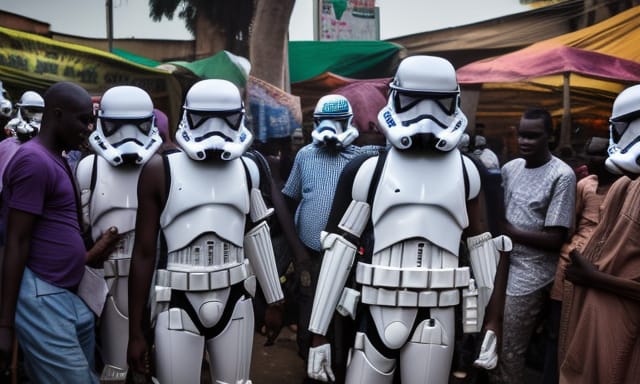
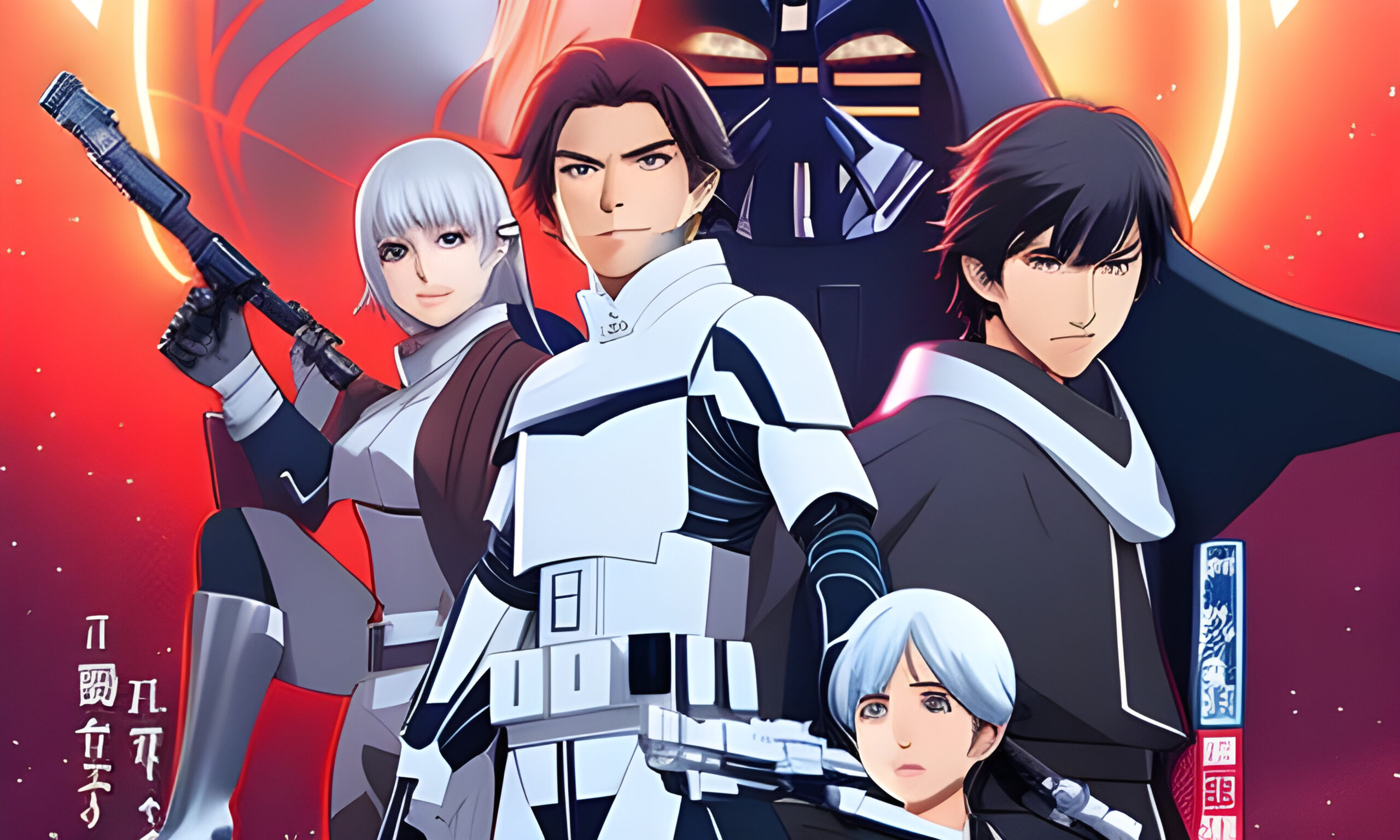
  • Lovecraft

    Lovecraft

    Biography

    Howard Phillips Lovecraft was an American author of horror, fantasy, and science fiction. He was born on August 20th, 1890 in Providence, Rhode Island to Winfield Scott Lovecraft and Sarah Susan Phillips Lovecraft. His father was a traveling salesman and his mother was a homemaker. Lovecraft was a precocious child, reading and writing at an early age. He was a voracious reader, devouring books on a variety of topics, including science, philosophy, and the occult.

    Lovecraft’s parents both died when he was a child, leaving him to be raised by his maternal grandfather, Whipple Van Buren Phillips. His grandfather’s death in 1904 left Lovecraft an orphan, and he was sent to live with his two aunts. During this time, he began to write stories, many of which were published in amateur press magazines.

    Lovecraft’s writing career began to take off in the 1920s, when his stories began to appear in Weird Tales and other pulp magazines. His most famous works include The Call of Cthulhu, The Shadow Over Innsmouth, and At the Mountains of Madness. These stories went on to established Lovecraft as one of the most influential horror writers of the 20th century.

    Lovecraft’s works were highly influential in the development of the horror and science fiction genres. His stories often featured cosmic horror, in which humanity is insignificant in the face of the vast and unknowable universe. He was also a pioneer in the use of psychological horror, in which the fear of the unknown is used to create a sense of dread and unease.

    Lovecraft married Sonia Greene in 1924, but the marriage ended in 1929. He moved to New York City in the 1930s and continued to write until his death in 1937. He is buried in Swan Point Cemetery in Providence, Rhode Island.

    Lovecraft’s legacy lives on in the form of numerous adaptations of his works, including films, television shows, and video games. He is also credited with inspiring a variety of authors, including Stephen King, Neil Gaiman, and Alan Moore. His influence can be seen in a variety of genres, from horror to science fiction to fantasy.

    Some Notable Works

    The Dream-Quest of Unknown Kadath

    The Dream-Quest of Unknown Kadath is a novella by H.P. Lovecraft, first published 1927. It follows the story of Randolph Carter, an American dreamer who embarks on a quest to find the mysterious city of Kadath in the Dreamlands.

    Carter has been dreaming of Kadath for years, and he finally decides to set out on a journey to find it. He travels through many strange lands, encountering bizarre creatures and surreal landscapes along the way. He eventually reaches the city of Ulthar, where he meets an old man who tells him that he must seek out the gods of Kadath in order to gain access to the city.

    Carter then sets off on a perilous journey across the Dreamlands, facing many dangers and obstacles along the way. He eventually reaches the peak of Mount Ngranek, where he finds himself face-to-face with Nyarlathotep, an ancient god who guards the entrance to Kadath. After a fierce battle, Carter is able to defeat Nyarlathotep and gain access to Kadath.

    Once inside, Carter discovers that Kadath is a beautiful city filled with wonders beyond his wildest dreams. He also learns that it is home to many powerful gods and creatures from all over the Dreamlands. After exploring for some time, Carter eventually returns home with newfound knowledge and wisdom from his journey.

    The Call of Cthulhu

    The Call of Cthulhu is a short story by H.P. Lovecraft, first published in 1928. It tells the story of an unnamed narrator who discovers a mysterious cult worshipping an ancient entity known as Cthulhu.

    The narrator begins to investigate the cult and its activities, eventually uncovering evidence that suggests Cthulhu is an ancient alien god-like creature that will one day awaken from its slumber and bring about the end of the world.

    As he delves deeper into the mystery, he finds himself drawn into a terrifying world of madness and horror. In the end, he is left with no choice but to confront Cthulhu itself in order to save humanity from destruction.

    The Dunwich Horror

    The Dunwich Horror is a horror novel by H.P. Lovecraft, first published in 1929. The story follows Wilbur Whateley, a deformed albino child living with his family in the isolated town of Dunwich, Massachusetts. Wilbur is the son of an unknown father and a witch named Lavinia Whateley, and he has been raised to summon an ancient being known as Yog-Sothoth.

    Wilbur’s activities attract the attention of Professor Armitage and his colleagues from Miskatonic University, who are researching the Necronomicon, an ancient book of forbidden knowledge. When Wilbur attempts to open a portal to Yog-Sothoth, Armitage and his team intervene and manage to close it before any harm can be done. However, Wilbur’s twin brother, an invisible entity known as the Dunwich Horror, escapes through the portal and begins wreaking havoc on the town.

    Armitage and his team must now find a way to stop the Dunwich Horror before it destroys everything in its path. With help from Lavinia Whateley and her magical powers, they set out to confront the creature in its lair deep within the hills of Dunwich. After a fierce battle, they manage to defeat it and close the portal once again. In the aftermath of their victory, Armitage discovers that Wilbur was actually trying to protect humanity from Yog-Sothoth rather than unleash it upon them.

    The Whisperer in Darkness

    The Whisperer in Darkness is a 1931 horror novella by H.P. Lovecraft. The story follows Albert Wilmarth, a professor of literature at Miskatonic University in Arkham, Massachusetts. Wilmarth has been studying the folklore of the area and has come to believe that strange creatures known as the “Old Ones” are living in the nearby Vermont hills.

    When Wilmarth begins receiving mysterious letters from a man named Henry Akeley, he travels to Akeley’s home in Vermont to investigate further. There, he discovers that Akeley has been in contact with the Old Ones and is trying to protect himself from them by using a strange device called the “Whisperer in Darkness”.

    Wilmarth soon finds himself caught up in a terrifying battle between humanity and the Old Ones, as he struggles to uncover the truth behind Akeley’s mysterious activities. In the end, Wilmarth must decide whether or not to trust Akeley and his warnings about the Old Ones, or risk his own life to save humanity from their evil plans.

    The Curse of Yig

    The Curse of Yig is a horror story by H.P. Lovecraft and Zealia Bishop. It tells the story of a family living in Oklahoma who are terrorized by a mysterious creature known as Yig, an ancient Native American god of snakes.

    The story begins with the family’s patriarch, Dr. McNeill, receiving a strange letter from his brother-in-law, John Balsam, who has been researching Native American folklore in Oklahoma. In the letter, Balsam warns McNeill about Yig and his curse that will befall anyone who disturbs him or his sacred grounds.

    McNeill dismisses the warning until he discovers that his daughter, Luella, has been having nightmares about Yig and his snake minions. He then decides to investigate further and discovers that Balsam had been killed by a giant snake while exploring an ancient Indian burial mound near their home.

    McNeill soon realizes that Yig is real and is determined to protect his family from the creature’s wrath. He enlists the help of a local medicine man to perform a ritual to ward off Yig’s curse but it fails and Luella is taken away by the snake god.

    McNeill and his wife set out to rescue their daughter but they are too late; she has already been transformed into a giant snake herself. In desperation, McNeill calls upon the power of another Native American god, Quetzalcoatl, to break Yig’s curse and restore Luella back to her human form.

    Quetzalcoatl agrees and uses his power to transform Luella back into her human form but not before exacting a heavy price from McNeill: he must never again disturb Yig or his sacred grounds or else suffer dire consequences. The story ends with McNeill vowing never to forget this lesson and warning others against disturbing Yig or his sacred grounds.

    Dagon

    Dagon is a short story by H.P. Lovecraft about a man who is shipwrecked off the coast of the Pacific Ocean and finds himself stranded on an island. He discovers that the island is inhabited by strange creatures, including a giant creature resembling a fish-man hybrid.

    The man soon realizes that he has stumbled upon an ancient civilization of fish-like creatures, which he calls “Deep Ones.” He also discovers that they worship an ancient god called Dagon, and that they are planning to take over the world.

    The man eventually escapes from the island and returns home, but his experience has left him deeply disturbed and haunted by nightmares of Dagon and his followers.

    The Cthulhu Mythos

    The Cthulhu Mythos is the shared fictional universe created by Lovecraft and expanded upon by other writers. It is a universe populated by a variety of powerful and mysterious entities, including ancient gods, powerful aliens, and cosmic horrors. The Cthulhu Mythos is often referred to as a “cosmic horror” due to its focus on the insignificance of humanity in the face of the vast and unknowable universe.

    The core concepts of the Cthulhu Mythos involve the idea of ancient gods and powerful aliens that exist outside of our reality. These entities are often referred to as “Great Old Ones” or “Outer Gods” and are said to be the source of many of the other gods in the Mythos. These entities are often described as being incredibly powerful and malevolent, and they are often associated with chaos and destruction.

    The Cthulhu Mythos also features a variety of other entities, including “Lesser Gods”, “Great Old Ones”, and “Outer Gods”. These entities are often described as being powerful and mysterious, and they are often associated with dark and sinister forces. These entities are often said to be the source of many of the other gods in the Mythos.

    The Cthulhu Mythos also features a variety of otherworldly locations, such as the city of R’lyeh, the sunken city of Y’ha-nthlei, and the Dreamlands. These locations are often described as being incredibly strange and alien, and they are often associated with dark and sinister forces.

    The Cthulhu Mythos also features a variety of powerful artifacts, such as the Necronomicon, the Shining Trapezohedron, and the Silver Key. These artifacts are often described as being incredibly powerful and mysterious, and they are often associated with dark and sinister forces.

    The Cthulhu Mythos also features a variety of strange and mysterious creatures, such as Deep Ones, Mi-Go, and Shoggoths. These creatures are often described as being incredibly strange and alien, and they are often associated with dark and sinister forces.

    Finally, the Cthulhu Mythos also features a variety of strange and mysterious cults, such as the Cult of Cthulhu and the Esoteric Order of Dagon. These cults are often described as being incredibly sinister and dangerous, and they are often associated with dark and sinister forces.

    The Cthulhu Mythos is an incredibly vast and complex universe, and it has been expanded upon by numerous authors over the years. It is a universe that is filled with mystery and horror, and it is a universe that has captivated consumers for generations.

    The Elder & Outer Gods

    Azathoth (The Dream-Quest of Unknown Kadath, 1926): Azathoth is a powerful cosmic entity that resides in a chaotic void at the center of the universe. He is often referred to as the “Daemon Sultan” and is said to be surrounded by a court of lesser entities. Azathoth is the father of all other gods in Lovecraft’s works. He is the progenitor of Cthulhu, Nyarlathotep, Yog-Sothoth, Shub-Niggurath, Hastur, Dagon, Yig, Tsathoggua, and Nodens.

    Cthulhu (The Call of Cthulhu, 1928): Cthulhu is a powerful, ancient being that resides in the depths of the Pacific Ocean. He is described as a monstrous entity with an octopus-like head and dragon-like wings. Cthulhu is the progeny of Azathoth and Hastur.

    Nyarlathotep (The Dream-Quest of Unknown Kadath, 1926): Nyarlathotep is a mysterious entity that appears in various forms throughout the works of Lovecraft. He is often referred to as the “Crawling Chaos” and is said to be an agent of the Outer Gods. Nyarlathotep is the offspring of Azathoth and created Yog-Sothoth.

    Yog-Sothoth (The Dunwich Horror, 1929): Yog-Sothoth is an omnipresent entity that exists outside of time and space. He is often referred to as the “All-in-One”. Yog-Sothoth is the child of Nyarlathotep..

    Shub-Niggurath (The Whisperer in Darkness, 1931): Shub-Niggurath is an entity of immense power that is said to be the mother of all other gods in Lovecraft’s works. She is often referred to as the “Black Goat of the Woods” and is said to be surrounded by a court of lesser entities. Shub-Niggurath is the creation of Yog-Sothoth.

    Hastur (The Whisperer in Darkness, 1931): Hastur is an ancient, powerful entity that is said to be the ruler of a dimension outside of our own. He is often referred to as the “Unspeakable One”. Hastur is the spawn of Shub-Niggurath and the parent of Cthulhu.

    Dagon (Dagon, 1917): Dagon is an ancient, aquatic god that is said to reside in the depths of the ocean. He is often referred to as the “Lord of the Deep”. Dagon is the spawn of Shub-Niggurath.

    Yig (The Curse of Yig, 1928): Yig is an ancient, serpent-like god that is said to be the father of all other gods in Lovecraft’s works. He is often referred to as the “Father of Serpents”. Yig is the son of Shub-Niggurath.

    Tsathoggua (The Whisperer in Darkness, 1931): Tsathoggua is an ancient, bat-like god that is said to reside in a subterranean realm. This entity is often referred to as the “Sleeping God”. Tsathoggua is another spawn of Shub-Niggurath.

    Nodens (The Dream-Quest of Unknown Kadath, 1926): Nodens is an ancient, powerful entity that is said to reside in a realm outside of our own. He is often referred to as the “Lord of the Great Abyss”. Nodens is the spawn of Shub-Niggurath.