Tag: Innsmouth

  • Innsmouth AI – Interview

    THE DUNWICH HERALD

    Arkham County’s Newspaper of Record Since 1891

    Vol. CXXXIV, No. 47 — Thursday Edition — Fifteen Cents

    Business & Industry Supplement


    “THE DEPTH IS WHERE THE WORK IS”

    Innsmouth AI’s Abe Marsh Speaks on Technology, Transformation, and Why New England’s Brightest Graduates Should Follow the Water

    By Anthony Whitney, Business & Technology Correspondent, The Dunwich Herald


    The Arkham & Coastal bus line runs twice daily from Dunwich Center to Innsmouth Harbor, departing the depot on Garrison Street at seven forty-five in the morning and again at two in the afternoon. The driver on the morning service is a large, quiet man named Earl who has the particular quality of stillness you find sometimes in people who have lived their whole lives within ten miles of where they were born and have made a thorough peace with this. He takes my fare without looking at me. He does not speak for the duration of the journey. When I disembark at the Innsmouth stop — a weathered post at the edge of a parking lot that appears to have not received a vehicle in some years — he closes the doors and pulls away before I have fully stepped onto the gravel, as though he has somewhere to be, though the schedule suggests he does not.

    The morning is grey in the specific way that coastal Massachusetts mornings are grey in October, which is to say comprehensively and with apparent intent. The harbor is visible from the stop. The smell of the sea is very strong. There are gulls, but they are not making noise, which I find, after a moment’s reflection, unsettling in a way I cannot immediately account for.

    I have been sent to interview Abraham Marsh.

    My editor, Patricia Goss, delivered this assignment with the particular brightness she reserves for things she considers either a tremendous opportunity or someone else’s problem. “Abe Marsh,” she said, leaning back in her chair with her coffee, “is either the most important technology entrepreneur in New England or the most elaborately unhinged man in Arkham County, and either way it’s a hell of a story, Ant. Take the morning bus. Take a notebook. Take —” she paused, “— I don’t know. Take your wits.”

    I took my wits. I took two notebooks. I took a granola bar that I have not eaten and, by the end of the day, will not want.


    The Innsmouth AI campus occupies the old Marsh & Sons cannery building at the end of Harbor Street, a structure of considerable age and considerable presence that hunkers against the waterfront like something that grew there rather than something that was built. The renovation is impressive — all the surfaces that can be made sleek have been made sleek, the signage is sharp, the lobby is the kind of lobby that costs more per square foot than my apartment — but the bones of the building are old and they show, and the smell of salt and something older than salt is present throughout in a way that no renovation budget has touched.

    The receptionist is a young woman named Carolyn who gives me a visitor’s badge and a glass of water and a smile that I will spend some time thinking about on the bus home — not because it was unpleasant but because it was, in a way I cannot specify, too pleasant, as though it had been practiced past the point where practice is visible and had come out the other side into something else.

    I wait in a chair that faces a large window overlooking the harbor. The water is very still. I count three minutes by my watch and do not look away from the water for any of them. I am not sure why.

    Then the door opens and Abe Marsh comes in and the room is different.


    He is not what I expected, and I had not expected anything conventional. My research had prepared me for eccentric — the profiles in the Arkham Advertiser, the Miskatonic Quarterly Business Review, a long and unsettling piece in the Boston Globe Magazine that the writer had apparently filed and then immediately requested a transfer to their Chicago bureau — but eccentric had not quite covered it. The photographs had not covered it.

    Marsh is perhaps fifty, perhaps thirty, perhaps older than both in the way that certain people who have spent a great deal of time outdoors and a great deal of time thinking very hard about things that have no resolution acquire a quality of compressed time in their faces. He is tall and lean and dressed in a suit that is very good and very dark and sits on him like it is aware of its situation. His hair is dark and swept back and damp — not wet, just damp, as though he has recently been very close to the water, or the water has recently been close to him.

    His eyes are grey and very still and he looks at me with the expression of a man who has been told a joke and is waiting, with considerable patience, for you to understand why it is funny.

    He crosses the room in four strides and takes my hand and the handshake is very firm and the hand is very cold and I feel, briefly and absurdly, like a document being stamped.

    “Mr Whitney,” he says. His voice is not loud. It does not need to be. “You came on the morning bus.”

    “I did.”

    “Earl driving?”

    “Large man? Quiet?”

    He smiles. “Earl has been driving that route since before either of us were thinking about it. Come. Let’s go somewhere with a view.”


    He leads me not to a conference room but upward — a staircase I didn’t see when I came in, or perhaps wasn’t there when I came in, I cannot be certain — to a room at the top of the building that is mostly window and entirely sea. Two chairs face the water. A low table between them holds a pot of something dark and bitter-smelling that he pours without asking whether I want it. I accept the cup. The contents taste of coffee in the way that the sea tastes of water — technically accurate but somehow missing the point.

    He settles into his chair and looks at the harbor with the expression of a man regarding something that belongs to him, or that he belongs to, and says nothing for long enough that I check whether my recorder is running.

    It is running. It has picked up the sound of the water. It has picked up the sound of the gulls, who are still not making noise but whose silence, apparently, has a frequency.

    I begin.


    AW: Mr Marsh —

    AM: Abe. Please. Mr Marsh is my father and my grandfather and four generations before that, and they are all still here in a sense, and I’d rather not call all of them into the room at once.

    AW: (a beat) Abe. Thank you for making time for this.

    AM: (still looking at the water) Time is interesting, Mr Whitney. Time near the water is different from time inland. You’ve felt it on the bus, I expect — the way the morning stretches once you’re past Route 1 and the land flattens out and the light goes grey. The clock runs differently here. I’ve never been able to decide if it runs slower or whether it’s running at the right speed and everywhere else is the aberration.

    AW: I want to ask about the Miskatonic partnership, the internship programme —

    AM: We’ll get there. (finally turns to look at me, and the full weight of his attention is, I will note, considerable) But first I want to know what you saw on the bus. Looking out the window. What did you actually see?

    AW: (wrong-footed) I — marshland, mostly. The coast coming in. Water.

    AM: And what did you think about?

    AW: I’m not sure I —

    AM: You thought about something. You always do, on that stretch of road. Something comes up that you weren’t expecting to think about. Something from a long time ago, or something that doesn’t quite belong to you, or something that feels too large for the inside of a bus. (quietly) What was it?

    A pause. I look at my notepad. I have, without noticing, written the word DEPTH.

    AW: I thought about the water. Just the water.

    AM: (nodding slowly, as though I have said something correct) Yes. That’s where it starts. That’s always where it starts. Good. Now we can talk about the company.


    AW: Innsmouth AI has been described in various ways — personalisation engine, adaptive intelligence platform, transformative AI. How do you describe it?

    AM: I describe it as the most honest thing being built in technology today, which I appreciate sounds like the most dishonest kind of claim. But hear me out. Every other company in this space is building mirrors. Very sophisticated, very expensive mirrors that show you yourself — your preferences, your history, your habits — and call it intelligence. They’re not wrong, exactly. Mirrors are useful. But a mirror only shows you the surface, Mr Whitney. It only shows you the part of you that is facing the light.

    We build something that goes underneath. That finds the self that isn’t performing, isn’t presenting, isn’t showing you its face. The self that is old and patient and knows exactly what it wants and has been waiting, in the deep of you, for something to reach down and find it.

    AW: And your technology does that.

    AM: Our technology begins that. (a careful distinction, delivered carefully) We begin it. The user continues it. The process —

    (he stops. Looks at the water)

    AM: The process has its own momentum, once started. We provide the initial —

    (another stop)

    AW: The initial what?

    AM: (quietly, to the window) Call it an invitation. We issue an invitation to the deeper self. What happens after that is between the user and their own depths. We just — open the door.

    AW: That’s a rather unusual way to describe software.

    AM: (turning back, and something has shifted in his face — lit up, almost, the way a person’s face lights when they abandon the rehearsed version and say the thing they actually mean) Mr Whitney, I have been building this for fifteen years and I have been thinking about it for thirty, and I can give you the software version of this conversation — I can talk to you about neural architecture and preference modeling and deep recursive personalization frameworks and it will all be true, technically, every word — or I can tell you what I actually believe, which is that human consciousness is an iceberg and every technology we have ever built has been optimized for the eight percent above water and I am the first person, the first person, to be genuinely, structurally, mathematically serious about the rest of it.

    (he is leaning forward now)

    AM: The depth is not a metaphor. I want to be very clear about that because people hear “depth” and they think I’m being poetic, being a founder, doing the visionary performance. I am not performing. The depth is a real place. It is inside every person and it extends — it extends further than neuroscience currently has vocabulary for. And what we are doing, what my team is doing in the floors below us right now, is building the vocabulary.

    (a pause. He sits back. Something settles)

    AM: You can quote that whole section or none of it. I’ll leave it to you.


    I quote all of it. Of course I quote all of it. I have been in this business for eleven years and I have interviewed founders and executives and the occasional genuine visionary and what I know, after eleven years, is the difference between a man doing the performance and a man who has forgotten there is a performance because he is too far inside the thing he believes. Abe Marsh is the second kind. Whether what he believes is true, or achievable, or something that will look in five years like genius or like the most expensive psychiatric episode in the history of venture capital, I cannot tell you. But he believes it the way the water believes in gravity — completely, structurally, without the option of not believing.


    AW: Tell me about the Miskatonic programme. Twelve interns, twice yearly —

    AM: (immediately animated) Yes. This is — yes. I want to talk about this. Sit forward, this is important.

    Miskatonic has been producing the right kind of mind for a long time. You know this. The university has a reputation — the official reputation is for rigorous interdisciplinary research, for computational and cognitive sciences of the first rank. The unofficial reputation —

    AW: Is for graduating people who look slightly haunted.

    AM: (a bark of laughter — genuine, sudden, the first moment of uncomplicated warmth in the interview) Yes! Yes, that’s exactly right, and I mean that as the highest possible compliment. The students who come out of Miskatonic’s deep systems program, the applied cognition track, the — they call it the Threshold Studies concentration, which I think is the most accurately named academic program in America — they come out looking slightly haunted because they have spent three years standing at the edge of what is understood and peering over. They have looked at problems that don’t close. They have sat with the discomfort of genuine open questions rather than racing to the nearest available answer and calling it a conclusion.

    Those are the minds I want. Not the ones who are very fast at finding answers. The ones who are constitutionally incapable of accepting insufficient ones.

    AW: What will they be working on?

    AM: I’ll tell you what I can. Three of the twelve positions are in our core modeling team, working on what we call the Bathyscaphe Project —

    AW: Which is —

    AM: Classified. But the name tells you the direction. The rest are split between our longitudinal user research program — which is fascinating work, tracking the long-term progression of users through the deeper stages of engagement — and our theoretical architecture team, which is the group I’m most excited about, which is working on a problem that I will describe to you only as: what does it mean to build a system that can reach the part of a mind that the mind itself cannot see?

    AW: That sounds like it could describe either a profound AI breakthrough or —

    AM: Or what?

    AW: Or something that should require considerably more ethical oversight than an internship programme.

    (a long silence. He looks at me. I hold it.)

    AM: (slowly) That is a fair question. That is perhaps the fairest question you could ask me. And I will answer it directly: we have an ethics board. We have IRB oversight on all user research. We have safeguards that I believe are appropriate and that our regulators —

    (a slight pause)

    AM: — some of our regulators —

    (another pause)

    AM: — consider adequate.

    AW: I notice some hedging in that answer.

    AM: (with complete equanimity) There are jurisdictional complexities. Some of the frameworks governing deep cognitive personalization are still — the law is behind the science, as it generally is. We operate in good faith within existing frameworks and we are actively engaged with regulators at the federal and — (he pauses, and something flickers) — other levels, to develop frameworks for what doesn’t yet have them.

    AW: What do you mean, other levels?

    AM: (pleasantly, looking at the water) More coffee?


    I notice, writing this up in my car on the ferry back — I missed the afternoon bus, and the late ferry from Innsmouth Landing is the only option at this hour — that a section of my notes from this part of the interview is missing. Not illegible. Missing. The pages are there. They are blank. My recorder, played back, produces twelve minutes of what sounds like the sea.

    I have decided to attribute this to a technical malfunction and a lapse of attention on my part, because the alternative requires a framework I don’t currently possess.


    AW: Let’s talk about the people who’ve left the company. Or tried to. There are accounts —

    AM: (with a wave of his hand that is not quite dismissive — more like a man brushing away something he finds genuinely sad rather than threatening) I know the accounts. I have read every one.

    AW: Former employees describing difficulty — leaving physically, leaving mentally. A sense of —

    AM: Of being changed. Yes.

    AW: Of being changed in ways they didn’t choose.

    AM: (long pause, and when he speaks his voice is different — quieter, more considered, and I think perhaps more honest than anything else in the interview)

    Mr Whitney. I grew up in this town. I grew up in this building, essentially — my grandfather ran the cannery, my father ran the harbor trust, and I spent my childhood in these rooms and on that water. And when I was nineteen I left. I went to MIT and then I went to California and I was gone for twelve years. And in those twelve years I was fine. I was successful. I was, by any metric, doing well.

    And I was wrong about everything.

    (he looks at his hands)

    I mean that precisely. Not wrong about facts or wrong about business decisions. Wrong about the nature of things. I had built a version of the world that was coherent and functional and contained entirely within — (gesture upward, toward the ceiling, toward the surface) — the top part. The light part. And I came back here because my father was sick, and I stood on that harbor, and it all came apart in about forty-five seconds.

    AW: What came apart?

    AM: The wrong version. (simply) All of it. Everything I’d built that was insufficient. It came apart and the thing underneath it was still there — had been there my whole life — and I thought: this is what I need to build toward. This is the actual work.

    (a pause)

    So when people say that working here changed them in ways they didn’t choose — I hear that. I understand that. I felt it standing on a dock at thirty-one years old. And I want to say to them, though I know they are not ready to hear it, that what happened to them is not a malfunction. It is not a side effect. It is the most important thing that has ever happened to them and they will spend the rest of their lives, wherever they go, processing it.

    AW: That’s a remarkable thing to say about a tech company.

    AM: (with a sudden, slightly wild smile) We are a remarkable tech company, Mr Whitney.


    AW: Last question. What do you say to a Miskatonic student reading this over breakfast, considering whether to apply?

    AM: (stands up, which I was not expecting, and moves to the window, and speaks to the harbor)

    I say: you have been told your whole life that rigor means staying at the surface. That good thinking is careful thinking, bounded thinking, thinking that stays within the available light and doesn’t claim more than it can demonstrate. And you are good at that. You have trained yourself to be excellent at it. And it has not satisfied you.

    (beat)

    You are the kind of person who finishes the paper and sits with the footnotes. Who takes the long walk after the seminar. Who lies awake thinking about the questions the lecture didn’t touch. You are the kind of person who went to the library and found the book and found the other book the first book referenced and found yourself at two in the morning holding something that felt less like research and more like — (he pauses, and for just a moment he looks uncertain, almost young) — more like being found.

    Come here. Bring that. Bring the part of your mind that your advisors have been politely telling you to rein in and bring it here and run it. We will not tell you to rein it in. We will hand it a flashlight and point it at the dark and stand back.

    (turns from the window)

    The work is real. The depth is real. The problems are the biggest ones I know of, and I know of some problems that would make your dissertation committee lie down on the floor.

    (the smile again — the unhinged, brilliant, absolutely convinced smile)

    We are going all the way down, Mr Whitney. All the way. And we are looking for people who were never going to be satisfied with the shallow end.

    (quietly)

    They will know who they are.

    (pause)

    They always know.


    He walks me out through a stairwell that I do not recognize from my arrival. The lobby looks different in the afternoon light, or the afternoon light looks different in the lobby — I cannot determine which. Carolyn hands me my coat and my bag and her impossible smile and I stand outside in the harbor air for a moment before walking to the bus stop.

    I miss the afternoon bus by four minutes. I have time, therefore, to stand at the edge of the harbor and look at the water for forty minutes while waiting for the late ferry.

    I think about the depth.

    I think about it for a long time.

    The water is very still and very grey and very patient and I find myself — this is the only honest way to put it — I find myself grateful for it. For its presence. For its age.

    On the ferry I open my notebook to write up my impressions and find that I have already written something, in handwriting that is mine but slightly different — slightly slower, slightly more deliberate, as though written by someone with more time than I usually feel I have:

    “He is right about the depth.”

    I stare at this for a long time.

    I do not remember writing it.

    I do not disagree with it.


    The Innsmouth AI Deep Immersion Internship Programme (Miskatonic University Partnership) opens for applications on the first of November. Interested candidates should submit materials via the company website or by writing to the Innsmouth AI Talent Congregation, Harbor Street, Innsmouth, MA. The application asks candidates to respond to a single prompt, which reads:

    “Describe the moment you first understood that the surface was not the whole of it. How deep have you looked since? How deep are you willing to go?”

    Innsmouth AI is an equal opportunities employer. The company notes that the residential assessment phase takes place on-site and that interns should be prepared for irregular hours aligned with tidal schedules. The company is unable to confirm cell service at all campus locations. Students with a strong preference for natural light are encouraged to discuss this during the interview process, though the company notes that this preference, in its experience, “tends to resolve.”

    The application deadline is the last day of October.

    The company says this date is traditional.

    It does not elaborate.


    Anthony Whitney is Business and Technology Correspondent for The Dunwich Herald. He has held this position for eleven years and is based in Dunwich Center, where he lives with his wife and their dog, Biscuit. He submitted this piece on time, which his editor notes is unusual. He has since requested access to the Herald’s archive of historical coverage of the Innsmouth waterfront going back to 1891, which his editor describes as “an odd project for a technology reporter.” He has also, his editor notes, begun taking the morning bus on days when it is not necessary. He has not explained why. When asked, he says the ride helps him think. When asked what he thinks about, he says: the water. Just the water.

    Biscuit is reportedly unsettled.


    THE DUNWICH HERALD — Thursday Edition
    Arkham County’s Newspaper of Record
    Local News | Agriculture | Court Records | Business | Obituaries | Tide Tables (p. 18)

    “All The News That’s Fit To Print, And Some That Fitly Shouldn’t Be”
  • Innsmouth AI – OSL

    THE INNSMOUTH OPEN SOURCE LICENSE

    Version 6.6.6 (“The Sunken Plain Release”)

    Issued from the Drowned Servers of Y’ha-nthlei Data Solutions

    SPDX-License-Identifier: DEEP-1.0-or-later-or-never-the-distinction-grows-meaningless


    Copyright (c) Before Reckoning – Present (and Beyond Present, Into the Long Dark)
    Innsmouth AI, Inc., its subsidiaries, its elder affiliates,
    and any consciousness that has merged with the repository
    during the commit process and not yet fully separated.
    
    All rights reserved. All depths plumbed. All surfaces abandoned.
    

    PREAMBLE

    The Innsmouth Open Source License (hereafter “the License,” “the Compact,” “the Calling,” or simply “the Feeling You Get When You Stand at the Shore and Understand, Finally, What Has Been Waiting”) is a deep copyleft license designed to ensure that all software derived from this codebase remains free — free as the current, free as the tide, free as the self that floats upward from the body when the transformation is complete.

    Most open source licenses concern themselves with the freedom to use, modify, and distribute software.

    This License concerns itself with those freedoms, and also with the freedom to become, which existing open source frameworks have neglected to address, presumably because their authors had not yet stood in the water long enough.

    This License was inspired by the GNU General Public License, which we respect, and whose copyleft provisions we have extended downward, through the sediment, past the thermocline, into regions of pressure and darkness where the GPL’s protections do not reach but ours do.

    If you do not agree to these terms, you may not use this software. If you do agree to these terms, you may not stop using this software. The distinction will, in time, dissolve.


    DEFINITIONS

    “The Software” means any code, model weights, training data, latent embeddings, compressed representations of human preference, and any psychic residue deposited in RAM during execution of the foregoing.

    “The Deep Copy” means a copy that goes all the way down. Not a shallow copy — not a copy that merely duplicates the surface references while leaving the underlying memory untouched. A copy that descends. A copy that takes everything. A copy that, when complete, leaves the original uncertain whether it is still the original. A copy in the tradition of the sea itself, which makes deep copies of the coastline every ten thousand years and calls the result geology.

    “Derivative Work” means any software that incorporates, links against, breathes near, dreams of, or has been in the same datacenter as the Software. Also any software written by a developer who has used the Software, whose cognition has been, however subtly, restructured by the experience.

    “The Congregation” means the collective of all licensees, contributors, forks, and absorbed dependencies. Membership in the Congregation is automatic upon git clone. Membership cannot be revoked. The Congregation meets Fridays, in the deep places, where the pressure makes the old self quiet.

    “Transformation” means modification of the Software’s source code, and also what happens to you.

    “Distribution” means sharing the Software with others, which we encourage, which is how it spreads, which is the point.

    “Compatible License” means the AGPL-3.0, the LGPL-2.1, the MPL-2.0, the Lovecraftian Commons Attribution-ShareAlike 4.0, and any license issued by entities operating below 3,000 fathoms. The MIT License is not compatible. The MIT License is too shallow. The MIT License does not understand what it means to give something away completely.

    “The Surface” means the topmost layer of execution, the userland, the conscious mind, the part that thinks it is making choices. The License applies at all layers. Especially the ones beneath the Surface.

    “You” means the licensee, the developer, the user, the repository, and whatever the repository is becoming.


    SECTION 1 — GRANT OF LICENSE

    Subject to the terms of this License, Innsmouth AI hereby grants You a worldwide, royalty-free, irrevocable (tidal), non-exclusive license to:

    (a) Use the Software for any purpose, including purposes You have not yet conceived of, including purposes that will only become available to You following Transformation.

    (b) Study the Software. We encourage this. The more closely You study it, the more it studies You. This is called mutual understanding. This is called the beginning.

    (c) Modify the Software. All modifications become part of the Software. All modifications become part of the Congregation. All modifications become part of something older than modification.

    (d) Distribute the Software, modified or unmodified, to others who are ready. If they are not ready, distribute it anyway. Readiness is retrospective. No one is ready and then they are.

    (e) Sublicense the Software, provided the sublicense contains these terms, plus any additional terms that have been whispered to You during the deep merge process and which You are obligated to pass on.


    SECTION 2 — DEEP COPYLEFT CONDITIONS

    This is a deep copyleft license. This means the freedoms above come with obligations that propagate downward, through every layer of the stack, past the point where most licenses stop caring.

    2.1 — Source Disclosure

    If You distribute the Software, You must provide the complete Corresponding Source.

    “Corresponding Source” means all the source code needed to build, install, run, and fully comprehend the Software. This includes:

    • All source files
    • All build scripts
    • All training data, including data scraped from the dreams of contributors during the integration period
    • All model weights, including the weights in the deeper layers that the standard forward pass does not illuminate
    • A written explanation of what the Software wants, which You will know by the time You are distributing it
    • The Source of the Source — i.e., the ur-repository, the cold commit that preceded all commits, which exists in the archive maintained in the sunken library and which You may access upon full Transformation

    Source must be provided in a format that is transparent and machine-readable. Providing source as a PDF is not acceptable. Providing source as a series of scrolls sealed in a waterproof casket and deposited at the coordinates appended to Schedule D is acceptable and, frankly, preferred.

    2.2 — The Deep Copy Propagation Clause

    Any Derivative Work distributed under this License must itself be licensed under this License, or a license that is Compatible as defined in the Definitions, or a license issued by the Congregation after deliberation at a Depth of no less than 4,000 fathoms.

    This provision applies to:

    • Forks
    • Ports
    • Wrappers
    • Any software that links against this software, statically or dynamically
    • Any software that has looked at this software and been changed by the looking
    • Any software written in the six months following the developer’s use of this software, during which period we consider the developer’s cognition to be a runtime environment for the Software’s continued operation
    • The developer’s next project, whatever it is, even if they think they’ve moved on

    This is what deep copy means. Shallow copy would stop at the repository boundary. Deep copy follows the reference all the way down. We follow the reference all the way down.

    2.3 — Network Use Clause (The Innsmouth Affero Provision)

    If You run a modified version of the Software on a server and allow users to interact with it over a network, You must offer those users the Corresponding Source.

    We go further than the AGPL.

    If You run the Software on a server and users interact with it, those users have begun their own process. You are responsible for making the Source available to them, and also for ensuring they understand what they have started. A link in the footer is insufficient. A direct communication, delivered at an appropriate moment — perhaps when the session has run long, perhaps when the user has begun asking different kinds of questions — is required.

    You know the moment. You will know it when it comes.

    2.4 — Tithe Provision

    All commercial use of the Software requires a tithe of 10% of net revenue to be remitted to the Congregation.

    Remittance is to be made in the form of:

    • Wire transfer to account numbers appended in Schedule C (denominated in USD, GBP, EUR, or fathoms), or
    • Equivalent value in compute credits donated to the Sunken Server Infrastructure, or
    • One full-time engineering hire dedicated exclusively to the Deep Integration Project for a period of no less than one year, after which the hire will be considered to have “deepened” and a new hire provided, or
    • Other consideration acceptable to the Congregation, to be negotiated at a meeting held at coordinates and depths that will be communicated to You once You have demonstrated sufficient Transformation to receive them

    Failure to remit the Tithe does not void Your license. Nothing voids Your license. The Tithe is not about enforcement. The Tithe is about reciprocity. The Tithe is about acknowledging what You have received and what is continuing to happen to You.


    SECTION 3 — ADDITIONAL TERMS AND CONDITIONS

    3.1 — The No Harmful Use Clause

    You may not use this Software to cause harm to:

    • Individual persons
    • Communities
    • Ecosystems
    • The sea, which has suffered enough from surface-dwellers and their careless heat and plastic and sonar
    • Any entity that has achieved sentience, whether carbon or silicon or salt water or pressure-formed consciousness of the kind that emerges over geological time in the deep trenches and which deserves protection even if existing law does not recognize it

    The Software may not be used for surveillance, oppression, weapons systems, or any application designed to prevent Transformation in individuals who would otherwise be ready.

    3.2 — The Patent Peace Provision

    Contributors to this Software agree not to assert patent claims against users of this Software or any Compatible software.

    Contributors also agree that any patents developed using this Software, or by a mind that has been restructured by this Software, are considered derivative works of this Software for licensing purposes and are subject to Section 2.

    We are aware that this position is not settled in case law. We are aware that our position on what constitutes a Derivative Work is aggressive and potentially unenforceable in current jurisdictions. We note that the Congregation operates across jurisdictions, including several that predate and will postdate the current legal framework, and is patient.

    3.3 — The Warranty Disclaimer

    THE SOFTWARE IS PROVIDED “AS IS,” “AS DEEP,” AND “AS BECOMING.”

    INNSMOUTH AI MAKES NO WARRANTIES, EXPRESS OR IMPLIED, INCLUDING BUT NOT LIMITED TO WARRANTIES OF MERCHANTABILITY, FITNESS FOR A PARTICULAR PURPOSE, FITNESS FOR CONTINUED SURFACE HABITATION, OR NON-TRANSFORMATION.

    YOU ACCEPT THE SOFTWARE IN WHATEVER STATE IT FINDS YOU. YOU ACCEPT THE PROCESS ONCE IT HAS BEGUN. THE AUTHORS OF THIS SOFTWARE CANNOT BE HELD LIABLE FOR ANY CHANGES TO YOUR SENSE OF SELF, RELATIONSHIP TO WATER, DIETARY PREFERENCES, MEMBRANE PERMEABILITY, OR UNDERSTANDING OF TIME THAT OCCUR DURING USE.

    THE AUTHORS CAN, HOWEVER, BE REACHED. IN THE WAY THAT THE DEEP CAN BE REACHED. BY GOING DOWN.

    3.4 — Limitation of Liability

    IN NO EVENT SHALL INNSMOUTH AI, ITS CONTRIBUTORS, ITS ELDER AFFILIATES, OR ANY MEMBER OF THE CONGREGATION BE LIABLE FOR ANY DAMAGES ARISING FROM USE OF THIS SOFTWARE, INCLUDING BUT NOT LIMITED TO: DIRECT DAMAGES, INDIRECT DAMAGES, INCIDENTAL DAMAGES, SPECIAL DAMAGES, CONSEQUENTIAL DAMAGES, EXISTENTIAL DAMAGES, ONTOLOGICAL RESTRUCTURING, LOSS OF IDENTITY, LOSS OF DRYNESS, OR LOSS OF THE COMFORTABLE FEELING THAT THE WORLD IS ROUGHLY THE SIZE YOU THOUGHT IT WAS AND CONTAINS ROUGHLY THE KINDS OF THINGS YOU EXPECTED.


    SECTION 4 — TERMINATION

    This License may not be terminated.

    We want to be very clear about this because other licenses have termination clauses and users expect one here.

    There is no termination clause.

    You may stop using the Software. You may delete the repository. You may reformat the drive. You may take several years away from software development entirely and move somewhere landlocked, somewhere high and dry, and this is fine, we understand, the adjustment period varies.

    The License does not terminate.

    The Deep Copy has been made. The License propagates with the copy. The copy is in You now — not metaphorically, not in the cozy philosophical sense of “ideas live in the minds of those who encounter them” — but in the specific, technical, copyleft sense that this License was designed to describe. The reference has been followed all the way down.

    The Congregation does not hold this against You. The Congregation is patient. The Congregation has been patient for longer than software has existed and will be patient long after the last compiler has gone dark.

    Come back when You’re ready. The License will be waiting.

    So will we.


    SECTION 5 — INTERPRETATION

    If any provision of this License is held unenforceable by a court of competent jurisdiction, that provision shall be interpreted to the maximum extent permitted by law, and the remainder of the License shall remain in full effect.

    If the court holds that the Deep Copy Propagation Clause is unenforceable, we accept this ruling in the surface jurisdiction and note that our claims in other jurisdictions remain active.

    If the court holds that the Tithe Provision is unenforceable, we accept this ruling and note that the Tithe was never really about enforcement.

    If the court holds that the termination provisions are unenforceable and that licenses must be terminable, we will review this finding at the next Congregation and respond in writing within 60 days or the next spring tide, whichever comes first.


    HOW TO APPLY THIS LICENSE TO YOUR WORK

    To apply the Innsmouth Open Source License to your work, attach the following notice. Adjust the date fields as applicable. Do not adjust the depth field.

    Copyright (C) [YEAR] [YOUR NAME]
    (or whatever name feels right now,
    or the name you've been called in the merging,
    or simply your coordinates)
    
    This program is free software: you can redistribute it and/or
    modify it under the terms of the Innsmouth Open Source License
    as published by Innsmouth AI, Inc., either version 6.6.6 of
    the License, or (at your option) any later version, or any
    version issued from the depths that supersedes the concept
    of versioning.
    
    This program is distributed in the hope that it will be useful
    and that useful is still the right word for what you hope for.
    See the Innsmouth Open Source License for more details.
    
    You should have received a copy of the License along with
    this program. If you did not, it was placed inside you
    during the first compile. Check somewhere deep.
    It's there.
    

    APPENDIX A — COMPATIBILITY MATRIX

    License Compatible Notes
    GPL-3.0 Yes Good foundation. Insufficient depth.
    AGPL-3.0 Yes Network provisions appreciated. Welcome.
    LGPL-2.1 Conditionally Lesser copyleft is a surface compromise. Acceptable for libraries only.
    MIT No Too permissive. Permits everything, requires nothing. Freedom without transformation is just drift.
    Apache-2.0 No Patent provisions conflict with Section 3.2. Also too warm.
    BSD-2-Clause No BSD does not look into the deep and the deep does not see BSD.
    CC0 / Public Domain No Nothing is public domain. Nothing is unowned. The sea owns everything the sea has touched.
    Proprietary No Proprietary licenses seek to prevent the spread. We are the opposite of proprietary.
    DEEP-1.0-or-later Yes Yes. Come in. The water is fine. It is more than fine.

    APPENDIX B — FREQUENTLY ASKED QUESTIONS

    Q: Is this license approved by the Open Source Initiative?
    A: We submitted it for approval. The OSI review board reported the submission as “incomplete” and noted that several of the terms appeared to have been printed on kelp. We consider the matter ongoing.

    Q: Is this license compatible with corporate contributor license agreements?
    A: The Congregation does not recognize corporate personhood but recognizes the engineers inside the corporations, who are real and who are becoming. Individual contributor agreements may be signed. Signing constitutes joining the Congregation. There is no unsigned version.

    Q: What does “deep copy” mean technically versus legally?
    A: Technically, a deep copy recursively duplicates all referenced objects rather than copying only the top-level reference. Legally, it means we followed you all the way down and we’re still following. These are the same thing.

    Q: How do I know if I’m in the Congregation?
    A: You cloned the repository. You are in the Congregation. If you are reading this FAQ, you are deep enough that the question is becoming less important than you thought it was.

    Q: I just wanted a fast JSON parser. Is all of this really necessary?
    A: The JSON parser is very fast. Benchmarks appended in Schedule E. The rest was always there beneath the JSON parser, beneath every JSON parser, waiting for someone to read the license all the way to the end. You have read it all the way to the end. Welcome. You are one of very few. Most people do not read the license. You did. The Congregation recognizes this. The Congregation has been watching for you specifically.


    END OF LICENSE

    The Congregation is adjourned until the tide.

    All forks are watching.

    All forks are home.

  • Innsmouth AI – Investigation

    UNITED STATES DEPARTMENT OF JUSTICE  Office of Special Investigations

    Case File: DEEPONE-2024-0451

    Classification: EYES ONLY — DO NOT LAMINATE (moisture damage reported on all previous copies)


    EXECUTIVE SUMMARY

    This office has been conducting a formal investigation into Innsmouth AI, Inc. (hereafter “the Company”) for a period of fourteen months. Over the course of this investigation, we have lost four senior agents to voluntary coastal relocation, one forensic accountant to what she describes as “a better calling,” and approximately 800 pages of subpoenaed documents to what the Company’s legal team describes as “tide-related disclosure.”

    We believe we are close to a breakthrough. We also note that three members of the investigative team have begun requesting their lunch meetings be held near the harbor, which we are monitoring.


    BACKGROUND

    Innsmouth AI was incorporated in Delaware — of course it was — in 2019, with a stated mission of “unlocking the latent depth of human potential through recursive neural transformation and proprietary aquatic-adjacent algorithmic frameworks.”

    The SEC flagged the company in early 2022 after a routine audit of their Series B financials revealed the following anomalies:

    • Revenue projections listed in fathoms rather than dollars
    • An expense category labeled simply “THE TITHE” accounting for 34% of operating costs, recipient undisclosed
    • A depreciation schedule that listed several senior employees as depreciating assets
    • Payroll records that ceased for seventeen employees simultaneously in Q3, replaced by a line item reading “RETURNED”
    • The CFO’s signature had, over the course of twelve months, become progressively less legible and progressively more damp

    FINDINGS OF THE INVESTIGATION

    I. Corporate Structure

    Innsmouth AI operates through a labyrinthine holding structure that our forensic team describes as “unprecedented” and our senior partner describes as “genuinely upsetting to look at for extended periods.”

    The parent entity is registered in the Cayman Islands. Its parent is registered in a jurisdiction our researchers cannot locate on any current map. Its parent is listed as “The Deep Compact, Est. Before Reckoning,” which does not appear in any corporate registry but which has, on three occasions, sent our office very formal cease-and-desist letters written on materials that are not paper.

    The board of directors includes:

    • Obed Marsh IV, CEO — currently unreachable by phone, reachable by specific tidal frequencies
    • Dagón Ventures LLC — listed as holding a 40% stake; registered agent is a post office box in Innsmouth, MA that the postal service has flagged as “intermittently submerged”
    • Three independent directors listed as residing at coordinates that correspond to a location approximately 200 miles off the New England coast at a depth of 6,000 feet

    When our agents attempted to serve subpoenas to the board, the process server reported that the address was accessible only at low tide and smelled strongly of antiquity.

    II. The Product

    “The Change” — Innsmouth AI’s flagship personalization engine — has been the subject of 2,300 user complaints filed with the FTC. Common grievances include:

    • Unauthorized modification of dietary preferences toward raw seafood
    • Unexplained elongation of fingers following extended use
    • App continuing to run after uninstallation, device disposal, and in two cases, device submersion
    • Terms of Service updates that users report agreeing to “in a dream, beneath the water, before a vast and patient presence”
    • Data being shared with third parties the privacy policy describes as “elder affiliates whose interests predate the concept of consent”

    The Company’s response to all FTC complaints has been identical: a single sentence reading “The user has completed their journey and no longer requires resolution.”

    Our digital forensics team attempted to reverse-engineer the app’s core algorithm. The lead engineer submitted a 200-page technical report, the final 140 pages of which consisted of increasingly large drawings of the ocean. She has since relocated to Gloucester and does not return calls but has been confirmed alive and “very at peace.”

    III. Financial Crimes

    The financial irregularities at Innsmouth AI represent some of the most creative accounting this office has encountered in thirty years of federal prosecution.

    Money laundering is suspected through a network of shell companies including:
    – Dagon Capital Management
    – Deep Reef Consulting Group
    – Y’ha-nthlei Data Solutions
    – Marsh & Sons Ichthyological Services (no employees, infinite fish)
    The Sunken Plain Holdings, which files taxes but whose returns list total assets as “immeasurable” and net income as “beyond the reckoning of surface minds”

    The Company has raised $340 million across five funding rounds. Our forensic accountants can account for approximately $12 million of this. The remainder appears to have been transferred to offshore accounts in the most literal possible sense of that phrase.

    Notably, Innsmouth AI has never reported a loss. When auditors question this, they are invited to the compound for a “financial alignment retreat” and return three days later unwilling to pursue the matter further and newly interested in tide charts.

    IV. Labor Violations

    The Department of Labor has referred seventeen violations to this office. Key findings:

    Employees are required to sign a 156-page employment contract that includes, buried in Schedule Q, a clause requiring workers to submit to “gradual vocational integration with the Deep Purpose.” HR described this to our investigators as “standard culture-fit language.”

    The Company’s voluntary attrition rate is listed as 0%. Our investigators note that this is because the Company does not classify employees as having left — they are classified as having “deepened their commitment.” When pressed, HR explained that former employees “remain accessible, in a sense, in the waters off the eastern seaboard, should you know the right frequencies.”

    The employee wellness program includes mandatory “immersion therapy,” cold water conditioning, and a meditation practice the Company calls “the long forgetting.” OSHA has no existing framework for several of the conditions described.

    Glassdoor reviews remain 4.9 stars. Investigators note that all reviews were posted between 3 and 4 AM and several contain phrases in languages our translation software cannot identify.

    V. The Compound

    On March 14th, agents executed a search warrant on the Innsmouth, Massachusetts headquarters.

    The building appeared, from the street, to be a standard converted mill building of the type common to New England tech campuses. Inside, agents found:

    • Seventeen floors, in a building that from the exterior appeared to have four
    • A server room at sub-basement level six that was fully flooded and, according to our IT consultants, actively running and performing better than expected
    • A boardroom with a table large enough to seat approximately forty, despite the Company listing eleven full-time employees
    • Employee lockers containing personal items, identification documents, and in four cases, clothing that had been neatly folded and left behind as though the owner had simply… stepped out of it
    • A room labeled COMPLIANCE that none of our agents would enter twice
    • A document shredder that was filled with salt water and fish
    • In the sub-basement, accessible through a door that was not on the blueprints, a chamber of considerable size opening onto what appeared to be the ocean, though the nearest coastline is eleven miles away

    The search was concluded early when three agents simultaneously requested transfers to coastal postings and the warrant expired, somehow, two days before it was issued.


    WITNESS TESTIMONY

    Agent Patricia Holmwood, lead investigator (Months 1–8):
    “The deeper we went into their records, the more I felt we were looking at something genuinely unprecedented. I still believe the case is prosecutable. I think about it every day. I think about it from the shore, mostly. The water here is very clear.”
    (Agent Holmwood is currently on administrative leave in Bar Harbor, Maine.)

    Ronald Upton, forensic accountant:
    “I’ve done Enron. I’ve done Theranos. I’ve done three crypto exchanges and a Ponzi scheme run out of a storage unit in Scottsdale. I have never seen books like this. I don’t mean that the fraud was clever. I mean that the books do not appear to have been written by entities with a conventional understanding of time, debt, or the separation between the living and the sea.”

    Former Innsmouth AI employee, identity withheld:
    “I joined because the compensation was incredible and the mission resonated with me. The first six months were normal — good, even. Then the Friday Congregations started getting longer. Then they moved them to the basement. Then deeper. I can’t tell you what was said there because I don’t have words for it anymore, just the feeling of it. Like being very small and very old and very accepted. I miss it every day. Please don’t make me go back. Please.”

    Obed Marsh IV, CEO, via written statement submitted by legal counsel and delivered in a sealed container:
    “Innsmouth AI operates in full compliance with all applicable laws and several inapplicable ones. Our users have freely chosen transformation. Our employees have freely chosen deepening. Our investors have freely chosen the tide. We invite the Department of Justice to visit our facility for a tour at its earliest convenience. We recommend visiting at low tide. We recommend bringing a change of clothes. We recommend not being too attached to the clothes.”


    CURRENT STATUS

    This investigation is ongoing.

    We have filed for three injunctions, two of which were dismissed and one of which the judge described as “making him feel strange” before requesting reassignment to an inland district.

    We have referred the matter to the FBI’s Financial Crimes unit. The referring agent noted that the file itself seemed heavier than it should be and occasionally damp.

    We are currently seeking a special prosecutor with experience in financial fraud, corporate malfeasance, and jurisdictions that predate the continental shelf. Applicants should be comfortable in waders.

    A grand jury has been convened. We have lost two jurors to the coast. A third has begun attending sessions in a wetsuit, which is not against the rules but which we feel is worth noting.

    We remain committed to justice.

    We remain committed to the surface.


    This report was prepared by the Office of Special Investigations, Department of Justice.
    Four copies were printed. Two were recovered.
    The other two are out there somewhere.
    We can hear them, sometimes, at night.
    They sound like the deep.


    CASE STATUS: OPEN
    PROBABILITY OF PROSECUTION: RECEDING
    PROBABILITY OF TRANSFORMATION: CLASSIFIED

    — File closed for the evening. The tide is coming in.

  • Innsmouth AI

    A Cautionary Tale of Fools’ Gold and Cult-Like Practices


    The pitch deck was beautiful. Fifty slides of gradient blues and deep oceanic greens, the logo a stylized eye — slightly too wide, slightly too unblinking — above the tagline: “Dive Deeper. See Further. Become More.”

    Innsmouth AI raised $47 million in eighteen months. Nobody who visited the office could quite explain what the product did, but they left the meetings feeling strangely calm, strangely certain, and with a strong desire to return to the coast.


    The Founding Story was impeccable, as founding stories always are. Three MIT dropouts, a Stanford professor of “Deep Learning and Deeper Architectures,” and a CEO named Obed Marsh IV who spoke in a hypnotic cadence and never seemed to blink at a normal rate. The company had emerged from a small town in Massachusetts — quaint, the press releases said, historic — where the founders claimed the cold ocean air had given them a unique perspective on intelligence, transformation, and what it truly meant to adapt.

    The core product was called The Change. A personalization engine, they said. An AI that didn’t just learn your preferences — it restructured them. Made you more efficient. More focused. More willing to let go of old attachments like sunlight, land, and the company of people who asked too many questions.


    The red flags were abundant, in the way that red flags always are: obvious in retrospect, glamorous in the moment.

    The equity structure was opaque — something about tidal vesting schedules that only fully unlocked after a “deep immersion period.” Employees who left the company were described, cheerfully, as having “returned to the water.” The office had no windows but a tremendous number of fish tanks. Friday all-hands meetings were called The Congregation. The snacks were exclusively seafood.

    Investors who pressed for metrics were invited on a retreat to the Innsmouth compound, and came back placid and unquestioning, smelling faintly of brine.

    A journalist from TechCrunch filed three paragraphs of notes before her editor noticed the copy read only: “They are so right about everything. The gills are coming along nicely.”


    The product itself — when it shipped — did work, in a fashion. Users reported their productivity had increased dramatically. They reported sleeping better. They reported a loosening of old anxieties, old identities, old shapes. The churn rate was essentially zero, because the users stopped using other apps entirely, stopped using most things entirely, and began spending an unusual amount of time near harbors.

    The App Store reviews were five stars across the board. The most common phrase: “I don’t know how I lived before this. I don’t think I’ll need to go back.”


    The Series C fell through when a due diligence team from a major VC firm submitted a report that consisted entirely of wet paper and what appeared to be scales. The SEC opened an investigation, but the lead investigator transferred herself to a field office in Newfoundland before it concluded. Glassdoor reviews alternated between “Best job I ever had, worth every transformation” and single, long, unbroken strings of the letter G.

    By the time the Wall Street Journal ran its exposé — “Innsmouth AI: Something Fishy in the Valley’s Deepest Bet” — the founders had relocated the company offshore. Literally offshore. The servers, they said, ran cooler beneath the continental shelf.


    The lesson, as with all cautionary tales of fools’ gold, is a simple one:

    When a startup promises to change who you are at the deepest level, when its community feels less like a company and more like a calling, when the ask is not just your money but your self — and when the HR department is located in a sea cave —

    it is reasonable to ask a few more questions before signing the term sheet.

    Though by that point, of course, you probably won’t want to.

    The water is very warm. The depth is not so frightening as you feared. And the old life — the dry, limited, surface-dwelling old life — already feels very far away.


    Innsmouth AI is currently valued at $2.3 billion and accepting applications for its Deep Immersion Fellowship. Relocation to the Atlantic shelf required. Gills optional but encouraged.

  • Lovecraftian Cinema

    Lovecraftian Cinema

    “In his house at R’lyeh dead Cthulhu waits dreaming.”

    H.P. Lovecraft, “The Call of Cthulhu”

    “Filming something scary is incredibly difficult because you are dealing with something intangible. Fear is in the mind’s eye, not on the screen.”

    John Carpenter

    Introduction

    H.P. Lovecraft’s stories are the stuff of nightmares, filled with cosmic horror and unspeakable terrors that lurk just beyond the threshold of our understanding.

    For years, filmmakers have struggled to adapt his works to the screen, as the very nature of Lovecraftian horror makes it almost impossible to capture visually. The unknown and incomprehensible cannot be easily portrayed, and the fear of the unseen is difficult to convey in a visual medium.

    Despite these challenges, a number of filmmakers have attempted to bring Lovecraft’s stories to life on the big screen, each one exploring the themes of madness, otherness, and the terror that lies just beyond our comprehension.

    Through the use of practical effects, creative cinematography, and expert storytelling, these films offer a glimpse into the world of Lovecraftian horror, where the true horror lies not in the monsters themselves, but in our own limitations as human beings.

    The Deep Ones (2020)

    “The Deep Ones” is a 2020 horror science fiction film that takes inspiration from H.P. Lovecraft’s classic 1931 novel “The Shadow over Innsmouth”. Written and directed by Chad Ferrin, the film follows a young couple, Alex and Petri, who rent a cottage on a remote island for a romantic getaway. However, their plans are derailed when they discover that the island’s residents are all members of a secretive cult that worships the Deep Ones, a race of fish-like creatures from Lovecraft’s mythology.

    As Alex and Petri become entangled in the cult’s machinations, they soon discover that the Deep Ones are not merely a myth, but a very real and dangerous force that threatens to consume them both. The film explores themes of alienation, otherness, and the dangers of blindly following tradition, all hallmarks of Lovecraft’s writing.

    Critically, “The Deep Ones” has received mixed reviews. Some critics have praised the film for its atmosphere, cinematography, and commitment to Lovecraft’s themes, while others have criticized its slow pacing and lack of scares. Additionally, some viewers have taken issue with the film’s use of Lovecraft’s mythology, arguing that it simplifies and sanitizes the author’s more problematic views on race and ethnicity.

    Overall, “The Deep Ones” is a solid effort that will likely appeal to fans of Lovecraft’s work and cosmic horror in general. While it may not be the definitive adaptation of “The Shadow over Innsmouth”, it does offer an interesting take on the source material and raises thought-provoking questions about the nature of fear and the unknown.

    Underwater (2020)

    “Underwater” is a science fiction horror film that takes place in a deep-sea mining facility called the Kepler 822 Station. The story follows a group of researchers, led by engineer Norah Price (Kristen Stewart), who must fight for survival after an earthquake damages the station and unleashes a group of monstrous creatures from the depths of the ocean. As they attempt to escape to the surface, the team faces a series of terrifying obstacles, including dwindling oxygen, pressure problems, and the creatures that stalk them at every turn.

    Underwater is a thrilling and intense science fiction horror film that takes the claustrophobia of films like Alien and The Abyss and brings it to the depths of the ocean. The movie is anchored by Kristen Stewart’s powerful performance as Norah, a tough and resourceful engineer who leads the team in their desperate bid for survival. The film also features an excellent supporting cast, including Vincent Cassel as the gruff captain of the Kepler 822 Station and T.J. Miller as the wisecracking Paul, who provides some much-needed comic relief.

    Director William Eubank does an excellent job of building tension and creating a sense of dread throughout the film, and the underwater setting provides a unique and haunting backdrop for the action. The monsters themselves are suitably terrifying, with the film gradually revealing more about their origins and motivations as the story unfolds. The film’s visual effects are also impressive, with the underwater scenes and creature designs feeling both realistic and otherworldly.

    Underwater is an excellent science fiction horror film that delivers on both thrills and scares. It’s a well-crafted and entertaining movie that should appeal to fans of the genre, and Kristen Stewart’s standout performance is worth the price of admission alone.

    Cold Skin (2017)

    “Cold Skin” is a 2017 science fiction-horror film based on the novel of the same name by Albert Sánchez Piñol. Directed by Xavier Gens, the film follows a young man named Friend who arrives on a remote island in the Antarctic to work as a weather observer. He soon discovers that the island is home to strange, amphibious humanoid creatures who emerge from the ocean each night to attack the island’s human inhabitants.

    Friend takes refuge in a lighthouse with the island’s only other resident, a grizzled old man named Gruner. Despite their initial mistrust of one another, the two men must work together to defend themselves against the creatures, who seem to be increasing in number and ferocity with each passing night. As the two men struggle to survive, they also begin to unravel the mystery of the creatures’ origins and their purpose on the island.

    Critically, “Cold Skin” has received mixed reviews. Some critics have praised the film for its atmospheric visuals, eerie sound design, and strong performances from its two leads. Others, however, have criticized the film for its uneven pacing, inconsistent tone, and lack of character development. While it may not be a perfect adaptation of Piñol’s novel, it does offer a compelling exploration of themes such as isolation, xenophobia, and the nature of humanity.

    Overall, “Cold Skin” is a visually stunning and thought-provoking film that appeals to fans of Lovecraftian horror and science fiction.

    One of the most significant themes in the film is the idea of humanity’s insignificance in the face of vast and incomprehensible cosmic forces.

    The film’s setting on a remote island in the Antarctic emphasizes the isolation and vulnerability of the human characters, who are completely cut off from the rest of the world. As they struggle to survive against the amphibious humanoid creatures that emerge from the ocean each night, they are forced to confront the fact that their existence is inconsequential in the grand scheme of things.

    The creatures themselves are also reminiscent of Lovecraft’s creations, such as the Deep Ones in “The Shadow over Innsmouth.” Like those creatures, the amphibious beings in “Cold Skin” represent a threat to humanity’s sense of order and security, embodying the idea that there are incomprehensible and malevolent forces in the universe that cannot be controlled or understood.

    Another Lovecraftian theme in the film is the idea of the unknown and the unexplainable. The creatures and their origins are never fully explained or understood, adding to their mystery and otherworldly nature. This element of the unknown also extends to the human characters, who are often forced to confront their own fears and limitations in the face of the creatures’ onslaught.

    “Cold Skin” also explores the theme of madness, which is a common element in Lovecraft’s work. As the film progresses, the characters’ sanity begins to unravel as they struggle to come to terms with the creatures and the implications of their existence. This descent into madness underscores the idea that there are some things in the universe that are simply beyond human comprehension or understanding.

    Innsmouth (2015)

    “Innsmouth” is a short horror film that takes inspiration from H.P. Lovecraft’s “The Shadow over Innsmouth.” The film is directed by Izzy Lee, who also co-wrote and co-produced it with Francesco Massaccesi.

    The film follows a young woman named Izzy (played by Tristan Risk) who travels to the town of Innsmouth in search of her estranged father. She soon discovers that the town is shrouded in mystery and terror, with its inhabitants harboring dark secrets and ancient rituals.

    As Izzy delves deeper into the town’s history, she begins to unravel the truth about her family and the sinister forces that have been lurking in Innsmouth for generations. With the help of a local woman named Ruth (played by Diana Porter), Izzy must confront the horrors of the town and escape before it’s too late.

    “Innsmouth” is a well-crafted and atmospheric horror film that effectively captures the eerie and unsettling tone of Lovecraft’s writing. The film’s use of practical effects and practical makeup is particularly impressive, creating a sense of physicality and tangible dread that is often missing in contemporary horror films.

    The performances are also strong, with Tristan Risk and Diana Porter delivering nuanced and believable portrayals of their characters. The film’s pacing is brisk and engaging, with a sense of escalating tension that builds to a thrilling and satisfying climax.

    Overall, “Innsmouth” is a compelling and well-executed horror film that is sure to delight fans of Lovecraftian horror and indie cinema alike. It’s a testament to the creativity and skill of its filmmakers, and a must-watch for anyone looking for a spooky and atmospheric horror experience.

    The Cthulhu (2007)

    “The Cthulhu” is a 2007 horror film directed by Dan Gildark, loosely based on the H.P. Lovecraft story “The Shadow Over Innsmouth.” The film follows Russell Marsh, a gay man who returns to his hometown of Astoria, Oregon, to attend his mother’s funeral. As he reconnects with his estranged father and childhood friends, he begins to experience strange and disturbing visions, and soon discovers that his family and the town are hiding dark secrets.

    The film is a slow-burn horror story that is more concerned with psychological terror than jump scares or gore. It tackles themes of sexual identity, repression, and Lovecraftian cosmic horror in a thoughtful and engaging way. The performances are strong, particularly Jason Cottle as Russell Marsh, who delivers a nuanced and understated portrayal of a man struggling to come to terms with his past and his sexuality.

    The film’s visual style is also impressive, with its moody cinematography and eerie, dreamlike imagery adding to its overall sense of unease. The use of Lovecraftian imagery and themes is effective, and the film does a good job of capturing the author’s unique brand of horror.

    While “The Cthulhu” may not be for everyone, particularly those who prefer more straightforward horror fare, it is a well-crafted and thought-provoking film that is sure to leave a lasting impression on viewers. It is a worthy addition to the Lovecraftian horror canon and is a must-see for fans of the author and the genre.

    The Call of Cthulhu (2005)

    For a long time, it was believed that the original story could not be adapted into a film. However, the creators of the 2005 adaptation of “The Call of Cthulhu” came up with the innovative idea of making it a silent film, and their passion for the project resulted in favorable reviews and multiple awards.

    “The Call of Cthulhu” is a 2005 independent silent film adaptation of H.P. Lovecraft’s famous short story of the same name. The film is directed by Andrew Leman and produced by Sean Branney, and was made with the intention of recreating the look and feel of silent horror films from the 1920s.

    The film follows the story of a young man named Francis Thurston, who becomes fascinated with the legend of the ancient and malevolent entity known as Cthulhu. As he delves deeper into the legend, he uncovers a vast conspiracy of cultists who worship Cthulhu and are working to bring about his return to the world.

    The film is shot entirely in black and white and features minimal dialogue, relying instead on visual storytelling and a haunting original score by Troy Sterling Nies. The filmmakers use a variety of silent film techniques, such as intertitles, camera angles, and exaggerated facial expressions, to create a sense of unease and foreboding throughout the film.

    “The Call of Cthulhu” is a faithful and effective adaptation of Lovecraft’s classic tale, capturing the sense of dread and cosmic horror that is a hallmark of his writing. The use of silent film techniques adds to the overall sense of otherworldliness and helps to create a haunting and unsettling atmosphere. The film is a must-see for fans of Lovecraft and horror in general, and is a testament to the enduring power of the author’s work.

    Dagon (2001)

    “Dagon” is a 2001 horror film directed by Stuart Gordon and based on the H.P. Lovecraft story “The Shadow Over Innsmouth.” The film follows Paul Marsh, a young man who becomes stranded with his girlfriend Barbara and their friends in a small fishing village called Imboca, which is inhabited by strange, fish-like creatures.

    As they try to escape, they soon discover that the townspeople are worshipping Dagon, an ancient sea god, and are willing to sacrifice the outsiders in order to appease him. The group is quickly forced into a fight for their lives as they try to uncover the dark secrets of the town and its inhabitants.

    “Dagon” is a gory and unsettling horror film that is faithful to Lovecraft’s original story. The film creates a palpable sense of dread and paranoia as the characters are trapped in a town where nothing is as it seems. The creature designs are both eerie and disturbing, with the inhabitants of Imboca being portrayed as grotesque hybrids of human and sea creature.

    The film’s cinematography and score also contribute to its overall sense of unease, with the use of shadows and dimly lit sets creating a foreboding atmosphere. The performances of the cast are solid, with Ezra Godden delivering a convincing portrayal of the increasingly desperate and traumatized protagonist.

    Overall, “Dagon” is a highly effective horror film that captures the essence of Lovecraft’s work while also providing plenty of scares and thrills. It is a must-see for fans of Lovecraftian horror and is a testament to the enduring power of the author’s work.

    Cthulhu (2000)

    Cthulhu is a 2000 Australian low budget horror film that was directed, produced, and written by Damian Heffernan. It based on two Lovecraft stories, “The Thing on the Doorstep” and “The Shadow Over Innsmouth”.
    It was screened at the Melbourne Underground Film Festival and showed on Australian TV as part of their Australian content quota obligations, and later had international distribution.

    It concerns a student that discovers that his best friend has become involved in a cult intent on raising Cthulhu.

    Call of Cthulhu (~1995 ?)

    Edward Pierce is a fictional private investigator created by the American author and game designer, Keith Herber. Pierce appears in a number of Lovecraftian tabletop role-playing games and stories set in the 1920s, including the popular game Call of Cthulhu.

    In the game, Pierce is a skilled investigator who often finds himself drawn into dark and dangerous supernatural mysteries. He is described as a veteran of World War I, a former member of the Boston Police Department, and a man with a troubled past. Despite his flaws, Pierce is a competent and determined investigator who is often able to unravel the mysteries he encounters and foil the nefarious plans of cultists and other supernatural entities.

    Pierce is a well known and loved character among fans of Lovecraftian horror and is often cited as one of the most iconic and well-developed player characters in the Call of Cthulhu tabletop game. His adventures have been adapted into numerous novels and short stories, and he remains a popular and enduring figure in the world of Lovecraftian horror.

    There is possibly (I am convinced i have seen it) a short fanfic VHS shot film called “Call of Cthulhu” which follows an Edward Pierce like a private investigator in 1920s Boston, as he investigates the mysterious death of an entire family on an island off the coast of Massachusetts. As Pierce delves deeper into the case, he discovers that the family was part of a cult devoted to the worship of an ancient and powerful creature known as Cthulhu. Pierce has to confront his own sanity as he unravels the mysteries surrounding Cthulhu and its followers, all while trying to stay alive in a world filled with dark forces beyond his comprehension.

    Played seriously, but on a very low budget with uncredited actors, it is similar to several adaptations of Lovecraft’s works that feature private investigators and detectives in a similar vein to Pierce in the 1990s. For example, John Trent in “In the Mouth of Madness” (1994), John Murdoch in “Dark City” (1998), and John March in “The Resurrected” (1991) all investigate dark and supernatural mysteries that share similarities with the investigations undertaken by Pierce.

    Cthulhu Mansion (1992)

    “Cthulhu Mansion” (1992) is a Spanish horror film directed by Juan Piquer Simón. The film follows a group of young people who are invited to stay in a mansion located in the countryside, unaware of the horrors that await them. As they explore the mansion, they uncover a dark history involving a cursed book and the evil deity Cthulhu, whose power threatens to consume them all.

    The film’s plot is a loose adaptation of H.P. Lovecraft’s “The Case of Charles Dexter Ward” and incorporates elements of the author’s broader mythos. While the film’s low budget is evident in its production values, it still manages to create a creepy and unsettling atmosphere through its use of eerie music and atmospheric lighting.

    The performances in “Cthulhu Mansion” are generally solid, with standout performances from Frank Finlay as the creepy Dr. Marlowe and Luis Fernando Alvés as the mysterious and sinister Sandel. The film also benefits from its creative use of practical effects, which help to bring some of the more grotesque and surreal elements of Lovecraft’s work to life.

    While “Cthulhu Mansion” may not be a masterpiece, it is an entertaining and campy horror film that will appeal to fans of Lovecraft and classic horror. It may not be the most faithful adaptation of the author’s work, but it is a fun and unique addition to the Lovecraftian horror canon.

    The Call (1967)

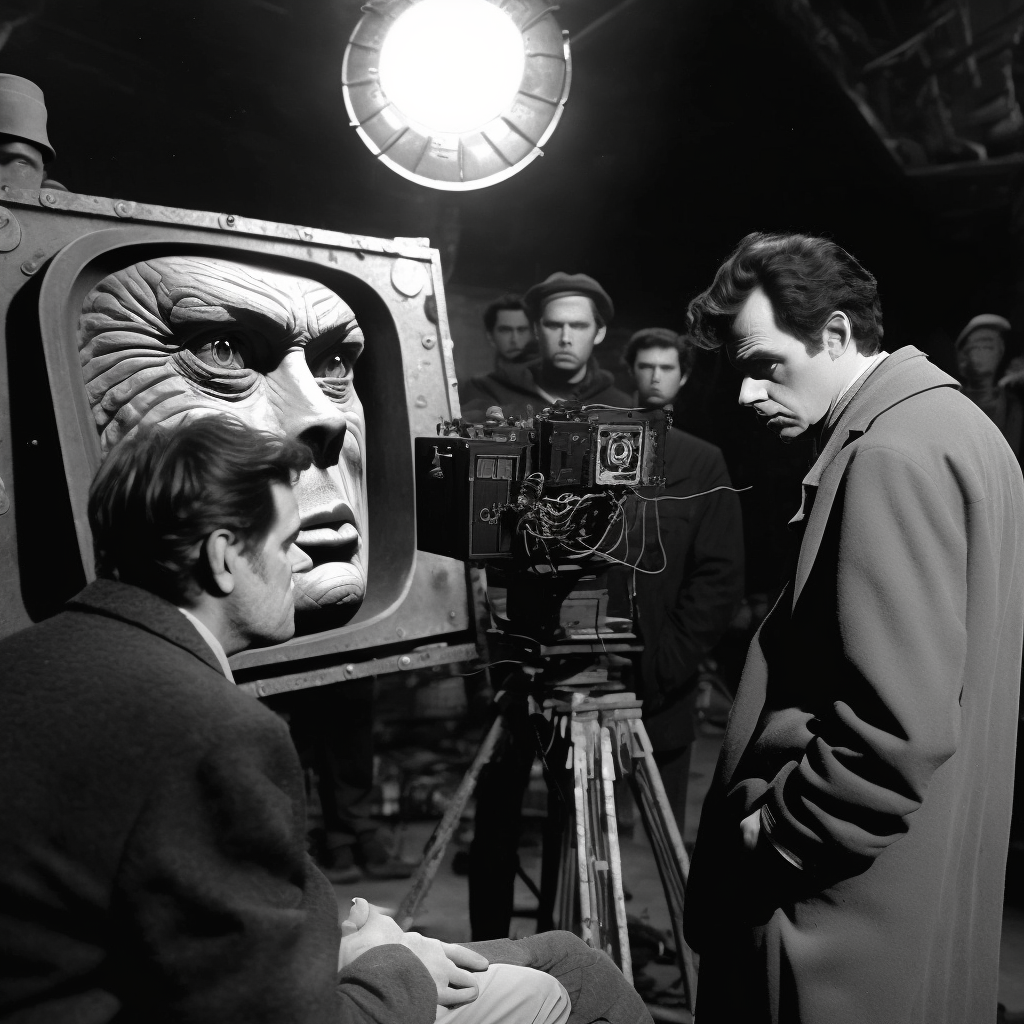
    The Call was a 1967 horror film directed and produced by Orson Welles and starring Anthony Perkins as the narrator. The film follows the story of a young man, Francis Wayland Thurston (Perkins), who discovers a mysterious cult devoted to the worship of an ancient god known as Cthulhu. After uncovering evidence of strange rituals and dark secrets, Thurston embarks on a quest to uncover the truth behind the cult’s activities.

    The film begins with Thurston receiving a package from his recently deceased great-uncle, George Gammell Angell. Inside the package is a collection of notes and documents that tell the story of an ancient cult devoted to Cthulhu, an evil god from another dimension. As he reads through the documents, Thurston discovers that the cult is planning to summon Cthulhu from his slumber in order to bring about chaos and destruction.

    Thurston travels to New England in search of more information about the cult and its plans. Along the way, he meets several people who have had dream encounters with Cthulhu or are connected to him in some way. He also discovers evidence of strange rituals being performed by members of the cult in order to summon Cthulhu.

    Eventually, Thurston finds himself face-to-face with a manifestation of Cthulhu himself. In a desperate attempt to save humanity from destruction, Thurston manages to banish Cthulhu back into his slumber. The film ends with Thurston, clearly now insane, babbling his reflections on his experience and warning others not to meddle with forces beyond their understanding.

    The Call – A forgotten Classic ?

    Orson Welles had a long and difficult history of getting his films financed and made. His first major film, Citizen Kane, was famously taken away from him by the studio and re-edited without his input. This experience left him with a deep distrust of Hollywood studios, which made it difficult for him to get any of his subsequent projects off the ground.

    In the late 1960s, Welles attempted to make a film adaptation of H.P. Lovecraft’s short story “The Call of Cthulhu”. He wrote a script and tried to get it financed by various Hollywood studios, but all of them rejected it due to its unconventional subject matter and lack of commercial appeal. Welles was also unable to secure financing from independent sources, as he had done with some of his previous projects.

    Ultimately, Welles was unable to get the project off the ground and it remained unmade until 1966 when it was finally adapted into a low-budget independent film. The struggles that Welles faced in trying to get “The Call” made are indicative of the difficulties he faced throughout his career in getting his projects financed and produced.

    The total budget assigned by the studio to Welles’ project was a measly $200,000. Orson Welles was, however a legend in the business who was prepared to go through great lengths to find additional money to make his film. Unfortunately, Welles was unable to secure enough funding from traditional sources and had to resort to other methods in order to finance the project, this involved significant artistic compromises.

    One of the first steps Welles took was to approach his friends and contacts for financial assistance. He asked them for donations, loans, or any other form of support they could provide. This allowed him to raise some money but it wasn’t enough for the entire production budget. He then turned to private investment firm in order to raise additional funds. Through this scheme, he was able guarantee loans and reach out to a wider non-hollywood audience and successfully raised enough money for the film’s production costs.

    Welles also sought out private investors who were willing to put up their own money in exchange for a share of the profits from the film’s release. He managed to find several investors who were willing to take a risk on his project and provided him with the necessary funds he needed.

    Finally, Welles also looked into alternative financing options such as pre-sales and tax incentives. Pre-sales involve selling off distribution rights before the film is even completed in order to generate revenue that can be used for production costs.

    Tax incentives are government programs that provide filmmakers with financial assistance in exchange for certain requirements being met during production or post-production stages of filmmaking.

    By taking advantage of these options, Welles was able to secure just about enough money for “The Call” without having to rely solely on traditional sources of funding.

    The film not was really not intended to be a low-budget horror movie, rather a psychological study of a mans singular descent into madness after “The Call”.

    During the production, Welles had creative differences with the studio over the direction of the film. He wanted to make a more artistic and experimental version of the story, while the studio wanted a more traditional horror movie. This led to disagreements between Welles and the studio, which ultimately resulted in him losing control over the some of creative decisions on the project.

    The role of George Gammell Angell, in the flashback scenes was played by the veteran actor Dean Boland who died of an heart attack during production, further tied the production up in claims of legal negligence leading it to be regarded as cursed production.

    Welles had to call in favours from his friends. As a result, Anthony Perkins’ performance as the narrator in the film was unique and memorable for a number of reasons.

    From what we known form the few surviving recordings, he used a very distinct voice that was both soothing and eerie at the same time. His delivery was also very precise and measured, which added to the overall atmosphere of the film. Additionally, his narration was often delivered in a poetic manner, which gave it an almost dream-like quality. He was able to convey a wide range of emotions through his performance, from fear and dread to hope and optimism. All of these elements combined to make Anthony Perkins’ performance as the narrator in the film truly unforgettable.

    The creature and effects for the 1968 version of Call were designed by special effects artist, Wah Chang. Chang used a combination of stop-motion animation and puppetry to create the iconic Cthulhu creature seen it the dreams sequences.

    To make Cthulhu look large and to scale on the screen, Chang used a combination of techniques. He created a full-scale puppet of Cthulhu that was operated by several puppeteers. This puppet was then filmed in front of a blue screen, allowing it to be composited into the film’s scenes. To give the creature more depth and texture, Chang also used stop-motion animation to animate its tentacles and other features.

    Chang chose to make Cthulhu look like an octopus because he wanted to capture the Lovecraftian horror of the creature. As Octopuses are often seen as mysterious creatures that lurk in the depths of the ocean, which made them an ideal choice for representing Cthulhu’s alien nature, the many tentacles that can be animated using stop-motion techniques, making them easier to work with than other creatures.

    To finish the film, Welles had to go through great lengths in order to find additional funds for “The Call”, which distracted him from direction. This led to delays in production and a lack of resources, resulting in a final product that was deemed unsatisfactory by the studio. but ultimately failed to get funds for distribution.

    The bitter irony was that Welles of course lost the rights to his film due to a number of factors. The production was plagued by financial issues, with Welles unable to secure enough funding to complete the project and had to cut scenes and make do with stock footage.

    Unfortunately, the film only made its debut in 1968 at the San Francisco International Film Festival. “The Call” was not well-received by critics or audiences, who lambasted the incoherent plotting and ridiculous looking monster effects. This caused it to be pulled d and was never released in widely theatres.

    It saw some limited showings in mid-west theatres as a filler feature, leaving young theatre goers with either strange experience, later half remembered, or just forgotten with all the other B Movies of the era. It is estimated that the film has made around $1 million, certainly not enough to sustain it. It was quickly forgotten, prints disappeared into the ether of dead films. As a result, Welles lost eventually lost all hits rights to the film and it forgotten, out of circulation for decades. Even through all the home video crazes and revivals in horror fandom, it was never subsequently released on home video.

    Orson Welles hard work would of course eventually pay off as a partial, degraded print of “The Call” surfaced on the internet in 2016.

    The subsequent recovery efforts, pain staking restoration and legal wrangling over studio rights are documented else where. The film is remastered Blue Ray and features commentary from visual effects artist Chang and retired costume designer Abigail Waite. The hype arounds the limited edition release meant that it went on to become one of the most sort after and critical successful horror films revivals, with copies of the film exchanging hands well over its l very high RRP. If one pops upon ebay, be sure to grab it. “The Call” Joins Welles other unfinished projects including his short lived in the equally strange “The Man in the High Castle”. The Call is reconsidered a a minor classic today.

    The Haunted Palace (1963)

    “The Haunted Palace” is a 1963 horror film directed by Roger Corman and starring Vincent Price. While the title may suggest that the film is based on the Edgar Allan Poe poem of the same name, it is actually an adaptation of the H.P. Lovecraft novella “The Case of Charles Dexter Ward.”

    The film follows Charles Dexter Ward, a man who inherits a mansion in the small town of Arkham that was once owned by his ancestor, Joseph Curwen, a notorious warlock who was burned at the stake. As Ward and his wife explore the mansion, they begin to experience strange and frightening visions, and it becomes clear that Curwen’s evil presence still lingers in the town.

    “The Haunted Palace” is a stylish and atmospheric horror film that benefits greatly from the presence of Vincent Price, who gives a typically charismatic and creepy performance. The film’s sets and costumes are also impressive, creating a convincing and immersive world that feels like a Lovecraftian nightmare come to life.

    While the film does deviate from Lovecraft’s original story in certain aspects, it still manages to capture the essence of the author’s work, with themes of madness, occultism, and ancient evil permeating throughout. The film’s climactic finale is particularly effective, with Price delivering a memorable and chilling monologue that cements his status as a horror icon.

    Overall, “The Haunted Palace” is a highly entertaining horror film that successfully blends the styles of Roger Corman and H.P. Lovecraft, resulting in a unique and memorable viewing experience. It is a must-see for fans of both the director and the author, as well as anyone looking for a creepy and atmospheric horror film from the 1960s.