Zero Trust is a security model that is gaining popularity among security architects and professionals. In the past, many organizations relied on a perimeter-based security model, where network traffic was trusted if it came from within the organization’s network perimeter, but untrusted if it came from outside. However, with the rise of cloud computing, mobile devices, and remote work, this model has become increasingly outdated and ineffective.
Zero Trust, on the other hand, assumes that all network traffic is untrusted, regardless of its origin or destination. It is based on the principle of “never trust, always verify,” meaning that every user, device, and network resource must be authenticated and authorized before being granted access to the network or data. This is done through a combination of identity and access management (IAM), network segmentation, and continuous monitoring and analysis of user and device behavior.
Principles
Some key principles of Zero Trust include:
Least privilege access: Users and devices should only be granted access to the resources they need to do their jobs, and nothing more.
Multi-factor authentication: Users should be required to authenticate themselves using at least two methods, such as a password and a fingerprint or smart card.
Micro-segmentation: The network should be segmented into small, isolated zones, with access controlled at each segment.
Continuous monitoring and analysis: User and device behavior should be monitored in real-time, with alerts raised if suspicious activity is detected.
Zero Trust is not a specific product or technology, but rather a security model that can be implemented using a variety of tools and techniques. Some common technologies used in Zero Trust architectures include firewalls, VPNs, IAM systems, and security information and event management (SIEM) platforms.
Zero Trust is a comprehensive security model that can help organizations better protect their sensitive data and assets in an increasingly complex and dynamic IT environment.
Multi-factor authentication
Multi-factor authentication (MFA) is a key component of the Zero Trust security model, as it helps to ensure that only authorized users are granted access to sensitive resources. MFA is a method of authentication that requires users to provide two or more forms of authentication before they are granted access to a resource.
The three factors of authentication are:
Something the user knows (e.g. a password or PIN)
Something the user has (e.g. a smart card or token)
Something the user is (e.g. biometric data like a fingerprint or face scan)
In the context of Zero Trust, MFA is used to verify the identity of users before granting them access to resources. This helps to reduce the risk of unauthorized access, even if a user’s password or other credentials have been compromised.
Some common examples of MFA implementation in Zero Trust architectures include:
Smart cards or tokens: These physical devices are used to generate a one-time code that the user enters along with their password to access a resource.
Biometric authentication: This involves using biometric data like fingerprints or face scans to verify a user’s identity.
SMS-based authentication: This involves sending a one-time code to the user’s mobile phone via SMS, which they enter along with their password to access a resource.
Mobile apps: Some applications provide MFA functionality through a mobile app that generates a one-time code that the user enters along with their password to access a resource.
FIDO (Fast IDentity Online) protocols: These open standards for authentication support a range of authentication methods, including biometric data, smart cards, and one-time codes.
It’s important to note that MFA is not a silver bullet for security, but it can significantly increase the security of authentication in Zero Trust architectures.
Microsegmentation
Microsegmentation is another key component of the Zero Trust security model. It involves dividing a network into small, isolated segments, each with its own set of access controls. This helps to reduce the risk of lateral movement within the network, as attackers who gain access to one segment will not be able to move laterally to other segments without proper authorization.
Microsegmentation is typically implemented using firewalls or network virtualization technologies that can apply access controls at the segment level. Each segment can be configured with its own set of access controls, based on factors such as the user’s identity, the type of device being used, and the sensitivity of the data or resource being accessed.
Some common examples of microsegmentation implementation in Zero Trust architectures include:
Application-level segmentation: Applications can be segmented into smaller components, each with its own set of access controls. For example, a database application could be segmented into separate components for data access and administration, with access controls applied to each component.
Network-level segmentation: Network segments can be created to isolate different types of traffic, such as internal versus external traffic, or different types of data traffic (e.g. email, file transfers, etc.).
Virtualized segmentation: Virtualization technologies like hypervisors and software-defined networking (SDN) can be used to create virtual segments within a physical network, each with its own set of access controls.
Endpoint-level segmentation: Endpoint devices can be segmented based on factors like the user’s identity, the device type, and the sensitivity of the data being accessed. Access controls can be applied at the device level to prevent unauthorized access to resources.
Microsegmentation is an effective way to reduce the risk of lateral movement within a network, and is an important component of the Zero Trust security model. By dividing a network into smaller, isolated segments, organizations can better protect their sensitive data and resources, and reduce the impact of any security breaches that may occur.
Least privilege
Implementing the principle of least privilege is a key component of the Zero Trust security model, especially in highly regulated environments where compliance requirements are strict. Here’s a practical example of how Zero Trust can be implemented to enforce the principle of least privilege:
Let’s say that you’re the security architect for a healthcare provider, and you need to ensure that only authorized users have access to patient data. Here’s how you could use Zero Trust to enforce the principle of least privilege:
User authentication: Implement multi-factor authentication (MFA) to ensure that users are who they claim to be. This helps to prevent unauthorized access to patient data, even if a user’s password or other credentials have been compromised.
Identity verification: Verify the user’s identity using a trusted identity provider (IDP) that can authenticate the user’s credentials and check their authorization level. This ensures that users are only granted access to the patient data that they are authorized to access.
Role-based access control: Implement role-based access control (RBAC) to restrict access to patient data based on the user’s role within the organization. For example, doctors and nurses may have different levels of access to patient data based on their job responsibilities.
Data encryption: Encrypt patient data at rest and in transit to protect it from unauthorized access. This ensures that even if patient data is stolen or intercepted, it cannot be read without the appropriate decryption keys.
Microsegmentation: Use microsegmentation to divide the network into smaller, isolated segments, each with its own set of access controls. This helps to reduce the risk of lateral movement within the network, as attackers who gain access to one segment will not be able to move laterally to other segments without proper authorization.
By implementing these Zero Trust controls, you can ensure that only authorized users have access to patient data, and that they are only able to access the data that they need to do their jobs. This helps to reduce the risk of data breaches and helps to ensure compliance with strict regulatory requirements.
Continuous monitoring and analysis
Continuous monitoring and analysis is an important concept in cybersecurity that involves the ongoing collection, analysis, and interpretation of data to detect and respond to security threats in real-time. It is a critical component of the Zero Trust security model, which emphasizes the need for continuous verification and authentication of all users and devices on a network, and the ongoing monitoring of all network activity to identify and respond to potential threats.
Continuous monitoring and analysis involves the use of various tools and technologies to collect and analyze data from across the network, including data from devices, applications, and user activity. This data is then analyzed using advanced analytics and machine learning algorithms to identify potential threats, anomalies, or suspicious behavior.
Some common examples of continuous monitoring and analysis in cybersecurity include:
Network traffic analysis: This involves the analysis of network traffic to detect potential security threats, such as malware, phishing attempts, or other malicious activity.
Endpoint monitoring: This involves the ongoing monitoring of endpoints, such as laptops, desktops, and mobile devices, to detect potential threats, such as unauthorized access attempts, malware infections, or suspicious behavior.
User behavior analysis: This involves the analysis of user behavior to detect potential insider threats, such as employees who may be intentionally or unintentionally putting sensitive data at risk.
Application monitoring: This involves the ongoing monitoring of applications to detect potential security vulnerabilities or exploits, such as SQL injection attacks or other types of web-based attacks.
Continuous monitoring and analysis is critical for identifying and responding to potential security threats in real-time, and is an important component of the Zero Trust security model.
By using advanced analytics and machine learning algorithms to analyze data from across the network, organizations can quickly detect and respond to potential threats, reducing the risk of data breaches and other types of cyber attacks.
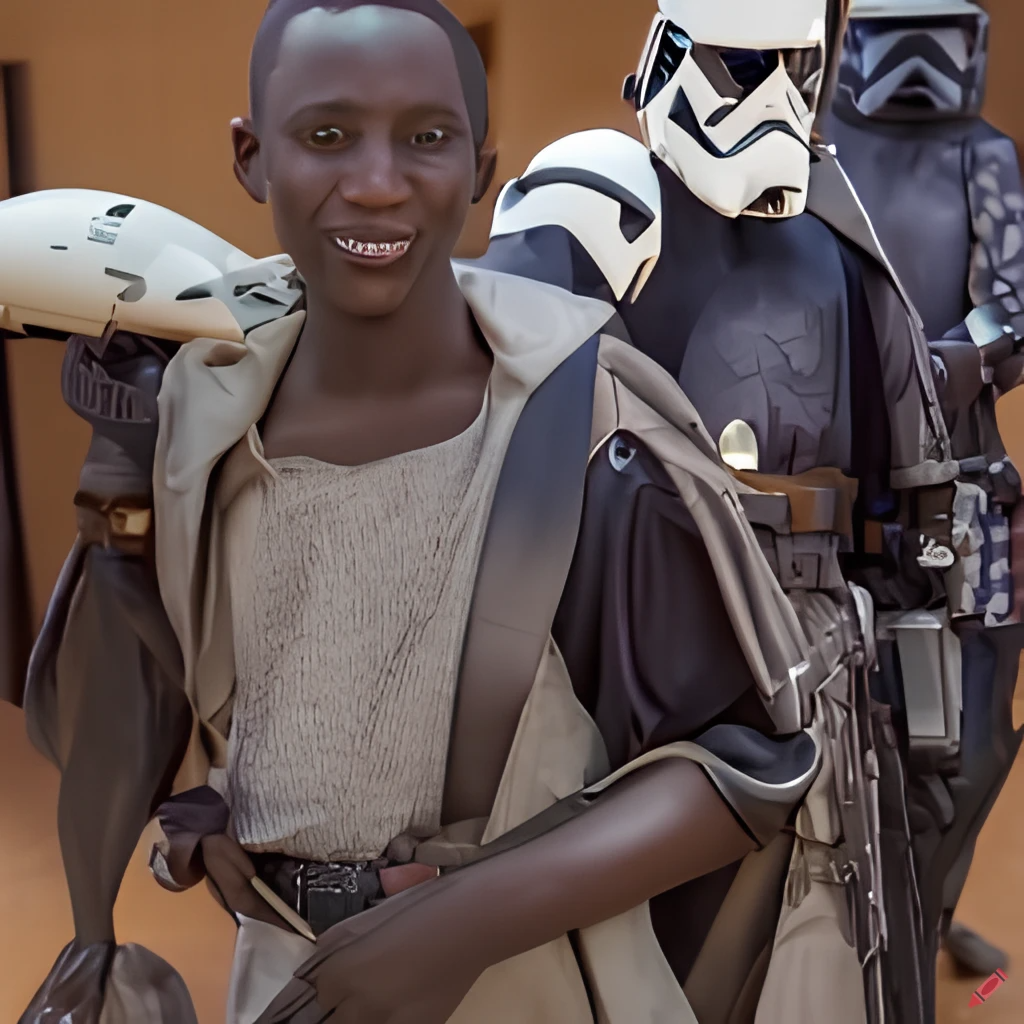
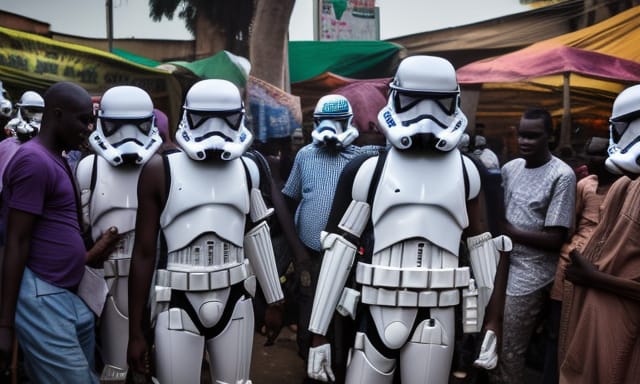
The hot Nigerian sun beat down on the bustling marketplace as vendors haggled with customers over prices. Amidst the crowd, a small group of filmmakers were discussing their latest project – an ambitious low-budget remake of the Star Wars trilogy, set in an Afro-futuristic universe with Africanized names for the main characters.
“Okay, for the first film, we’ll call it ‘Nyoka Wars: The Spark of Freedom’,” said the director, a tall, lanky man with a thick Yoruba accent.
“Great name, boss!” replied one of the producers, a rotund Igbo man.
“Who’s gonna play Lucuana Ostu?” asked the makeup artist, a young Hausa woman.
“We’ll hold auditions next week,” said the director. “But for now, let’s focus on the droids. RU4R and CEPIO are our comedic duo, so we need actors with good comic timing.”
Meanwhile, in a small village on the outskirts of Lagos, a group of aspiring filmmakers were discussing their own sci-fi epic, set in a dystopian future where robots had taken over the world.
“We’ll call it ‘Ife Robot’,” said the director, a quiet, serious man with a shaved head. “It’s about a young girl who teams up with a group of rebels to overthrow the robot overlords and restore humanity to its rightful place.”
“That sounds amazing!” said the producer, a jovial man with a thick Igbo accent. “But how are we gonna film all the special effects on our budget?”
“We’ll have to get creative,” said the director. “Maybe we can use miniatures and practical effects instead of CGI. And for the robots, we can dress up actors in costumes and use clever camera angles to make them look bigger.”
As the two film crews worked on their respective projects, they faced many challenges and setbacks. The Nigerian heat was unforgiving, and equipment often broke down due to the harsh conditions. But through it all, they persevered, driven by their passion for storytelling and their desire to put African sci-fi on the map.
Finally, after months of hard work and dedication, both films were completed. “Nyoka Wars: The Spark of Freedom” had become a hilarious, irreverent romp through a galaxy far, far away, filled with slapstick droid antics and over-the-top action scenes. “Ife Robot”, on the other hand, was a gritty, dystopian thriller that explored themes of oppression and resistance, with stunning practical effects and an unforgettable performance by its young lead actress.
As the films premiered to packed theaters across Nigeria, audiences were amazed by what they saw. Never before had African sci-fi been so boldly and imaginatively represented on the big screen. And though the films were very different in tone and style, they both spoke to the resilience, creativity, and innovation of African filmmakers, and the limitless potential of African sci-fi as a genre.
Nigerian sci-fi cinema, often referred to as “Nollywood Sci-Fi,” is a growing genre of African cinema that merges elements of traditional African storytelling with science fiction and fantasy themes. While Nollywood is primarily known for its low-budget, straight-to-DVD productions, the sci-fi genre is pushing boundaries and challenging expectations.
One of the pioneers of Nigerian sci-fi cinema is filmmaker Kunle Afolayan, who directed the 2009 film “The Figurine.” The movie tells the story of two friends who find a mystical statue and are faced with a series of supernatural events. The Figurine was widely acclaimed, and it opened up new opportunities for Nigerian sci-fi filmmakers.
Since then, Nollywood has produced a variety of sci-fi films, ranging from post-apocalyptic tales to futuristic dramas. Many of these films focus on social and political issues in Nigeria and the wider African continent. For example, “Elysium,” a 2019 Nigerian sci-fi film, depicts a dystopian world where the wealthy live in a floating city, while the poor are left to struggle on a desolate earth.
Another notable Nigerian sci-fi film is “Hello, Rain,” which premiered in 2018. The film tells the story of a woman with mystical powers who controls the weather, but is faced with societal pressure to conform to expectations. The film is visually stunning and uses special effects to create a world that is both familiar and otherworldly.
One of the challenges facing Nollywood sci-fi is the lack of resources, which limits the quality of special effects and sets. However, this has not stopped filmmakers from pushing boundaries and using their creativity to produce compelling stories.
In summary, Nigerian sci-fi cinema is a rapidly growing genre that is pushing boundaries and challenging expectations. While it may not yet have the resources of Hollywood, it is producing innovative and thought-provoking stories that draw on African culture and address social and political issues.
Mars, the red planet, has been a fascination for humans for centuries. With recent advancements in space technology, the possibility of humans visiting and even colonizing Mars in the near future is becoming increasingly more realistic. However, long before humans had the capability to physically travel to Mars, authors have been exploring the planet through the lens of science fiction literature.
Mars has served as a backdrop for countless science fiction stories, ranging from classic works like H.G. Wells’ “War of the Worlds” to contemporary works like Andy Weir’s “The Martian.” Through these stories, authors have explored the potential challenges and opportunities that would come with colonizing Mars. These stories have also given readers a chance to experience the red planet and its mysteries in ways that would otherwise be impossible.
One of the most notable authors of Mars-based science fiction is Kim Stanley Robinson. His “Mars Trilogy” – “Red Mars,” “Green Mars,” and “Blue Mars” – is considered a classic of the genre. In these novels, Robinson explores the social, political, and environmental implications of human colonization on Mars. The books are widely regarded for their attention to scientific detail and their nuanced exploration of complex ethical and social issues.
Other notable works of Martian science fiction include “The War of the Worlds” by H.G. Wells, “Stranger in a Strange Land” by Robert A. Heinlein, and “The Martian” by Andy Weir. These novels explore a range of topics, from the challenges of surviving on an alien planet to the potential consequences of human colonization.
Through these works of science fiction, readers are able to experience the thrill of exploration and discovery on a planet that is still largely unknown to humans. These stories offer insights into the potential opportunities and challenges that come with human exploration and colonization of Mars, as well as the ethical dilemmas that may arise.
As we continue to explore the mysteries of the universe, Mars will remain a key destination for both scientific and literary exploration. For anyone interested in the possibilities of space exploration and the wonders of science fiction, Mars-based novels offer an exciting and thought-provoking journey to the red planet and beyond.
Reading list
The Martian by Andy Weir – A science fiction novel about an astronaut who is stranded on Mars and must figure out how to survive until he can be rescued.
Red Rising by Pierce Brown – A science fiction novel set in a dystopian future where society is divided into color-coded classes, with the protagonist rising from the lowest class to lead a rebellion against the ruling class on Mars.
The War of the Worlds by H.G. Wells – A classic science fiction novel in which Martians invade Earth and attempt to conquer it.
The Mars Trilogy by Kim Stanley Robinson – A series of three science fiction novels that explore the colonization and terraforming of Mars by humans.
A Princess of Mars by Edgar Rice Burroughs – A classic science fiction novel about a Confederate soldier who is transported to Mars and becomes embroiled in the planet’s conflicts.
Martian Time-Slip by Philip K. Dick – A science fiction novel set on a Mars colony where time moves differently, and the protagonist becomes embroiled in a conflict between two groups vying for control.
Red Planet by Robert A. Heinlein – A science fiction novel set on a Mars colony where a group of teenagers uncover a conspiracy that threatens the safety of the colony.
Stranger in a Strange Land by Robert A. Heinlein – A science fiction novel about a human raised on Mars who returns to Earth and becomes embroiled in a cultural and political revolution.
The Sands of Mars by Arthur C. Clarke – A science fiction novel set on a human colony on Mars, where a journalist uncovers a sinister plot.
The Martian Chronicles by Ray Bradbury – A collection of interconnected short stories that explore the colonization and eventual abandonment of Mars by humans.
The Space Trilogy by C.S. Lewis – A series of three science fiction novels that includes a visit to Mars as part of a larger cosmic adventure.
The Memory of Mars by Raymond F. Jones – A science fiction novel about a group of scientists who discover ancient Martian artifacts that reveal the planet’s past and future.
Mars by Ben Bova – A science fiction novel about a journalist who travels to Mars to cover the first human mission to the planet and becomes embroiled in political and personal drama.
The Light of Other Days by Arthur C. Clarke and Stephen Baxter – A science fiction novel that explores the consequences of a technology that allows people to view any point in space and time, including the past and future of Mars.
Martian Time Jump by Mike Resnick – A science fiction novel about a team of scientists who travel back in time to ancient Mars and become embroiled in a power struggle between rival factions.
Mission to Mars by Buzz Aldrin and John Barnes – A science fiction novel that imagines a human mission to Mars in the near future and explores the personal and political struggles of the crew.
Old Mars edited by George R.R. Martin and Gardner Dozois – A collection of short stories by various authors that imagines a version of Mars as it was popularly imagined in early science fiction, including ancient civilizations, lost cities, and alien encounters.
Mars Crossing by Geoffrey A. Landis – A science fiction novel about a group of astronauts who must navigate a treacherous journey to Mars in order to save a stranded colleague.
The Red Trilogy by Linda Nagata – A series of three science fiction novels that explore a near-future conflict between China and the United States on Mars.
The Martian Race by Gregory Benford – A science fiction novel that imagines a global competition to be the first to send humans to Mars, and the personal and political struggles of the competing teams.
The First Men in the Moon by H.G. Wells – A classic science fiction novel that explores a journey to the moon and encounters with alien life, including a trip to Mars.
The Children of Mars by David Gerrold – A science fiction novel that imagines a future where humans have colonized Mars, and explores the personal and societal consequences of genetic engineering.
The Ghosts of Mars by George Alec Effinger – A science fiction novel that imagines a future where Mars has been terraformed, and explores the personal and political struggles of the colonists.
The Expanse series by James S.A. Corey – A series of science fiction novels that includes Mars as one of the major settings, and explores the political and personal conflicts between Earth, Mars, and the outer planets.
The Medusa Chronicles by Alastair Reynolds and Stephen Baxter – A science fiction novel that explores a journey to Mars and encounters with ancient alien technology.
The City of the Chasch by Jack Vance – A science fiction novel that imagines a future where Mars is inhabited by a variety of alien species, and explores the conflict between them and a human explorer.
The Martian Engineer’s Notebook by Margaret Atwood – A science fiction novella that imagines a future where humans have colonized Mars, and explores the personal and philosophical struggles of a Martian engineer.
The “Red” trilogy
Linda Nagata is a science fiction author known for her imaginative and thought-provoking works. She has published a number of novels and short stories, including several set in the near-future world of her “Red” trilogy.
The “Red” trilogy includes three novels – “The Red: First Light,” “The Trials,” and “Going Dark” – that explore a near-future conflict between the United States and China, with Mars serving as a major setting. The series follows a team of soldiers equipped with advanced combat technology as they struggle to navigate the political and military complexities of the conflict.
Nagata’s other works include “The Bohr Maker,” which won the Locus Award for Best First Novel, and its sequels “Deception Well” and “Vast.” These novels are set in a future where biotechnology has advanced to the point where individuals can modify their bodies and minds in radical ways, leading to social and political upheaval.
Nagata’s works are known for their attention to detail, complex characters, and thought-provoking themes. She often explores the intersection of technology, politics, and human nature, and her stories frequently feature strong female characters who navigate complex ethical dilemmas.
Overall, if you are a fan of thought-provoking, character-driven science fiction, Linda Nagata’s novels are definitely worth checking out.
“Mars Trilogy”
Kim Stanley Robinson is a science fiction author known for his detailed and meticulously researched works that often explore themes of ecological and social change. Robinson has written a number of novels set on Mars, including his “Mars Trilogy” – “Red Mars,” “Green Mars,” and “Blue Mars” – which follow a group of colonists as they establish a human settlement on the planet and navigate the political and environmental challenges of living in an alien environment.
Robinson’s depiction of Mars is both scientifically accurate and imaginative, taking into account the real-world challenges of living on the planet while also incorporating fantastical elements such as terraforming and the discovery of alien life. His characters are complex and multi-dimensional, grappling with the personal and political implications of their actions in a rapidly changing world.
One of Robinson’s strengths as a writer is his ability to weave together scientific and technical details with engaging storytelling and deep character development. His novels often incorporate elements of hard science fiction, exploring the real-world implications of emerging technologies and scientific discoveries, while also exploring the psychological and emotional impact of these changes on individual human beings.
Overall, Robinson’s works are known for their imaginative world-building, complex characters, and insightful explorations of the implications of scientific and technological change. If you are a fan of science fiction that grapples with big ideas and explores the intersection of science and society, his novels set on Mars are definitely worth checking out.
Common Mars Themes
The lessons from novels set on Mars can vary depending on the specific work in question, but there are a few themes and messages that tend to emerge across many of these stories. Here are a few lessons that can be gleaned from reading Martian novels:
The importance of science and exploration: Many Martian novels emphasize the importance of scientific research and exploration in expanding human knowledge and understanding of the universe. By setting stories on Mars – a planet that has long been a focus of scientific study and exploration – these novels highlight the ways in which science and exploration can push the boundaries of human understanding and inspire new discoveries.
The challenges of living in a harsh and unfamiliar environment: Mars is an incredibly challenging environment, with harsh conditions and a lack of many of the resources necessary for human survival. Martian novels often explore the difficulties and dangers of living in such an environment, emphasizing the need for careful planning and innovation in order to ensure survival.
The potential consequences of human actions on other planets: Many Martian novels explore the ways in which human actions on other planets can have far-reaching consequences, both for the planet itself and for the people who live there. By examining the environmental and social impact of human colonization and exploration, these novels highlight the need for responsible stewardship of our resources and our environment.
The power of human resilience and adaptability: Despite the challenges of living on Mars, many Martian novels emphasize the resilience and adaptability of human beings in the face of adversity. By showcasing characters who are able to innovate and overcome obstacles in order to survive, these novels highlight the ways in which human beings are capable of overcoming even the most daunting challenges.
Overall, Martian novels offer a rich and thought-provoking exploration of science, human nature, and the challenges of exploration and discovery. By examining the lessons and themes that emerge from these works, readers can gain a deeper understanding of the potential of science and exploration, as well as the importance of responsible stewardship and ethical decision-making in the face of new frontiers.
Grand Admiral Thrawn is a fictional character from the Star Wars franchise and is one of the most beloved and enduring characters in the series. He was created by Timothy Zahn and first appeared in the 1991 novel, “Heir to the Empire,” the first book in the Thrawn Trilogy. Since then, Thrawn has become a fan favorite, known for his intelligence, strategic genius, and deep understanding of art and culture.
Thrawn is a member of the Chiss species, a blue-skinned humanoid race with red eyes and black hair. He is an Imperial officer and one of the few non-human characters in the Star Wars universe to achieve such a high rank. Thrawn is known for his tactical abilities, his love of art, and his understanding of other cultures. He is a master strategist and is able to anticipate his opponents’ moves before they happen. He is also able to understand an enemy’s culture and use that knowledge to defeat them. Thrawn is not only a military genius, but also a complex and fascinating character.
Thrawn’s character is one of the few villains in the Star Wars franchise who is not defined by evil or malice. He does not seek power or control for its own sake, but rather sees his role as a necessary one to maintain order and protect the galaxy from chaos. He is driven by a desire for knowledge, an appreciation of beauty, and a respect for discipline and order. Thrawn’s adherence to these principles is what makes him such a compelling character, as he is not a typical one-dimensional villain, but a complex and nuanced figure.
Star Wars: The Thrawn Trilogy
Thrawn’s popularity with fans is due in part to his unique personality and abilities, but also to the excellent writing and development of the character by Timothy Zahn. Zahn’s portrayal of Thrawn as a brilliant tactician and an enigmatic figure has captivated readers and viewers for decades.
Star Wars: The Thrawn Trilogy is a series of three novels written by Timothy Zahn and set in the Star Wars universe.
The trilogy consists of the books “Heir to the Empire,” “Dark Force Rising,” and “The Last Command.” It was first published in the early 1990s by Bantam Spectra, and quickly became a best-selling series.
The trilogy takes place five years after the events of Return of the Jedi, and follows the continuing adventures of Luke Skywalker, Princess Leia, and Han Solo, as they battle against a new threat to the galaxy: Grand Admiral Thrawn, a brilliant military strategist and tactician who has emerged from the shadows of the defeated Empire to lead a new campaign of conquest.
The Thrawn Trilogy introduced many new characters to the Star Wars universe, including Thrawn himself, Mara Jade (a former assassin who becomes a key ally to Luke Skywalker), and Talon Karrde (a smuggler who becomes embroiled in the struggle against Thrawn). It also brought back several classic characters from the original trilogy, including Chewbacca, C-3PO, and R2-D2.
One of the most notable aspects of the Thrawn Trilogy is its focus on the political and military struggles of the post-Imperial era. The trilogy delves deeply into the power struggles and machinations of the New Republic, as well as the various factions vying for control of the galaxy in the wake of the Empire’s defeat.
The Thrawn Trilogy was widely praised for its strong characterizations, intricate plot, and faithful depiction of the Star Wars universe. It is often credited with reviving interest in the franchise after a period of decline in the late 1980s and early 1990s. The trilogy also inspired a number of follow-up novels and comics, as well as a significant fanbase who consider it to be one of the best entries in the Star Wars canon.
The Thrawn Trilogy is considered part of the Star Wars Legends continuity, which encompasses all of the Star Wars media produced before Disney’s acquisition of Lucasfilm in 2012. As such, it is not officially considered part of the current Star Wars canon.
However, the events and characters introduced in the Thrawn Trilogy have had a significant impact on the Star Wars universe, both in Legends and in the current canon. Many of the concepts introduced in the trilogy, such as the New Republic and Grand Admiral Thrawn, have been incorporated into subsequent Star Wars media, including novels, comics, and TV shows, and continues to be celebrated by fans as one of the best examples of the expanded Star Wars universe.
The Hand of Thrawn
The Hand of Thrawn is a two-book series by author Timothy Zahn set in the Star Wars Expanded Universe, taking place ten years after the events of the original Thrawn Trilogy. The series introduces a new threat to the New Republic in the form of an Imperial Remnant led by a mysterious figure known as the Hand of Thrawn.
The first book, Specter of the Past, begins with the discovery of a seemingly abandoned and forgotten Imperial facility on the planet Nirauan. As the New Republic investigates, they uncover evidence that suggests Thrawn may still be alive and plotting his return. Meanwhile, Luke Skywalker and Mara Jade are sent on a diplomatic mission to the Chiss Ascendancy, where they encounter a young Chiss officer named Mitth’raw’nuruodo (aka Thrawn) who claims to be Thrawn’s nephew.
In the second book, Vision of the Future, the Hand of Thrawn makes his move, launching a series of attacks on New Republic targets and threatening to destabilize the fragile peace that has been established in the galaxy. As the New Republic races to uncover the identity of the Hand of Thrawn and stop his plans, Luke and Mara continue their investigation into Thrawn’s past, uncovering secrets that could change the course of the war.
The Hand of Thrawn series is notable for its exploration of Thrawn’s character and motivations, as well as its depiction of the New Republic’s struggles to maintain order in a post-Imperial galaxy. The series also introduces several new characters, including Mara Jade’s former smuggling partner Talon Karrde, and further develops the relationships between established characters like Luke Skywalker and Han Solo.
Thrawn
In 2017, a new novel titled “Thrawn” was released, written by Timothy Zahn and set in the current Star Wars canon. The novel reintroduces Grand Admiral Thrawn as a key antagonist earlier in the new continuity, and provides a new backstory for the character that differs somewhat from the original Thrawn Trilogy.
Characters
The Thrawn Trilogy is a set of books in the Star Wars Expanded Universe. The main characters in the trilogy are:
Grand Admiral Thrawn – a brilliant military strategist and tactician who serves as the main antagonist in the trilogy.
Luke Skywalker – one of the primary heroes of the Star Wars saga and a powerful Jedi Knight.
Han Solo – a smuggler and former captain of the Millennium Falcon.
Leia Organa – a former princess of Alderaan and a leader in the Rebel Alliance.
Talon Karrde – a smuggler and information broker who becomes a key ally to the New Republic.
Mara Jade – a former agent of the Emperor who becomes an important character in the trilogy and later in the Expanded Universe.
Admiral Ackbar – a Mon Calamari military commander who serves as a leader in the New Republic.
Lando Calrissian – a former smuggler and captain of the Millennium Falcon who becomes a general in the New Republic.
Timeline
The Novels follow on from the End of Return of the Jedi.
4 ABY: Battle of Endor, Death of Emperor Palpatine, and destruction of the second Death Star. The Rebel Alliance becomes the New Republic.
5 ABY: Luke Skywalker discovers a new threat to the New Republic: Grand Admiral Thrawn, a brilliant strategist who commands the remnants of the Imperial Fleet. Thrawn begins a campaign to reunite the fractured Empire and destroy the New Republic.
6 ABY: Thrawn launches a series of attacks on the New Republic, using his vast knowledge of art, culture, and military tactics to outmaneuver the Republic’s forces. He captures key planets, including the shipyards at Sluis Van, and steals a valuable cloaking device from the Republic.
7 ABY: Thrawn gains the allegiance of the Noghri, a fierce species of assassins, by promising to heal their poisoned homeworld. He also discovers a new weapon, the Katana fleet, a collection of lost Republic ships that he plans to use against the New Republic.
8 ABY: Thrawn attacks the New Republic capital planet of Coruscant, using the Katana fleet and his own cunning tactics to trap the Republic’s leaders. However, his plans are foiled by the efforts of Luke Skywalker, Leia Organa Solo, and Han Solo, as well as the treachery of his own bodyguard, Rukh. Thrawn is killed in the Battle of Bilbringi, ending his campaign to reunite the Empire.
19 ABY: Mara Jade, a former agent of the Emperor, is forced to work with Luke Skywalker to track down a new threat to the galaxy: a group of clones created from the remains of the Emperor. Together, they uncover a conspiracy by a group called the Hand of Thrawn, which seeks to use a superweapon to destroy the New Republic and restore the Empire to power.
20 ABY: The New Republic foils the Hand of Thrawn’s plans, and Mara Jade is accepted as a member of the New Republic’s intelligence service. She begins a romantic relationship with Luke Skywalker and helps to train new Jedi Knights.
The Legacy of Thrawn
The theory is that the Thrawn Trilogy had a significant thematic influence on the sequels, particularly in the way that certain plot elements, characterizations, and technologies were reused in the later films has been previously stated.
The Thrawn Trilogy may have influenced the sequels is in its focus on political intrigue and the machinations of various factions within the Star Wars universe. The Thrawn Trilogy introduced the concept of the New Republic, which was struggling to maintain control in the wake of the fall of the Empire, and this theme of political instability was carried over into the sequels, where the Resistance is depicted as a small band of rebels fighting against a resurgent First Order.
The Sequels reuse of certain technologies, such as cloaking devices and interdictor cruisers, which were first introduced in the earlier books. These technologies played a key role in the strategic battles of the Thrawn Trilogy and were later repurposed in the sequels, such as in the Battle of Crait in The Last Jedi, where the Resistance employs a cloaking device to evade detection.
The sequels are influenced thematically, particularly in its exploration of the gray areas between the light and dark sides of the Force. The character of Thrawn himself was depicted as an honorable adversary who respected his enemies and had a code of ethics, even though he was fighting against the heroes of the story. This moral ambiguity was also explored in the sequels, particularly in the character of Kylo Ren, who struggled with his allegiance to the dark side and was ultimately redeemed in the final film.
Thrawn’s popularity among fans was a driving force behind his continued presence in the franchise, and many of the qualities that made him a compelling antagonist in the Thrawn Trilogy, such as his strategic brilliance and complex motivations shaped aspect of the sequels. These were to be carried over into his later appearances and re-integration within the canon of the Stars Wars franchise.
Grand Admiral Thrawn himself, was reintroduced into the Star Wars canon in the animated series Rebels before making his live-action debut in the final season of The Mandalorian.
The Thrawn Trilogy also introduced several new characters, such as Mara Jade, Talon Karrde, and Gilad Pellaeon, who played significant roles in the later Expanded Universe novels and comics. Mara Jade, in particular, became a fan favorite and was later reintroduced bcak into the canon in the Rebels series and the later Thrawn novels by Timothy Zahn.
Overall, the Thrawn Trilogy has had a lasting impact on the Star Wars franchise, and its themes, characters, and technologies continue to be explored in the later novels, comics, and animated series. The enduring popularity of Grand Admiral Thrawn, in particular, is a testament to the influence of these books on the wider Star Wars canon.
Themes
There are several major themes explored in the Thrawn Trilogy and some examples of how they are developed:
The nature of leadership and the responsibility of power: The Thrawn Trilogy explores the different ways that characters wield power and authority, and the consequences that result from their decisions. This theme is exemplified by the character of Grand Admiral Thrawn, who is a brilliant military strategist but has a controversial leadership style. Similarly, Princess Leia struggles with her role as a leader of the New Republic, and the challenges she faces as she tries to balance her ideals with the reality of governing a complex society.
The legacy of the past and the challenges of the present: The Thrawn Trilogy is set in the aftermath of the original Star Wars trilogy, and deals with the aftermath of the fall of the Empire. Characters grapple with the legacy of the past, and the ways in which it continues to shape the present. This is exemplified by the character of Mara Jade, who is a former agent of the Emperor and must come to terms with her past actions.
The power of redemption and forgiveness: A recurring theme in the Thrawn Trilogy is the idea of redemption and the possibility of forgiveness, even in the face of great evil. This is exemplified by the character of Darth Vader, whose legacy looms large over the trilogy, and the ways in which his actions continue to impact the characters long after his death.
The importance of personal connections and loyalty: The Thrawn Trilogy emphasizes the importance of personal connections and loyalty, particularly in the face of adversity. This is exemplified by the friendship between Luke Skywalker and Talon Karrde, a smuggler who becomes an unlikely ally to the Jedi, as well as the bond between Han Solo and Chewbacca, who are tested in new ways throughout the course of the trilogy.
The Thrawn Trilogy is a rich and complex work that explores a wide range of themes and ideas, while also providing thrilling action and adventure. It continues to be a beloved part of the Star Wars universe and a favorite among fans of the franchise.
The major themes in the Thrawn Trilogy reoccur in the sequel trilogy (Episodes 7-9):
Leadership and responsibility of power: This theme is also explored in the sequel trilogy, particularly with regards to characters like Rey, Finn, and Kylo Ren. Like Thrawn and Leia in the Thrawn Trilogy, these characters are thrust into positions of leadership and must grapple with the challenges of wielding power effectively.
Legacy of the past and challenges of the present: This theme is even more central to the sequel trilogy, as it deals with the legacy of the original Star Wars trilogy and the consequences of the actions of its characters. This is exemplified by the character of Kylo Ren, who struggles with his familial legacy and the dark shadow of Darth Vader.
Power of redemption and forgiveness: This theme is also present in the sequel trilogy, particularly in the character arc of Ben Solo to Kylo Ren. Like Darth Vader in the Thrawn Trilogy, Kylo Ren is a villain who ultimately seeks redemption and is granted forgiveness by the characters around him.
Importance of personal connections and loyalty: This theme is present in both the Thrawn Trilogy and the sequel trilogy, with the relationships between characters like Luke Skywalker and Rey, Finn and Poe, and Rey and Kylo Ren serving as key examples.
However, there are also two key differences in the way these themes are developed:
The Thrawn Trilogy is more focused on military strategy and political intrigue, while the sequel trilogy places a greater emphasis on character development and the emotional journeys of its heroes and villains.
The Thrawn Trilogy takes place in the expanded Star Wars universe, while the sequel trilogy is part of the main film canon, which may also impact the way these themes are explored.
The Hidden Fleet
In the Thrawn Trilogy, Grand Admiral Thrawn discovers a hidden fleet of warships called the Katana fleet, which had been lost for years. Thrawn uses the fleet to launch a surprise attack on the New Republic and gain an advantage in the ongoing conflict.
Similarly, in the sequel trilogy, the Sith cult on Exegol has been secretly building a massive fleet of warships called the Final Order, which they plan to use to conquer the galaxy and restore the power of the Sith. Like the Katana fleet in the Thrawn Trilogy, the Final Order fleet represents a significant threat that the heroes must overcome in order to save the galaxy.
While the specific circumstances and context are different in the two trilogies, the idea of a hidden fleet of powerful warships that can tip the balance of power is a recurring motif in Star Wars storytelling. It reflects the idea that even in a galaxy as vast as the Star Wars universe, there are always hidden threats and dangers waiting to be uncovered.
Hyperspace Weapons
The Imperial Interdictor ships of the Thrawn trilogy were designed to create gravity wells that could pull ships out of hyperspace. This was a useful tool for the Empire to catch and trap enemy ships, preventing them from escaping. It was a passive tactic that relied on the ships’ gravity well generators and required the enemy ships to come to them.
In the sequel trilogy, the technology used to pull ships out of hyperspace is called a hyperspace tracker. This device is used by the First Order to track the movements of Resistance ships through hyperspace, allowing them to intercept and attack their targets. The hyperspace tracker is a significant technological advancement, as it allows the First Order to locate and pursue ships that are trying to escape through hyperspace, which was previously believed to be impossible.
The technology is based on the research and development of the Galactic Empire’s Interdictor-class Star Destroyers, which used gravity well projectors to pull ships out of hyperspace.
The relativistic attack on the Supremacy was an active tactic that required a skilled pilot to execute. The attack involved accelerating a small ship to near-light speed and then ramming it into the target ship. This caused massive damage and destruction to the target ship. It was a desperate move made by the Resistance, as they had no other means to destroy the Supremacy’s shields.
In terms of effectiveness, the Interdictor ships were useful in capturing enemy ships, but they were not capable of causing significant damage. The relativistic attack, on the other hand, was a devastating blow to the Supremacy, although it required a lot of sacrifice.
Cloning Technology
Joruus C’baoth is a clone of the Jedi master Jorus C’baoth, who had died before the events of the Thrawn Trilogy. The clone is created by the insane dark Jedi Joruus C’baoth, who seeks to use his clone to manipulate and control Luke Skywalker and Leia Organa Solo.
Like Palpatine in the sequel trilogy, Joruus C’baoth is a cloned, irrational but powerful and dangerous figure who seeks to impose his will on the galaxy through any means necessary. The thematic connections between Joruus C’baoth and Palpatine are not as direct or intentional as they might seem at first glance.
There are some similarities and differences in the technology used by Joruus C’baoth and Palpatine to make clones of themselves in the Star Wars expanded universe.
Firstly, both characters are able to use advanced cloning technology to create duplicates of themselves. However, the specifics of the technology are different.
Palpatine’s cloning technology is said to be based on research conducted by the Sith on the ancient world of Exegol. This technology allows Palpatine to create fully formed clones with all of his memories and abilities intact. Palpatine also claims that the process of cloning him weakens his physical body, which is why he needs to transfer his consciousness to a new host body.
Joruus C’baoth’s cloning technology is said to be based on his own research into the Force. C’baoth claims that he is able to use the Force to manipulate the genetic material of his clones and imbue them with some of his own Force abilities. However, the clones he creates are not perfect copies of himself, and they are often unstable and prone to madness.
Another difference between the two characters is that Palpatine’s cloning technology is shown to be more advanced and reliable. In the sequel trilogy, Palpatine is able to create an entire army of clones on Exegol, as well as several backup clones of himself in case his primary body is destroyed. In contrast, Joruus C’baoth’s clones are shown to be imperfect and short-lived, and they are ultimately unable to help him achieve his goals.
While both Palpatine and Joruus C’baoth use cloning technology to create duplicates of themselves, the specifics of the technology and the purposes it serves are different. Palpatine’s cloning technology is shown to be more advanced and reliable, while Joruus C’baoth’s cloning technology is more closely tied to his own Force abilities and is ultimately less successful.
Droids
In the Thrawn Trilogy, which takes place five years after the events of Return of the Jedi, computers and droids are used primarily for logistical purposes. They assist in tasks such as data analysis, communication, and navigation. However, they are not as central to the plot as they are in the sequel trilogy.
In the sequel trilogy, which takes place about 30 years after the events of Return of the Jedi, computers and droids are more prominently featured. BB-8, a spherical droid, is a central character and plays a key role in the plot. Additionally, the First Order, the successor to the Empire, uses advanced technology and artificial intelligence to maintain its power.
The use of computers and droids in the Thrawn trilogy is an evolution from the Original Star Wars trilogy more subdued and focused on practical applications, while in the sequel trilogy, they are more integral to the plot and demonstrate a greater reliance on technology in the Star Wars universe. This is also widely reflective of real world difference between between 1990’s and 2020’s culture and increased reliance on technology.
Imperial and and First Order Tactics
The Thrawn Trilogy and the sequel trilogy both involve military conflict, but the use of military tactics differs between the two.
In the Thrawn Trilogy, Grand Admiral Thrawn, the main antagonist, is a brilliant strategist who is able to analyze his enemies’ art and culture to predict their next moves. He also employs psychological warfare, such as using art to manipulate his enemies’ emotions. Thrawn also places a great emphasis on information-gathering and intelligence work, using both spies and technology to learn about his opponents. The Empire in the Thrawn Trilogy is also portrayed as a more disciplined and organized military force than in the original trilogy.
In contrast, the sequel trilogy focuses more on the personal conflicts of its main characters, rather than military tactics. The First Order, the main antagonist in the sequel trilogy, is portrayed as more fanatical and less organized than the Empire in the Thrawn Trilogy.
Their tactics involve brute force and overwhelming firepower, such as using their Starkiller Base to destroy entire planets. The Resistance, the main protagonists, rely more on small-scale guerrilla tactics and individual heroism.
Thrawn Trilogy places a greater emphasis on military strategy and intelligence, while the sequel trilogy focuses more on personal conflict and spectacle.
Thrawn’s Tactics
Grand Admiral Thrawn was known for his tactical brilliance and strategic thinking. He was a master of military strategy, and his tactics often revolved around using the enemy’s strengths against them.
Here are some examples of Thrawn’s tactics, both successful and unsuccessful:
Surprise attacks: Thrawn often used surprise attacks to catch his enemies off guard. For example, in the Thrawn Trilogy, he launches a surprise attack on the New Republic fleet at Sluis Van by using a cloaked interdictor cruiser to pull them out of hyperspace.
Diversionary tactics: Thrawn was a master of using diversionary tactics to distract his enemies while he carried out his true objective. In the Thrawn Trilogy, he sends a fleet to attack the planet Coruscant, knowing that the New Republic will divert resources to defend it, while he launches a separate attack on the planet Bilbringi.
Psychological warfare: Thrawn was known for his ability to use psychological warfare to demoralize his enemies. For example, in the Thrawn Trilogy, he sends a message to the New Republic, telling them that he has kidnapped their families and will kill them unless they surrender.
Studying the enemy: Thrawn was always studying his enemies, analyzing their strengths and weaknesses. He often used this knowledge to anticipate their moves and counter them effectively. For example, he correctly predicts that the New Republic will use their B-wing starfighters in a particular battle, and he prepares his defenses accordingly.
While Thrawn’s tactics were often successful, he did have his share of failures. For example he is ultimately defeated by a combination of factors, including the unexpected intervention of a Jedi, the defection of one of his own officers, and the betrayal of a subordinate. Nonetheless, Thrawn remains one of the most feared and respected tacticians in the Star Wars universe.
Thrawn’s Remnants of the Imperial Forces and the First Order the had different tactics in their approach to war and military strategy.
Thrawn was a master of understanding his enemy’s strengths and weaknesses, and using that knowledge to gain an advantage on the battlefield. Thrawn was able to analyze and adapt to any situation, creating unorthodox and unexpected strategies that often caught his enemies off guard. He believed in using intelligence, subterfuge, and psychological manipulation to defeat his opponents, rather than simply overwhelming them with brute force.
One example of Thrawn’s success was his use of a disguised Noghri commando team to capture Leia Organa in the novel “Heir to the Empire”. Thrawn knew that Leia would be more likely to trust Noghri, a race known for their loyalty, and used this knowledge to his advantage. Another example was his use of captured smugglers to infiltrate and sabotage the New Republic’s shipyards in “Dark Force Rising”.
The First Order, led by Supreme Leader Snoke and later by Kylo Ren, relied heavily on brute force and intimidation to maintain their control over the galaxy. They were willing to sacrifice their own troops and resources to achieve their objectives, often using overwhelming firepower to crush their enemies. The First Order’s tactics were focused on instilling fear and demonstrating their power, rather than on strategic planning and coordination.
However, Thrawn’s tactics were not always successful. In “The Last Command”, Thrawn attempted to use cloned Jedi warriors to fight against the New Republic, but the plan ultimately failed due to his underestimation of their willpower and the influence of the Force. Suimilraily, Palpatine’s use of cloned Sith on Exogol proved ineffective. Thrawn’s tactical prowess, like First Orders brute force was not enough to save them from his own arrogance and underestimation of his enemies, which ultimately led to his downfall.
Thrawn and the First Order had different approaches to military strategy. While the First Order relied on overwhelming force and intimidation, Thrawn’s tactics focused on analyzing his enemy and using subterfuge to gain the upper hand. While Thrawn was successful in many of his battles, his downfall was similar to that of the First Order and the Final Order, showed that even the best tactics cannot always overcome hubris and complacency
The Leaders
Grand Admiral Thrawn
Thrawn is a highly intelligent and strategic military leader from the Chiss species who rose through the ranks of the Imperial Navy to become a Grand Admiral. He is known for his analytical mind and ability to quickly assess his opponent’s strengths and weaknesses, as well as his tactical brilliance in battle. Thrawn is a self-taught expert on various species and cultures, which he uses to his advantage in his strategies. Thrawn is a strategic genius and a tactical mastermind who is widely regarded as one of the most brilliant military minds in the galaxy. Thrawn is highly respected by his subordinates and peers for his leadership skills and his ability to inspire loyalty and respect.
General Armitage Hux
Armitage Hux is a highly ambitious and ruthless officer in the First Order who is known for his fanatical loyalty to Supreme Leader Snoke and later to Kylo Ren.
He is known for his fiery and passionate speeches, his willingness to resort to extreme measures to achieve his goals, and his tendency to be rash and impulsive. Hux relies heavily on brute force, intimidation, and fear to maintain his power and authority within the First Order.
Hux is a human officer, born into a military family and trained in the traditions of the Galactic Empire. He has no force powers, but is a skilled tactician and strategist. Hux has risen to a high-ranking military officer in the First Order, serving as its General and overseeing its ground forces. Hux’s tactics are generally more straightforward and predictable. He relies heavily on brute force and intimidation, using overwhelming firepower and brute force to crush his opponents. He is willing to take extreme measures to achieve his goals, including the use of superweapons and genocide. While this approach can be effective in certain situations, it can also be risky and can lead to unnecessary losses if not executed properly.
Hux starts off as a loyal servant of the First Order and its ideology of human supremacy, but is also ambitious and willing to betray his superiors to advance his own position. He is shown to be envious of Kylo Ren’s favor with Snoke and plots to overthrow him.
Supreme Leader Snope
Snoke is a mysterious and powerful figure who emerges as the leader of the First Order, the remnants of the defeated Empire. His origins and background are largely unknown, and he is presented as an enigmatic and intimidating presence, possessing significant Force powers. Snoke’s primary role in the story is to serve as a master to Kylo Ren and an antagonist to the heroes of the Resistance. He is revealed to be a powerful dark side user with a disfigured appearance and a connection to the ancient Sith.
Snoke is subtle and manipulative in his leadership style, using his charisma and force powers to control his subordinates and shape the destiny of the First Order. Snoke becomes more impulsive and ruthless, using his immense power and authority to crush his enemies, using his power to turn Kylo Ren against his own father and to manipulate the events of the sequel trilogy for his own ends. In terms of their tactics, Thrawn tends to rely on careful planning and analysis, using his knowledge of his opponents to gain an advantage.
While that are all are effective leaders, Thrawn’s approach is more methodical and calculated, Hux and Snoke’s are both more aggressive, impulsive and domineering. Thrawn’s analytical and unconventional approach contrasting sharply with Hux’s reliance on First Order doctrine of brute force and fear. Thrawn’s tactics are often successful because he is able to think outside the box and to use his opponents’ expectations against them. He is also highly skilled in the art of deception, using misdirection and psychological warfare to gain the upper hand in battle.
Lando Calrissian
Lando Calrissian is a character in the Star Wars franchise who first appeared in The Empire Strikes Back and became a key player in the original trilogy. He is a former smuggler turned administrator who owns a mining facility on the planet of Bespin called Cloud City. He is known for his charm, wit, and loyalty to his friends.
In the Thrawn Trilogy, Lando plays a significant role in the New Republic’s efforts to defeat Grand Admiral Thrawn. He assists in the battle for Bilbringi, where he leads a starfighter squadron and helps to disable the cloaking device on Thrawn’s flagship, the Chimaera. He also helps to uncover a traitor within the New Republic, which leads to the discovery of Thrawn’s cloning facility on Wayland.
In the sequel trilogy, Lando makes a brief appearance in The Rise of Skywalker, where he is portrayed as an older man who has retired from his days as a smuggler and is now living on the desert planet of Pasaana. He helps the Resistance by providing them with information about the location of the Sith fleet and leads a charge of allies in the final battle against the First Order.
Lando Calrissian is known for his bravery and loyalty to his friends. He played similar important roles in both the Thrawn Trilogy and the sequel trilogy, demonstrating his ability to adapt to changing circumstances and remain a key player in the fight against evil forces.
Admiral Ackbar
Admiral Ackbar is a prominent character in the Star Wars universe, known for his strategic genius and leadership abilities. He is a member of the Mon Calamari species and serves as the commander of the Rebel Alliance’s capital ships in the original trilogy.
In the Thrawn Trilogy, Ackbar plays a key role in the defense of the New Republic against the resurgent Empire led by Grand Admiral Thrawn. He helps to organize the defense of Coruscant and other key worlds, and is instrumental in the eventual defeat of Thrawn.
In the sequel trilogy, Ackbar returns as an elderly leader of the Resistance. He is shown to still possess his sharp strategic mind and is a trusted advisor to General Leia Organa. In The Last Jedi, Ackbar leads the Resistance’s attack on the First Order’s flagship, the Supremacy. However, he is tragically killed when the ship is destroyed, sacrificing himself to save others.
There are some similarities in Ackbar’s character and plot across both the Thrawn Trilogy and the sequel trilogy. In both, he is shown to be a brilliant strategist and a dedicated leader who is willing to put himself in harm’s way for the greater good. Additionally, both versions of Ackbar are involved in key battles against overwhelming odds and play critical roles in the ultimate success of their respective causes.
Talon Karrde
Talon Karrde is a human smuggler and information broker who operates in the Outer Rim and is known for his shrewd business sense and extensive network of contacts.
Karrde was born on Myrkr, a planet known for its dangerous flora and fauna. He was orphaned at a young age and taken in by the smuggler Shada D’ukal, who taught him the ways of the trade. Karrde eventually took over D’ukal’s organization and built it into a powerful network of smugglers and information brokers.
During the Galactic Civil War, Karrde maintained a neutral stance and did business with both the Rebel Alliance and the Galactic Empire. He was known to have close ties with Grand Admiral Thrawn, the leader of the Empire’s military forces, and played a role in Thrawn’s efforts to track down a hidden fleet of Imperial warships.
After the fall of the Empire, Karrde continued to operate in the Outer Rim and became involved in the New Republic’s efforts to track down and eliminate any remaining Imperial threats. He also played a role in the search for the long-lost Jedi Master Jorus C’baoth.
Karrde is known for his calm demeanor, strategic thinking, and ability to maintain a vast network of contacts across the galaxy. He is a skilled negotiator and businessman, and is often sought out for his expertise and knowledge of the criminal underworld.
In the sequel trilogy, there is no character that can be directly considered an equivalent to Talon Karrde. However, there are a few characters that share certain traits or characteristics with Karrde.
One of the most notable characters is Maz Kanata, who runs a cantina on the planet Takodana. Like Karrde, Maz is a shrewd businesswoman who is well-connected and has a network of spies and informants. She also has a reputation for being able to obtain hard-to-find objects and information.
Another character that could be considered similar to Karrde is DJ, a codebreaker who is encountered by Finn and Rose on the casino planet of Canto Bight in “The Last Jedi”. Like Karrde, DJ is a rogue who is not aligned with either the Resistance or the First Order. He also has a talent for obtaining information and resources that others cannot.
While these characters are not exact equivalents to Talon Karrde, they do share some similarities in terms of their skills, connections, and resourcefulness.
Mara Jade
Mara Jade is a fictional character in the Star Wars universe. She was first introduced in the 1991 novel “Heir to the Empire” by Timothy Zahn as a former assassin and smuggler who becomes an ally to Luke Skywalker and the New Republic.
Mara was orphaned at a young age and was taken in by the Emperor Palpatine, who trained her as one of his personal agents, known as the Emperor’s Hand. She was skilled in combat and espionage, and was fiercely loyal to the Empire.
After the death of the Emperor at the Battle of Endor, Mara became a rogue agent and began working as a smuggler. She was hired by the warlord Talon Karrde, who became her mentor and friend. Mara eventually crossed paths with Luke Skywalker, who sensed her connection to the Force and began training her as a Jedi.
Throughout the course of the Expanded Universe novels, Mara Jade became a key ally to Luke Skywalker and the New Republic, and eventually fell in love with and married Luke. She was a popular and beloved character among fans, and her storylines often explored themes of redemption and forgiveness.
In the new canon established after Disney’s acquisition of Lucasfilm, Mara Jade has not yet been reintroduced, and it is unknown if she will be included in future Star Wars projects.
In the sequel trilogy, there are no characters that have a direct equivalent to Mara Jade. However, there are some characters who share certain similarities or traits with her. For example:
Rey: Like Mara Jade, Rey is a strong, capable female character who is adept at fighting and has a connection to the Force. Both characters also have a mysterious past that is gradually revealed over the course of the story. Rey, Like Mara is trained by Luke. Mara, like Rey bring Luke out of himself and provides with purpose.
Jannah: Jannah is a former stormtrooper who joins the Resistance and fights against the First Order. Like Mara Jade, they both transfer loyalties to the resistance. She is a skilled fighter and has a strong sense of loyalty to her cause.
Captain Phasma: While Captain Phasma is a villain rather than a hero like Mara Jade, she shares some similarities with the character. Both are highly skilled fighters and have a strong sense of loyalty to their respective causes.
Comparisons
Here are some other comparisons between characters in the sequels and their near counterparts in the Thrawn trilogy:
Rey and Mara Jade: Both characters are skilled in combat and have a strong sense of justice. Mara Jade was a former Emperor’s Hand who joined the New Republic and became a skilled Jedi, while Rey was a scavenger on Jakku who discovered she was strong with the Force and became a Jedi in training.
Kylo Ren and Joruus C’baoth: Both characters have a connection to the Force and a desire to rule the galaxy. Joruus C’baoth was a mad clone of a Jedi master who sought to create a new Jedi order and take control of the galaxy, while Kylo Ren was a conflicted Sith apprentice who sought to continue the legacy of his grandfather, Darth Vader, and rule the galaxy with the First Order.
General Hux and Captain Pellaeon: Both characters are high-ranking officers in the Imperial military. Captain Pellaeon was a loyal officer who served under Grand Admiral Thrawn and later helped negotiate a peace treaty with the New Republic, while General Hux was a fanatical officer who served under Supreme Leader Snoke and later under Kylo Ren in the First Order.
Finn and Wedge Antilles: Both characters were former stormtroopers who defected to the side of the Rebellion/New Republic. Wedge Antilles was a skilled pilot who fought in the Battle of Yavin and later served as a general in the New Republic, while Finn was a stormtrooper who defected to the Resistance and became a key member of the fight against the First Order.
Thrawn and Kylo Ren – Thrawn and Kylo Ren are both formidable leaders who command respect from their subordinates. However, while Thrawn is calm, calculating, and strategic, Kylo Ren is more impulsive and driven by his emotions.
Eli Vanto and Finn – Eli Vanto and Finn are both former members of a military organization who defect to the other side. However, while Finn is motivated by a desire for freedom and a sense of right and wrong, Eli Vanto is more concerned with personal growth and finding his place in the galaxy.
Governor Pryce and General Hux – Governor Pryce and General Hux are both high-ranking members of the Empire/First Order who are ruthless in their pursuit of power. However, while Pryce is more subtle in her approach and willing to work behind the scenes, Hux is more overt and willing to take extreme measures to achieve his goals.
Arihnda Pryce and Captain Phasma – Arihnda Pryce and Captain Phasma are both high-ranking female officers in the Empire/First Order who are known for their toughness and loyalty. However, while Pryce is more politically savvy and willing to do whatever it takes to advance her career, Phasma is more of a warrior and values strength above all else.
Thrawn and Poe Dameron – Thrawn and Poe Dameron are both skilled pilots and tacticians who play important roles in their respective conflicts. However, while Thrawn is more strategic and methodical in his approach, Poe is more of a risk-taker and willing to improvise in order to achieve his objectives
Overall, while there are some similarities between characters in the sequels and their counterparts in the Thrawn trilogy, the characters in the sequels tend to be more complex and multi-dimensional, with more detailed backstories and motivations.
Additionally, the characters in the sequels tend to focus more on themes of redemption, hope, and the power of individual agency, while in the Thrawn trilogy, they focuses more on military strategy, political intrigue, and the consequences of war.
Star Wars: Thrawn – Canon
The canon novels Thrawn, Thrawn: Alliances, and Thrawn: Treason are a trilogy of books by author Timothy Zahn, which focus on the character of Grand Admiral Thrawn, a fan-favorite villain from the Legends novels.
The later Thrawn trilogy, consisting of the novels “Thrawn”, “Thrawn: Alliances” and “Thrawn: Treason”, is part of the Disney Canon and takes place before the events of the original Star Wars trilogy.
These novels focus on the character of Thrawn and his rise through the ranks of the Imperial Navy.
Thrawn takes place before the events of Star Wars Rebels, and tells the story of Thrawn’s rise to power within the Empire. Thrawn is an alien from the planet Chiss, and his tactical brilliance and strategic mind make him a valuable asset to the Empire. Thrawn is sent to the Imperial Academy, where he quickly rises through the ranks, catching the attention of Emperor Palpatine himself. Thrawn’s loyalty to the Empire is tested when he is sent on a mission to uncover a conspiracy within the Imperial Navy.
Thrawn: Alliances takes place after the events of Thrawn and features Thrawn teaming up with none other than Darth Vader on a mission to a remote planet in the Unknown Regions. There, they encounter a threat to the Empire that requires their combined talents to defeat.
Thrawn: Treason takes place after the events of Thrawn: Alliances and focuses on Thrawn’s role in the Empire during the events of the original Star Wars trilogy. Thrawn is tasked with defending the Empire against a growing threat from the Rebel Alliance, while also uncovering a traitor within the Empire’s ranks.
Throughout the trilogy, Thrawn’s strategic brilliance and tactical mind are on full display as he navigates the complicated politics and power struggles of the Empire. The novels also explore Thrawn’s relationships with other characters, such as his protégé, Eli Vanto, and the Emperor himself.
The later Thrawn trilogy ties into the larger Disney Canon by introducing characters and events that are relevant to the sequel trilogy. For example, “Thrawn: Alliances” features a young Han Solo and Lando Calrissian, while “Thrawn: Treason” ties into the events of “Star Wars: Rebels” and the larger conflict between the Empire and the Rebellion.
Overall, the later Thrawn trilogy adds depth and complexity to the Star Wars universe, while also setting the stage for the events of the sequel trilogy.
Thrawn’s popularity led to his inclusion in the animated series “Star Wars Rebels,” where he became a major character in the show’s third and fourth seasons.
In “Star Wars Rebels,” Thrawn is once again portrayed as a complex and multifaceted character. He is a ruthless strategist, but also a man of culture and sophistication. He is a formidable opponent, but also a respected leader who commands the loyalty of his subordinates. Thrawn’s interactions with the show’s main characters, especially the Jedi Kanan Jarrus and the rebel leader Hera Syndulla, provide insight into his character and motivations.
Thrawn’s enduring popularity is a testament to the skillful writing and development of the character by Timothy Zahn, as well as his unique personality and abilities. His inclusion in the animated series “Star Wars Rebels” has further cemented his place in the Star Wars canon and has introduced him to a new generation of fans.
Thrawn is a fascinating character whose popularity is sure to endure for years to come.
Major Appearances
Here listing all the Thrawn books, comics, and media:
Title
Type
Author
Publisher
Release Date
Heir to the Empire
Novel
Timothy Zahn
Bantam Spectra
May 1991
Dark Force Rising
Novel
Timothy Zahn
Bantam Spectra
June 1992
The Last Command
Novel
Timothy Zahn
Bantam Spectra
April 1993
Specter of the Past
Novel
Timothy Zahn
Bantam Spectra
May 1997
Vision of the Future
Novel
Timothy Zahn
Bantam Spectra
September 1998
Outbound Flight
Novel
Timothy Zahn
Del Rey
January 2006
Thrawn
Novel
Timothy Zahn
Del Rey
April 2017
Thrawn: Alliances
Novel
Timothy Zahn
Del Rey
July 2018
Thrawn: Treason
Novel
Timothy Zahn
Del Rey
July 2019
Thrawn: Ascendancy (Book I: Chaos Rising)
Novel
Timothy Zahn
Del Rey
September 2020
Thrawn: Ascendancy (Book II: Greater Good)
Novel
Timothy Zahn
Del Rey
April 2021
Thrawn: Ascendancy (Book III: Lesser Evil)
Novel
Timothy Zahn
Del Rey
November 2021
Thrawn: The Comic
Comic
Jody Houser
Marvel Comics
February 2018
Thrawn: Alliances
Comic
Jody Houser
Marvel Comics
June 2019
Thrawn: Treason
Comic
Jody Houser
Marvel Comics
February 2020
Star Wars Rebels
Animated Series
Dave Filoni
Disney XD
2014 – 2018
The Mandalorian
Live-action series
Jon Favreau
Disney+
2019 – present
Note: This list may not include every single appearance of Thrawn in the Star Wars canon, but it includes the major works where he is a prominent character.
In the Star Wars universe, a clone is an individual or organism that is created through the process of cloning, which involves replicating the genetic material of an existing organism to create a new, identical one.
In the context of Star Wars, cloning is often used to create armies of soldiers, with the most well-known example being the Clone Army created by the Kaminoans for the Galactic Republic. Clones are typically created using specialized technology and techniques, and can be customized for specific purposes, such as combat or intelligence gathering.
However, the use of cloning technology raises ethical and moral questions about the nature of life and sentience, and has been a recurring theme throughout the Star Wars franchise.
Clone Tech
There are several cloning technologies in the Star Wars universe, along with a brief description of each, as well as their strengths and weaknesses:
Kaminoan cloning: This is one of the most well-known and widely used cloning technologies in the Star Wars universe. Kaminoans use cloning to create armies of soldiers, including the Clone Army that fought in the Clone Wars. Kaminoan cloning is highly specialized, and clones can be customized for specific purposes, such as combat or intelligence gathering. However, Kaminoan clones are often seen as somewhat cold and emotionless, and their genetic stability can be a concern.
Spaarti cloning: The Sparti cloning cylinder was mentioned in an earlier question. This technology is fast and efficient, allowing for the creation of fully-formed clones in a matter of days. However, the clones created using the Sparti cloning cylinder are often less stable and more prone to genetic defects than other types of clones.
Arkanian cloning: This cloning technology is used by the Arkanian species to create clones of themselves for various purposes. Arkanian clones are often highly intelligent and possess special abilities, such as enhanced strength or agility. However, the use of Arkanian cloning is controversial, and many view it as unethical due to the fact that it involves cloning sentient beings.
Sith alchemy: The Sith have been known to use alchemy to create clones with special abilities, such as the ability to use the Force. Sith clones are often unstable and prone to madness, however, and are not widely used.
Spaarti cloning technology variant: There is a variant of the Sparti cloning technology used by the Empire that creates stronger, faster, and more obedient clones. This technology was used to create Emperor Palpatine’s secret army in the novel “Dark Empire.” However, the clones created using this technology have a shorter lifespan and are prone to mental instability.
Jedi artifice cloning: The Jedi Order was known to use a type of cloning technology known as artifice cloning to create clones of ancient Jedi Masters. These clones possessed the skills and knowledge of the original Jedi Master, but were not truly sentient beings and lacked free will.
Each of these cloning technologies has its own strengths and weaknesses, and is used for different purposes. While cloning can be a powerful tool in the Star Wars universe, it also raises ethical and moral questions about the nature of life and sentience.
Kaminoan
In the Star Wars universe, Kaminoan clone technology is considered superior to other cloning technologies for several reasons.
The Kaminoans have a long history of genetic engineering and cloning, which has allowed them to develop highly advanced techniques for creating and manipulating genetic material. They have also been able to create a stable and effective cloning process, which produces clones with a high degree of genetic uniformity and predictability.
The Kaminoans had access to advanced technology and resources, which allows them to create clones with advanced physical and mental capabilities. They were able to create clones that are physically stronger, faster, and more durable than regular humans, as well as clones that have enhanced mental abilities such as heightened perception and memory.
The Kaminoans developed a strong reputation for reliability and consistency in their cloning technology. Their clones were considered to be among the best in the galaxy, and were widely used by both the Galactic Republic and the Galactic Empire for military purposes.
The superiority of Kaminoan clone technology is due to a combination of their advanced genetic engineering techniques, access to advanced technology and resources, and a reputation for reliability and consistency. These factors have allowed the Kaminoans to become a leading provider of clones in the galaxy, and have helped them to maintain their position as a dominant force in the field of genetic engineering and cloning.
The main Kaminoan Clone types were created for specific purposes to order:
Clone Troopers: The Clone Troopers were created on Kamino by the Kaminoans at the request of Jedi Master Sifo-Dyas, who foresaw the coming conflict with the Separatists. They were commissioned by the Galactic Republic to serve as soldiers in the Clone Wars.
Clone Assassins: Clone Assassins were specialized clone troopers created by the Kaminoans to serve as assassins and snipers in the Grand Army of the Republic. They were designed to be highly skilled in marksmanship and stealth.
Clone Commandos: Clone Commandos were elite clone troopers created by the Kaminoans to serve as special forces operatives in the Grand Army of the Republic. They were designed to be highly skilled in a variety of combat techniques and were often deployed on covert missions.
ARC Troopers: ARC Troopers were an elite group of clone troopers created by the Kaminoans to serve as commanders and leaders in the Grand Army of the Republic. They were trained in a variety of combat techniques and were given advanced armor and weapons.
Clone Shock Troopers: Clone Shock Troopers were a specialized unit of clone troopers created by the Kaminoans to serve as the personal guards of Supreme Chancellor Palpatine during the Clone Wars. They were trained to be fiercely loyal and were given specialized equipment and weapons.
Imperial Clone Commandos: Imperial Clone Commandos were clones of former Republic Commandos who were repurposed by the Galactic Empire following the end of the Clone Wars. They were used to help maintain order and suppress rebellion throughout the galaxy.
These clone types were created for a variety of reasons, including as soldiers, assassins, special forces operatives, and more. They were often created using advanced cloning technology and were designed to be highly skilled and specialized in their roles.
Out of the mass armies of Clones, there are some of the named characters who were clones and their story:
Boba Fett: Boba Fett was a clone of the infamous bounty hunter Jango Fett. He was created as an unaltered clone and was raised by Jango as his son. After Jango’s death, Boba Fett became a bounty hunter in his own right, and was involved in several major events throughout the Star Wars saga, including the Clone Wars and the Galactic Civil War.
Clone Commander Cody: Clone Commander Cody was a high-ranking clone officer in the Grand Army of the Republic. He was created on Kamino and trained to serve as a soldier in the Clone Wars. Cody fought alongside Jedi General Obi-Wan Kenobi throughout the war, and ultimately carried out Order 66, the command that marked the beginning of the Great Jedi Purge.
Captain Rex: Captain Rex was a clone trooper who served in the Grand Army of the Republic during the Clone Wars. He was created on Kamino and served under Jedi General Anakin Skywalker and later under Jedi General Ahsoka Tano. After the end of the war, Rex was one of the few clones to remove his inhibitor chip, which had been implanted to force him to follow Order 66. He later joined the Rebel Alliance and fought against the Galactic Empire.
Clone Trooper Fives: Clone Trooper Fives was a member of the Domino Squad and served in the Grand Army of the Republic during the Clone Wars. He was created on Kamino and fought alongside Jedi General Anakin Skywalker and Captain Rex. Fives became involved in a conspiracy involving the inhibitor chips that were implanted in all clone troopers, and ultimately discovered the truth behind Order 66. He was killed while trying to reveal the truth to the Jedi Council.
CT-5555 “Fives”: CT-5555 “Fives” was a clone trooper who served in the Grand Army of the Republic during the Clone Wars. He was a member of the 501st Legion and served under Jedi General Anakin Skywalker and Captain Rex. Fives became involved in a conspiracy involving the inhibitor chips that were implanted in all clone troopers, and ultimately discovered the truth behind Order 66. He was killed while trying to reveal the truth to the Jedi Council.
Gregor: Gregor was a clone commando who served in the Grand Army of the Republic during the Clone Wars. He was presumed dead after an explosion on the planet Abafar, but actually survived and suffered from amnesia. Gregor was later found by the rebels, and helped them in their fight against the Galactic Empire.
These named clone characters were created for a variety of reasons, including as soldiers, officers, and leaders in the Grand Army of the Republic. They were often involved in major events throughout the Star Wars saga and faced unique challenges as clones. Some ultimately turned against the Galactic Empire and joined the Rebel Alliance, while others carried out the devastating Order 66 and helped to bring about the end of the Jedi Order.
Spaarti
The Spaarti cloning cylinder is a type of cloning technology that was developed by the Galactic Republic during the Clone Wars. It was named after the planet Spaarti, where the cloning cylinders were originally developed.
The Spaarti cloning cylinder was designed to create clones quickly and efficiently, without the need for a long gestation period or extensive genetic modification. The process involved taking a sample of genetic material from a living organism, and then using that sample to create a fully-formed clone in a matter of days.
One of the key advantages of the Spaarti cloning cylinder was its speed and efficiency. Unlike other cloning technologies that required months or even years of gestation, the Spaarti cloning cylinder could create fully-formed clones in a matter of days. This made it ideal for creating armies of clones quickly and efficiently, which was critical during the Clone Wars.
However, the Spaarti cloning cylinder also had some limitations. Because the clones were created so quickly, they did not have the same level of genetic stability and predictability as clones created through other methods. They were also more susceptible to genetic defects and other problems, which could limit their effectiveness in battle.
The Spaarti cloning cylinder was an important technological innovation during the Clone Wars, and helped the Galactic Republic to create the army of clones that was ultimately instrumental in defeating the Separatist forces. However, its limitations and potential drawbacks mean that it was not always the preferred method of creating clones, and other technologies such as Kaminoan cloning remained in use throughout the Clone Wars and beyond.
Some characters from the Star Wars universe who were either created using Spaarti cloning technology or who utilized it:
Luuke Skywalker: Luuke Skywalker was a clone created by the insane Jedi clone master Joruus C’baoth. C’baoth used Spaarti cloning cylinders to create Luuke as a clone of Luke Skywalker. Luuke was used by C’baoth to try to lure Luke to the Dark Side.
Mara Jade: Mara Jade was trained as a “hand” for Emperor PalpatineHowever, she was ultimately rejected by Palpatine and given to the Emperor’s Hand, who trained her as an assassin. She had a backup clone built using Spaarti cloning technology.
Grand Admiral Thrawn: Grand Admiral Thrawn did not directly utilize Spaarti cloning technology in his efforts to create a clone army. Instead, he developed his own method of cloning using a combination of Spaarti cylinders and cloning tanks from the planet Wayland. This method allowed for rapid cloning without the loss of genetic diversity. Thrawn’s clones were created as a backup plan in case he ever needed to overthrow Emperor Palpatine, but he ultimately chose not to use them and instead remained loyal to the Empire.
Darth Sidious: It is rumored that Emperor Palpatine himself may have been created using Spaarti cloning technology, although this has never been confirmed in canon.
Spaarti cloning technology was a relatively rare and secretive practice within the Star Wars universe. The technology was known for its ability to rapidly produce clones, but it also had its drawbacks, including reduced genetic diversity and an increased risk of insanity among the clones produced.
Joruus C’baoth
Joruus C’baoth is a character in the Star Wars Legends continuity who is a clone of the Jedi Master Jorus C’baoth. He was created by the Empire using Spaarti cloning technology and was intended to serve as a weapon for the Empire. However, due to a flaw in his cloning process, he developed a severe mental instability that made him highly unpredictable and dangerous.
In his youth, Jorus C’baoth was a gifted Jedi who served as a member of the Jedi Council during the Clone Wars. He was known for his strong convictions and his belief in the power of the Jedi to bring peace to the galaxy. However, after his death, the Empire acquired his genetic material and used it to create a clone of him.
As a clone, Joruus C’baoth was highly Force-sensitive and possessed many of the same skills and abilities as the original C’baoth. However, his mental instability made him highly unpredictable and dangerous. He became obsessed with gaining power and controlling the minds of others, and he frequently clashed with other powerful Force-users.
Joruus C’baoth made his first appearance in the novel “Heir to the Empire” by Timothy Zahn, which is the first book in the Thrawn trilogy. In the novel, he is introduced as a mad clone Jedi Master who is seeking to gain power and control the minds of others. He becomes a major antagonist in the series, and his actions have significant consequences for the main characters.
Joruus C’baoth also appears in several other novels and comics in the Star Wars Legends continuity. He is a major character in the Hand of Thrawn duology, which serves as a sequel to the Thrawn trilogy. He also appears in the Dark Empire comic book series, where he serves as an ally to the resurrected Emperor Palpatine.
Overall, Joruus C’baoth is a complex and intriguing character in the Star Wars Legends continuity. His mental instability and obsession with power make him a dangerous antagonist, and his connection to the original Jedi Master Jorus C’baoth adds an interesting layer to his character.
Luuke Skywalker
In the Star Wars expanded universe (now known as “Legends”), Luuke Skywalker was a clone created by the insane Jedi clone master Joruus C’baoth.
C’baoth used Spaarti cloning cylinders to create Luuke as a clone of Luke Skywalker, using cells from Luke’s severed hand (which had been lost during a battle with Darth Vader). C’baoth’s goal was to create a perfect copy of Luke Skywalker, whom he believed was the key to restoring the galaxy to order. He hoped to use Luuke as a tool to lure the real Luke to the dark side and turn him into his apprentice.
After Luuke’s creation, he was trained by C’baoth in the ways of the Force and in combat, using techniques that he had learned from studying ancient Jedi holocrons. Luuke was ultimately pitted against the real Luke Skywalker in a battle on the planet Wayland. During the fight, Luuke was killed by Mara Jade, a former assassin who had been trained by the Emperor to kill Luke but had since turned against the Empire.
Luuke Skywalker’s story is now considered to be part of the Legends continuity and is no longer part of the official Star Wars canon.
Mara Jade’s Clone
In the Legends continuity, Mara Jade was a former Imperial agent who was trained as the Emperor’s Hand, an elite assassin and enforcer who carried out his will. After the Emperor’s death, Mara was left without a clear sense of purpose, and she ultimately turned against the Empire and became a smuggler.
Later on, Mara played a more significant role in the Thrawn trilogy of novels. She was introduced as a love interest for Luke Skywalker, and her character developed over the course of the series as she became a trusted ally to the New Republic.
In the novel “Vision of the Future,” Mara’s backstory is further explored, and it is revealed that she was cloned by the Empire at some point in her past. The clone was created as a backup plan in case Mara was ever killed or incapacitated, and it was programmed with all of her skills and memories. However, the clone was flawed and eventually died.
It’s worth noting that the character of Mara Jade is part of the Star Wars Legends continuity, which means that her story is no longer considered canon.
Palpatine’s Spaarti Clones
In the Star Wars Legends continuity, there were instances where Palpatine created clones of himself using various cloning technologies, such as the Spaarti cloning cylinders and the World Devastator factories.
Sheev Palpatine, the first Darth Sidious, was not himself a clone. He was a human male from the planet Naboo who rose to power as the Supreme Chancellor of the Galactic Republic before declaring himself Emperor of the Galactic Empire.
In the current Star Wars canon, it has not been revealed directly whether or not Palpatine ever created clones of himself. However, it is known that he did some how survive his apparent death in Return of the Jedi and returned in the sequel trilogy…
Arkanian
Arkanian cloning is a type of cloning technology that was developed by the Arkanian people, a race of humanoid beings known for their advanced scientific knowledge. Arkanian cloning is unique in that it allows for the creation of genetically-enhanced clones that possess advanced physical and mental abilities.
Arkanian cloning technology was used by the Arkanians themselves, as well as by various other organizations and individuals throughout the Star Wars galaxy. The technology was highly prized for its ability to create clones that were stronger, faster, and more intelligent than normal humans.
The significance of Arkanian cloning in the Star Wars universe is that it represents a major advancement in cloning technology. While most forms of cloning in the Star Wars universe involve creating exact genetic copies of existing individuals, Arkanian cloning allows for the creation of enhanced clones that possess unique abilities and traits.
Arkanian cloning has been mentioned in several Star Wars publications, including novels, comic books, and video games. It is first mentioned in the comic book series “Tales of the Jedi,” which takes place several thousand years before the events of the original Star Wars trilogy. The technology is also featured in several novels in the Star Wars Legends continuity, including “The Clone Wars” and “Shadows of the Empire.”
In addition to its appearances in various Star Wars publications, Arkanian cloning has also been referenced in other media, including the Star Wars: The Old Republic video game. The technology is often used by the game’s various factions and organizations, and players can create their own genetically-enhanced characters using Arkanian cloning technology.
Sith Alchemy
Sith alchemy is a dark side ability that involves the manipulation of the Force to create and control life. It can be used to create clones with specific physical characteristics, abilities, and even personalities. The process involves imbuing the clone with the essence of a Sith Lord or other powerful dark side user, which can give the clone access to that individual’s knowledge, memories, and skills.
One example of the use of Sith alchemy to create clones is in the Star Wars Legends novel “Dark Empire.” In the book, Emperor Palpatine is resurrected through the use of Sith alchemy, which involves transferring his consciousness into a series of clone bodies. These clones are specifically created to be strong in the Force and to serve as Palpatine’s new vessels.
Another example can be found in the Star Wars: The Clone Wars animated series. In the episode “The Citadel,” the Separatist leader Count Dooku attempts to use Sith alchemy to create an army of super-powered clones. However, his plan is foiled by the Jedi, who manage to destroy the facility where the clones are being created.
Sith alchemy has also been used to create other types of creatures and objects, such as the monsters that inhabit the ancient Sith temple in the Star Wars: Knights of the Old Republic video game, and the Sith artifacts that are scattered throughout the Star Wars universe.
The use of Sith alchemy to create clones raises ethical questions, as it essentially involves the creation of sentient beings for the sole purpose of serving the dark side. It also highlights the dangers of dark side abilities and the lengths to which some individuals will go to gain power and control over others.
Jedi Artifice
Jedi artifice cloning is a type of cloning that involves the use of technology and the Force to create a clone body, but does not involve the use of dark side energies or Sith alchemy. It is a more natural and less invasive process, as it does not require the use of another individual’s essence or life force.
Jedi artifice cloning was developed by the Jedi Order as a means of preserving their knowledge and abilities in the event of their destruction or downfall. It involves the creation of a clone body that is imbued with the knowledge and experiences of the original individual, but without the emotional baggage or negative aspects of their personality.
One example of Jedi artifice cloning in the Star Wars universe can be found in the novel “Outbound Flight” by Timothy Zahn. In the book, a group of Jedi attempt to use Jedi artifice cloning to create a new order of Jedi to protect the galaxy. However, their plan is thwarted by the intervention of Grand Admiral Thrawn.
Another example can be found in the Star Wars: The Clone Wars animated series. In the episode “Ghosts of Mortis,” the Jedi Master Qui-Gon Jinn appears to Obi-Wan Kenobi and reveals that he has been cloned by the Force. This clone body has been created to preserve Qui-Gon’s knowledge and wisdom, and to aid the Jedi in their fight against the dark side.
In contrast to Sith alchemy, Jedi artifice cloning is seen as a more noble and benevolent use of cloning technology. It is a means of preserving knowledge and skills for the benefit of future generations, rather than a way of gaining power and control over others.
Jedi artifice cloning and Sith alchemy represent two very different approaches to cloning within the Star Wars universe. While both can be used to create clones with specific characteristics and abilities, the motivations behind their use and the ethical implications are very different.
Palpatine Mark II
Palpatine’s cloning has been a topic of discussion among Star Wars fans for quite some time, and it finally came to fruition in the film “Star Wars: The Rise of Skywalker.” The process of cloning himself began long before the events of the film, and its details were revealed in various books and comics.
The motivation behind Palpatine’s cloning was his fear of death and his desire for power. As a Sith Lord, he had access to various dark side techniques, including cloning. He had been searching for a way to cheat death for a long time, and cloning was one of his preferred methods. He wanted to create a body that he could transfer his consciousness into, allowing him to live forever.
The process of Palpatine’s cloning involved creating a series of clones, with the most powerful and strongest one being chosen as his new vessel. The cloning was not without its failures, and many of the clones were deformed or not strong enough to contain Palpatine’s power. However, he eventually succeeded in creating a clone that was powerful enough to contain his essence.
One of the major sources of evidence for Palpatine’s cloning comes from the novel “Star Wars: Dark Empire.” In this story, Palpatine returns as a clone, and it is revealed that he had been experineting with cloning himself for a long time. The comic book series “Star Wars: The Clone Wars” also features a story arc about the cloning of Palpatine, where it is revealed that the process was tried on the planet Kamino.
In “The Rise of Skywalker,” it is revealed that Palpatine was able to successfully clone himself and transfer his consciousness into the new body. However, the process was not without its drawbacks. The clone was not as strong as his original body, and he was also damaged from the cloning process. Palpatine’s ultimate goal was to transfer his consciousness into the body of his granddaughter, Rey, who was strong with the Force. However, this plan ultimately failed, and he was defeated by Rey and the other heroes of the story.
Palpatine’s cloning was a key part of his plan for immortality and power. His motivation was to cheat death and maintain his control over the galaxy. Despite the failures and drawbacks of the process, he was ultimately able to create a successful clone of himself.
Supreme Leader Snoke
In the sequel trilogy of the Star Wars franchise, fans were introduced to the character of Supreme Leader Snoke, who was the leader of the First Order and the master of Kylo Ren. Initially, fans were left wondering about Snoke’s origins and how he rose to power. However, in the novelization of “Star Wars: The Last Jedi,” it was revealed that Snoke was created by none other than Emperor Palpatine, who had survived the events of “Return of the Jedi” and had been pulling the strings behind the scenes all along.
The process by which Palpatine created Snoke was through a combination of Sith alchemy and cloning technology. It is revealed that Palpatine had been experimenting with cloning for many years, and had created multiple failed attempts before finally succeeding with Snoke. He created a strandcast, a genetically engineered being created using the Force and the dark side of the Force. Palpatine then used Sith alchemy to imbue Snoke with intelligence, charisma, and dark side powers.
The motivation behind Palpatine’s creation of Snoke was to have a puppet to lead the First Order, while he remained hidden and continued to manipulate events from behind the scenes. Palpatine knew that he could not openly return to power, as the galaxy would reject him due to his past actions as the Emperor. Instead, he created Snoke to act as his representative and to spread chaos throughout the galaxy, weakening the New Republic and allowing the First Order to rise to power.
Palpatine’s creation of Snoke was a success in that he was able to create a powerful and charismatic leader who was able to rally the forces of the First Order. However, it was also a failure in that Snoke ultimately proved to be disposable, and was killed by Kylo Ren in “The Last Jedi” when he was no longer needed. This showed that while Palpatine was able to create a powerful being, he was not able to control him in the way that he had hoped.
Overall, the creation of Snoke by Emperor Palpatine using Sith alchemy and cloning technology is a fascinating addition to the Star Wars lore. It adds another layer of complexity to the events of the sequel trilogy and shows the extent of Palpatine’s influence even after his apparent death.
Palpatine and the Kaminoans
Palpatine did not use Kaminoan clone technology to create his clones for several reasons.
Palpatine likely wanted to maintain a degree of secrecy and control over the cloning process. If he had used Kaminoan technology, he would have had to rely on the Kaminoans to create and manage the clones, which could have potentially exposed his plans to others. By creating his own cloning technology, Palpatine was able to maintain a higher degree of secrecy and control over the process.
Palpatine’s cloning technology was likely more advanced and specialized than Kaminoan technology. Palpatine was known to have access to ancient Sith knowledge and artifacts, which he could have used to enhance his cloning technology and create clones with unique abilities and characteristics. It is possible that Palpatine’s cloning technology was simply better suited to his specific needs than Kaminoan technology.
Palpatine may have simply wanted to distance himself from the Kaminoans and their clones. The Kaminoans were known to be somewhat aloof and detached from the rest of the galaxy, and their clones were often seen as somewhat cold and emotionless. Palpatine may have wanted his clones to be more human-like and emotionally connected to him, which may have been difficult to achieve with Kaminoan technology.
There were likely several factors that influenced Palpatine’s decision to create his own cloning technology rather than relying on Kaminoan technology.
Whether it was for reasons of secrecy, specialization, or emotional connection, Palpatine’s choice to create his own cloning technology helped him to achieve his goals and maintain his power in the galaxy.
Strandcasts
In Star Wars, a strandcast refers to a genetically engineered being created through the use of advanced cloning techniques. Unlike traditional clones, which are created by duplicating the genetic material of a specific individual, strandcasts are made by synthesizing genetic material from multiple sources to create a new, unique individual.
Strandcasts are typically created for a specific purpose, such as to serve as assassins or soldiers. They are often genetically modified to enhance their physical abilities or give them unique traits, such as increased strength or resistance to certain environmental conditions.
One of the most prominent examples of strandcasts in the Star Wars universe are the Sith Eternal soldiers created on Exegol in The Rise of Skywalker. These soldiers were created using a combination of Sith alchemy and genetic engineering, resulting in beings that were physically powerful and completely devoted to the Sith cause.
Overall, strandcasts represent a form of genetic engineering that is more advanced and flexible than traditional cloning techniques, and they have been used throughout the Star Wars franchise to create unique and powerful characters
Palpatine the III ?
It is unclear whether the Palpatine clone seen in The Rise of Skywalker was the last one or not. While the movie does not provide any direct evidence to suggest that there were other clones, there are a few clues from other Star Wars media that suggest otherwise.
In the novelization of The Rise of Skywalker, there is a passage that suggests Palpatine had been working on multiple clone bodies. The passage reads: “He had never anticipated having to rely upon a clone body. But he had learned long ago that one must always be prepared for the unexpected. Hence the contingency measures he had taken to ensure that his grand design would survive even his own death.”
Additionally, the comic series Darth Vader: Dark Lord of the Sith, which takes place shortly after the events of Revenge of the Sith, features a story arc in which Vader discovers a secret facility where Palpatine has been conducting experiments to create Force-sensitive clones. While it is not explicitly stated that Palpatine was cloning himself, it does suggest that he was exploring various cloning technologies and may have been experimenting with other types of clones as well.
Furthermore, in the canon novel Tarkin, which takes place several years before the events of A New Hope, it is mentioned that Palpatine had a collection of clones stored on a remote planet. It is not specified what these clones were for or if they were intended for Palpatine’s use, but it does suggest that he had a continued interest in cloning technology.
While there is no definitive evidence that there are other Palpatine clones besides the one seen in The Rise of Skywalker, the various hints and clues from other Star Wars media suggest that it is a possibility.
Palpatine’s Cloning
Palpatine’s experiments with cloning himself raise significant ethical questions about the value of individuality, the morality of playing god, and the consequences of a single individual having too much power. By delving into Palpatine’s psychology and his perception of individuality, we can gain a deeper understanding of the ethical implications of his cloning experiments.
Palpatine’s motivations for cloning himself were primarily driven by his desire for immortality and the perpetuation of his own power. As a Sith Lord, he was consumed with the pursuit of power and control, and saw cloning as a means to an end. By creating clones of himself, he could continue to exert control over the galaxy long after his physical body had decayed. However, this desire for immortality raises ethical questions about the value of individuality and the right to a natural lifespan. Palpatine’s actions suggest a disregard for the natural cycle of life and death, and a belief that he is above the laws of nature.
Furthermore, Palpatine’s cloning experiments also reveal his perception of individuality. As a Sith Lord, Palpatine saw individuality as a weakness to be exploited, rather than a strength to be celebrated. His belief in the superiority of the collective over the individual is exemplified by his creation of clone armies, which he saw as the ultimate expression of power and control. By creating an army of identical clones, Palpatine eliminated individuality and created a perfect, obedient fighting force.
This devaluation of individuality is reflected in the way Palpatine treated the Kaminoans who created his clone armies. The Kaminoans were treated as nothing more than cogs in a machine, with their primary function being to produce clones. They were stripped of their individuality and reduced to mere suppliers of a product, with no say in how that product was used. This dehumanizing treatment raises ethical questions about the value of human life and the morality of treating sentient beings as mere commodities.
The use of clone armies, such as the Stormtroopers, raises additional ethical questions about the role of soldiers in society. Clone armies are created for a single purpose: to fight and die for their creators. They have no agency, no choice in how their lives are used, and no opportunity to determine their own destiny. This raises questions about the ethics of creating soldiers whose sole purpose is to kill and die on behalf of their masters. It also raises questions about the responsibility of those who create these soldiers and the consequences of their actions.
Furthermore, the use of clones as soldiers raises questions about the dehumanization of the enemy. When soldiers are created solely for the purpose of killing, it is easy to see the enemy as less than human, mere targets to be eliminated. This dehumanization can lead to atrocities and war crimes, as soldiers are encouraged to see their enemies as subhuman and thus not worthy of mercy or compassion.
Palpatine’s cloning experiments also highlight the dangers of a single individual having too much power. By creating an army of clones and using them to seize control of the galaxy, Palpatine consolidated his power and eliminated any threats to his rule. However, this concentration of power in the hands of a single individual raises ethical questions about the role of power in society and the danger of unchecked authority.
Palpatine’s experiments with cloning reveal a complex web of ethical questions surrounding individuality, the devaluation of human life, the role of soldiers in society, and the dangers of unchecked power. By exploring the motivations behind Palpatine’s cloning experiments and their ethical implications, we gain a deeper understanding of the consequences of playing god and the need to recognize the inherent value of individuality and human life.
The Ethics of Mass Cloning
Cloning has been a recurring theme in science fiction for decades, and the Star Wars universe is no exception.
One of the most prominent examples of cloning in Star Wars is the creation of Clone armies, which were created to serve as soldiers for the Galactic Republic during the Clone Wars. However, the ethics of cloning soldiers are deeply complex, and there are many ethical considerations that need to be taken into account.
One of the most prominent ethical concerns when it comes to cloning soldiers is the issue of dehumanization. Clones, as genetically identical copies of one another, are often viewed as interchangeable and expendable. This was certainly the case with the Clone armies of the Galactic Republic, which were created by the Kaminoans through a commercial contract with the Republic. In exchange for payment, the Kaminoans agreed to create an army of clones that would be loyal to the Republic and serve as soldiers in its war against the Separatists.
The dehumanization of the clones is perhaps best illustrated in the fact that they were given numbers instead of names. For example, the clone trooper who would eventually become known as “Captain Rex” was originally designated as “CT-7567”. This dehumanization is further reinforced by the fact that the clones were bred and trained solely for the purpose of fighting in the war. They were not given the opportunity to pursue their own interests or lead their own lives outside of their military service.
Another ethical concern when it comes to cloning soldiers is the issue of consent. In the case of the Clone armies, the clones themselves were not given a choice about whether or not they wanted to serve as soldiers. They were created specifically for that purpose, and their entire existence was geared towards fulfilling that role. This raises important questions about whether it is ethical to create sentient beings for the sole purpose of serving as soldiers, without giving them any say in the matter.
In addition to these ethical concerns, there is also the question of whether or not cloning soldiers is an effective military strategy. On the one hand, clones are genetically identical to one another, which means that they are highly predictable and can be trained to work together seamlessly. This can make them highly effective on the battlefield. However, it also means that they are highly vulnerable to certain tactics, such as bioweapons or psychological warfare. Furthermore, the fact that clones are all genetically identical to one another means that they are all susceptible to the same weaknesses and vulnerabilities, which can be exploited by their enemies.
Despite these ethical concerns, the creation of Clone armies was ultimately deemed necessary in the context of the Clone Wars. The Republic was facing an existential threat from the Separatists, and the clones were seen as a way to level the playing field and ensure victory. However, the creation of the clones was not without its problems. The Kaminoans, who were responsible for creating the clones, had their own motivations and interests, and they were not necessarily aligned with those of the Republic. This is illustrated by the fact that the Kaminoans included secret programming in the clones that would make them more likely to obey their orders, even if those orders went against the best interests of the Republic.
The issue of cloning soldiers is further complicated by the fact that the clones themselves are sentient beings with their own thoughts and feelings. This is perhaps best illustrated by the character of Captain Rex, who becomes disillusioned with the war and begins to question the morality of his own actions. His arc serves as a reminder that the clones are not mindless automatons, but rather individuals with their own agency and sense of morality.
The dehumanization of the clones is also highlighted by the fact that they were not granted the same rights and freedoms as other citizens of the Republic.
In addition to the ethical concerns surrounding the cloning of soldiers, there is also the issue of the dehumanizing commercial contracts between the Kaminoans and the Galactic Republic. The Kaminoans were willing to create clones of any species, regardless of ethical considerations, for profit. They were able to supply the Republic with a massive army in exchange for a hefty sum of credits. The clones themselves were also viewed as commodities rather than individuals with rights and dignity.
This dehumanizing treatment of the clones is evident in the language used to describe them. They were referred to as “units” or “troops” rather than as individuals with names and personalities. Their uniformity further reinforced the idea that they were interchangeable and expendable. The clones were also bred and trained solely for combat, with no consideration given to their desires or potential for other pursuits.
The use of clones as soldiers raises questions about the value of human life and the morality of creating beings solely for the purpose of war. Clones were designed to be obedient and to follow orders without question, effectively reducing their agency and autonomy. This raises questions about the nature of free will and the extent to which individuals should be allowed to make their own decisions.
Furthermore, the creation of clones for war has implications for the psychological well-being of the soldiers involved. The trauma and stress of combat can have long-lasting effects on the mental health of soldiers, particularly those who were not given the choice to participate in the first place. Clones were not given the opportunity to consent to their role as soldiers, and their lack of agency in the matter may have contributed to the psychological toll of the war.
In contrast, the use of non-clone soldiers such as Stormtroopers raises different ethical considerations. While non-clone soldiers may have more autonomy and agency than clones, they are still subject to the same dehumanizing treatment and the same risks of combat trauma. In addition, the use of non-clone soldiers may raise questions about the morality of sending individuals to war for political gain.
Ultimately, the use of soldiers, whether clones or non-clones, raises complex ethical questions that must be considered carefully. The dehumanizing treatment of clones by the Kaminoans and the Galactic Republic highlights the need for greater respect for the dignity and agency of all individuals involved in military conflicts.
The ethics of cloning soldiers must be examined in light of the larger ethical considerations surrounding war and the value of human life.
Afterword
Cloning soldiers raises a number of ethical issues that must be examined in the context of larger questions about the morality of war and the value of human life. While the technology to create clone armies in the Star Wars universe is presented as a solution to the problem of limited resources and the need for a large standing military, the use of clones as expendable soldiers raises serious questions about the nature of human identity, the relationship between individuals and society, and the role of violence in conflict.
One of the primary ethical issues raised by cloning soldiers is the question of human identity. Clones, by definition, are created as genetic copies of existing individuals, and the use of clone soldiers raises the question of whether clones are truly individuals with their own rights and identities or merely tools of the state. This issue is particularly relevant in the Star Wars universe, where clones are often created for the explicit purpose of serving as soldiers, and are trained from birth to view themselves as part of a larger military organization rather than as individuals with unique personalities and experiences.
Another ethical issue raised by cloning soldiers is the relationship between individuals and society. The use of clones as soldiers reflects a view of individuals as disposable resources to be used for the benefit of the state, rather than as individuals with their own inherent value and worth. This view is particularly problematic when applied to the military context, where soldiers are often asked to risk their lives for the sake of larger political goals. The use of clones as soldiers can be seen as an extreme expression of this utilitarian logic, in which individual lives are sacrificed for the sake of the greater good.
The dehumanization of clones is further reinforced by the commercial contracts that Kaminoans sign with the Galactic Republic. These contracts enslave the clones, forcing them into servitude for the Republic, with no say in how their lives unfold. This implies a lack of individuality, agency and freedom for the clones.
The ethical issues raised by cloning soldiers are further complicated by the nature of war itself. While war is often presented as a necessary evil, the use of clones as soldiers raises questions about whether the end justifies the means. Is it ever ethical to create beings specifically for the purpose of fighting and dying in a war? The use of clones as soldiers also raises questions about the nature of violence and its role in conflict. The use of clones as expendable soldiers can be seen as an attempt to sanitize war by reducing the risk to human soldiers, but it also reinforces the idea that violence is an acceptable means of achieving political ends.
Turning specifically to the Stormtrooper program, the use of conscription could be seen as a more ethical means of recruitment, as it recognizes the value of individual choice and autonomy, and allows individuals to choose to serve their society through military service. However, the effectiveness of conscript armies can be debated, and the use of clones can provide a more organized and efficient military force.
Examining the ethics of Palpatine’s experiments with cloning himself raises additional questions about the nature of individuality and the value of human life. Palpatine’s desire to create clones of himself reflects a deep-seated fear of death and a desire for immortality, as well as a willingness to sacrifice the lives of others to achieve that end. This desire for power and control over life and death reflects a disturbing disregard for the inherent value of human life, and a willingness to treat others as mere means to an end.
Furthermore, Palpatine’s desire for clones of himself reveals a distorted view of individuality, one in which the self is seen as a fixed and unchanging entity, rather than a dynamic and evolving process. This view of the self as a fixed entity is reflected in Palpatine’s desire for clones of himself, as it implies that his identity is rooted in his genetic makeup rather than in the mind.
The use of clones as soldiers raises questions about the concept of individuality and personhood. Clones are genetically identical and programmed to serve a specific purpose, raising concerns about their autonomy and free will. Additionally, the fact that clones are mass-produced and treated as disposable resources devalues their individual worth and reduces them to mere tools of war.
The use of clones as soldiers also raises concerns about the psychological toll on the individuals responsible for creating and commanding them. In the case of the Kaminoans, their willingness to produce an army of clones for the highest bidder without any concern for their well-being or autonomy is deeply troubling. It is also worth noting that the Kaminoans’ commercial contracts with the Republic and later the Empire demonstrate the extent to which the development of clones is driven by profit and political power, rather than any ethical considerations.
When it comes to the use of clones as soldiers, the ethical considerations are further complicated by the fact that they are not fully human. Clones are created in laboratories and are programmed to serve a specific purpose, making it difficult to argue that they have the same moral status as naturally born humans. This raises questions about whether clones are entitled to the same rights and protections as human beings.
The use of stormtroopers as soldiers raises a different set of ethical questions. Stormtroopers are human beings who have been conscripted or volunteered to serve in the military, and they retain their individuality and autonomy. However, the way they are trained and indoctrinated raises concerns about the extent to which their free will is compromised. The stormtroopers are trained to follow orders without question, and their loyalty is to the Empire, rather than to any moral or ethical principles.
Overall, the use of clones as soldiers raises complex ethical questions that require careful consideration. It raises concerns about the devaluation of individual worth and autonomy, the psychological toll on those responsible for their creation and command, and the treatment of clones as disposable resources.
It also raises questions about the moral status of clones and their entitlement to the same rights and protections as naturally born humans. In contrast, the use of stormtroopers as soldiers raises concerns about the extent to which their free will is compromised and their loyalty to an authoritarian regime.
These issues highlight the need for ethical reflection and thoughtful consideration of the use of soldiers in warfare.
Emperor Palpatine, also known as Darth Sidious, is one of the most iconic and complex villains in modern pop culture. He is the central antagonist of the Star Wars saga, appearing in the original trilogy and the prequel trilogy, and has become a symbol of ultimate power and evil.
Palpatine’s character is fascinating because of the complexity and depth of his motivations and actions. He is a master manipulator and strategist, who is willing to do whatever it takes to achieve his goals. His ultimate goal is to control the galaxy and impose his will on all beings within it. He is willing to sacrifice anyone and anything to achieve this goal, including his own followers and family members.
Palpatine’s rise to power is a key element of his character, and it is explored in depth in the prequel trilogy. He starts out as a senator from Naboo, but it quickly becomes clear that he has much larger ambitions. He orchestrates a series of events that lead to the fall of the Republic and the rise of the Empire, positioning himself as the ultimate authority in the galaxy.
One of the most interesting aspects of Palpatine’s character is his use of the dark side of the Force. He is a Sith Lord, and he uses the dark side to increase his power and manipulate those around him. However, his relationship with the Force is complicated, and there are hints throughout the films that he may be more than just a Sith Lord. He is able to manipulate the Force in ways that other Sith cannot, and he has a deep understanding of its power.
Palpatine’s relationship with other characters in the Star Wars saga is also complex. He has a number of followers, including Darth Vader, who is one of the most iconic villains in movie history. He is able to manipulate and control Vader, using him as a tool to achieve his goals.
Palpatine’s character is also fascinating because of his motivations. He is not simply evil for the sake of being evil; he has a clear goal that he is working towards. He believes that the galaxy needs to be controlled in order to achieve stability and prosperity. However, his methods for achieving this goal are extreme and ruthless, and they ultimately lead to the destruction of countless lives.
Emperor Palpatine is a fascinating and complex character who has become a cultural icon. His use of the dark side of the Force, his relationships with other characters, and his motivations are all key elements of his character. While he is ultimately a villain, he is one of the most memorable and interesting villains in modern pop culture, and his impact on the Star Wars saga is undeniable.
Timeline
A brief timeline biography of Palpatine, also known as Darth Sidious, a major character in the Star Wars universe:
Birth and Early Life:
82 BBY (Before the Battle of Yavin): Palpatine is born on the planet Naboo.
Political Career:
52 BBY: Palpatine is elected to the Galactic Senate as the representative of Naboo.
32 BBY: Palpatine is elected Chancellor of the Galactic Republic, after the previous Chancellor is assassinated.
22 BBY: Palpatine convinces the Senate to give him emergency powers to deal with the Separatist Crisis and the Clone Wars. This effectively makes him a dictator.
19 BBY: Palpatine issues Order 66, which commands the clone troopers to turn against the Jedi and eliminate them. He also reveals himself as Darth Sidious, a Sith Lord, to Anakin Skywalker and recruits him as his apprentice, Darth Vader.
19 BBY: Palpatine declares the formation of the Galactic Empire, with himself as Emperor. He dissolves the Galactic Senate and establishes a new government.
0 BBY: Palpatine oversees the construction of the Death Star, a superweapon capable of destroying entire planets.
Death and Legacy:
4 ABY (After the Battle of Yavin): Palpatine returns from the dead as a clone, but is ultimately defeated by the Rebel Alliance at the Battle of Endor. Darth Vader also dies during the battle.
Post-Endor: Palpatine’s legacy lives on through his loyalists, who continue to wage war against the New Republic and the Jedi.
35 ABY: Palpatine returns again as a Sith spirit, possessing a cloned body of himself. He attempts to once again take control of the galaxy, but is ultimately defeated by Rey and the Resistance at the Battle of Exegol. It’s worth noting that some of the dates and details of Palpatine’s life and career may vary depending on the source material, as there have been numerous books, comics, and other media that explore his character and backstory in more depth.
Death
In 4 ABY, Palpatine was around 84 years old when he died during the Battle of Endor, according to the Legends continuity. However, it’s worth noting that in the current Star Wars canon, the age of Palpatine during his first death is not explicitly stated.
In 35 ABY, Palpatine was around 112 years old when he died for the second time during the Battle of Exegol, according to the Star Wars: The Rise of Skywalker Visual Dictionary. It’s important to note that Palpatine was able to survive and extend his life through various means, including cloning and dark side powers.
The Turn to the Dark Side
Palpatine was always fascinated by the dark side of the Force, and he began studying the ways of the Sith at a young age. As he rose through the ranks of the Galactic Republic, he continued to hone his skills in secret, using the dark side to manipulate those around him and further his own ambitions.
It’s unclear exactly what turned Palpatine to the dark side, but it’s likely that a combination of factors contributed to his fall. These may have included his own arrogance and desire for power, as well as the corrupting influence of the Sith teachings and the dark side of the Force.
Throughout his political career, Palpatine used his knowledge of the dark side to manipulate others and achieve his goals, gradually becoming more ruthless and cruel as he gained more power. He was eventually able to seduce Anakin Skywalker, who became his apprentice Darth Vader and aided him in his rise to become Emperor.
Palpatine’s turn to the dark side was a gradual process that began in his youth and was driven by a combination of personal ambition, a fascination with the dark side, and the corrupting influence of the Sith teachings.
The Persona of Darth Sidious
Palpatine became a Sith Lord and adopted the persona of Darth Sidious long before he rose to power as the Emperor of the Galactic Empire.
In the Legends continuity, it is suggested that Palpatine became Darth Sidious during his youth, when he first began to study the ways of the dark side under the tutelage of his Sith Master, Darth Plagueis.
In the current canon, the exact point at which Palpatine adopted the persona of Darth Sidious is unclear. However, it is known that he was a Sith Lord during the events of the prequel trilogy, and he was referred to as Darth Sidious by his apprentice, Darth Maul, in the film Star Wars: Episode I – The Phantom Menace.
Throughout the prequel trilogy, Palpatine operated in secret as both the Chancellor of the Galactic Republic and Darth Sidious, using his position to manipulate events and further his own ambitions. He revealed his true identity as the Sith Lord behind the Clone Wars to Anakin Skywalker in Star Wars: Episode III – Revenge of the Sith, and ultimately rose to power as the Emperor of the Galactic Empire following the fall of the Republic.
Palpatine and his Apprentice
In the Star Wars canon, Palpatine was apprenticed to a number of different Sith Masters throughout his life.
According to the novel “Darth Plagueis” by James Luceno, Palpatine was initially apprenticed to Darth Plagueis, a powerful Sith Lord who was obsessed with the power of the Force to manipulate life and death. Palpatine learned much from Plagueis, including the ability to manipulate midi-chlorians (the microscopic life forms that connect all living things in the Star Wars universe) to create and sustain life.
However, Palpatine eventually betrayed and killed Plagueis, taking his place as the reigning Sith Lord. After this, Palpatine took on a number of apprentices of his own, including Darth Maul, Count Dooku (also known as Darth Tyranus), and ultimately Anakin Skywalker (who became Darth Vader).
Darth Maul
Palpatine was able to control Darth Maul through a combination of manipulation, fear, and loyalty.
As Maul’s Sith Master, Palpatine had trained him in the ways of the dark side of the Force and taught him to seek power and control. Palpatine also manipulated Maul by promising him more power and status as he rose in the ranks of the Sith.
However, Palpatine also made it clear to Maul that he was expendable and that he could be easily replaced. This fear of being replaced likely kept Maul loyal to his Master, as he did not want to lose the power and status he had gained as a Sith Lord.
Palpatine’s control over Darth Maul was based on a complex combination of fear, loyalty, and manipulation, which allowed him to maintain his power over the Sith Lord.
Count Dooku
Palpatine controlled Count Dooku, also known as Darth Tyranus, through a combination of manipulation, fear, and the promise of power.
As a Sith Lord, Dooku was trained by Palpatine in the ways of the dark side of the Force and was taught to seek power and control. Palpatine also manipulated further Dooku by promising him more power and status as he rose in the ranks of the Sith.
However, Palpatine also made it clear to Dooku that he was expendable and could be replaced if necessary. This fear of being replaced likely kept Dooku loyal to his Master, as he did not want to lose the power and status he had gained as a Sith Lord.
Palpatine also used his political power to manipulate Dooku. During the Clone Wars, Palpatine posed as a friend of the Jedi and the Republic, while secretly manipulating both sides to further his own goals. He convinced Dooku to lead the Separatist movement against the Republic, giving him the opportunity to cause chaos and destruction throughout the galaxy.
Ultimately, Palpatine betrayed Dooku by ordering his execution at the hands of Anakin Skywalker. This served as a warning to other potential Sith apprentices that they were ultimately disposable and that Palpatine’s power and control were absolute.
Anakin Skywalker
Palpatine corrupted and ultimately controlled Anakin Skywalker through a combination of manipulation, fear, and promises of power.
Palpatine recognized Anakin’s potential to become a powerful Sith Lord and began grooming him early on, manipulating him with flattery and promises of helping him achieve his goals. He played on Anakin’s fears, including his fear of losing those he loved and his fear of not being powerful enough to protect them.
As Anakin’s mentor and friend, Palpatine gradually convinced him that the Jedi Order was flawed and that the dark side of the Force offered greater power and control. He encouraged Anakin to keep his marriage to Padme a secret, feeding into his fear of losing her if the Jedi discovered their relationship.
Palpatine also manipulated Anakin’s perception of the Jedi, painting them as hypocritical and dogmatic. He convinced Anakin that the Jedi were plotting to overthrow the Republic and that the only way to save it was to join the Sith.
In the end, Palpatine orchestrated events that led to Anakin’s turn to the dark side, including his vision of Padme dying and his belief that the dark side was the only way to save her. Once Anakin turned to the dark side, Palpatine became his Sith Master and manipulated him further to carry out his own plans to destroy the Jedi and rule the galaxy as Emperor.
Overall, Palpatine’s control over Anakin was based on a complex combination of manipulation, fear, and promises of power, which ultimately led to Anakin’s fall to the dark side and his transformation into Darth Vader.
Palpatine’s strategy was consistent, he saw his apprentices as a means to further his own power and influence, and he was always looking for ways to strengthen his position and eliminate any potential threats to his reign. He was a ruthless and manipulative teacher, using fear and cruelty to maintain his control over his apprentices and shape them into loyal servants of the dark side.
Palpatine’s Political Career
Palpatine’s motivations were complex and multi-faceted, but at their core, his political ambitions were driven by his desire for power and control.
From a young age, Palpatine was fascinated by the dark side of the Force and the power it granted to those who wielded it. He saw himself as a superior being, destined to rule over others and bring order to the galaxy through his own vision of government.
As a politician, Palpatine was a master manipulator who played on the fears and insecurities of others to gain their loyalty and support. He was able to take advantage of the political turmoil and corruption of the Galactic Republic to position himself as a savior figure, promising to restore order and stability to the galaxy.
As a native of Naboo, Palpatine was able to use his knowledge of the planet’s political system and his connections within Naboo’s government to advance his own political career. This allowed him to eventually become the Chancellor of the Galactic Republic and, ultimately, the Emperor of the Galactic Empire.
In addition to his connections on Naboo, Palpatine was also a powerful Sith Lord who was skilled in the use of the dark side of the Force. This undoubtedly played a major role in his acquisition and maintenance of power, as he was able to manipulate others and bend them to his will using his Force abilities.
Once he had achieved the position of Chancellor, Palpatine used the threat of the Separatist Crisis and the Clone Wars to convince the Senate to grant him emergency powers. He then used these powers to gradually transform the Republic into an autocratic regime, ultimately dissolving the Senate and declaring himself Emperor of the Galactic Empire.
Throughout his reign, Palpatine used fear, propaganda, and manipulation to maintain his grip on power, and he was willing to commit atrocities and sacrifice countless lives to achieve his goals. His ultimate motivation was the pursuit of his own power and immortality, and he was willing to do whatever it took to achieve these ends.
The Trade Federation War
During the events of the trade federation war in the Star Wars prequel trilogy, Palpatine (operating in secret as Darth Sidious) manipulated events to further his own political agenda and consolidate his power.
In the film “Star Wars: Episode I – The Phantom Menace,” Palpatine is first seen as the Senator from Naboo, a planet that is under siege by the Trade Federation, a powerful cartel that controls much of the galaxy’s trade. Palpatine secretly manipulates events by encouraging the Trade Federation’s blockade of Naboo, which in turn prompts the intervention of the Jedi Order and ultimately leads to the election of Palpatine as Supreme Chancellor of the Galactic Republic.
Throughout the trade war and its aftermath, Palpatine continues to manipulate events to further his own agenda. He uses his position as Chancellor to centralize power in the Republic and eliminate his political opponents, ultimately creating the conditions that lead to the downfall of the Jedi Order and the rise of the Galactic Empire.
Palpatine’s manipulation of the trade war involved a complex web of deception and political maneuvering, which included secret negotiations with the Trade Federation, the use of the Sith’s dark powers to manipulate events and individuals, and the creation of false crises to further his own political goals. His ultimate aim was to consolidate his own power and establish the Sith’s dominance over the galaxy.
The Clone Wars
During his time as Chancellor of the Galactic Republic, Palpatine (operating in secret as Darth Sidious) manipulated events to start the Clone Wars and further his own political agenda.
In the Star Wars prequel trilogy, the Clone Wars were initiated when the Separatist movement, led by Count Dooku (who was also secretly working for Palpatine), declared their intent to secede from the Republic. Palpatine used this crisis to further his own ends, playing both sides against each other and using the threat of war to consolidate his own power.
To start the Clone Wars, Palpatine manipulated events in a number of ways. One of his key strategies was to create a sense of fear and urgency in the Galactic Senate by engineering a series of crises and terrorist attacks. He then used these events to argue for the creation of a Grand Army of the Republic, composed of clone troopers grown from the DNA of a bounty hunter named Jango Fett.
Palpatine also secretly ordered the creation of a Separatist army of droids, ensuring that both sides would be evenly matched and that the war would be long and drawn-out. This would give him time to consolidate his power and establish the infrastructure of the new Galactic Empire.
Throughout the Clone Wars, Palpatine continued to manipulate events to further his own ends, playing both sides against each other and using his position as Chancellor to centralize power and eliminate his political opponents. He also continued to secretly operate as Darth Sidious, using the power of the dark side to further his goals and eliminate anyone who posed a threat to his rule.
Palpatine orchestrated the end of the Clone Wars by engineering a complex plot to eliminate the Jedi Order and establish himself as the sole ruler of the galaxy.
In the Star Wars prequel trilogy, the Clone Wars ended with the execution of Order 66, a secret protocol that Palpatine had programmed into the clones. This order directed the clones to turn against their Jedi commanders and eliminate them as traitors to the Republic.
Palpatine used the end of the Clone Wars to further his own power by declaring the formation of the Galactic Empire, with himself as the Emperor. He argued that the Republic was too weak to handle the aftermath of the war and that a strong, centralized government was necessary to bring stability and security to the galaxy.
With the Jedi Order eliminated and his opponents defeated, Palpatine was able to establish his rule over the galaxy and consolidate his power. He continued to operate as Darth Sidious, using the dark side of the Force to manipulate events and eliminate anyone who posed a threat to his rule.
Palpatine’s ultimate goal was to ensure the continued dominance of the Sith and the dark side of the Force. To this end, he established the Rule of Two, a Sith tradition that allowed only two Sith Lords to exist at any given time: a master and an apprentice. By controlling the Sith and the dark side of the Force, Palpatine was able to maintain his power and ensure the continuation of his rule.
Palpatine (operating as Darth Sidious) manipulated events to become Emperor of the Galactic Empire by playing both sides of the Clone Wars and eliminating his political opponents.
Throughout the Clone Wars, Palpatine portrayed himself as a strong leader who was willing to take the necessary actions to win the war. He used his position as Chancellor to consolidate power and eliminate his political opponents, positioning himself as the only one capable of bringing stability to the galaxy.
Palpatine also orchestrated the creation of the Grand Army of the Republic, composed of clone troopers, and secretly ordered the creation of a Separatist army of droids. This ensured that both sides would be evenly matched and that the war would be long and drawn-out, giving Palpatine time to consolidate his power and establish the infrastructure of the new Galactic Empire.
Palpatine used the end of the Clone Wars to further his own power by declaring the formation of the Galactic Empire, with himself as the Emperor. He argued that the Republic was too weak to handle the aftermath of the war and that a strong, centralized government was necessary to bring stability and security to the galaxy.
Palpatine also manipulated events to eliminate the Jedi Order, who he saw as a threat to his rule. He used the execution of Order 66, a secret protocol that he had programmed into the clones, to turn the clones against their Jedi commanders and eliminate them as traitors to the Republic.
With the Jedi Order eliminated and his opponents defeated, Palpatine was able to establish his rule over the galaxy and consolidate his power. He continued to operate as Darth Sidious, using the dark side of the Force to manipulate events and eliminate anyone who posed a threat to his rule.
Palpatine’s ultimate goal was to ensure the continued dominance of the Sith and the dark side of the Force. To this end, he established the Rule of Two, a Sith tradition that allowed only two Sith Lords to exist at any given time: a master and an apprentice. By controlling the Sith and the dark side of the Force, Palpatine was able to maintain his power and ensure the continuation of his rule as Emperor of the Galactic Empire.
The Rule of Emperor Palpatine
In the gap between the prequels and A New Hope, Palpatine and the Galactic Empire worked to extend their reach and consolidate their power over the galaxy through a number of actions, including:
Establishing Imperial rule: The Empire continued to enforce its authority over the galaxy by maintaining a strong military presence and a strict system of laws and regulations. Imperial governors were appointed to oversee individual star systems and were granted a great deal of autonomy in governing their territories.
Constructing the Death Star: Palpatine ordered the construction of the Death Star, a massive space station capable of destroying entire planets. The Death Star was seen as a symbol of the Empire’s power and a deterrent to any who would oppose it.
Suppressing dissent: The Empire worked to suppress any signs of dissent or rebellion, often through brutal means. Dissidents were arrested, imprisoned, or executed, and planets suspected of harboring rebel sympathizers were subject to harsh sanctions.
Expanding Imperial influence: The Empire sought to expand its influence by establishing new trade routes, negotiating treaties with other galactic powers, and asserting its dominance in diplomatic negotiations.
Seeking out Force-sensitive individuals: Palpatine continued his search for Force-sensitive individuals who could be trained as Sith apprentices or as Imperial agents. This led to the creation of the Inquisitorius, a group of highly trained Force users who were tasked with hunting down and eliminating any remaining Jedi.
Overall, Palpatine and the Empire worked tirelessly to extend their reach and consolidate their power over the galaxy during the time between the prequels and A New Hope.
By the time of the setting of A New Hope, the political order in the galaxy had changed significantly from the time of the Galactic Republic and the Clone Wars. Instead of the Republic, the galaxy was now ruled by the Galactic Empire, with Palpatine as the Emperor and his agents enforcing his will throughout the galaxy.
The Empire had established a strong central government with Palpatine as its absolute ruler, and had abolished the Senate, which had been the governing body of the Republic. This meant that there was no longer any form of democratic representation or checks and balances on the Emperor’s power.
The Empire also maintained a large and powerful military force, including the Stormtrooper Corps, the Imperial Navy, and various other specialized units. The military was used to enforce the Emperor’s will and maintain order throughout the galaxy, with garrisons and outposts stationed on numerous worlds to keep the population in line.
Despite the Empire’s efforts to maintain order, there was growing unrest and dissent throughout the galaxy, particularly among those who opposed the Empire’s harsh rule and its policies of oppression and tyranny. This led to the formation of various rebel groups, such as the Rebel Alliance, who sought to overthrow the Empire and restore freedom and democracy to the galaxy.
The political order at the A New Hope was characterized by the absolute rule of the Galactic Empire, the absence of democratic representation, and growing unrest and opposition to the Empire’s rule.
During the events of A New Hope, The Empire Strikes Back, and Return of the Jedi, Palpatine was still the Emperor of the Galactic Empire and continued to pursue his goals of consolidating power and crushing any opposition to his rule.
In A New Hope, Palpatine is not seen or mentioned directly, but his influence is felt throughout the film as the Empire’s vast military and political apparatus is deployed to maintain control over the galaxy. Palpatine is indirectly referenced by Darth Vader, who serves as his right-hand man and enforcer, as well as by the presence of the Death Star, a symbol of the Empire’s power that was built under his direction.
In The Empire Strikes Back, Palpatine is revealed to be the mastermind behind the Empire’s efforts to destroy the Rebel Alliance and maintain its hold on the galaxy. He communicates with Vader via hologram, ordering him to capture Luke Skywalker and bring him to him so that he can be turned to the dark side of the Force and become Palpatine’s new apprentice.
In Return of the Jedi, Palpatine appears in person for the first time and reveals himself to be a powerful Sith Lord, Darth Sidious. He tempts Luke Skywalker to join him and become his new apprentice, and also orders the construction of a new, more powerful Death Star in order to crush the Rebel Alliance once and for all. However, his plans are ultimately foiled by the efforts of Luke and the Rebel Alliance, who launch a daring attack on the Death Star and successfully destroy it, bringing an end to Palpatine’s reign.
Throughout this period, Palpatine’s motivations were primarily focused on maintaining his power and crushing any opposition to his rule. He saw the Rebel Alliance and the Jedi as threats to his authority and sought to eliminate them both in order to cement his control over the galaxy. He was also motivated by his desire to spread the influence of the dark side of the Force, which he believed was the key to achieving ultimate power and domination.
Palpatine, however made several mistakes in Return of the Jedi that ultimately led to his defeat and death. Some of these mistakes include:
Overconfidence: Palpatine’s greatest mistake was his overconfidence in his own power and ability to manipulate those around him. He believed that he had already won and that the Rebel Alliance posed no real threat to his reign. This overconfidence led him to underestimate the Rebel Alliance and ignore warning signs of their strength and resolve.
Underestimating Luke Skywalker: Palpatine also underestimated Luke Skywalker and his ability to resist the dark side. He believed that he could turn Luke to the dark side and use him as a powerful ally, but he failed to anticipate Luke’s loyalty to his friends and his commitment to the Jedi way.
Revealing His True Intentions: Palpatine’s decision to reveal his true intentions and to openly taunt Luke during their confrontation on the Death Star also proved to be a mistake. This allowed Luke to see through Palpatine’s manipulations and recognize the true nature of his evil plans.
Allowing the Rebel Fleet to Reach the Death Star: Finally, Palpatine’s decision to allow the Rebel fleet to reach the Death Star and engage in a direct assault on the station proved to be his undoing. Despite his attempts to turn Luke to the dark side and use his power to destroy the Rebel fleet, Palpatine was ultimately unable to stop the Rebels from destroying the Death Star and ending his reign.
It is difficult to say definitively whether Palpatine’s power was in decline in Return of the Jedi. On the one hand, he still possessed incredible Force abilities and was able to manipulate those around him, including Luke Skywalker. He also had a vast military machine at his disposal, including the Death Star II, which he hoped would be enough to crush the Rebel Alliance once and for all.
However, it is also clear that Palpatine’s power was not absolute. He had already suffered a significant defeat at the Battle of Endor, which had weakened the Empire’s military forces and its hold over the galaxy. Additionally, the Rebel Alliance had grown in strength and resolve, thanks in part to the leadership of figures like Leia Organa and Luke Skywalker, who were able to inspire others to join their cause.
In the end, Palpatine’s defeat can be attributed to a combination of factors, including his own overconfidence and miscalculations, the strength and determination of the Rebel Alliance, and the unexpected intervention of key players like Darth Vader, who ultimately turned against him and helped to bring about his downfall.
Palpatine’s mistakes and overconfidence led to his defeat and death, demonstrating that even the most powerful and manipulative Sith Lord was not invincible.
The Clone Emperor
In the Star Wars universe, there are a few different theories or explanations for Palpatine’s resurrection, depending on which sources and materials are considered.
One theory is that Palpatine was able to cheat death by transferring his consciousness or essence into a clone body. This theory is supported by the events of the 2019 film Star Wars: The Rise of Skywalker, in which it is revealed that Palpatine survived his apparent death at the end of Return of the Jedi by transferring his consciousness into a clone body on the planet Exegol. This explanation suggests that Palpatine had been planning for his resurrection for a long time, and had made preparations to ensure that he would be able to return to power even after his physical body had been destroyed.
Another theory is that Palpatine was able to survive his apparent death in Return of the Jedi by using his mastery of the dark side of the Force to sustain himself. This theory suggests that Palpatine’s power was so great that he was able to survive even the destruction of his physical body, and that he may have been able to reconstitute himself over time. This theory is supported by various sources in the Star Wars expanded universe, including novels and comics.
There is also a theory that Palpatine’s resurrection was actually a plot by the Sith Eternal, a secret organization of dark side acolytes who were devoted to the worship and service of the Sith. This theory suggests that the Sith Eternal were responsible for cloning Palpatine and bringing him back to life, possibly as part of a plan to ensure the continuation of the Sith’s power and influence in the galaxy.
Overall, the exact nature and explanation of Palpatine’s resurrection remains somewhat ambiguous and open to interpretation, and may continue to be explored and expanded upon in future Star Wars materials.
After his resurrection as a clone, who was his apprentice In the current Star Wars canon, which includes the events of the sequel trilogy, it is not explicitly stated whether Palpatine had an apprentice after his resurrection as a clone in the film “Star Wars: Episode IX – The Rise of Skywalker.”
However, it is implied in the film that Palpatine had been secretly manipulating events from behind the scenes throughout the entire sequel trilogy, and that he had been grooming his granddaughter Rey to become his new apprentice. He attempts to turn Rey to the dark side, hoping to use her power and potential to ensure his continued rule over the galaxy.
Ultimately, however, Rey rejects Palpatine’s offer and turns against him, leading to his defeat at the hands of Rey and the combined forces of the Resistance. It is left ambiguous whether Palpatine had a formal apprentice during the events of the sequel trilogy or if he was solely focused on manipulating Rey to achieve his goals.
Mastery of the Force
At the height of his strength, Palpatine was an incredibly powerful Sith Lord who demonstrated his mastery of the Force in a number of ways. Some of the powers he possessed and examples of their use and benefits include:
Force Lightning: Perhaps Palpatine’s most iconic power, Force Lightning allowed him to project deadly bolts of electricity from his fingertips. This power was not only visually impressive, but also served as a powerful weapon, capable of incapacitating or even killing his enemies.
Force Choke: Another of Palpatine’s signature powers, Force Choke allowed him to telekinetically strangle his opponents, demonstrating his ability to control others with the Force and instill fear in his enemies.
Force Drain: Palpatine was also able to drain the life force of others, sapping their strength and vitality to fuel his own power. This allowed him to rejuvenate himself and maintain his strength over long periods of time.
Force Illusions: Palpatine was a master of illusion, able to manipulate the minds of others and create convincing visions or hallucinations. This power allowed him to deceive his enemies and control those around him with ease.
Force Storms: In some versions of Star Wars lore, Palpatine was also said to be capable of conjuring massive storms of dark side energy that could ravage entire planets or fleets of starships. This power demonstrated his incredible mastery of the Force and his ability to wield it on a grand scale.
Palpatine’s mastery of the Force was an essential part of his power and influence. He was able to use his abilities to control others, strike fear into his enemies, and project his influence over entire star systems.
There is certainly some truth to the idea that Palpatine’s powers alos had a cohesive effect on the Empire and the Imperial forces. As a Sith Lord and master of the dark side of the Force, Palpatine was able to use his powers to instill fear and obedience in his followers, and to quell dissent or rebellion. His charisma, intelligence, and ability to manipulate others also played a key role in his ability to maintain control over the Empire.
However, it is important to note that the Empire was not a monolithic entity, and there were many factions and power struggles within its ranks. Palpatine’s power was not absolute, and there were many individuals who opposed him or sought to challenge his authority. The fact that the Rebel Alliance was able to mount a successful rebellion against the Empire is evidence of the fact that Palpatine’s power was not infallible.
Additionally, while Palpatine’s powers may have helped to maintain the cohesion of the Empire to some extent, they also contributed to the Empire’s downfall. Palpatine’s reliance on fear, violence, and authoritarianism created a culture of corruption, oppression, and brutality within the Empire that ultimately led to its collapse.
It is debatable whether Palpatine was driven insane by his power, but it is clear that his obsession with maintaining his control over the galaxy ultimately led to his downfall.
Throughout his reign, Palpatine had demonstrated a willingness to use any means necessary to hold onto power, including manipulation, deception, and violence. He showed a callous disregard for the lives of others, using them as mere pawns in his quest for dominance.
By the time of the events of the original trilogy, Palpatine had become so consumed with his own power that he was blind to the realities of the galaxy around him. He underestimated the strength of the Rebel Alliance and failed to see the potential threat posed by Luke Skywalker.
In the end, it was this overconfidence and arrogance that led to Palpatine’s defeat. His attempts to turn Luke to the dark side failed, and he was ultimately killed by Darth Vader, his own apprentice, who turned back to the light side of the Force in a moment of redemption.
Military Strategist
Palpatine show astute miliary strategy through out his rise and reign, can you provide example of how he out manoeuvred his opponents, specifically the Jedi order.
Palpatine was a highly skilled and cunning military strategist, and his ability to outmaneuver his opponents played a key role in his rise to power and eventual domination of the galaxy. Some examples of how he outmaneuvered his opponents, specifically the Jedi Order, include:
The Clone Wars: During the Clone Wars, Palpatine was able to manipulate both the Jedi and the Separatists to his advantage, playing both sides against each other to achieve his own goals. He convinced the Jedi to grant him emergency powers and allowed them to lead the war effort, while also secretly orchestrating the Separatist movement and using it to create chaos and instability in the galaxy. By doing so, he was able to consolidate his power and position himself as the only viable leader capable of ending the war and bringing peace to the galaxy.
The Battle of Coruscant: During the Battle of Coruscant, Palpatine was able to outmaneuver the Jedi by taking advantage of their overconfidence and underestimation of his abilities. He allowed himself to be captured by General Grievous and then used his own Force powers to escape, killing several Jedi in the process. This move not only allowed Palpatine to eliminate some of his enemies but also helped to cement his reputation as a powerful and dangerous Sith Lord.
Order 66: Palpatine was able to turn the clone troopers against the Jedi using Order 66, a contingency plan that he had put in place years earlier. When he felt that the time was right, he issued the order, which programmed the clones to view the Jedi as traitors and to eliminate them on sight. This caught the Jedi completely off guard and allowed Palpatine to eliminate many of his most powerful opponents in one fell swoop.
The Clone Wars
Palpatine’s ability to manipulate and outmaneuver his opponents was a key factor in his success, both during the Clone Wars and throughout his reign as Emperor. His strategic thinking and mastery of political and military tactics allowed him to stay one step ahead of his enemies and maintain his grip on power, even in the face of significant opposition.
Palpatine had made several mistakes during the Trade War, One of his biggest mistakes was underestimating the strength of the Trade Federation and its allies, and failing to anticipate their willingness to use military force to achieve their objectives. This led to the blockade of Naboo and the invasion of the planet, which in turn led to a conflict with the Galactic Republic.
During the Trade Federation’s blockade of Naboo, he underestimated the resolve and capabilities of the Naboo and their allies. He initially hoped to resolve the crisis through diplomacy, but the Trade Federation’s invasion of Naboo quickly escalated the situation into a full-scale conflict. Palpatine was forced to rely on the Jedi to help end the crisis, which ultimately would lead to the discovery of his true identity as Darth Sidious.
However, Palpatine learned from this mistake and became much more proactive and strategic in his handling of the Clone Wars. He used the crisis as an opportunity to consolidate his power, taking direct control of the Grand Army of the Republic and using his political skills and manipulation to keep the various factions of the Republic in line. He also played both sides of the conflict, secretly manipulating the Separatists while publicly supporting the Republic.
One key strategy that Palpatine used during the Clone Wars was to create a sense of fear and crisis, which he then used to justify the expansion of his own powers and the erosion of democracy within the Republic. He also played the long game, patiently waiting for the right moment to execute his ultimate plan of destroying the Jedi Order and consolidating his own power as Emperor.
Palpatine’s mistakes during the Trade Federation blockade of Naboo helped him learn valuable lessons about the importance of strategy, manipulation, and proactive leadership. He applied these lessons to great effect during the Clone Wars, ultimately emerging as the undisputed ruler of the galaxy.
The Battle of Coruscant
During the Battle of Coruscant, Palpatine orchestrated his own capture by the Separatists in order to lure Anakin Skywalker and Obi-Wan Kenobi into a trap. Palpatine knew that Anakin was conflicted and tempted by the dark side, and he saw an opportunity to turn him to his cause.
Once in captivity, Palpatine was able to manipulate Anakin into killing Count Dooku, the leader of the Separatist forces, with the promise of saving the life of Anakin’s wife Padmé Amidala. With Dooku out of the way, Palpatine was able to further manipulate Anakin, playing on his fear and insecurity, and planting the seeds of his eventual turn to the dark side.
After Anakin rescued Palpatine from the Separatists, the two returned to Coruscant where Palpatine used the victory to further consolidate his power, both within the Republic and as the shadowy Sith lord Darth Sidious. He also continued to manipulate Anakin, slowly pushing him towards the dark side, and grooming him to become his new apprentice.
Palpatine orchestrated his capture and the murder of Count Dooku in order to further manipulate Anakin and turn him to the dark side, ultimately setting the stage for the downfall of the Jedi Order and the rise of the Galactic Empire.
Palpatine decided to change apprentices from Count Dooku to Anakin Skywalker because he saw in Anakin the potential for greater power and a more malleable pawn in his plan to destroy the Jedi and take over the galaxy. Dooku, also known as Darth Tyranus, was a skilled warrior and Sith Lord in his own right, but he was also a former Jedi and had a strong sense of honor and loyalty, which made him less susceptible to Palpatine’s manipulation.
On the other hand, Anakin was a young, gifted Jedi with a troubled past and a strong attachment to his loved ones, which Palpatine exploited to turn him against the Jedi and the Republic. Palpatine had been grooming Anakin for years, slowly but surely undermining his faith in the Jedi Order and convincing him that he alone could save the galaxy from chaos and destruction.
In short, Palpatine saw in Anakin the perfect combination of power, susceptibility, and loyalty that would allow him to carry out his plans for galactic domination
Order 66
Order 66 was the infamous protocol that Palpatine implemented during the Clone Wars, which called for the immediate execution of all Jedi Knights by their clone trooper units. The execution of Order 66 was a meticulously planned and executed operation that played a critical role in Palpatine’s rise to absolute power.
Palpatine had been planning Order 66 for years, using his position as Chancellor to gain control of the clone army and secretly implanting a control chip in the brains of each clone trooper. The chip ensured that the clone troopers would obey any order given to them by their superiors without question, including the order to turn on their Jedi comrades.
Palpatine also carefully orchestrated events leading up to the execution of Order 66. He allowed the Jedi to take a more active role in the war effort, which caused them to become increasingly spread out and vulnerable. He also manipulated the war to create situations where Jedi were forced to rely on their clone trooper units for support, further cementing the loyalty of the clones to their Jedi commanders.
When the time came to execute Order 66, Palpatine personally gave the order to clone commanders across the galaxy, triggering a sudden and devastating assault on the Jedi Order. Thousands of Jedi were hunted down and executed by their former clone trooper allies, leaving the Order decimated and unable to mount an effective resistance against Palpatine’s new Empire.
The impact of Order 66 on the Jedi Order was catastrophic. It wiped out the majority of the Jedi, leaving only a handful of survivors who were forced to go into hiding. The destruction of the Jedi Order allowed Palpatine to consolidate his power absolutely, as he was no longer hindered by the Jedi’s opposition to his rule. He was able to use the newly-formed Imperial military to enforce his will across the galaxy and maintain control over his subjects through fear and oppression.
In addition to the political benefits of Order 66, Palpatine also benefited from the fact that many of the Jedi who were targeted were also skilled warriors and leaders. Their removal from the galaxy left a power vacuum that Palpatine was able to fill with his own loyal followers, further consolidating his control over the Empire.
Overall, Order 66 was a devastating blow to the Jedi Order and a critical component of Palpatine’s plan to take over the galaxy. It allowed him to eliminate the Jedi as a threat to his rule, consolidate his power absolutely, and fill the power vacuum left by the Jedi with his own loyal followers.
The Death Star
The plot to design and build the Death Star began soon after the formation of the Galactic Empire, when Emperor Palpatine and his top advisors decided that a superweapon capable of destroying entire planets would be a powerful tool in their efforts to maintain control over the galaxy.
The initial design of the Death Star was overseen by the Geonosian insectoid species, who were forced to work on the project under duress. They were aided by the expertise of various Imperial scientists and engineers. The project was kept highly classified, and only a select few high-ranking officials were aware of its existence.
Construction of the Death Star was overseen by Grand Moff Tarkin, a close ally of Palpatine. The project was divided into several phases, beginning with the construction of a prototype station that was used to test the weapon’s destructive capabilities. This was followed by the construction of the primary station, which was much larger and more powerful.
The construction of the Death Star was plagued by numerous setbacks and delays. There were technical challenges in designing and building a weapon of such unprecedented power, as well as security concerns over the possibility of the project being leaked to the Rebel Alliance. There were also issues with recruitment and retention of personnel, as many individuals were reluctant to be associated with such a controversial and potentially dangerous project.
Despite these challenges, the Death Star was eventually completed and demonstrated its full power when it destroyed the planet Alderaan as a show of force.
The configuration of the Death Star was as a moon-sized space station with a diameter of 120 kilometers and the capability to destroy an entire planet with a single blast from its superlaser. It had a crew complement of over one million and could hold up to 700,000 troops, along with starfighters, shuttles, and support craft.
Other capabilities of the Death Star include:
Shields: The Death Star had powerful shields that protected it from most forms of attack.
Tractor Beams: It had tractor beams that could immobilize and capture enemy ships.
TIE Fighter Squadrons: The Death Star housed multiple TIE fighter squadrons for space combat.
Superlaser: The most well-known and feared weapon of the Death Star was its superlaser, capable of destroying an entire planet with a single shot.
Communication Arrays: The Death Star had multiple communication arrays for relaying messages across vast distances.
Deflector Shields: The station had multiple deflector shields to protect against enemy attacks.
Gravity Wells: The Death Star could create artificial gravity wells, which could be used to pull enemy ships out of hyperspace.
Hyperdrive: The Death Star was equipped with a hyperdrive, allowing it to travel across the galaxy at faster-than-light speeds.
Ventilation Shafts: Despite its incredible power, the Death Star was vulnerable to attack through its reactor ventilation shafts, as seen in the Battle of Yavin.
However, the station was ultimately destroyed by a group of Rebel fighters led by Luke Skywalker, who exploited the weakness in its design to trigger a catastrophic chain reaction.
The construction of the Death Star had significant implications for the galaxy. Its existence and capabilities helped to solidify Palpatine’s control over the Empire and intimidated many who might have opposed him. However, it also served as a rallying cry for the Rebel Alliance, who were galvanized by the weapon’s destructive power and committed themselves to bringing down the Empire at any cost.
The construction of the second Death Star, also known as the DS-2 Death Star, began approximately four years before the destruction of the first Death Star in the events of A New Hope. It was started in secret and was located in orbit above the forest moon of Endor, which was the location of the shield generator that protected the DS2 while it was under construction.
The primary reason for building DS2 was to create a mark 2 weapon even more powerful than the first, capable of destroying entire planets. Additionally, Palpatine may have wanted to have a backup plan in case the first Death Star was destroyed or if another superweapon was needed to quell any potential multiple rebellions.
The DS2 was also designed to be more heavily armed and better defended than its predecessor, making it a formidable, strategic defensive capability.
Palpatine, therefore devised a plan to use the DS2 as a trap to lure the Rebel Alliance into a decisive battle, hoping to crush them once and for all.
Impact and Legacy
Palpatine, was a master manipulator who orchestrated the dismantling of democracy in the Old Republic and the establishment of the Galactic Empire. His rise to power provides a striking example of how a single individual with a great deal of charisma and cunning can manipulate a system to their own ends.
Politics
The parallels between Palpatine’s rise to power and the real world are hard to ignore. Many theorists have drawn comparisons between the Galactic Empire and real-world totalitarian regimes, such as Nazi Germany and the Soviet Union. Palpatine’s methods of control and manipulation are eerily similar to those used by totalitarian leaders throughout history.
Palpatine’s rise to power began with his appointment as the Supreme Chancellor of the Galactic Republic. He initially presented himself as a friend of the Republic, a man who would do whatever was necessary to protect it from external threats. However, he quickly began to undermine the democratic process, using his position to accumulate more and more power.
One of Palpatine’s key tactics was to create a sense of fear and uncertainty among the people of the Republic. He manipulated crises, such as the Clone Wars, to his advantage, using them to create a sense of urgency and the need for a strong leader who could take decisive action. He also played on people’s fear of the unknown, painting the Jedi as a secretive and mysterious order who could not be trusted.
Palpatine also used propaganda and the media to his advantage, creating a cult of personality around himself. He used his charisma and charm to win over the people, painting himself as a savior figure who could protect the Republic from the chaos and corruption that threatened to tear it apart.
However, behind the scenes, Palpatine was orchestrating a massive power grab. He used his position as Supreme Chancellor to manipulate the Jedi Order, using their own arrogance and sense of superiority against them. He turned their own troops against them, using his new army of clones to destroy the Jedi and seize control of the Republic.
With the Jedi gone, Palpatine was free to establish the Galactic Empire, a totalitarian regime that was built on fear, oppression, and the complete control of every aspect of society. The Empire was built on the principles of efficiency and control, with a centralized government that was capable of enforcing its will on every planet in the galaxy.
One of the key features of the Empire was its use of propaganda and media control. Palpatine established the Imperial Information Office, which was tasked with controlling all media outlets and censoring any information that might be seen as critical of the Empire. This allowed him to create a narrative that portrayed the Empire as a force for good, a government that was capable of restoring order and stability to the galaxy.
However, beneath the surface, the Empire was a corrupt and oppressive regime. It was built on the subjugation of entire planets and the exploitation of their resources. The Empire’s leaders were driven by a lust for power and control, and they used fear and intimidation to maintain their grip on the galaxy.
The parallels between Palpatine’s rise to power and real-world totalitarian regimes are hard to ignore. The use of propaganda, media control, and fear to maintain control are all tactics that have been used by totalitarian leaders throughout history. The construction of a centralized government that is capable of enforcing its will on every aspect of society is also a hallmark of totalitarianism.
The impact of Palpatine’s rule on the galaxy was devastating. The Empire was built on the suppression of individual freedoms and the complete control of every aspect of society. It was a regime that was driven by fear and the lust for power, and it left a trail of destruction and misery in its wake. The people of the galaxy were oppressed, their cultures and identities erased, and their resources exploited for the benefit of the Empire.
Palpatine’s rise to power provides a striking example of how a single individual can manipulate a system to their own ends, and how the dismantling of democracy can lead to the establishment of a totalitarian regime. His tactics of creating fear, propaganda, and media control, as well as the establishment of a centralized government that can enforce its will on every aspect of society, are all hallmarks of totalitarianism.
The Star Wars narrative serves as a cautionary tale, reminding us of the dangers of authoritarianism and the importance of democracy. Palpatine’s rise to power and the establishment of the Galactic Empire reflect the theories of totalitarianism, highlighting the need for vigilance and the protection of democratic values.
In the real world, we have seen the rise of authoritarian regimes that use similar tactics of fear, propaganda, and media control to maintain their grip on power. The lessons of Star Wars remind us that democracy is not something that can be taken for granted, and that we must remain vigilant against the erosion of our freedoms and the manipulation of our democratic institutions.
In conclusion, Palpatine’s impact on the dismantling of democracy in the Old Republic and the establishment of the Galactic Empire serves as a cautionary tale about the dangers of authoritarianism. His tactics of fear, propaganda, and media control, as well as the establishment of a centralized government that can enforce its will on every aspect of society, are all hallmarks of totalitarianism. The parallels between Palpatine’s rise to power and real-world authoritarian regimes are hard to ignore, reminding us of the importance of democracy and the need for vigilance against the erosion of our freedoms.
Personality
Palpatine, the Sith Lord and mastermind behind the fall of the Old Republic and the rise of the Galactic Empire, was a master of persuasion. He used his powers of manipulation to influence people and organizations to his own ends, overcoming immediate blockers and putting in place long-term plans to achieve his goals in both his personal and political lives.
One of Palpatine’s most significant powers was his ability to manipulate people’s emotions and desires. He was a master of using fear, anger, and frustration to his advantage, playing on people’s weaknesses and exploiting their vulnerabilities. He used this power to turn people against each other, to create divisions and distrust, and to manipulate entire organizations to his will.
In his personal life, Palpatine used his powers of persuasion to manipulate those around him, using flattery and charm to win people over to his side. He was a skilled politician, able to sway public opinion and garner support for his causes through clever rhetoric and persuasive arguments. He was also a skilled strategist, able to anticipate his opponents’ moves and devise effective counter-strategies to neutralize them.
Palpatine’s mastery of persuasion was also evident in his political life. He was able to manipulate entire organizations and governments to his will, using his vast network of spies and agents to gather information and sow dissent among his enemies. He was able to create a powerful propaganda machine, controlling the media and using it to shape public opinion in his favor.
One of the most significant examples of Palpatine’s use of persuasion was his manipulation of the Jedi Order. He used his powers of persuasion to turn Anakin Skywalker, one of the most powerful Jedi in the galaxy, to the dark side of the Force. Palpatine recognized Anakin’s vulnerabilities and exploited them, playing on his fears and desires to turn him away from the Jedi and towards the Sith.
Palpatine’s manipulation of the Jedi Order was a long-term strategy that he had been planning for years. He had been sowing the seeds of dissent among the Jedi for years, using his agents to spread rumors and create divisions within the Order. He had also been using his powers of persuasion to gain the trust of the Jedi Council, convincing them that he was a benevolent leader who had the best interests of the Republic at heart.
In addition to his manipulation of the Jedi Order, Palpatine also used his powers of persuasion to manipulate the Galactic Senate. He was able to gain the support of many senators, using his persuasive powers to convince them that he was the only one who could save the Republic from the chaos and corruption that plagued it. He was able to create a sense of fear and urgency among the senators, convincing them that they needed to take drastic action to protect the Republic.
Palpatine’s ability to overcome immediate blockers was a testament to his skill as a strategist and his ability to anticipate his opponents’ moves. He was always several steps ahead of his enemies, able to devise effective counter-strategies to neutralize their attacks. He was also able to manipulate events to his advantage, using his vast network of spies and agents to gather information and control the flow of events.
One of the most significant examples of Palpatine’s ability to overcome blockers was his manipulation of the Jedi Council during the Clone Wars. He was able to use his agents to create a sense of distrust and suspicion among the Jedi, leading to a breakdown in their ability to work together effectively. He was also able to use his powers of persuasion to convince the Jedi that they needed to take a more active role in the war effort, leading them into a trap that ultimately led to their downfall. He had also been manipulating the Galactic Senate, creating a sense of fear and urgency that would justify the creation of a powerful military dictatorship.
Palpatine’s ability to put in place long-term planning was another key factor in his success. He was always looking ahead, anticipating future events and devising strategies to achieve his goals. He was patient and methodical, willing to bide his time and wait for the right moment to strike. He also had a keen understanding of the political landscape and the motivations of those around him, which allowed him to make effective long-term plans.
Palpatine’s long-term planning also allowed him to consolidate his power after the fall of the Jedi Order. He was able to create a powerful propaganda machine, using his vast resources to control the media and shape public opinion. He was also able to create a network of spies and informants, allowing him to monitor his enemies and neutralize any potential threats to his rule.
In addition to his personal and political life, Palpatine’s mastery of persuasion can be seen in his creation of the Galactic Empire. He was able to persuade the people of the galaxy that the Empire was necessary for their protection and security. He was also able to persuade the military and the bureaucracy to serve his interests, creating a vast network of loyalists who were willing to do his bidding.
Palpatine’s creation of the Galactic Empire is a clear example of totalitarianism. Totalitarianism is a political system in which the state has total control over all aspects of society, including the economy, the media, and the lives of individual citizens. Palpatine’s Empire was a perfect example of totalitarianism, with Palpatine as the ultimate authority figure and the state controlling every aspect of society.
Palpatine’s use of propaganda was a key element of his totalitarian regime. He was able to control the media, using it to spread his message of fear and control. He was also able to use propaganda to dehumanize his enemies, creating a sense of otherness that justified their oppression and persecution.
Palpatine’s mastery of persuasion was a key factor in his success in both his personal and political lives. He was able to manipulate people and organizations to his own ends, using his powers of persuasion to overcome blockers and put in place long-term planning. His creation of the Galactic Empire, his personnel ambitions are mirrored clearly in the example of totalitarianism, with Palpatine as the ultimate authority figure and the state controlling every aspect of society.
The parallels between Palpatine’s political narrative and the theories of totalitarianism are evident, serving as a warning of the dangers of centralized power and the importance of maintaining democratic institutions and values.
Psychology
From a psychological perspective, Emperor Palpatine can be seen as a highly manipulative, narcissistic, and power-hungry individual. His actions suggest that he exhibits traits of several personality disorders, including antisocial personality disorder, narcissistic personality disorder, and borderline personality disorder.
Palpatine shows a complete lack of empathy for others and is willing to manipulate, deceive, and even kill those who stand in his way. He is highly skilled in using emotional manipulation and mind control to achieve his goals, and has a deep-seated desire for power and control. Palpatine is a master manipulator, using his charm and charisma to win the loyalty of those around him, while at the same time plotting against them and working to increase his own power and influence.
Palpatine also shows a tendency towards sadism and a lack of remorse for his actions. He takes pleasure in causing pain and suffering to others, often using torture and violence to achieve his goals. He is highly skilled in psychological warfare, using fear and intimidation to control those around him.
In addition to these traits, Palpatine also shows signs of grandiosity and a belief in his own superiority. He sees himself as the only one capable of leading the galaxy and is willing to do whatever it takes to achieve his goals, no matter the cost.
Palpatine can be seen as a highly manipulative and power-hungry individual, with a complete lack of empathy for others. He is willing to use any means necessary to achieve his goals, including deception, manipulation, and violence. His actions suggest that he exhibits traits of several personality disorders, including antisocial personality disorder, narcissistic personality disorder, and borderline personality disorder.
The duality of Palpatine’s personality can be seen as the culmination of his long-term plan to gain ultimate power and control over the galaxy. In his public persona as Chancellor, Palpatine projected an image of a wise and benevolent leader, winning the trust and admiration of many within the galaxy. However, in his private persona as Darth Sidious, he was a cruel and ruthless individual, willing to use any means necessary to achieve his goals.
These two personas are not necessarily at odds with each other but are rather two sides of the same coin. Palpatine’s public persona was carefully crafted to win the trust and loyalty of those around him, while his private persona allowed him to operate outside the boundaries of the law and to pursue his darker ambitions.
Palpatine’s ability to reconcile these two seemingly contradictory traits is a testament to his skills as a manipulator and a master strategist. He was able to convince others that his actions were necessary for the greater good, even as he plotted to undermine the very foundations of the Republic.
As Emperor, Palpatine’s public persona became that of an all-powerful ruler, who could do no wrong. His cruelty and ruthlessness were no longer hidden, but rather displayed openly as a sign of his power and authority. His use of fear and intimidation to maintain his grip on power only served to reinforce his public persona as a strong and decisive leader.
In essence, Palpatine’s public and private personas were two sides of the same coin, each serving a different purpose in his overall plan for ultimate power and control. By projecting an image of benevolence and wisdom in public, Palpatine was able to win the trust and loyalty of many within the galaxy. Meanwhile, his private persona allowed him to operate outside the boundaries of the law and to pursue his darker ambitions.
The duality of Palpatine’s personality can be seen as a key factor in his success as a manipulator and strategist. He was able to reconcile seemingly contradictory traits into a cohesive persona that allowed him to achieve his ultimate goal of creating the Galactic Empire and cementing his place as one of the most powerful and feared rulers in the galaxy.
The belief and corruption of the dark side of the Force played a crucial role in both fixing Palpatine’s duality and enabling him to become the Emperor. The dark side of the Force is associated with fear, anger, aggression, and hatred. These emotions can be used to gain power and control over others, which is precisely what Palpatine did.
Palpatine’s innate talent for manipulating others was amplified by his use of the dark side of the Force. The dark side allowed him to tap into his deepest fears, anger, and hatred, which he then used to manipulate and control others. He used this power to seduce Anakin Skywalker to the dark side, turning him into his loyal apprentice Darth Vader. Palpatine’s mastery of the dark side also allowed him to project an aura of fear and intimidation, which helped to cement his power and control over the galaxy.
Moreover, the dark side of the Force enabled Palpatine to reconcile his duality and become the Emperor. As Darth Sidious, Palpatine was able to indulge in his darker impulses, allowing him to pursue his goal of gaining ultimate power and control over the galaxy. As the Emperor, he projected an image of power, strength, and fearlessness, which only served to reinforce his public persona as a strong and decisive leader.
In a sense, the dark side of the Force fixed Palpatine’s duality by allowing him to integrate his public and private personas into a single unified persona. By embracing the dark side, Palpatine was able to pursue his ambitions openly, without fear of being exposed or judged. His public persona as the Emperor was bolstered by his private persona as Darth Sidious, which gave him the power and control he needed to rule the galaxy with an iron fist.
Palpatine’s belief and subsequent corruption through the dark side of the Force played a crucial role in his rise to power and his ability to reconcile his duality. The dark side amplified his innate talent for manipulation, allowed him to indulge in his darker impulses, and projected an aura of fear and intimidation that helped to cement his power and control over the galaxy. Without the dark side, it is unlikely that Palpatine would have been able to become the Emperor or achieve his ultimate goal of creating the Galactic Empire.
The Force as a Multiplier
Palpatine’s abilities were a combination of both his innate abilities and his use of the Force. As a Sith Lord, Palpatine was highly attuned to the Force and had mastered many of its dark powers, which allowed him to manipulate and control others. However, Palpatine’s innate abilities, such as his intelligence, charisma, and manipulative skills, were also a significant factor in his success.
Palpatine was a highly intelligent and cunning individual, who was able to manipulate others to achieve his goals. He was also highly charismatic, which allowed him to win the trust and loyalty of those around him. These innate abilities, combined with his mastery of the Force, made him a formidable opponent.
Palpatine’s use of the Force allowed him to access a wide range of abilities, including telekinesis, mind control, and the ability to shoot lightning from his fingertips. These abilities gave him a significant advantage in combat and allowed him to overpower his enemies. However, Palpatine’s true strength lay in his ability to use the Force to manipulate the thoughts and emotions of others, which allowed him to control them without them even realizing it.
While Palpatine’s innate abilities were certainly a significant factor in his success, it was his mastery of the dark side of the Force that truly set him apart. The Sith are known for their ability to manipulate and control others, and Palpatine was no exception. His use of the Force allowed him to manipulate events on a galactic scale, bending others to his will and achieving his ultimate goal of creating the Galactic Empire.
Palpatine’s abilities were a combination of both his innate abilities and his mastery of the Force. While his intelligence, charisma, and manipulative skills were certainly a factor in his success, it was his use of the dark side of the Force that truly set him apart. Palpatine’s abilities allowed him to manipulate events on a galactic scale, achieving his ultimate goal of creating the Galactic Empire and cementing his place as one of the most formidable Sith Lords in history.
Palpatine’s Family
In the current Star Wars canon, very little is known about Palpatine’s family or personal relationships. The character’s origins and background were initially shrouded in mystery, and much of his backstory was left unexplored until the release of the prequel trilogy. Here is what we do know about Palpatine’s family and relationships:
Origins: In the Star Wars prequel trilogy, it is revealed that Palpatine was born on the planet Naboo and was originally known as Sheev Palpatine. Beyond this, there is little information about his family or upbringing.
Parents: In the current canon, Palpatine’s parents are not named, and very little is known about them. It is unclear whether they were Force-sensitive or had any significant impact on Palpatine’s life and development.
Relationships: Palpatine was known for his manipulative and self-serving nature, and he did not seem to have any genuine personal relationships. However, he did have a number of apprentices over the years, including Darth Maul, Count Dooku, and Darth Vader. It is also hinted in some Star Wars novels that Palpatine may have had a romantic relationship with a female Sith acolyte named Sly Moore, who served as his personal aide.
Children: In the current Star Wars canon, there is no indication that Palpatine had any children. However, in the Legends continuity (which is no longer considered canon), Palpatine had a son named Triclops, who was born with three eyes due to exposure to the dark side of the Force. Triclops later became a member of the Imperial Court and served as a spy for his father.
Overall, Palpatine’s family and personal relationships have not been a major focus of Star Wars canon. Instead, the character is primarily defined by his political machinations, manipulative nature, and mastery of the dark side of the Force.
In the Star Wars sequel trilogy, there is a lot of speculation and misdirection around the relationship between Palpatine, Rey’s parents, and Rey herself. Here is what we know based on the films:
Rey’s parents: In “Star Wars: The Last Jedi,” it is revealed that Rey’s parents were “nobodies” who sold her into slavery for drinking money. This seemed to be a way of subverting fan expectations, as many had speculated that Rey might be related to Luke Skywalker or another major Star Wars character.
Palpatine’s return: In “Star Wars: The Rise of Skywalker,” it is revealed that Palpatine somehow survived his apparent death in “Return of the Jedi” and has been secretly manipulating events in the galaxy for years. It is also implied that Palpatine was responsible for the creation of Snoke, the mysterious figure who served as the Supreme Leader of the First Order.
Rey’s heritage: In “The Rise of Skywalker,” it is revealed that Rey is actually the granddaughter of Palpatine. This is a major revelation, as it explains why Rey is so powerful in the Force and also provides a connection between the protagonist and the primary antagonist of the sequel trilogy.
Palpatine is revealed to be Rey’s grandfather in “The Rise of Skywalker.” However, the exact nature of his relationship with Rey’s parents is never fully explained, and it is unclear how much they knew about their own connection to the Sith Lord.
The explanation given in “Star Wars: The Rise of Skywalker” is that Palpatine had a son who fathered Rey, but this son’s identity and backstory are not revealed in the film. It is left to the viewer’s imagination to fill in the gaps, although some fans have speculated that the son could have been a product of cloning or other Force-related means.
It is worth noting that the reveal of Rey’s heritage as Palpatine’s granddaughter has been a subject of controversy among fans, with some feeling that it was a forced plot twist that contradicted previous installments of the Star Wars saga, feeling that it was a contrived way to tie the sequel trilogy back to the original trilogy and the prequel trilogy. However, others appreciate the connection between the protagonist and the primary antagonist of the sequel trilogy.
In the Star Wars canon, it is implied that Palpatine may have had the ability to manipulate the Force to create life. In “Star Wars: Episode III – Revenge of the Sith,” Palpatine tells Anakin Skywalker the story of Darth Plagueis the Wise, a Sith Lord who had the power to manipulate the Force to create life and prevent death. Palpatine claims that he learned everything he could from Plagueis and then killed him in his sleep.
It is not explicitly stated whether Palpatine ever used this power to create life himself, but his interest in the topic suggests that he may have attempted it. In the “Star Wars: Darth Vader” comic series, Palpatine is shown to have experimented with cloning and genetic manipulation, which could be seen as an extension of his interest in manipulating life and death.
However, it is worth noting that Palpatine’s abilities and actions are often shrouded in mystery and ambiguity, leaving much to the interpretation of the audience.
The mechanics of Palpatine’s resurrection in “Star Wars: The Rise of Skywalker” are not explicitly explained in the film, but it is heavily implied that his ability to transfer his consciousness into new bodies played a role. It is also hinted that cloning technology was involved in some way, as evidenced by the presence of several Snokes and the tanks filled with clones of Snoke and Palpatine in the Sith temple.
As for the the theory for his creation of Rey, it is not suggested that Palpatine had a direct hand in her creation. Instead, it is revealed that she is the granddaughter of Palpatine’s son. While Rey does share some similarities with Palpatine in terms of charisma and manipulative skills, it is suggested that this is due to her own inherent abilities and experiences rather than any direct influence from Palpatine.
The mechanics of both Palpatine’s resurrection and Rey’s creation remain open to interpretation, and it is ultimately up to individual viewers to determine their own understanding of the events portrayed in the films.
Character Comparison
Palpatine, as a character, can be compared to several historical figures, in terms of his traits, actions, and impact. Here are a few examples:
Julius Caesar: Palpatine’s rise to power and his consolidation of power through the creation of the Galactic Empire can be compared to Julius Caesar’s rise to power and his consolidation of power through the Roman Empire. Both figures were charismatic leaders who manipulated political systems to gain power and control, and both used their military prowess and public image to cement their authority. In the films, Palpatine uses the Clone Wars as a means to gain power and position himself as the only solution to end the conflict, much like Caesar used his conquests to gain popularity and loyalty.
Adolf Hitler: Palpatine’s use of propaganda and manipulation of public opinion to consolidate his power can be compared to Adolf Hitler’s rise to power in Germany. Both figures were able to sway public opinion through their charismatic speeches and mass media campaigns, and both used fear and intimidation to suppress opposition and maintain control. In the films, Palpatine uses his position as the leader of the Republic to create a false narrative that the Jedi are the enemy, and that the only way to protect the galaxy is to give him more power.
Joseph Stalin: Palpatine’s use of purges and political purges to eliminate opposition and consolidate his power can be compared to Joseph Stalin’s purges and political repression in the Soviet Union. Both figures used the threat of violence and imprisonment to control dissidents, and both eliminated potential threats to their authority through mass executions and purges. In the films, Palpatine orders the extermination of the Jedi Order, much like Stalin ordered the extermination of political opponents and perceived threats.
Machiavelli: Palpatine’s manipulation of others, cunning, and ability to maintain power can be compared to the teachings of Machiavelli in “The Prince.” Both figures understood the importance of maintaining power and control through any means necessary, and both believed that the ends justified the means. In the films, Palpatine manipulates the events of the galaxy to his advantage, and maintains power through a complex web of deception and intrigue.
Palpatine can be compared to several historical figures, in terms of his traits, actions, and impact. From Julius Caesar to Machiavelli, Palpatine’s use of propaganda, manipulation, and consolidation of power through fear and intimidation reflect the tactics and strategies of many historical figures who sought to maintain their authority and control.
It is important to note that drawing comparisons between fictional characters and real-life individuals is a delicate matter and should be done with care. However, there are a few contemporary figures who have been compared to Palpatine in various ways, based on their actions and behaviors. Here are a few examples:
Vladimir Putin: The Russian President has been compared to Palpatine for his perceived cunning, manipulation of political systems, and consolidation of power. Putin has been accused of using propaganda, disinformation, and suppression of opposition to maintain his grip on power in Russia, much like Palpatine did in the Star Wars universe.
Recep Tayyip Erdogan: The President of Turkey has been compared to Palpatine for his authoritarian tendencies, perceived manipulation of public opinion, and elimination of opposition. Erdogan has been accused of suppressing dissent and using mass arrests to silence opposition, much like Palpatine did with the Jedi Order in the Star Wars universe.
Donald Trump: The former President of the United States has been compared to Palpatine for his perceived manipulation of media and public opinion, as well as his ability to cultivate a loyal base of supporters. Trump has been accused of using propaganda and social media to create a false narrative, and promoting an “us vs. them” mentality to divide the American people.
Xi Jinping: The President of China has been compared to Palpatine for his perceived consolidation of power, suppression of opposition, and use of propaganda. Xi has been accused of silencing critics, suppressing dissent, and promoting a cult of personality around himself, much like Palpatine did in the Star Wars universe.
It is important to note that these comparisons are not without controversy, and the actions and behaviors of these individuals are subject to debate and interpretation. Nonetheless, the perceived similarities between these contemporary figures and Palpatine highlight the potential dangers of authoritarianism and the need to remain vigilant against the manipulation of power and public opinion.
There are a few similarities that can be drawn between the stories of Palpatine and Frank Herbert’s Leto Atreides as the God Emperor of Dune.
Firstly, both characters utilize their power and manipulation of a substance to gain control over their respective empires. For Palpatine, this is the Dark Side of the Force, while for Leto it is the spice melange.
Secondly, both characters become despotic rulers, using their power and control to enforce their own will and create an oppressive regime. Palpatine creates the Galactic Empire, while Leto establishes the Golden Path and becomes a god-like figure worshiped by his subjects.
Thirdly, both characters ultimately face opposition to their rule, with rebellion and resistance arising against them. Palpatine faces the Rebel Alliance and the Jedi, while Leto faces opposition from various factions in the Dune universe.
Lastly, both characters are depicted as tragic figures, ultimately sacrificing their own humanity and morality in their pursuit of power and control. Palpatine becomes the deformed and twisted Emperor, while Leto becomes a monstrous human-sandworm hybrid.
Overall, both Palpatine and Leto Atreides represent cautionary tales of the dangers of absolute power and the corrupting influence it can have on even the most well-intentioned individuals.
Ming the Merciless is a fictional character from the Flash Gordon comic strip and various adaptations, including the 1980 film. While there are some similarities between Ming and Palpatine, there are also some significant differences.
One similarity is that both characters are ruthless, power-hungry leaders who seek to exert control over a vast empire. Ming rules over the planet Mongo, while Palpatine seeks to control the entire galaxy. Both characters are also willing to use any means necessary to achieve their goals, including violence and manipulation.
Another similarity is that both characters have a distinctive appearance and dress in distinctive clothing. Ming is often depicted wearing ornate robes and jewelry, while Palpatine is known for his flowing black robes and hooded cloak.
However, there are also some notable differences between the two characters. Ming is portrayed as more of a stereotypical villain, with little depth or complexity to his character. Palpatine, on the other hand, is a more nuanced character who is shown to have both good and evil qualities.
Additionally, while both characters are skilled manipulators who are able to control others, Palpatine’s use of the Force gives him an additional level of power and influence that Ming does not possess.
Palpatine has been a significant character in the Star Wars franchise and has had a considerable impact on popular culture. Many characters in various forms of media have drawn inspiration or been directly derivative of him. Here are a few examples:
Chancellor Dreyfus (Kingsman: The Secret Service) – Dreyfus shares Palpatine’s ability to manipulate those around him and convince them to follow his plans without question.
President Snow (The Hunger Games) – Snow, like Palpatine, has a strong desire for power and control over his people. He also uses fear and propaganda to maintain his hold on the population.
Lord Voldemort (Harry Potter) – Voldemort is driven by a desire for power and control over the wizarding world, much like Palpatine’s desire for control over the galaxy. He also has a penchant for manipulation and using fear to control his followers.
The Governor (The Walking Dead) – The Governor is a master manipulator and uses fear and propaganda to maintain his control over the people in his community. He also has a strong desire for power and control.
Kilgrave (Jessica Jones) – Kilgrave has the ability to control people’s minds and make them do his bidding, much like Palpatine’s use of the Force to manipulate those around him.
Emperor Mateus (Final Fantasy II) – Mateus is a power-hungry emperor who seeks to control the world and will stop at nothing to achieve his goals, much like Palpatine’s quest for galactic domination.
These are just a few examples of characters that have been influenced by or directly derived from Palpatine’s character.
Afterword
Emperor Palpatine’s cultural significance and depth of characterisation cannot be overstated. He has become one of the most iconic villains in modern pop culture, inspiring countless imitators and influencing the way that people think about evil in popular media.
At the heart of Palpatine’s character is a complex and nuanced portrayal of evil. He is not a one-dimensional villain; he is a multi-faceted character with a clear goal and a methodical approach to achieving it. This makes him all the more terrifying, as it is clear that he will stop at nothing to achieve his goals.
Palpatine’s use of the dark side of the Force is another key aspect of his characterisation. He is able to manipulate the Force in ways that other Sith cannot, and this makes him a truly formidable opponent. His relationship with the Force is complex, and it is clear that he has a deep understanding of its power.
Palpatine’s relationships with other characters in the Star Wars saga are also significant. His ability to manipulate and control those around him is a testament to his skill as a strategist and his mastery of the dark side of the Force. His relationship with Darth Vader is particularly interesting, as he is able to use Vader as a tool to achieve his goals.
Ultimately, Emperor Palpatine’s cultural significance lies in the way that he has become a symbol of ultimate evil. His characterisation is so well-defined and nuanced that he has become a cultural touchstone for the idea of evil in popular media. He has inspired countless imitators, and his impact on the Star Wars saga is undeniable.
Emperor Palpatine is a fascinating and complex character who has become a cultural icon. His use of the dark side of the Force, his relationships with other characters, and his motivations are all key elements of his characterisation. He is a symbol of ultimate evil, and his cultural significance and impact on popular media cannot be overstated.
Further Content
Sure, here is listing some of the notable films, books, and comics that have featured Emperor Palpatine:
Title
Author
Publisher
Publication Date
Star Wars: Episode VI – Return of the Jedi
Directed by Richard Marquand
Lucasfilm Ltd.
1983
Star Wars: Episode III – Revenge of the Sith
Directed by George Lucas
Lucasfilm Ltd.
2005
Darth Plagueis
James Luceno
Del Rey Books
2012
Star Wars: Dark Empire
Tom Veitch
Dark Horse Comics
1991-1992
Star Wars: The Thrawn Trilogy
Timothy Zahn
Bantam Spectra
1991-1993
Star Wars: Legacy
John Ostrander, Jan Duursema
Dark Horse Comics
2006-2010
Star Wars: Darth Vader – Dark Lord of the Sith
Charles Soule
Marvel Comics
2017-2018
Star Wars: The Rise of Skywalker
Directed by J.J. Abrams
Lucasfilm Ltd.
2019
Star Wars: The Clone Wars
Created by George Lucas
Lucasfilm Animation
2008-2020
Star Wars: Rebels
Created by Simon Kinberg, Dave Filoni, Carrie Beck
Lucasfilm Animation
2014-2018
This is by no means an exhaustive list, but it includes some of the most notable and influential works that have featured Emperor Palpatine.
There are several subtexts and themes in the original “Star Wars: Episode IV – A New Hope” that relate to political ideologies and social commentary.
One of the most significant themes is the conflict between the Rebel Alliance and the Galactic Empire, which can be seen as a representation of the struggle between democracy and totalitarianism.
The Torture of Leia
The torture scene with Princess Leia in A New Hope is a disturbing moment in the film that conveys a sense of brutality and terror. The scene is significant not only for its portrayal of violence, but also for the symbolic meaning that can be inferred from it.
At a symbolic level, the torture scene can be seen as a representation of the power dynamics at play in the Star Wars universe, specifically the conflict between the Rebel Alliance and the Galactic Empire. Princess Leia is a symbol of the rebellion and the hope for a better future, while Darth Vader represents the ruthless and oppressive Empire.
During the torture scene, Princess Leia is subjected to physical and psychological torment by Vader in an attempt to extract information from her. This can be seen as a metaphor for the ways in which oppressive regimes use violence and intimidation to maintain their power and suppress dissent.
Vader’s use of technology to inflict pain on Leia is also significant, as it represents the dehumanizing effects of technology and its potential to be used as a tool of oppression. The use of torture to extract information also highlights the moral ambiguity of the Star Wars universe, where even the heroes of the rebellion are forced to make difficult choices in order to achieve their goals.
The torture scene with Princess Leia is a disturbing moment in the film that conveys a sense of brutality and terror. At a symbolic level, it represents the power dynamics at play in the Star Wars universe, as well as the dehumanizing effects of technology and the moral ambiguity of the conflict between the Rebel Alliance and the Galactic Empire.
The Destruction of Alderaan
The destruction of Alderaan by the Empire is a war crime on massive and unjustifiable scale, as it involved the use of a superweapon capable of destroying entire planet and resulted in the deaths of millions of innocent people.
In the film, Grand Moff Tarkin justifies the destruction of Alderaan to the Emperor as a demonstration of the power of the Death Star, the Empire’s superweapon. Tarkin argues that the destruction of Alderaan will send a clear message to the Rebel Alliance and other potential enemies of the Empire that resistance is futile and that the Empire is willing to use extreme force to maintain its grip on the galaxy.
Tarkin also argues that the destruction of Alderaan is necessary to maintain the stability of the galaxy and prevent further rebellion. He suggests that the people of Alderaan were sympathetic to the Rebel Alliance and that their destruction will serve as a warning to other planets to stay in line.
Ultimately, Tarkin’s justification for the destruction of Alderaan is based on the idea that the ends justify the means. He believes that the use of extreme force is necessary to maintain order and stability in the galaxy, and that the Empire’s power must be demonstrated through acts of brutality and intimidation.
However, this justification is highly problematic, as it ignores the human cost of such actions and the moral implications of using weapons of mass destruction against civilian populations. The destruction of Alderaan is a stark reminder of the dangers of unchecked power and the need for restraint in the use of force.
Imperial Stormtroopers
The design of the Stormtroopers in the Star Wars universe can be seen as a reflection of the Galactic Empire’s emphasis on conformity, control, and dehumanization.
One of the most striking features of the Stormtroopers is their uniformity. They wear identical white armor and helmets that obscure their faces and make it difficult to distinguish one trooper from another. This uniformity reflects the Empire’s desire to create a sense of order and conformity, with individual identity subsumed by the collective identity of the Empire.
The Stormtroopers are also portrayed as largely ineffective in close combat, despite their advanced weaponry and training. This may be seen as a commentary on the dehumanizing effects of military training and indoctrination, which can erode individual initiative and creativity, making soldiers less effective in unpredictable situations.
The design of the Stormtroopers can be seen as a critique of authoritarianism and the dangers of dehumanization. The Empire’s emphasis on conformity and control has led to the creation of an army of soldiers who are largely interchangeable and ineffective in close combat, highlighting the dangers of subsuming individual identity and creativity in service of a larger ideology or organization.
Imperial Droids
The design of the droids in the Star Wars universe can reveal a lot about the society in which they were created, including the Imperial society.
In the Star Wars universe, droids are often portrayed as subservient beings that are designed to perform specific tasks. They are typically programmed to follow orders and carry out their duties without question, which reflects the authoritarian and hierarchical nature of the societies in which they exist.
In the case of the Imperial society, the design of the droids reflects the Empire’s emphasis on order, efficiency, and control. The Imperial droids are often sleek and utilitarian in design, with minimal ornamentation or unnecessary features. They are designed to perform specific tasks, such as maintenance, protocol, or combat, and are often equipped with advanced sensors and weapons.
The Imperial droids are also typically painted in shades of black, white, and gray, which reinforces the Empire’s focus on uniformity and conformity. This uniformity is also reflected in the way the droids are deployed, with large numbers of identical droids being used to maintain order and enforce Imperial rule.
The design of the Imperial droids in the Star Wars universe can be seen as a reflection of the Empire’s values and priorities. They are designed to serve the Empire and help maintain its power, while also reinforcing the strict hierarchical structure of Imperial society.
R2D2 Hacking the Death Star
The scene in which R2-D2 hacks into the Death Star’s computer systems is a key moment in the original Star Wars movie, and it raises questions about the level of security within the Empire’s military infrastructure.
It’s worth noting that the Star Wars universe is not particularly consistent when it comes to depictions of technology and computer systems. In some cases, the technology is extremely advanced, while in others it seems quite primitive. With that said, there are a few possible explanations for how R2-D2 was able to hack into the Death Star’s systems.
One possibility is that the Empire’s computer systems were simply not as advanced or secure as they might have been. Given the massive scale of the Death Star and the many layers of security that would have been necessary to protect such a weapon, it’s possible that there were vulnerabilities in the computer systems that R2-D2 was able to exploit.
Another possibility is that R2-D2 was specifically designed or modified for the task of hacking into the Death Star’s systems. The droid is portrayed as having a wide range of technical skills and is capable of interfacing with a variety of different devices. It’s possible that the Rebel Alliance specifically equipped R2-D2 for this mission or that the droid had some kind of pre-existing capability that allowed it to bypass the Empire’s security measures (this view is sought of backed off by the Prequel trilogy).
Finally, it’s worth noting that the scene in which R2-D2 hacks into the Death Star’s systems is portrayed in a somewhat simplistic manner, and it’s not entirely clear how realistic the depiction is. The Star Wars universe is one in which the Force is a very real and powerful phenomenon, and it’s possible that R2-D2’s ability to hack into the Death Star’s systems was aided by some kind of channelling of mystical or otherworldly power?
The reasons why R2-D2 was able to hack into the Death Star’s systems are not entirely clear, and there are a variety of possible explanations. However, the scene is a key moment in the movie and helps to set up the final battle between the Rebels and the Empire.
Obi-Wan Disabling the Tractor Beam
The scene in which Obi-Wan Kenobi disables the tractor beam on the Death Star by shutting down the power to the force field is a critical moment in the plot of the original Star Wars movie. It’s not entirely clear whether this was a deliberate design flaw on the part of the Empire or simply a lucky break for the Rebels.
There are a few possible explanations for why the Death Star was vulnerable to this kind of attack. One possibility is that the Empire was simply overconfident and failed to properly account for all potential vulnerabilities in the design of the station. Given the immense size and complexity of the Death Star, it’s possible that there were simply too many moving parts to keep track of, and that the Empire did not fully appreciate the risks involved in leaving a critical system vulnerable to a power shutdown.
Another possibility is that there was some kind of intentional design flaw built into the Death Star’s systems. This is hinted at in the scene where Princess Leia describes the Death Star plans as being “incomplete,” which suggests that there may have been some kind of flaw or weakness deliberately included in the design. This theory is supported by the fact that the Rebels are able to use the same vulnerability to ultimately destroy the Death Star.
Ultimately, the exact reasons why the Death Star was vulnerable to Obi-Wan Kenobi’s attack are not entirely clear. It’s possible that this was simply a lucky break for the Rebels, or that there was some kind of intentional or unintentional flaw built into the design of the station. Regardless of the cause, however, the vulnerability of the Death Star ultimately proved to be the Empire’s undoing and helped to set the stage for the events of the subsequent movies in the Star Wars franchise.
The Death Star
The Death Star in the Star Wars universe is a massive superweapon that serves as the ultimate symbol of military might and technological prowess. However, it also contains a hidden fatal flaw, which ultimately leads to its destruction.
The Death Star’s flaw, which allows a single well-placed shot to trigger a catastrophic chain reaction that destroys the entire station, can be seen as a metaphor for the dangers of military industrial hubris. The Empire’s belief in their own superiority and invincibility led them to overlook this crucial flaw in the Death Star’s design, resulting in a catastrophic failure.
This flaw is also indicative of the broader issues surrounding military technology and the dangers of relying too heavily on advanced weaponry. The Death Star represents the pinnacle of military technology, but it is ultimately undone by a single small weakness, highlighting the importance of a more holistic approach to military strategy that takes into account not just technological superiority, but also tactical flexibility and resilience.
Furthermore, the Death Star’s fatal flaw can also be seen as a commentary on the hubris of those in power who believe that they are above reproach and immune to criticism. The Empire’s arrogance and overconfidence led them to overlook the potential weaknesses in their designs and strategies, which ultimately led to their downfall.
The Death Star’s fatal flaw serves as a cautionary tale about the dangers of military industrial hubris and the need for humility, foresight, and adaptability in the face of evolving threats and challenges.
Imperial TIE Fighters
The design of the TIE fighter in the Star Wars universe reflects the military doctrine of the Galactic Empire, emphasizing speed, manoeuvrability, and a willingness to sacrifice individual pilots for the greater good of the Empire.
The TIE fighter is a small, lightweight spacecraft that is designed to be mass-produced and easily replaceable. It is equipped with twin ion engines, which give it exceptional speed and agility, but also require a constant supply of energy to operate.
One of the defining features of the TIE fighter is its lack of shields or hyperdrive, making it vulnerable to enemy fire and limiting its range of operations. This design choice reflects the Empire’s focus on aggressive, hit-and-run tactics, with TIE fighters often used in large numbers to overwhelm enemy forces and quickly establish air superiority.
The TIE fighter is also notable for its lack of life support systems, which means that pilots must wear specialized suits to survive in the cockpit. This design choice reinforces the idea that individual pilots are expendable resources to be used in service of the Empire’s goals, rather than valued members of the military.
The design of the TIE fighter in the Star Wars universe reflects the Empire’s militaristic values and priorities. It emphasizes speed, manoeuvrability, and mass production, while also reinforcing the idea that individual pilots are disposable resources to be used in service of the greater good of the Empire.
Battle of Yavin
In the Battle of Yavin, the Rebel Alliance faced a daunting challenge in their attempt to destroy the Death Star. The massive superweapon was heavily defended by Imperial forces, including swarms of TIE fighters and a powerful turbolaser battery.
The initial Rebel strategy involved sending a group of X-wing and Y-wing fighters to attack the Death Star’s defenses head-on, hoping to disable enough of the station’s defenses to allow a final, decisive assault on the vulnerable exhaust port.
However, this strategy proved to be largely ineffective, as the Rebel fighters were quickly overwhelmed by the superior numbers and firepower of the Imperial forces. Despite the best efforts of skilled pilots like Wedge Antilles and Red Leader, the Rebel attack failed to make significant headway against the Death Star’s defenses.
It was only when Luke Skywalker, using the guidance of the Force, was able to make a precise shot at the vulnerable exhaust port that the Death Star was finally destroyed.
So what made the Rebel strategy ineffective until Luke used the Force? One major factor was the overwhelming strength of the Imperial defenses. The Rebels were simply outmatched in terms of firepower and numbers, and their initial strategy of attacking head-on was ill-suited to the task at hand.
Another factor was the element of surprise. The Rebels had to launch their attack quickly, before the Death Star could be used to destroy any more planets. This meant that they had limited time to plan and coordinate their assault, and they were forced to rely on a strategy that was not well-suited to the task at hand.
Ultimately, it was Luke’s unshaken belief in the force that allowed the Rebels to overcome these obstacles and achieve victory. By tapping into his intuition, freewill and innate abilities, using the Force as guidance for his actions, Luke was able to make the precise shot that destroyed the Death Star and turned the tide of the battle.
Han Solo’s Self Interest
Han Solo is a character who is known for being motivated by self-interest and survival. He is often portrayed as a rogue who is more concerned with making a profit and staying out of trouble than with fighting for any particular cause. So it may seem out of character for him to risk his life to help Luke Skywalker and the Rebel Alliance in the attack on the Death Star.
However, it’s important to remember that Han’s character arc in the original Star Wars trilogy is one of growth and transformation. Over the course of the three films, he becomes increasingly invested in the cause of the Rebel Alliance and develops close relationships with Luke, Leia, and the other members of the group.
In the case of the attack on the Death Star, Han’s decision to return and help Luke can be seen as a result of this transformation. While he may initially be motivated by self-preservation, his experiences with the Rebels have taught him the value of standing up for something larger than himself. He also has a deep respect for Luke and recognizes the importance of the mission to destroy the Death Star.
Additionally, it’s worth noting that Han’s decision to return and help in the attack is not entirely selfless. He is still motivated by his desire to make money and clear his debts with Jabba the Hutt, and he sees the mission as a way to accomplish these goals. However, his willingness to put himself in harm’s way and risk his life for the cause of the Rebel Alliance is a significant departure from his earlier characterization as a selfish and cynical smuggler.
Han’s decision to help Luke in the attack on the Death Star can be seen as a result of his growth as a character and his increasing investment in the cause of the Rebel Alliance. While it may seem out of character at first glance, it is consistent with the arc of his character throughout the original trilogy.
The Destruction the Death Star
The Death Star and its destruction can be seen as a symbol for a variety of themes and concepts.
On one level, the Death Star can be seen as a representation of totalitarianism and the dangers of unchecked authoritarian power. The massive superweapon represents the ultimate expression of the Empire’s power and control, capable of destroying entire planets with a single shot. Its destruction, then, can be seen as a triumph of freedom and resistance against tyranny.
At the same time, the Death Star can also be interpreted as a symbol of technological hubris and the dangers of relying too heavily on advanced weaponry. The Empire’s belief in their own technological superiority led them to develop the Death Star as the ultimate expression of their power, but they ultimately overlooked a crucial flaw that made it vulnerable to attack. The Death Star’s destruction can be seen as a reminder that even the most advanced technology can be undone by a single, well-placed shot.
The Death Star’s destruction can also be interpreted as a symbol of hope and inspiration for those fighting against oppressive regimes. The Rebel Alliance’s successful attack on the Death Star shows that even the most powerful and seemingly invincible foe can be defeated with the right strategy and the courage to take bold action.
The Death Star and its destruction serve as a powerful symbol for a range of themes, including resistance against tyranny, the dangers of unchecked technological advancement, and the power of hope and courage in the face of overwhelming odds.
The Medal Ceremony
The medal ceremony scene at the end of the movie, where Princess Leia awards medals to Luke Skywalker and Han Solo, can be interpreted as a critique of imperial totalitarianism. The scene takes place in a vast hall with a large Imperial symbol prominently displayed in the background, emphasizing the oppressive nature of the Empire. The ceremony is also highly structured and formal, with the Rebels standing at attention and the medals being awarded in a precise, militaristic manner.
By contrast, the Rebel Alliance is portrayed as more democratic and egalitarian. The Rebels are shown to be a diverse group of individuals from different planets and species, all united in their fight against the Empire. The medal ceremony scene highlights this diversity, with Leia personally presenting medals to Luke, a young hero from Tatooine, and Han, a rogue smuggler who has joined the Rebellion.
The medal ceremony scene can be seen as a commentary on the dangers of totalitarianism and the importance of democracy and individual freedom. The Rebel Alliance is portrayed as a group of individuals who are willing to fight for their beliefs and stand up against oppression, while the Empire is shown as a rigid and oppressive regime that values conformity and obedience above all else.
The term “Recipe” is a structural notation that includes components in addition to the list of ingredients. These include:
The Head Note: The Head note or Introduction is the first component of a recipe, the head note is the introduction to the the recipe and provides context, for example it tells the tells the story of the recipe.
The Ingredients – A list of material and their quantity that make up the recipe.
The Instruction: These can or precede or come the after ingredients list, and include preparation or directional information, such as greasing pans and preheating the oven. Other use include substitution of ingredients and alternative methods of preparation.
The Direction: Also commonly called the “Method,” this provides directions and steps for assembling and cooking the ingredients. The Instruction and Direction can be concatenated.
The Media: Optional Photographs, videos and Audio (podcasts). These components accompany recipes and have copyright protection separate from the other components of the recipe.
A Template for Instructions and Directions
Preheat the oven to the desired temperature.
Gather all necessary ingredients and equipment needed for the recipe.
Prepare any ingredients that require mixing or chopping beforehand, such as butter, eggs, and so on.
If a recipe calls for melting butter or chocolate chips, melt them in a double boiler or in the microwave at medium heat in 30-second intervals.
In a large bowl, mix together all dry ingredients such as flour, sugar, baking powder, baking soda, and so on until everything is combined evenly.
In a separate bowl, mix together all wet ingredients such as egg whites, melted butter, vanilla extract or other flavorings until everything is combined evenly.
Combine the wet and dry ingredients by mixing them together until everything is just combined – do not overmix!
Grease the baking pan with butter or cooking spray and pour the batter into it evenly.
Place into pre-heated oven and bake according to instructions provided in recipe (typically 25-30 minutes).
Test with a toothpick inserted into center of cake to make sure it is done before taking out of oven; toothpick should come out clean when done cooking.
Allow cake to cool before serving or frosting if desired.
Enjoy!
Licensing Collections
The origins of the ingredients of a dish and the general steps involved in making them are likely in the public domain. A Christmas Cake, for example, has no distinct original owner.
Most recipes, however, include content in addition to the list of ingredients, which make them subject to Copyright. Similar to ideas, facts and history, there isn’t copyright protection on recipes published only as a lists of ingredients. In fact I am not sure there is a way to release a formally written recipe into the public domain..
Copyright protection applies to any written text, photographs or videos accompanying that list of ingredients. The headnotes and instructions on how to combine ingredients are protected by copyright.
A collection recipes as a whole (for example a “Cookbook”, “Article” or “Blog”) is protected by copyright. Collections are protected even if the individual recipes themselves are in the public domain.
An Authors intent for a collection of recipes and the supporting materials should be apply a Creative Commons license. This should allow you to share the recipes freely and others to use them for their own purposes. The details of the license are outlined in the collections copyright notice..
The Creative Commons Attribution-ShareAlike 4.0 International License (CC BY-SA 4.0) is what an Author can assigned as the appropriate license to use for their Collection. This license allows for others to share, adapt, and build upon the work for commercial or non-commercial purposes as long as they give “appropriate credit” and distribute the resulting work under the same terms.
As the recipient or consumer of any collection of recipes you can legally able do the following:
Make that recipe for your yourself, family or even as a caterer for a large group or the public.
Make that recipe and sell its as a finished food product.
Make media (Take a photo, or make a Video) of the finished food creation from a copy right protected recipe and share the photo on your Social Media Account or blog.
Share on your Social Media Account, blog or elsewhere on how you cooked the recipe and your thoughts about it, a summary of the recipe, and a link to it.
With reference to the concept of “appropriate credit” within Creative Commons, be mindful to link to an authorized source, such as the cookbook writer’s or publisher’s website, or to a recipe elsewhere that’s been clearly authorized.
Fostering a culture of respect for copyright and ethics in recipe writing indirectly helps you protect your own “original” recipe. If you are posting another blogger’s recipe on your site, you should get permission to do so and clearly indicate that you’re using the recipe with their permission. If your recipe is a derivative work, inspired by someone elses published recipe or a dish you consumed in a restaurant or at a friends home, give them the attribution.
.. That being said, as the author of a Collection of Recipes, you may no intention or means of seeking royalties, or spending any of our effort in chasing “appropriate credit”…
Creative Commons license expires when the underlying copyright and similar rights expire.
Disclaimer
It is always worth thinking about including a disclaimer.
The collection is provided for informational or entertainment purposes only and no recipe should be used for medical or any other advice. The authors shall not be held liable for any errors or omissions in the recipes or instructions, nor for any damages resulting from the use of such recipes. All recipes are provided “as is” without any express or implied warranties, including merchant-ability or fitness for a particular purpose.
OODA is an acronym for Observe, Orient, Decide and Act. It’s a decision-making process originally developed by military strategist and USAF Colonel John Boyd.
The OODA Loop is a four-stage decision-making process that stands for Observe, Orient, Decide and Act. The OODA loop bases itself on the premise that parties to a conflict or competitors are systems that operate through a rational decision-making process that follows a cycle of Observation, Orientation or situational awareness, Decision Making, and Action.
Here’s how it works:
Observe: In this stage, you gather information about your current situation. This could include data about your environment, your competitors or any other relevant factors.
Orient: In this stage, you analyze the information you gathered in the Observe stage. You consider your own strengths and weaknesses as well as those of your competitors or other relevant parties. You also take into account any cultural, historical or other contextual factors that might influence your decision.
Decide: In this stage, you make a decision about what to do based on the analysis you conducted in the Orient stage. You choose a course of action that you believe will help you achieve your goals.
Act: In this final stage, you implement the decision you made in the Decide stage. You take action to achieve your goals.
By going through these four stages in a continuous loop, individuals and organizations can make quick and effective decisions in rapidly changing environments.
The OODA loop is a decision-making process that can be used in a wide range of fields. It was originally developed for use in air-to-air combat situations by military strategist and United States Air Force Colonel John Boyd. However, it has since been applied to many other areas including business, sports and personal development.
The OODA loop can help individuals and organizations make quick and effective decisions in rapidly changing environments. By going through the four stages of Observe, Orient, Decide and Act, they can gather information about their situation, analyze it to make informed decisions and then take action based on those decisions. Is there anything else you would like to know?
Use Cases
The concept was originally developed to help with decision making in air-to-air combat situations. However, it has since been applied to a wide range of fields including business, sports and personal development.
The OODA loop can help individuals and organizations make quick and effective decisions in rapidly changing environments. By going through the four stages of Observe, Orient, Decide and Act, they can gather information about their situation, analyze it to make informed decisions and then take action based on those decisions.
An example of how the OODA loop can be used is in a business setting is that a company might use the OODA loop to make decisions about how to respond to a new competitor entering the market.
First, they would Observe the situation by gathering information about the new competitor and their products or services.
Next, they would Orient themselves by analyzing this information and considering their own strengths and weaknesses.
Then they would Decide on a course of action based on this analysis.
Finally, they would Act by implementing their decision.
Organizations use the OODA loop to orient their strategy to disorient or disrupt their competitors. The “observe” phase of the OODA loop probes and tests competitors to reveal their strengths, weaknesses, maneuvers, and intentions. Instead of the conventional approach of using raw power to overwhelm competition, or reacting to competitors actions, John Boyle’s OODA loop recommends implementing the OODA cycle at a faster pace than competitors do. Such a blitz, while making explicit the competitors intentions to the organization, obscures the organization’s intentions from the competitors, and thereby makes the organization unpredictable and ambiguous to competition, and inhibits the competition from adapting or reacting to the onslaught.
The OODA loop helps organizations exploit situations and respond to challenges better, and change existing states or conditions before customers lose interest, before competitors understand the organization’s business strategy and devise something better, and/or before the external environment changes for the worse.
This can help companies make quick and effective decisions in response to changing market conditions.
Use in Business
Sun Tzu’s “The Art of War” has guidelines that sheds light on how to lengthen the competitor’s OODA loop. Countering competition requires being extremely mysterious to the point of soundlessness to the point of formlessness. The strategy is not to wait for the competitor to make a mistake and hope to capitalize on such mistakes, but rather to adopt deception, make fast transient manoeuvres, and show unexpected reactions to competitor initiatives. Such postures sow uncertainty, mistrust, and ambiguity in the competitor’s mind, enticing them to make wrong perception of threats, and thereby, make wrong decisions. Attacking the competitors thought process through such means also shatters their morale values, generates panic, and induces decision-making paralysis, leading to their collapse. The exact means adopted depends on the perception of threats.
The business strategy adopted by Honda trying to overcome the challenge poised by Yamaha is an example of OODA applied to competition. Honda countered Yamaha’s initiative to build a new grandiose factory and take the title of “World’s Largest Motorcycle Manufacturer” away from Honda not by building an even larger factory but by a smart manoeuvre of introducing many more new models to Yamaha’s 37. Honda neither waited to see what Yamaha was going to do, nor aped Yamaha’s strategy. It rather processed a faster OODA cycle to seize the initiative of shaping the marketplace, with decisive effect. At the end of eighteen month, Yamaha publicly acknowledged defeat.
In 2002, Netflix observed that the Internet was becoming more important and that consumer broadband access was increasing rapidly. While the market wasn’t quite ready for streaming videos, Netflix oriented towards this future. At this point, Netflix could see several ways forward
Similarly, Wal-Mart bases its success not on a reactionary approach of detecting market trends but by a fast OODA loop to create such trends in the first place. Wal-Mart succeeded in rapid conversion of ideas into reality such as reinventing the Five-and-Dime marketplace into rural markets to pull the rug out from under its competitors.
OODA as System
The OODA loop bears resemblance to the Plan Do Check Act cycle. Both OODa and PDCA highlight the importance of analyzing situations accurately, checking for actions to have intended results, and making the required changes. This is applied to automation as follows:
(O)=Observe: The system scans the environment and gathers information regarding changes in the environment that affects the system directly or indirectly, and how the environment reacts to the strength, weakness, maneuvers, and intentions of the system. Such observations aim to spot mismatches before customers and competitors do.
(O)=Orient: Orientation is interpretation of the observed information, or converting information into knowledge by developing concepts through analysis of information. The way the system interprets knowledge depends on culture, genetic heritage, ability to analyze and synthesize, experience, and latest changes to information, and success depends on such interpretation being better or more relevant than that of the competitors.
(D)=Decide: Decide is weighing the several options or alternatives available from the concepts knowledge body generated during the orientation phase, and picking the best one. For instance, a company having realized the need for a new product may choose to launch a new product or repackage an existing product, based on what they perceive the customer would do with the same knowledge. Decisions are at basic level guesses, and as such, need to remain fluid or work-in-progress, ready to change as new information comes.
(A)=Act: Act is carrying out or implementing the selected decision. This completes the OODA loop and the feedback of the implementation is the basis for the next round of observation.
John Boyd
John Richard Boyd (January 23, 1927 – March 9, 1997) was a United States Air Force fighter pilot and Pentagon consultant of the late 20th century. He was born in Erie, Pennsylvania. Boyd enlisted in the Army Air Forces on October 30, 1944 while he was still a junior in high school. After graduation, he completed his basic training and skill training as an aircraft turret mechanic during the waning months of World War II.
Throughout his career, Boyd studied dogfighting principles, based on his experience as a fighter pilot to explain victory in air-to-air combat, he looked at the ability of an aircraft to manoeuvrer into positions of advantage where it could shoot down an opposing aircraft.
He later extended this concept into a grand strategy to defeat the enemy by psychological paralysis and the OODA loop found its way from the military battlefield to corporate boardrooms as a management strategy, where the theory has been highly influential business, sports and litigation.
He retired from the U.S. Air Force as a Colonel on August 31st,1975.
WordPress is a powerful content management system (CMS) that can be used to create and manage your website. It is an open source platform, meaning it is free to use and modify. WordPress is the most popular CMS in the world, powering about 35% of all websites on the internet.
This guide will provide an brief overview of WordPress and how to get started using it.
What is WordPress?
WordPress is a content management system (CMS) that allows users to create and manage websites without needing to know any coding or web development skills. It was first released in 2003 and has since become the most popular CMS in the world, powering about 35% of all websites on the internet today. WordPress is open source software, meaning it is free to use and modify for any purpose you wish.
Benefits of Using WordPress
WordPress offers many benefits for website owners, including:
Easy to use – With its intuitive user interface, anyone can quickly learn how to use WordPress without needing any technical knowledge or experience with web development or coding languages.
Flexible – With thousands of themes and plugins available, you can customize your website to look exactly how you want it to look and add any features you need for your website’s functionality.
Secure – WordPress has built-in security features that help protect your website from malicious attacks and hackers.
SEO friendly – WordPress makes it easy to optimize your website for search engines so that your content can be easily found by potential visitors online.
Installing WordPress
Installing WordPress on your server requires a few steps:
Decide either to use a manged service or host your own.
Upload the files to your server via FTP or SSH (Secure Shell).
Create a MySQL database for your installation using cPanel or phpMyAdmin (if available).
Run the installation script by visiting http://yourdomainname/wp-admin/install.php in your browser window (replace “yourdomainname” with your actual domain name).
Setting Up Your Website
Once you have installed WordPress, you will need to set up your website before you can start adding content or customizing it with themes and plugins:
Choose a theme – You can choose from thousands of free or premium themes available on wordpress.org/themes/.
Install plugins – Plugins are small pieces of software that add additional features and functionality to your website such as contact forms, ecommerce solutions, etc., which can be found at wordpress.org/plugins/.
Working with Themes and Plugins
Once you have installed a theme and plugins for your website, you will need to configure them properly so they work correctly:
Configure theme settings – Most themes come with their own settings page where you can customize various aspects such as colors, fonts, layouts, etc., so make sure you take some time to go through these settings and adjust them according to your preferences before moving on to other tasks like adding content or installing plugins.
Configure plugin settings – Each plugin will have its own settings page where you can configure various options such as enabling certain features or setting up payment gateways if applicable. Make sure you take some time to go through each plugin’s settings page so that everything works correctly when visitors come to your site.
Managing Content
Once you have set up your website with a theme and plugins, it’s time to start adding content! You can do this by creating posts or pages in the admin area of your site:
Create posts – Posts are short pieces of content such as blog posts or news articles that are displayed in reverse chronological order on the homepage of your site . To create a post , go to Posts > Add New in the admin area.
Create pages – Pages are static pieces of content such as About Us pages or Contact Us pages that are not displayed on the homepage but rather accessed directly via their own URL . To create a page , go to Pages > Add New in the admin area .
SEO Best Practices
Search engine optimization (SEO) helps ensure that people searching online for topics related to yours will find your website more easily . Here are some tips for optimizing your site for search engines :
Use keywords throughout your content – Make sure each post or page includes relevant keywords related to its topic so search engines can more easily find it when someone searches for those terms.
Optimize titles & meta descriptions – Titles should include relevant keywords while meta descriptions should provide an accurate summary of what visitors will find when they click through from search results.
Use internal links – Linking between different pages on your site helps search engines understand how all the different parts of it fit together.
Security Tips
Keeping your site secure is essential if you want visitors coming back again and again without worrying about their data being compromised . Here are some tips for keeping things secure :
Use strong passwords & two-factor authentication – Make sure all user accounts have strong passwords that cannot be easily guessed , as well as two-factor authentication enabled if possible .
Keep everything updated – Make sure all themes , plugins , and core software are kept up-to-date with the latest versions so any security vulnerabilities are patched quickly .
Monitor activity & backups regularly– Regularly monitor activity logs for suspicious activity , as well as backing up all data regularly just in case something goes wrong .
Troubleshooting Common Issues
From time-to-time , issues may arise when working with WordPress due to conflicts between themes , plugins , or other software running on the same server. Here are some tips for troubleshooting common issues :
Check error logs & debug mode– Check error logs in cPanel or phpMyAdmin for clues about what might be causing an issue , as well as enabling debug mode in wp-config file which will display errors directly on screen instead of hiding them away from view.
Disable conflicting plugins & themes– If an issue appears after installing a new plugin or theme, try disabling them one at a time until the issue disappears then contact support if necessary.
Welcome to the world of Just Making Cake, where every day is a celebration! If you need a delicious dessert that will make your family’s eyes light up, then you’ve come to the right place. Whether you’re looking for a classic pound cake or something a bit more exotic, these pages are sure to satisfy your sweet tooth. So preheat your oven and let’s get baking!
A cake is a type of dessert that is usually made with flour, sugar, eggs, and butter. It can be baked in various shapes and decorated with frosting and other edible decorations.
The origin of cake dates back to ancient Egypt, where it was eaten as a flatbread. Over time, the Egyptians began experimenting with different ingredients and eventually came up with a spongy type of cake made from honey, nuts, grains and dried fruit.
In Europe during the Middle Ages, the recipe for cake evolved to include eggs, butter and milk. These ingredients allowed bakers to create light and fluffy cakes that were often served at weddings and other special occasions.
By the 19th century, cakes had become a staple of British cuisine. New techniques such as baking powder allowed bakers to create even more elaborate cakes.
In America during the 20th century, cakes became more popular than ever as they were used in celebrations like birthdays and anniversaries. Innovations such as electric mixers created a revolution in home baking that continues today with modern appliances like stand mixers and food processors being used to make cakes at home.
Cakes are often baked and served for special occasions such as weddings, anniversaries and birthdays.
The Basics
Why Make your Own Cake ?
Cost-efficient: Homemade cakes are usually much cheaper than store-bought cakes, making them a great option for those on a budget.
Customizable: Homemade cakes can easily be customized with different flavors, decorations, and fillings to suit your taste and dietary preferences.
Healthier: Since you are in control of the ingredients used when baking a homemade cake, you can choose to use healthier ingredients such as whole wheat flour and natural sweeteners like honey or pure maple syrup instead of refined white sugar.
More satisfying: Baking a homemade cake gives you an immense sense of pride and accomplishment that you don’t get from buying a pre-made cake from the store.
How do you make a Cake ?
The basic ingredients needed to make a cake are: all-purpose flour, sugar, baking powder, baking soda, salt, butter or oil, eggs, and milk.
Just Making a Cake is a simple process that begins with gathering the ingredients and tools you will need. You will need flour, sugar, baking powder, baking soda, salt, butter or oil, eggs, milk and any other ingredients for the specific cake you are making. Once you have these items on hand, preheat the oven to the specified temperature for your recipe. Then mix together the dry ingredients and wet ingredients separately before combining them together. Grease and flour your cake pans before pouring in the batter. Bake according to recipe instructions and test for doneness before taking out of the oven. Always allow to cool completely before frosting or serving.
Basic Ingredients
Flour: A powder made from ground cereal grains, used to make bread, cakes, and other baked goods.
Plain flour is made from wheat that has been milled to a fine, powdery consistency. It has no chemical leavening agents, such as baking powder or baking soda, and so must be combined with other ingredients to help the dough rise.
Self-rising flour is a combination of plain flour, baking powder and salt. The baking powder acts as a leavening agent so the dough will rise without having to add any additional ingredients.
Sugar: A sweet crystalline substance obtained from various plants, especially sugar cane and sugar beet, consisting essentially of sucrose.
Baking Powder: A leavening agent made up of a combination of baking soda, cream of tartar, and cornstarch. It releases carbon dioxide gas bubbles when added to dough or batter, causing it to rise and become light.
Baking Soda: A leavening agent that releases carbon dioxide gas when combined with an acid ingredient such as vinegar or buttermilk. It is commonly used in baking to help doughs and batters rise and become light.
Salt: A common mineral composed primarily of sodium chloride (NaCl) that is used as a seasoning or preservative in food preparation.
Butter: A solid dairy product made by churning cream until it forms a semi-solid mass of fat globules suspended in water. It is often used as a condiment or spread on breads and pastries.
Oil: Any of various liquid fats or greases derived from plants or animals, such as vegetable oil and fish oil; used for cooking or as lubricants.
Eggs: The oval-shaped reproductive body produced by female birds, most commonly chicken eggs; often eaten for breakfast or baking purposes.
Milk: A white liquid produced by mammals that contains proteins, fats, carbohydrates, vitamins and minerals; often consumed for its nutritional benefits.
Cake mix is a pre-made product used to make cakes. It often consists of dry ingredients that are mixed with eggs, butter, and water to form a batter. Cake mix makes it easier for home bakers to make cakes as it eliminates the need to measure out individual ingredients.
Vanilla: Vanilla extract is made from steeping vanilla beans in alcohol and water, while vanilla essence is made from a combination of synthetic chemicals. Vanilla extract has a much stronger flavor, whereas vanilla essence has a weaker flavor and is more often used for baking.
Budgeting
The cost of a homemade cake will depend on the size, ingredients and decorations used. Generally, a simple 9″ round cake can range from $15-$50. This includes ingredients such as butter, sugar, eggs, baking powder, cocoa powder, and flour. Additionally, energy costs to bake the cake in an oven may also be considered.
Common Measures
Teaspoon (tsp): 5 milliliters
Tablespoon (Tbsp): 15 milliliters
Cup (c): 237 milliliters (8 fl oz)
Pint (pt): 473 milliliters
Quart (qt): 946 milliliters
Gallon (gal): 3785 milliliters
Milliliter (ml): 1/1000 of a liter
Liter (l or L): 1000 milliliters
Ounce (oz): 28 grams
Pound (lb): 453 grams
Milliliter (ml): 1 gram(g)
Liter (l): 1 kilogram
Kilogram (kg): 1000 grams
Basic Cooking Utensils
Stand Mixer: A stand mixer is an electric appliance used to mix ingredients together quickly and easily.
Measuring Cups: Measuring cups are used to measure out the correct amounts of dry ingredients for a cake recipe.
Bowls: Bowls are used to combine ingredients, hold batter or icing, and to mix wet and dry ingredients together.
Spatula: A spatula is a kitchen utensil used to stir, scrape, and fold batters and mixtures during the cake-making process.
Whisk: A whisk is used to mix wet ingredients together quickly and evenly for a light, airy cake batter.
Cake Pan or Cake Tin: A cake pan is a metal or glass baking dish that comes in various sizes and shapes that can be used for baking cakes.
Round tins are the most common, and they range in size from mini tins that are 4 inches in diameter to large ones that can be 16 inches or more in diameter.
Square or rectangular cake tins are also available, usually ranging from 8 inches to 12 inches.
Bundt cake tins come in a variety of sizes and shapes, with the most common being 10 to 12 inches wide.
Loaf pans for baking cakes can be up to 8 inches long.
Springform pans are commonly used for cheesecakes or other cakes that need to be easily removed after baking, and they usually range from 8 to 10 inches in diameter.
Parchment Paper: Parchment paper is a non-stick greaseproof paper that is placed in the bottom of the cake pan before adding the batter for easy release after baking the cake
Cooling Rack: A cooling rack is a metal frame with legs that can be placed over a baking sheet or countertop to cool cakes after they have been baked in the oven or on top of the stovetop.
Basic Actions
Bake: To cook food in an oven at usually 350°F – 450°F.
Beat: To manually mix ingredients with a spoon or electric mixer until they are light and fluffy
Divide: To separate a mixture into two or more equal parts.
Dollop: A small scoop of soft food, such as cream or mashed potatoes.
Drizzle: To pour a thin stream of liquid over something in a zigzag pattern.
Fold: To gently combine ingredients by using a spatula to cut down through the mixture and then lifting it up and over itself repeatedly.
Glaze: A thin, glossy coating added to the surface of food to add shine and flavor.
Grease: To coat the inside of a pan or baking dish with a thin layer of oil or butter to prevent sticking.
Mix: To combine two or more ingredients together using a spoon, whisk, or mixer
Knead: To work dough with your hands to make it smooth and elastic
Line: The process of covering the inside of a baking tin with parchment paper. This is done to prevent the food from sticking to the tin and make it easier to remove after it has been cooked.
Paddle: A type of kitchen utensil with a wide, flat blade used for stirring and mixing ingredients together.
Pour: To put liquid into something by letting it flow gently from one container to another.
Spread: To evenly distribute a substance over an area such as butter on bread
Sprinkle: To lightly scatter an ingredient over an area such as sugar on a cake
Stir: To combine ingredients together with a spoon or spatula in circular motions
Whisk: To quickly whip ingredients together using a whisk
The Oven
The oven is a box-like appliance used for baking or heating food. It is usually found in your kitchen. Most modern ovens use either electricity or gas to heat the air inside and cook food. There are also convection ovens, which use fans to circulate the hot air for faster and more even cooking.
The oven is a versatile appliance that can be used to bake cakes and other delicious treats. It features a temperature control knob with settings ranging from 175 to 500 degrees Fahrenheit, and has a timer that can be set for up to 60 minutes. The oven also includes an adjustable rack, so you can adjust the height of your cake in order to get the perfect bake. Additionally, it has an interior light so you can easily monitor your cake’s progress without having to open the oven door. The interior is coated with a nonstick finish making it easy to clean and maintain. Lastly, it may have a convection setting which circulates hot air around your cake for even baking results every time.
Common Oven Temperatures
100°C (212°F) – Low
150°C (302°F) – Moderate Low
200°C (392°F) – Moderate
250°C (482°F) – Moderate High
300°C (572°F) – High
How long does it take to Make and Bake a Cake?
The exact amount of time it takes to prepare a cake varies depending on the recipe and size of the cake. Generally, it can take anywhere from 30 minutes to an hour or more to prepare the Cake.
Baking depends on the type of cake you are baking and the size, but generally it takes between 30-45 minutes to bake a cake.
The Toothpick Test
This is how to use a toothpick to check your baking:
Preheat your oven to the desired temperature.
Place your baking item in the oven and bake according to the recipe instructions.
Once the baking time is up, remove the item from the oven and let it cool for a few minutes.
Insert a toothpick into the center of the item; if it comes out clean with no batter stuck to it, it’s done baking! If there is still some batter stuck on it, then put it back in the oven and check again in a few minutes or according to recipe instructions.
(Alternatively you can use a knife or a cocktail skewer).
Cooking Cakes Outdoors
Or How to cook a cake outdoors without an oven ?
Make a solar oven. You can construct a simple solar oven using a cardboard box, aluminum foil, a sheet of glass or plastic, and black paint. With the solar oven, you can bake your cake in direct sunlight for about an hour.
Use a campfire Dutch oven. A Dutch oven is basically a large iron pot with a lid that you can place over the fire to bake your cake. This method requires some preparation and careful monitoring of the fire to ensure that your cake cooks evenly.
Use an open fire. If you don’t have access to an oven or Dutch oven, you can still bake your cake over an open fire with some improvisation and creativity. You will need to construct some kind of makeshift baking dish out of foil and use sticks or stones to hold it over the flame so that it doesn’t burn or fall through the flames. This method requires careful monitoring of the heat and constant stirring of the batter for even cooking results.
Making Cakes without Processed Sugar
Making cakes without processed sugar is easy! Just use natural sweeteners like honey, maple syrup, dates or coconut sugar. You can also add natural flavors like vanilla, cinnamon and nutmeg to enhance the flavor. Here are a few tips to help you make delicious cakes without processed sugar:
Use a low-fat milk alternative like almond milk or coconut milk in place of regular milk for an added bonus of sweetness.
Use applesauce or mashed banana as an egg substitute along with baking powder to create a light and fluffy cake.
Use coconut oil or olive oil instead of butter for added health benefits and moisture.
Choose whole grain flour options like oat flour, buckwheat flour, or spelt flour instead of white flour for added nutrition.
Add dried fruits and nuts to your cake batter for extra flavor and texture.
Replace refined sugar with natural sweeteners such as honey, dates, maple syrup or coconut sugar for a healthier version of the classic cake recipe!
Lower Cholesterol Cakes
Use applesauce or mashed banana in place of some of the butter or oil in your recipe. This will reduce the amount of saturated fat in your cake.
Use unsweetened almond milk or skim milk instead of full-fat dairy milk.
Use egg whites instead of whole eggs to reduce the cholesterol content.
Use whole wheat flour instead of white flour and substitute half the amount of oil with pureed prunes or dates to add natural sweetness and texture to your cake while also reducing the fat content.
Substitute some or all of the sugar for natural sweeteners like honey, maple syrup, or agave nectar to reduce refined sugar intake and boost flavor without compromising moisture.
Instead of adding frosting made from butter, cream cheese, and other high-fat ingredients, top your cake with a light glaze made from Greek yogurt and powdered sugar or a natural fruit topping such as fresh strawberries or blueberries for added flavor and nutrition without all the fat and calories from traditional frosting recipes.
Considering Dietary Preferences, Food In-tolerances and Allergies
To make a vegan cake, you will need to substitute ingredients like eggs and butter for vegan alternatives. You can use a vegan egg replacer, like ground flaxseed mixed with water, or a vegan butter substitute such as vegetable shortening or coconut oil. You can also use non-dairy milk such as almond or coconut milk in place of cow’s milk. Finally, you may need to find speciality ingredients such as vegan chocolate chips or dairy-free cream cheese for frosting. Once you have your ingredients together, follow the directions of any cake recipe you are using and enjoy your delicious vegan creation!
If you are baking a cake for someone with food in-tolerances and allergies, it is important to be mindful of any potential allergens they may be sensitive to. Before starting, check with the person you are baking for to make sure you have a list of all ingredients they can and cannot have.
Choose an appropriate recipe that does not include any of their allergens, such as gluten-free or dairy-free cakes. Consider using alternative flours like almond flour or coconut flour, and using non-dairy ingredients like coconut milk or oat milk instead of cow’s milk. Look for recipes with natural sweeteners such as honey or maple syrup instead of white sugar, and use vegetable oils such as coconut oil or olive oil instead of butter. Finally, check labels on all ingredients for potential cross contamination with allergens.
It is also a good idea to bake in a dedicated area that has been cleared of any potential cross contamination from other foods that might contain allergens. Finally, make sure to keep the cake away from any potential allergens during storage and serving.
If someone has a nut allergy, then the best way to handle it when making a cake is to avoid using any nuts or nut-based products in the recipe. Many cake recipes call for nuts as an optional ingredient, so if that is the case, then simply omit them. If the recipe calls for nut-based products such as peanut butter or Nutella, then substitute them with other ingredients such as sunflower seed butter or chocolate spread. Additionally, it is important to be sure that all of the other ingredients used are free from nuts and nut traces. Lastly, it is important to properly clean all of the equipment used in the cake-making process to avoid any cross-contamination.
Ethically Sourcing Ingredients
Purchase ingredients from a local grocery store or farmer’s market. This will provide quality ingredients and help support your local community.
Look for organic and fair-trade certified products when possible. This will ensure that the production process was done in an ethical manner, often with fair wages and safe working conditions.
Invest in a few staple items such as flour, sugar, butter, eggs, and milk to keep on hand so you don’t have to buy them every time you bake a cake.
Reuse leftover ingredients from previous cakes to save money and prevent waste. For example, if you have half a bag of flour left over from another cake recipe you can use it for your new cake instead of buying more flour from the store.
Use natural flavors and colorings instead of artificial ones whenever possible to reduce your carbon footprint and avoid harmful chemicals.
Sourcing Ingredients for Belief and Faith
Check the ingredients list on the recipe to make sure that all of the ingredients are suitable for your dietary or Faith requirements.
Look for recipes specifically designed for faith or dietary restrictions. Many baking websites offer recipes that are tailored to certain diets or religions, such as vegan, kosher, and halal.
Consider substituting certain ingredients in a recipe to make it more suitable for your diet or beliefs. For example, if a recipe calls for butter, you could replace it with margarine or vegetable oil instead. Alternatively, you could opt to use agave nectar instead of honey when baking cakes that need sweetness.
Purchase ingredients from stores that specialize in faith-based foods and ingredients. These stores often carry special ingredients that are necessary for certain recipes and diets, such as matzo meal and almond flour.
Read the ingredients list carefully when purchasing pre-packaged or processed foods. Many of these products may contain animal by-products or other ingredients that are not suitable for certain diets or religions.
Handling Eggs
Check the eggs before buying them to make sure they are not cracked or dirty.
Refrigerate eggs as soon as possible and store them in the coldest part of the refrigerator, usually in the back of the main compartment.
Use eggs within 3-5 weeks for best quality, or follow use-by dates provided on packaging.
Keep eggs away from foods with strong odors, such as onions and garlic, to prevent absorption of those flavors into the egg.
Use a separate container to transport eggs from the store so that any dirt or bacteria is not transferred from other groceries.
If you don’t want to use Eggs, here some alternative egg-free options for baking a cake include:
Applesauce: Replace each egg with 1/4 cup of unsweetened applesauce.
Banana: Replace each egg with 1/2 mashed banana.
Yogurt: Replace each egg with 1/4 cup of plain yogurt.
Silken Tofu: Replace each egg with 1/4 cup of blended silken tofu.
Flaxseed Meal: Mix together 1 tablespoon of ground flaxseed meal and 3 tablespoons of water for every egg that needs to be replaced.
Vinegar and Baking Soda: Mix together 1 teaspoon of white vinegar and 1 teaspoon of baking soda for every egg that needs to be replaced.
Common Spices
When it comes to the spices used for cakes, there are many options. Common spices used for cakes include cinnamon, nutmeg, allspice, ginger, cloves, and cardamom.
Cinnamon is a warming spice that adds a sweet and spicy flavor to cakes.
Nutmeg adds a sweet and earthy flavor that pairs well with other spices.
Allspice is a blend of cinnamon and other spices that adds an exotic flavor to cakes.
Ginger is a warm and spicy ingredient that adds depth of flavor to cakes.
Cloves are strong and pungent, giving a subtle sweetness to cakes.
Finally, cardamom adds a sweet and floral flavor that complements other spices nicely.
Vanilla and Flavour Enhancers
Bakers typically add vanilla extract to cakes to enhance the flavor. Vanilla extract is made from the seeds of vanilla pods and contains a high concentration of flavor. Bakers may also use other forms of vanilla, such as vanilla bean paste, which contains both the seeds and the pod itself, to create a more intense flavor. Vanilla can also be used in frosting and other baked goods for a sweet, fragrant finish. As an alrernative to vanilla your can use:
Chocolate
Lemon
Almond
Coconut
Carrot
Red Velvet
Banana
Spice (e.g., cinnamon, nutmeg, etc.)
Raspberry
Orange
Making Fondant Icing
Fondant icing, also known as rolled fondant, is a type of sugar paste made from sugar, water, gelatin or gum paste, and glycerin. It is used to decorate cakes, cupcakes and other sweet treats. Fondant can be rolled out into thin sheets and used to cover cakes in an even layer that gives a smooth and elegant finish. It can also be molded into shapes or decorations on cakes.
Making fondant icing is a relatively easy process:
First, you will need to gather the necessary ingredients: powdered sugar, water, corn syrup, glycerin, and flavored extracts (optional).
Next, combine the powdered sugar and water in a large bowl and stir until it forms a thick paste. If desired, add flavored extract to give the fondant an extra kick of flavor.
Once the paste has been mixed together, slowly add in the corn syrup and glycerin while stirring. Continue stirring until all of the ingredients have been fully incorporated into a smooth dough-like consistency.
Finally, knead the fondant on a lightly floured surface until it is soft and pliable. Once it is ready to use, you can roll it out with a rolling pin or shape it into whatever design you desire.
Making Marzipan ?
Marzipan (or Mazapán) is a confection made from almond meal, sugar, and egg whites that is often used to make decorative figures and cake decorations. It is also popularly used to make marzipan fruits, which are small candies that look like real fruit. Marzipan is often flavored with almond extract, rose water, or orange-flower water.
It is usually easier to just buy Marzipan, however if you want to make your own marzipan at home, you’ll need the following ingredients and Instructions:
Ingredients:
3 cups of almond meal
1 ½ cups of powdered sugar
2 egg whites
1 teaspoon of almond extract (optional)
Food coloring (optional)
Directions:
Preheat your oven to 300 degrees F.
In a medium bowl, combine the almond meal and powdered sugar until they are well mixed.
In a separate bowl, beat the egg whites until they form soft peaks.
Add the egg whites to the almond meal mixture and mix until a paste forms. If desired, add almond extract or food coloring at this point and mix to combine.
Place the marzipan paste onto a greased baking sheet and spread it out evenly with a spoon or spatula so that it is about ¼ inch thick.
Bake for 15 minutes or until lightly browned on top. Allow to cool completely before using or storing in an airtight container for up to 1 month (or longer in the refrigerator).
Persipan is a similar, but less expensive product, in which the almonds are replaced by apricot or peach kernels.
Sprinkles
Sprinkles are small pieces of candy or other edible decorations used to decorate cakes, cupcakes, ice cream, and other desserts. They come in a variety of shapes, sizes and colors and are often used to add an extra bit of sweetness or decoration to a treat. Common types of sprinkles include:
Nonpareils: These are the most common type of sprinkle. They are small, round and come in a variety of colors.
Jimmies: These are long, thin strands of colored sugar. They come in many colors and can be used to make stripes or other patterns on desserts.
Confetti Sprinkles: These are larger than nonpareils and come in shapes such as stars, hearts or even smiley faces.
Glitter Sprinkles: These are tiny pieces of edible glitter that can add sparkle to a treat.
Pearls: These are pearl-shaped sprinkles that come in a variety of colors and sizes.
Quins: These are larger, disk-shaped sprinkles that are often used to create a cake border.
Sanding Sugar: This is a coarse, colored sugar that can be used to add texture and sweetness.
Making your own Cake and Eating It!
.. Or Cake for One Person.
Choose a recipe that is designed for one person. There are many single-serving cake recipes available online, including mug cakes and mini cakes.
Gather all the ingredients needed for the recipe before you start to bake. Check that you have enough of each ingredient and measure them accurately to ensure a successful bake.
Preheat your oven as directed in the recipe and prepare your baking tin or dish. Grease it lightly with butter or oil, or line it with baking parchment if required.
Following the recipe instructions, mix together all of the ingredients until they are combined into a smooth batter. If you need to, use an electric hand mixer to make sure there are no lumps in your mixture.
Pour the cake batter into your prepared baking tin or dish and spread it out evenly with a spatula or spoon.
Bake the cake according to your recipe instructions and check that it is cooked through by inserting a skewer or tooth pick into its centre—if it comes out clean then the cake is ready!
When finished, leave the cake to cool in its tin for 10 minutes before transferring it onto a wire rack to cool completely before serving or storing away for later use.
Finally – Top Tips for Successful Cakes
Plan ahead: Make sure you give yourself plenty of time to bake and decorate your cake, as the process can be time consuming.
Grease and flour the cake pan: Greasing and flouring your cake pan will help to ensure that your cake comes out of the pan without sticking.
Preheat the oven: Make sure you preheat the oven before baking your cake so that it is at the right temperature when it goes in.
Use quality ingredients: Using high quality ingredients such as real butter, fresh eggs and good-quality chocolate will make a big difference in taste and texture.
Follow directions carefully: Read through all instructions before beginning to bake so that you don’t miss any important steps.
Don’t overbake: Overbaked cakes can become dry and crumbly, so be sure to check for doneness a few minutes before the recipe suggests, especially if you are baking at a higher altitude or in a convection oven.
Let cool completely before frosting: Baking cakes with lots of layers? Let each layer cool completely before frosting or layering them on top of each other; otherwise, they may slide off or collapse under the weight of other layers!
Take your time with the frosting: Frosting a cake can take time, so relax and enjoy the process. You can always refrigerate an unfrosted cake for up to 24 hours or freeze it for up to two weeks before frosting.
Make an edible centerpiece: Add a special touch to your decorated cake by making an edible centerpiece out of sugar flowers, gumpaste butterflies, or royal icing shapes.
Practice!: Before you make the cake for your special occasion, practice baking and decorating it several times so that you become comfortable with the process
Just Make Cake Recipes
The Pound Cake
Pound cake is a type of cake traditionally made with a pound each of butter, sugar, flour, and eggs. It is usually flavored with vanilla and is either baked in a loaf pan or as individual cupcakes. It has a dense, rich texture and a buttery flavor.
Ingredients:
1 pound (4 sticks) butter, room temperature
1 pound (2 cups) white sugar
6 large eggs, room temperature
1 teaspoon pure vanilla extract
2 tablespoons vegetable oil
1 pound (4 cups) all-purpose flour
1/2 teaspoon baking powder
Pinch of salt
Instructions:
Preheat your oven to 350 degrees F (175 degrees C). Grease and flour a 9 x 5 inch loaf pan.
In a large bowl, cream together the butter and sugar until the mixture is light and fluffy. Beat in the eggs one at a time, then stir in the vanilla and oil.
In a separate bowl, sift together the flour, baking powder, and salt. Gradually stir the dry ingredients into the batter until blended.
Pour the batter into the prepared pan. Bake for 60 to 70 minutes, or until a toothpick inserted into the center of the cake comes out clean. Allow to cool before serving.
A Simple Cake
Ingredients
1 box of yellow cake mix
1 1/4 cups of water
3 eggs
1/3 cup of vegetable oil
1 teaspoon of vanilla extract
Instructions
Preheat oven to 350 degrees Fahrenheit. Grease an 8 or 9 inch round cake pan.
In a large bowl, combine the cake mix, water, eggs, oil and vanilla extract. Beat on medium speed until fully combined and the batter is smooth, about 2 minutes.
Pour the batter into the greased cake pan and spread evenly with a spatula.
Bake for 25-30 minutes or until a toothpick inserted into the center of the cake comes out clean. Allow to cool completely before cutting and serving. Enjoy!
The Fruit Cake
Ingredients:
3 cups all-purpose flour
2 teaspoons baking powder
1 teaspoon salt
1/2 teaspoon ground cinnamon
1/4 teaspoon ground nutmeg
3/4 cup butter, softened
2 cups white sugar
4 eggs, beaten
1 teaspoon vanilla extract
1 cup raisins
1 cup chopped walnuts
1 cup candied cherries, halved
1/2 cup brandy or apple juice
Instructions:
Preheat oven to 325 degrees F (165 degrees C). Grease and lightly flour a 9×13 inch pan.
Sift together the flour, baking powder, salt, cinnamon and nutmeg; set aside.
In a large bowl, cream together the butter and sugar until light and fluffy. Beat in the eggs one at a time, then stir in the vanilla. Gradually blend in the sifted ingredients until just combined. Fold in the raisins, walnuts and cherries. Stir in brandy or apple juice until evenly distributed throughout the batter.
Pour batter into prepared pan. Bake for 1 hour to 1 hour and 15 minutes in preheated oven, or until a toothpick inserted into center of cake comes out clean. Let cool before serving
A Birthday Cake
People have cake at birthdays as a way to celebrate the special occasion. It is a sweet treat that can be shared by everyone and enjoyed together. It also provides an opportunity for people to make a wish, blow out candles, and sing “Happy Birthday.”
Ingredients:
2 cups all-purpose flour
2 teaspoons baking powder
1/2 teaspoon salt
1 cup (2 sticks) butter, softened
2 cups granulated sugar
4 large eggs
1 teaspoon pure vanilla extract
1 cup milk
Vanilla or Chocolate Frosting of your choice
Instructions:
Preheat oven to 350°F. Grease two 9” round cake pans with butter and set aside.
In a medium bowl, whisk together the flour, baking powder, and salt until well combined; set aside.
In a large bowl, cream together the butter and sugar until light and fluffy. Add the eggs one at a time, beating well after each addition. Beat in the vanilla extract.
Slowly add in half of the dry ingredients to the wet ingredients and mix until just combined. Then add in the milk and mix until just combined again. Finally add in the remaining dry ingredients and mix until just combined again (the batter should be thick).
Divide the batter evenly between your two prepared pans and spread out evenly with a spatula or spoon so that it reaches all sides of the pan. Bake for 25 minutes or until a toothpick inserted into the center comes out clean. Allow cakes to cool before frosting with your desired frosting flavor (vanilla or chocolate). Enjoy!
A Christmas Cake
The Christmas cake is a popular holiday dessert that has its roots in the Middle Ages. In early England, cakes were served during the twelve days of Christmas and during other special occasions. The cakes were made from various ingredients like dried fruits, spices, and honey. They were often shaped into a round or rectangular shape and decorated with candles, holly leaves, and other decorations. Over time, the cake evolved to become a traditional part of Christmas celebrations in many countries around the world. Today’s version of the Christmas cake usually includes dried fruits, nuts, spices, and alcohol like rum or brandy. It is often frosted with marzipan or fondant and topped with candles or other decorations.
Ingredients
2 ¼ cups all-purpose flour
1 teaspoon baking powder
¼ teaspoon baking soda
½ teaspoon salt
1 cup (2 sticks) unsalted butter, softened
1 cup granulated sugar
4 large eggs
2 teaspoons pure vanilla extract
½ cup sour cream
1 cup dried fruit such as cranberries, cherries, dates, and/or raisins
Instructions
Preheat oven to 350°F. Grease a 9 x 13 inch cake pan with butter and set aside.
In a medium bowl, whisk together the flour, baking powder, baking soda, and salt; set aside.
In the bowl of an electric mixer fitted with the paddle attachment, beat the butter and sugar on medium speed until light and fluffy, about 5 minutes. Add eggs one at a time, mixing until just combined after each addition. Add vanilla and mix until incorporated.
With the mixer on low speed, add half of the dry ingredients and mix until just combined. Add sour cream and mix until just combined; add remaining dry ingredients and mix until just combined. Fold in dried fruit with a rubber spatula or wooden spoon.
Pour batter into prepared pan and spread evenly with an offset spatula or spoon. Bake for 25 to 30 minutes or until a toothpick inserted into the center comes out clean. Let cool in pan for 10 minutes before turning out onto a wire rack to cool completely before slicing and serving.
The Chocolate Cake
The chocolate cake is believed to have originated in the early 19th century, when a new method for making cocoa powder was developed. This new method allowed for the production of chocolate cakes with a unique texture and flavor. The cakes became popular in Europe and America, and over time, different variations of the recipe began to emerge. Today, chocolate cake is enjoyed all around the world in various forms, from classic layer cakes to brownies, cupcakes, and more.
Ingredients:
2 cups all-purpose flour
2 cups sugar
3/4 cup cocoa powder
2 teaspoons baking soda
1 teaspoon baking powder
1 teaspoon salt
2 large eggs
1 cup vegetable oil
1 cup buttermilk or plain yogurt
2 teaspoons vanilla extract
1 cup hot coffee or hot water
Instructions:
Preheat oven to 350°F (175°C). Grease and flour two 9 x 2 inch round cake pans.
In a large bowl, sift together the flour, sugar, cocoa powder, baking soda, baking powder and salt; whisk to combine.
In a separate bowl, whisk together the eggs, oil, buttermilk (or yogurt), and vanilla extract.
Add the wet ingredients to the dry ingredients and mix until just combined. Gradually add in the hot coffee (or water) while mixing until combined.
Pour batter into prepared pans and bake for 30 minutes or until a toothpick inserted into the center comes out clean. Cool for 10 minutes before removing from pans to cool completely on wire cooling racks before frosting.
Fairy or Cup Cake
A fairy cake is a small, round, single-layer sponge cake that is usually topped with sweet icing and decorations. It is also known as a cupcake.
Ingredients
2 large eggs
110g softened butter
110g caster sugar
2 teaspoons of vanilla essence
110g self raising flour
2 tablespoons of milk
Assorted decorations (optional)
Instructions
Preheat oven to 180 degrees C (160 fan). Grease and line a 12-hole muffin tin with paper cases.
In a large mixing bowl, cream together the butter and sugar until light and fluffy.
Beat in the eggs, one at a time, then stir in the vanilla essence.
Sift in the flour and fold into the mixture until all ingredients are fully combined.
Stir in the milk and mix until smooth.
Divide the mixture evenly between the paper cases.
Bake in the preheated oven for 15-20 minutes, or until golden brown and a skewer inserted into the centre of a cake comes out clean.
Leave to cool in the tin for 10 minutes, then transfer onto a wire rack to cool completely.
Decorate with your choice of decorations, then serve and enjoy!
An Apple Cake
Ingredients:
2 cups all-purpose flour
2 teaspoons baking powder
1 teaspoon ground cinnamon
1/2 teaspoon salt
3/4 cup butter, softened
3/4 cup white sugar
3/4 cup light brown sugar, packed
2 eggs
1 teaspoon vanilla extract
2 cups peeled and diced apples
Instructions:
Preheat oven to 350°F (175°C). Grease and flour a 9×13 inch pan.
In a medium bowl, sift together the flour, baking powder, cinnamon, and salt; set aside.
In a large bowl, cream together the butter and sugars until light and fluffy. Beat in the eggs one at a time, then stir in the vanilla extract. Gradually stir in the dry ingredients until well blended. Fold in the apples until evenly distributed. Spread batter into prepared pan.
Bake for 40 to 50 minutes in the preheated oven, or until a knife inserted into the center of the cake comes out clean. Cool before serving. Enjoy!
Considerations:
Start with a high-quality apple such as Granny Smith, Honeycrisp, or Braeburn.
Use melted butter to give the cake moisture and a richer flavor.
Add plenty of spices like cinnamon, nutmeg, and allspice to give the cake depth of flavor and a warm aroma.
Consider adding other ingredients such as walnuts, pecans, cranberries, or raisins for texture and flavor.
Be sure not to overmix the batter so that the cake will be light and fluffy.
Bake the cake until it is golden brown and a toothpick inserted into the center comes out clean.
To get that extra bit of sweetness, glaze the cake with a simple sugar syrup or dust it with powdered sugar before serving.
The Sponge Cake
A sponge cake is a type of cake made with eggs, flour, sugar, and butter or oil, and sometimes baking powder. It has a light texture that is made from the air beaten into the batter. Sponge cakes are often used as the base for trifles, as well as for strawberry shortcake and other desserts.
Ingredients:
2 cups all-purpose flour
2 teaspoons baking powder
1/4 teaspoon salt
1 cup (2 sticks) butter, softened
2 cups granulated sugar
4 large eggs, at room temperature
2 teaspoons pure vanilla extract
1 cup milk, at room temperature
Cream cheese frosting (optional)
Instructions:
Preheat oven to 350°F. Grease and flour three 8 or 9 inch round cake pans. Set aside.
Sift together the flour, baking powder and salt into a medium bowl. Set aside.
In a large bowl, beat the butter with an electric mixer on medium speed until creamy, about 1 minute. Gradually add the sugar and beat on medium speed until light and fluffy, about 3 minutes. Add the eggs one at a time, beating well after each addition and scrape down the sides of the bowl as needed. Beat in the vanilla extract until combined.
With the mixer on low speed, slowly add half of the dry ingredients followed by all of the milk then finally add remaining dry ingredients until just combined being careful not to over mix it. Divide evenly among prepared cake pans and spread into an even layer using a rubber spatula or back of a spoon .
Bake for 25 – 30 minutes or until golden brown and toothpick inserted into center comes out clean . Allow cakes to cool for 10 minutes in the pans before removing onto cooling racks to cool completely before frosting .
Frost with cream cheese frosting before serving . Enjoy!
Rock Cake
Ingredients:
2 cups of self-raising flour
1/4 teaspoon of salt
1/2 cup of butter
1/2 cup of sugar
1 large egg, beaten
2 tablespoons of milk
1 teaspoon of vanilla extract
1/2 cup of dried fruit (raisins, sultanas, cranberries, etc.)
Instructions:
Preheat the oven to 350 degrees Fahrenheit.
In a medium bowl, mix together the flour and salt. Set aside.
In a separate bowl, cream together the butter and sugar until light and fluffy. Gradually add in the beaten egg, milk and vanilla extract until combined.
Slowly add the dry ingredients to the wet ingredients, mixing until just combined. Do not overmix!
Fold in your choice of dried fruit.
Grease a baking sheet with butter or line with parchment paper and drop spoonfuls of batter onto it to form rock cakes (the size should be about 2 inches across).
Bake for 20-25 minutes or until golden brown on top and cooked through in the center when tested with a toothpick or skewer.
Allow to cool on a wire rack before serving or storing in an airtight container at room temperature for up to 3 days or freeze for up to 1 month. Enjoy!
Galaxy Cake
The Galaxy Cake is a Space Cake without the addition of the cannabis-infused edibles. Space cakes can take on many forms, from traditional baking recipes to modern, creative recipes. Where as the Space cake has been baked with cannabis butter or oil, resulting in an edible form of marijuana, The Galaxy Cakes stimulating effects are only taste and visual appeal.
Ingredients:
1/2 cup butter
1 cup granulated sugar
2 eggs
1 teaspoon vanilla extract
1 1/2 cups all-purpose flour
1 teaspoon baking powder
1/4 teaspoon salt
2/3 cup milk
2 tablespoons cocoa powder
Optional: 1/4 cup sprinkles or other decorations of your choice (silver balls, stars, planets, etc.)
Instructions:
Preheat oven to 350 degrees F. Grease and flour an 8×8 inch baking pan.
In a large bowl, cream together the butter and sugar until light and fluffy. Beat in the eggs one at a time, then stir in the vanilla extract.
Combine the flour, baking powder, and salt; gradually add to the creamed mixture alternately with the milk until all ingredients are blended together. Beat for 2 minutes on medium speed until smooth.
Divide the batter evenly between two bowls. To one bowl add the cocoa powder and mix well.
Alternately spoon batter into prepared pan starting with plain batter then adding chocolate batter until all of the batter is used up (should be about 4 layers). Swirl with a knife if desired for a marbled look (optional). Sprinkle optional decorations on top if using. Be Creative!
Bake for 25 to 30 minutes or until a toothpick inserted into center comes out clean. Cool completely before cutting into squares and serving!
Mud Cake
A Mud cake is a type of dessert cake that is usually made with chocolate and has a dense, moist texture. The Mud Cake should not be confused with a Mississippi Mud Pie, which is a type of dessert that originated in the American south. It consists of a crumb crust, usually made from graham cracker crumbs, a layer of chocolate pudding, a layer of coffee-flavored custard, and a topping of whipped cream or meringue. The pie is often decorated with marshmallows or walnuts.
Preheat oven to 350 degrees F (175 degrees C). Grease and flour a 9×13 inch pan.
In a large bowl, combine cake mix, pudding mix, eggs, oil, sour cream and vanilla. Beat on medium speed for 2 minutes. Stir in the chocolate chips and walnuts if desired. Spread batter into prepared pan.
Bake for 35 minutes or until a toothpick inserted into the center of the cake comes out clean. Cool completely before serving. Enjoy!
The cake can be topped with ganache or frosting, such as buttercream, and may also be filled with ingredients such as nuts or fruit
A Jammy Cake
Ingredients:
2 cups all-purpose flour
1 teaspoon baking powder
1 teaspoon baking soda
1/2 teaspoon salt
1/2 cup (1 stick) unsalted butter, softened
1 cup granulated sugar
2 large eggs
1 teaspoon vanilla extract
3/4 cup whole milk
1 cup of your favorite fruit jam
Instructions:
Preheat the oven to 350°F. Grease and flour an 8 x 8 inch baking pan and set aside.
In a medium bowl, whisk together the flour, baking powder, baking soda and salt; set aside.
In a large bowl, beat the butter and sugar with an electric mixer until light and fluffy, about 3 minutes. Add the eggs one at a time and beat until combined. Beat in the vanilla extract.
With the mixer on low speed, add the dry ingredients in three parts alternating with the milk in two parts; beginning and ending with the dry ingredients; mix just until combined after each addition. Do not overmix!
Pour half of the batter into prepared pan and spread evenly with a spatula. Dollop jam onto batter using spoonfuls or spread evenly using a spatula as desired (you may need to warm it up slightly in microwave if it’s too thick). Cover jam layer with remaining batter using a spoon or spatula to spread evenly over top of jam layer.
Bake for 35 – 40 minutes, or until a toothpick inserted into center of cake comes out clean; let cool completely before serving. Enjoy!
Your Mothers Cake
Ingredients:
2 cups all-purpose flour
3/4 cup cocoa powder
1 teaspoon baking soda
1/2 teaspoon salt
1 cup (2 sticks) butter, softened
2 cups granulated sugar
4 large eggs, at room temperature
1 cup buttermilk
2 teaspoons vanilla extract
Instructions:
Preheat oven to 350 degrees F (175 degrees C). Grease and flour a 9 x 13 inch baking pan.
In a medium bowl, stir together the flour, cocoa powder, baking soda and salt; set aside.
In a large bowl, cream together the butter and sugar until light and fluffy. Beat in the eggs one at a time until completely incorporated. Add in the buttermilk and vanilla extract until combined. Slowly add in the dry ingredients until just blended. Do not over mix!
Pour batter into prepared pan and bake for 30 minutes or until a toothpick inserted into center comes out clean. Allow cake to cool before frosting or serving warm with whipped cream or ice cream!
Salted Caramel Cake
Salted caramel is a combination of sweet and salty flavors. It is made by combining caramel with a pinch of salt, typically sea salt. The finished product has a rich, creamy flavor and can be used in a variety of desserts and treats.
Ingredients:
Cake:
2 and 1/4 cups all-purpose flour
1 teaspoon baking powder
1 teaspoon baking soda
1/2 teaspoon salt
3/4 cup butter, at room temperature
1 and 1/2 cups granulated sugar
3 large eggs, at room temperature
2 teaspoons pure vanilla extract
3/4 cup buttermilk, at room temperature
Salted Caramel Frosting:
2 cups unsalted butter, softened to room temperature
5 cups powdered sugar
2 teaspoons pure vanilla extract
2 teaspoons sea salt flakes (or to taste)
6 tablespoons caramel sauce (homemade or store bought)
Instructions:
Preheat oven to 350 F degrees. Grease two 8 inch round cake pans with butter and dust with flour. Set aside.
In a medium bowl, whisk together the flour, baking powder, baking soda and salt for 20 seconds. Set aside.
In a large bowl using a hand mixer or stand mixer fitted with the paddle attachment, cream the butter and sugar together on medium speed until light in color and fluffy, about 3 minutes.
Add the eggs one at a time, mixing after each addition until combined. Stir in the vanilla extract until combined.
With the mixer on low speed, add the dry ingredients in three additions alternating with the buttermilk in two additions (beginning and ending with dry ingredients). Beat each addition just until combined before adding the next one in (do not overmix!). Scrape down the sides of the bowl as needed to make sure everything is mixed together evenly.
Divide batter evenly between prepared cake pans and bake for 25 minutes or until a toothpick inserted into the center of each comes out clean or with moist crumbs attached (not wet batter). Allow cakes to cool completely before frosting them with Salted Caramel Frosting (recipe below).
Salted Caramel Frosting:
Beat butter on medium speed for about 30 seconds using a stand mixer fitted with paddle attachment or electric handheld mixer until creamy and smooth (no lumps!).
Slowly add powdered sugar one cup at a time on low speed while beating until all is incorporated into butter mixture (scrape down sides of bowl occasionally when needed).
Mix in vanilla extract and sea salt flakes – beat on low speed for about 30 seconds then increase to high speed for an additional minute or two until fully incorporated into frosting mixture (scrape down sides of bowl occasionally when needed).
Add caramel sauce – beat on low speed for about 30 seconds then increase to high speed for an additional minute or two until fully incorporated into frosting mixture (scrape down sides of bowl occasionally when needed).
Spread frosting onto cooled cakes as desired – enjoy!
Chocolate Bundt Cake
A bundt cake is a type of cake made in a special round pan with decorative ridges. It is traditionally baked in a ring-shaped form, giving it its distinctive shape. The cake is usually served dusted with confectioners’ sugar or drizzled with a glaze.
Ingredients:
2 cups all-purpose flour
1 teaspoon baking powder
1/2 teaspoon baking soda
1/4 teaspoon salt
1 cup (2 sticks) unsalted butter, at room temperature
2 cups granulated sugar
4 large eggs, at room temperature
2 teaspoons pure vanilla extract
1 cup buttermilk, at room temperature
6 ounces semisweet chocolate, melted and cooled slightly
Chocolate glaze (optional)
Instructions:
Preheat oven to 350°F. Grease a 10 or 12 cup Bundt pan with butter or nonstick cooking spray. Dust with a little flour and set aside.
In a medium bowl, whisk together the flour, baking powder, baking soda and salt; set aside.
In the bowl of an electric mixer fitted with the paddle attachment, cream together the butter and sugar on medium speed until light and fluffy, about 3 minutes. Add the eggs one at a time and mix until fully incorporated. Add the vanilla extract and mix until combined.
With the mixer on low speed, add half of the dry ingredients to the butter mixture and mix until just combined. Add in the buttermilk and mix until just combined; scrape down sides of bowl as needed. Add remaining dry ingredients and mix until just combined; do not overmix!
With a rubber spatula, fold in melted chocolate until evenly distributed throughout batter.
Pour batter into prepared Bundt pan and spread into an even layer using an offset spatula or rubber spatula if needed (batter will be thick). Place in preheated oven and bake for 45 minutes to 1 hour or until a toothpick inserted into center of cake comes out clean (start checking for doneness at 45 minutes). Allow cake to cool in pan for 15 minutes before inverting onto wire rack to cool completely before glazing (if desired).
Once cake has cooled, prepare chocolate glaze (if desired). Drizzle glaze over cake and serve. Enjoy!
Red Velvet Cake
Red velvet cake is a classic cake made with cocoa powder, butter, sugar, eggs and red food coloring. It’s usually topped with a cream cheese or buttercream frosting and sometimes chopped nuts. Red velvet cake has a moist texture and mild chocolate flavor that has been popular for decades.
Ingredients:
2 ½ cups all-purpose flour
1 teaspoon baking soda
1 teaspoon baking powder
¼ teaspoon salt
2 tablespoons cocoa powder
1 ½ cups granulated sugar
¾ cup vegetable oil
2 large eggs
2 tablespoons red food coloring
1 cup buttermilk
1 teaspoon vanilla extract
Instructions:
Preheat oven to 350°F and grease two 9 inch round cake pans with cooking spray.
In a medium bowl, sift together the flour, baking soda, baking powder, salt, and cocoa powder. Set aside.
In a large bowl, whisk together the sugar, oil and eggs until smooth and creamy. Add in the food coloring and whisk until combined. Slowly add in the buttermilk and vanilla extract while whisking continuously.
Gradually add in the dry ingredients to the wet ingredients in batches while stirring continuously until just combined (do not over mix).
Divide batter evenly between the prepared cake pans and bake for 25 minutes or until an inserted toothpick comes out clean. Allow cakes to cool completely before frosting (about 30 minutes). Enjoy!
Ice Cake
Ingredients:
1 package yellow cake mix
2 cups heavy whipping cream
1 (14 ounce) can sweetened condensed milk
2 teaspoons vanilla extract
1 (20 ounce) can crushed pineapple, with juice
½ cup chopped pecans (optional)
Instructions:
Preheat oven to 350°F. Grease and flour a 9×13 inch baking pan.
Prepare the cake mix according to the package instructions and pour into prepared pan. Bake for 25 to 30 minutes or until a toothpick inserted in the center comes out clean. Allow to cool completely before continuing.
In a large bowl, beat the heavy cream until stiff peaks form; set aside.
In another large bowl, combine the condensed milk, vanilla extract and crushed pineapple with juice; mix until combined. Fold in the whipped cream and chopped pecans (optional). Spread this mixture over the cooled cake in an even layer and refrigerate for at least 4 hours before serving.
Butter Cake
Ingredients:
-1 cup (2 sticks) butter, room temperature -2 cups sugar -4 eggs -2 3/4 cups all-purpose flour -1 teaspoon baking powder -1/4 teaspoon salt -1 cup milk -2 teaspoons vanilla extract
Instructions:
Preheat oven to 350°F (175°C). Grease and flour two 9 inch round cake pans.
In a large bowl, cream together the butter and sugar until light and fluffy. Beat in the eggs one at a time, then stir in the vanilla extract.
In a separate bowl, sift together the flour, baking powder and salt; add to the creamed mixture alternately with the milk. Beat well after each addition.
Pour batter into prepared pans and bake for 30 minutes or until a toothpick inserted into the center of the cake comes out clean. Let cool for 10 minutes before turning out onto wire racks to cool completely.
Another Fruit Cake with a Topping
A fruit cake is a type of cake that is made with a variety of dried or fresh fruits, nuts, and spices. It typically has a dense texture, and is can be covered in a layer of marzipan or fondant icing. They can also be served as an accompaniment to tea or coffee. Optionally The cake can be served plain or decorated with frosting, glacé cherries, nuts, or other decorations. Fruit cakes are popular around the holidays, but can be enjoyed year-round.
Ingredients:
3 cups all-purpose flour
2 teaspoons baking powder
1/4 teaspoon baking soda
1/2 teaspoon salt
1/2 cup butter, softened
3/4 cup white sugar
2 eggs
1 teaspoon vanilla extract
1/2 cup milk
1 1/2 cups chopped dried fruit (such as raisins, currants, apricots, dates, etc)
1/2 cup chopped walnuts or pecans (optional)
1/4 cup brandy or dark rum (optional)
Instructions:
Preheat oven to 350 degrees F (175 degrees C). Grease and flour a 9 x 13 inch baking pan.
In a medium bowl, sift together the flour, baking powder, baking soda and salt. Set aside.
In a large bowl, cream together the butter and sugar until light and fluffy. Beat in the eggs one at a time, then stir in the vanilla and milk. Gradually stir the dry ingredients into the wet mixture until just blended. Fold in the dried fruit and nuts if desired. If desired, stir in brandy or rum until evenly distributed throughout batter.
Spread batter into prepared pan and bake for 40 minutes in preheated oven or until a toothpick inserted into center of cake comes out clean. Allow cake to cool before serving.
Cake Topping
To put a layer of marzipan and fondant icing on the fruit cake:
Roll out the marzipan on a clean work surface and use a rolling pin to make it about 1/8-inch thick.
Place the marzipan onto the cake and press it down gently with your hands to ensure that it sticks to the cake.
Trim away any excess marzipan from around the edges of the cake with a sharp knife or pizza cutter.
Roll out the fondant icing on a clean work surface, again using a rolling pin to make it about 1/8-inch thick.
Place the fondant icing over the top of the marzipan-covered cake and press down gently with your hands to ensure that it sticks in place.
Smooth out any air bubbles or ridges in the fondant icing with your hands or an icing smoother tool before trimming away any excess from around the edges of the cake with a sharp knife or pizza cutter.
Decorate the cake with any extra fondant icing decorations, such as flowers or other motifs, as desired.
Candy Cake
Ingredients:
-1 box white cake mix -3 eggs -1/2 cup vegetable oil -1 1/4 cups water -3/4 cup finely chopped candy bars of your choice -Frosting of your choice (optional)
Instructions:
Preheat oven to 350 degrees F (175 degrees C). Grease and flour one 9 x 13 inch cake pan.
In a large bowl, combine the cake mix, eggs, oil and water. Beat at medium speed for 2 minutes. Stir in the chopped candy bars. Pour batter into the prepared pan.
Bake in preheated oven for 30 to 35 minutes, or until a toothpick inserted in the center comes out clean. Let cool in pan before frosting, if desired.
Fisk cake
I’m going to provide a recipe for a delicious Fisk Cake that is sure to impress your guests!
FYI – Fisk is a confectionary made with a layer of nougat, covered in milk chocolate and sprinkled with hazelnut chips.
Ingredients:
2 sticks unsalted butter, softened
2 cups granulated sugar
4 large eggs
1 teaspoon vanilla extract
2 1/2 cups all-purpose flour
1 teaspoon baking powder
1/2 teaspoon baking soda
1/4 teaspoon salt
3/4 cup buttermilk or sour cream
3/4 cup finely chopped walnuts or pecans (optional)
1 bag (7 ounces) Fisk candy bars, chopped into small pieces (about 1 1/2 cups)
Instructions:
Preheat oven to 350°F. Grease and flour a Bundt pan. Set aside.
In a large bowl, cream together the butter and sugar using an electric mixer until light and fluffy. Add the eggs one at a time, beating well after each addition. Stir in the vanilla extract.
In a separate bowl, combine the flour, baking powder, baking soda and salt. Slowly add the dry ingredients to the creamed mixture until just combined. Stir in the buttermilk or sour cream until smooth and creamy. Gently fold in the walnuts or pecans (if using). Finally add in the chopped candy bars and stir to combine everything evenly throughout the batter.
Pour batter into prepared Bundt pan and bake for 45 minutes or until an inserted toothpick comes out clean when poked into center of cake. Allow cake to cool before turning it out onto serving platter or cake stand and dust with powdered sugar if desired!
Coffee Cake
Coffee is not typically used in a coffee cake because the cake itself is meant to be sweet and rich with its own flavors. The cake usually contains spices such as cinnamon, nutmeg, or allspice to give it a warm, coffee-like flavor without the actual coffee.
Ingredients:
2 cups all-purpose flour
1 teaspoon baking powder
½ teaspoon baking soda
¾ cup granulated sugar
¼ cup softened butter
2 eggs
½ cup milk
1 teaspoon vanilla extract
½ cup sour cream
For the topping:
¼ cup softened butter
½ cup all purpose flour
¼ cup packed brown sugar
2 tablespoons granulated sugar
1 teaspoon ground cinnamon
Instructions:
Preheat oven to 350 degrees F (175 degrees C). Grease a 9 inch round cake pan.
In a medium bowl, mix together flour, baking powder, and baking soda. Set aside.
In a large bowl, cream together the butter and sugar until light and fluffy. Beat in the eggs one at a time, then stir in the milk and vanilla extract until well blended. Stir in the flour mixture alternately with the sour cream until just blended. Spread batter into prepared pan.
To make the topping: In a small bowl, mix together softened butter, flour, brown sugar, granulated sugar and cinnamon until crumbly. Sprinkle over batter in pan.
Bake for 30 minutes in preheated oven or until a toothpick inserted into center of cake comes out clean. Allow to cool before serving
Tea Cake
Tea cakes are so named because they are small cakes that are served at tea time. Tea cakes are usually light and sweet and are traditionally served with tea or coffee. They may also be eaten as a snack or dessert.
Ingredients:
2 cups all-purpose flour
1 teaspoon baking soda
1 teaspoon baking powder
1/4 teaspoon salt
2 tablespoons ground cinnamon
1/2 cup butter, softened
1/2 cup granulated sugar
1/2 cup packed brown sugar
2 eggs, beaten
3/4 cup milk
2 teaspoons vanilla extract
Instructions:
Preheat oven to 350°F (175°C). Grease and flour a 9 x 13 inch baking pan.
In a medium bowl, combine the flour, baking soda, baking powder, salt, and cinnamon; set aside.
In a large bowl, cream together the butter and sugars until light and fluffy. Beat in the eggs one at a time. Stir in the milk and vanilla extract until well blended. Gradually add in the dry ingredients until just incorporated.
Spread evenly into prepared pan. Bake for 25 to 30 minutes or until a toothpick inserted near the center comes out clean. Allow to cool before serving.
Carrot Cake
Carrot cake is a popular cake made from grated carrots mixed with butter, sugar, eggs, flour, baking powder and spices (usually cinnamon, nutmeg and allspice). It is often covered in cream cheese icing. Carrot cakes are often served at birthdays, holidays and other special occasions.
Ingredients:
2 cups all-purpose flour
2 teaspoons baking soda
1 teaspoon ground cinnamon
1/4 teaspoon ground nutmeg
2 cups granulated sugar
1 cup vegetable oil
4 large eggs, lightly beaten
3 cups grated carrots
1 (8 ounce) can crushed pineapple, with juice reserved
1/2 cup chopped walnuts (optional)
Instructions:
Preheat oven to 350 degrees F (175 degrees C). Grease and flour a 9 x 13 inch pan.
In a medium bowl, sift together the flour, baking soda, cinnamon and nutmeg; set aside. In a separate large bowl, mix together the sugar, oil and eggs. Add the dry ingredients to the wet ingredients, stirring until combined. Stir in the carrots, pineapple and walnuts (if using). Pour into prepared pan.
Bake for 40 minutes in preheated oven, or until a toothpick inserted into center of cake comes out clean. Let cool before serving. Enjoy!
Vegan Chocolate Cake
Ingredients:
2 cups all-purpose flour
1 1/2 cups white sugar
3/4 cup cocoa powder
2 teaspoons baking soda
1 teaspoon baking powder
1 teaspoon salt
2 cups water
1 cup vegetable oil
2 teaspoons vanilla extract
Instructions:
Preheat oven to 350 degrees F (175 degrees C). Grease and flour a 9 x 13 inch pan.
In a large bowl, stir together the flour, sugar, cocoa powder, baking soda, baking powder and salt. Add the water, oil and vanilla; mix until well blended. Pour batter into prepared pan.
Bake for 30 to 35 minutes in the preheated oven, or until a toothpick inserted into the center of the cake comes out clean. Cool before frosting with vegan chocolate frosting. Enjoy!
Gluten Free Chocolate Cake
Ingredients:
1¼ cups almond flour
½ cup cocoa powder
1 teaspoon baking soda
¼ teaspoon salt
3 large eggs, room temperature
½ cup honey
¼ cup melted coconut oil
1 teaspoon pure vanilla extract
½ cup boiling water
Instructions:
Preheat oven to 350°F and grease an 8 inch round cake pan.
In a large bowl, mix together the almond flour, cocoa powder, baking soda and salt.
In a separate bowl, whisk together the eggs, honey, coconut oil and vanilla extract until light and fluffy.
Pour the wet ingredients into the dry ingredients and mix until combined.
Slowly add in the boiling water and mix until a smooth batter is formed.
Pour the batter into the prepared cake pan and bake for 25 to 30 minutes or until a toothpick inserted in the center of the cake comes out clean.
Allow to cool before serving or frosting with your favorite icing or chocolate ganache! Enjoy!
Dairy Free Chocolate Cake
A dairy-free cake is a cake made without any dairy products, such as milk, butter, or cream. These cakes are often made with alternative ingredients like nut milks, coconut oil, and vegan margarine.
Ingredients:
2 cups all-purpose flour
2 teaspoons baking powder
1 teaspoon baking soda
1/2 teaspoon salt
1/2 cup cocoa powder
1 cup sugar
1/4 cup vegetable oil
1 cup almond milk
2 teaspoons vanilla extract
1/4 cup apple cider vinegar
Instructions:
Preheat the oven to 350°F. Grease and flour a 9″ round cake pan.
In a medium bowl, whisk together the flour, baking powder, baking soda, salt, and cocoa powder. Set aside.
In a large bowl, whisk together the sugar and oil until combined. Add in the almond milk and vanilla extract and whisk until combined.
Slowly add in the dry ingredients to the wet mixture, stirring until just combined (do not overmix).
Add in the apple cider vinegar and stir until just combined (the batter will be thin).
Pour batter into prepared cake pan and spread evenly with a spatula or spoon. Bake for 25 minutes or until a toothpick inserted into the center comes out clean. Let cool before serving or frosting as desired!
Considerstions
Not having the right ingredients: Be sure to check the recipe and make sure you have all the necessary ingredients before starting to make the cake.
Not preheating the oven: Preheating the oven is an important step when baking a cake; if you don’t do it, your cake may not rise as much as it should, or may cook unevenly.
Overbeating the batter: Overbeating can cause your cake to be tough and chewy, so make sure to mix only until ingredients are just combined.
Not using enough fat: When making a diary-free cake, you need to substitute with an appropriate amount of fat such as butter or oil; if you don’t use enough, your cake will be dry and crumbly.
Opening the oven too soon: Opening the oven door during baking can let out too much heat and cause your cake to collapse or sink in certain areas.
Peace Cake
Ingredients:
1 ½ cups all-purpose flour
1 teaspoon baking soda
½ teaspoon salt
½ cup unsalted butter, softened
1 cup white sugar
2 eggs
2 teaspoons vanilla extract
1 cup buttermilk
2 tablespoons honey
½ teaspoon ground cinnamon
¼ teaspoon ground ginger
Instructions:
Preheat oven to 350 degrees F (175 degrees C). Grease and flour a 9 x 13 inch pan.
In a medium bowl, mix together the flour, baking soda and salt. Set aside.
In a large bowl, cream together the butter and sugar until light and fluffy. Beat in the eggs one at a time, then stir in the vanilla. Beat in the dry ingredients alternately with the buttermilk, mixing just until incorporated. Mix in the honey, cinnamon and ginger until well blended. Spread batter into prepared pan.
Bake for 30 to 35 minutes in preheated oven, or until a toothpick inserted into center of cake comes out clean. Allow cake to cool in pan for 10 minutes before turning out onto a wire rack to cool completely before serving. Enjoy!
Love Cake
A love cake is a type of cake that is traditionally given as a gift on special occasions such as anniversaries, birthdays or Valentine’s Day. The cake is typically decorated with a romantic message or design to express love or affection.
Ingredients:
2 cups all-purpose flour
1 teaspoon baking powder
1/4 teaspoon baking soda
1/4 teaspoon salt
3/4 cup butter, softened
2 cups granulated sugar
4 eggs, lightly beaten
2 teaspoons vanilla extract
1 cup buttermilk or sour cream
1 tablespoon strawberry jam (optional)
Instructions:
Preheat oven to 350 degrees F (175 degrees C). Grease and flour a 9 x 13 inch cake pan.
In a medium bowl, mix together the flour, baking powder, baking soda and salt. Set aside.
In a large bowl, cream together the butter and sugar until light and fluffy. Beat in the eggs one at a time, then stir in the vanilla extract.
Add the dry ingredients to the creamed mixture alternately with the buttermilk or sour cream; beat well after each addition.
Pour batter into prepared pan. Drop spoonfuls of strawberry jam over top of batter if desired. Swirl with a knife for marbling effect if desired.
Bake for 30 to 35 minutes in preheated oven, or until cake tests done with a toothpick inserted into center of cake (jam layer should not be too gooey). Let cool before serving!
Decorate to express your Love. Enjoy Together!
Liberty Cake
A liberty cake is a type of cake that was popular in the United States during the late 18th and early 19th centuries. The original recipe is thought to have originated in France and was brought over by French immigrants. Liberty cakes were typically served at celebrations and were often decorated with symbols of patriotism, such as flags or eagles.
Preheat oven to 350°F. Grease and flour a 9 x 13 inch baking pan.
In a medium bowl, whisk together the flour, sugar, baking powder and salt until combined.
In a separate bowl, combine the melted butter, eggs, vanilla extract and milk until blended. Add the wet ingredients to the dry ingredients and stir until just combined. Do not overmix.
Fold in the walnuts (if desired), poppy seeds (if desired), and lemon zest (if desired). Pour batter into prepared pan and spread evenly with a rubber spatula or spoon.
Bake in preheated oven for 25 to 30 minutes or until golden brown on top and a toothpick inserted into the center of the cake comes out clean. Allow cake to cool completely before cutting into squares to serve. Decorate with your favourite flag and Enjoy!
A Scottish Cake
Scottish cakes are traditionally made with local ingredients . They can be served plain (as in this recipe) or with a variety of toppings like cream, jam, or whisky. Many Scottish cakes are made with a special recipe that has been passed down through generations in Scotland, making them an important part of the country’s culture and history. A variant is the Oat Cake.
Ingredients:
1/2 cup (1 stick) unsalted butter, softened
1/2 cup granulated sugar
2 large eggs
1 teaspoon vanilla extract
1 1/2 cups all-purpose flour
2 teaspoons baking powder
1/4 teaspoon salt
2 tablespoons milk
3/4 cup raisins or currants or sultanas
3 tablespoons toasted almonds, chopped (optional)
Instructions:
Preheat oven to 350°F and lightly grease a round 8 inch cake pan.
Cream together the butter and sugar in a bowl until light and fluffy. Beat in the eggs one at a time, and then stir in the vanilla extract.
In a separate bowl, whisk together the flour, baking powder, and salt. Gradually add this to the creamed mixture alternately with the milk until everything is combined.
Fold in the raisins or currants and almonds (if using). Pour into prepared pan and spread evenly.
Bake for 25 minutes or until a toothpick inserted into center comes out clean. Allow to cool before serving. Enjoy!
The World Cake
Global in its outlook, local in its taste…
Ingredients:
2 cups all-purpose flour
1 teaspoon baking powder
1/2 teaspoon salt
3/4 cup butter, softened
1 cup sugar
3 eggs
1 teaspoon vanilla extract
1/2 cup milk
2 tablespoons food coloring in any colors you choose to represent different countries in your world cake
Instructions:
Preheat oven to 350 degrees F (175 degrees C). Grease and flour an 8 inch round cake pan.
In a medium bowl, mix together the flour, baking powder and salt; set aside.
In a large bowl, cream together the butter and sugar until light and fluffy. Beat in the eggs one at a time, then stir in the vanilla. Beat in the flour mixture alternately with the milk; mix just until incorporated. Divide batter into two bowls; stir food coloring of your choice into each bowl of batter.
Spoon batters into prepared pan – first spoon one color of batter around edge of pan, then spoon second color of batter into center of pan; use a knife to swirl colors together slightly.
Bake in preheated oven for 30 to 40 minutes or until a toothpick inserted into center of cake comes out clean. Let cool for 10 minutes before removing from pan to cool completely on wire rack.
Unicorn Cake
Unicorn cakes have grown in popularity recently due to the whimsical and magical allure of the mythical creature. The bright colors, sparkles, and rainbow designs of these cakes make them a great choice for special occasions like birthdays. Unicorn cakes are also popular because they are a fun way to express your creativity in the kitchen.
Ingredients:
1 box white cake mix
3 eggs
1/2 cup vegetable oil
1 cup water
Assorted food coloring (pastel pink, purple, blue, and green)
1 can ready-to-spread white frosting
Sprinkles, edible glitter, and/or other decorations of your choice
Instructions:
Preheat oven to 350°F (175°C). Grease a 9×13 inch baking pan with nonstick cooking spray.
In a large bowl, mix together cake mix, eggs, oil and water until combined. Divide the batter evenly into four separate bowls.
Add desired amounts of food coloring to each bowl and stir until color is evenly distributed throughout each bowl of batter.
Pour each colored batter into the prepared baking pan in alternating stripes (pink, purple, blue and green). Swirl gently with a butter knife to create a marbled effect.
Bake in preheated oven for 25 minutes or until a toothpick inserted into the center comes out clean. Let cool completely before frosting.
Spread white frosting on top of cooled cake and decorate with sprinkles, edible glitter or other decorations of your choice to make a colorful unicorn creation! Enjoy.
Caterpillar Cake
The Caterpillar Cake is a classic British children’s cake first seen in the 1970s. It is a chocolate cake made in a long, oval shape and decorated with brightly coloured buttercream and sweets to resemble a caterpillar. The story behind the Caterpillar Cake comes from the popular children’s book, “The Very Hungry Caterpillar” by Eric Carle, which tells the story of a caterpillar who eats its way through an array of food before turning into a butterfly. The resemblance between the story and cake has made it a popular choice for birthdays and other celebrations.
Ingredients:
1 box of white cake mix
3 eggs
1/3 cup vegetable oil
1 cup water
2 cups of prepared green buttercream frosting
Green food coloring
2 cups of prepared yellow buttercream frosting
Yellow food coloring
1/2 cup semisweet chocolate chips
Green and yellow sprinkles or sugar decorations.
Instructions:
Preheat oven to 350°F (175°C). Grease and flour a 9 x 13 inch baking pan.
In a large bowl, combine cake mix, eggs, oil and water. Beat for 2 minutes. Pour the batter into the prepared pan.
Bake for 25 to 30 minutes or until a toothpick inserted in the center comes out clean. Allow the cake to cool completely before decorating.
Divide the green buttercream frosting in two bowls and color one bowl with green food coloring until desired hue is reached, set aside. Color the other bowl with yellow food coloring until desired hue is reached, set aside.
Frost the cooled cake with the green frosting and spread it evenly over the surface of the cake using an offset spatula or knife. Place in refrigerator for 15 minutes to allow frosting to set up a bit before adding decorations.
Sprinkle some chocolate chips over half of the cake, then sprinkle some green and yellow sprinkles or sugar decorations over the entire surface of the cake to create a caterpillar effect.
Using a spoon or piping bag fitted with a medium round tip, pipe yellow dots all over other half of cake (as seen in photo).
Allow caterpillar cake to chill in refrigerator until ready to serve!
Air Cake
A lighter alternative
Ingredients:
2¼ cups all-purpose flour
1 teaspoon baking powder
½ teaspoon baking soda
½ teaspoon salt
1 cup granulated sugar
½ cup (1 stick) unsalted butter, at room temperature
2 large eggs, at room temperature
1 teaspoon pure vanilla extract
1 cup buttermilk, at room temperature
2 tablespoons vegetable oil or melted coconut oil
Instructions:
Preheat oven to 350°F and grease and flour an 8 x 8 inch baking pan.
In a medium bowl, whisk together the flour, baking powder, baking soda and salt until combined. Set aside.
In a separate bowl, beat together the butter and sugar until light and fluffy, about 3 minutes on medium speed. Add the eggs one at a time, beating well after each addition. Add the vanilla extract and mix until combined.
Add the dry ingredients to the wet ingredients in three batches, alternating with the buttermilk and oil until just combined (do not over mix).
Pour batter into prepared pan and bake for 30–35 minutes or until a toothpick inserted into the center comes out clean. Allow cake to cool completely before serving. Enjoy!
An Oat Cake
An oat cake is a traditional snack food that is made from oats, butter, flour, sugar, and other ingredients. It has a unique flavor and texture, with a crunchy exterior and a soft center. It is often served with cheese or jam for breakfast or as an afternoon snack.
Ingredients:
1 cup all-purpose flour 1 cup rolled oats 3/4 cup light brown sugar 1 teaspoon baking powder 1/2 teaspoon baking soda 1/2 teaspoon ground cinnamon 1/2 teaspoon ground nutmeg 1/4 teaspoon salt 1/2 cup melted butter or vegetable oil 2 eggs, lightly beaten 3/4 cup buttermilk or plain yogurt
Instructions:
Preheat oven to 350°F and grease an 8-inch square baking pan.
In a large bowl, whisk together the flour, oats, brown sugar, baking powder, baking soda, cinnamon, nutmeg and salt until evenly mixed. Stir in the melted butter or oil until it’s evenly distributed throughout the dry ingredients.
In a separate bowl, whisk together the eggs and buttermilk or yogurt until combined. Pour this mixture into the dry ingredients and stir to combine everything together. The batter should be thick but not overly dry or crumbly. If it seems too dry, add a tablespoon of milk at a time until you reach the desired consistency.
Spread the batter into the prepared pan and bake for 25-30 minutes or until a toothpick inserted in center comes out clean. Allow to cool before slicing and serving. Enjoy!
Processed Sugar Free Cake
It is difficult to make a cake without processed or refined sugar – here is an attempt..
Ingredients:
1 cup all-purpose flour
1 teaspoon baking soda
1/2 teaspoon baking powder
1/4 teaspoon salt
3/4 cup unsweetened applesauce
1/2 cup Greek yogurt
1/4 cup almond milk
2 teaspoons vanilla extract
2 tablespoons coconut oil, melted
1/4 cup honey or maple syrup, optional
Instructions:
Preheat oven to 350°F (175°C). Grease a 9 x 13 inch cake pan and set aside.
In a medium bowl, whisk together flour, baking soda, baking powder, and salt. Set aside.
In a large bowl, mix applesauce, Greek yogurt, almond milk and vanilla extract until smooth. Add the melted coconut oil and mix until combined. (If desired add honey or maple syrup for additional sweetness)
Slowly add the dry ingredients to the wet ingredients and mix until combined and no lumps remain. Pour batter into prepared cake pan.
Bake for 20 minutes or until a toothpick inserted into the center comes out clean. Allow to cool completely before serving. Enjoy!
Low-Calorie Chocolate Cake
Ingredients:
1 cup whole wheat flour
1/2 cup unsweetened cocoa powder
1 teaspoon baking powder
1 teaspoon baking soda
1/4 teaspoon salt
2 egg whites
3/4 cup granulated sugar substitute (such as Splenda)
3/4 cup fat free plain yogurt
3 tablespoons canola oil
2 teaspoons vanilla extract
Instructions:
Preheat oven to 350°F. Spray an 8 inch round cake pan with nonstick cooking spray and set aside.
In a medium bowl, whisk together the flour, cocoa powder, baking powder, baking soda and salt until combined.
In a large bowl, beat the egg whites until foamy using an electric mixer on medium speed. Add the sugar substitute and continue to beat until soft peaks form. Add the yogurt, oil and vanilla extract and mix until just combined.
Slowly add the dry ingredients to the wet ingredients while mixing on low speed until just combined (do not overmix). Pour batter into prepared cake pan and spread evenly with a spatula. Place in preheated oven and bake for 25 minutes or until a toothpick inserted in center comes out clean. Cool completely before serving for best results!
Low Cholesterol Cake 1
Ingredients:
1 1/2 cups all-purpose flour
1 teaspoon baking powder
1/2 teaspoon baking soda
1/4 teaspoon salt
3/4 cup sugar
1/3 cup canola oil
2 egg whites
2 tablespoons lemon juice
1 teaspoon grated lemon zest
3/4 cup nonfat buttermilk
Instructions:
Preheat oven to 350°F. Grease and flour an 8 x 8 inch pan. Set aside.
In a medium bowl, combine the flour, baking powder, baking soda and salt; set aside.
In a separate bowl, mix together the sugar, canola oil, egg whites, lemon juice and lemon zest until well combined. Add the buttermilk and mix until incorporated.
Add the dry ingredients to the wet ingredients in two batches and mix until just combined (do not overmix). Pour into prepared pan and bake for 30 minutes or until a toothpick inserted in the center comes out clean. Allow to cool before cutting into squares to serve.
Low Cholesterol Cake 2
Ingredients:
1 ½ cups all-purpose flour
1 cup white sugar
2 teaspoons baking powder
¼ teaspoon salt
½ cup applesauce
¼ cup canola oil
2 egg whites
1 teaspoon vanilla extract
¾ cup low fat buttermilk
Instructions:
Preheat oven to 350 degrees F (175 degrees C). Grease a 9×13 inch baking pan.
In a medium bowl, combine flour, sugar, baking powder and salt. Make a well in the center and set aside.
In a separate bowl, mix together applesauce, canola oil, egg whites and vanilla extract. Pour mixture into well of dry ingredients and stir until just combined.
Pour batter into prepared pan and spread evenly with a spatula or spoon.
Bake for 25 minutes or until golden brown and a toothpick inserted into the center comes out clean. Let cool before serving. Enjoy!
A Single Parent Cake
Ingredients:
2 cups all-purpose flour
1 teaspoon baking powder
1/2 teaspoon baking soda
1/2 teaspoon salt
3/4 cup butter, softened
2 cups white sugar
4 eggs
1 teaspoon vanilla extract
1 cup milk
Instructions:
Preheat oven to 350 degrees F (175 degrees C). Grease and flour a 9 x 13 inch pan.
Sift together the flour, baking powder, baking soda, and salt; set aside.
In a large bowl, cream together the butter and sugar until light and fluffy. Beat in the eggs one at a time, then stir in the vanilla. Add the flour mixture alternately with the milk; mix well. Pour batter into prepared pan.
Bake for 30 to 35 minutes in preheated oven, or until a toothpick inserted into center of cake comes out clean. Cool before serving.
Gold Cake
Ingredients:
1 box white cake mix
3 eggs
1/3 cup vegetable oil
1 cup buttermilk
2 tablespoons vanilla extract
2 ounces gold food coloring gel
1/4 cup light corn syrup
Instructions:
Preheat oven to 350 degrees F. Grease and flour two 9 inch round pans. Set aside.
In a large bowl, combine the cake mix, eggs, oil, buttermilk and vanilla extract. Beat with a hand mixer for 2 minutes or until well combined.
Divide the batter evenly into two bowls. To one bowl add 2 ounces of gold food coloring gel and the corn syrup, stirring until fully combined. The batter should be a bright golden color when done stirring.
Pour both batters into prepared pans and bake for 30 minutes or until a toothpick inserted into the center of each cake comes out clean. Allow cakes to cool completely before frosting them with your favorite frosting and serving!
Celebration Cake
Ingredients:
1 1/2 cups all-purpose flour
1 teaspoon baking powder
1/4 teaspoon baking soda
1/4 teaspoon salt
3/4 cup (1 1/2 sticks) unsalted butter, at room temperature
3/4 cup granulated sugar
2 large eggs, at room temperature
2 teaspoons pure vanilla extract
3/4 cup buttermilk, at room temperature
Frosting:
3 cups confectioners’ sugar
1/2 cup (1 stick) unsalted butter, at room temperature
2 tablespoons milk
Decoration:
Rainbow sprinkles
Instructions:
Preheat oven to 350°F. Grease and flour two 9″ cake pans.
In a medium bowl, whisk together the flour, baking powder, baking soda, and salt; set aside.
In a large bowl using an electric mixer on medium speed, cream together the butter and sugar until light and fluffy. Add eggs one at a time, beating until combined after each addition. Beat in the vanilla extract. With mixer on low speed, alternately add the flour mixture and buttermilk to the butter mixture in three additions, beginning and ending with the flour mixture; beat until just combined after each addition.
Divide batter evenly between prepared pans and smooth the tops with an offset spatula or spoon.
Bake for 20–25 minutes or until a tester inserted into the center of each cake comes out clean.
Allow cakes to cool in pan for 10 minutes before turning out onto wire racks to cool completely before frosting.
For frosting: In a large bowl using an electric mixer on medium speed, beat together confectioners’ sugar and butter until light and fluffy. Add milk one tablespoon at a time until desired consistency is reached; beat until frosting is smooth and creamy.
To assemble cake: Place one layer onto cake stand or serving plate. Spread 2–3 generous tablespoons of frosting over top of layer; spread evenly with an offset spatula or spoon. Top with second layer of cake; spread remaining frosting over top and sides of cake as desired (you may have some extra). Decorate with rainbow sprinkles as desired before serving. Enjoy!
SpongeBob Themed Cake
Ingredients:
1 box of yellow cake mix
3 eggs
1/3 cup of vegetable oil
1/2 cup of water
1 tub of white buttercream frosting
Food coloring: Blue, Yellow and Red
Small round cookie cutter
Spatula
Instructions:
Preheat your oven to 350 degrees Fahrenheit. Grease and flour a 9 inch round cake pan.
Mix together the cake mix, eggs, vegetable oil and water in a large bowl until everything is combined. Pour the batter into the prepared cake pan. Bake for about 30 minutes or until a toothpick inserted into the center comes out clean. Let the cake cool completely before moving onto the next step.
Using a small round cookie cutter, cut out several small rounds from the cooled cake. Place them on a plate or baking sheet and set aside for later use.
Divide your buttercream frosting into three separate bowls and add food coloring to each one in order to make blue, yellow and red colored frostings respectively. Using a spatula, spread some of each colored frosting on top of your larger cake (you can get creative here with swirls or other designs). Then place your smaller rounds on top of your larger one to make SpongeBob’s eyes and smile! Finish off by adding edible stars around the plate for decoration! Enjoy!
Coming Out Cake
Ingredients
2 cups all-purpose flour
1 teaspoon baking powder
3/4 teaspoon baking soda
1/2 teaspoon salt
1/2 cup vegan butter, melted and cooled
1 cup granulated sugar
3 tablespoons ground flaxseed mixed with 6 tablespoons of water (to replace eggs)
2 teaspoons pure vanilla extract
1 cup unsweetened non dairy milk of your choice (such as almond, coconut, or soy milk)
Instructions
Preheat oven to 350°F. Grease an 8 inch round cake pan and line the bottom with parchment paper. Set aside.
In a medium bowl, sift together flour, baking powder, baking soda and salt. Set aside.
In a large bowl, whisk together melted vegan butter and sugar until combined. Add in flaxseed mixture and mix until combined. Add in vanilla extract and mix until combined.
Alternately add in the dry ingredients and non dairy milk to the wet ingredients, beginning and ending with the dry ingredients until just combined (do not overmix).
Pour batter into prepared cake pan and spread evenly with a spatula or spoon. Bake for 25 minutes or until a toothpick inserted into the center comes out clean (or with moist crumbs).
Let cool completely before frosting or decorating as desired
Technology Cake
Ingredients:
1 box of your favorite yellow or white cake mix
3 eggs
1/2 cup vegetable oil
1 3/4 cups water
1 can (16 ounces) vanilla frosting
Food coloring in blue and green
Candy decorations such as M&M’s, gumdrops, gummy worms, and sprinkles in various colors
Instructions:
Preheat the oven to 350°F. Grease and flour a 9 x 13 inch baking pan.
In a large bowl, combine the cake mix, eggs, oil and water. Beat with an electric mixer on low speed for 1 minute until blended. Increase the speed to medium and beat for 2 minutes more. Pour the batter into the prepared pan.
Bake for 25 minutes or until a toothpick inserted into the center comes out clean. Cool completely before frosting.
Divide the frosting between two bowls; color one bowl blue and one bowl green using food coloring. Spread the blue frosting over half of the cake and spread the green frosting over other half of cake so that it resembles a tech circuit board pattern when its cut into slices!
Decorate your tech cake with candy decorations as desired! Enjoy!
Apple Mac themed Cake
Ingredients:
1 box white cake mix (plus ingredients needed to prepare the mix)
1 tub white frosting
Food coloring gels: red, green, and blue
Apple mac logo template (or any other design you’d like)
Rolling pin
Knife
Cake board or platter for serving
Instructions:
Preheat your oven to the temperature indicated on the cake mix box. Grease and flour a 9×13 inch pan and set aside. Prepare the cake mix according to package instructions and pour into prepared pan. Bake for 30 minutes or until a toothpick inserted into the center comes out clean. Allow to cool completely before frosting.
Meanwhile, make your fondant decorations. Divide the tub of frosting into 3 separate bowls and color each one with a different food coloring gel (red, green, and blue). Start by rolling out one of the colors on a flat surface with a rolling pin until it is about 1/8” thick. Cut out your desired shapes using either a knife or cookie cutters, if desired. Place these on a parchment paper lined baking sheet and put in the freezer for 10 minutes to harden before transferring to your cake board or platter later. Repeat this process with the remaining colors until all shapes are cut out and frozen solid.
Once your cake is cooled completely, spread an even layer of white frosting over top of it using an offset spatula or butter knife. Place your fondant decorations onto the cake in whatever design you prefer – making sure to assemble them first on wax paper so you know how it will look before transferring them onto the cake itself! Enjoy!
Friends Themed Cake
Ingredients:
1 box of cake mix (any flavor)
Eggs, oil, and water as called for on the cake mix box
1 tub of white frosting
Yellow food coloring
Red and blue gel food coloring
Assorted candy (M&M’s, liquorice strings, etc.)
Instructions:
Preheat oven to 350 degrees F. Grease and flour a 9 x 13 inch pan.
Prepare cake mix according to instructions on box. Pour into prepared pan. Bake according to instructions on box. Cool completely before frosting.
In a medium bowl, mix together the white frosting and yellow food coloring until desired shade is reached. Set aside 1/3 of yellow frosting for later use.
Spread remaining yellow frosting over cooled cake and smooth with a spatula or knife until even.
Place assorted candy in a pattern across the top of the cake to resemble the Central Perk logo from the show Friends (red M&M’s for the heart shape in the center, licorice strings for lettering, etc.).
Place remaining 1/3 of yellow frosting in two separate bowls and color each one with red and blue gel food colors until desired shade is reached (for Phoebe and Rachel’s hair). 7. Using a pastry bag fitted with a small tip or spoon, pipe or drizzle Rachel & Phoebe’s hair onto cake in their respective colors above Central Perk logo on top of cake using a back-and-forth motion to create their signature hairstyles from show (Rachel’s layered cut & Phoebe’s long locks). Enjoy!
Mystery Cake
Ingredients:
2 cups all purpose flour
1 teaspoon baking powder
1 teaspoon baking soda
3/4 teaspoon salt
1/2 cup (1 stick) unsalted butter, at room temperature
1 cup granulated sugar
2 large eggs, at room temperature
1 teaspoon pure vanilla extract
3/4 cup buttermilk, at room temperature
2 tablespoons freshly squeezed lemon juice
Filling:
1/2 cup seedless raspberry jam or preserves
Frosting:
2 cups powdered sugar
6 tablespoons unsalted butter, melted and cooled slightly
3 tablespoons freshly squeezed lemon juice
Instructions:
Preheat oven to 350° F. Grease and flour two 8″ cake pans.
In a medium bowl, whisk together the flour, baking powder, baking soda and salt. Set aside.
In the bowl of a stand mixer fitted with the paddle attachment, beat the butter and granulated sugar together on medium speed until light and fluffy, about 3 minutes. Add the eggs one at a time, beating well after each addition and scraping down the sides of the bowl as necessary. Beat in the vanilla extract.
With the mixer on low speed, add half of the dry ingredients to the butter mixture and mix until just combined. Add in the buttermilk and lemon juice and mix until combined. Add in remaining dry ingredients and mix until just combined (do not over mix).
Divide batter evenly between prepared pans and spread evenly with an offset spatula or spoon; bake for 25 minutes or until a toothpick inserted into center comes out clean. Let cool in pans for 10 minutes before turning out onto cooling racks to cool completely before frosting or filling with jam or preserves.
To make Frosting: In a medium bowl whisk together powdered sugar, melted butter and lemon juice until smooth; spread over cooled cake layers with an offset spatula or spoon; decorate as desired (optional). Enjoy!
Notes on Recipes
What is a Recipe ?
The term “Recipe” is a structural notation that includes components in addition to the list of ingredients. These include:
The Head Note: The Head note or Introduction is the first component of a recipe, the head note is the introduction to the the recipe and provides context, for example it tells the tells the story of the recipe.
The Ingredients – A list of material and their quantity that make up the recipe.
The Instruction: These can or precede or come the after ingredients list, and include preparation or directional information, such as greasing pans and preheating the oven. Other use include substitution of ingredients and alternative methods of preparation.
The Direction: Also commonly called the “Method,” this provides directions and steps for assembling and cooking the ingredients. The Instruction and Direction can be concatenated.
The Media: Optional Photographs, videos and Audio (podcasts). These components accompany recipes and have copyright protection separate from the other components of the recipe.
A Template for the Cake Baking Instructions and Directions
Preheat the oven to the desired temperature.
Gather all necessary ingredients and equipment needed for the recipe.
Prepare any ingredients that require mixing or chopping beforehand, such as butter, eggs, and so on.
If a recipe calls for melting butter or chocolate chips, melt them in a double boiler or in the microwave at medium heat in 30-second intervals.
In a large bowl, mix together all dry ingredients such as flour, sugar, baking powder, baking soda, and so on until everything is combined evenly.
In a separate bowl, mix together all wet ingredients such as egg whites, melted butter, vanilla extract or other flavorings until everything is combined evenly.
Combine the wet and dry ingredients by mixing them together until everything is just combined – do not overmix!
Grease the baking pan with butter or cooking spray and pour the batter into it evenly.
Place into pre-heated oven and bake according to instructions provided in recipe (typically 25-30 minutes).
Test with a toothpick inserted into center of cake to make sure it is done before taking out of oven; toothpick should come out clean when done cooking.
Allow cake to cool before serving or frosting if desired.
Enjoy!
Language & Terms
Mostly we have defaulted to use the US spellings in this recipe collection. The following list of alternative spelling and explanatory text for some terms which may help:
Aluminum Aluminium
Canola Oil Rapeseed Oil
Center Centre
Centerpiece Centrepiece – An object occupying a central position.
Cocktail Stick or Cocktail skewer – A short cylindrical stick, made of wood, that has sharp point on both ends. You would probably use this instead of a toothpick in the UK for checking cake.
Caterpillar Cakes – I think this is mostly a A UK thing – Caterpillar cakes are derived from Eric Carle’s children’s picture book “The Very Hungry Caterpillar”. Caterpillar Cakes are branded a competitively sold by most UK Supermarkets. As a staple of children’s birthday parties, making your own Caterpillar Cakes is a “rite of passage” for some parents.
Color Colour
Customized Customised
Diary-Free – Some people need to avoid dairy products because their bodies can’t digest lactose or they have an intolerance or allergy to the proteins in cows’ milk: casein, albumin or whey. If you are cooking for someone who avoids dairy products, it is advisable to speak to them about their allergy or intolerance because thier symptoms range from very mild to severe.
Doneness – The condition of being cooked to the desired degree. Usually reserved for meat.
Enjoy! – This stop sequebce is used to urge someone to take pleasure in what is being offered or is about to happen. This is, of course, optional.
Favorite Favourite
Friends – Refers to the American television sitcom. The concept of the friends cake is a celebration of an alternative family lifestyle by representing young people who live unconventional domestic lives. Other Sitcoms could be used,
Flavor Flavour
Flaxseed Linseed
Gluten-Free – Gluten is a protein found in wheat, barley, rye, couscous and semolina and is present in any food or drink made from or containing these grains. A gluten-free diet doesn’t contain any foods or drinks made from gluten.
“Happy Birthday” or “Happy Birthday to You”, The combination of melody and lyrics in “Happy Birthday to You” first appeared in print in 1912. The song is currently in the public domain in the United States and the European Union.
Liter Litre
Nutella – Nutella is a brand of sweetened hazelnut cocoa spread. It was created in Italy in the 1940s and is now sold all over the world. It is used as a spread on toast, crepes, pancakes, waffles, sandwiches and other baked goods. It can also be used as an ingredient in many recipes such as cakes, cupcakes and ice cream.
Odors Odours
Overbeating Over-Beating – To beat (something, such as eggs) excessively.
Overmix Over-Mix – To mix too much.
Replacer Replacement – To take the place of especially as a substitute or successor.
Silken tofu is also known as Soft tofu.
Splenda – A global brand of sugar substitutes, usually the main ingredient is sucralose.
SpongeBob refers to “SpongeBob SquarePants” which is the Animated Yellow Sponge in the American animated comedy television series of the same name. Being a relatively easy shape to make, the purpose of the cake is to cheer up the other kids with an parody or embarrassingly poor rendition of the characters facial image for limbs for consumption during your Kids Birthday Party. Other animated characters could be used…
Toothpick – Pointed instrument (such as a slender tapering piece of wood) for removing food particles lodged between the teeth. – Yuck
Vegan – A vegan diet is one based on plants (such as vegetables, grains, nuts and fruits) and foods made from plants. Vegans do not eat foods that come from animals, including dairy products and eggs. With good planning and an understanding of what makes up a healthy, balanced vegan diet, you can get all the nutrients your body needs.
Notes on the Copyright of the Recipe Collection
The origins of the ingredients of a dish and the general steps involved in making them are likely in the public domain. A Christmas Cake, for example, has no distinct original owner.
Most recipes, however, include content in addition to the list of ingredients, which make them subject to Copyright. Similar to ideas, facts and history, there isn’t copyright protection on recipes published only as a lists of ingredients. In fact we are not sure there is a way to release a formally written recipe into the public domain..
Copyright protection applies to any written text, photographs or videos accompanying that list of ingredients. The headnotes and instructions on how to combine ingredients are protected by copyright.
A collection recipes as a whole (for example a “Cookbook”, “Article” or “Blog”) is protected by copyright. Collections are protected even if the individual recipes themselves are in the public domain.
The Authors intent for this collection of recipes and the supporting material is to apply a Creative Commons license. This should allow you to share the recipes freely and others to use them for their own purposes. The details of the license are outlined in the copyright notice within this collection.
The Creative Commons Attribution-ShareAlike 4.0 International License (CC BY-SA 4.0) is what the Author has assigned as the appropriate license to use for this Collection. This license allows for others to share, adapt, and build upon the work for commercial or non-commercial purposes as long as they give “appropriate credit” and distribute the resulting work under the same terms.
From a any collection of recipes (including this one) you can legally able do the following:
Make that recipe for your yourself, family or even as a caterer for a large group or the public.
Make that recipe and sell its as a finished food product.
Make media (Take a photo, or make a Video) of the finished food creation from a copy right protected recipe and share the photo on your Social Media Account or blog.
Share on your Social Media Account, blog or elsewhere on how you cooked the recipe and your thoughts about it, a summary of the recipe, and a link to it.
With reference to the concept of “appropriate credit” within Creative Commons, be mindful to link to an authorized source, such as the cookbook writer’s or publisher’s website, or to a recipe elsewhere that’s been clearly authorized.
Fostering a culture of respect for copyright and ethics in recipe writing indirectly helps you protect your own “original” recipe. If you are posting another blogger’s recipe on your site, you should get permission to do so and clearly indicate that you’re using the recipe with their permission. If your recipe is a derivative work, inspired by someone else’s published recipe or a dish you consumed in a restaurant or at a friends home, then give them the attribution..
.. That being said, as the Authors of this Collection of Recipes, have no intention of seeking royalties, or spending any of our effort in chasing “appropriate credit”…
Creative Commons license expires when the underlying copyright and similar rights expire.
This collection is provided for informational or entertainment purposes only and no recipe should be used for medical or any other advice. The authors shall not be held liable for any errors or omissions in the recipes or instructions, nor for any damages resulting from the use of such recipes. All recipes are provided “as is” without any express or implied warranties, including merchant-ability or fitness for a particular purpose.
About the Authors
The Authors (Abbi and Sara Whaite) are passionate home bakers and cake decorators. They has been baking together since late teens and loves to explore new techniques and flavors for cakes. They specializes in creating unique, custom cakes for all occasions based on traditional recipes. They are well-versed in a variety of decorating techniques and strives to learn something new with every cake they make. Your use of the recipes in this collection are sure to be the star of any special event! Just Make Cake & Enjoy!
The authors generated some of this text using assistance from AI models. The draft text, was reviewed, edited and formatted. The authors takes ultimate responsibility for the quality of the content of this collection.