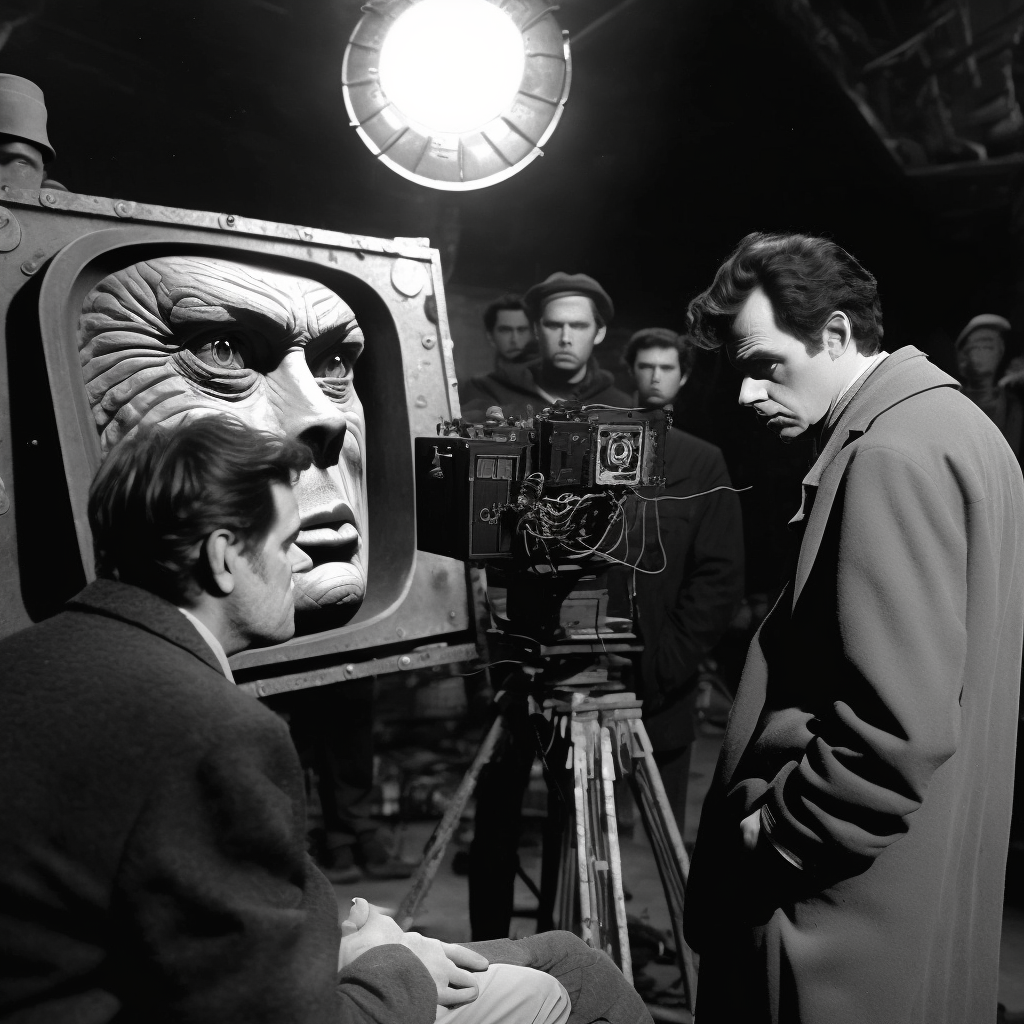
Tag: Film

  • Sci-Fi Classics 1968-76

    Sci-Fi Classics 1968-76

    The films mentioned in this blog are commonly recognized and celebrated within the science fiction genre and have had a significant impact on cinematic history. They are often discussed in critical analyses, retrospectives, and academic studies due to their artistic, thematic, and cultural significance.

    The selection of these films is based on their historical importance, critical acclaim, enduring popularity, and their representation of key themes and styles prevalent in science fiction during the 1960s and early 1970s. They serve as notable examples of the genre and provide a rich foundation for exploring the themes, cultural context, and impact of science fiction filmmaking during that period.

    Please note that the selection may not include every significant science fiction film from the given timeframe, and there are certainly other noteworthy films that could be included in discussions about science fiction of the period.

    These films exemplify the creative and thought-provoking science fiction works each contributing unique perspectives on societal issues, technological advancements, and the human condition.

    • 2001: A Space Odyssey (1968) – Directed by Stanley Kubrick, this ground breaking film explores human evolution, artificial intelligence, and the mysteries of space.
    • Planet of the Apes (1968) – A classic science fiction film that depicts a future where intelligent apes dominate Earth, raising questions about societal structures and humanity.
    • THX 1138 (1971) – A dystopian film directed by George Lucas, portraying a future where emotions and individuality are suppressed, highlighting themes of conformity and control.
    • A Clockwork Orange (1971) – Directed by Stanley Kubrick, this film takes place in a near-future society and explores themes of violence, free will, and the effects of social conditioning.
    • The Andromeda Strain (1971) – Based on Michael Crichton’s novel, this film follows a team of scientists investigating a deadly extraterrestrial organism that could threaten humanity.
    • Silent Running (1972) – Set in a future where Earth’s plant life is extinct, this film follows a botanist who preserves the last remaining forests aboard a spacecraft, exploring themes of environmentalism and isolation.
    • Solaris (1972) – Directed by Andrei Tarkovsky, this thought-provoking film delves into themes of consciousness, memory, and the human experience when confronted with an alien intelligence.
    • Westworld (1973) – A science fiction thriller directed by Michael Crichton, where androids in a futuristic theme park malfunction and pose a threat to the human visitors.
    • Soylent Green (1973) – A dystopian film depicting an overpopulated, resource-depleted world, where a detective uncovers a disturbing secret about the government’s food supply.
    • Logan’s Run (1976) – Set in a post-apocalyptic future, this film portrays a society where individuals are terminated at the age of 30, exploring themes of youth obsession and the search for freedom.

    Contemporary Analysis

    The science fiction films have some common themes serve as narrative backbones, driving the stories and exploring deeper social, philosophical, and ethical questions. They make science fiction a genre capable of sparking discussions and contemplation about our own world and potential futures.

    • Human Evolution and Existentialism: Films like “2001: A Space Odyssey” and “Solaris” delve into the nature of human existence, consciousness, and our place in the universe. They raise questions about the evolution of humanity, our relationship with technology, and the search for meaning.
    • Dystopian Societies: Many of the films on the list, such as “Planet of the Apes,” “THX 1138,” and “Logan’s Run,” depict oppressive or post-apocalyptic societies. They explore themes of totalitarian control, loss of individuality, and the consequences of unchecked governance.
    • Technology and its Consequences: Science fiction often examines the impact of advanced technology on society and individuals. Films like “Westworld” and “A Clockwork Orange” delve into questions of artificial intelligence, human-machine interaction, and the ethical implications of technological advancements.
    • Environmental Concerns: “Silent Running” addresses ecological themes, highlighting the importance of preserving the environment and the potential consequences of its destruction. It reflects on our responsibility to protect and coexist with nature.
    • Social Commentary and Critique: Films such as “Soylent Green” and “A Clockwork Orange” offer social critiques, exploring themes of overpopulation, societal decay, and the potential dangers of unchecked consumerism. They prompt viewers to reflect on the flaws and consequences of contemporary society.
    • Identity and Individuality: Many of these films grapple with questions of identity and individuality in the face of oppressive systems. They examine the struggle to maintain one’s sense of self, freedom, and personal agency.
    • Ethical Dilemmas and Morality: “The Andromeda Strain” and “Soylent Green” raise ethical dilemmas regarding scientific experimentation, resource allocation, and the choices societies make in times of crisis. They prompt viewers to reflect on moral quandaries and the consequences of unethical actions.

    The films reflect the social and cultural concerns of their time. Here’s what some of these films say about the society and culture of that period:

    • Challenging Authority and Conformity: Films like “THX 1138” and “A Clockwork Orange” critique oppressive systems and question the conformity demanded by society. They reflect the countercultural movements of the 1960s and early 1970s, which rejected traditional norms and challenged authority figures.
    • Environmental Awareness and Activism: “Silent Running” and “Soylent Green” touch on environmental themes, highlighting concerns about pollution, overpopulation, and resource depletion. These films resonate with the growing environmental awareness of the time, as people became more conscious of ecological issues.
    • Fear of Social Decay and Loss of Individuality: Films such as “Planet of the Apes” and “Logan’s Run” depict dystopian societies plagued by decay and loss of personal freedoms. They reflect the anxieties of the era, including concerns about societal breakdown, overreliance on technology, and the erosion of individuality.
    • Cold War Tensions and Nuclear Anxiety: While not explicitly mentioned in the listed films, the overarching backdrop of the Cold War and nuclear tensions can be seen in the science fiction films of this period. Films like “2001: A Space Odyssey” and “The Andromeda Strain” explore the fear of technological disasters, the unknown threats of outer space, and the quest for control in an unpredictable world.
    • Technological Advancements and Ethical Dilemmas: Many of the films tackle the ethical implications of advancing technology. They reflect a growing awareness of the potential consequences of rapid scientific progress, highlighting concerns about the loss of human connection, the dehumanizing effects of technology, and the potential for misuse and abuse.

    The films offer insights into the societal and cultural concerns of that period. They reflect the turbulence, questioning of authority, environmental consciousness, and anxieties about technology and societal breakdown that characterized the era.

    The films served as a medium to explore and critique contemporary issues, inviting audiences to contemplate the state of society and the potential paths for its future.

    In retrospect, the themes continue to resonate and have taken on new dimensions in contemporary society.

    The contemporary reading of some of these themes include:

    • Authority and Conformity: The questioning of authority and societal conformity remains relevant today. Contemporary society continues to grapple with issues of power, control, and the balance between individual freedom and social norms. Films like “THX 1138” and “A Clockwork Orange” still speak to ongoing discussions surrounding surveillance, government control, and the tension between personal autonomy and societal expectations.
    • Environmental Awareness and Activism: Environmental concerns have become even more prominent in contemporary society. The themes of ecological preservation, resource depletion, and the consequences of environmental neglect depicted in “Silent Running” and “Soylent Green” resonate deeply in an era marked by climate change, calls for sustainable practices, and increased activism to address ecological issues.
    • Loss of Individuality and Societal Decay: The fear of loss of individuality and societal decay remains relevant, particularly in the context of rapidly advancing technology and the influence of social media. The digital age has brought about concerns of privacy, the impact of social media algorithms, and the erosion of personal agency. Films like “Planet of the Apes” and “Logan’s Run” prompt discussions about the dangers of conformity, the value of personal identity, and the implications of a homogeneous society.
    • Ethical Dilemmas of Technology: With the rapid progress of technology in contemporary society, ethical dilemmas surrounding artificial intelligence, automation, and the potential consequences of unchecked scientific advancements have come to the forefront. The films’ exploration of these themes in works like “2001: A Space Odyssey” and “The Andromeda Strain” finds resonance in contemporary debates on topics such as data privacy, algorithmic bias, and the ethical boundaries of scientific research.

    While the specific societal and cultural contexts have evolved since the release of these films, the underlying themes continue to have relevance and provide a lens for examining contemporary issues.

    The enduring nature of these themes demonstrates the enduring power of science fiction to provoke critical thinking, raise important questions, and offer social commentary on the complexities of the human experience.

    In terms of cultural sensitivities, the way these films have aged and their contemporary critical reading can vary. Here are some considerations:

    • Social and Gender Representation: Some of the older films on the list may exhibit limited or stereotypical social and gender representations that may be seen as outdated or problematic by contemporary standards. For example, female characters in older science fiction films often served as objects of desire or lacked agency. The contemporary critical reading would likely emphasize the need for more diverse and inclusive representations that challenge gender norms and promote equality.
    • Racial and Cultural Representation: Older science fiction films have been criticized for their lack of diverse racial and cultural representation. Characters of non-white backgrounds were often portrayed in stereotypical or tokenized roles. A contemporary critical reading would stress the importance of representing and empowering diverse voices and experiences within the genre.
    • LGBTQ+ Representation: The older films generally have limited or nonexistent LGBTQ+ representation. Contemporary critical analysis would highlight the importance of inclusivity and accurate representation of LGBTQ+ characters, relationships, and experiences in science fiction narratives.
    • Cultural and Historical Context: It is important to view these films through the lens of their historical context. Some themes or depictions that were acceptable or typical at the time of their release may be viewed differently today. The contemporary critical reading acknowledges the evolution of cultural values and expectations over time.
    • Subversive and Progressive Elements: Despite potential shortcomings, many of these films were considered progressive for their time and pushed boundaries in terms of storytelling, visuals, and thematic exploration. Contemporary readings often recognize and appreciate the pioneering aspects of these films while also calling for further progress and representation.

    Contemporary critical readings of these films focus on promoting inclusivity, challenging stereotypes, and addressing social and cultural issues that were not adequately addressed in the past.

    They encourage a re-evaluation of these films in light of current cultural sensitivities, acknowledging both their historical significance and the need for ongoing progress in representation and inclusivity within the science fiction genre.

    Sci-Fi Classics and their Legacy

    The films are considered great and memorable for several reasons:

    • Innovative and Visionary Storytelling: These films pushed the boundaries of storytelling within the science fiction genre, offering unique and thought-provoking narratives. They tackled complex themes and ideas, often exploring existential questions, societal issues, and the nature of humanity itself.
    • Visual and Cinematic Excellence: Many of these films showcased ground breaking visual effects, stunning cinematography, and meticulous attention to detail. They created immersive and visually striking worlds that captivated audiences and set new standards for technical achievement in filmmaking.
    • Thoughtful Exploration of Themes: These films delved into deeper philosophical and social themes, offering commentary and critique on various aspects of human existence, society, and the future. They provided a platform for audiences to contemplate complex ideas and engage in intellectual discussions.
    • Impactful Performances: The films featured memorable performances from talented actors who brought their characters to life and added depth and emotional resonance to the stories. These performances contributed to the lasting impact and memorability of the films.
    • Cultural and Historical Significance: Many of these films have left a lasting impact on popular culture and influenced subsequent science fiction works. They have become touchstones and references for future filmmakers and have helped shape the genre as a whole.
    • Timeless Relevance: Despite being made decades ago, these films continue to resonate with audiences due to their exploration of timeless themes and the enduring questions they raise about the human condition, morality, and the nature of progress.
    • Directorial Vision: The films were helmed by visionary directors who brought their distinct artistic visions to the screen. Directors like Stanley Kubrick, Andrei Tarkovsky, and George Lucas left their indelible mark on these films, contributing to their greatness and lasting legacy.

    These qualities, among others, have contributed to the enduring greatness and memorability of these science fiction films.

    They continue to be celebrated and appreciated by audiences and critics alike, ensuring their place in cinematic history.

    Several contemporary films could be considered successors or have thematic connections to the science fiction films listed.

    Here are a few examples:

    • “Ex Machina” (2014): Expanding on the ethical dilemmas surrounding artificial intelligence and human-machine interaction, this film explores the nature of consciousness, the boundaries of technology, and the implications of creating sentient beings.
    • “Blade Runner 2049” (2017): A sequel to the original “Blade Runner,” this film continues to explore themes of identity, humanity, and the relationship between humans and replicants. It delves into questions of memory, free will, and the consequences of technological advancements.
    • “Annihilation” (2018): Like “Solaris,” this film explores the mysteries of an extraterrestrial entity and its effects on human perception and existence. It delves into themes of self-destruction, transformation, and the unknown complexities of the natural world.
    • “Her” (2013): Examining the impact of technology on human relationships, this film delves into themes of love, connection, and the blurred boundaries between humans and artificial intelligence. It explores the emotional and existential dimensions of human-machine interactions.
    • “Snowpiercer” (2013): Similar to “Soylent Green,” this film portrays a dystopian future where societal divisions and environmental concerns are amplified. It delves into class struggle, oppression, and the consequences of social inequality in a post-apocalyptic setting.
    • “The Lobster” (2015): Like “A Clockwork Orange,” this film explores societal expectations and conformity, depicting a world where single individuals must find romantic partners within a strict timeframe or risk being transformed into animals. It satirizes social norms, explores the pressures of conformity, and examines the human need for companionship.

    These contemporary films build upon and expand the themes explored in their predecessors, offering new perspectives and insights into the evolving societal and cultural landscape.

    They continue to engage with issues such as the ethics of technology, the complexities of human identity, environmental concerns, and the impact of societal structures on individual freedom and expression.

  • Freddy Got Fingered

    Freddy Got Fingered

    “Freddy Got Fingered” is a 2001 American comedy film directed by and starring Tom Green. The film tells the story of a 28-year-old slacker named Gord Brody who aspires to be a cartoonist.

    Gord faces opposition from his father, played by Rip Torn, who wants him to get a “real” job, and his younger brother Freddy, who is successful and well-adjusted.

    The film is known for its absurd and offensive humor, which includes scenes of crude behaviour and shocking imagery. Upon its release in 2001, the film was widely panned by critics and audiences alike, and was a commercial failure at the box office, but has since gained a cult following among fans of unconventional comedy.

    Despite its deserved reputation for being crude and controversial, the film has been praised by some for its unapologetic commitment to its absurdity and its willingness to push boundaries.

    In terms of its impact on the film industry, “Freddy Got Fingered” is notable for being a rare example of a Hollywood film that pushed boundaries and challenged traditional storytelling conventions. It was a departure from the more mainstream comedies of its time, and its willingness to embrace shock humour and absurdity paved the way for other unconventional comedies in the years that followed.

    It should be noted, however, that the film contains graphic and potentially offensive content, and may not be suitable for all viewers.

    The film’s legacy is also marked by controversy and criticism. Some viewers have accused it of being misogynistic, homophobic, and insensitive to people with disabilities. Others argue that it is a work of satire that is intentionally provocative and subversive.

    Although highly unconventional, the film can be interpreted in a variety of ways, some of its main themes include:

    • Artistic Expression: The film explores the idea of artistic expression and the lengths to which some individuals will go to pursue their creative passions. Gord Brody’s desire to become a successful cartoonist is a central plot point, and the film portrays his struggles to find validation and recognition for his work.
    • Family Dynamics: The film also deals with the complicated and often dysfunctional relationships that can exist within families. Gord’s strained relationship with his father and his envy of his younger brother’s success are key elements of the plot.
    • Rebellion Against Authority: Another major theme in the film is rebellion against authority and societal norms. Gord is portrayed as a rebellious figure who refuses to conform to the expectations of his family and society at large. The film uses shock humour and absurdity to challenge the viewer’s expectations and push boundaries.
    • Absurdity and Surrealism: “Freddy Got Fingered” is known for its bizarre and nonsensical humour, which often borders on surrealism. The film embraces the absurd and uses it to create a unique and unconventional viewing experience.

    “Freddy Got Fingered” is a highly unconventional film that challenges traditional storytelling conventions and explores themes of artistic expression, family dynamics, rebellion, and absurdity. It is a film that has left a lasting impression on viewers and the film industry, both for its unconventional humour and its controversial content.

    While it may not be to everyone’s taste, it is a film that continues to inspire discussion and debate among audiences and critics.

    If you can find a copy on DVD or juts scenes on YouTube, then its worth a watch.

  • Lovecraftian Cinema

    Lovecraftian Cinema

    “In his house at R’lyeh dead Cthulhu waits dreaming.”

    H.P. Lovecraft, “The Call of Cthulhu”

    “Filming something scary is incredibly difficult because you are dealing with something intangible. Fear is in the mind’s eye, not on the screen.”

    John Carpenter

    Introduction

    H.P. Lovecraft’s stories are the stuff of nightmares, filled with cosmic horror and unspeakable terrors that lurk just beyond the threshold of our understanding.

    For years, filmmakers have struggled to adapt his works to the screen, as the very nature of Lovecraftian horror makes it almost impossible to capture visually. The unknown and incomprehensible cannot be easily portrayed, and the fear of the unseen is difficult to convey in a visual medium.

    Despite these challenges, a number of filmmakers have attempted to bring Lovecraft’s stories to life on the big screen, each one exploring the themes of madness, otherness, and the terror that lies just beyond our comprehension.

    Through the use of practical effects, creative cinematography, and expert storytelling, these films offer a glimpse into the world of Lovecraftian horror, where the true horror lies not in the monsters themselves, but in our own limitations as human beings.

    The Deep Ones (2020)

    “The Deep Ones” is a 2020 horror science fiction film that takes inspiration from H.P. Lovecraft’s classic 1931 novel “The Shadow over Innsmouth”. Written and directed by Chad Ferrin, the film follows a young couple, Alex and Petri, who rent a cottage on a remote island for a romantic getaway. However, their plans are derailed when they discover that the island’s residents are all members of a secretive cult that worships the Deep Ones, a race of fish-like creatures from Lovecraft’s mythology.

    As Alex and Petri become entangled in the cult’s machinations, they soon discover that the Deep Ones are not merely a myth, but a very real and dangerous force that threatens to consume them both. The film explores themes of alienation, otherness, and the dangers of blindly following tradition, all hallmarks of Lovecraft’s writing.

    Critically, “The Deep Ones” has received mixed reviews. Some critics have praised the film for its atmosphere, cinematography, and commitment to Lovecraft’s themes, while others have criticized its slow pacing and lack of scares. Additionally, some viewers have taken issue with the film’s use of Lovecraft’s mythology, arguing that it simplifies and sanitizes the author’s more problematic views on race and ethnicity.

    Overall, “The Deep Ones” is a solid effort that will likely appeal to fans of Lovecraft’s work and cosmic horror in general. While it may not be the definitive adaptation of “The Shadow over Innsmouth”, it does offer an interesting take on the source material and raises thought-provoking questions about the nature of fear and the unknown.

    Underwater (2020)

    “Underwater” is a science fiction horror film that takes place in a deep-sea mining facility called the Kepler 822 Station. The story follows a group of researchers, led by engineer Norah Price (Kristen Stewart), who must fight for survival after an earthquake damages the station and unleashes a group of monstrous creatures from the depths of the ocean. As they attempt to escape to the surface, the team faces a series of terrifying obstacles, including dwindling oxygen, pressure problems, and the creatures that stalk them at every turn.

    Underwater is a thrilling and intense science fiction horror film that takes the claustrophobia of films like Alien and The Abyss and brings it to the depths of the ocean. The movie is anchored by Kristen Stewart’s powerful performance as Norah, a tough and resourceful engineer who leads the team in their desperate bid for survival. The film also features an excellent supporting cast, including Vincent Cassel as the gruff captain of the Kepler 822 Station and T.J. Miller as the wisecracking Paul, who provides some much-needed comic relief.

    Director William Eubank does an excellent job of building tension and creating a sense of dread throughout the film, and the underwater setting provides a unique and haunting backdrop for the action. The monsters themselves are suitably terrifying, with the film gradually revealing more about their origins and motivations as the story unfolds. The film’s visual effects are also impressive, with the underwater scenes and creature designs feeling both realistic and otherworldly.

    Underwater is an excellent science fiction horror film that delivers on both thrills and scares. It’s a well-crafted and entertaining movie that should appeal to fans of the genre, and Kristen Stewart’s standout performance is worth the price of admission alone.

    Cold Skin (2017)

    “Cold Skin” is a 2017 science fiction-horror film based on the novel of the same name by Albert Sánchez Piñol. Directed by Xavier Gens, the film follows a young man named Friend who arrives on a remote island in the Antarctic to work as a weather observer. He soon discovers that the island is home to strange, amphibious humanoid creatures who emerge from the ocean each night to attack the island’s human inhabitants.

    Friend takes refuge in a lighthouse with the island’s only other resident, a grizzled old man named Gruner. Despite their initial mistrust of one another, the two men must work together to defend themselves against the creatures, who seem to be increasing in number and ferocity with each passing night. As the two men struggle to survive, they also begin to unravel the mystery of the creatures’ origins and their purpose on the island.

    Critically, “Cold Skin” has received mixed reviews. Some critics have praised the film for its atmospheric visuals, eerie sound design, and strong performances from its two leads. Others, however, have criticized the film for its uneven pacing, inconsistent tone, and lack of character development. While it may not be a perfect adaptation of Piñol’s novel, it does offer a compelling exploration of themes such as isolation, xenophobia, and the nature of humanity.

    Overall, “Cold Skin” is a visually stunning and thought-provoking film that appeals to fans of Lovecraftian horror and science fiction.

    One of the most significant themes in the film is the idea of humanity’s insignificance in the face of vast and incomprehensible cosmic forces.

    The film’s setting on a remote island in the Antarctic emphasizes the isolation and vulnerability of the human characters, who are completely cut off from the rest of the world. As they struggle to survive against the amphibious humanoid creatures that emerge from the ocean each night, they are forced to confront the fact that their existence is inconsequential in the grand scheme of things.

    The creatures themselves are also reminiscent of Lovecraft’s creations, such as the Deep Ones in “The Shadow over Innsmouth.” Like those creatures, the amphibious beings in “Cold Skin” represent a threat to humanity’s sense of order and security, embodying the idea that there are incomprehensible and malevolent forces in the universe that cannot be controlled or understood.

    Another Lovecraftian theme in the film is the idea of the unknown and the unexplainable. The creatures and their origins are never fully explained or understood, adding to their mystery and otherworldly nature. This element of the unknown also extends to the human characters, who are often forced to confront their own fears and limitations in the face of the creatures’ onslaught.

    “Cold Skin” also explores the theme of madness, which is a common element in Lovecraft’s work. As the film progresses, the characters’ sanity begins to unravel as they struggle to come to terms with the creatures and the implications of their existence. This descent into madness underscores the idea that there are some things in the universe that are simply beyond human comprehension or understanding.

    Innsmouth (2015)

    “Innsmouth” is a short horror film that takes inspiration from H.P. Lovecraft’s “The Shadow over Innsmouth.” The film is directed by Izzy Lee, who also co-wrote and co-produced it with Francesco Massaccesi.

    The film follows a young woman named Izzy (played by Tristan Risk) who travels to the town of Innsmouth in search of her estranged father. She soon discovers that the town is shrouded in mystery and terror, with its inhabitants harboring dark secrets and ancient rituals.

    As Izzy delves deeper into the town’s history, she begins to unravel the truth about her family and the sinister forces that have been lurking in Innsmouth for generations. With the help of a local woman named Ruth (played by Diana Porter), Izzy must confront the horrors of the town and escape before it’s too late.

    “Innsmouth” is a well-crafted and atmospheric horror film that effectively captures the eerie and unsettling tone of Lovecraft’s writing. The film’s use of practical effects and practical makeup is particularly impressive, creating a sense of physicality and tangible dread that is often missing in contemporary horror films.

    The performances are also strong, with Tristan Risk and Diana Porter delivering nuanced and believable portrayals of their characters. The film’s pacing is brisk and engaging, with a sense of escalating tension that builds to a thrilling and satisfying climax.

    Overall, “Innsmouth” is a compelling and well-executed horror film that is sure to delight fans of Lovecraftian horror and indie cinema alike. It’s a testament to the creativity and skill of its filmmakers, and a must-watch for anyone looking for a spooky and atmospheric horror experience.

    The Cthulhu (2007)

    “The Cthulhu” is a 2007 horror film directed by Dan Gildark, loosely based on the H.P. Lovecraft story “The Shadow Over Innsmouth.” The film follows Russell Marsh, a gay man who returns to his hometown of Astoria, Oregon, to attend his mother’s funeral. As he reconnects with his estranged father and childhood friends, he begins to experience strange and disturbing visions, and soon discovers that his family and the town are hiding dark secrets.

    The film is a slow-burn horror story that is more concerned with psychological terror than jump scares or gore. It tackles themes of sexual identity, repression, and Lovecraftian cosmic horror in a thoughtful and engaging way. The performances are strong, particularly Jason Cottle as Russell Marsh, who delivers a nuanced and understated portrayal of a man struggling to come to terms with his past and his sexuality.

    The film’s visual style is also impressive, with its moody cinematography and eerie, dreamlike imagery adding to its overall sense of unease. The use of Lovecraftian imagery and themes is effective, and the film does a good job of capturing the author’s unique brand of horror.

    While “The Cthulhu” may not be for everyone, particularly those who prefer more straightforward horror fare, it is a well-crafted and thought-provoking film that is sure to leave a lasting impression on viewers. It is a worthy addition to the Lovecraftian horror canon and is a must-see for fans of the author and the genre.

    The Call of Cthulhu (2005)

    For a long time, it was believed that the original story could not be adapted into a film. However, the creators of the 2005 adaptation of “The Call of Cthulhu” came up with the innovative idea of making it a silent film, and their passion for the project resulted in favorable reviews and multiple awards.

    “The Call of Cthulhu” is a 2005 independent silent film adaptation of H.P. Lovecraft’s famous short story of the same name. The film is directed by Andrew Leman and produced by Sean Branney, and was made with the intention of recreating the look and feel of silent horror films from the 1920s.

    The film follows the story of a young man named Francis Thurston, who becomes fascinated with the legend of the ancient and malevolent entity known as Cthulhu. As he delves deeper into the legend, he uncovers a vast conspiracy of cultists who worship Cthulhu and are working to bring about his return to the world.

    The film is shot entirely in black and white and features minimal dialogue, relying instead on visual storytelling and a haunting original score by Troy Sterling Nies. The filmmakers use a variety of silent film techniques, such as intertitles, camera angles, and exaggerated facial expressions, to create a sense of unease and foreboding throughout the film.

    “The Call of Cthulhu” is a faithful and effective adaptation of Lovecraft’s classic tale, capturing the sense of dread and cosmic horror that is a hallmark of his writing. The use of silent film techniques adds to the overall sense of otherworldliness and helps to create a haunting and unsettling atmosphere. The film is a must-see for fans of Lovecraft and horror in general, and is a testament to the enduring power of the author’s work.

    Dagon (2001)

    “Dagon” is a 2001 horror film directed by Stuart Gordon and based on the H.P. Lovecraft story “The Shadow Over Innsmouth.” The film follows Paul Marsh, a young man who becomes stranded with his girlfriend Barbara and their friends in a small fishing village called Imboca, which is inhabited by strange, fish-like creatures.

    As they try to escape, they soon discover that the townspeople are worshipping Dagon, an ancient sea god, and are willing to sacrifice the outsiders in order to appease him. The group is quickly forced into a fight for their lives as they try to uncover the dark secrets of the town and its inhabitants.

    “Dagon” is a gory and unsettling horror film that is faithful to Lovecraft’s original story. The film creates a palpable sense of dread and paranoia as the characters are trapped in a town where nothing is as it seems. The creature designs are both eerie and disturbing, with the inhabitants of Imboca being portrayed as grotesque hybrids of human and sea creature.

    The film’s cinematography and score also contribute to its overall sense of unease, with the use of shadows and dimly lit sets creating a foreboding atmosphere. The performances of the cast are solid, with Ezra Godden delivering a convincing portrayal of the increasingly desperate and traumatized protagonist.

    Overall, “Dagon” is a highly effective horror film that captures the essence of Lovecraft’s work while also providing plenty of scares and thrills. It is a must-see for fans of Lovecraftian horror and is a testament to the enduring power of the author’s work.

    Cthulhu (2000)

    Cthulhu is a 2000 Australian low budget horror film that was directed, produced, and written by Damian Heffernan. It based on two Lovecraft stories, “The Thing on the Doorstep” and “The Shadow Over Innsmouth”.
    It was screened at the Melbourne Underground Film Festival and showed on Australian TV as part of their Australian content quota obligations, and later had international distribution.

    It concerns a student that discovers that his best friend has become involved in a cult intent on raising Cthulhu.

    Call of Cthulhu (~1995 ?)

    Edward Pierce is a fictional private investigator created by the American author and game designer, Keith Herber. Pierce appears in a number of Lovecraftian tabletop role-playing games and stories set in the 1920s, including the popular game Call of Cthulhu.

    In the game, Pierce is a skilled investigator who often finds himself drawn into dark and dangerous supernatural mysteries. He is described as a veteran of World War I, a former member of the Boston Police Department, and a man with a troubled past. Despite his flaws, Pierce is a competent and determined investigator who is often able to unravel the mysteries he encounters and foil the nefarious plans of cultists and other supernatural entities.

    Pierce is a well known and loved character among fans of Lovecraftian horror and is often cited as one of the most iconic and well-developed player characters in the Call of Cthulhu tabletop game. His adventures have been adapted into numerous novels and short stories, and he remains a popular and enduring figure in the world of Lovecraftian horror.

    There is possibly (I am convinced i have seen it) a short fanfic VHS shot film called “Call of Cthulhu” which follows an Edward Pierce like a private investigator in 1920s Boston, as he investigates the mysterious death of an entire family on an island off the coast of Massachusetts. As Pierce delves deeper into the case, he discovers that the family was part of a cult devoted to the worship of an ancient and powerful creature known as Cthulhu. Pierce has to confront his own sanity as he unravels the mysteries surrounding Cthulhu and its followers, all while trying to stay alive in a world filled with dark forces beyond his comprehension.

    Played seriously, but on a very low budget with uncredited actors, it is similar to several adaptations of Lovecraft’s works that feature private investigators and detectives in a similar vein to Pierce in the 1990s. For example, John Trent in “In the Mouth of Madness” (1994), John Murdoch in “Dark City” (1998), and John March in “The Resurrected” (1991) all investigate dark and supernatural mysteries that share similarities with the investigations undertaken by Pierce.

    Cthulhu Mansion (1992)

    “Cthulhu Mansion” (1992) is a Spanish horror film directed by Juan Piquer Simón. The film follows a group of young people who are invited to stay in a mansion located in the countryside, unaware of the horrors that await them. As they explore the mansion, they uncover a dark history involving a cursed book and the evil deity Cthulhu, whose power threatens to consume them all.

    The film’s plot is a loose adaptation of H.P. Lovecraft’s “The Case of Charles Dexter Ward” and incorporates elements of the author’s broader mythos. While the film’s low budget is evident in its production values, it still manages to create a creepy and unsettling atmosphere through its use of eerie music and atmospheric lighting.

    The performances in “Cthulhu Mansion” are generally solid, with standout performances from Frank Finlay as the creepy Dr. Marlowe and Luis Fernando Alvés as the mysterious and sinister Sandel. The film also benefits from its creative use of practical effects, which help to bring some of the more grotesque and surreal elements of Lovecraft’s work to life.

    While “Cthulhu Mansion” may not be a masterpiece, it is an entertaining and campy horror film that will appeal to fans of Lovecraft and classic horror. It may not be the most faithful adaptation of the author’s work, but it is a fun and unique addition to the Lovecraftian horror canon.

    The Call (1967)

    The Call was a 1967 horror film directed and produced by Orson Welles and starring Anthony Perkins as the narrator. The film follows the story of a young man, Francis Wayland Thurston (Perkins), who discovers a mysterious cult devoted to the worship of an ancient god known as Cthulhu. After uncovering evidence of strange rituals and dark secrets, Thurston embarks on a quest to uncover the truth behind the cult’s activities.

    The film begins with Thurston receiving a package from his recently deceased great-uncle, George Gammell Angell. Inside the package is a collection of notes and documents that tell the story of an ancient cult devoted to Cthulhu, an evil god from another dimension. As he reads through the documents, Thurston discovers that the cult is planning to summon Cthulhu from his slumber in order to bring about chaos and destruction.

    Thurston travels to New England in search of more information about the cult and its plans. Along the way, he meets several people who have had dream encounters with Cthulhu or are connected to him in some way. He also discovers evidence of strange rituals being performed by members of the cult in order to summon Cthulhu.

    Eventually, Thurston finds himself face-to-face with a manifestation of Cthulhu himself. In a desperate attempt to save humanity from destruction, Thurston manages to banish Cthulhu back into his slumber. The film ends with Thurston, clearly now insane, babbling his reflections on his experience and warning others not to meddle with forces beyond their understanding.

    The Call – A forgotten Classic ?

    Orson Welles had a long and difficult history of getting his films financed and made. His first major film, Citizen Kane, was famously taken away from him by the studio and re-edited without his input. This experience left him with a deep distrust of Hollywood studios, which made it difficult for him to get any of his subsequent projects off the ground.

    In the late 1960s, Welles attempted to make a film adaptation of H.P. Lovecraft’s short story “The Call of Cthulhu”. He wrote a script and tried to get it financed by various Hollywood studios, but all of them rejected it due to its unconventional subject matter and lack of commercial appeal. Welles was also unable to secure financing from independent sources, as he had done with some of his previous projects.

    Ultimately, Welles was unable to get the project off the ground and it remained unmade until 1966 when it was finally adapted into a low-budget independent film. The struggles that Welles faced in trying to get “The Call” made are indicative of the difficulties he faced throughout his career in getting his projects financed and produced.

    The total budget assigned by the studio to Welles’ project was a measly $200,000. Orson Welles was, however a legend in the business who was prepared to go through great lengths to find additional money to make his film. Unfortunately, Welles was unable to secure enough funding from traditional sources and had to resort to other methods in order to finance the project, this involved significant artistic compromises.

    One of the first steps Welles took was to approach his friends and contacts for financial assistance. He asked them for donations, loans, or any other form of support they could provide. This allowed him to raise some money but it wasn’t enough for the entire production budget. He then turned to private investment firm in order to raise additional funds. Through this scheme, he was able guarantee loans and reach out to a wider non-hollywood audience and successfully raised enough money for the film’s production costs.

    Welles also sought out private investors who were willing to put up their own money in exchange for a share of the profits from the film’s release. He managed to find several investors who were willing to take a risk on his project and provided him with the necessary funds he needed.

    Finally, Welles also looked into alternative financing options such as pre-sales and tax incentives. Pre-sales involve selling off distribution rights before the film is even completed in order to generate revenue that can be used for production costs.

    Tax incentives are government programs that provide filmmakers with financial assistance in exchange for certain requirements being met during production or post-production stages of filmmaking.

    By taking advantage of these options, Welles was able to secure just about enough money for “The Call” without having to rely solely on traditional sources of funding.

    The film not was really not intended to be a low-budget horror movie, rather a psychological study of a mans singular descent into madness after “The Call”.

    During the production, Welles had creative differences with the studio over the direction of the film. He wanted to make a more artistic and experimental version of the story, while the studio wanted a more traditional horror movie. This led to disagreements between Welles and the studio, which ultimately resulted in him losing control over the some of creative decisions on the project.

    The role of George Gammell Angell, in the flashback scenes was played by the veteran actor Dean Boland who died of an heart attack during production, further tied the production up in claims of legal negligence leading it to be regarded as cursed production.

    Welles had to call in favours from his friends. As a result, Anthony Perkins’ performance as the narrator in the film was unique and memorable for a number of reasons.

    From what we known form the few surviving recordings, he used a very distinct voice that was both soothing and eerie at the same time. His delivery was also very precise and measured, which added to the overall atmosphere of the film. Additionally, his narration was often delivered in a poetic manner, which gave it an almost dream-like quality. He was able to convey a wide range of emotions through his performance, from fear and dread to hope and optimism. All of these elements combined to make Anthony Perkins’ performance as the narrator in the film truly unforgettable.

    The creature and effects for the 1968 version of Call were designed by special effects artist, Wah Chang. Chang used a combination of stop-motion animation and puppetry to create the iconic Cthulhu creature seen it the dreams sequences.

    To make Cthulhu look large and to scale on the screen, Chang used a combination of techniques. He created a full-scale puppet of Cthulhu that was operated by several puppeteers. This puppet was then filmed in front of a blue screen, allowing it to be composited into the film’s scenes. To give the creature more depth and texture, Chang also used stop-motion animation to animate its tentacles and other features.

    Chang chose to make Cthulhu look like an octopus because he wanted to capture the Lovecraftian horror of the creature. As Octopuses are often seen as mysterious creatures that lurk in the depths of the ocean, which made them an ideal choice for representing Cthulhu’s alien nature, the many tentacles that can be animated using stop-motion techniques, making them easier to work with than other creatures.

    To finish the film, Welles had to go through great lengths in order to find additional funds for “The Call”, which distracted him from direction. This led to delays in production and a lack of resources, resulting in a final product that was deemed unsatisfactory by the studio. but ultimately failed to get funds for distribution.

    The bitter irony was that Welles of course lost the rights to his film due to a number of factors. The production was plagued by financial issues, with Welles unable to secure enough funding to complete the project and had to cut scenes and make do with stock footage.

    Unfortunately, the film only made its debut in 1968 at the San Francisco International Film Festival. “The Call” was not well-received by critics or audiences, who lambasted the incoherent plotting and ridiculous looking monster effects. This caused it to be pulled d and was never released in widely theatres.

    It saw some limited showings in mid-west theatres as a filler feature, leaving young theatre goers with either strange experience, later half remembered, or just forgotten with all the other B Movies of the era. It is estimated that the film has made around $1 million, certainly not enough to sustain it. It was quickly forgotten, prints disappeared into the ether of dead films. As a result, Welles lost eventually lost all hits rights to the film and it forgotten, out of circulation for decades. Even through all the home video crazes and revivals in horror fandom, it was never subsequently released on home video.

    Orson Welles hard work would of course eventually pay off as a partial, degraded print of “The Call” surfaced on the internet in 2016.

    The subsequent recovery efforts, pain staking restoration and legal wrangling over studio rights are documented else where. The film is remastered Blue Ray and features commentary from visual effects artist Chang and retired costume designer Abigail Waite. The hype arounds the limited edition release meant that it went on to become one of the most sort after and critical successful horror films revivals, with copies of the film exchanging hands well over its l very high RRP. If one pops upon ebay, be sure to grab it. “The Call” Joins Welles other unfinished projects including his short lived in the equally strange “The Man in the High Castle”. The Call is reconsidered a a minor classic today.

    The Haunted Palace (1963)

    “The Haunted Palace” is a 1963 horror film directed by Roger Corman and starring Vincent Price. While the title may suggest that the film is based on the Edgar Allan Poe poem of the same name, it is actually an adaptation of the H.P. Lovecraft novella “The Case of Charles Dexter Ward.”

    The film follows Charles Dexter Ward, a man who inherits a mansion in the small town of Arkham that was once owned by his ancestor, Joseph Curwen, a notorious warlock who was burned at the stake. As Ward and his wife explore the mansion, they begin to experience strange and frightening visions, and it becomes clear that Curwen’s evil presence still lingers in the town.

    “The Haunted Palace” is a stylish and atmospheric horror film that benefits greatly from the presence of Vincent Price, who gives a typically charismatic and creepy performance. The film’s sets and costumes are also impressive, creating a convincing and immersive world that feels like a Lovecraftian nightmare come to life.

    While the film does deviate from Lovecraft’s original story in certain aspects, it still manages to capture the essence of the author’s work, with themes of madness, occultism, and ancient evil permeating throughout. The film’s climactic finale is particularly effective, with Price delivering a memorable and chilling monologue that cements his status as a horror icon.

    Overall, “The Haunted Palace” is a highly entertaining horror film that successfully blends the styles of Roger Corman and H.P. Lovecraft, resulting in a unique and memorable viewing experience. It is a must-see for fans of both the director and the author, as well as anyone looking for a creepy and atmospheric horror film from the 1960s.

  • Eko Space Wars

    Eko Space Wars

    Along time ago in a .. market in Lagos

    In the bustling streets of Lagos, a group of young filmmakers were hard at work crafting their latest project, “Eko Space Wars: The Battle for Lagos”. This epic adventure followed the journey of young Jedi warrior, Jide Obi, as he fought to save the retro future city of Lagos from the evil forces of the Empire.

    The film was a masterful blend of African culture and sci-fi tropes, with Jide Obi’s journey taking him through the colorful markets of Lagos and into the heart of the sprawling city. But it wasn’t just the setting that made “Eko Space Wars” so unique – it was also the cast of characters.

    Joining Jide Obi on his quest were the droids R4-N4 and C3P3, who provided comic relief throughout the film. And of course, no space adventure would be complete without a villainous antagonist – in this case, the imposing masked Major Dare Vanderbilt, who was voiced by a deep and commanding voice actor.

    As “Eko Space Wars” gained popularity among local audiences, it inspired a wave of low-budget remakes across Nigeria. One such film was “Kano Star Chronicles”, which featured a cast of mostly unknown actors and a plot that closely followed the original “Star Wars” story.

    In “Kano Star Chronicles”, the droids were renamed R3-K3 and CP-15, and were portrayed as lazy and bumbling sidekicks who stumbled their way through the adventure. Meanwhile, the villainous role of Darth Vader was replaced by the sinister Dark Lord Mukhtar, whose menacing presence sent chills down the spines of viewers.

    Despite the low budget and campy production values, “Kano Star Chronicles” was a hit among Nigerian audiences, who appreciated its clever blend of sci-fi and African culture. And as more and more filmmakers were inspired by the success of “Eko Space Wars”, the Nigerian sci-fi cinema scene continued to grow and thrive.

  • Star Wars: Overview

    Star Wars: Overview

    Introduction

    Since the release of the original Star Wars film in 1977, the franchise has become a cultural phenomenon, captivating audiences across generations and around the world. With its iconic characters, epic storylines, and ground breaking special effects, Star Wars has inspired countless fans and creators to explore its rich universe through a wide range of derivative works, including films, television shows, books, comics, and video games.

    At the heart of Star Wars’ enduring appeal is its timeless themes of heroism, hope, and the struggle between good and evil. Through the adventures of characters like Luke Skywalker, Princess Leia, Han Solo, and Darth Vader, Star Wars has captured the imaginations of audiences of all ages and backgrounds, offering a sense of escapism and inspiration that continues to resonate with viewers today.

    Over the years, Star Wars has become a cultural touchstone, with legions of devoted fans engaging in cosplay, creating fan fiction and art, and forming communities to discuss and debate the nuances of the series. Its influence can be seen in countless works of popular culture, from movies and TV shows to music and fashion.

    As the franchise continues to expand and evolve the enduring appeal of Star Wars shows no signs of fading. With its rich mythology, relatable characters, and inspiring message, Star Wars remains an enduring testament to the power of storytelling and the universal human experience.

    Star Wars: A New Hope

    Plot

    Star Wars: A New Hope, released in 1977 and directed by George Lucas, is a classic science-fiction film that has become a cultural phenomenon. It tells the story of a young farm boy, Luke Skywalker, who finds himself on an epic adventure to save the galaxy from the evil Empire.

    The film begins with a text crawl that explains the backstory of the galaxy far, far away, and sets up the conflict between the Empire, an oppressive regime that seeks to rule the galaxy, and the Rebel Alliance, a group of freedom fighters who resist the Empire’s rule.

    The story then introduces Luke Skywalker, a young farm boy who dreams of leaving his dull life on the desert planet of Tatooine and becoming a pilot. He gets his chance when he discovers a message from Princess Leia, a leader of the Rebel Alliance, hidden in a droid named R2-D2. The message contains information about the Empire’s ultimate weapon, the Death Star, and a plea for help to deliver the plans to the Rebel Alliance.

    Luke is joined on his adventure by two unlikely allies: the wise old Jedi Knight Ben Obi-Wan Kenobi, and Han Solo, a roguish smuggler with a heart of gold.

    Together, they set out to rescue Princess Leia from the clutches of the Empire on the Death Star, and deliver the plans to the Rebel Alliance.

    Along the way, they encounter a colorful cast of characters, including the menacing Darth Vader, a dark lord of the Sith who serves as the primary antagonist of the film.

    Vader is a terrifying presence, with his imposing black armor, deep voice, and mastery of the Force, a mysterious energy field that gives certain individuals extraordinary abilities. Obi-Wan faces off against Vader in a lightsaber duel and is killed allowing the other to escape.

    Luke, Han, and the Rebel Alliance launch an desperate attack on the station. The climax of the film takes place over the Death Star, a massive space station that can destroy entire planets. In the end, Luke is able to use the Force to destroy the Death Star and save the day.

    Timeline

    0 BBY/ABY (Before/After the Battle of Yavin): Episode IV – A New Hope

    • Princess Leia Organa of Alderaan is captured by Darth Vader and taken aboard the Death Star, a massive battle station capable of destroying entire planets
    • Luke Skywalker, a farm boy from the planet Tatooine, discovers a message from Leia hidden inside a droid named R2-D2, and sets out on a quest to rescue her
    • Luke meets Obi-Wan Kenobi, a former Jedi Knight who has been living in hiding on Tatooine, and learns about the Force, a mystical energy field that can be harnessed by certain individuals
    • The group, along with Han Solo and Chewbacca, two smugglers, travel to the Death Star to rescue Leia and disable its destructive capabilities
    • The film ends with the destruction of the Death Star and the Rebels’ victory over the Empire

    Analysis

    The key themes of the film is the struggle between good and evil, as represented by the Rebel Alliance and the Empire.

    • The Rebels are portrayed as brave and heroic, fighting for freedom and justice against a tyrannical regime.
    • The Empire, on the other hand, is depicted as cold and ruthless, willing to do whatever it takes to maintain its power.

    As a concept that bridges good and evil, the power of the Force is presented as a mystical energy field that binds the galaxy together. The Force is wielded by the Jedi Knights, who use it for good, and the Sith, who use it for evil. Luke learns to harness the power of the Force over the course of the film, under the brief tutelage of Obi-Wan.

    The film also features novel and ground breaking special effects that were ahead of their time. The space battles and the use of models to create the Death Star and other spacecraft were revolutionary, and paved the way for the use of CGI in later films.

    The film has had a significant impact on popular culture and the film industry, with Star Wars: A New Hope providing a commanding, but also limiting set of influences on science fiction as a genre. The film helped to popularize the space opera, a subgenre of science fiction that features epic adventures, exotic locations, and larger-than-life characters. IT would be many years until other sub-genres came out form under its shadow.

    In conclusion, Star Wars: A New Hope is a classic science fiction film that has had a lasting impact on popular culture and the film industry. Its themes of good versus evil and the power of the Force have resonated with audiences for over four decades, and its ground breaking special effects have influenced countless filmmakers. It remains a beloved, iconic and classic film that continues to inspire and entertain audiences.

    Star Wars – The Empire Strikes Back

    Plot

    Star Wars: The Empire Strikes Back is the second installment of wahs has become known as the Original Star Wars trilogy. It released in 1980 and directed by Irvin Kershner. The film picks up the story of Luke Skywalker, Princess Leia, and Han Solo as they continue their fight against the evil Galactic Empire.

    The film opens with the Rebel Alliance on the defensive, as the Empire has launched a massive assault on their secret base on the icy planet of Hoth. Luke, Han, and Leia are forced to flee the planet and go their separate ways in order to evade the Imperial fleet.

    While Han and Leia try to escape the Empire aboard the Millennium Falcon, Luke travels to the swamp planet of Dagobah to train with Jedi Master Yoda. Through his training, Luke learns more about the Force and the ways of the Jedi, while also having a vision of his friends in danger.

    Meanwhile, Darth Vader continues his relentless pursuit of the Rebel Alliance, with the help of a new villainous character, bounty hunter Boba Fett. The climax of the film sees the main characters reunited in a desperate battle against the Empire, with Luke facing off against Darth Vader in an iconic lightsaber duel.

    Timeline

    3 ABY: Episode V – The Empire Strikes Back

    • The Empire has launched a massive assault on the Rebel Alliance, forcing them to evacuate their base on the planet Hoth
    • Luke travels to the planet Dagobah to train with Jedi Master Yoda, while Han and Leia, along with C-3PO and Chewbacca, flee from Darth Vader and the Imperial fleet aboard the Millennium Falcon
    • The group seeks refuge in the city of Bespin, but are betrayed by Han’s friend Lando Calrissian and handed over to Vader
    • Vader reveals to Luke that he is his father, and offers him the chance to join him and rule the galaxy together
    • The film ends with Luke narrowly escaping Vader’s grasp, and the Rebels scattered and on the run

    Analysis

    One of the key themes of the film is the idea of good versus evil, as Luke, Han, and Leia are forced to confront the full might of the Empire. The film also explores the complex relationships between the characters, with Han and Leia’s romance blossoming even as they face seemingly insurmountable odds.

    In this instalment, Lucas expands on the concept of destiny, as Luke comes to terms with his role in the larger struggle against the Empire. Through his training with Yoda, Luke learns that his destiny is intertwined with that of the Rebellion, and that he must continue to fight against the Empire in order to bring peace to the galaxy.

    The Empire Strikes Back also features some of the most iconic scenes and characters in the Star Wars universe.

    • The AT-AT walkers, giant mechanical walking tanks used by the Empire in their assault on Hoth, became an instant fan favourite.
    • The introduction of Yoda, a wise and powerful Jedi Master, added a new depth to the mythology of the series.
    • The reveal of Darth Vader as Luke’s father is one of the most shocking and memorable moments in recent history of genre cinema.

    The film represented a significant leap forward in terms of special effects and filmmaking technology. The use of models and practical effects to create the creatures and environments of the Star Wars universe helped to create a sense of realism and immersion for audiences.

    In conclusion, Star Wars: The Empire Strikes Back is widely regarded as one of the greatest science fiction genre films ever made. Its complex themes, memorable characters, and ground breaking special effects have cemented its place in popular culture. The film’s legacy has continued to influence filmmakers and storytellers to this day, making it a true classic of the genre.

    Star Wars – Return of the Jedi

    Plot

    Star Wars: Return of the Jedi is the third installment of the original Star Wars trilogy, released in 1983 and directed by Richard Marquand. The film continues the story of Luke Skywalker, Princess Leia, and Han Solo as they lead the Rebel Alliance in their final battle against the Empire.

    The film opens with a confident Luke Skywalker, now a fully-fledged Jedi Knight, on a mission to rescue Han Solo from the clutches of the gangster Jabba the Hutt. Along with Princess Leia, Chewbacca, and a band of droids, Luke devises a plan to infiltrate Jabba’s palace and rescue Han.

    After a tense battle with Jabba’s guards, Luke is able to defeat the gangster and free Han.

    The group then sets off to continue their fight against the Empire, which is in the process of constructing a new and more powerful Death Star. The Rebel Alliance launches a plan to destroy the Death Star, with Han and Leia leading a team to disable the shield generator on the forest moon of Endor. Meanwhile, Luke confronts Darth Vader and the Emperor aboard the Death Star, hoping to turn Vader back to the light side of the Force.

    The climax of the film sees a three-way battle between the Rebel Alliance, the Empire, and the Ewoks, a primitive species native to Endor. In the end, Luke is able to redeem Vader and defeat the Emperor, saving the galaxy from the Empire’s tyranny.

    Timeline

    4 ABY: Episode VI – Return of the Jedi

    • Luke returns to Tatooine to rescue Han from the clutches of Jabba the Hutt, a powerful crime lord
    • The Rebels learn of a new weapon being developed by the Empire, the second Death Star, and plan to launch a daring mission to destroy it
    • Luke confronts Vader and attempts to turn him back to the light side of the Force, while the Rebel fleet engages the Imperial forces in a massive space battle
    • The final showdown takes place aboard the Death Star, with Luke facing Vader and the Emperor himself
    • In the end, Vader is redeemed and sacrifices himself to save his son, and the Rebels emerge victorious over the Empire once and for all

    Analysis

    The Film is in two acts. After being scattered in the previous film, the first half focus on bringing the main characters back together, with second halve set out to decisively resolve the power struggle conflict between the Rebel Alliance and the Empire, playing out the theme of destiny.

    The key themes of the film is the power of redemption, as exemplified by Luke’s efforts to turn Vader back to the light side of the Force. Luke sees the good in his father, despite his years of service to the Emperor, and is able to reach him through his love and compassion.

    The theme of sacrifice is core, as many of the characters are forced to make difficult choices in the face of overwhelming odds. Han and Leia risk their lives to disable the shield generator, while Luke is willing to face almost certain death in his quest to defeat the Emperor.

    The film also features some of the most iconic scenes and characters in the Star Wars universe. Jabba the Hutt is a memorable villain, with his grotesque appearance and ruthless demeanour.

    The Ewoks are a younger fan favourite, with their cute and cuddly exterior hiding a fierce warrior spirit. And of course, the extended and plotted final dual between Luke and Vader is one of the most emotional and impactful moments in the series.

    Return of the Jedi also represents a significant milestone in the evolution of special effects. The film features some of the most elaborate and ambitious effects of the time, including the creation of an entirely new planet (Endor) and the use of practical effects and costume to bring the Ewoks to life.

    In conclusion, Star Wars: Return of the Jedi is a fitting conclusion to the original trilogy, with its themes of redemption, sacrifice, and the power of the Force resonating with audiences to this day. Its iconic scenes and characters have cemented it as a beloved classic of the science fiction genre.

    The prequel trilogy

    Despite its enduring popularity, the Star Wars franchise has experienced its share of ups and downs over the years. After the initial trilogy of films in the late 70s and early 80s, there was a gap of over a decade before the franchise returned with the prequel trilogy in the late 90s and early 2000s. These films were met with mixed reviews, with some fans feeling that they failed to capture the magic of the original trilogy.

    The prequel trilogy consisted of Episode I: The Phantom Menace, Episode II: Attack of the Clones, and Episode III: Revenge of the Sith.

    These movies were released between 1999 and 2005, and they depicted events that took place roughly 20-30 years before the events of A New Hope.

    The prequel trilogy explored the rise of the Galactic Empire and the fall of the Jedi Order, as well as the origins of iconic characters such as Anakin Skywalker (who later becomes Darth Vader), Obi-Wan Kenobi, and Emperor Palpatine. It also introduced new characters such as Padmé Amidala, Count Dooku, and General Grievous.

    Main Plot events

    32 BBY (Before the Battle of Yavin): Episode I – The Phantom Menace

    • The Trade Federation blockades the planet of Naboo
    • Jedi Knights Qui-Gon Jinn and Obi-Wan Kenobi are sent to negotiate a settlement
    • The two Jedi meet Anakin Skywalker, a young slave with a powerful connection to the Force
    • The group encounters the Sith Lord Darth Maul, who is working with the Trade Federation
    • The Jedi and their allies succeed in defeating Maul and freeing Naboo

    22 BBY: Episode II – Attack of the Clones

    • A separatist movement threatens the stability of the Republic
    • Padmé Amidala, now a senator, is targeted for assassination
    • Anakin Skywalker is tasked with protecting her and begins to develop romantic feelings for her
    • Obi-Wan Kenobi investigates the separatists and uncovers a massive clone army being secretly created for the Republic by the mysterious Kaminoans
    • The Jedi discover that former Jedi Count Dooku has become a Sith Lord and is leading the separatist movement
    • A massive battle ensues on the planet Geonosis, leading to the beginning of the Clone Wars

    19 BBY: Episode III – Revenge of the Sith

    • The Clone Wars rage on, with the Jedi leading the fight against the separatists
    • Anakin Skywalker becomes increasingly disillusioned with the Jedi and drawn to the dark side of the Force
    • Chancellor Palpatine, who is secretly the Sith Lord Darth Sidious, uses the chaos of the war to gain more power
    • Palpatine manipulates Anakin into betraying the Jedi and becoming his apprentice, Darth Vader
    • Vader helps Palpatine execute Order 66, which results in the extermination of most of the Jedi Order
    • Palpatine declares himself Emperor and begins a brutal reign over the galaxy

    While the prequel trilogy was not as well-received by critics and some fans as the original trilogy, it is still an important part of the Star Wars franchise and offers valuable context and backstory for the events of the original movies.

    Expanding the Universe and Genre

    Although there had always been other media release of derivative material, it wasn’t really until the 10th anniversary of the original trilogy that the Expanded Universe opened up Star Wars as a franchise for the community to add content and extend.

    Typically of the characters are derivatives of the main character archetypes or feature backstories of minor character and reuse iconic locations from the film properties. These resources all the creators to focus on the plot elements without needing significant character exposition, but are typically limited to episodic events that could be reconciled with Star Wars Canon and Main Film Continuity, e.g. small indecisive battles where the main characters escape with their lives and be rescued in the next adventure by another author.

    Star Wars: Legacy of the Force

    This Obi-Wan Kenobi focused story takes place between Episodes III and IV, with Obi-Wan living in exile on the planet of Tatooine. The story explores Obi-Wan’s efforts to protect the infant Luke Skywalker and confront his former apprentice, Darth Vader, who is hunting down remaining Jedi.

    It feature new characters, such as Tusken Raiders and bounty hunters who threaten the safety of Tatooine. It ultimately show Obi-Wan accepting his new role as protector and mentor to Luke, and set the stage for the events of A New Hope.

    Both the prequel trilogy and the Legacy of the Force provide important backstory and context for the events of the original Star Wars trilogy, while also offering their own compelling stories of political intrigue, galactic conflict, and the struggle between good and evil.

    Star Wars: Shadow War

    In the Star Wars: Shadow War, set between the events of A New Hope and The Empire Strikes Back, the Rebel Alliance continues their fight against the Galactic Empire.

    Plot

    The plot follows a small group of Rebel soldiers who are tasked with a dangerous mission to gather vital information that could help turn the tide of the war.

    The main character is a young Rebel soldier named Jyn, who is tasked with leading the mission. Jyn is a skilled fighter and strategist, but she also has a troubled past that has left her with a deep distrust of authority figures. Despite her reservations, she agrees to take on the mission in order to help the cause of the Rebellion.

    Jyn’s team includes a diverse group of Rebels with different skills and personalities. There’s K-2SO, a reprogrammed Imperial droid who provides comic relief and valuable intelligence. There’s also Cassian, a veteran Rebel spy who is willing to do whatever it takes to complete the mission. Rounding out the group are Chirrut, a blind warrior who believes in the Force, and Baze, his loyal companion and protector.

    The mission takes the group back to a remote Imperial research base on the desert planet of Tatooine. They must infiltrate the base, gather the information they need, and escape before the Empire discovers their presence. Along the way, they briefly encounter a smuggler named Han Solo, who is back on Tatooine trying to clear his name in the criminal underworld.

    As Jyn and her team navigate the dangers of the Imperial base, they begin to uncover a sinister plot by the Imperial Scientists to recreate an new superweapon. This weapon, they learn, is an even more efficient version of the Death Star gun array, and it could spell the end of the Rebel Alliance if it get delivered bcak into the hands of the Emperor.

    In a tense and action-packed climax, Jyn and her team face off against the Empire’s forces in a desperate bid to destroy the facility and escape with the information they’ve gathered. Along the way, they must also confront their own doubts and fears, and learn to trust each other if they hope to succeed.

    Analysis

    The narrative explores themes of bravery, loyalty, and sacrifice, as Jyn and her team put their lives on the line for the greater good. It also delves into the darker side of the Star Wars universe, as the Rebels are forced to make tough choices and confront the harsh realities of war.

    The introduction of new characters and settings to the Star Wars universe, interlink with the familiar by featuring recognisable faces like Han Solo and brief menacing glimpses of bounty hunter Boba Fett, as he escapes at the end with the plans, foreshadowing the events in the Empire Strikes Back and Return of the Jedi.

    Being made much later than the original trilogy, it showcase the latest advancements in CGI filmmaking technology, with visuals and special effects that seem to push the boundaries of what’s now possible on screen against the context of the original trilogy

    In conclusion, the Shadow War offer a thrilling and engaging addition to the Star Wars saga. With a compelling story, complex characters, and high-stakes action, it would capture the spirit of the original films without pushing the franchise into significant new directions. Fans of the series would undoubtedly be eager to see what adventures await Jyn and her team in the war-torn galaxy far, far away.

    Star Wars: Battle for Coruscant

    In a Battle for Coruscant, a Star Wars production set between the events of The Empire Strikes Back and Return of the Jedi, the Rebel Alliance has suffered a major defeat and the Galactic Empire is on the verge of crushing the Rebellion once and for all.

    Plot

    The narrative follows a group of Rebels as they attempt to turn the tide of the war by launching a daring attack on an Imperial stronghold.

    The main character is a young Rebel pilot named Kiera, who has been a part of the Rebellion since the early days of the war. She is a skilled pilot and a natural leader, but she is haunted by the loss of her friends and the constant struggles of the Rebellion. Despite her doubts, she is determined to do whatever it takes to save the galaxy from the Empire’s tyranny.

    Kiera’s team includes a group of veteran Rebels who have been fighting the Empire for years. There’s Captain Akbar, a Mon Calamari admiral who is a strategic mastermind, and Wedge Antilles, a skilled pilot who has been a part of some of the Rebellion’s most daring missions. There’s also Lando Calrissian, a former smuggler who has become a valuable ally to the Rebels, who their to make deals with local rebel cell leaders.

    The mission takes the group to an Imperial stronghold on the planet of Coruscant, the heart of the Empire’s power. They must infiltrate the stronghold, disable its defences, and launch a surprise attack that could disrupt the Empire’s ability to wage war. Along the way, they encounter a new enemy: a ruthless Imperial commander named Thrawn, who is determined to stop the Rebels at any cost.

    As Kiera and her team navigate the dangers of the Imperial City underworld as their try to reach the stronghold, they must also confront their own doubts and fears. They are faced with tough choices and betrayal, and must decide whether to prioritize the mission or the safety of their fellow Rebels. Along the way, they also discover a dark secret about the Empire’s plans that could change the course of the war forever.

    In a thrilling climax, Kiera and her team launch their attack on the Imperial stronghold, engaging in a fierce battle that could determine the fate of the galaxy.

    In orbit above the planet, Akbar faces off against Thrawn and his Star Destroyer force, using all his skills and resources to achieve an narrow victory and escape, jumping out to rendezvous with the rebel fleet.

    Analysis

    The Battle for Coruscant explores themes of sacrifice, redemption, and the power of hope in the face of overwhelming odds. It also delves into the complex relationships between the Rebels, as they struggle to trust each other and work together despite their differences.

    The production also introduce new settings and characters to the Star Wars universe, while also featuring familiar faces like Admiral Akbar and Lando Calrissian. It would showcase the advancements in effects technology, with stunning CGI visuals of Coruscant ,reminiscent of the Prequel trilogy and special effects that push the boundaries of what’s possible on screen.

    In conclusion, the Battle of Coruscant offer an engaging addition to the Star Wars saga. With a compelling story, complex characters, and high-stakes action, it would capture the spirit of the original films while also proving bridging action in exciting new directions.

    Fans of the series would undoubtedly be eager to see what adventures await Kiera and her team in the war-torn galaxy far, far away…

    Star Wars: A New Dawn

    Set after the climatic events of the Return if the Jedi and featuring fan favourite couple Han and Leia.

    Plot

    The galaxy is in a state of flux following the collapse of the Galactic Empire and the death of Emperor Palpatine. Han Solo and Leia Organa have thrown themselves into the task of rebuilding the New Republic, but their efforts are constantly threatened by the remnants of the Empire, who refuse to go quietly into the night.

    As the story opens, Han and Leia are overseeing the construction of a new capital city on the planet of Chandrila, which they hope will serve as the heart of the New Republic. However, their work is interrupted by an attack by a group of Imperial loyalists, who have banded together under the leadership of a charismatic but dangerous figure known only as the Warlord.

    The Warlord and his followers are determined to restore the Empire to its former glory and will stop at nothing to achieve their goal. Han and Leia find themselves in the crosshairs of this new threat and must use all their skills and resources to defend the fledgling New Republic.

    As Han and Leia navigate the dangers of the Warlord’s forces, they are aided by a new generation of heroes, including a talented young pilot, a former Imperial officer who has defected to the New Republic, and a group of alien warriors who owe Han a debt of honor.

    As the conflict between the New Republic and the Warlord escalates, Han and Leia face difficult choices and must confront their own fears and doubts. They also grapple with the challenges of parenthood, as they raise their son Ben, who shows signs of great strength in the Force.

    In a thrilling climax, Han, Leia, and their allies face off against the Warlord and his forces in a final battle that will determine the fate of the galaxy. The stakes are higher than ever before, and the outcome is far from certain.

    Analysis

    The narrative explores themes of legacy, sacrifice, and the enduring power of hope in the face of darkness.

    It also offers a satisfying conclusion to the stories of Han and Leia, while setting the stage for the next generation of heroes to take up the fight against evil in the Star Wars universe.

    In conclusion, a New Dawn offer a thrilling and emotionally resonant addition to the Star Wars saga. With beloved characters like Han and Leia at the forefront, and a compelling new villain to challenge them, the new dawn captures and reprises the spirit of the original trilogy while also moving the franchise forward in exciting new directions.

    Fans of the series would undoubtedly be eager to see what challenges and adventures await the heroes of the New Republic in the years to come.

    Star Wars: The Knights of Ren

    This story takes place after the events of the New Dawn, and explore the origins of the mysterious group known as the Knights of Ren.

    It follows a group of Force-sensitive individuals as they are drawn to the dark side and become the Knights of Ren, and show their early interactions with Kylo Ren (formerly known as Ben Solo).

    The production also explores the aftermath of the fall of the Empire, and how various factions are vying for power in the galaxy.

    The Remake Trilogy

    In the years that followed, the franchise went through a period of relative quiet, with few new films or other media being released.

    To better manage its IP, in 2014, Lucasfilm rebranded the Expanded Universe material as Star Wars Legends and declared it non-canonical to the franchise. The company’s focus would be shifted towards a restructured Star Wars canon based on new material for a modern audience.

    In 2015, following failed acquisition attempt, a newly emboldened Lucasfilm proceeded with the release the first film in a new trilogy. While this film was largely well-received, some fans criticized it for being too derivative of the original trilogy, and for failing to take enough risks with the story.

    The subsequent two films in the sequel trilogy were similarly divisive, with some fans loving them and others hating them. Some critics have attributed this to a phenomenon known as “franchise fatigue,” where audiences become tired of seeing the same characters and stories played out repeatedly over time.

    Despite these challenges, however, the Star Wars franchise continues to thrive, with new films, television shows, and other media being released on a regular basis.

    And as each new generation of fans discovers the series for the first time, they bring with them their own perspectives and experiences, breathing fresh life into the franchise and ensuring its continued relevance and appeal for years to come.

    Star Wars: The New Hope 2.0

    In a galaxy ruled by the iron fist of the Galactic Empire, a young woman named Leia Organa is captured by the evil Darth Vader and subjected to brutal interrogation. Despite the torture and abuse she endures, Leia refuses to betray the rebellion she leads, even as the Empire destroys her home planet of Alderaan with its new weapon, the Death Star.

    Meanwhile, on the backwater planet of Tatooine, a young man named Luke Skywalker dreams of escaping his mundane life and joining the rebellion. When he encounters two droids carrying a message from Leia, he unwittingly becomes embroiled in the conflict between the Empire and the rebellion. With the help of a grizzled old warrior named Obi-Wan Kenobi, Luke sets out on a perilous journey to deliver the stolen plans of the Death Star to the rebellion.

    Along the way, Luke and his companions encounter Han Solo, a cynical smuggler with a price on his head, and his loyal Wookiee partner Chewbacca. Together, they must overcome the mistrust and tension between them to form an uneasy alliance and take on the Empire.

    As they sneak onto the Death Star to rescue Leia, they are constantly pursued by Darth Vader and his minions. Kenobi sacrifices himself in a lightsaber duel with Vader, leaving Luke and his companions to complete the mission alone.

    In a dramatic space battle, Luke taps into the power of the Force to guide his shots and destroy the Death Star, delivering a major blow to the Empire’s hold on the galaxy. But the victory is bittersweet, as they have lost a mentor and friend in Kenobi, and Leia is forced to come to terms with the horrific torture she suffered at the hands of Vader.

    This modern retelling of Star Wars: A New Hope brings out the themes of oppression and tragedy inherent in the story. The Empire is shown as a brutal regime that will stop at nothing to maintain its grip on the galaxy, while the rebellion represents the struggle for freedom and justice.

    The characters are flawed and complex, grappling with their own fears and doubts as they navigate a world of uncertainty and danger. The production is a gritty, visceral experience that captures the sense of hopelessness and despair that often accompanies resistance against a powerful oppressor.

    Star Wars: The Empire Strikes Back 2.0

    After a narrow victory against the Empire on the ice planet of Hoth, the rebellion is forced to flee to the far corners of the galaxy to avoid detection. Meanwhile, Darth Vader becomes obsessed with finding Luke Skywalker, who he believes is the key to destroying the rebellion.

    Luke travels to the swamp planet of Dagobah, seeking guidance from the wise Jedi Master Yoda. But Yoda subjects him to a grueling regime of physical and mental training, pushing Luke to his limits and beyond. Along the way, Luke has disturbing visions of his friends in danger and confronts the darkness within himself.

    Meanwhile, Han Solo and Princess Leia lead the remaining rebels on a desperate mission to escape the pursuing Empire, only to be relentlessly pursued by Vader and his forces. In a moment of selflessness, Han sacrifices himself to allow the others to escape, and he is captured and frozen in carbonite by the ruthless bounty hunter, Boba Fett.

    In a final confrontation inside the Cloud City, Luke faces off against Vader, hoping to rescue his friends and defeat the Sith Lord once and for all. But the fight ends in tragedy, as Vader reveals himself to be Luke’s father and Luke loses a hand in the duel. Devastated and traumatized, Luke barely escapes with his life, while Vader and the Empire emerge victorious.

    The Empire Strikes Back is a dark and visceral exploration of trauma, loss, and the struggle against an overwhelming power. The rebel defeat on Hoth and the loss of Han Solo emphasize the stakes of the conflict, while the scenes on Dagobah highlight the cost of becoming a Jedi and the dangers of facing one’s own demons.

    The confrontation between Luke and Vader is a stunning revelation that forever changes the dynamic of the Star Wars universe, setting the stage for a final battle between father and son in the upcoming Return of the Jedi.

    Star Wars: Return of the Jedi 2.0

    After rescuing Han Solo from the clutches of the ruthless gangster Jabba the Hutt, Princess Leia is taken prisoner and subjected to his sadistic whims. But Leia refuses to be broken, and she exacts a brutal revenge on Jabba, killing him in cold blood.

    Meanwhile, Luke Skywalker travels to the forest moon of Endor to destroy the new Death Star being built by the Empire. But he finds himself facing a new threat in the form of the evil Emperor Palpatine, who seeks to turn Luke to the dark side and make him his new apprentice.

    As the battle rages on Endor, the rebels suffer terrible losses, including the tragic death of the wise Jedi Master Yoda. Luke confronts his darkest fears and the trauma inflicted upon him by Vader, leading to a bittersweet reconciliation between father and son as they fight together against Palpatine.

    In a climactic battle, the rebels destroy the Death Star, bringing an end to the Empire’s reign of terror. As the galaxy celebrates, the people of the Empire are left to pick up the pieces and face an uncertain future without the grip of Palpatine.

    Return of the Jedi is a complex and emotional exploration of the costs of war and the struggle for freedom. Leia’s treatment by Jabba highlights the brutality of those in power, while Luke’s journey shows the toll that the fight against oppression can take on an individual.

    The losses suffered by the rebels and the death of Yoda emphasize the stakes of the conflict, while the final battle against the Emperor and the destruction of the Death Star provide a satisfying conclusion to the remake Star Wars trilogy.

    Star Wars: New Hope 3.0 – Anime

    Star Wars has been one of the most beloved and enduring film franchises of all time, capturing the imaginations of audiences around the world for over four decades. And now, a new take on the series is set to arrive in the form of an anime remake.

    While Star Wars has been adapted into various other media over the years, including novels, comics, and video games, this marks the first time that the series will be reimagined in the distinct style of anime. With its unique blend of action, drama, and rich character development, anime is the perfect medium for exploring the rich tapestry of the Star Wars universe in a fresh and exciting way.

    The anime is sure to appeal to both diehard Star Wars fans and anime enthusiasts alike, offering a thrilling new way to experience the story of Jedi knights, lightsabers, and epic battles between the forces of good and evil. With stunning visuals, compelling storytelling, and a deep reverence for the source material, the anime remake promises to be a must-see event for anyone who loves Star Wars, anime, or both.

    Plot

    In a galaxy far away, a young woman named Leia Organa leads the rebellion against the oppressive Galactic Empire, which seeks to impose its will on the galaxy through fear and violence. Leia is determined to bring freedom to all the worlds under Imperial rule, but her efforts are constantly thwarted by the ruthless Emperor and his enforcer, Darth Vader.

    Meanwhile, on the desert planet of Tatooine, a young man named Luke Skywalker dreams of adventure and excitement beyond the confines of his small town. He yearns to join the rebellion and fight for a cause he believes in, but he feels trapped by his family’s expectations and the monotony of his everyday life.

    Luke meets a droid named R2-D2, who holds a secret message from Princess Leia. The message contains the plans to the Empire’s ultimate weapon, the Death Star, which is capable of destroying entire planets. Luke and his new ally, the sagely and mysterious Jedi Knight Obi-Wan Kenobi, embark on a perilous journey to deliver the plans to the rebellion and enable them strike a decisive blow against the Empire.

    Along the way, they encounter a charming rogue named Han Solo and his trusty co-pilot Chewbacca, who offer to help them complete their mission in exchange for a hefty reward. Luke, Obi-Wan, Han, and Chewbacca face countless dangers and obstacles as they race against time to reach the rebels and launch a daring attack on the Death Star.

    As the battle rages on, Luke discovers the power of the Force, a mystical energy field that binds all living things together. With Obi-Wan’s guidance and the support of his new friends, Luke harnesses the power of the Force to destroy the Death Star and deliver a crushing blow to the Empire.

    In this modern retelling of Star Wars: A New Hope, the themes of rebellion, freedom, and the power of the individual to make a difference are still front and center.

    However, the story also emphasizes the importance of diversity, inclusivity, and the need to challenge oppressive systems of power. The characters are complex and multidimensional, reflecting the diversity of the world we live in today. The animated film is an exciting adventure that captures the spirit of the original while also speaking to a new generation of viewers.

  • On Insincerity

    On Insincerity

    Insincerity is a pervasive phenomenon that can have serious consequences in personal and professional relationships. It is characterized by the act of not being genuine or honest in one’s actions or words. While insincerity is often seen as a negative trait, it has also been a recurring theme in literature and philosophy. 

    Insincerity is a complex and multi-faceted concept that has been explored in many different fields, including philosophy, literature, art, and science. In this blog post, we will delve into the meaning and significance of insincerity, examining its definition, interpretation, and uses in language and culture, as well as its ethical implications.

    Definition & interpretation

    Insincerity is the act of saying or doing something that does not correspond to one’s true feelings or intentions. It can be deliberate or unintentional and can manifest itself in various ways, such as through lies, hypocrisy, flattery, or sarcasm. Insincerity is often seen as a negative quality, as it can lead to misunderstandings, distrust, and a breakdown of social relationships.

    The interpretation of insincerity can vary depending on the cultural and social context in which it occurs. For example, in some cultures, flattery and polite lies are seen as necessary social lubricants, while in others, they may be viewed as insincere and disingenuous. Additionally, the interpretation of insincerity can be influenced by factors such as power dynamics, gender, and social class.

    Insincerity in literature

    Insincerity is a prevalent theme in literature, where it is often used to explore the complexities of human behavior and the ways in which we use language to deceive and manipulate those around us. In William Shakespeare’s play Hamlet, the character Polonius famously says, “This above all: to thine own self be true, / And it must follow, as the night the day, / Thou canst not then be false to any man.” This quote suggests that being true to oneself is the key to avoiding insincerity with others. Throughout the play, many characters, including Hamlet himself, exhibit varying degrees of insincerity in their interactions with others. For example, Hamlet’s feigned madness is an example of insincerity used as a means of achieving a specific goal.

    In addition to these examples, insincerity is a common theme in many works of literature, particularly those that explore the complexities of human relationships and communication. By using insincerity as a literary device, authors are able to explore the ways in which individuals may present different versions of themselves to different audiences, and the impact that insincerity can have on our ability to connect with others.

    The narrator in Erasmus’ “Praise of Folly” is a notable example of insincerity in literature. In this work, the narrator, who is personified as Folly herself, presents a satirical critique of contemporary society and its values. However, the narrator’s true intentions are not always clear, and it can be difficult to discern whether she is being sincere in her critiques or simply using them as a means of mocking others.

    In modern literature, insincerity is often used to depict the complexities of modern relationships. In J.D. Salinger’s The Catcher in the Rye, the protagonist Holden Caulfield is obsessed with the idea of phoniness and the ways in which people use insincerity to hide their true selves.

    In literature, the concept of insincerity can be explored in terms of identity, particularly in terms of the relationship between different identities. Henry Peyre’s paper, “The Problem of Sincerity and Insincerity in Literature”, argues that sincerity and insincerity are rhetorical concepts that can be used to explore the complexities of identity.

    Peyre argues that sincerity and insincerity are not simply binary concepts, but rather exist on a spectrum. Individuals may exhibit varying degrees of sincerity and insincerity depending on their context, audience, and personal motivations. This can be particularly true in literature, where authors may use insincerity as a means of exploring different identities and perspectives.

    For example, an author may intentionally write a character who is insincere in order to explore the complexities of their identity. This character may exhibit different levels of insincerity depending on their interactions with different characters, highlighting the ways in which individuals may present different versions of themselves to different audiences.

    Peyre’s perspective on insincerity and identity can be particularly relevant in discussions about representation and authenticity in literature. By recognizing the ways in which individuals may exhibit different levels of sincerity and insincerity in different contexts, authors can work towards creating more nuanced and authentic representations of identity in their work.

    The New Sincerity movement emerged in the 1980s as a response to the perceived cynicism and irony of postmodernism, which was seen by many as a rejection of traditional values and an embrace of relativism and nihilism.

    The New Sincerity movement was characterized by an emphasis on personal connections and individual experiences, as well as a rejection of the detached, ironic tone of much postmodern art and literature. Instead, artists and writers associated with the New Sincerity sought to express their emotions and perspectives in a more direct and authentic way, often drawing on personal experiences and relationships to explore broader themes of identity, community, and social change.

    Some of the key figures associated with the New Sincerity movement include writers like David Foster Wallace, Mary Karr, and Dave Eggers, as well as musicians like Kurt Cobain and Liz Phair. Although the movement was relatively short-lived, its influence can still be seen in contemporary culture, particularly in the emphasis on personal storytelling and emotional authenticity in fields like memoir, indie music, and podcasting.

    Insincerity in film

    Insincerity is a recurring theme in film, as filmmakers often use it to explore the complexities of human behavior and relationships. Like literature, film uses insincerity to create conflict, reveal character, and critique society. In addition, film has the unique ability to visually convey insincerity through the use of facial expressions, body language, and other visual cues. In the classic Hollywood film Sunset Boulevard, the character Norma Desmond is a faded silent film star who uses insincerity and manipulation to maintain her illusion of fame and glamour. In the contemporary film 

    One example of insincerity in film can be seen in the character of Tom Ripley in The Talented Mr. Ripley. Throughout the film, Ripley is constantly lying and deceiving those around him in order to gain advantage and maintain his façade of sophistication and wealth. By using insincerity as a central theme, the film explores the darker aspects of human behavior and the consequences of living a life built on deception.

    Another example can be seen in the film American Beauty, in which insincerity is used to critique the suburban American lifestyle. The character of Carolyn Burnham, played by Annette Bening, is constantly trying to project an image of success and happiness, even though she is deeply unhappy and unfulfilled. By using insincerity to critique the values and norms of suburban life, the film exposes the façade of happiness and success that many people try to project to the outside world.

    In the film The Social Network, insincerity is depicted through the character Mark Zuckerberg, who is portrayed as being insincere in his relationships with his business partners and friends.

    In addition to these examples, insincerity can be found in many other films, from classic dramas like All About Eve to contemporary comedies like The Hangover. By exploring the use and significance of insincerity in film, we can gain greater insight into the complexities of human behavior and the ways in which we use language and nonverbal cues to deceive and manipulate those around us.

    Overall, insincerity is a complex and multifaceted phenomenon that can be found in many different forms of artistic expression, from literature to film. While it can be used to create conflict and tension, it can also be a source of critique and social commentary. By examining the ways in which insincerity is used in various forms of art, we can gain a greater understanding of its significance in our lives and society as a whole.

    Insincerity in art

    Insincerity has also been explored in the world of fine art, particularly in the context of postmodernism. In postmodern art, insincerity is often used as a tool to critique the art world and challenge traditional notions of authenticity and sincerity.

    Insincerity has also played a significant role in fine art, particularly in postmodernism. Postmodernism is a movement that emerged in the mid-twentieth century and rejected the modernist emphasis on authenticity, originality, and sincerity. Instead, postmodernism embraced irony, pastiche, and appropriation, using insincerity as a means of critique and subversion.

    One example of insincerity in postmodern art is the work of Jeff Koons, who is known for his sculptures that often feature kitschy or mundane objects, such as balloon animals and vacuum cleaners. By using these objects in his art, Koons challenges the idea of authenticity and originality in art, using insincerity as a means of subverting traditional notions of what constitutes art.

    Another example of insincerity in postmodern art is the work of Cindy Sherman, who is known for her photographs in which she poses as various characters and personas, often using costumes and makeup to transform her appearance. By using insincerity to challenge the notion of a fixed or stable identity, Sherman critiques the ways in which gender and identity are constructed in society.

    Overall, postmodernism has used insincerity as a means of critique and subversion, challenging traditional notions of authenticity and originality in art. By using irony, pastiche, and appropriation, postmodern artists have explored the ways in which insincerity can be used to challenge and subvert established norms and values.

    In conclusion, insincerity is a complex and multifaceted phenomenon that can be found in many different forms of art, from literature to film to fine art. While it can be used to create conflict and tension, it can also be a source of critique and subversion, challenging established norms and values. By examining the ways in which insincerity is used in various forms of art, we can gain a greater understanding of its significance in our lives and society as a whole.

    Insincerity through the history of western culture

    Insincerity has been a part of Western culture since ancient times. In ancient Greece, for example, flattery and insincere praise were common ways to gain favor and influence with those in power. During the Middle Ages, insincerity was often seen as a necessary evil, as it was believed that lying and deception were necessary to protect oneself and others from harm.

    During the medieval period, insincerity was often seen as a sin, as it was considered a form of deception that went against the teachings of the Church. In Dante’s Divine Comedy, for example, the sin of hypocrisy is punished in the eighth circle of Hell, where the hypocrites are made to wear cloaks of lead and walk around in circles.

    In the Enlightenment era, attitudes towards insincerity began to shift, as thinkers such as Jean-Jacques Rousseau began to question the idea of sincerity itself. Rousseau argued that the emphasis on sincerity was a product of modern society, which placed a premium on individuality and authenticity. In his Confessions, Rousseau famously writes, “I am not made like anyone I have seen; I dare believe that I am not made like anyone in existence. If I am not better, at least I am different.”

    By the Victorian era, attitudes towards insincerity had become more complex, as the rise of industrialization and urbanization created new forms of social and cultural change. In the Victorian era, insincerity was often seen as a sign of moral decay, as it was associated with the excesses and superficiality of the era. In literature, the theme of insincerity was often explored in the context of social class and gender, as authors such as Jane Austen and Oscar Wilde used it to critique the hypocrisy and double standards of their society, highlighting the ways in which social norms and expectations can lead people to hide their true feelings and intentions.

    Overall, the history of Western culture has been marked by changing attitudes towards insincerity, from its condemnation as a moral failing in ancient Greece to its subversion and critique in postmodern art. While the definition and significance of insincerity may have evolved over time, it remains a prevalent theme in literature, art, and philosophy, reflecting our ongoing fascination with the complexities of human behavior and the ways in which we use language and nonverbal cues to deceive and manipulate those around us.

    Jacques Derrida’s philosophy of deconstruction emphasizes the ways in which language can be ambiguous and contradictory, and insincerity can be seen as a natural result of this. In his view, insincerity is not necessarily a negative quality, but rather a necessary part of communication and understanding. By recognizing the inherent limitations and complexities of language, individuals can work towards a deeper understanding of themselves and others. Derrida’s philosophy has had a significant impact on literary theory and criticism, as well as broader discussions about language and communication.

    In philosophy, the relationship between free speech, falsity, and insincerity is a complex one. On the one hand, free speech is often seen as a fundamental right that allows individuals to express themselves and share their ideas with others. However, this right is not absolute, and there are limits to what individuals can say in certain contexts.

    One of the main concerns with insincerity in the context of free speech is the potential for individuals to spread false or misleading information. While individuals have the right to express their opinions and beliefs, they do not have the right to intentionally mislead others or spread misinformation. This can be seen as a form of insincerity, as it involves hiding one’s true intentions or beliefs in order to achieve a desired outcome.

    However, it is important to note that not all forms of insincerity are necessarily harmful or negative. As mentioned earlier, insincerity can also be used as a means of critique or artistic expression. In these contexts, individuals may intentionally use insincerity as a way to challenge social norms or highlight contradictions within society.

    In terms of falsity, it is important to recognize that not all false statements are necessarily insincere. For example, individuals may make false statements due to a lack of information or understanding, rather than an intention to deceive. However, when false statements are made intentionally in order to mislead others, they can be seen as a form of insincerity.

    Overall, the relationship between free speech, falsity, and insincerity is a complex one, and requires careful consideration of the potential harm and benefits of different forms of expression. While individuals have the right to express themselves, they also have a responsibility to be honest and truthful in their communications with others.

    Uses of insincerity in language

    Insincerity is not only present in literature but also in everyday language, from polite phrases to marketing slogans. Irony and sarcasm are often used to convey insincerity in speech and writing. While using insincere language may seem harmless, it can have negative effects, such as eroding trust and causing misunderstandings. Ethically, using insincere language can be seen as deceptive or manipulative, especially when used to gain advantage over others.

    In the field of ethics, insincerity is often associated with dishonesty and deception, which are considered to be morally wrong. Lying, for example, is a form of insincerity that involves intentionally deceiving someone by making false statements. It is widely regarded as a serious ethical violation, as it undermines trust and can have serious consequences for personal and professional relationships.

    In addition to lying, there are other forms of insincerity that can be ethically problematic. One such form is flattery, which involves using insincere compliments or praise to gain favor or influence over someone. While flattery may seem harmless, it can be manipulative and can undermine trust in the long run.

    Another form of insincerity is hypocrisy, which involves saying one thing and doing another. Hypocrisy can be particularly harmful in political or religious contexts, where it can undermine the credibility and legitimacy of leaders and institutions.

    On the other hand, there may be cases where insincerity is necessary or acceptable. For example, in some situations, it may be more ethical to withhold the truth than to reveal it, such as when telling the truth would cause unnecessary harm or violate someone’s privacy. Similarly, in certain social situations, such as small talk, it may be socially acceptable to use insincere language, such as polite phrases, as a way of maintaining social harmony and avoiding conflict.

    The ethics of insincerity are, however, more complex, as it can be difficult to determine when insincerity is justified or not. While some argue that insincerity can be used as a tool to protect oneself or others from harm, others see it as a form of deception that undermines trust and violates ethical principles such as honesty and integrity.

    One example of the ethical implications of insincerity is in politics, where politicians are often accused of being insincere in order to gain votes or manipulate public opinion. For example, during the 2016 U.S. presidential campaign, both major candidates were accused of being insincere and dishonest by their opponents.

    It can be challenging to detect insincerity in online communications, especially when we are communicating with individuals we do not know well or have never met in person. Here are some clues that may help you identify insincerity in online communications:

    • Lack of specificity: Insincere individuals may use vague or general statements that could apply to anyone or any situation, rather than providing specific details about their own experiences or perspectives.
    • Overuse of flattery: Insincere individuals may use excessive flattery or praise in order to gain favor or manipulate others.
    • Inconsistencies: Insincere individuals may make contradictory statements or behave in ways that are inconsistent with their stated beliefs or values.
    • Evasive language: Insincere individuals may use evasive language or avoid answering direct questions in order to avoid revealing their true intentions or beliefs.
    • Unwillingness to listen or consider other perspectives: Insincere individuals may be dismissive of others’ opinions or perspectives, and may not engage in productive dialogue or discussion.

    Of course, it’s important to recognize that these clues are not foolproof, and that individuals may exhibit insincerity in different ways depending on their context and motivations. However, by being aware of these potential indicators of insincerity, we can better navigate online communications and avoid being taken advantage of by insincere individuals.

    In conclusion, while insincerity may seem like a harmless or even necessary aspect of everyday language, it can have serious ethical implications. When used for manipulative or deceptive purposes, insincere language can undermine trust and harm personal and professional relationships. By cultivating greater awareness of the impact of our words and actions on others, we can strive to be more sincere and authentic in our interactions, promoting trust, integrity, and ethical behavior.

    Insincerity and science

    While insincerity is often seen as antithetical to scientific inquiry, there are instances where insincerity can play a role in scientific research. For example, some researchers may use insincere methods such as placebo treatments in order to test the effectiveness of new medications or treatments.

    However, the use of insincerity in scientific research is a topic of ethical debate, as it can raise questions about informed consent and the use of deception in research. It is important for researchers to carefully consider the potential ethical implications of using insincere methods in their research.

    One area where insincerity can be particularly problematic in science is in cases of scientific misconduct, such as falsifying data or plagiarizing work. These practices are unethical and can have serious consequences, such as losing funding, damaging one’s reputation, and even legal action in some cases.

    On the other hand, it’s worth noting that science is not immune to the social and cultural forces that shape human behavior, including insincerity. For example, in the realm of science communication, insincerity can manifest itself in various ways, such as through the use of exaggerated claims or the selective presentation of data to support a particular agenda or viewpoint. This can undermine public trust in science and lead to a distortion of scientific findings.

    Therefore, while insincerity and science may seem incompatible on the surface, it’s important to recognize that the two are not always mutually exclusive. Scientists and science communicators must strive to maintain the highest standards of honesty and integrity while remaining aware of the social and cultural context in which scientific research is conducted and communicated. By doing so, they can help ensure that science remains a trustworthy and reliable source of knowledge for the public.

    Conclusion

    In conclusion, insincerity is a complex and multifaceted concept that has been explored in various fields throughout history. While it can be seen as a negative quality, it is also a necessary part of social interaction and can be used as a tool for critique and artistic expression. 

    However, the ethics of insincerity are complex, and it is important for individuals to carefully consider the potential harm and benefits of insincerity in their actions and relationships, striving for sincerity in both words and actions is a worthy goal, both in personal relationships and in broader social interactions.