Tag: Fiction

  • Star Wars: The Legacy of Thrawn.

    Star Wars: The Legacy of Thrawn.

    Introduction

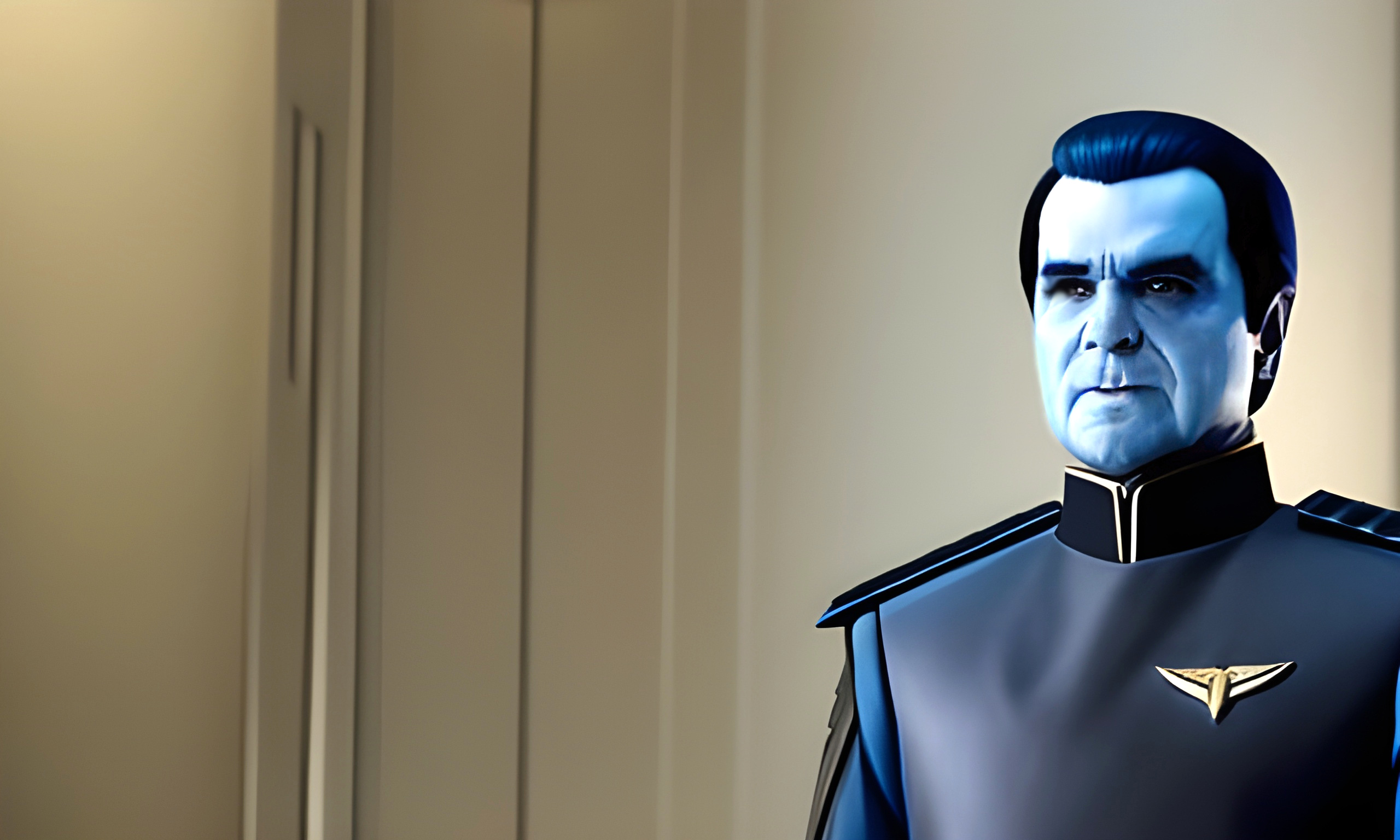
    Grand Admiral Thrawn is a fictional character from the Star Wars franchise and is one of the most beloved and enduring characters in the series. He was created by Timothy Zahn and first appeared in the 1991 novel, “Heir to the Empire,” the first book in the Thrawn Trilogy. Since then, Thrawn has become a fan favorite, known for his intelligence, strategic genius, and deep understanding of art and culture.

    Thrawn is a member of the Chiss species, a blue-skinned humanoid race with red eyes and black hair. He is an Imperial officer and one of the few non-human characters in the Star Wars universe to achieve such a high rank. Thrawn is known for his tactical abilities, his love of art, and his understanding of other cultures. He is a master strategist and is able to anticipate his opponents’ moves before they happen. He is also able to understand an enemy’s culture and use that knowledge to defeat them. Thrawn is not only a military genius, but also a complex and fascinating character.

    Thrawn’s character is one of the few villains in the Star Wars franchise who is not defined by evil or malice. He does not seek power or control for its own sake, but rather sees his role as a necessary one to maintain order and protect the galaxy from chaos. He is driven by a desire for knowledge, an appreciation of beauty, and a respect for discipline and order. Thrawn’s adherence to these principles is what makes him such a compelling character, as he is not a typical one-dimensional villain, but a complex and nuanced figure.

    Star Wars: The Thrawn Trilogy

    Thrawn’s popularity with fans is due in part to his unique personality and abilities, but also to the excellent writing and development of the character by Timothy Zahn. Zahn’s portrayal of Thrawn as a brilliant tactician and an enigmatic figure has captivated readers and viewers for decades.

    Star Wars: The Thrawn Trilogy is a series of three novels written by Timothy Zahn and set in the Star Wars universe.

    The trilogy consists of the books “Heir to the Empire,” “Dark Force Rising,” and “The Last Command.” It was first published in the early 1990s by Bantam Spectra, and quickly became a best-selling series.

    The trilogy takes place five years after the events of Return of the Jedi, and follows the continuing adventures of Luke Skywalker, Princess Leia, and Han Solo, as they battle against a new threat to the galaxy: Grand Admiral Thrawn, a brilliant military strategist and tactician who has emerged from the shadows of the defeated Empire to lead a new campaign of conquest.

    The Thrawn Trilogy introduced many new characters to the Star Wars universe, including Thrawn himself, Mara Jade (a former assassin who becomes a key ally to Luke Skywalker), and Talon Karrde (a smuggler who becomes embroiled in the struggle against Thrawn). It also brought back several classic characters from the original trilogy, including Chewbacca, C-3PO, and R2-D2.

    One of the most notable aspects of the Thrawn Trilogy is its focus on the political and military struggles of the post-Imperial era. The trilogy delves deeply into the power struggles and machinations of the New Republic, as well as the various factions vying for control of the galaxy in the wake of the Empire’s defeat.

    The Thrawn Trilogy was widely praised for its strong characterizations, intricate plot, and faithful depiction of the Star Wars universe. It is often credited with reviving interest in the franchise after a period of decline in the late 1980s and early 1990s. The trilogy also inspired a number of follow-up novels and comics, as well as a significant fanbase who consider it to be one of the best entries in the Star Wars canon.

    The Thrawn Trilogy is considered part of the Star Wars Legends continuity, which encompasses all of the Star Wars media produced before Disney’s acquisition of Lucasfilm in 2012. As such, it is not officially considered part of the current Star Wars canon.

    However, the events and characters introduced in the Thrawn Trilogy have had a significant impact on the Star Wars universe, both in Legends and in the current canon. Many of the concepts introduced in the trilogy, such as the New Republic and Grand Admiral Thrawn, have been incorporated into subsequent Star Wars media, including novels, comics, and TV shows, and continues to be celebrated by fans as one of the best examples of the expanded Star Wars universe.

    The Hand of Thrawn

    The Hand of Thrawn is a two-book series by author Timothy Zahn set in the Star Wars Expanded Universe, taking place ten years after the events of the original Thrawn Trilogy. The series introduces a new threat to the New Republic in the form of an Imperial Remnant led by a mysterious figure known as the Hand of Thrawn.

    The first book, Specter of the Past, begins with the discovery of a seemingly abandoned and forgotten Imperial facility on the planet Nirauan. As the New Republic investigates, they uncover evidence that suggests Thrawn may still be alive and plotting his return. Meanwhile, Luke Skywalker and Mara Jade are sent on a diplomatic mission to the Chiss Ascendancy, where they encounter a young Chiss officer named Mitth’raw’nuruodo (aka Thrawn) who claims to be Thrawn’s nephew.

    In the second book, Vision of the Future, the Hand of Thrawn makes his move, launching a series of attacks on New Republic targets and threatening to destabilize the fragile peace that has been established in the galaxy. As the New Republic races to uncover the identity of the Hand of Thrawn and stop his plans, Luke and Mara continue their investigation into Thrawn’s past, uncovering secrets that could change the course of the war.

    The Hand of Thrawn series is notable for its exploration of Thrawn’s character and motivations, as well as its depiction of the New Republic’s struggles to maintain order in a post-Imperial galaxy. The series also introduces several new characters, including Mara Jade’s former smuggling partner Talon Karrde, and further develops the relationships between established characters like Luke Skywalker and Han Solo.

    Thrawn

    In 2017, a new novel titled “Thrawn” was released, written by Timothy Zahn and set in the current Star Wars canon. The novel reintroduces Grand Admiral Thrawn as a key antagonist earlier in the new continuity, and provides a new backstory for the character that differs somewhat from the original Thrawn Trilogy.

    Characters

    The Thrawn Trilogy is a set of books in the Star Wars Expanded Universe. The main characters in the trilogy are:

    • Grand Admiral Thrawn – a brilliant military strategist and tactician who serves as the main antagonist in the trilogy.
    • Luke Skywalker – one of the primary heroes of the Star Wars saga and a powerful Jedi Knight.
    • Han Solo – a smuggler and former captain of the Millennium Falcon.
    • Leia Organa – a former princess of Alderaan and a leader in the Rebel Alliance.
    • Talon Karrde – a smuggler and information broker who becomes a key ally to the New Republic.
    • Mara Jade – a former agent of the Emperor who becomes an important character in the trilogy and later in the Expanded Universe.
    • Admiral Ackbar – a Mon Calamari military commander who serves as a leader in the New Republic.
    • Lando Calrissian – a former smuggler and captain of the Millennium Falcon who becomes a general in the New Republic.

    Timeline

    The Novels follow on from the End of Return of the Jedi.

    • 4 ABY: Battle of Endor, Death of Emperor Palpatine, and destruction of the second Death Star. The Rebel Alliance becomes the New Republic.
    • 5 ABY: Luke Skywalker discovers a new threat to the New Republic: Grand Admiral Thrawn, a brilliant strategist who commands the remnants of the Imperial Fleet. Thrawn begins a campaign to reunite the fractured Empire and destroy the New Republic.
    • 6 ABY: Thrawn launches a series of attacks on the New Republic, using his vast knowledge of art, culture, and military tactics to outmaneuver the Republic’s forces. He captures key planets, including the shipyards at Sluis Van, and steals a valuable cloaking device from the Republic.
    • 7 ABY: Thrawn gains the allegiance of the Noghri, a fierce species of assassins, by promising to heal their poisoned homeworld. He also discovers a new weapon, the Katana fleet, a collection of lost Republic ships that he plans to use against the New Republic.
    • 8 ABY: Thrawn attacks the New Republic capital planet of Coruscant, using the Katana fleet and his own cunning tactics to trap the Republic’s leaders. However, his plans are foiled by the efforts of Luke Skywalker, Leia Organa Solo, and Han Solo, as well as the treachery of his own bodyguard, Rukh. Thrawn is killed in the Battle of Bilbringi, ending his campaign to reunite the Empire.
    • 19 ABY: Mara Jade, a former agent of the Emperor, is forced to work with Luke Skywalker to track down a new threat to the galaxy: a group of clones created from the remains of the Emperor. Together, they uncover a conspiracy by a group called the Hand of Thrawn, which seeks to use a superweapon to destroy the New Republic and restore the Empire to power.
    • 20 ABY: The New Republic foils the Hand of Thrawn’s plans, and Mara Jade is accepted as a member of the New Republic’s intelligence service. She begins a romantic relationship with Luke Skywalker and helps to train new Jedi Knights.

    The Legacy of Thrawn

    The theory is that the Thrawn Trilogy had a significant thematic influence on the sequels, particularly in the way that certain plot elements, characterizations, and technologies were reused in the later films has been previously stated.

    The Thrawn Trilogy may have influenced the sequels is in its focus on political intrigue and the machinations of various factions within the Star Wars universe. The Thrawn Trilogy introduced the concept of the New Republic, which was struggling to maintain control in the wake of the fall of the Empire, and this theme of political instability was carried over into the sequels, where the Resistance is depicted as a small band of rebels fighting against a resurgent First Order.

    The Sequels reuse of certain technologies, such as cloaking devices and interdictor cruisers, which were first introduced in the earlier books. These technologies played a key role in the strategic battles of the Thrawn Trilogy and were later repurposed in the sequels, such as in the Battle of Crait in The Last Jedi, where the Resistance employs a cloaking device to evade detection.

    The sequels are influenced thematically, particularly in its exploration of the gray areas between the light and dark sides of the Force. The character of Thrawn himself was depicted as an honorable adversary who respected his enemies and had a code of ethics, even though he was fighting against the heroes of the story. This moral ambiguity was also explored in the sequels, particularly in the character of Kylo Ren, who struggled with his allegiance to the dark side and was ultimately redeemed in the final film.

    Thrawn’s popularity among fans was a driving force behind his continued presence in the franchise, and many of the qualities that made him a compelling antagonist in the Thrawn Trilogy, such as his strategic brilliance and complex motivations shaped aspect of the sequels. These were to be carried over into his later appearances and re-integration within the canon of the Stars Wars franchise.

    Grand Admiral Thrawn himself, was reintroduced into the Star Wars canon in the animated series Rebels before making his live-action debut in the final season of The Mandalorian.

    The Thrawn Trilogy also introduced several new characters, such as Mara Jade, Talon Karrde, and Gilad Pellaeon, who played significant roles in the later Expanded Universe novels and comics. Mara Jade, in particular, became a fan favorite and was later reintroduced bcak into the canon in the Rebels series and the later Thrawn novels by Timothy Zahn.

    Overall, the Thrawn Trilogy has had a lasting impact on the Star Wars franchise, and its themes, characters, and technologies continue to be explored in the later novels, comics, and animated series. The enduring popularity of Grand Admiral Thrawn, in particular, is a testament to the influence of these books on the wider Star Wars canon.

    Themes

    There are several major themes explored in the Thrawn Trilogy and some examples of how they are developed:

    • The nature of leadership and the responsibility of power: The Thrawn Trilogy explores the different ways that characters wield power and authority, and the consequences that result from their decisions. This theme is exemplified by the character of Grand Admiral Thrawn, who is a brilliant military strategist but has a controversial leadership style. Similarly, Princess Leia struggles with her role as a leader of the New Republic, and the challenges she faces as she tries to balance her ideals with the reality of governing a complex society.
    • The legacy of the past and the challenges of the present: The Thrawn Trilogy is set in the aftermath of the original Star Wars trilogy, and deals with the aftermath of the fall of the Empire. Characters grapple with the legacy of the past, and the ways in which it continues to shape the present. This is exemplified by the character of Mara Jade, who is a former agent of the Emperor and must come to terms with her past actions.
    • The power of redemption and forgiveness: A recurring theme in the Thrawn Trilogy is the idea of redemption and the possibility of forgiveness, even in the face of great evil. This is exemplified by the character of Darth Vader, whose legacy looms large over the trilogy, and the ways in which his actions continue to impact the characters long after his death.
    • The importance of personal connections and loyalty: The Thrawn Trilogy emphasizes the importance of personal connections and loyalty, particularly in the face of adversity. This is exemplified by the friendship between Luke Skywalker and Talon Karrde, a smuggler who becomes an unlikely ally to the Jedi, as well as the bond between Han Solo and Chewbacca, who are tested in new ways throughout the course of the trilogy.

    The Thrawn Trilogy is a rich and complex work that explores a wide range of themes and ideas, while also providing thrilling action and adventure. It continues to be a beloved part of the Star Wars universe and a favorite among fans of the franchise.

    The major themes in the Thrawn Trilogy reoccur in the sequel trilogy (Episodes 7-9):

    • Leadership and responsibility of power: This theme is also explored in the sequel trilogy, particularly with regards to characters like Rey, Finn, and Kylo Ren. Like Thrawn and Leia in the Thrawn Trilogy, these characters are thrust into positions of leadership and must grapple with the challenges of wielding power effectively.
    • Legacy of the past and challenges of the present: This theme is even more central to the sequel trilogy, as it deals with the legacy of the original Star Wars trilogy and the consequences of the actions of its characters. This is exemplified by the character of Kylo Ren, who struggles with his familial legacy and the dark shadow of Darth Vader.
    • Power of redemption and forgiveness: This theme is also present in the sequel trilogy, particularly in the character arc of Ben Solo to Kylo Ren. Like Darth Vader in the Thrawn Trilogy, Kylo Ren is a villain who ultimately seeks redemption and is granted forgiveness by the characters around him.
    • Importance of personal connections and loyalty: This theme is present in both the Thrawn Trilogy and the sequel trilogy, with the relationships between characters like Luke Skywalker and Rey, Finn and Poe, and Rey and Kylo Ren serving as key examples.

    However, there are also two key differences in the way these themes are developed:

    • The Thrawn Trilogy is more focused on military strategy and political intrigue, while the sequel trilogy places a greater emphasis on character development and the emotional journeys of its heroes and villains.
    • The Thrawn Trilogy takes place in the expanded Star Wars universe, while the sequel trilogy is part of the main film canon, which may also impact the way these themes are explored.

    The Hidden Fleet

    In the Thrawn Trilogy, Grand Admiral Thrawn discovers a hidden fleet of warships called the Katana fleet, which had been lost for years. Thrawn uses the fleet to launch a surprise attack on the New Republic and gain an advantage in the ongoing conflict.

    Similarly, in the sequel trilogy, the Sith cult on Exegol has been secretly building a massive fleet of warships called the Final Order, which they plan to use to conquer the galaxy and restore the power of the Sith. Like the Katana fleet in the Thrawn Trilogy, the Final Order fleet represents a significant threat that the heroes must overcome in order to save the galaxy.

    While the specific circumstances and context are different in the two trilogies, the idea of a hidden fleet of powerful warships that can tip the balance of power is a recurring motif in Star Wars storytelling. It reflects the idea that even in a galaxy as vast as the Star Wars universe, there are always hidden threats and dangers waiting to be uncovered.

    Hyperspace Weapons

    The Imperial Interdictor ships of the Thrawn trilogy were designed to create gravity wells that could pull ships out of hyperspace. This was a useful tool for the Empire to catch and trap enemy ships, preventing them from escaping. It was a passive tactic that relied on the ships’ gravity well generators and required the enemy ships to come to them.

    In the sequel trilogy, the technology used to pull ships out of hyperspace is called a hyperspace tracker. This device is used by the First Order to track the movements of Resistance ships through hyperspace, allowing them to intercept and attack their targets. The hyperspace tracker is a significant technological advancement, as it allows the First Order to locate and pursue ships that are trying to escape through hyperspace, which was previously believed to be impossible.

    The technology is based on the research and development of the Galactic Empire’s Interdictor-class Star Destroyers, which used gravity well projectors to pull ships out of hyperspace.

    The relativistic attack on the Supremacy was an active tactic that required a skilled pilot to execute. The attack involved accelerating a small ship to near-light speed and then ramming it into the target ship. This caused massive damage and destruction to the target ship. It was a desperate move made by the Resistance, as they had no other means to destroy the Supremacy’s shields.

    In terms of effectiveness, the Interdictor ships were useful in capturing enemy ships, but they were not capable of causing significant damage. The relativistic attack, on the other hand, was a devastating blow to the Supremacy, although it required a lot of sacrifice.

    Cloning Technology

    Joruus C’baoth is a clone of the Jedi master Jorus C’baoth, who had died before the events of the Thrawn Trilogy. The clone is created by the insane dark Jedi Joruus C’baoth, who seeks to use his clone to manipulate and control Luke Skywalker and Leia Organa Solo.

    Like Palpatine in the sequel trilogy, Joruus C’baoth is a cloned, irrational but powerful and dangerous figure who seeks to impose his will on the galaxy through any means necessary. The thematic connections between Joruus C’baoth and Palpatine are not as direct or intentional as they might seem at first glance.

    There are some similarities and differences in the technology used by Joruus C’baoth and Palpatine to make clones of themselves in the Star Wars expanded universe.

    Firstly, both characters are able to use advanced cloning technology to create duplicates of themselves. However, the specifics of the technology are different.

    Palpatine’s cloning technology is said to be based on research conducted by the Sith on the ancient world of Exegol. This technology allows Palpatine to create fully formed clones with all of his memories and abilities intact. Palpatine also claims that the process of cloning him weakens his physical body, which is why he needs to transfer his consciousness to a new host body.

    Joruus C’baoth’s cloning technology is said to be based on his own research into the Force. C’baoth claims that he is able to use the Force to manipulate the genetic material of his clones and imbue them with some of his own Force abilities. However, the clones he creates are not perfect copies of himself, and they are often unstable and prone to madness.

    Another difference between the two characters is that Palpatine’s cloning technology is shown to be more advanced and reliable. In the sequel trilogy, Palpatine is able to create an entire army of clones on Exegol, as well as several backup clones of himself in case his primary body is destroyed. In contrast, Joruus C’baoth’s clones are shown to be imperfect and short-lived, and they are ultimately unable to help him achieve his goals.

    While both Palpatine and Joruus C’baoth use cloning technology to create duplicates of themselves, the specifics of the technology and the purposes it serves are different. Palpatine’s cloning technology is shown to be more advanced and reliable, while Joruus C’baoth’s cloning technology is more closely tied to his own Force abilities and is ultimately less successful.

    Droids

    In the Thrawn Trilogy, which takes place five years after the events of Return of the Jedi, computers and droids are used primarily for logistical purposes. They assist in tasks such as data analysis, communication, and navigation. However, they are not as central to the plot as they are in the sequel trilogy.

    In the sequel trilogy, which takes place about 30 years after the events of Return of the Jedi, computers and droids are more prominently featured. BB-8, a spherical droid, is a central character and plays a key role in the plot. Additionally, the First Order, the successor to the Empire, uses advanced technology and artificial intelligence to maintain its power.

    The use of computers and droids in the Thrawn trilogy is an evolution from the Original Star Wars trilogy more subdued and focused on practical applications, while in the sequel trilogy, they are more integral to the plot and demonstrate a greater reliance on technology in the Star Wars universe. This is also widely reflective of real world difference between between 1990’s and 2020’s culture and increased reliance on technology.

    Imperial and and First Order Tactics

    The Thrawn Trilogy and the sequel trilogy both involve military conflict, but the use of military tactics differs between the two.

    In the Thrawn Trilogy, Grand Admiral Thrawn, the main antagonist, is a brilliant strategist who is able to analyze his enemies’ art and culture to predict their next moves. He also employs psychological warfare, such as using art to manipulate his enemies’ emotions. Thrawn also places a great emphasis on information-gathering and intelligence work, using both spies and technology to learn about his opponents. The Empire in the Thrawn Trilogy is also portrayed as a more disciplined and organized military force than in the original trilogy.

    In contrast, the sequel trilogy focuses more on the personal conflicts of its main characters, rather than military tactics. The First Order, the main antagonist in the sequel trilogy, is portrayed as more fanatical and less organized than the Empire in the Thrawn Trilogy.

    Their tactics involve brute force and overwhelming firepower, such as using their Starkiller Base to destroy entire planets. The Resistance, the main protagonists, rely more on small-scale guerrilla tactics and individual heroism.

    Thrawn Trilogy places a greater emphasis on military strategy and intelligence, while the sequel trilogy focuses more on personal conflict and spectacle.

    Thrawn’s Tactics

    Grand Admiral Thrawn was known for his tactical brilliance and strategic thinking. He was a master of military strategy, and his tactics often revolved around using the enemy’s strengths against them.

    Here are some examples of Thrawn’s tactics, both successful and unsuccessful:

    • Surprise attacks: Thrawn often used surprise attacks to catch his enemies off guard. For example, in the Thrawn Trilogy, he launches a surprise attack on the New Republic fleet at Sluis Van by using a cloaked interdictor cruiser to pull them out of hyperspace.
    • Diversionary tactics: Thrawn was a master of using diversionary tactics to distract his enemies while he carried out his true objective. In the Thrawn Trilogy, he sends a fleet to attack the planet Coruscant, knowing that the New Republic will divert resources to defend it, while he launches a separate attack on the planet Bilbringi.
    • Psychological warfare: Thrawn was known for his ability to use psychological warfare to demoralize his enemies. For example, in the Thrawn Trilogy, he sends a message to the New Republic, telling them that he has kidnapped their families and will kill them unless they surrender.
    • Studying the enemy: Thrawn was always studying his enemies, analyzing their strengths and weaknesses. He often used this knowledge to anticipate their moves and counter them effectively. For example, he correctly predicts that the New Republic will use their B-wing starfighters in a particular battle, and he prepares his defenses accordingly.

    While Thrawn’s tactics were often successful, he did have his share of failures. For example he is ultimately defeated by a combination of factors, including the unexpected intervention of a Jedi, the defection of one of his own officers, and the betrayal of a subordinate. Nonetheless, Thrawn remains one of the most feared and respected tacticians in the Star Wars universe.

    Thrawn’s Remnants of the Imperial Forces and the First Order the had different tactics in their approach to war and military strategy.

    Thrawn was a master of understanding his enemy’s strengths and weaknesses, and using that knowledge to gain an advantage on the battlefield. Thrawn was able to analyze and adapt to any situation, creating unorthodox and unexpected strategies that often caught his enemies off guard. He believed in using intelligence, subterfuge, and psychological manipulation to defeat his opponents, rather than simply overwhelming them with brute force.

    One example of Thrawn’s success was his use of a disguised Noghri commando team to capture Leia Organa in the novel “Heir to the Empire”. Thrawn knew that Leia would be more likely to trust Noghri, a race known for their loyalty, and used this knowledge to his advantage. Another example was his use of captured smugglers to infiltrate and sabotage the New Republic’s shipyards in “Dark Force Rising”.

    The First Order, led by Supreme Leader Snoke and later by Kylo Ren, relied heavily on brute force and intimidation to maintain their control over the galaxy. They were willing to sacrifice their own troops and resources to achieve their objectives, often using overwhelming firepower to crush their enemies. The First Order’s tactics were focused on instilling fear and demonstrating their power, rather than on strategic planning and coordination.

    However, Thrawn’s tactics were not always successful. In “The Last Command”, Thrawn attempted to use cloned Jedi warriors to fight against the New Republic, but the plan ultimately failed due to his underestimation of their willpower and the influence of the Force. Suimilraily, Palpatine’s use of cloned Sith on Exogol proved ineffective. Thrawn’s tactical prowess, like First Orders brute force was not enough to save them from his own arrogance and underestimation of his enemies, which ultimately led to his downfall.

    Thrawn and the First Order had different approaches to military strategy. While the First Order relied on overwhelming force and intimidation, Thrawn’s tactics focused on analyzing his enemy and using subterfuge to gain the upper hand. While Thrawn was successful in many of his battles, his downfall was similar to that of the First Order and the Final Order, showed that even the best tactics cannot always overcome hubris and complacency

    The Leaders

    Grand Admiral Thrawn

    Thrawn is a highly intelligent and strategic military leader from the Chiss species who rose through the ranks of the Imperial Navy to become a Grand Admiral. He is known for his analytical mind and ability to quickly assess his opponent’s strengths and weaknesses, as well as his tactical brilliance in battle. Thrawn is a self-taught expert on various species and cultures, which he uses to his advantage in his strategies. Thrawn is a strategic genius and a tactical mastermind who is widely regarded as one of the most brilliant military minds in the galaxy. Thrawn is highly respected by his subordinates and peers for his leadership skills and his ability to inspire loyalty and respect.

    General Armitage Hux

    Armitage Hux is a highly ambitious and ruthless officer in the First Order who is known for his fanatical loyalty to Supreme Leader Snoke and later to Kylo Ren.

    He is known for his fiery and passionate speeches, his willingness to resort to extreme measures to achieve his goals, and his tendency to be rash and impulsive. Hux relies heavily on brute force, intimidation, and fear to maintain his power and authority within the First Order.

    Hux is a human officer, born into a military family and trained in the traditions of the Galactic Empire. He has no force powers, but is a skilled tactician and strategist. Hux has risen to a high-ranking military officer in the First Order, serving as its General and overseeing its ground forces. Hux’s tactics are generally more straightforward and predictable. He relies heavily on brute force and intimidation, using overwhelming firepower and brute force to crush his opponents. He is willing to take extreme measures to achieve his goals, including the use of superweapons and genocide. While this approach can be effective in certain situations, it can also be risky and can lead to unnecessary losses if not executed properly.

    Hux starts off as a loyal servant of the First Order and its ideology of human supremacy, but is also ambitious and willing to betray his superiors to advance his own position. He is shown to be envious of Kylo Ren’s favor with Snoke and plots to overthrow him.

    Supreme Leader Snope

    Snoke is a mysterious and powerful figure who emerges as the leader of the First Order, the remnants of the defeated Empire. His origins and background are largely unknown, and he is presented as an enigmatic and intimidating presence, possessing significant Force powers. Snoke’s primary role in the story is to serve as a master to Kylo Ren and an antagonist to the heroes of the Resistance. He is revealed to be a powerful dark side user with a disfigured appearance and a connection to the ancient Sith.

    Snoke is subtle and manipulative in his leadership style, using his charisma and force powers to control his subordinates and shape the destiny of the First Order. Snoke becomes more impulsive and ruthless, using his immense power and authority to crush his enemies, using his power to turn Kylo Ren against his own father and to manipulate the events of the sequel trilogy for his own ends. In terms of their tactics, Thrawn tends to rely on careful planning and analysis, using his knowledge of his opponents to gain an advantage.

    While that are all are effective leaders, Thrawn’s approach is more methodical and calculated, Hux and Snoke’s are both more aggressive, impulsive and domineering. Thrawn’s analytical and unconventional approach contrasting sharply with Hux’s reliance on First Order doctrine of brute force and fear. Thrawn’s tactics are often successful because he is able to think outside the box and to use his opponents’ expectations against them. He is also highly skilled in the art of deception, using misdirection and psychological warfare to gain the upper hand in battle.

    Lando Calrissian

    Lando Calrissian is a character in the Star Wars franchise who first appeared in The Empire Strikes Back and became a key player in the original trilogy. He is a former smuggler turned administrator who owns a mining facility on the planet of Bespin called Cloud City. He is known for his charm, wit, and loyalty to his friends.

    • In the Thrawn Trilogy, Lando plays a significant role in the New Republic’s efforts to defeat Grand Admiral Thrawn. He assists in the battle for Bilbringi, where he leads a starfighter squadron and helps to disable the cloaking device on Thrawn’s flagship, the Chimaera. He also helps to uncover a traitor within the New Republic, which leads to the discovery of Thrawn’s cloning facility on Wayland.
    • In the sequel trilogy, Lando makes a brief appearance in The Rise of Skywalker, where he is portrayed as an older man who has retired from his days as a smuggler and is now living on the desert planet of Pasaana. He helps the Resistance by providing them with information about the location of the Sith fleet and leads a charge of allies in the final battle against the First Order.

    Lando Calrissian is known for his bravery and loyalty to his friends. He played similar important roles in both the Thrawn Trilogy and the sequel trilogy, demonstrating his ability to adapt to changing circumstances and remain a key player in the fight against evil forces.

    Admiral Ackbar

    Admiral Ackbar is a prominent character in the Star Wars universe, known for his strategic genius and leadership abilities. He is a member of the Mon Calamari species and serves as the commander of the Rebel Alliance’s capital ships in the original trilogy.

    In the Thrawn Trilogy, Ackbar plays a key role in the defense of the New Republic against the resurgent Empire led by Grand Admiral Thrawn. He helps to organize the defense of Coruscant and other key worlds, and is instrumental in the eventual defeat of Thrawn.

    In the sequel trilogy, Ackbar returns as an elderly leader of the Resistance. He is shown to still possess his sharp strategic mind and is a trusted advisor to General Leia Organa. In The Last Jedi, Ackbar leads the Resistance’s attack on the First Order’s flagship, the Supremacy. However, he is tragically killed when the ship is destroyed, sacrificing himself to save others.

    There are some similarities in Ackbar’s character and plot across both the Thrawn Trilogy and the sequel trilogy. In both, he is shown to be a brilliant strategist and a dedicated leader who is willing to put himself in harm’s way for the greater good. Additionally, both versions of Ackbar are involved in key battles against overwhelming odds and play critical roles in the ultimate success of their respective causes.

    Talon Karrde

    Talon Karrde is a human smuggler and information broker who operates in the Outer Rim and is known for his shrewd business sense and extensive network of contacts.

    Karrde was born on Myrkr, a planet known for its dangerous flora and fauna. He was orphaned at a young age and taken in by the smuggler Shada D’ukal, who taught him the ways of the trade. Karrde eventually took over D’ukal’s organization and built it into a powerful network of smugglers and information brokers.

    During the Galactic Civil War, Karrde maintained a neutral stance and did business with both the Rebel Alliance and the Galactic Empire. He was known to have close ties with Grand Admiral Thrawn, the leader of the Empire’s military forces, and played a role in Thrawn’s efforts to track down a hidden fleet of Imperial warships.

    After the fall of the Empire, Karrde continued to operate in the Outer Rim and became involved in the New Republic’s efforts to track down and eliminate any remaining Imperial threats. He also played a role in the search for the long-lost Jedi Master Jorus C’baoth.

    Karrde is known for his calm demeanor, strategic thinking, and ability to maintain a vast network of contacts across the galaxy. He is a skilled negotiator and businessman, and is often sought out for his expertise and knowledge of the criminal underworld.

    In the sequel trilogy, there is no character that can be directly considered an equivalent to Talon Karrde. However, there are a few characters that share certain traits or characteristics with Karrde.

    One of the most notable characters is Maz Kanata, who runs a cantina on the planet Takodana. Like Karrde, Maz is a shrewd businesswoman who is well-connected and has a network of spies and informants. She also has a reputation for being able to obtain hard-to-find objects and information.

    Another character that could be considered similar to Karrde is DJ, a codebreaker who is encountered by Finn and Rose on the casino planet of Canto Bight in “The Last Jedi”. Like Karrde, DJ is a rogue who is not aligned with either the Resistance or the First Order. He also has a talent for obtaining information and resources that others cannot.

    While these characters are not exact equivalents to Talon Karrde, they do share some similarities in terms of their skills, connections, and resourcefulness.

    Mara Jade

    Mara Jade is a fictional character in the Star Wars universe. She was first introduced in the 1991 novel “Heir to the Empire” by Timothy Zahn as a former assassin and smuggler who becomes an ally to Luke Skywalker and the New Republic.

    Mara was orphaned at a young age and was taken in by the Emperor Palpatine, who trained her as one of his personal agents, known as the Emperor’s Hand. She was skilled in combat and espionage, and was fiercely loyal to the Empire.

    After the death of the Emperor at the Battle of Endor, Mara became a rogue agent and began working as a smuggler. She was hired by the warlord Talon Karrde, who became her mentor and friend. Mara eventually crossed paths with Luke Skywalker, who sensed her connection to the Force and began training her as a Jedi.

    Throughout the course of the Expanded Universe novels, Mara Jade became a key ally to Luke Skywalker and the New Republic, and eventually fell in love with and married Luke. She was a popular and beloved character among fans, and her storylines often explored themes of redemption and forgiveness.

    In the new canon established after Disney’s acquisition of Lucasfilm, Mara Jade has not yet been reintroduced, and it is unknown if she will be included in future Star Wars projects.

    In the sequel trilogy, there are no characters that have a direct equivalent to Mara Jade. However, there are some characters who share certain similarities or traits with her. For example:

    • Rey: Like Mara Jade, Rey is a strong, capable female character who is adept at fighting and has a connection to the Force. Both characters also have a mysterious past that is gradually revealed over the course of the story. Rey, Like Mara is trained by Luke. Mara, like Rey bring Luke out of himself and provides with purpose.
    • Jannah: Jannah is a former stormtrooper who joins the Resistance and fights against the First Order. Like Mara Jade, they both transfer loyalties to the resistance. She is a skilled fighter and has a strong sense of loyalty to her cause.
    • Captain Phasma: While Captain Phasma is a villain rather than a hero like Mara Jade, she shares some similarities with the character. Both are highly skilled fighters and have a strong sense of loyalty to their respective causes.

    Comparisons

    Here are some other comparisons between characters in the sequels and their near counterparts in the Thrawn trilogy:

    • Rey and Mara Jade: Both characters are skilled in combat and have a strong sense of justice. Mara Jade was a former Emperor’s Hand who joined the New Republic and became a skilled Jedi, while Rey was a scavenger on Jakku who discovered she was strong with the Force and became a Jedi in training.
    • Kylo Ren and Joruus C’baoth: Both characters have a connection to the Force and a desire to rule the galaxy. Joruus C’baoth was a mad clone of a Jedi master who sought to create a new Jedi order and take control of the galaxy, while Kylo Ren was a conflicted Sith apprentice who sought to continue the legacy of his grandfather, Darth Vader, and rule the galaxy with the First Order.
    • General Hux and Captain Pellaeon: Both characters are high-ranking officers in the Imperial military. Captain Pellaeon was a loyal officer who served under Grand Admiral Thrawn and later helped negotiate a peace treaty with the New Republic, while General Hux was a fanatical officer who served under Supreme Leader Snoke and later under Kylo Ren in the First Order.
    • Finn and Wedge Antilles: Both characters were former stormtroopers who defected to the side of the Rebellion/New Republic. Wedge Antilles was a skilled pilot who fought in the Battle of Yavin and later served as a general in the New Republic, while Finn was a stormtrooper who defected to the Resistance and became a key member of the fight against the First Order.
    • Thrawn and Kylo Ren – Thrawn and Kylo Ren are both formidable leaders who command respect from their subordinates. However, while Thrawn is calm, calculating, and strategic, Kylo Ren is more impulsive and driven by his emotions.
    • Eli Vanto and Finn – Eli Vanto and Finn are both former members of a military organization who defect to the other side. However, while Finn is motivated by a desire for freedom and a sense of right and wrong, Eli Vanto is more concerned with personal growth and finding his place in the galaxy.
    • Governor Pryce and General Hux – Governor Pryce and General Hux are both high-ranking members of the Empire/First Order who are ruthless in their pursuit of power. However, while Pryce is more subtle in her approach and willing to work behind the scenes, Hux is more overt and willing to take extreme measures to achieve his goals.
    • Arihnda Pryce and Captain Phasma – Arihnda Pryce and Captain Phasma are both high-ranking female officers in the Empire/First Order who are known for their toughness and loyalty. However, while Pryce is more politically savvy and willing to do whatever it takes to advance her career, Phasma is more of a warrior and values strength above all else.
    • Thrawn and Poe Dameron – Thrawn and Poe Dameron are both skilled pilots and tacticians who play important roles in their respective conflicts. However, while Thrawn is more strategic and methodical in his approach, Poe is more of a risk-taker and willing to improvise in order to achieve his objectives

    Overall, while there are some similarities between characters in the sequels and their counterparts in the Thrawn trilogy, the characters in the sequels tend to be more complex and multi-dimensional, with more detailed backstories and motivations.

    Additionally, the characters in the sequels tend to focus more on themes of redemption, hope, and the power of individual agency, while in the Thrawn trilogy, they focuses more on military strategy, political intrigue, and the consequences of war.

    Star Wars: Thrawn – Canon

    The canon novels Thrawn, Thrawn: Alliances, and Thrawn: Treason are a trilogy of books by author Timothy Zahn, which focus on the character of Grand Admiral Thrawn, a fan-favorite villain from the Legends novels.

    The later Thrawn trilogy, consisting of the novels “Thrawn”, “Thrawn: Alliances” and “Thrawn: Treason”, is part of the Disney Canon and takes place before the events of the original Star Wars trilogy.

    These novels focus on the character of Thrawn and his rise through the ranks of the Imperial Navy.

    Thrawn takes place before the events of Star Wars Rebels, and tells the story of Thrawn’s rise to power within the Empire. Thrawn is an alien from the planet Chiss, and his tactical brilliance and strategic mind make him a valuable asset to the Empire. Thrawn is sent to the Imperial Academy, where he quickly rises through the ranks, catching the attention of Emperor Palpatine himself. Thrawn’s loyalty to the Empire is tested when he is sent on a mission to uncover a conspiracy within the Imperial Navy.

    Thrawn: Alliances takes place after the events of Thrawn and features Thrawn teaming up with none other than Darth Vader on a mission to a remote planet in the Unknown Regions. There, they encounter a threat to the Empire that requires their combined talents to defeat.

    Thrawn: Treason takes place after the events of Thrawn: Alliances and focuses on Thrawn’s role in the Empire during the events of the original Star Wars trilogy. Thrawn is tasked with defending the Empire against a growing threat from the Rebel Alliance, while also uncovering a traitor within the Empire’s ranks.

    Throughout the trilogy, Thrawn’s strategic brilliance and tactical mind are on full display as he navigates the complicated politics and power struggles of the Empire. The novels also explore Thrawn’s relationships with other characters, such as his protégé, Eli Vanto, and the Emperor himself.

    The later Thrawn trilogy ties into the larger Disney Canon by introducing characters and events that are relevant to the sequel trilogy. For example, “Thrawn: Alliances” features a young Han Solo and Lando Calrissian, while “Thrawn: Treason” ties into the events of “Star Wars: Rebels” and the larger conflict between the Empire and the Rebellion.

    Overall, the later Thrawn trilogy adds depth and complexity to the Star Wars universe, while also setting the stage for the events of the sequel trilogy.

    Thrawn’s popularity led to his inclusion in the animated series “Star Wars Rebels,” where he became a major character in the show’s third and fourth seasons.

    In “Star Wars Rebels,” Thrawn is once again portrayed as a complex and multifaceted character. He is a ruthless strategist, but also a man of culture and sophistication. He is a formidable opponent, but also a respected leader who commands the loyalty of his subordinates. Thrawn’s interactions with the show’s main characters, especially the Jedi Kanan Jarrus and the rebel leader Hera Syndulla, provide insight into his character and motivations.

    Thrawn’s enduring popularity is a testament to the skillful writing and development of the character by Timothy Zahn, as well as his unique personality and abilities. His inclusion in the animated series “Star Wars Rebels” has further cemented his place in the Star Wars canon and has introduced him to a new generation of fans.

    Thrawn is a fascinating character whose popularity is sure to endure for years to come.

    Major Appearances

    Here listing all the Thrawn books, comics, and media:

    TitleTypeAuthorPublisherRelease Date
    Heir to the EmpireNovelTimothy ZahnBantam SpectraMay 1991
    Dark Force RisingNovelTimothy ZahnBantam SpectraJune 1992
    The Last CommandNovelTimothy ZahnBantam SpectraApril 1993
    Specter of the PastNovelTimothy ZahnBantam SpectraMay 1997
    Vision of the FutureNovelTimothy ZahnBantam SpectraSeptember 1998
    Outbound FlightNovelTimothy ZahnDel ReyJanuary 2006
    ThrawnNovelTimothy ZahnDel ReyApril 2017
    Thrawn: AlliancesNovelTimothy ZahnDel ReyJuly 2018
    Thrawn: TreasonNovelTimothy ZahnDel ReyJuly 2019
    Thrawn: Ascendancy (Book I: Chaos Rising)NovelTimothy ZahnDel ReySeptember 2020
    Thrawn: Ascendancy (Book II: Greater Good)NovelTimothy ZahnDel ReyApril 2021
    Thrawn: Ascendancy (Book III: Lesser Evil)NovelTimothy ZahnDel ReyNovember 2021
    Thrawn: The ComicComicJody HouserMarvel ComicsFebruary 2018
    Thrawn: AlliancesComicJody HouserMarvel ComicsJune 2019
    Thrawn: TreasonComicJody HouserMarvel ComicsFebruary 2020
    Star Wars RebelsAnimated SeriesDave FiloniDisney XD2014 – 2018
    The MandalorianLive-action seriesJon FavreauDisney+2019 – present

    Note: This list may not include every single appearance of Thrawn in the Star Wars canon, but it includes the major works where he is a prominent character.
  • Eko Space Wars

    Eko Space Wars

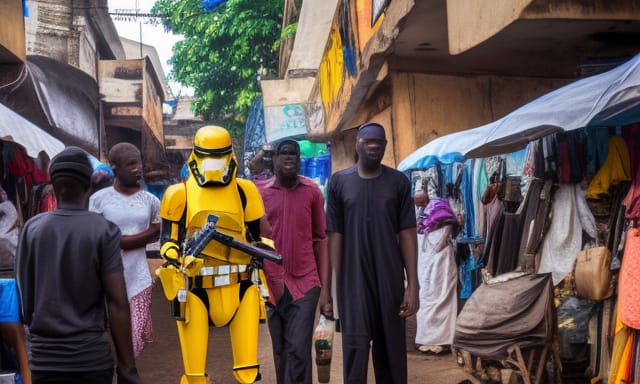
    Along time ago in a .. market in Lagos

    In the bustling streets of Lagos, a group of young filmmakers were hard at work crafting their latest project, “Eko Space Wars: The Battle for Lagos”. This epic adventure followed the journey of young Jedi warrior, Jide Obi, as he fought to save the retro future city of Lagos from the evil forces of the Empire.

    The film was a masterful blend of African culture and sci-fi tropes, with Jide Obi’s journey taking him through the colorful markets of Lagos and into the heart of the sprawling city. But it wasn’t just the setting that made “Eko Space Wars” so unique – it was also the cast of characters.

    Joining Jide Obi on his quest were the droids R4-N4 and C3P3, who provided comic relief throughout the film. And of course, no space adventure would be complete without a villainous antagonist – in this case, the imposing masked Major Dare Vanderbilt, who was voiced by a deep and commanding voice actor.

    As “Eko Space Wars” gained popularity among local audiences, it inspired a wave of low-budget remakes across Nigeria. One such film was “Kano Star Chronicles”, which featured a cast of mostly unknown actors and a plot that closely followed the original “Star Wars” story.

    In “Kano Star Chronicles”, the droids were renamed R3-K3 and CP-15, and were portrayed as lazy and bumbling sidekicks who stumbled their way through the adventure. Meanwhile, the villainous role of Darth Vader was replaced by the sinister Dark Lord Mukhtar, whose menacing presence sent chills down the spines of viewers.

    Despite the low budget and campy production values, “Kano Star Chronicles” was a hit among Nigerian audiences, who appreciated its clever blend of sci-fi and African culture. And as more and more filmmakers were inspired by the success of “Eko Space Wars”, the Nigerian sci-fi cinema scene continued to grow and thrive.

  • Star Wars: Overview

    Star Wars: Overview

    Introduction

    Since the release of the original Star Wars film in 1977, the franchise has become a cultural phenomenon, captivating audiences across generations and around the world. With its iconic characters, epic storylines, and ground breaking special effects, Star Wars has inspired countless fans and creators to explore its rich universe through a wide range of derivative works, including films, television shows, books, comics, and video games.

    At the heart of Star Wars’ enduring appeal is its timeless themes of heroism, hope, and the struggle between good and evil. Through the adventures of characters like Luke Skywalker, Princess Leia, Han Solo, and Darth Vader, Star Wars has captured the imaginations of audiences of all ages and backgrounds, offering a sense of escapism and inspiration that continues to resonate with viewers today.

    Over the years, Star Wars has become a cultural touchstone, with legions of devoted fans engaging in cosplay, creating fan fiction and art, and forming communities to discuss and debate the nuances of the series. Its influence can be seen in countless works of popular culture, from movies and TV shows to music and fashion.

    As the franchise continues to expand and evolve the enduring appeal of Star Wars shows no signs of fading. With its rich mythology, relatable characters, and inspiring message, Star Wars remains an enduring testament to the power of storytelling and the universal human experience.

    Star Wars: A New Hope

    Plot

    Star Wars: A New Hope, released in 1977 and directed by George Lucas, is a classic science-fiction film that has become a cultural phenomenon. It tells the story of a young farm boy, Luke Skywalker, who finds himself on an epic adventure to save the galaxy from the evil Empire.

    The film begins with a text crawl that explains the backstory of the galaxy far, far away, and sets up the conflict between the Empire, an oppressive regime that seeks to rule the galaxy, and the Rebel Alliance, a group of freedom fighters who resist the Empire’s rule.

    The story then introduces Luke Skywalker, a young farm boy who dreams of leaving his dull life on the desert planet of Tatooine and becoming a pilot. He gets his chance when he discovers a message from Princess Leia, a leader of the Rebel Alliance, hidden in a droid named R2-D2. The message contains information about the Empire’s ultimate weapon, the Death Star, and a plea for help to deliver the plans to the Rebel Alliance.

    Luke is joined on his adventure by two unlikely allies: the wise old Jedi Knight Ben Obi-Wan Kenobi, and Han Solo, a roguish smuggler with a heart of gold.

    Together, they set out to rescue Princess Leia from the clutches of the Empire on the Death Star, and deliver the plans to the Rebel Alliance.

    Along the way, they encounter a colorful cast of characters, including the menacing Darth Vader, a dark lord of the Sith who serves as the primary antagonist of the film.

    Vader is a terrifying presence, with his imposing black armor, deep voice, and mastery of the Force, a mysterious energy field that gives certain individuals extraordinary abilities. Obi-Wan faces off against Vader in a lightsaber duel and is killed allowing the other to escape.

    Luke, Han, and the Rebel Alliance launch an desperate attack on the station. The climax of the film takes place over the Death Star, a massive space station that can destroy entire planets. In the end, Luke is able to use the Force to destroy the Death Star and save the day.

    Timeline

    0 BBY/ABY (Before/After the Battle of Yavin): Episode IV – A New Hope

    • Princess Leia Organa of Alderaan is captured by Darth Vader and taken aboard the Death Star, a massive battle station capable of destroying entire planets
    • Luke Skywalker, a farm boy from the planet Tatooine, discovers a message from Leia hidden inside a droid named R2-D2, and sets out on a quest to rescue her
    • Luke meets Obi-Wan Kenobi, a former Jedi Knight who has been living in hiding on Tatooine, and learns about the Force, a mystical energy field that can be harnessed by certain individuals
    • The group, along with Han Solo and Chewbacca, two smugglers, travel to the Death Star to rescue Leia and disable its destructive capabilities
    • The film ends with the destruction of the Death Star and the Rebels’ victory over the Empire

    Analysis

    The key themes of the film is the struggle between good and evil, as represented by the Rebel Alliance and the Empire.

    • The Rebels are portrayed as brave and heroic, fighting for freedom and justice against a tyrannical regime.
    • The Empire, on the other hand, is depicted as cold and ruthless, willing to do whatever it takes to maintain its power.

    As a concept that bridges good and evil, the power of the Force is presented as a mystical energy field that binds the galaxy together. The Force is wielded by the Jedi Knights, who use it for good, and the Sith, who use it for evil. Luke learns to harness the power of the Force over the course of the film, under the brief tutelage of Obi-Wan.

    The film also features novel and ground breaking special effects that were ahead of their time. The space battles and the use of models to create the Death Star and other spacecraft were revolutionary, and paved the way for the use of CGI in later films.

    The film has had a significant impact on popular culture and the film industry, with Star Wars: A New Hope providing a commanding, but also limiting set of influences on science fiction as a genre. The film helped to popularize the space opera, a subgenre of science fiction that features epic adventures, exotic locations, and larger-than-life characters. IT would be many years until other sub-genres came out form under its shadow.

    In conclusion, Star Wars: A New Hope is a classic science fiction film that has had a lasting impact on popular culture and the film industry. Its themes of good versus evil and the power of the Force have resonated with audiences for over four decades, and its ground breaking special effects have influenced countless filmmakers. It remains a beloved, iconic and classic film that continues to inspire and entertain audiences.

    Star Wars – The Empire Strikes Back

    Plot

    Star Wars: The Empire Strikes Back is the second installment of wahs has become known as the Original Star Wars trilogy. It released in 1980 and directed by Irvin Kershner. The film picks up the story of Luke Skywalker, Princess Leia, and Han Solo as they continue their fight against the evil Galactic Empire.

    The film opens with the Rebel Alliance on the defensive, as the Empire has launched a massive assault on their secret base on the icy planet of Hoth. Luke, Han, and Leia are forced to flee the planet and go their separate ways in order to evade the Imperial fleet.

    While Han and Leia try to escape the Empire aboard the Millennium Falcon, Luke travels to the swamp planet of Dagobah to train with Jedi Master Yoda. Through his training, Luke learns more about the Force and the ways of the Jedi, while also having a vision of his friends in danger.

    Meanwhile, Darth Vader continues his relentless pursuit of the Rebel Alliance, with the help of a new villainous character, bounty hunter Boba Fett. The climax of the film sees the main characters reunited in a desperate battle against the Empire, with Luke facing off against Darth Vader in an iconic lightsaber duel.

    Timeline

    3 ABY: Episode V – The Empire Strikes Back

    • The Empire has launched a massive assault on the Rebel Alliance, forcing them to evacuate their base on the planet Hoth
    • Luke travels to the planet Dagobah to train with Jedi Master Yoda, while Han and Leia, along with C-3PO and Chewbacca, flee from Darth Vader and the Imperial fleet aboard the Millennium Falcon
    • The group seeks refuge in the city of Bespin, but are betrayed by Han’s friend Lando Calrissian and handed over to Vader
    • Vader reveals to Luke that he is his father, and offers him the chance to join him and rule the galaxy together
    • The film ends with Luke narrowly escaping Vader’s grasp, and the Rebels scattered and on the run

    Analysis

    One of the key themes of the film is the idea of good versus evil, as Luke, Han, and Leia are forced to confront the full might of the Empire. The film also explores the complex relationships between the characters, with Han and Leia’s romance blossoming even as they face seemingly insurmountable odds.

    In this instalment, Lucas expands on the concept of destiny, as Luke comes to terms with his role in the larger struggle against the Empire. Through his training with Yoda, Luke learns that his destiny is intertwined with that of the Rebellion, and that he must continue to fight against the Empire in order to bring peace to the galaxy.

    The Empire Strikes Back also features some of the most iconic scenes and characters in the Star Wars universe.

    • The AT-AT walkers, giant mechanical walking tanks used by the Empire in their assault on Hoth, became an instant fan favourite.
    • The introduction of Yoda, a wise and powerful Jedi Master, added a new depth to the mythology of the series.
    • The reveal of Darth Vader as Luke’s father is one of the most shocking and memorable moments in recent history of genre cinema.

    The film represented a significant leap forward in terms of special effects and filmmaking technology. The use of models and practical effects to create the creatures and environments of the Star Wars universe helped to create a sense of realism and immersion for audiences.

    In conclusion, Star Wars: The Empire Strikes Back is widely regarded as one of the greatest science fiction genre films ever made. Its complex themes, memorable characters, and ground breaking special effects have cemented its place in popular culture. The film’s legacy has continued to influence filmmakers and storytellers to this day, making it a true classic of the genre.

    Star Wars – Return of the Jedi

    Plot

    Star Wars: Return of the Jedi is the third installment of the original Star Wars trilogy, released in 1983 and directed by Richard Marquand. The film continues the story of Luke Skywalker, Princess Leia, and Han Solo as they lead the Rebel Alliance in their final battle against the Empire.

    The film opens with a confident Luke Skywalker, now a fully-fledged Jedi Knight, on a mission to rescue Han Solo from the clutches of the gangster Jabba the Hutt. Along with Princess Leia, Chewbacca, and a band of droids, Luke devises a plan to infiltrate Jabba’s palace and rescue Han.

    After a tense battle with Jabba’s guards, Luke is able to defeat the gangster and free Han.

    The group then sets off to continue their fight against the Empire, which is in the process of constructing a new and more powerful Death Star. The Rebel Alliance launches a plan to destroy the Death Star, with Han and Leia leading a team to disable the shield generator on the forest moon of Endor. Meanwhile, Luke confronts Darth Vader and the Emperor aboard the Death Star, hoping to turn Vader back to the light side of the Force.

    The climax of the film sees a three-way battle between the Rebel Alliance, the Empire, and the Ewoks, a primitive species native to Endor. In the end, Luke is able to redeem Vader and defeat the Emperor, saving the galaxy from the Empire’s tyranny.

    Timeline

    4 ABY: Episode VI – Return of the Jedi

    • Luke returns to Tatooine to rescue Han from the clutches of Jabba the Hutt, a powerful crime lord
    • The Rebels learn of a new weapon being developed by the Empire, the second Death Star, and plan to launch a daring mission to destroy it
    • Luke confronts Vader and attempts to turn him back to the light side of the Force, while the Rebel fleet engages the Imperial forces in a massive space battle
    • The final showdown takes place aboard the Death Star, with Luke facing Vader and the Emperor himself
    • In the end, Vader is redeemed and sacrifices himself to save his son, and the Rebels emerge victorious over the Empire once and for all

    Analysis

    The Film is in two acts. After being scattered in the previous film, the first half focus on bringing the main characters back together, with second halve set out to decisively resolve the power struggle conflict between the Rebel Alliance and the Empire, playing out the theme of destiny.

    The key themes of the film is the power of redemption, as exemplified by Luke’s efforts to turn Vader back to the light side of the Force. Luke sees the good in his father, despite his years of service to the Emperor, and is able to reach him through his love and compassion.

    The theme of sacrifice is core, as many of the characters are forced to make difficult choices in the face of overwhelming odds. Han and Leia risk their lives to disable the shield generator, while Luke is willing to face almost certain death in his quest to defeat the Emperor.

    The film also features some of the most iconic scenes and characters in the Star Wars universe. Jabba the Hutt is a memorable villain, with his grotesque appearance and ruthless demeanour.

    The Ewoks are a younger fan favourite, with their cute and cuddly exterior hiding a fierce warrior spirit. And of course, the extended and plotted final dual between Luke and Vader is one of the most emotional and impactful moments in the series.

    Return of the Jedi also represents a significant milestone in the evolution of special effects. The film features some of the most elaborate and ambitious effects of the time, including the creation of an entirely new planet (Endor) and the use of practical effects and costume to bring the Ewoks to life.

    In conclusion, Star Wars: Return of the Jedi is a fitting conclusion to the original trilogy, with its themes of redemption, sacrifice, and the power of the Force resonating with audiences to this day. Its iconic scenes and characters have cemented it as a beloved classic of the science fiction genre.

    The prequel trilogy

    Despite its enduring popularity, the Star Wars franchise has experienced its share of ups and downs over the years. After the initial trilogy of films in the late 70s and early 80s, there was a gap of over a decade before the franchise returned with the prequel trilogy in the late 90s and early 2000s. These films were met with mixed reviews, with some fans feeling that they failed to capture the magic of the original trilogy.

    The prequel trilogy consisted of Episode I: The Phantom Menace, Episode II: Attack of the Clones, and Episode III: Revenge of the Sith.

    These movies were released between 1999 and 2005, and they depicted events that took place roughly 20-30 years before the events of A New Hope.

    The prequel trilogy explored the rise of the Galactic Empire and the fall of the Jedi Order, as well as the origins of iconic characters such as Anakin Skywalker (who later becomes Darth Vader), Obi-Wan Kenobi, and Emperor Palpatine. It also introduced new characters such as Padmé Amidala, Count Dooku, and General Grievous.

    Main Plot events

    32 BBY (Before the Battle of Yavin): Episode I – The Phantom Menace

    • The Trade Federation blockades the planet of Naboo
    • Jedi Knights Qui-Gon Jinn and Obi-Wan Kenobi are sent to negotiate a settlement
    • The two Jedi meet Anakin Skywalker, a young slave with a powerful connection to the Force
    • The group encounters the Sith Lord Darth Maul, who is working with the Trade Federation
    • The Jedi and their allies succeed in defeating Maul and freeing Naboo

    22 BBY: Episode II – Attack of the Clones

    • A separatist movement threatens the stability of the Republic
    • Padmé Amidala, now a senator, is targeted for assassination
    • Anakin Skywalker is tasked with protecting her and begins to develop romantic feelings for her
    • Obi-Wan Kenobi investigates the separatists and uncovers a massive clone army being secretly created for the Republic by the mysterious Kaminoans
    • The Jedi discover that former Jedi Count Dooku has become a Sith Lord and is leading the separatist movement
    • A massive battle ensues on the planet Geonosis, leading to the beginning of the Clone Wars

    19 BBY: Episode III – Revenge of the Sith

    • The Clone Wars rage on, with the Jedi leading the fight against the separatists
    • Anakin Skywalker becomes increasingly disillusioned with the Jedi and drawn to the dark side of the Force
    • Chancellor Palpatine, who is secretly the Sith Lord Darth Sidious, uses the chaos of the war to gain more power
    • Palpatine manipulates Anakin into betraying the Jedi and becoming his apprentice, Darth Vader
    • Vader helps Palpatine execute Order 66, which results in the extermination of most of the Jedi Order
    • Palpatine declares himself Emperor and begins a brutal reign over the galaxy

    While the prequel trilogy was not as well-received by critics and some fans as the original trilogy, it is still an important part of the Star Wars franchise and offers valuable context and backstory for the events of the original movies.

    Expanding the Universe and Genre

    Although there had always been other media release of derivative material, it wasn’t really until the 10th anniversary of the original trilogy that the Expanded Universe opened up Star Wars as a franchise for the community to add content and extend.

    Typically of the characters are derivatives of the main character archetypes or feature backstories of minor character and reuse iconic locations from the film properties. These resources all the creators to focus on the plot elements without needing significant character exposition, but are typically limited to episodic events that could be reconciled with Star Wars Canon and Main Film Continuity, e.g. small indecisive battles where the main characters escape with their lives and be rescued in the next adventure by another author.

    Star Wars: Legacy of the Force

    This Obi-Wan Kenobi focused story takes place between Episodes III and IV, with Obi-Wan living in exile on the planet of Tatooine. The story explores Obi-Wan’s efforts to protect the infant Luke Skywalker and confront his former apprentice, Darth Vader, who is hunting down remaining Jedi.

    It feature new characters, such as Tusken Raiders and bounty hunters who threaten the safety of Tatooine. It ultimately show Obi-Wan accepting his new role as protector and mentor to Luke, and set the stage for the events of A New Hope.

    Both the prequel trilogy and the Legacy of the Force provide important backstory and context for the events of the original Star Wars trilogy, while also offering their own compelling stories of political intrigue, galactic conflict, and the struggle between good and evil.

    Star Wars: Shadow War

    In the Star Wars: Shadow War, set between the events of A New Hope and The Empire Strikes Back, the Rebel Alliance continues their fight against the Galactic Empire.

    Plot

    The plot follows a small group of Rebel soldiers who are tasked with a dangerous mission to gather vital information that could help turn the tide of the war.

    The main character is a young Rebel soldier named Jyn, who is tasked with leading the mission. Jyn is a skilled fighter and strategist, but she also has a troubled past that has left her with a deep distrust of authority figures. Despite her reservations, she agrees to take on the mission in order to help the cause of the Rebellion.

    Jyn’s team includes a diverse group of Rebels with different skills and personalities. There’s K-2SO, a reprogrammed Imperial droid who provides comic relief and valuable intelligence. There’s also Cassian, a veteran Rebel spy who is willing to do whatever it takes to complete the mission. Rounding out the group are Chirrut, a blind warrior who believes in the Force, and Baze, his loyal companion and protector.

    The mission takes the group back to a remote Imperial research base on the desert planet of Tatooine. They must infiltrate the base, gather the information they need, and escape before the Empire discovers their presence. Along the way, they briefly encounter a smuggler named Han Solo, who is back on Tatooine trying to clear his name in the criminal underworld.

    As Jyn and her team navigate the dangers of the Imperial base, they begin to uncover a sinister plot by the Imperial Scientists to recreate an new superweapon. This weapon, they learn, is an even more efficient version of the Death Star gun array, and it could spell the end of the Rebel Alliance if it get delivered bcak into the hands of the Emperor.

    In a tense and action-packed climax, Jyn and her team face off against the Empire’s forces in a desperate bid to destroy the facility and escape with the information they’ve gathered. Along the way, they must also confront their own doubts and fears, and learn to trust each other if they hope to succeed.

    Analysis

    The narrative explores themes of bravery, loyalty, and sacrifice, as Jyn and her team put their lives on the line for the greater good. It also delves into the darker side of the Star Wars universe, as the Rebels are forced to make tough choices and confront the harsh realities of war.

    The introduction of new characters and settings to the Star Wars universe, interlink with the familiar by featuring recognisable faces like Han Solo and brief menacing glimpses of bounty hunter Boba Fett, as he escapes at the end with the plans, foreshadowing the events in the Empire Strikes Back and Return of the Jedi.

    Being made much later than the original trilogy, it showcase the latest advancements in CGI filmmaking technology, with visuals and special effects that seem to push the boundaries of what’s now possible on screen against the context of the original trilogy

    In conclusion, the Shadow War offer a thrilling and engaging addition to the Star Wars saga. With a compelling story, complex characters, and high-stakes action, it would capture the spirit of the original films without pushing the franchise into significant new directions. Fans of the series would undoubtedly be eager to see what adventures await Jyn and her team in the war-torn galaxy far, far away.

    Star Wars: Battle for Coruscant

    In a Battle for Coruscant, a Star Wars production set between the events of The Empire Strikes Back and Return of the Jedi, the Rebel Alliance has suffered a major defeat and the Galactic Empire is on the verge of crushing the Rebellion once and for all.

    Plot

    The narrative follows a group of Rebels as they attempt to turn the tide of the war by launching a daring attack on an Imperial stronghold.

    The main character is a young Rebel pilot named Kiera, who has been a part of the Rebellion since the early days of the war. She is a skilled pilot and a natural leader, but she is haunted by the loss of her friends and the constant struggles of the Rebellion. Despite her doubts, she is determined to do whatever it takes to save the galaxy from the Empire’s tyranny.

    Kiera’s team includes a group of veteran Rebels who have been fighting the Empire for years. There’s Captain Akbar, a Mon Calamari admiral who is a strategic mastermind, and Wedge Antilles, a skilled pilot who has been a part of some of the Rebellion’s most daring missions. There’s also Lando Calrissian, a former smuggler who has become a valuable ally to the Rebels, who their to make deals with local rebel cell leaders.

    The mission takes the group to an Imperial stronghold on the planet of Coruscant, the heart of the Empire’s power. They must infiltrate the stronghold, disable its defences, and launch a surprise attack that could disrupt the Empire’s ability to wage war. Along the way, they encounter a new enemy: a ruthless Imperial commander named Thrawn, who is determined to stop the Rebels at any cost.

    As Kiera and her team navigate the dangers of the Imperial City underworld as their try to reach the stronghold, they must also confront their own doubts and fears. They are faced with tough choices and betrayal, and must decide whether to prioritize the mission or the safety of their fellow Rebels. Along the way, they also discover a dark secret about the Empire’s plans that could change the course of the war forever.

    In a thrilling climax, Kiera and her team launch their attack on the Imperial stronghold, engaging in a fierce battle that could determine the fate of the galaxy.

    In orbit above the planet, Akbar faces off against Thrawn and his Star Destroyer force, using all his skills and resources to achieve an narrow victory and escape, jumping out to rendezvous with the rebel fleet.

    Analysis

    The Battle for Coruscant explores themes of sacrifice, redemption, and the power of hope in the face of overwhelming odds. It also delves into the complex relationships between the Rebels, as they struggle to trust each other and work together despite their differences.

    The production also introduce new settings and characters to the Star Wars universe, while also featuring familiar faces like Admiral Akbar and Lando Calrissian. It would showcase the advancements in effects technology, with stunning CGI visuals of Coruscant ,reminiscent of the Prequel trilogy and special effects that push the boundaries of what’s possible on screen.

    In conclusion, the Battle of Coruscant offer an engaging addition to the Star Wars saga. With a compelling story, complex characters, and high-stakes action, it would capture the spirit of the original films while also proving bridging action in exciting new directions.

    Fans of the series would undoubtedly be eager to see what adventures await Kiera and her team in the war-torn galaxy far, far away…

    Star Wars: A New Dawn

    Set after the climatic events of the Return if the Jedi and featuring fan favourite couple Han and Leia.

    Plot

    The galaxy is in a state of flux following the collapse of the Galactic Empire and the death of Emperor Palpatine. Han Solo and Leia Organa have thrown themselves into the task of rebuilding the New Republic, but their efforts are constantly threatened by the remnants of the Empire, who refuse to go quietly into the night.

    As the story opens, Han and Leia are overseeing the construction of a new capital city on the planet of Chandrila, which they hope will serve as the heart of the New Republic. However, their work is interrupted by an attack by a group of Imperial loyalists, who have banded together under the leadership of a charismatic but dangerous figure known only as the Warlord.

    The Warlord and his followers are determined to restore the Empire to its former glory and will stop at nothing to achieve their goal. Han and Leia find themselves in the crosshairs of this new threat and must use all their skills and resources to defend the fledgling New Republic.

    As Han and Leia navigate the dangers of the Warlord’s forces, they are aided by a new generation of heroes, including a talented young pilot, a former Imperial officer who has defected to the New Republic, and a group of alien warriors who owe Han a debt of honor.

    As the conflict between the New Republic and the Warlord escalates, Han and Leia face difficult choices and must confront their own fears and doubts. They also grapple with the challenges of parenthood, as they raise their son Ben, who shows signs of great strength in the Force.

    In a thrilling climax, Han, Leia, and their allies face off against the Warlord and his forces in a final battle that will determine the fate of the galaxy. The stakes are higher than ever before, and the outcome is far from certain.

    Analysis

    The narrative explores themes of legacy, sacrifice, and the enduring power of hope in the face of darkness.

    It also offers a satisfying conclusion to the stories of Han and Leia, while setting the stage for the next generation of heroes to take up the fight against evil in the Star Wars universe.

    In conclusion, a New Dawn offer a thrilling and emotionally resonant addition to the Star Wars saga. With beloved characters like Han and Leia at the forefront, and a compelling new villain to challenge them, the new dawn captures and reprises the spirit of the original trilogy while also moving the franchise forward in exciting new directions.

    Fans of the series would undoubtedly be eager to see what challenges and adventures await the heroes of the New Republic in the years to come.

    Star Wars: The Knights of Ren

    This story takes place after the events of the New Dawn, and explore the origins of the mysterious group known as the Knights of Ren.

    It follows a group of Force-sensitive individuals as they are drawn to the dark side and become the Knights of Ren, and show their early interactions with Kylo Ren (formerly known as Ben Solo).

    The production also explores the aftermath of the fall of the Empire, and how various factions are vying for power in the galaxy.

    The Remake Trilogy

    In the years that followed, the franchise went through a period of relative quiet, with few new films or other media being released.

    To better manage its IP, in 2014, Lucasfilm rebranded the Expanded Universe material as Star Wars Legends and declared it non-canonical to the franchise. The company’s focus would be shifted towards a restructured Star Wars canon based on new material for a modern audience.

    In 2015, following failed acquisition attempt, a newly emboldened Lucasfilm proceeded with the release the first film in a new trilogy. While this film was largely well-received, some fans criticized it for being too derivative of the original trilogy, and for failing to take enough risks with the story.

    The subsequent two films in the sequel trilogy were similarly divisive, with some fans loving them and others hating them. Some critics have attributed this to a phenomenon known as “franchise fatigue,” where audiences become tired of seeing the same characters and stories played out repeatedly over time.

    Despite these challenges, however, the Star Wars franchise continues to thrive, with new films, television shows, and other media being released on a regular basis.

    And as each new generation of fans discovers the series for the first time, they bring with them their own perspectives and experiences, breathing fresh life into the franchise and ensuring its continued relevance and appeal for years to come.

    Star Wars: The New Hope 2.0

    In a galaxy ruled by the iron fist of the Galactic Empire, a young woman named Leia Organa is captured by the evil Darth Vader and subjected to brutal interrogation. Despite the torture and abuse she endures, Leia refuses to betray the rebellion she leads, even as the Empire destroys her home planet of Alderaan with its new weapon, the Death Star.

    Meanwhile, on the backwater planet of Tatooine, a young man named Luke Skywalker dreams of escaping his mundane life and joining the rebellion. When he encounters two droids carrying a message from Leia, he unwittingly becomes embroiled in the conflict between the Empire and the rebellion. With the help of a grizzled old warrior named Obi-Wan Kenobi, Luke sets out on a perilous journey to deliver the stolen plans of the Death Star to the rebellion.

    Along the way, Luke and his companions encounter Han Solo, a cynical smuggler with a price on his head, and his loyal Wookiee partner Chewbacca. Together, they must overcome the mistrust and tension between them to form an uneasy alliance and take on the Empire.

    As they sneak onto the Death Star to rescue Leia, they are constantly pursued by Darth Vader and his minions. Kenobi sacrifices himself in a lightsaber duel with Vader, leaving Luke and his companions to complete the mission alone.

    In a dramatic space battle, Luke taps into the power of the Force to guide his shots and destroy the Death Star, delivering a major blow to the Empire’s hold on the galaxy. But the victory is bittersweet, as they have lost a mentor and friend in Kenobi, and Leia is forced to come to terms with the horrific torture she suffered at the hands of Vader.

    This modern retelling of Star Wars: A New Hope brings out the themes of oppression and tragedy inherent in the story. The Empire is shown as a brutal regime that will stop at nothing to maintain its grip on the galaxy, while the rebellion represents the struggle for freedom and justice.

    The characters are flawed and complex, grappling with their own fears and doubts as they navigate a world of uncertainty and danger. The production is a gritty, visceral experience that captures the sense of hopelessness and despair that often accompanies resistance against a powerful oppressor.

    Star Wars: The Empire Strikes Back 2.0

    After a narrow victory against the Empire on the ice planet of Hoth, the rebellion is forced to flee to the far corners of the galaxy to avoid detection. Meanwhile, Darth Vader becomes obsessed with finding Luke Skywalker, who he believes is the key to destroying the rebellion.

    Luke travels to the swamp planet of Dagobah, seeking guidance from the wise Jedi Master Yoda. But Yoda subjects him to a grueling regime of physical and mental training, pushing Luke to his limits and beyond. Along the way, Luke has disturbing visions of his friends in danger and confronts the darkness within himself.

    Meanwhile, Han Solo and Princess Leia lead the remaining rebels on a desperate mission to escape the pursuing Empire, only to be relentlessly pursued by Vader and his forces. In a moment of selflessness, Han sacrifices himself to allow the others to escape, and he is captured and frozen in carbonite by the ruthless bounty hunter, Boba Fett.

    In a final confrontation inside the Cloud City, Luke faces off against Vader, hoping to rescue his friends and defeat the Sith Lord once and for all. But the fight ends in tragedy, as Vader reveals himself to be Luke’s father and Luke loses a hand in the duel. Devastated and traumatized, Luke barely escapes with his life, while Vader and the Empire emerge victorious.

    The Empire Strikes Back is a dark and visceral exploration of trauma, loss, and the struggle against an overwhelming power. The rebel defeat on Hoth and the loss of Han Solo emphasize the stakes of the conflict, while the scenes on Dagobah highlight the cost of becoming a Jedi and the dangers of facing one’s own demons.

    The confrontation between Luke and Vader is a stunning revelation that forever changes the dynamic of the Star Wars universe, setting the stage for a final battle between father and son in the upcoming Return of the Jedi.

    Star Wars: Return of the Jedi 2.0

    After rescuing Han Solo from the clutches of the ruthless gangster Jabba the Hutt, Princess Leia is taken prisoner and subjected to his sadistic whims. But Leia refuses to be broken, and she exacts a brutal revenge on Jabba, killing him in cold blood.

    Meanwhile, Luke Skywalker travels to the forest moon of Endor to destroy the new Death Star being built by the Empire. But he finds himself facing a new threat in the form of the evil Emperor Palpatine, who seeks to turn Luke to the dark side and make him his new apprentice.

    As the battle rages on Endor, the rebels suffer terrible losses, including the tragic death of the wise Jedi Master Yoda. Luke confronts his darkest fears and the trauma inflicted upon him by Vader, leading to a bittersweet reconciliation between father and son as they fight together against Palpatine.

    In a climactic battle, the rebels destroy the Death Star, bringing an end to the Empire’s reign of terror. As the galaxy celebrates, the people of the Empire are left to pick up the pieces and face an uncertain future without the grip of Palpatine.

    Return of the Jedi is a complex and emotional exploration of the costs of war and the struggle for freedom. Leia’s treatment by Jabba highlights the brutality of those in power, while Luke’s journey shows the toll that the fight against oppression can take on an individual.

    The losses suffered by the rebels and the death of Yoda emphasize the stakes of the conflict, while the final battle against the Emperor and the destruction of the Death Star provide a satisfying conclusion to the remake Star Wars trilogy.

    Star Wars: New Hope 3.0 – Anime

    Star Wars has been one of the most beloved and enduring film franchises of all time, capturing the imaginations of audiences around the world for over four decades. And now, a new take on the series is set to arrive in the form of an anime remake.

    While Star Wars has been adapted into various other media over the years, including novels, comics, and video games, this marks the first time that the series will be reimagined in the distinct style of anime. With its unique blend of action, drama, and rich character development, anime is the perfect medium for exploring the rich tapestry of the Star Wars universe in a fresh and exciting way.

    The anime is sure to appeal to both diehard Star Wars fans and anime enthusiasts alike, offering a thrilling new way to experience the story of Jedi knights, lightsabers, and epic battles between the forces of good and evil. With stunning visuals, compelling storytelling, and a deep reverence for the source material, the anime remake promises to be a must-see event for anyone who loves Star Wars, anime, or both.

    Plot

    In a galaxy far away, a young woman named Leia Organa leads the rebellion against the oppressive Galactic Empire, which seeks to impose its will on the galaxy through fear and violence. Leia is determined to bring freedom to all the worlds under Imperial rule, but her efforts are constantly thwarted by the ruthless Emperor and his enforcer, Darth Vader.

    Meanwhile, on the desert planet of Tatooine, a young man named Luke Skywalker dreams of adventure and excitement beyond the confines of his small town. He yearns to join the rebellion and fight for a cause he believes in, but he feels trapped by his family’s expectations and the monotony of his everyday life.

    Luke meets a droid named R2-D2, who holds a secret message from Princess Leia. The message contains the plans to the Empire’s ultimate weapon, the Death Star, which is capable of destroying entire planets. Luke and his new ally, the sagely and mysterious Jedi Knight Obi-Wan Kenobi, embark on a perilous journey to deliver the plans to the rebellion and enable them strike a decisive blow against the Empire.

    Along the way, they encounter a charming rogue named Han Solo and his trusty co-pilot Chewbacca, who offer to help them complete their mission in exchange for a hefty reward. Luke, Obi-Wan, Han, and Chewbacca face countless dangers and obstacles as they race against time to reach the rebels and launch a daring attack on the Death Star.

    As the battle rages on, Luke discovers the power of the Force, a mystical energy field that binds all living things together. With Obi-Wan’s guidance and the support of his new friends, Luke harnesses the power of the Force to destroy the Death Star and deliver a crushing blow to the Empire.

    In this modern retelling of Star Wars: A New Hope, the themes of rebellion, freedom, and the power of the individual to make a difference are still front and center.

    However, the story also emphasizes the importance of diversity, inclusivity, and the need to challenge oppressive systems of power. The characters are complex and multidimensional, reflecting the diversity of the world we live in today. The animated film is an exciting adventure that captures the spirit of the original while also speaking to a new generation of viewers.

  • A Story about a Planet

    A Story about a Planet

    A Story about an Planet called Bhasad.

    Bhasad is a planet located in the outer reaches of the galaxy. It is known for its unique geography, with two distinct continents occupying opposite hemispheres.

    The South continent of Bhasad is small, but it is home to the planet’s most technologically advanced societies. Cities on this continent are hubs of innovation and industry, with towering skyscrapers, advanced transportation systems, and state-of-the-art infrastructure. The people of the South are known for their intelligence and resourcefulness, and they have made great strides in fields such as science, technology, and engineering.

    In contrast, the North continent of Bhasad is a vast desert wasteland, inhabited by nomadic tribes who roam the sands in search of water and sustenance. The harsh conditions of the North have shaped the culture of its inhabitants, who are known for their resilience and adaptability. Despite the challenges they face, the nomads of the North have managed to thrive in their harsh environment, developing unique traditions and ways of life that have allowed them to survive for generations.

    Overall, Bhasad is a planet of contrasts, with two very different cultures coexisting on opposite sides of the globe. Despite their differences, the people of Bhasad are united by their shared history and their resilience in the face of adversity.

    A Disaster Happened !

    As time passed, a natural disaster struck the North continent of Bhasad, unleashing a series of devastating events that would change the course of history for the planet. A massive earthquake struck the region, causing widespread destruction and unleashing powerful sandstorms that swept across the desert.

    The nomadic tribes of the North, who had always been prepared for the challenges of their harsh environment, were caught off guard by the scale of the disaster. Many of their settlements were destroyed, and their traditional ways of life were disrupted. With their sources of food and water scarce, the nomads were forced to rely on the assistance of the more technologically advanced societies of the South.

    The people of the South, seeing the plight of their fellow citizens, rose to the challenge and mobilized to provide aid. They sent supplies, food, and medical care to the North, and worked tirelessly to help the nomads rebuild their communities.

    However, despite their best efforts, the disaster had taken a heavy toll on the South as well. Many of their cities had been damaged, and their infrastructure was in disrepair. The cost of rebuilding and providing aid to the North placed a strain on the South’s resources, and they were forced to make difficult decisions about how to allocate their limited resources.

    As the years passed and the recovery efforts continued, the people of Bhasad began to realize the true cost of the disaster. The once-great technical civilization of the South had been weakened, and the North had been forever changed. The natural disaster had brought the two continents closer together, but it had also revealed the fragility of their way of life and the need to work together to rebuild and move forward.

    A Leader Rose to Power !

    In the aftermath of the natural disaster that struck Bhasad, a charismatic leader emerged in the South. This leader, who had previously been a prominent figure in the tech industry, seized upon the chaos and fear caused by the disaster to gain power.

    Promising to restore order and prosperity to the South, the leader launched a campaign of propaganda blaming the disaster on the North and its nomadic inhabitants. They argued that the North, with its harsh and uncivilized way of life, had brought the disaster upon itself and that the South had suffered as a result.

    As the leader’s popularity grew, they began to consolidate power, establishing a harsh dictatorship that ruled with an iron fist. They suppressed dissent and opposition, and used the media and education system to promote their own narrative and propaganda.

    Under the dictator’s rule, the North and its people became the target of discrimination and persecution. The dictator implemented harsh policies that oppressed the northern tribes, stripping them of their rights and freedoms. Many nomads were forced to leave their ancestral lands and flee to the South, where they were treated as second-class citizens.

    The dictator’s rule was characterized by fear and oppression, as they used their power to crush any opposition and maintain control. The people of Bhasad lived in a state of constant fear, unsure of when they might fall afoul of the dictator’s regime and suffer its wrath. The once-great technical civilization of the South had been corrupted and twisted by the dictator’s quest for power, and the people paid the price.

    The Leader went to War but the People Resisted!

    As the dictator’s rule grew more oppressive and tyrannical, the people of the North began to resist. Despite being vastly outnumbered and outgunned, the nomadic tribes of the North refused to submit to the dictator’s rule.

    They formed guerrilla groups that waged a covert war against the dictator’s forces, using their knowledge of the desert and their mobility to their advantage. The nomads struck at supply lines, sabotaged infrastructure, and ambushed convoys, making it difficult for the dictator’s army to maintain control over the North.

    In response, the dictator declared war on the North, launching a full-scale invasion in an attempt to crush the resistance once and for all. The dictator’s forces, equipped with advanced weaponry and technology, were able to make initial gains, but they soon found themselves bogged down in a brutal, guerilla war.

    The nomads fought with bravery and determination, refusing to give up their freedom and way of life. They used their intimate knowledge of the desert to their advantage, hitting the dictator’s forces where they were weakest and then melting away into the sands.

    Despite the dictator’s best efforts, the war dragged on for years, with neither side able to gain a decisive advantage. The dictator’s rule began to crumble as the war took its toll on the South, and eventually, the dictator was overthrown in a popular uprising.

    The people of Bhasad rejoiced as the dictator fell, and the war came to an end. The North was finally free from the dictator’s rule, and the people of both continents began the difficult task of rebuilding and reconciling after years of conflict.

    Questions and Answers.

    What was the political landscape after the war ?

    After the war, the political landscape of Bhasad underwent significant changes. The dictator’s regime had been toppled, and the people of both the South and the North were eager to establish a new system of government that would ensure that such a disaster would never happen again.

    Initially, the South took the lead in shaping the new political landscape, with its more advanced societies and infrastructure. However, as the recovery efforts progressed, the North began to assert itself as well.

    The nomadic tribes of the North, who had always been a marginalized and oppressed group, now had a chance to have a say in the direction of their own lives. They formed political parties and advocacy groups, and worked to ensure that their voices were heard in the new government.

    As the North began to rebuild, it also began to modernize, adopting some of the technological advances of the South while also retaining its own unique culture and traditions. The people of the North became more integrated into the broader society of Bhasad, and their influence grew.

    Eventually, a power-sharing arrangement was reached, with the South and the North each having a say in the governance of the planet. This arrangement allowed both cultures to thrive and contribute to the betterment of Bhasad, and it laid the foundation for a more peaceful and prosperous future for all of its inhabitants.

    How did the people begin to repair their planet ?

    After the war and the fall of the dictator, the people of Bhasad were determined to rebuild and create a better future for themselves. They knew that the natural disaster that had struck the North had been a wake-up call, and that they needed to work together to prevent such a disaster from occurring again.

    One of the major priorities for the people of Bhasad was to repair and restore their planet. They knew that the natural resources of Bhasad had been strained by the war and the disaster, and they wanted to ensure that their planet was able to sustain them into the future.

    To this end, the people of Bhasad began a massive effort to green the desert of the North. They used advanced irrigation and agriculture techniques to turn the barren sands into fertile fields, and they planted forests and grasslands to help stabilize the soil and protect against erosion.

    As the desert began to green, the people of Bhasad noticed a dramatic improvement in their environment. The air became cleaner and fresher, and the wildlife began to return. The people of the North, who had always been closely connected to the land, were especially pleased to see the desert come back to life.

    The greening of the desert was a massive undertaking, but it was worth it. The people of Bhasad had come together and worked towards a common goal, and they had achieved something truly remarkable. They had transformed their planet and laid the foundation for a bright and sustainable future.

    What was Government and Society like after the War ?

    The government of Bhasad is a federal, power-sharing arrangement between the South and the North, with both regions having representation in the central government. This arrangement was established after the war that toppled the dictator, as a way to ensure that both cultures had a say in the governance of the planet.

    The government is divided into three branches: the executive branch, the legislative branch, and the judicial branch. The executive branch is responsible for implementing and enforcing the laws of the government, and is headed by a president who is elected by the people. The legislative branch is responsible for making the laws, and is composed of a parliament with representatives from both the South and the North. The judicial branch is responsible for interpreting the laws and resolving disputes, and is made up of a system of courts.

    In terms of society, Bhasad is a diverse and multicultural planet. The South is home to technologically advanced societies, with cities that are hubs of innovation and industry. The people of the South are known for their intelligence and resourcefulness, and they have made great strides in fields such as science, technology, and engineering.

    The North is a desert region, inhabited by nomadic tribes who roam the sands in search of water and sustenance. The nomads of the North are known for their resilience and adaptability, and they have developed unique traditions and ways of life that have allowed them to survive in their harsh environment.

    Despite their differences, the people of Bhasad are united by their shared history and their commitment to building a better future. They are a resilient and resourceful people, who have overcome great challenges and worked together to rebuild and transform their planet.

    Did the Peace Last ?

    After the people of Bhasad succeeded in making the desert green and restoring their planet, they were able to enjoy a period of peace and prosperity. The power-sharing arrangement between the South and the North helped to ensure that both cultures were able to thrive and contribute to the betterment of Bhasad.

    The greening of the desert had a number of positive effects on Bhasad. The environment improved, with cleaner air and more diverse wildlife. The economy also benefited, as the agriculture and forestry industries flourished in the newly-fertile lands of the North. The people of Bhasad were able to work together and build a brighter future for themselves.

    That being said, no society is immune to challenges and conflicts. There were still issues and disputes that arose over the years, and the government and people of Bhasad had to work to address them. However, overall, the peace on Bhasad held, and the people were able to continue building upon the progress they had made.

    In the end, the peace on Bhasad was a testament to the resilience and determination of its people. Despite the challenges they had faced, they had come together and worked towards a common goal, and in doing so, they had transformed their planet and laid the foundation for a better future.

    Are there any Lessons that could be applied to Earth ?

    There are several lessons that could be drawn from the story of Bhasad that could be applied to Earth. Here are a few examples:

    The importance of resilience and adaptability: The people of Bhasad faced a number of challenges, including a natural disaster and a brutal war. However, they were able to persevere and rebuild, thanks to their resilience and adaptability. This is a valuable lesson for Earth, as our planet is also facing a number of challenges, such as climate change and political conflict. By learning to be resilient and adaptable, we can better navigate these challenges and build a better future.

    The value of diversity and multiculturalism: The story of Bhasad highlights the importance of embracing diversity and multiculturalism. The people of Bhasad came from different cultures and backgrounds, but they were able to work together and build a better future for themselves. This is a lesson that Earth could also benefit from, as our planet is becoming increasingly diverse and interconnected. By learning to respect and appreciate different cultures, we can build stronger, more cohesive communities.

    The power of collaboration and teamwork: The people of Bhasad were able to achieve great things by working together and collaborating. They were able to green the desert and rebuild their planet, thanks to their collective efforts. This is a lesson that Earth could also learn from, as we face a number of global challenges that require collaboration and teamwork to solve. By coming together and working towards common goals, we can make a difference and create a better future for all.

    What Technology did the People need to Repair their Planet ?

    To repair their planet and make the desert green, the people of Bhasad needed to develop a number of technologies. Some examples of the technologies they may have used include:

    • Advanced irrigation systems: To turn the desert into fertile fields, the people of Bhasad would have needed to develop advanced irrigation systems that could deliver water to crops and plants. These systems could have included drip irrigation, sprinkler systems, or other innovative technologies that could efficiently deliver water to the plants.
    • Agricultural technology: In order to grow crops and plants in the desert, the people of Bhasad would have needed to develop a range of agricultural technologies. These could have included genetically modified seeds that were able to thrive in the desert environment, as well as advanced fertilizers and pest control methods.
    • Environmental restoration technologies: To restore the environment of the North, the people of Bhasad may have needed to develop technologies that could help to stabilize the soil, prevent erosion, and restore habitats. These could have included techniques such as reforestation, afforestation, and soil conservation methods.
    • Renewable energy technologies: To power their efforts to repair the planet, the people of Bhasad may have needed to develop renewable energy technologies that could provide clean and sustainable energy. These could have included solar panels, wind turbines, and other technologies that harness the power of the sun and the wind.

    Overall, the people of Bhasad would have needed to develop a range of technologies in order to repair their planet and make the desert green. These technologies would have been critical to their success, and would have allowed them to build a brighter, more sustainable future.

    In hindsight, was the Leader right to start the War, given that in the end it brought the Peoples together ?

    No, the dictator was not right to start the war with the North. The decision to go to war was driven by the dictator’s desire for power and control, and it caused untold suffering and destruction for the people of Bhasad.

    While it is true that the war ultimately brought the people of Bhasad closer together and led to the establishment of a power-sharing arrangement between the South and the North, this outcome was not worth the cost. The war resulted in countless lives lost, communities destroyed, and resources wasted. It was a tragic and unnecessary conflict that could have been avoided.

    Furthermore, the dictator’s motivations for starting the war were not altruistic or benevolent. The dictator was not seeking to bring the people of Bhasad closer together or create a better future for them. Instead, they were motivated by their own ambition and desire for power, and they were willing to do whatever it took to achieve their goals, even if it meant causing harm to others.

    In hindsight, it is clear that the dictator was not justified in starting the war with the North. The conflict caused immense suffering and damage, and it could have been avoided if the dictator had not pursued their own selfish interests.

    Would the Planet have been repaired without the War ?

    It is impossible to say for certain whether the planet of Bhasad would have been repaired without the war. It is possible that the natural disaster that struck the North could have been a catalyst for change and cooperation, leading the people of Bhasad to work together to rebuild and restore their planet.

    However, it is also possible that the disaster could have led to more conflict and division, rather than cooperation. Without the war, it is possible that the South and the North could have remained at odds, with each side blaming the other for the disaster and struggling to find a way to move forward.

    Overall, it is difficult to predict how the story of Bhasad would have played out without the war. What is certain is that the conflict was a major turning point in the history of the planet, and it had a profound impact on the people of Bhasad and the direction of their society.

    How did the People prevent the rise of another Dictator ?

    The dictator of Bhasad came to power during a time of crisis and uncertainty, when the people of the planet were struggling to cope with the aftermath of a natural disaster that had struck the North. The dictator was able to capitalize on the fear and confusion caused by the disaster, and they used their charisma and cunning to seize power.

    It is not uncommon for dictators to come to power in times of crisis, as they are able to use the chaos and uncertainty of such situations to their advantage. They often promise to restore order and security, and they use propaganda and manipulation to win support.

    To prevent the rise of another dictator, the people of Bhasad would need to be vigilant and aware of the risks of authoritarianism. They could do this by:

    • Ensuring that their political system is robust and democratic: A strong, transparent, and accountable political system can help to prevent the rise of authoritarian leaders.
    • Supporting independent media and civil society: A free and independent media, as well as a vibrant civil society, can serve as a check on government power and help to expose abuses.
    • Educating the public about the dangers of authoritarianism: It is important for the people of Bhasad to understand the risks of authoritarianism and the importance of protecting their freedoms and rights.
    • Holding their leaders accountable: The people of Bhasad should hold their leaders accountable for their actions and ensure that they are acting in the best interests of the people, rather than their own selfish interests.

    By following these steps, the people of Bhasad can help to create a society that is resistant to authoritarianism and committed to democracy and freedom.

    In the Long Run did they Make It ?

    It is difficult to predict what the society of Bhasad would be like 2000 years in the future. There are too many variables and unknowns that could shape the course of the planet’s future.

    That being said, it is possible that the people of Bhasad would have been able to build a sustainable and prosperous society, provided that they continue to work together and address the challenges that they face. By leveraging their diverse cultures and strengths, and by using their intelligence and creativity, the people of Bhasad could build a bright and thriving future for themselves.

    However, it is also possible that the people of Bhasad could face new challenges and setbacks in the coming years. There is always the risk of natural disasters, technological failures, or social conflicts that could impact the planet and its inhabitants.

    Ultimately, the future of Bhasad will depend on the choices and actions of its people. If they are able to work together and overcome their challenges, they could create a society that is resilient, prosperous, and sustainable. If they are unable to do so, they may face a more difficult and uncertain future.

    Whether or not Bhasad will “make it” in the long term will depend on the resilience and resourcefulness of its people, as well as their ability to adapt and work together to build a better future.

    Is there a Lesson of Bhasad ?

    One possible lesson of the story of Bhasad is the importance of resilience and adaptability. The people of Bhasad faced a number of challenges, including a natural disaster and a brutal war. However, they were able to persevere and rebuild, thanks to their resilience and adaptability. This is a valuable lesson for all societies, as we are all faced with challenges and setbacks from time to time. By learning to be resilient and adaptable, we can better navigate these challenges and build a better future.

    Another possible lesson of the story of Bhasad is the value of diversity and multiculturalism. The people of Bhasad came from different cultures and backgrounds, but they were able to work together and build a better future for themselves. This is a lesson that all societies could benefit from, as diversity and multiculturalism can be sources of strength and resilience. By learning to respect and appreciate different cultures, we can build stronger, more cohesive communities.

    A third possible lesson of the story of Bhasad is the power of collaboration and teamwork. The people of Bhasad were able to achieve great things by working together and collaborating. This is a lesson that all societies could learn from, as we all face global challenges that require collaboration and teamwork to solve. By coming together and working towards common goals, we can make a difference and create a better future for all

    Summarise in 250 Words ?

    The planet of Bhasad is a world with a rich and complex history. It is home to two continents: the South, which is small and technically advanced, and the North, which is a desert region inhabited by nomadic tribes.

    At some point in its history, a natural disaster struck the North, causing widespread destruction and devastation. In the aftermath of the disaster, a charismatic leader came to power in the South and established a harsh dictatorship. The dictator blamed the disaster on the North and began to oppress the northern tribes.

    The dictator then went to war with the North, seeking to conquer and control the desert region. The nomads of the North resisted, and a brutal conflict ensued. The war lasted for many years, and it caused immense suffering and destruction for both sides.

    Eventually, the dictator was toppled, and the people of Bhasad were left to pick up the pieces. They knew that they needed to work together if they were to rebuild and create a better future. A power-sharing arrangement was established, with the South and the North each having representation in the central government.

    The people of Bhasad then set out to repair their planet and make the desert green. They used advanced irrigation and agriculture techniques to turn the barren sands into fertile fields, and they planted forests and grasslands to help stabilize the soil and protect against erosion.

    As the desert began to green, the people of Bhasad noticed a dramatic improvement in their environment. The air became cleaner and fresher, and the wildlife began to return. The people of the North, who had always been closely connected to the land, were especially pleased to see the desert come back to life.

    In the end, the people of Bhasad were able to rebuild and transform their planet, laying the foundation for a bright and sustainable future. Their story is one of resilience, adaptability, and the power of teamwork and collaboration.

    5 February 2023

    Creative Commons License

    This work is licensed under a Creative Commons Attribution-ShareAlike 4.0 International License.